This Hidden Georgia Folk Art Village Looks Like Something From Another Planet
I stopped my car in the middle of the road the first time I saw it. Just stopped, right there, because my brain refused to process what my eyes were seeing.
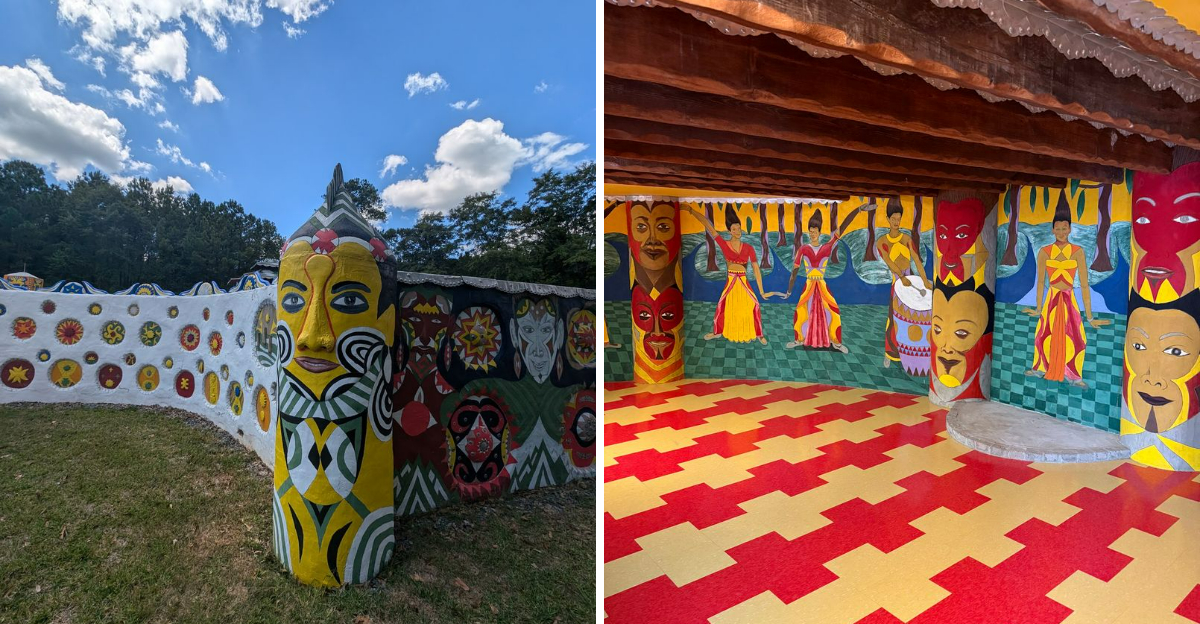
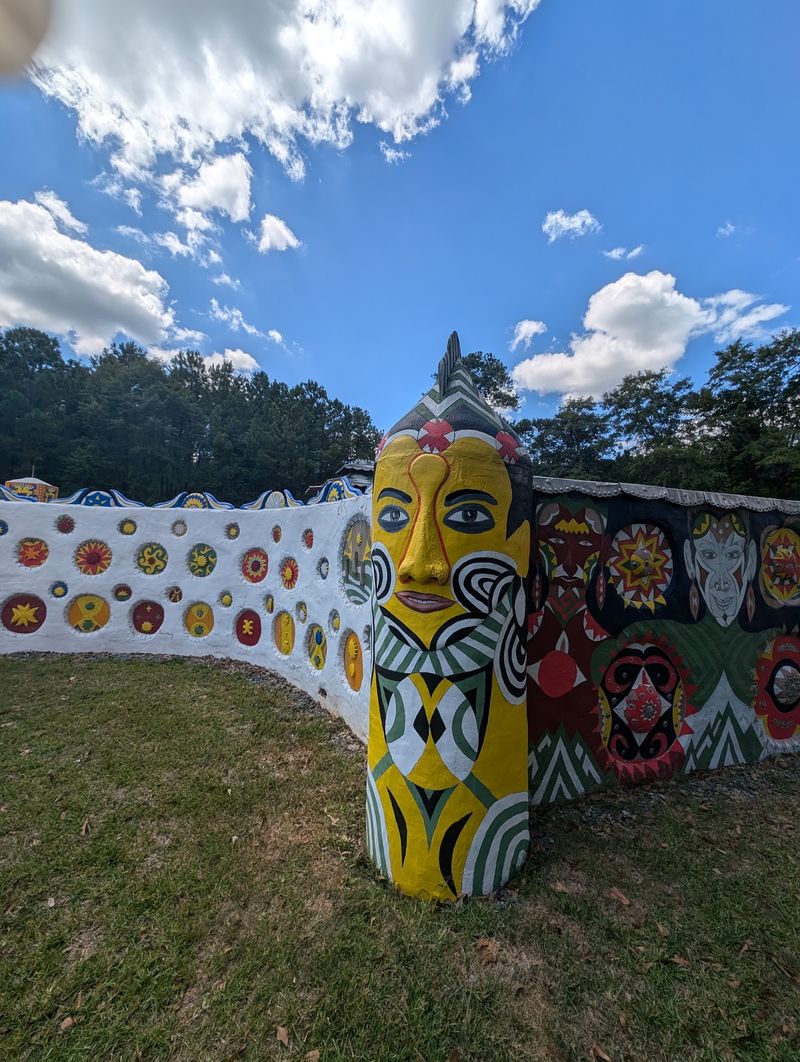
Fields and quiet pastures one second, then color explosion the next. Painted totems taller than houses.
Walls covered in patterns that look pulled from a fever dream. Seven acres of pure, unfiltered imagination sitting in the middle of Georgia farmland.
Nobody warns you properly before you arrive. Photos online don’t do it justice either.
You have to stand there in person, surrounded by all that color, to actually feel it. Georgia holds onto strange and wonderful corners like this, places built by one person’s imagination running completely wild.
This one might be the strangest, and the most unforgettable, of them all.
The Visionary Who Built An Entire World From Scratch
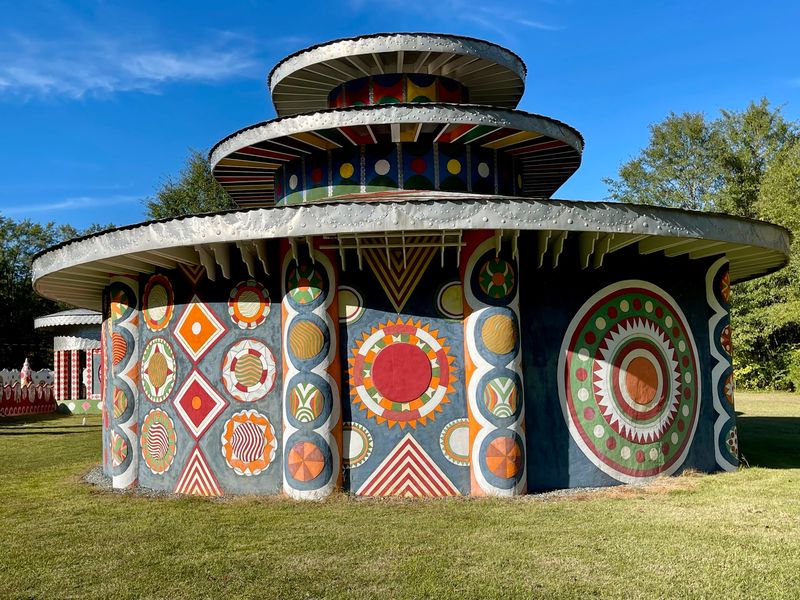
One fever changed everything. In 1935, a self-taught artist named Eddie Owens Martin experienced a powerful vision during a high fever that redirected his entire life.
Born in 1908 in Marion County, Georgia, he had already lived a turbulent life. He left home at age 14 with nothing but a bag and a stubborn will to survive.
New York City swallowed him whole for years. He scraped by however he could, eventually earning a living as a fortune teller, reading palms and cards for strangers who never guessed what he would become.
Then came the fever, and with it, a vision unlike anything he had known. It told him to follow a new path he called Pasaquoyanism, part philosophy, part spiritual calling, entirely his own invention.
He adopted the name St. EOM, pronounced “ohm,” and never looked back. What he built afterward would turn a quiet patch of Georgia into something the world had never seen before, at 238 Eddie Martin Rd, Buena Vista, GA 31808.
900 Feet Of Painted Walls That Defy Every Expectation
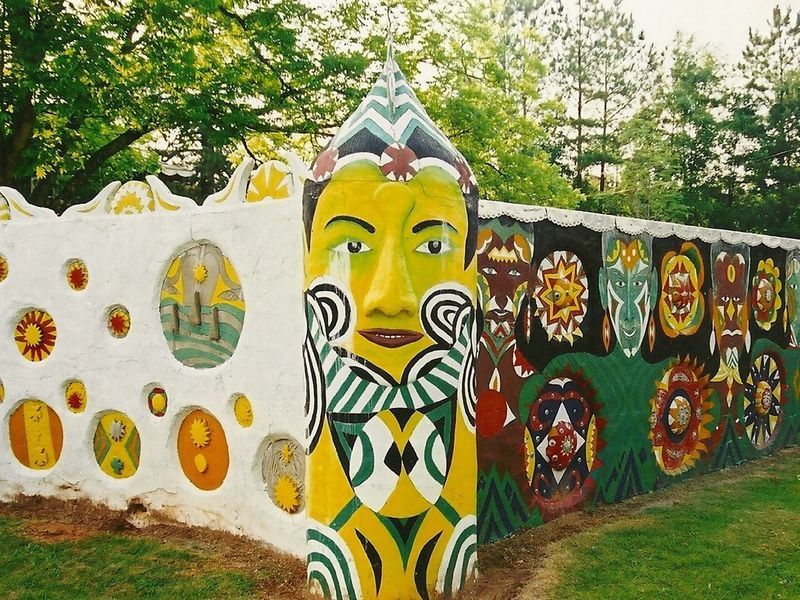
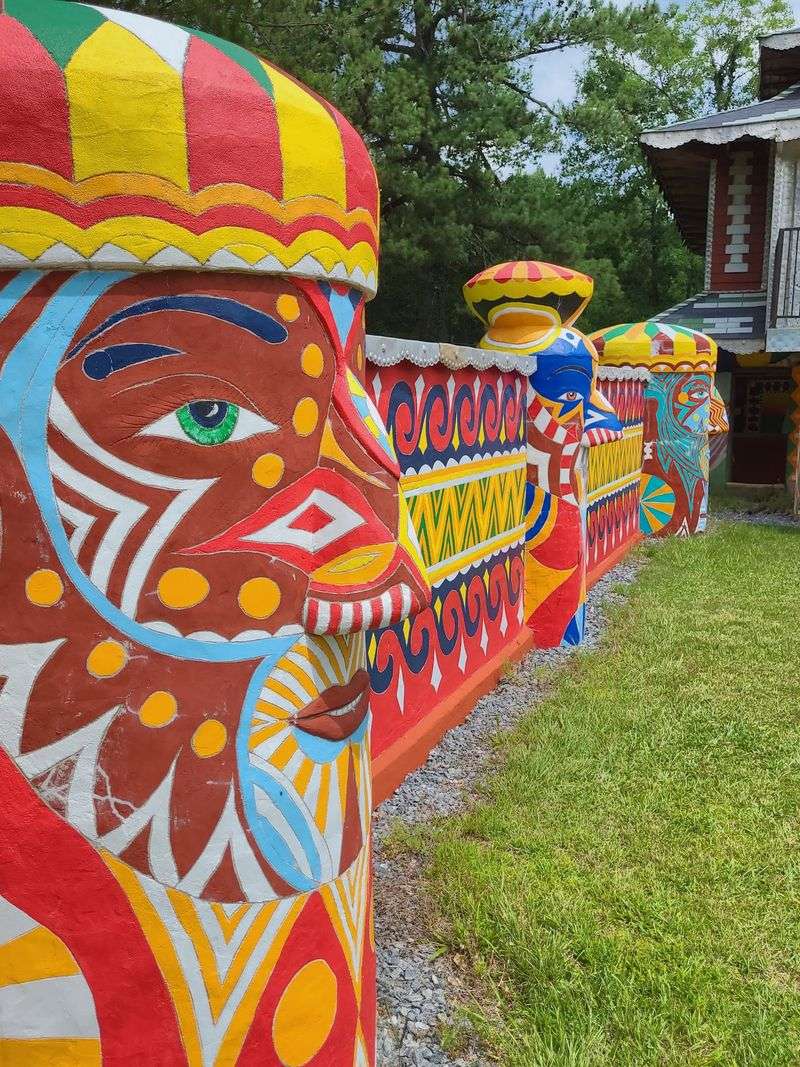
Walls are not just walls here. Over 900 feet of painted masonry wrap around the property in bold, electric color that feels almost impossible to process all at once.
Reds bleed into purples, purples bleed into gold, and nothing about it asks permission to be understood.
The designs pull from pre-Columbian Mexican, African, and Native American symbols, layered together in a way that shouldn’t work but somehow does. Faces stare out from every surface, some calm, some almost unsettling.
Intricate geometric patterns cover every inch with obsessive precision, like someone who couldn’t stop even if they wanted to.
Standing in front of these walls feels strange in the best possible sense. No photo fully captures the scale or the intensity of what St. EOM created here.
Six Major Structures That Feel Like Another Civilization
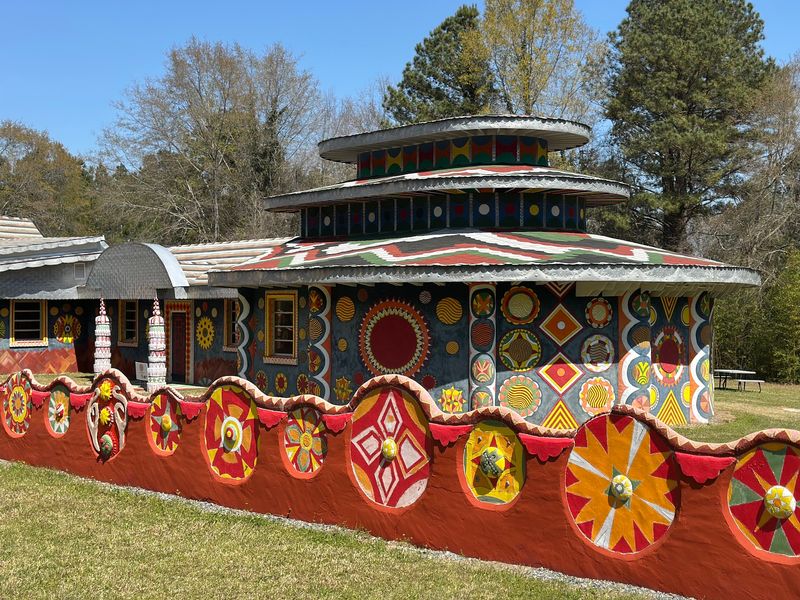
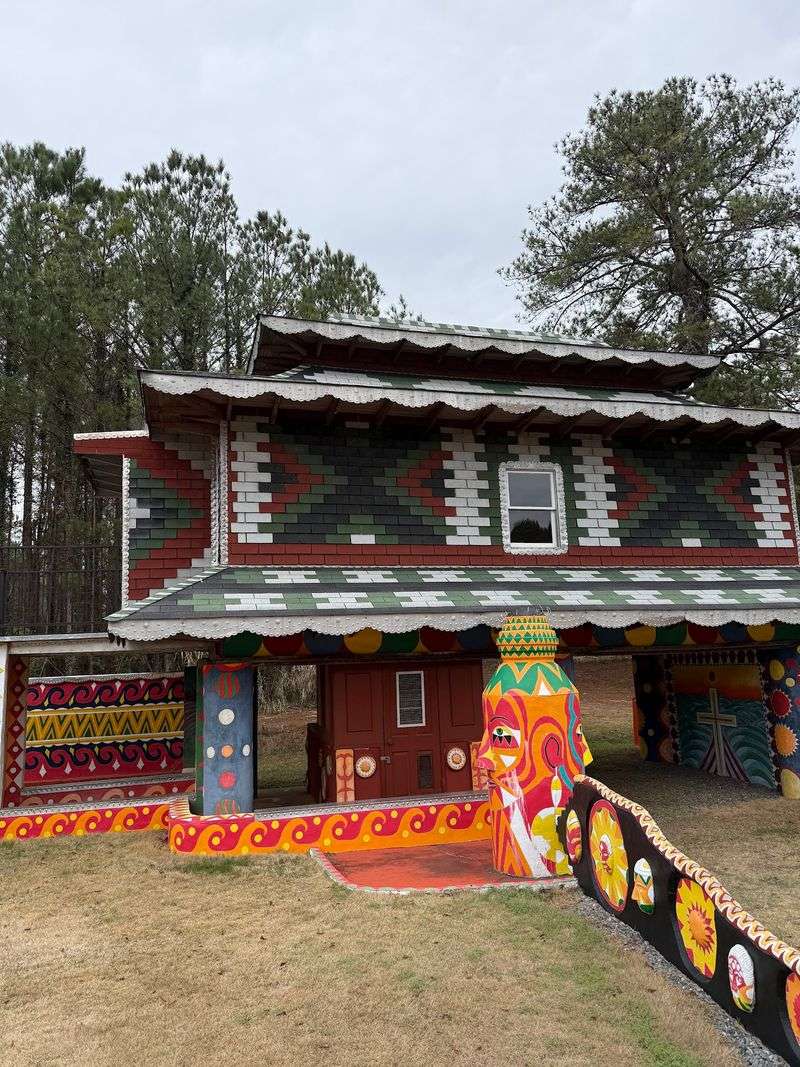
Most art installations give you one centerpiece. This place gives you six major structures and a redesigned 1885 farmhouse, all transformed into something unrecognizable from their original form.
Nothing here plays by ordinary rules.
Towering totems rise from the ground like guardians nobody hired but everybody needed. Pagodas painted in vivid reds, greens, and yellows stand beside a traditional kiva structure that feels borrowed from the American Southwest, dropped into rural Georgia without explanation.
Somehow it all fits together anyway.
Each building has its own personality. Moving from one to the next feels like flipping through chapters of a very strange and wonderful book you never want to put down.
One structure feels ceremonial. Another feels playful.
A third feels like it belongs somewhere else entirely, maybe another planet, maybe another century. Together they turn a single visit into something closer to an experience you carry home with you.
A Religion Invented By One Man On A Georgia Farm
St. EOM did not just make art. He built an entire belief system called Pasaquoyanism, centered on global harmony, futuristic ideas, and the unity of all world cultures.
To him, art and belief were never separate things.
His vision included concepts like “levitation transportation” and a future where every culture coexists peacefully, blending traditions most people never think to combine. These ideas are woven directly into every mural, sculpture, and painted surface on the property, nothing placed there by accident.
Reading about Pasaquoyanism before visiting makes the art hit differently. The symbols suddenly have context, and the whole place starts to feel less like decoration and more like a living philosophy someone actually built with their own hands.
Once you understand what he believed, you start seeing his entire world instead of just his paint.
Mandalas And Murals Inside The Farmhouse
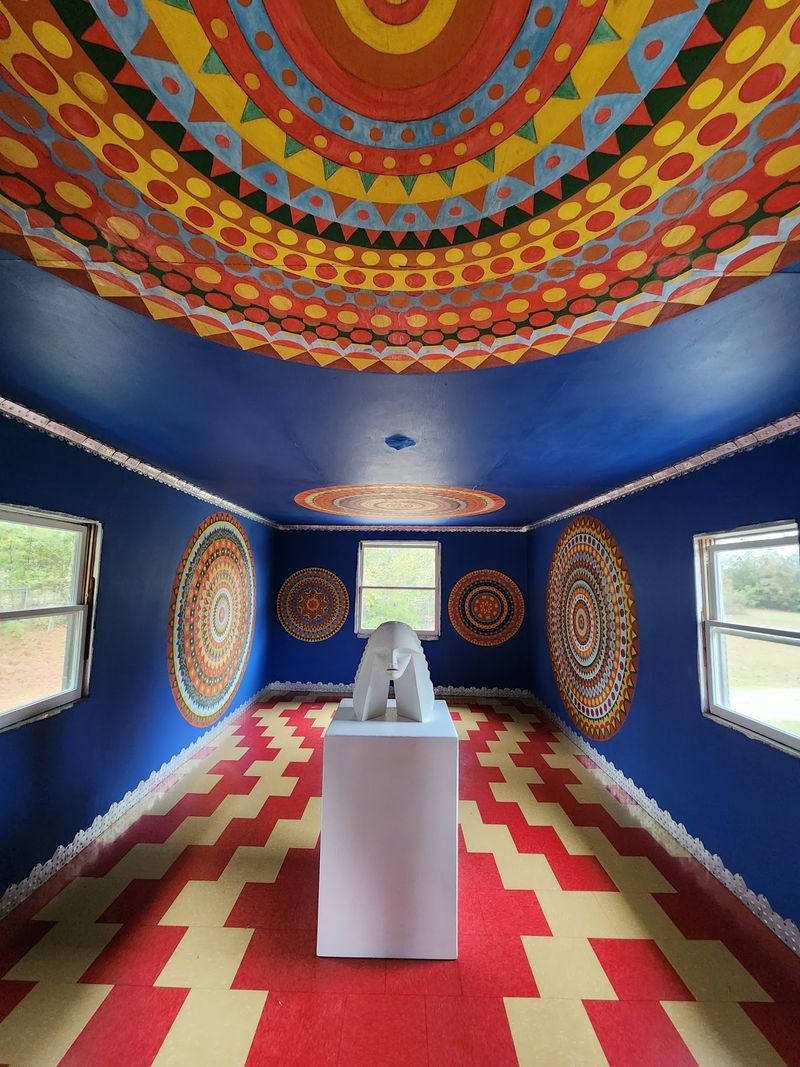
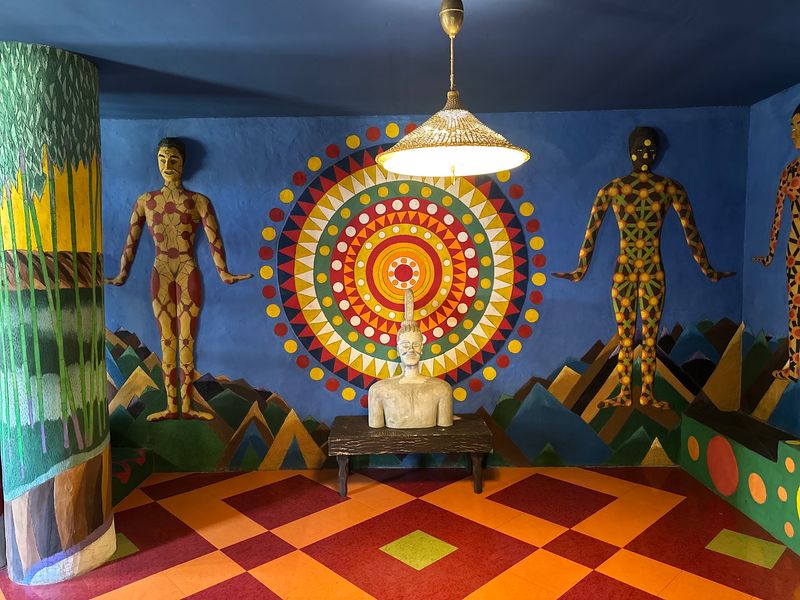
Enter the farmhouse and the outside world disappears completely. Intricate mandala murals cover the walls and ceilings in patterns so detailed they seem to breathe under the light, pulling your eyes in every direction at once.
The furniture inside was designed by St. EOM himself, each piece painted and shaped to match the world he was building around it. Nothing feels store bought or ordinary.
Every chair, every table, every surface carries his fingerprints in some form.
A video inside the farmhouse tells his full story with real depth and clarity, filling in pieces the murals alone can’t explain.
Start here before exploring the grounds. Understanding the man behind the art makes every painted surface outside feel like a personal message meant just for you, instead of just color thrown against a wall.
A Restoration Story Worth Knowing Before You Go
After St. EOM passed in 1986, the property fell into serious neglect for decades. Paint faded, structures weakened, and the world outside mostly forgot it existed.
The Pasaquan Preservation Society kept it alive through sheer determination, but a full restoration did not begin until 2014.
The Kohler Foundation and Columbus State University partnered to lead that major effort, pouring years of work into saving what could have easily been lost forever. The site reopened to the public in October 2016 after years of careful conservation work, piece by piece, wall by wall.
Today, Columbus State University stewards the property through ongoing preservation efforts and artist residency programs that help keep Pasaquan vibrant year-round, making sure St. EOM’s strange and brilliant vision keeps reaching new eyes instead of fading into memory.
How To Plan Your Visit Without Missing A Thing
This spot is open Friday through Sunday, from 10 a.m. to 5 p.m. Adult admission is $10, seniors pay $5, and students pay $3, a fair price for what you actually experience once inside.
Plan to spend at least one full hour exploring, maybe more if you get pulled into every mural along the way. The grounds are immaculate and well organized, making it easy to wander at your own pace without feeling rushed or boxed into a set path.
Bring a packed lunch. There are picnic tables on the property, set apart from the main structures under the shade of the trees, and eating surrounded by all that color turns into one of the more memorable meals you will have in Georgia.
Few places let you combine art and lunch quite like this one does.
Cultural Influences From Around The World In One Yard
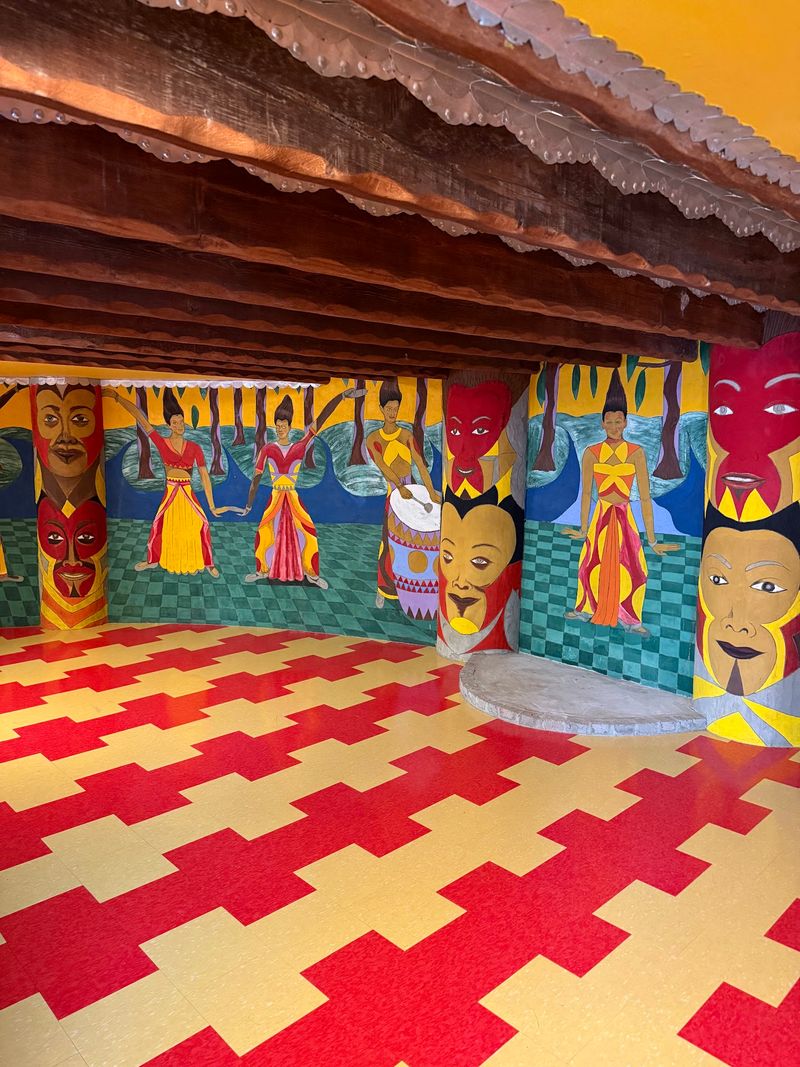
Few places on earth blend this many cultural traditions onto one seven-acre property. St. EOM pulled from pre-Columbian Mexican art, African visual traditions, and Native American symbolism all at once, weaving them together without treating any single influence as more important than the rest.
He also drew inspiration from books about the Lost Continent of Mu, a mythological ancient civilization most visitors have never heard of before arriving. That influence gives the art an otherworldly, futuristic quality that feels unlike anything else in the American South, closer to science fiction than folk art.
Every pattern has a source and a meaning behind it. Spending time reading the on-site signs connecting symbols to their origins adds a whole new layer to the experience, turning a simple walk around the property into something closer to studying a language you’re only beginning to understand.
On The National Register And Still Wildly Underrated
Getting added to the National Register of Historic Places in 2008 was a big deal for this property. Not every visionary art environment earns that kind of official recognition, especially one built entirely by a single self-taught artist working alone for decades, with no formal training and no outside help.
Despite that status, this place remains far less visited than it deserves. The rural location outside Buena Vista keeps crowds small, which actually makes the experience feel more personal and immersive, almost like you have the whole property to yourself for an hour or two.
There is no rushing past other groups, no waiting in line for a photo.
People who make the drive tend to leave describing Pasaquan as one of Georgia’s most unique attractions, unlike anything else they’ve seen in the state or anywhere nearby. Many say one visit simply is not enough to take it all in, since new details keep surfacing on every wall and every turn.
Plenty end up planning a return trip before they’ve even left the parking lot, already thinking about what they missed the first time around.