This Idaho City Is Home To One Of The Nation’s Largest Historic Arms Collections
A former prison already comes with enough atmosphere. One in Boise decided it also needed a collection spanning thousands of years of military history.
Behind those old walls sits an astonishing display of historic arms, armor, and memorabilia.
Ancient bronzes share space with medieval pieces and artifacts tied to conflicts from much more recent history, making the exhibit feel far larger than most visitors expect.
Idaho is not usually the first place people associate with one of the nation’s most significant collections of its kind.
That surprise is exactly what makes walking in so memorable.
Even people who arrive thinking they are “not really museum people” may find themselves stopping longer than planned.
Every object carries a story about craftsmanship, survival, power, or the people who once handled it.
The name stays hidden for now, but the setting offers a major clue. Few history collections make an old prison feel even more dramatic than it already does.
Start With The Collection That Makes Boise Unexpected
Boise does not seem like the obvious place for a collection this wide-ranging, which is exactly why the exhibit catches so many visitors off guard. The J.
The Curtis Earl Memorial Exhibit brings together historic artifacts and military memorabilia spanning many centuries.
Beyond the prison cells and sandstone walls, visitors can explore bronze objects, medieval armor, ceremonial pieces, historic equipment, and other carefully preserved displays.
That contrast gives the stop real surprise. The exhibit is not a small side room meant to fill space.
It is a major collection with enough variety to slow down even visitors who do not consider themselves military-history fans. The strength of the display comes from its range.
Ancient craftsmanship sits beside industrial-era firepower. Personal items sit beside large artifacts.
Design changes, materials shift, and the whole room becomes a visual timeline of how humans have built tools for conflict. Boise feels unexpected here because the collection feels bigger than the city’s casual reputation suggests.
Follow Historic Arms From Ancient Pieces To Modern Conflicts
A walk through the exhibit feels like moving across a long and complicated timeline. Ancient bronze pieces and edged artifacts introduce visitors to early craftsmanship, when metalwork, status, combat, and ceremony often overlapped.
Medieval arms and armor bring a different kind of drama, showing how protection and attack evolved before modern firearms changed the entire rhythm of battle.
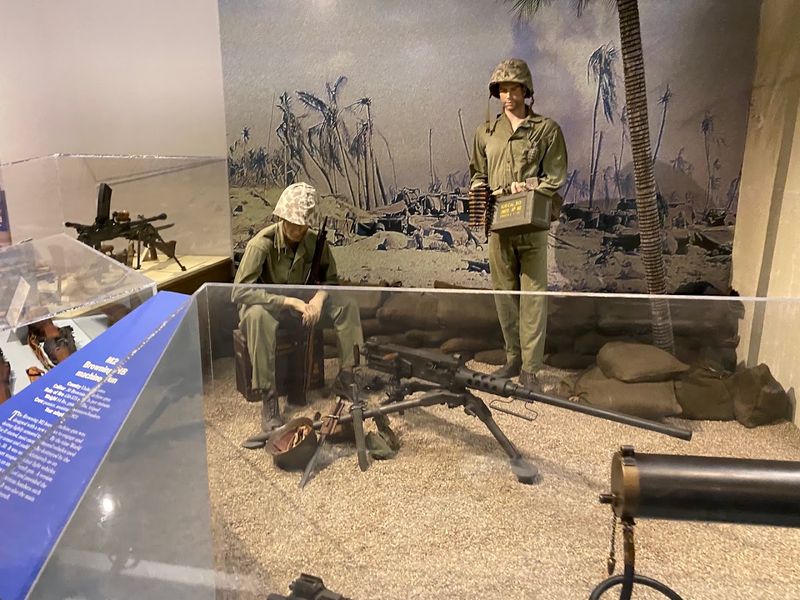
From there, the collection moves into later centuries with Revolutionary War pieces, Civil War artifacts, and artifacts connected to World War I, World War II, and later conflicts.
That progression keeps the exhibit from feeling repetitive. A sword tells one story.
A rifle tells another. A machine gun tells something else entirely about speed, scale, and industrial warfare.
The most useful way to view the collection is not as a celebration of artifacts, but as a study of human invention under pressure. Designs changed because tactics changed.
Materials changed because manufacturing changed. Conflicts changed because technology changed the distance between people.
The exhibit gives visitors a chance to see those shifts in physical form, rather than simply reading about them in a textbook.
Step Inside The Old Penitentiary Setting First
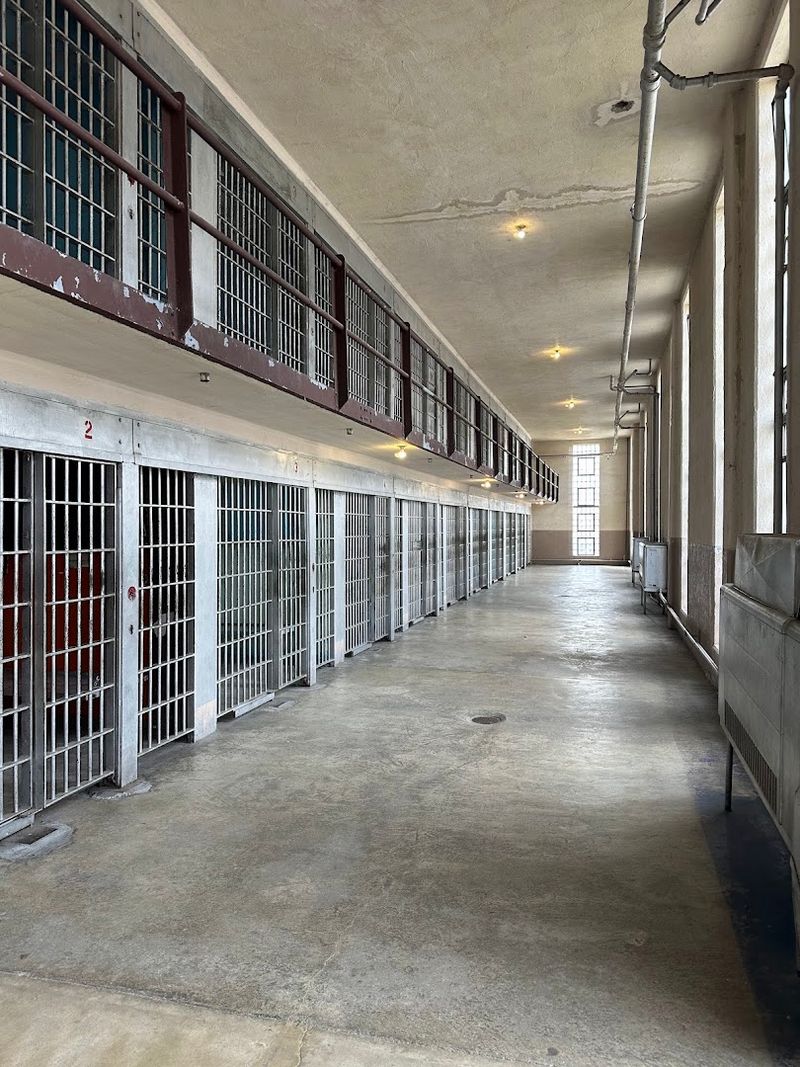
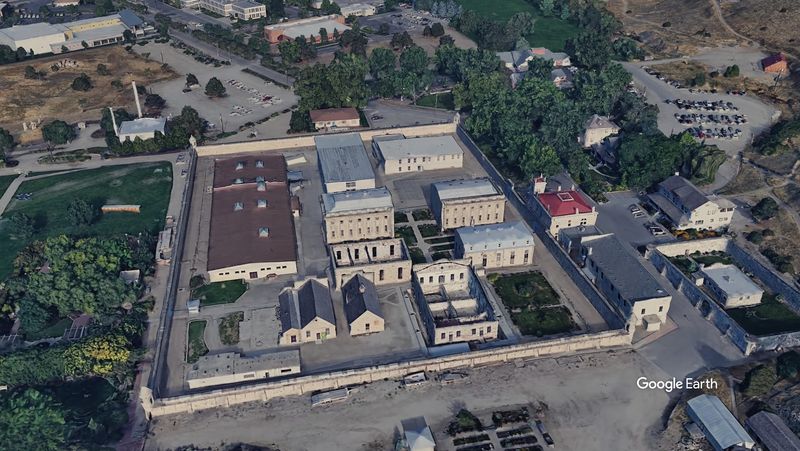
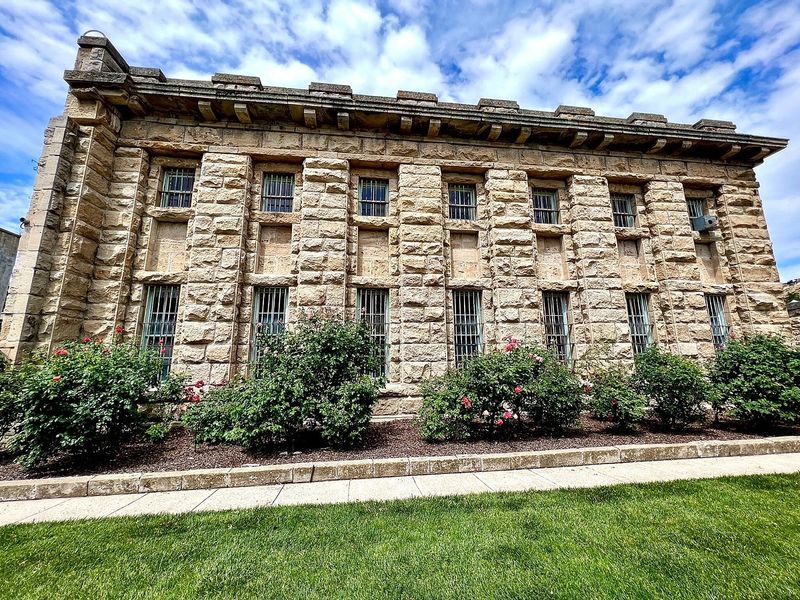
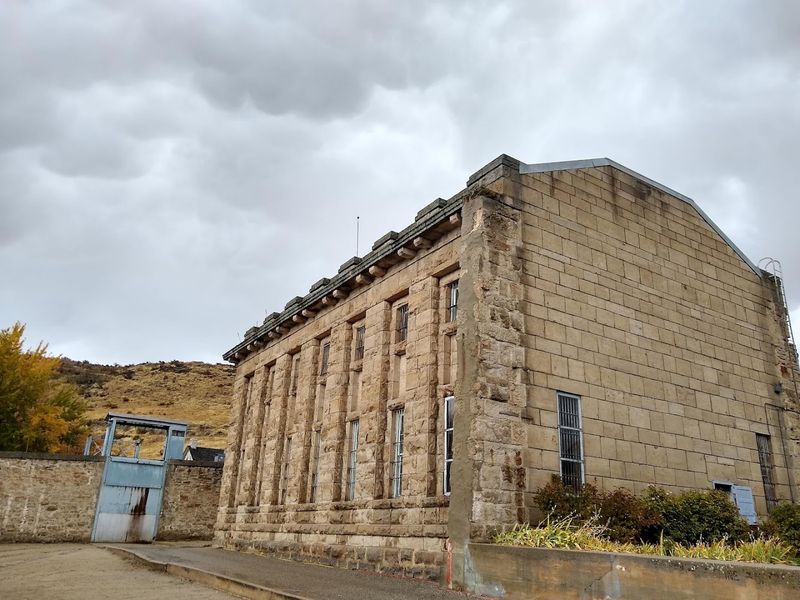
Stone walls give the whole visit a heavier mood before the arms collection even begins. The Old Idaho Penitentiary operated for more than a century, and the preserved grounds still carry the atmosphere of a place built around confinement, discipline, labor, and punishment.
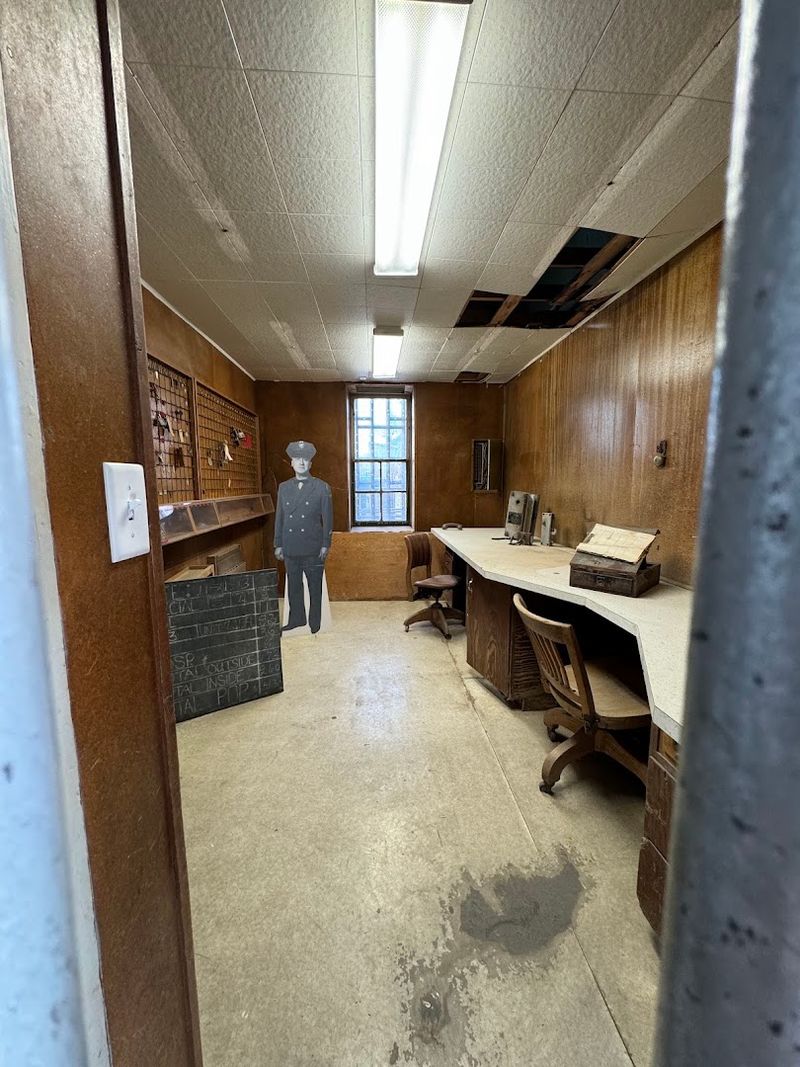
Cell houses, guard areas, prison yards, and historic buildings create a strong sense of place. That setting matters because the J.
Curtis Earl Memorial Exhibit is not sitting inside a plain modern gallery. It is placed within a site where Idaho’s institutional history already feels close.
Visitors should understand that the arms exhibit has its own subject and is not the same story as the prison itself, but the two experiences naturally shape each other during a visit. The prison grounds create a serious frame.
The collection adds a study of military history and technology. Together, they make the Old Pen feel broader than a simple prison tour.
Before stepping into the exhibit, it is worth taking time with the surrounding site. The old walls, preserved spaces, and layered buildings make the transition into the arms collection feel more grounded and more memorable.
See The 1883 Gatling Gun On Its Original Carriage
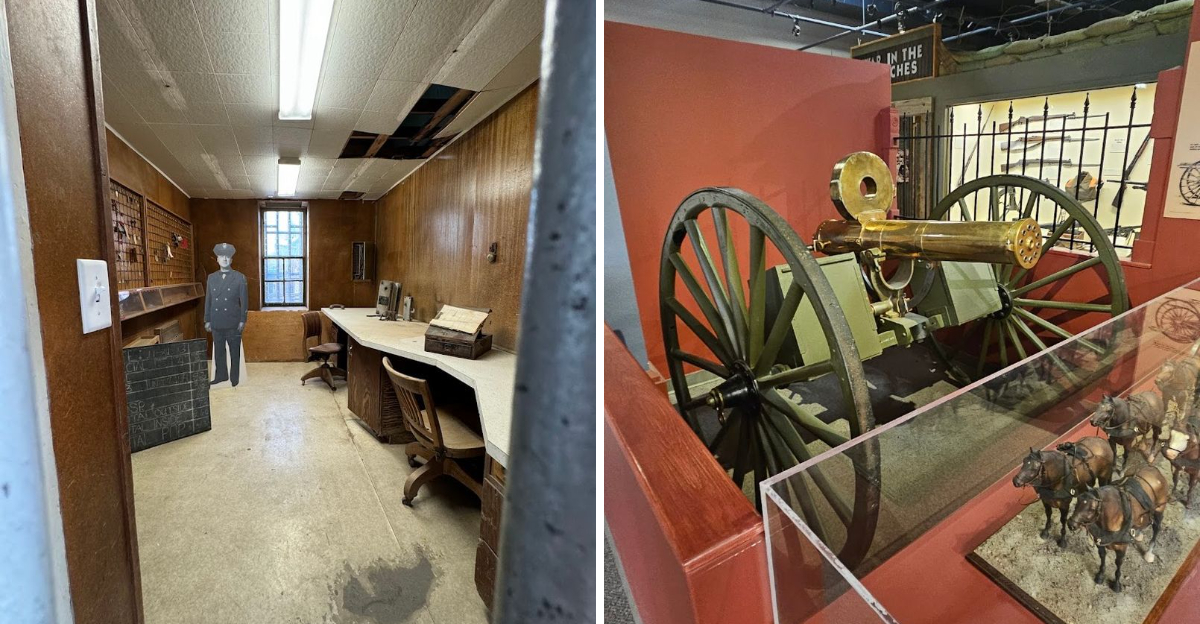
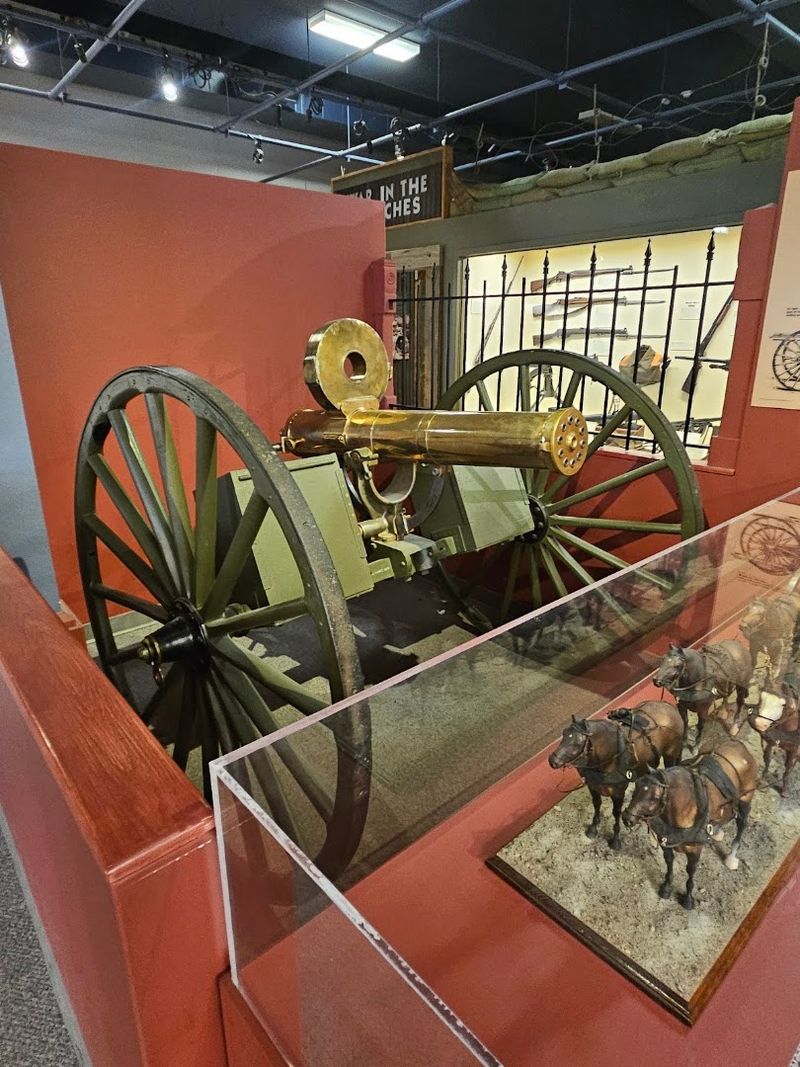
One object has a way of pulling attention even from people who do not know much about military technology. The 1883 Gatling gun on its original carriage stands out because it represents a major turning point in the story of rapid-fire artifacts.
The carriage helps visitors understand the object as more than a detached mechanism. It shows scale, mobility, weight, engineering, and the way a weapon like this would have existed as a complete piece of equipment.
The objects on display belong to the era when military technology began moving away from slower single-shot patterns toward faster mechanical fire. Seeing one preserved with its carriage makes that transition easier to grasp.
It also gives the exhibit one of its clearest centerpiece moments. The brass, structure, wheels, and overall presence make the piece visually memorable without needing extra drama around it.
The best response is not awe for firepower alone, but curiosity about the period that produced it. Why did designs change?
How did armies adapt? What did this kind of invention mean for soldiers on the ground?
A single object opens all of those questions.
Walk Through Displays Built For Military History Fans
Immersive scenes help the exhibit speak to visitors who might otherwise struggle with rows of unfamiliar objects. A trench-style display connected to World War I gives people a clearer sense of the conditions soldiers faced, from confined space to constant pressure.
Another scene places military artifacts into a damaged European setting, turning artifacts and equipment into part of a broader wartime environment. Those displays work because context changes everything.
A rifle in a case can be interesting. A rifle shown near the kind of setting where it may have been used becomes easier to understand.
Military-history fans will naturally spend time with the details, but casual visitors can still follow the larger story. The exhibit does not expect every person to arrive with technical knowledge.
It gives enough visual structure to help people understand eras, environments, and the human side of conflict. Younger visitors especially may connect more with scenes than with labels alone.
That makes the display more approachable for families, students, and travelers who want history to feel tangible. The strongest parts of the exhibit are the ones that turn objects into questions about real experience.
Notice How The Exhibit Covers More Than Firearms
Swords, armor, bronzes, cannons, mortars, uniforms, and memorabilia keep the collection from feeling one-note. That variety matters because historic arms collections can easily become repetitive when every display focuses on similar objects.
Here, the range gives different visitors different entry points. Someone interested in medieval history may stop at armor and blades.
Someone curious about engineering may study the mechanics of later firearms. Another visitor may be drawn to military memorabilia, insignia, equipment, or the smaller objects that suggest how people lived around conflict.
Ancient bronze pieces add another layer, reminding visitors that this story did not begin with modern warfare. It reaches back into early metalwork and the long human history of making tools for defense, ceremony, status, and battle.
The collection becomes more compelling when viewed as material culture. These objects reveal craftsmanship, technology, fear, power, training, and memory.
They also show how the scale of conflict changed over time. A hand-held blade and a mounted gun do not belong to the same world, yet they sit inside one long history.
That breadth is what gives the exhibit its weight.
Keep The Stop Educational Rather Than Sensational
A collection like this works best when it is approached with care. The point is not to turn artifacts into spectacle or make conflict feel exciting without consequence.
The better experience comes from asking what each object reveals about the people and eras connected to it. A sword can teach visitors about craftsmanship and social status.
A rifle can show how manufacturing changed. A trench display can start a conversation about fear, endurance, and the daily reality of war.
A piece of memorabilia can point toward service, identity, and memory. That educational framing matters, especially for families.
Children may be drawn first to the size, shape, or strangeness of certain objects, but adults can help guide the visit toward bigger questions. Who made this?
Why was it used? What changed after inventions like this appeared?
How did ordinary people experience those changes? The exhibit becomes more meaningful when visitors slow down and think beyond the surface.
Military history can be difficult, but it can also be deeply instructive when presented respectfully. Boise’s exhibit gives people space to study conflict without reducing it to shock value.
Pair The Exhibit With The Prison’s Bigger Story
The strongest visit does not stop with the J. Curtis Earl Memorial Exhibit.
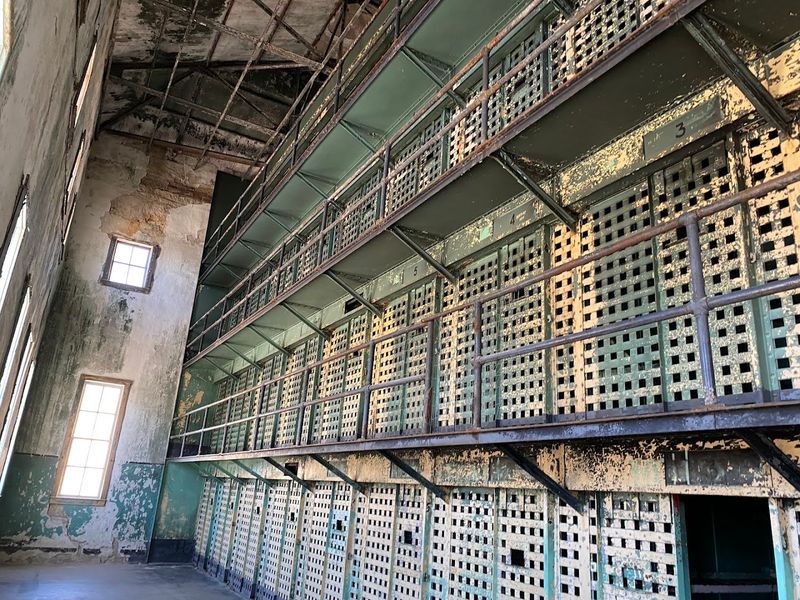
The Old Idaho Penitentiary grounds include historic cell blocks, courtyards, preserved buildings, and exhibits exploring daily life at the site. Displays also cover young residents, work programs, women connected to the institution, architecture, disciplinary practices, and Idaho’s correctional history.
That larger setting gives the arms collection more depth because visitors are already thinking about power, law, punishment, violence, reform, and human choices.
The two stories are separate, but they sit in conversation during the visit. One examines arms and military artifacts across centuries.
The other preserves the history of a prison that shaped lives in Idaho for generations. Taking time with both creates a fuller experience than rushing straight to one display and leaving.
Plan enough time to walk the grounds, read exhibits, and let the site feel serious rather than merely unusual. The Old Idaho Penitentiary is at 2445 Old Penitentiary Road in Boise, Idaho, and the J.
Curtis Earl Memorial Exhibit is included as part of the broader historic-site visit.