This Kentucky Town Was Built Directly Over A Living Cave And Most Visitors Have No Idea
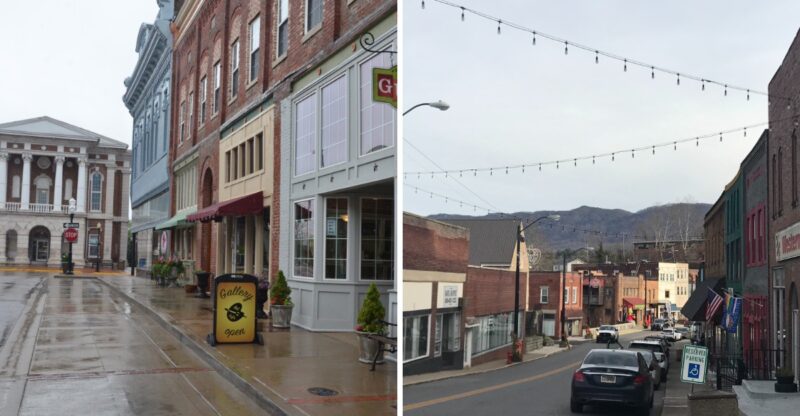
You could drive straight through this Kentucky town and never suspect a thing. The storefronts look ordinary.
The sidewalks behave themselves.
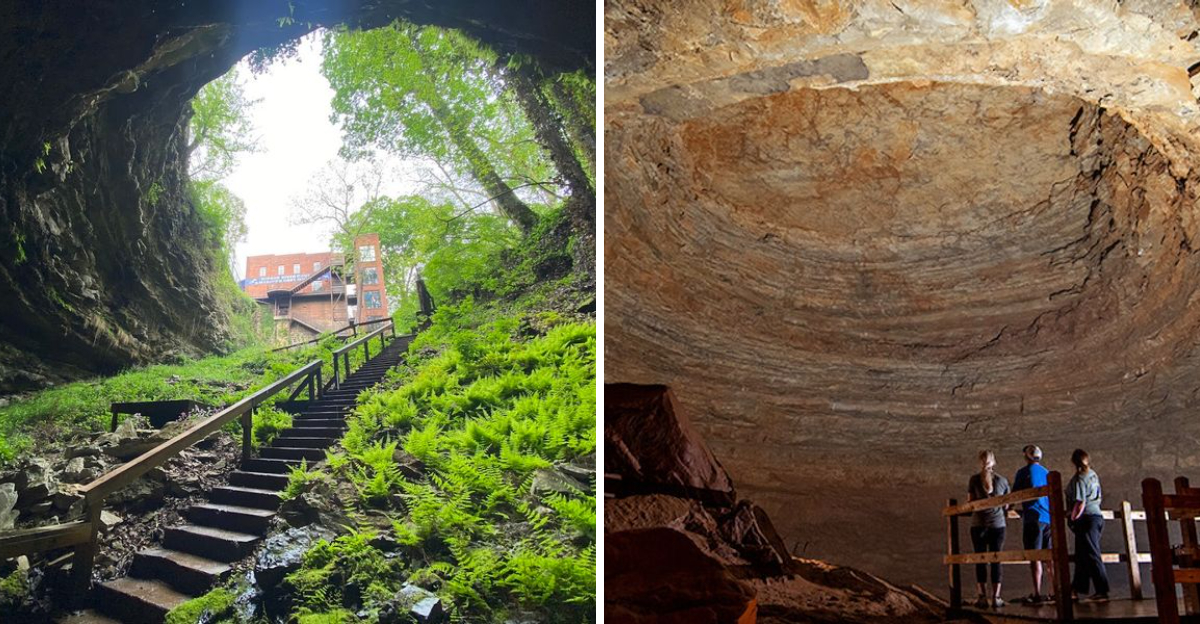
Then you learn that a cave mouth three stories deep sits right behind Main Street. An actual river runs beneath your feet, minding its own business.
The whole town was built around that sinkhole on purpose, which takes a certain kind of confidence.
There is a plot twist, too. This cave was once the most polluted in the country, and the smell nearly ran the place out of business.
Locals fought, cleaned it up, and coaxed the wildlife back home. Now you can zipline across the entrance or rappel down its limestone walls.
You can also just stand at the edge and feel appropriately small. Vertigo is optional.
Most folks passing on the highway never guess any of this exists. You are about to know better than they do.
The Town With A Secret Underground World
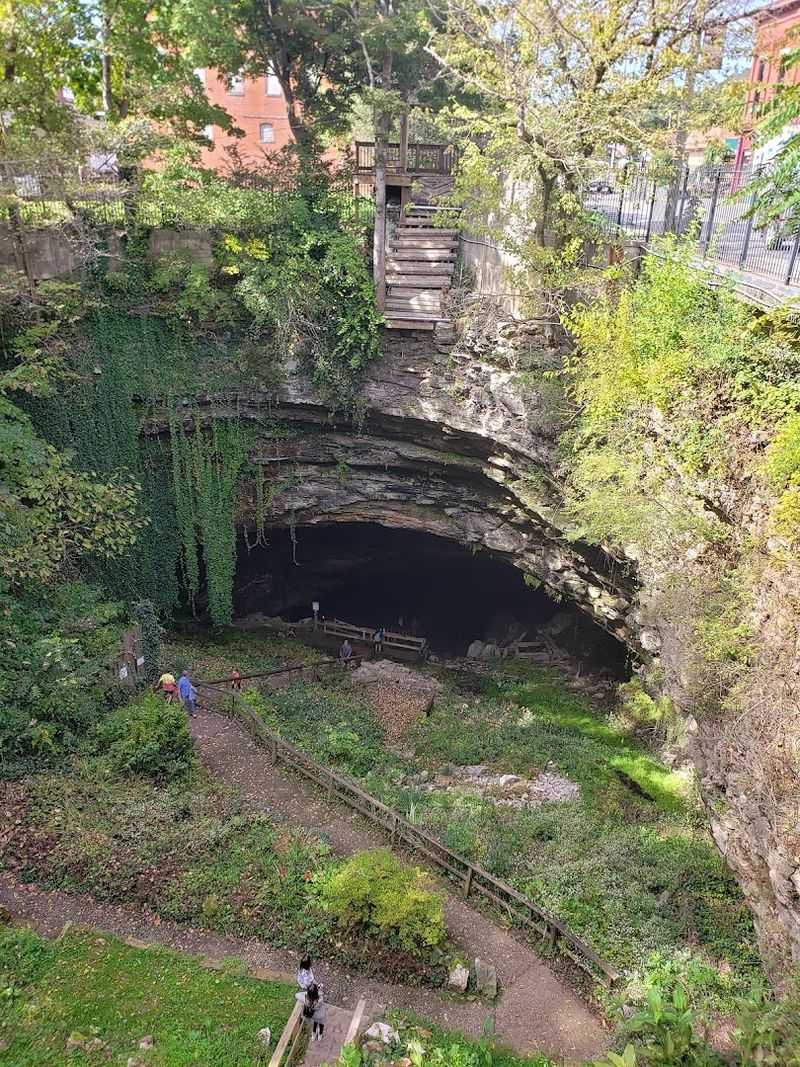
Horse Cave, Kentucky is one of those places that sounds like a quirky name on a road sign until you actually show up. With a population of just 2,212 as of the 2020 census, it is a genuinely small town.
But small does not mean ordinary, not here.
The entire downtown area sits directly above a living cave. Not a sealed-off cave, not a historical relic, but an active, breathing underground river system that runs beneath the streets.
Locals have known about it for generations, but visitors usually have zero idea.
Mayor Randall Curry leads the city alongside a six-member city council, and they govern a community that has one of the most unusual geological situations of any town in America.
The cave below is not a tourist gimmick. It is a real, functioning natural system.
That fact alone makes Horse Cave worth the detour on any Kentucky road trip.
The Cave That Literally Runs Under Main Street
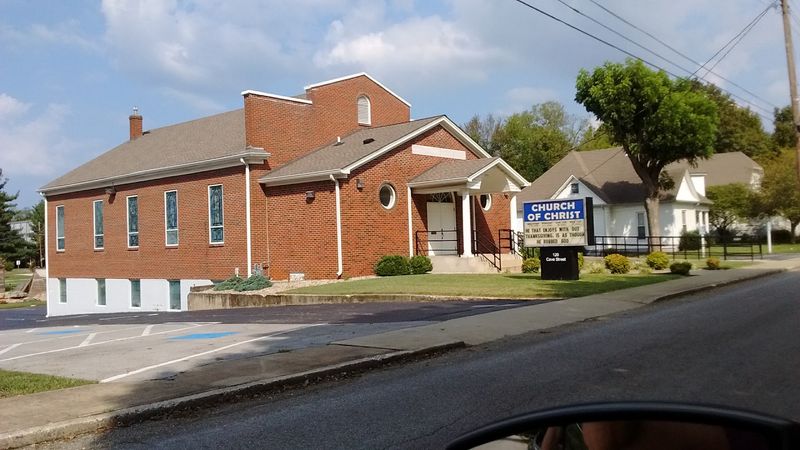
Standing on the sidewalk in downtown Horse Cave, you are probably standing directly above a cave passage. That is not a metaphor.
The cave system here extends beneath the commercial district, and in some spots, the ceiling of the cave is just a short distance below street level.
The cave is known as Hidden River Cave, and the name tells you everything. An underground river flows through it, carving the limestone rock over thousands of years.
Limestone is the key ingredient here. Kentucky sits on massive deposits of it, and water eats through limestone like it has a personal grudge.
What makes this cave different from others in the region is its location directly under an inhabited town. Most caves are out in the woods or on the edge of farmland.
This one is under your feet while you grab a snack at a local shop.
The combination of geology, history, and sheer weirdness makes this cave one of the most fascinating natural features in the entire state, and most people driving through on the highway never stop to find out.
Hidden River Cave And The American Cave Museum
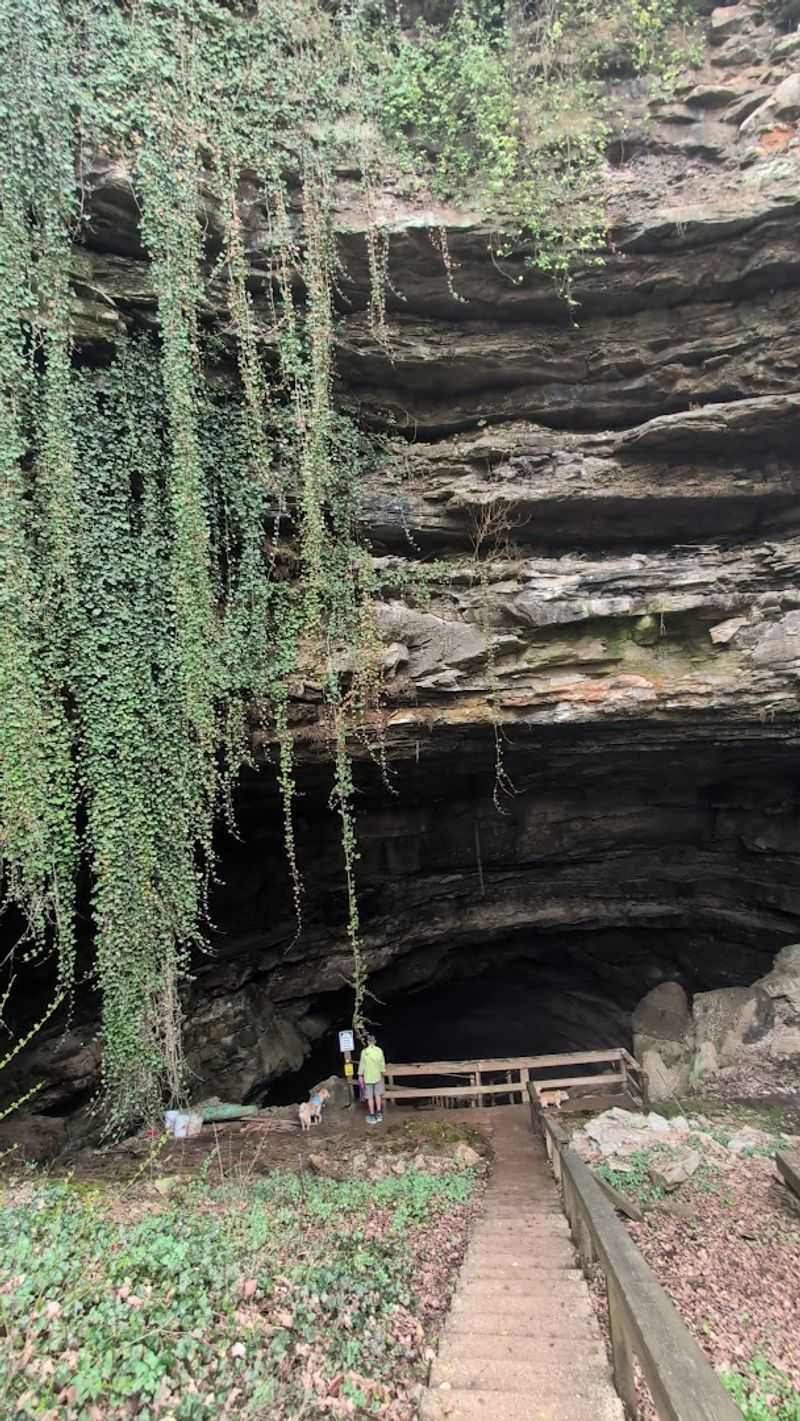
Right in the middle of town, you can actually walk down into the cave. The American Cave Museum and Hidden River Cave sit at the heart of Horse Cave, and the entrance is genuinely dramatic.
One moment you are on a regular small-town street, and the next you are descending into a cool, dimly lit underground world.
The museum above ground tells the story of caves across America, including the conservation efforts that have helped restore cave ecosystems that were damaged over the decades.
It is educational without being boring, which is a harder balance to strike than it sounds.
The cave tour takes you along the underground river, through passages that open into wide chambers and narrow corridors.
The temperature underground stays around 57 degrees Fahrenheit year-round, so bring a light jacket even in July. Guides explain the geology in plain language, which makes the whole experience accessible for kids and adults equally.
It is one of those rare attractions where you leave genuinely knowing something new about the ground you walk on every single day.
How Kentucky Limestone Created This Entire Situation
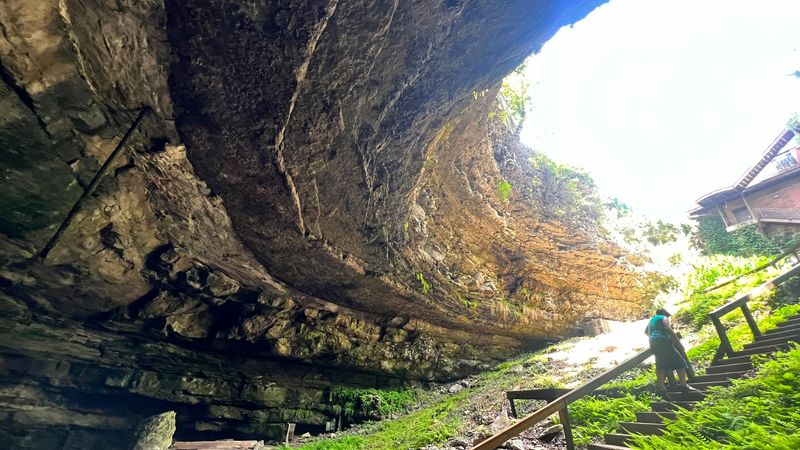
Kentucky is basically one giant slab of limestone under a thin layer of soil and grass. That sounds dramatic, but geologists would back it up.
The entire region sits on what is called karst topography, which is a landscape shaped almost entirely by dissolving rock.
Water picks up carbon dioxide from the air and soil, turns mildly acidic, and then slowly dissolves the limestone beneath. Over thousands and thousands of years, that process carves out tunnels, chambers, and river passages.
The result is what you see in Horse Cave: a hollow space large enough to walk through right under a functioning town.
This is the same geological process that created Mammoth Cave, which is just a short drive away and is the longest known cave system on Earth.
Hart County and the surrounding area are essentially sitting on top of one of the most cave-dense regions anywhere on the planet. Horse Cave is not an exception in this landscape.
It is a striking example of a town that developed around a cave entrance and the valuable water source beneath it.
The Surprising History Of The Cave And The Town
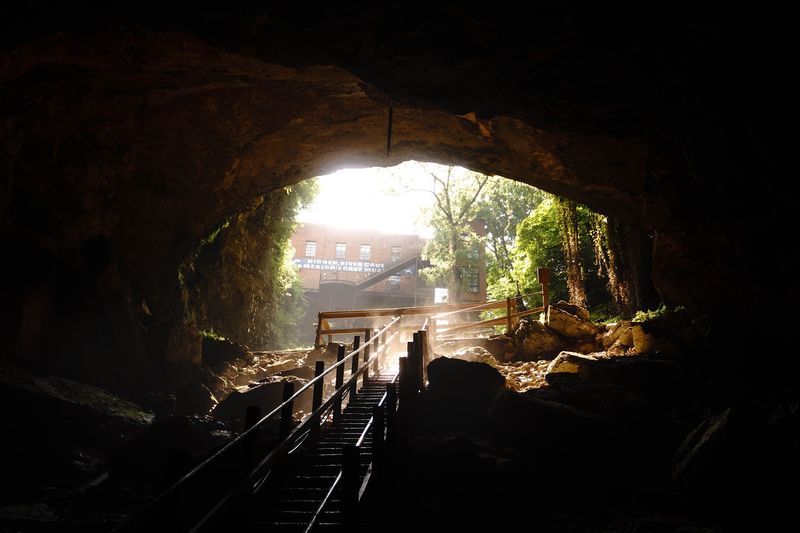
People have known about the cave at Horse Cave for a very long time. Native Americans used the cave, and early European settlers recognized it as a significant natural feature.
The town that grew up around the cave entrance was essentially named after the cave itself, which makes the whole situation feel almost inevitable.
In the late 1800s and early 1900s, the cave was used in ways that would make modern conservationists cringe.
Industrial activity near and in the cave caused serious damage to the underground ecosystem, including the underground river. The water quality suffered significantly for decades.
The story of Hidden River Cave is also a story of environmental recovery. Serious restoration efforts began in the late twentieth century, and today the cave ecosystem is in much better shape than it was a hundred years ago.
The American Cave Conservation Association, headquartered right in Horse Cave, has played a major role in that recovery.
The town went from nearly destroying its most remarkable natural feature to becoming a national leader in cave conservation. That is a genuinely impressive turnaround for a town of just over two thousand people.
What It Feels Like To Tour The Cave
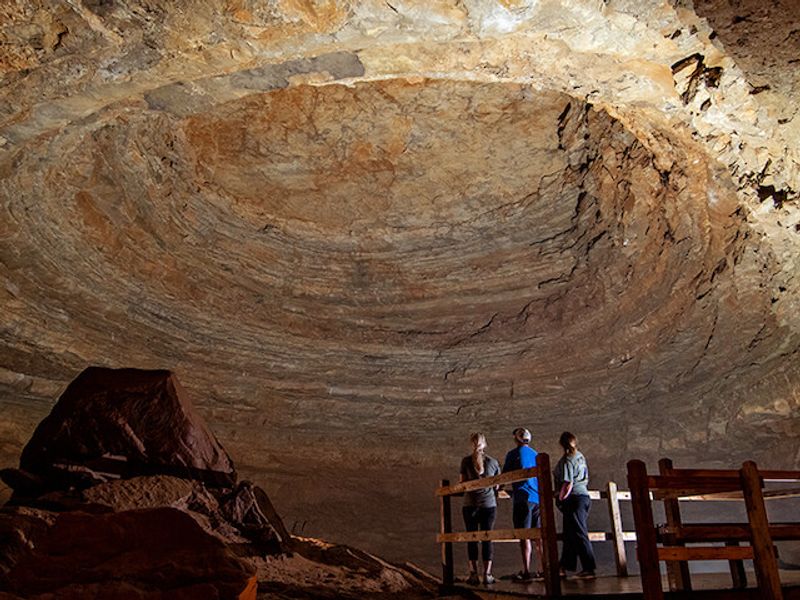
The moment the temperature drops and the light shifts, something changes in your brain. You become immediately more curious and slightly more aware of how much rock is above your head.
That is the experience of stepping into Hidden River Cave, and it happens fast.
The guided tours move at a comfortable pace, and the passages are well-maintained. You walk along the underground river, which is genuinely flowing water moving through solid rock in the dark.
The sound of it is oddly calming. The cave formations, stalactites and stalagmites built up over millennia, are visible throughout the tour.
One thing that surprised me was how connected the cave felt to the town above. At certain points on the tour, you are reminded that you are directly beneath streets and buildings.
That context makes the whole experience feel different from visiting a remote cave. This is not wilderness.
This is a living town with a living cave underneath it, and both are operating at the same time.
Tours run regularly and are suitable for most fitness levels, making this one of the more accessible cave experiences in Kentucky without sacrificing any of the wow factor.
The American Cave Conservation Association Calls This Home
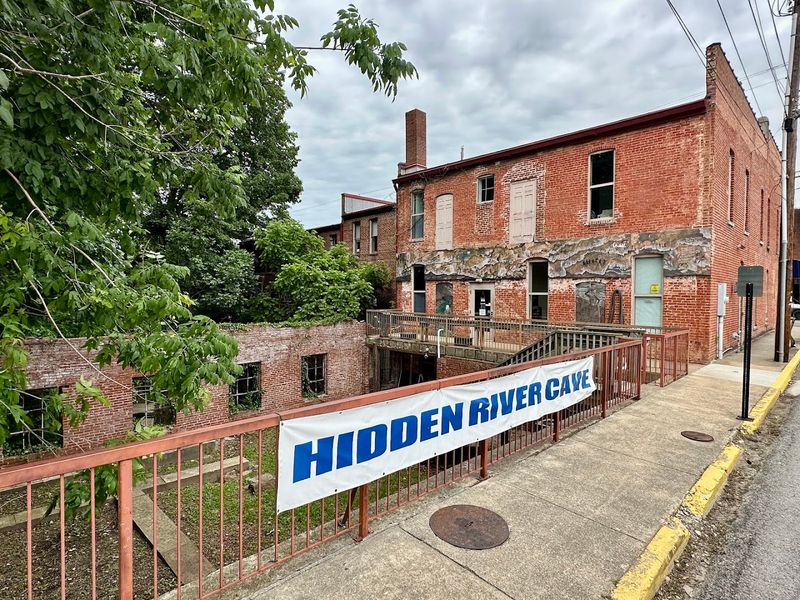
Not every small town of 2,000 people hosts a nationally significant conservation organization, but Horse Cave does. The American Cave Conservation Association has its headquarters right here, and that is not a coincidence.
The history of Hidden River Cave made this town ground zero for thinking seriously about how to protect cave ecosystems across the country.
The organization works on cave and karst conservation issues at a national level, which means the work happening in this tiny Kentucky town has ripple effects far beyond Hart County.
Research, advocacy, and public education all flow out of this headquarters and into the broader conversation about underground natural resources.
For visitors, the presence of the organization adds a layer of credibility and depth to the whole experience. This is not just a tourist attraction with a cave in the basement.
It is a place where real scientific and conservation work is ongoing. The museum associated with the organization reflects that seriousness.
Exhibits are thoughtful and informative, and the staff clearly knows their subject.
Coming to Horse Cave and skipping the museum would be like visiting a great library and only looking at the parking lot. You would miss the entire point of being there.
Why It Deserves A Spot On Your Kentucky Road Trip
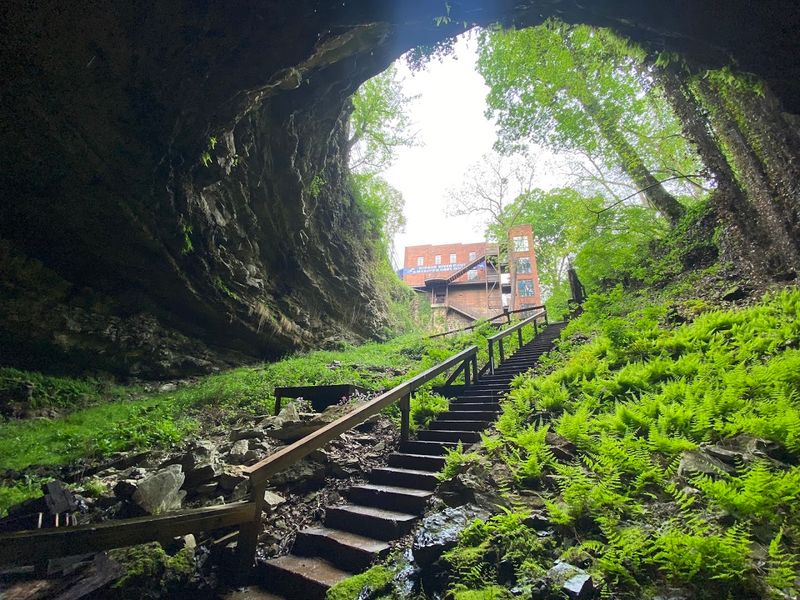
Kentucky road trips usually include Mammoth Cave, bourbon country, and maybe a stop in Lexington or Louisville. Horse Cave almost never makes the list, and that is exactly why it should.
The town is small, the stop is manageable, and what you get in return is genuinely out of the ordinary.
The cave tour takes a couple of hours, the museum is worth the time, and the town itself has the kind of quiet, genuine character that over-touristed places have long since lost. There are no enormous crowds.
There is no waiting in lines that snake around a parking structure. You just show up and experience something remarkable.
Hart County is also within easy driving distance of Mammoth Cave National Park, making Horse Cave a natural add-on to any visit to that area.
Pairing the two gives you a fuller picture of just how extraordinary the cave landscape of central Kentucky really is. Horse Cave is the kind of place that rewards curiosity.
You have to be willing to stop, to look down at the sidewalk and wonder what is underneath, and to follow that question all the way into the earth. That is a pretty good way to travel anywhere.