This Mennonite Restaurant In Maryland Serves The Kind Of Homemade Pies People Remember
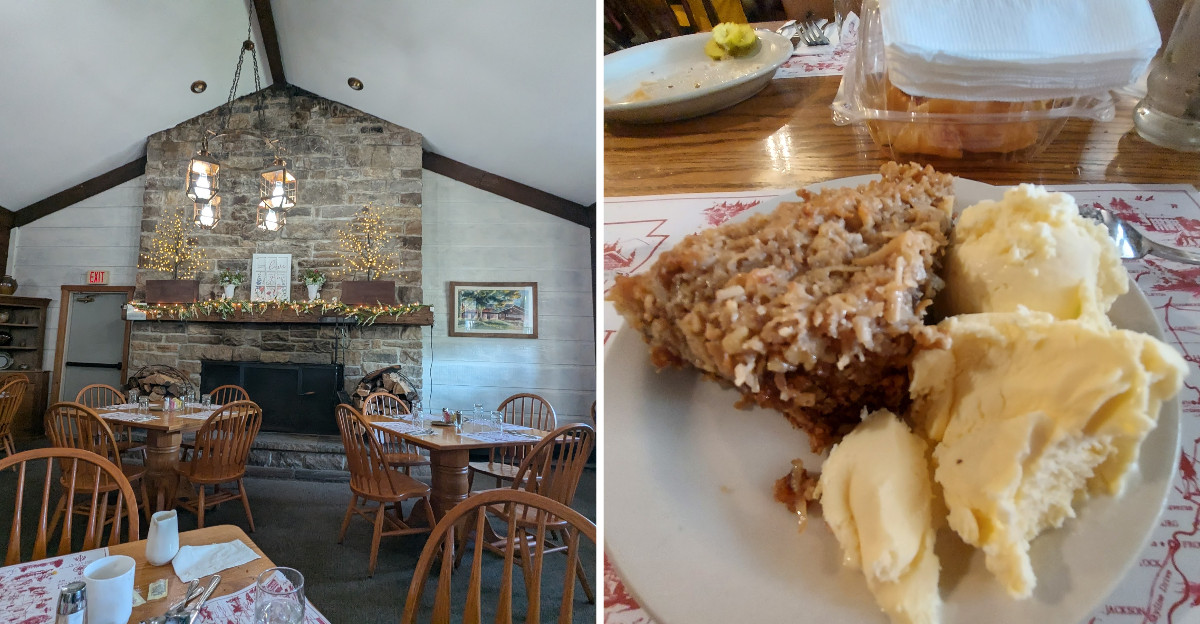
Some road trips need a view. Others just need pie.
Maryland has a historic country restaurant where homemade desserts, hearty cooking, and old-fashioned surroundings make a simple meal feel much more memorable.
The building carries generations of travel history, which gives the whole stop an extra layer of charm.
Then the pie hits the table and, honestly, history can wait a minute. Flaky crust has priorities!
It is the kind of place where lunch stretches naturally because nobody is eager to leave.
A good slice does that. Add postcard scenery outside, and suddenly dessert has turned into the main event.
A Log Inn With Old Stories
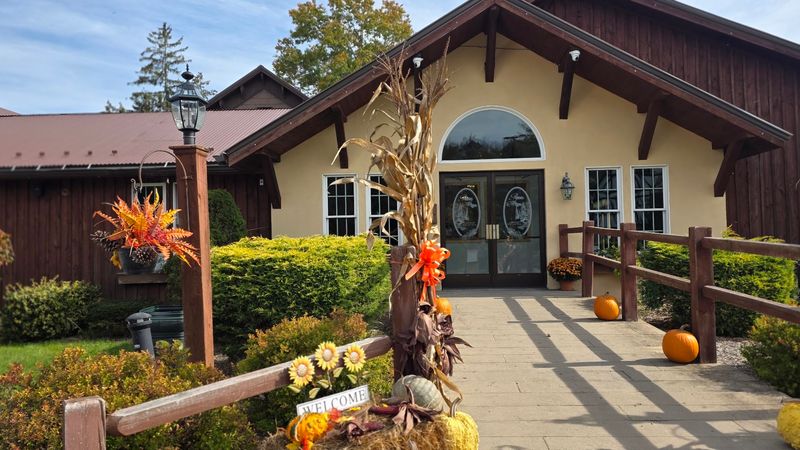
Travelers have been stopping around Little Crossings for roughly two centuries. Parts of the original log inn remain within the much larger restaurant complex.
Penn Alps Restaurant and Craft Shop incorporates the old Little Crossings Inn, built in 1818. Back then, wagons rolled along the National Pike, and this was a welcome rest stop.
That history gives the property a rare distinction. It is the last log hospitality house on that historic route still serving the public.
Three of the restaurant’s six dining rooms were once part of the original Little Crossings Inn. Later expansions grew around the historic log core rather than replacing it.
The building has changed considerably since its early years. Even so, surviving portions of the original inn keep its National Road history visible inside the present restaurant.
A little history lesson comes naturally with a meal here. Historic dining rooms sit alongside newer spaces that accommodate everything from small groups to larger gatherings.
Finding this western Maryland landmark is easy, just steps from Interstate 68. The restaurant sits at 125 Casselman Rd in Grantsville.
Old-Fashioned Desserts Worth Saving Room For
Dessert remains an important part of a Penn Alps meal, although the current selection is broader than the pie-focused reputation found in older material.
The dessert lineup at Penn Alps leans on traditional recipes, many dating back to 1959.
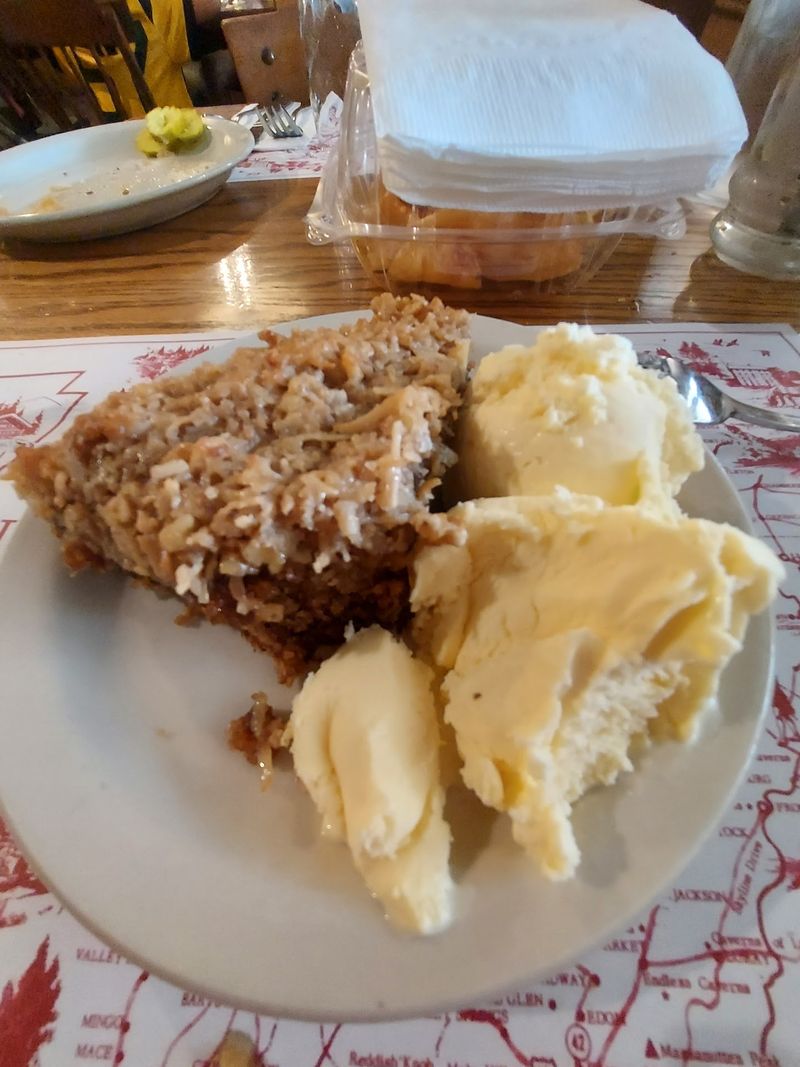
Current choices include Dutch chocolate cake, oatmeal cake, nut brown pudding, blackberry cobbler, and ice cream.
Blackberry cobbler brings fruit and a baked golden topping together in one of the menu’s simplest old-fashioned desserts. It can also be paired with ice cream.
Oatmeal cake is another current option. Nut brown pudding adds walnuts and raisins for a different texture and flavor.
Dutch chocolate cake covers the richer end of the dessert menu. The daily dessert bar available with the restaurant’s buffet offerings can add more variety depending on the day.
Some of the recipes used at Penn Alps trace back to the restaurant’s early years after it opened in 1959.
Selections can change between regular menu service, weekend buffets, and special events. Checking the current menu before a visit gives the clearest picture of what will be available.
Cobbler, Cake, And Sweet Surprises
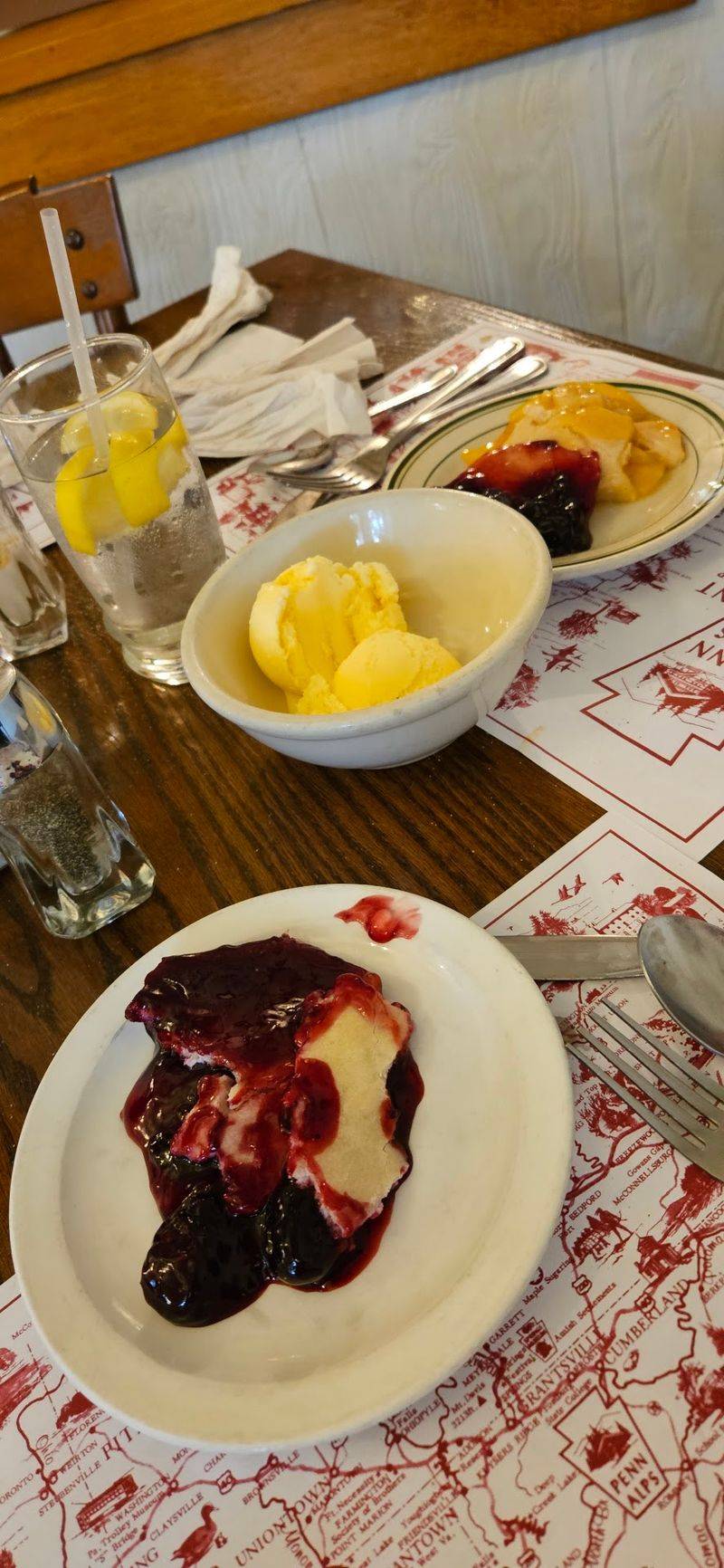
Pie may no longer be guaranteed on the regular menu, but the rest of the dessert selection gives the meal a traditional finish. Several options remain rooted in recipes that have been used for decades.
Blackberry cobbler is currently one of the main baked desserts. Its fruit filling and golden topping keep the focus on a straightforward country-style preparation.
Oatmeal cake is another regular choice on the current menu. Dutch chocolate cake provides a richer alternative for anyone leaning toward chocolate.
Nut brown pudding brings walnuts and raisins into the mix. Ice cream can stand alone or accompany several of the baked desserts.
The weekend buffet also includes a dessert bar alongside the hot dishes, soup, and salad selections. The exact assortment can vary rather than following one fixed lineup every day.
Many menu items, including desserts, have roots in recipes used when Penn Alps began serving meals in 1959.
Comfort Food Done The Old Way
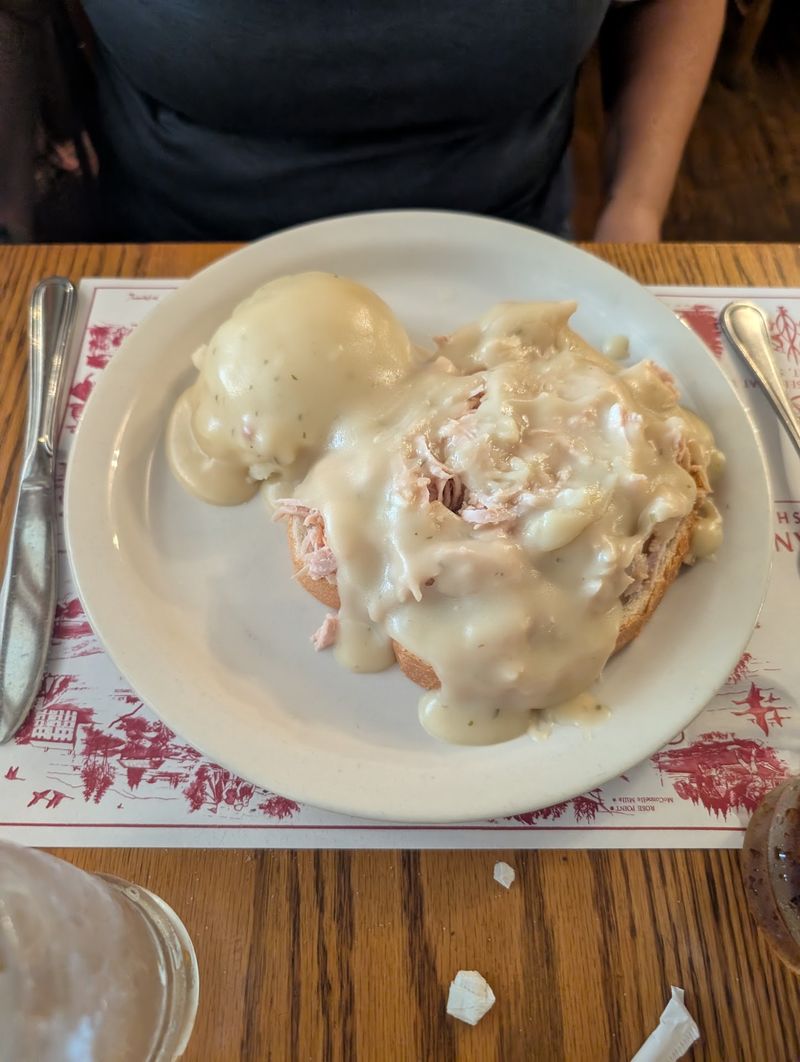
Gravy has a noticeable place on this menu, especially beside the restaurant’s roast meats and mashed potatoes.
Before dessert enters the picture, the main dishes make a strong case for themselves.
Penn Alps Restaurant and Craft Shop serves hearty country fare influenced by the German heritage of the Amish and Mennonite charter members behind the nonprofit organization.
Current entrees include roast beef, fried chicken, roast turkey with stuffing, smoked sausage, roast pork with sauerkraut, and cabbage rolls.
Meatloaf also appears as a weekday special. Sandwiches, salads, wraps, and burgers round out the menu for diners looking for something smaller than a traditional entree.
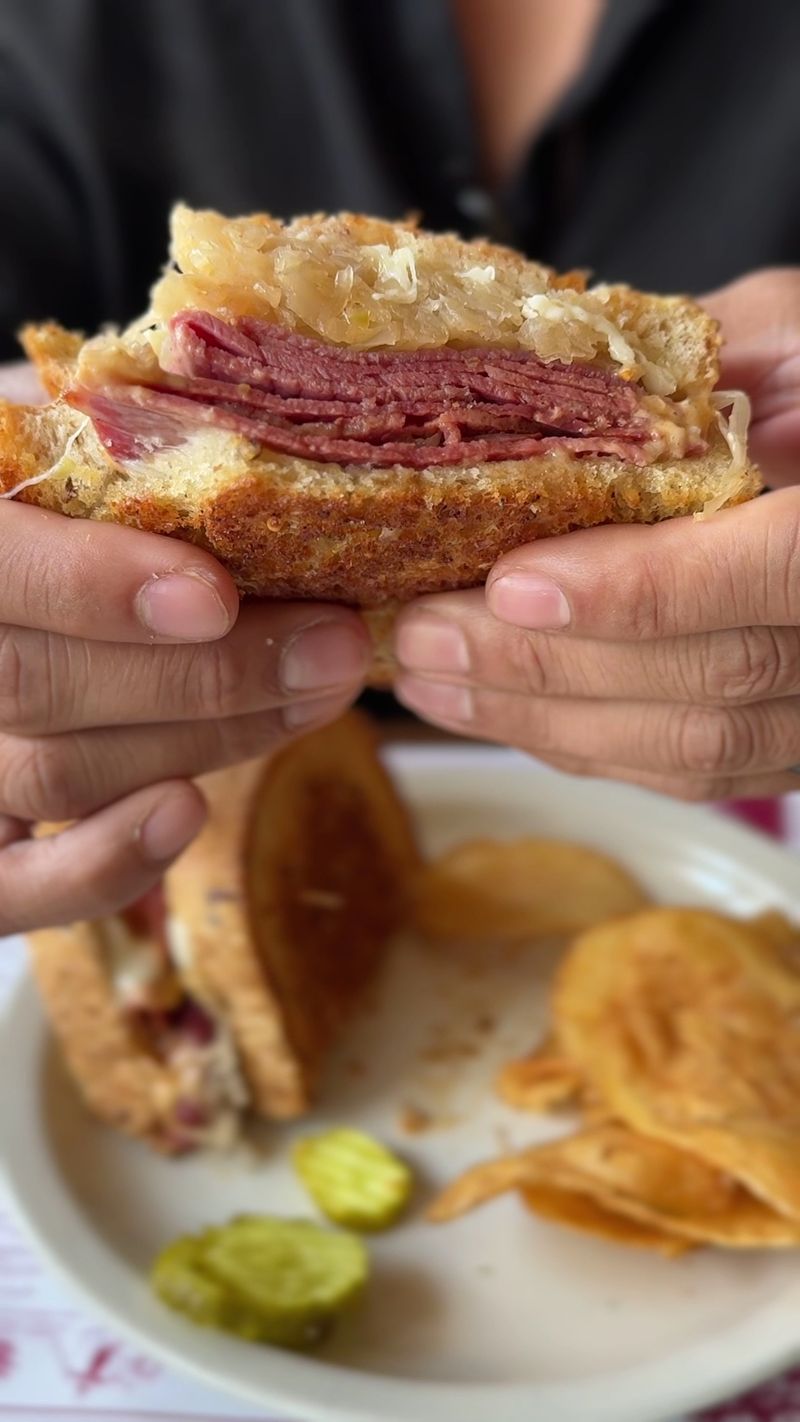
The Penn Alps Reuben remains a house specialty, combining grilled corned beef with Swiss cheese, sauerkraut, and Thousand Island dressing on multigrain bread. Sandwiches currently come with potato chips and pickles.
Roast turkey is served with stuffing, cranberry sauce, and gravy, while roast beef comes with gravy and a choice of side. Several entrees also include access to the soup and salad bar.
Portions are built around the restaurant’s hearty country-food approach. Side choices currently include mashed potatoes, baked potatoes, home fries, green beans, corn, broccoli, and several other familiar options.
Buffets, Bowls, And Big Salads
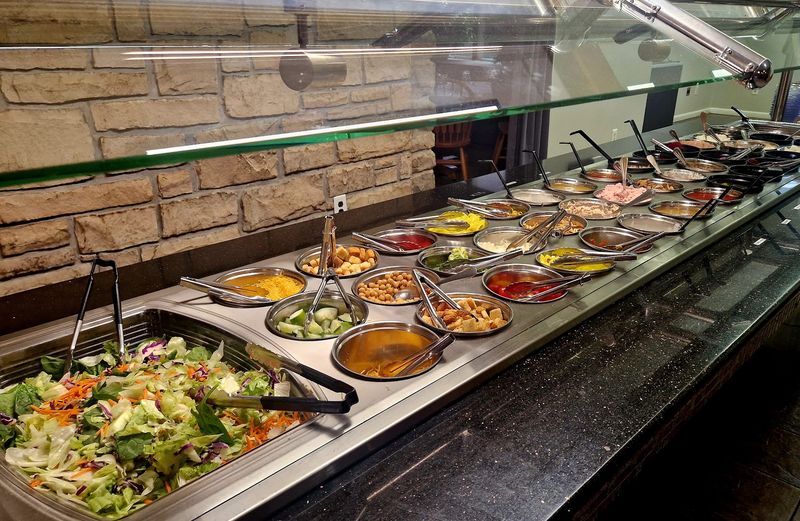
The buffet remains one of the restaurant’s major weekend features. Friday has a different lineup from Saturday and Sunday.
The soup and salad bar is available daily. It includes lettuce, vegetables, prepared salads, fruit, dressings, and other rotating selections.
Two house dressings, known as Red House and White House, remain on the current menu. Other familiar dressings are available alongside them.
Soups rotate, with German vegetable soup offered alongside a homemade soup of the day. A warm bowl fits especially well during cooler weather in the Allegheny Mountains.
Weekend buffets bring out hot dishes along with soup, salad, and dessert bars. Friday currently leans toward fish and seafood dishes with fried chicken and ham, while Saturday and Sunday regularly feature fried chicken, roast beef, ham, sides, and another featured entree.
The hot sides also change somewhat by day. Mashed potatoes, green beans, corn, noodles, and other country-style accompaniments appear in the current buffet rotation.
The buffet schedule matters because the full weekend spread is not offered every day. Friday, Saturday, and Sunday are the main buffet days, while weekday service relies more heavily on the regular menu and daily specials.
Shop Crafts From Local Hands
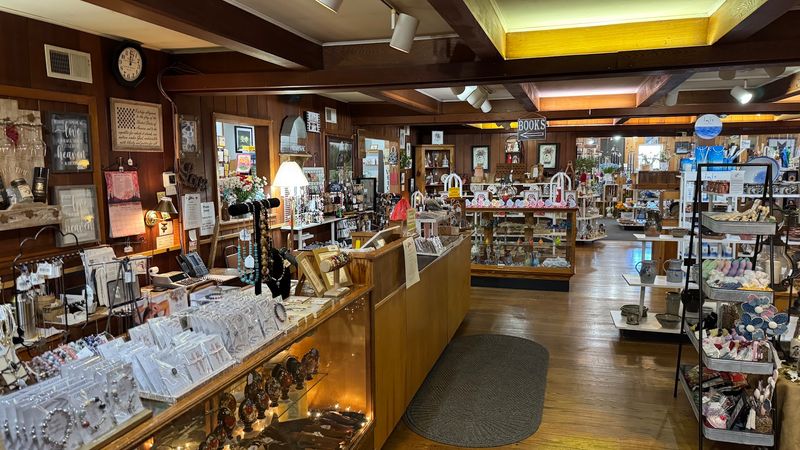
The craft shop adds a second reason to spend time inside the Penn Alps complex. Its purpose reaches back almost as far as the restaurant itself.
Over its history, more than 2,500 craftspeople have marketed their work through the Penn Alps Craft Shop. Most have come from the surrounding Tri-State region.
The wider Penn Alps and Spruce Forest tradition includes pottery, weaving, basket making, woodwork, metalwork, painting, leather craft, and other handmade forms. The selection connects shopping directly with the area’s craft heritage.
The shop began as part of an effort to give regional cottage industries a reliable outlet. That mission was established before the restaurant opened and helped shape the entire Penn Alps project.
Founder Alta Schrock wanted the operation to support traditional skills while giving craftspeople a practical market for their work. Her guiding phrase was To help people help themselves.
The craft shop remains attached to the restaurant complex and generally follows the restaurant’s operating hours.
The neighboring Spruce Forest Artisan Village expands the idea further. Professional artisans work in restored historic buildings where visitors can see crafts such as pottery, weaving, metalsmithing, basket making, painting, and carving.
A Bridge, A Mill, A Village
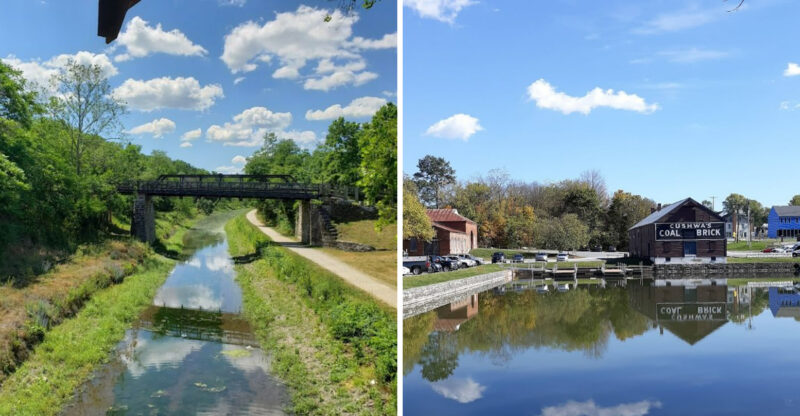
The restaurant sits among several important pieces of western Maryland history. Much of the Little Crossings area can be explored within a short distance of the dining rooms.
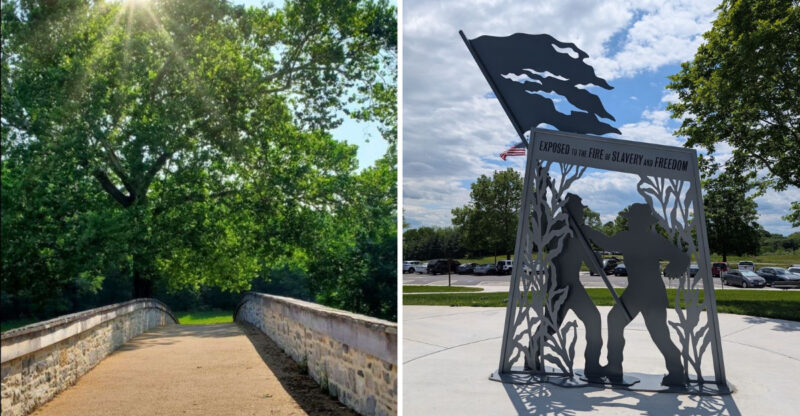
Nearby stands the Casselman River Bridge, a stone arch built in 1813 and 1814. When completed, its 80-foot span was the largest single-span stone arch of its type in America.
The bridge is currently closed to public access while restoration work continues. Visitors can still learn about its place on the National Road, but access restrictions should be followed until the site officially reopens.
Close to the restaurant sits Stanton’s Mill, first built at the site in 1797. Portions of that early mill remain within the present structure, which was enlarged and updated repeatedly over its long working history.
Spruce Forest Artisan Village sits beside Penn Alps too. Restored log and frame buildings provide working studio space for professional craftspeople during the village’s operating season.
The Yoder House adds another historical layer to the village. Completed in 2004 to preserve the Yoder family story, it includes a smokehouse, cellar storage, authentic furniture, and household utensils.
Plan Your Sweet Mountain Stop
A little planning makes the stop easier, especially if the weekend buffet or artisan village is part of the reason for visiting.
Penn Alps currently posts regular hours beginning at 11 in the morning and continuing into the evening. Shorter hours apply on some days during the winter season.
Weekends are particularly useful for visitors who want the restaurant’s full buffet. Weekday guests can order from the regular menu and take advantage of scheduled daily specials.
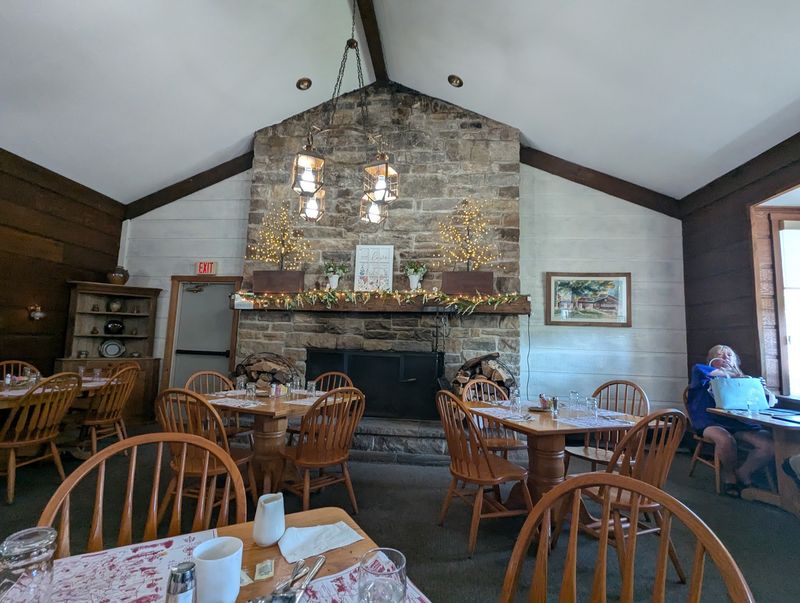
Several dining rooms spread across the enlarged complex. Three retain direct connections to the historic Little Crossings Inn, while newer rooms provide additional seating and space for groups.
This Maryland restaurant can accommodate gatherings of different sizes. Its current group spaces range from smaller historic rooms to a larger meeting room designed for substantial parties.
The adjoining craft shop follows the restaurant schedule, while Spruce Forest Artisan Village keeps its own seasonal hours. Individual artisan studio schedules can also vary.
Pairing a meal with time in the craft shop and village gives the visit more depth. Stanton’s Mill is another worthwhile stop when it is open to visitors.