This Nebraska Orchard Lets You Pick Apples Straight Off The Trees Into Late October
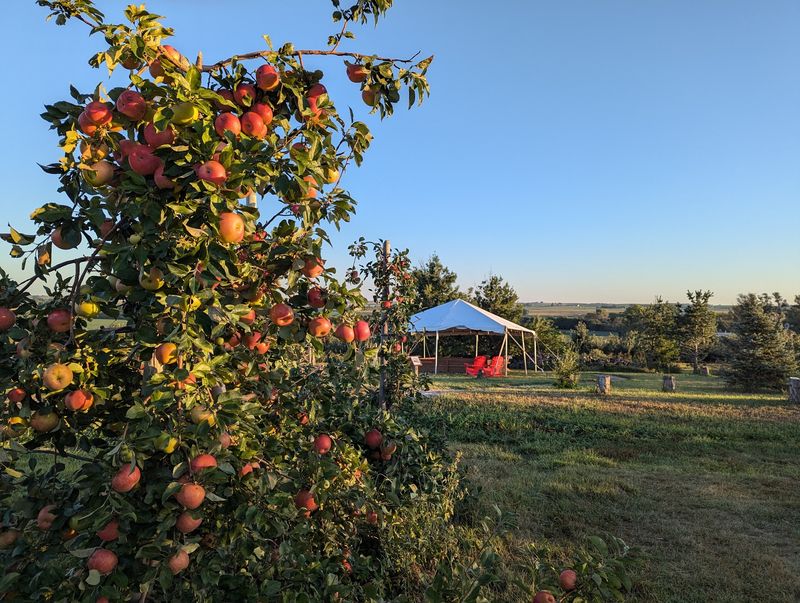
There’s a gravel turnoff in eastern Nebraska where the rows of trees start close to the road and the smell of cut hay hangs around all afternoon. I pulled in expecting a quick stop and left three hours later with a sack of apples, sticky fingers from a cider slush, and a kid who refused to leave the tire swing.
The place looks small from the parking area, which is exactly why it surprises people. Apples keep coming off these trees well into late October, long after most folks assume picking season has wrapped up.
A Hillside Farm Between Lincoln and Ashland
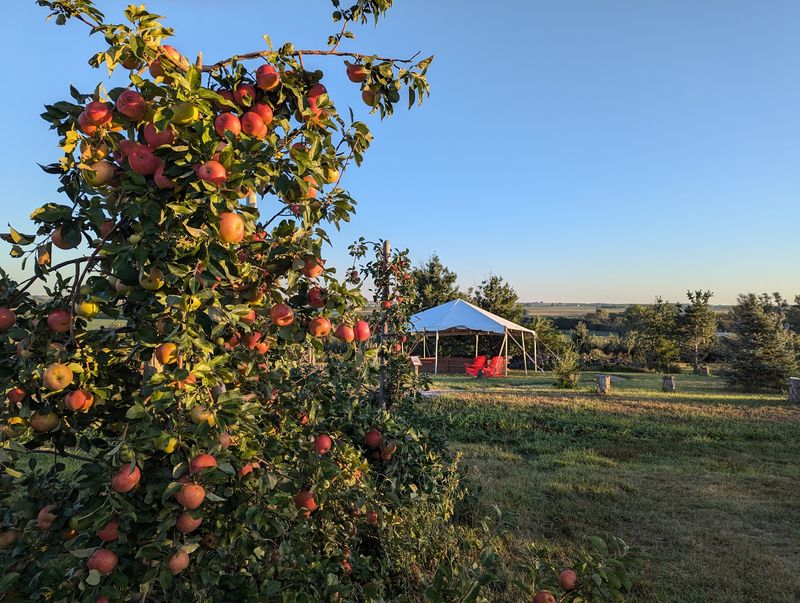
Rows of low, wide apple trees climb a gentle slope of Saunders County farmland, close enough together that you can walk the whole planting without wearing out a toddler. Martin’s Hillside Orchard sits along Ashland Road outside Ceresco, a short drive north of Lincoln and an easy run from Omaha’s western edge.
Calling it a hillside is accurate. The ground rolls just enough to give you a view across the fields, and the layout keeps the trees, the pumpkin patch, and the play areas within sight of one another.
Size works in its favor here. Larger operations spread guests across hundreds of acres and shuttle buses; this one asks for a walk, not an expedition, which matters when you’re carrying a bag of fruit and a three-year-old at the same time.
Picking runs by the season rather than a single weekend rush. Strawberries turn up in June, peaches arrive in August, raspberries follow in September, and apples hold on through late October.
That long tail is the part most people miss when they assume orchard season ends with the first cool snap.
A Family Operation With Teaching on Its Mind
Some farms sell you fruit. This one sells you fruit and then tells you which tree it came from and why that variety ripens when it does.
Agriculture education runs through the whole place. Signs, conversation, and the wagon ride all circle back to how the crops grow, and the owners take real interest in explaining it to anyone who asks.
Talk to them for ten minutes and you’ll learn more about pollination and picking windows than most people pick up in a lifetime of grocery store apples.
Family ownership shapes the feel of the property, too. Prices stay modest compared to the big destination orchards, and the atmosphere leans quiet instead of carnival.
Return trips are common enough that it functions as a family tradition for a lot of households in the Lincoln area. People come back for the same reasons they came the first time: reasonable cost, short walk, warm welcome at the stand.
Nothing about the operation feels engineered for a photo op, which is a large part of why the photos turn out well anyway.
Twenty Trees, Twenty Flavors: The Apple Lineup
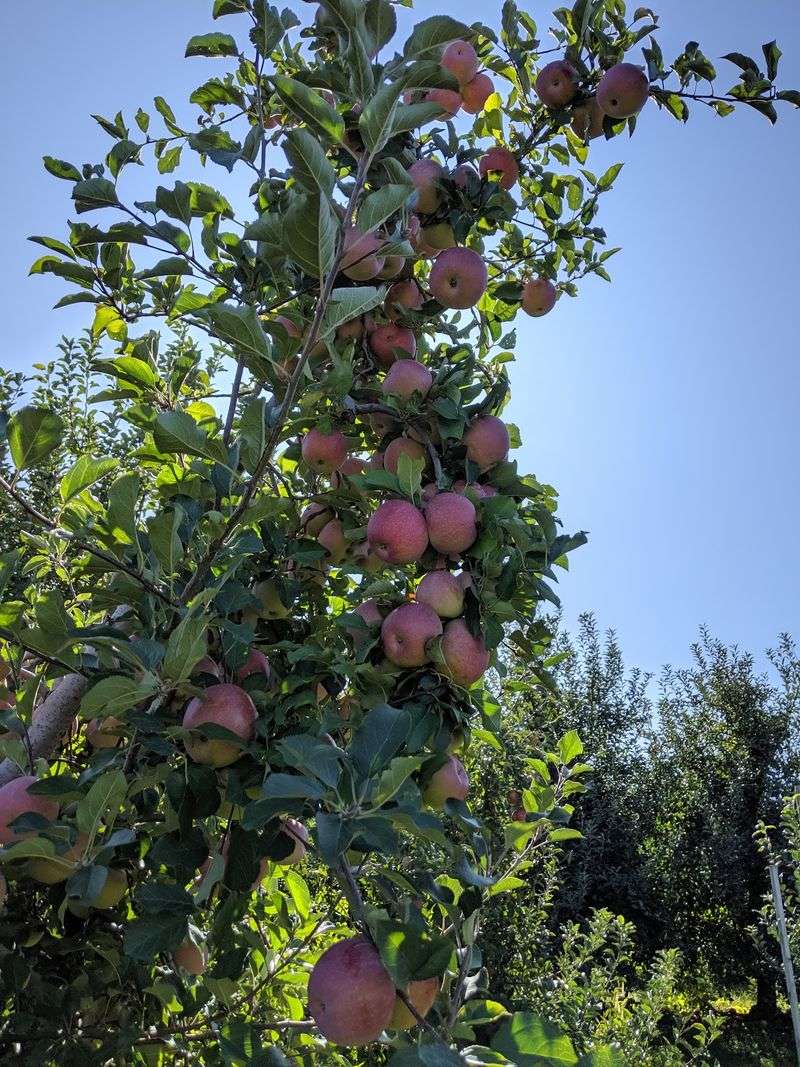
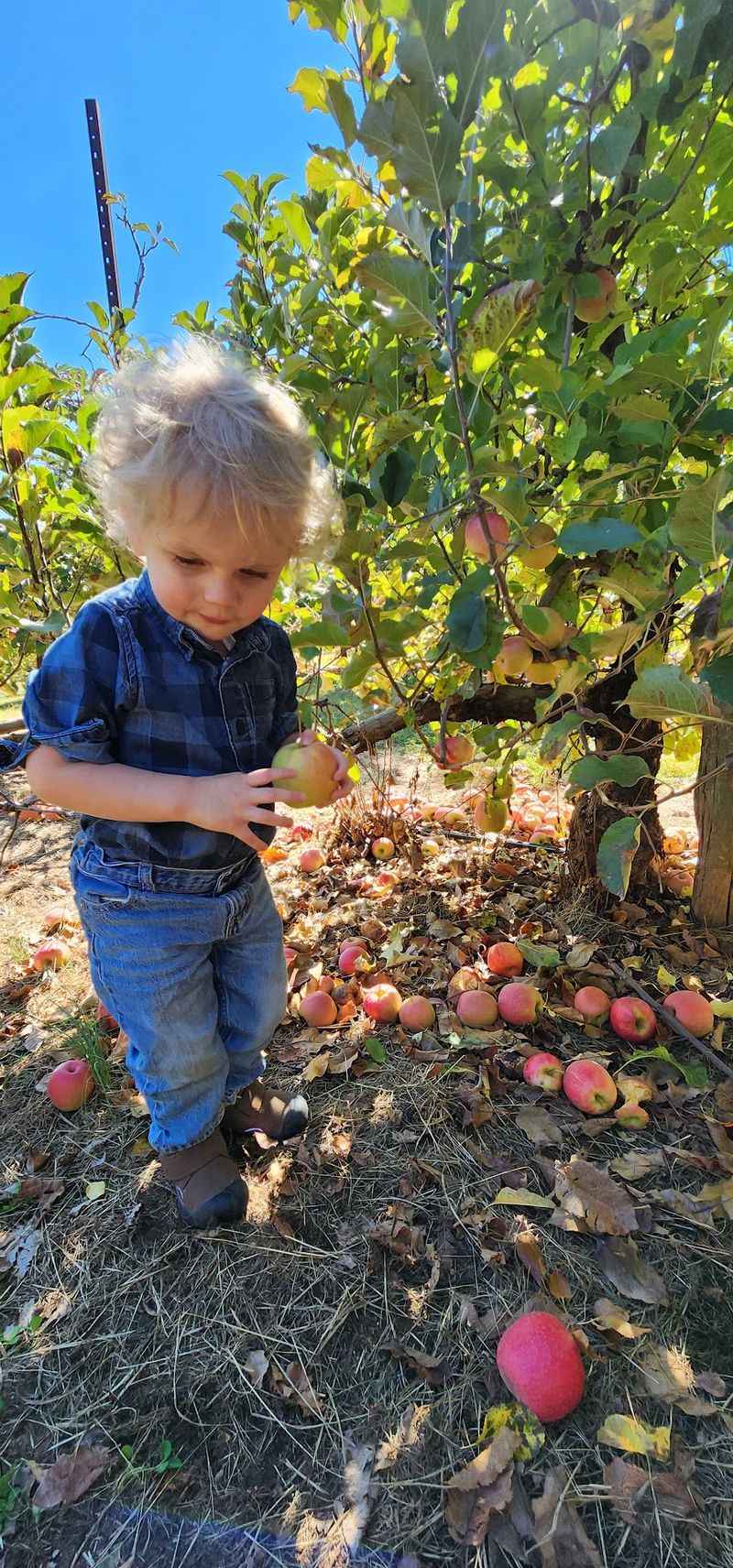
Honeycrisp, Gala, and Somerset all come ripe for u-pick here, and the varieties rotate as the weeks go by, so a mid-September bag tastes nothing like a late-October one. Sampling is part of the routine.
You bite, you decide, you fill your sack accordingly.
Apple picking ranks among the top reasons people drive out, and the fruit stays affordable. One family walked off with fifteen pounds without wincing at the total, and older pricing worked out to roughly three apples for a dollar.
Fair warning that trips people up now and then: you buy what you pick. Fill the bag with enthusiasm and the bill grows accordingly, so it pays to pick with a plan.
Late-season varieties are the real argument for a late-October drive. Firm, tart, storage-friendly apples hang on after the early sweet types are gone, which means pie apples and sauce apples right when you want them.
Bring a sturdy bag. Cardboard flats and grocery sacks both have their limits once wet grass gets involved.
Pumpkins, Gourds, and the October Patch
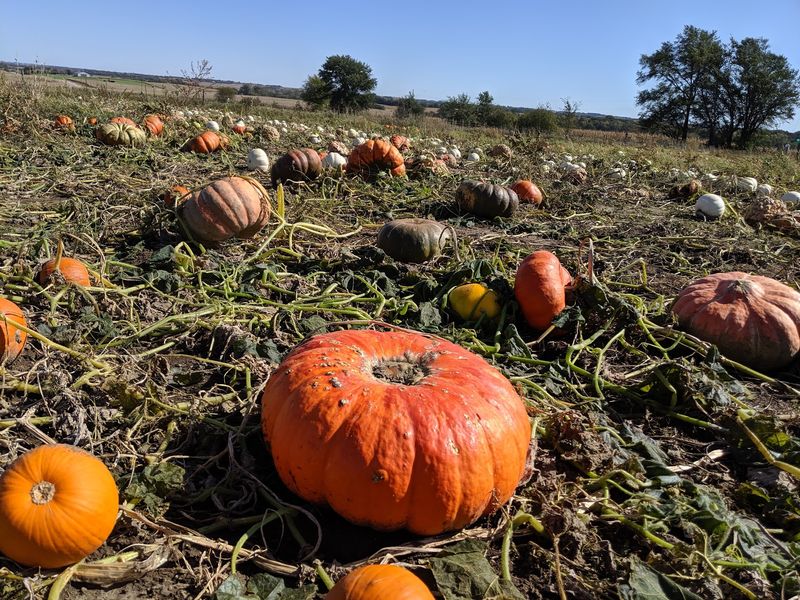
Pumpkins draw more conversation than anything else on the property, and there’s a reason. The patch carries carving pumpkins, small pie pumpkins, knobby decorative gourds, and the odd-shaped ones kids always go straight for.
Picking your own is the point. Rather than choosing from a pallet out front, you walk the rows, poke around, and haul your find back yourself.
Timing overlaps neatly with the apple season, which is what makes a late-October visit efficient. One stop, one admission, apples and pumpkins both in the trunk before lunch.
Nothing here leans spooky. There are no haunted trails, no jump scares, no fog machines, just a farm in autumn doing what farms in autumn do.
For parents of small kids, that absence is a feature.
Decorative gourds are the sleeper pick. They last for weeks on a porch rail, cost little, and look better than anything shipped in from three states away.
Cooler mornings make for better hauling. Wet grass plus a heavy pumpkin plus flip-flops is a lesson you only need once.
Cider Slushes, Apple Donuts, and the Farm Stand
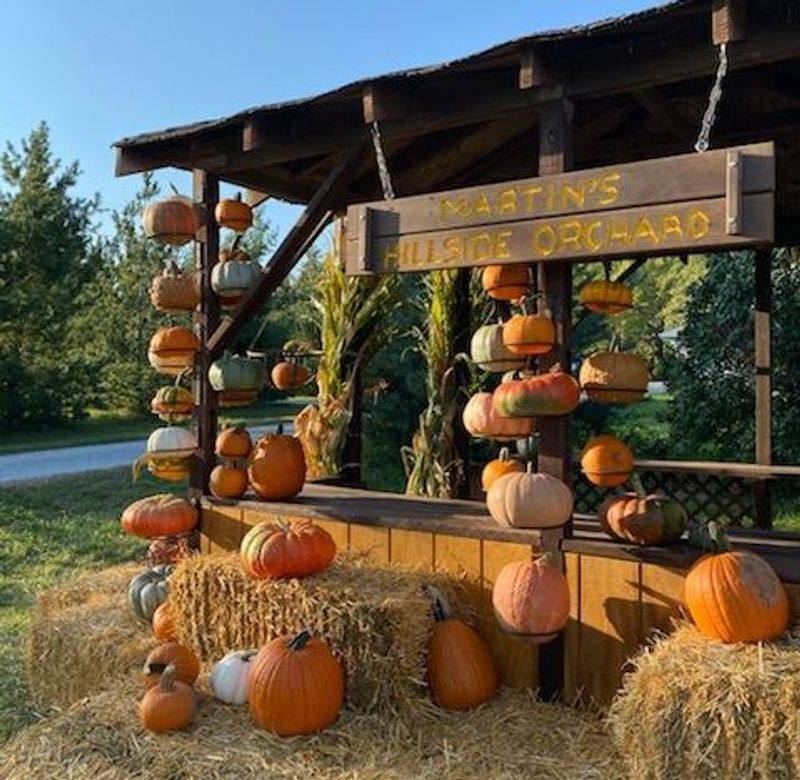
An apple cider slush in one hand and a warm apple donut in the other is how most visits here end, and occasionally how they begin. The slushes come up again and again in conversation about the place, and the donuts hold their own beside them.
Pulled pork sandwiches turn up on the food side, though the stand also allows something rarer at seasonal farms: you can pack your own lunch and eat it at the picnic tables without anyone minding.
Canned goods fill the shelves inside. Apple butter is the standout, joined by jams and preserves that make decent gifts for anyone who’d rather receive food than an ornament.
Apple cider gets its own following. Cold, unfiltered, and properly tart, it tastes like the orchard it came out of rather than a concentrate.
Prices lean friendly across the board. A round of snacks for a family here costs less than the same round at a big fall destination, which keeps the outing from turning into a budget decision halfway through the afternoon.
Corn Bins, Tire Swings, and the Discovery Trail
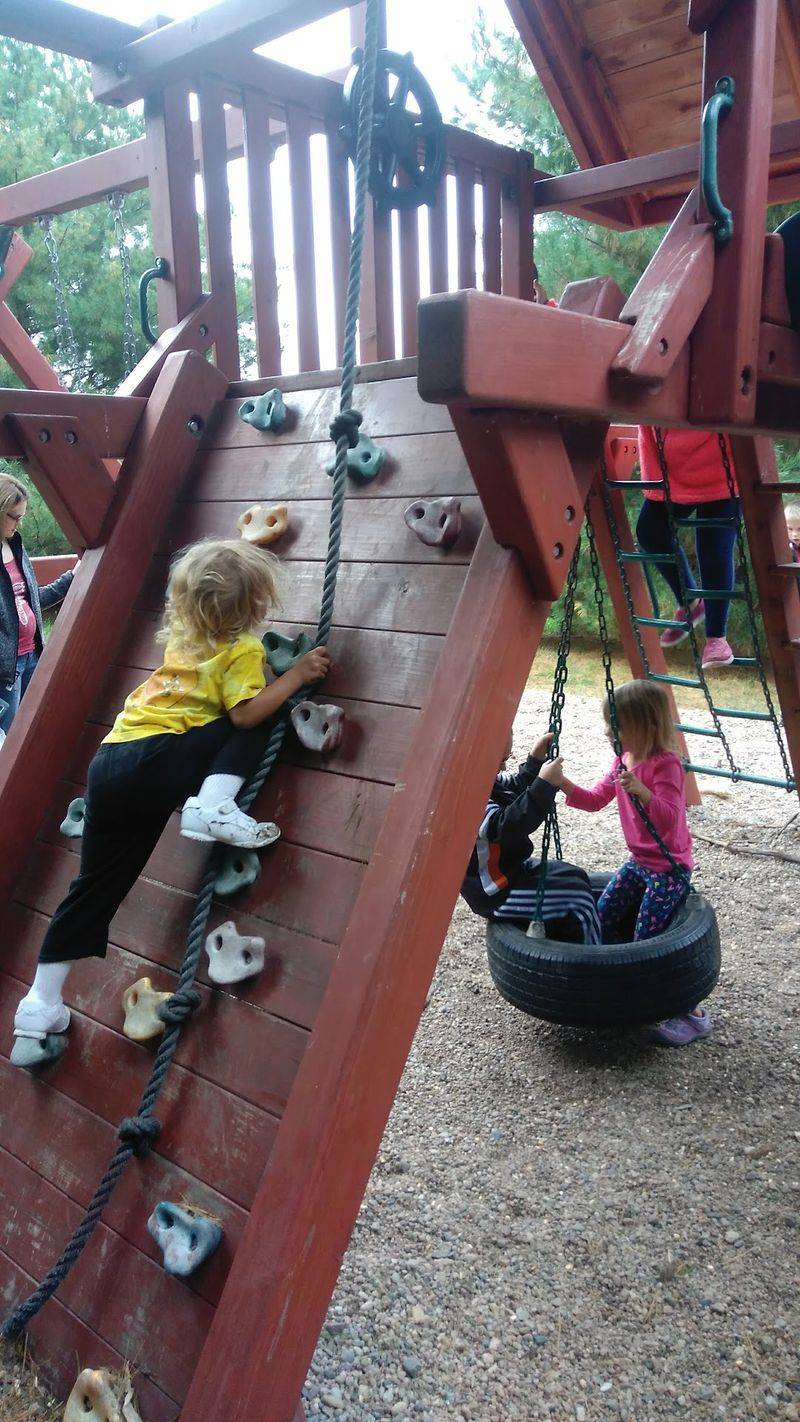
The big wooden swing gets claimed within thirty seconds of arrival, every time. Behind it sit hay stacks with tunnels burrowed through them, a corn bin kids sink into up to their knees, multiple playgrounds, and a tire swing that never sits empty for long.
A discovery trail winds through part of the grounds, and a butterfly garden adds a quieter stop for anyone who’d rather look than climb. Wildflower patches let you cut your own bouquet, which turns a fruit run into something that comes home in a vase.
Carnival games round out the list, along with a small corn maze sized for short legs instead of teenagers looking for a challenge.
Hay rack rides pulled by tractor circle the orchard on a loop, with commentary on the apple varieties, the flowers, and the pumpkins along the way. Riding beats walking when the day has gone long.
Picnic tables are scattered throughout, so there’s always somewhere to sit down, split an apple, and figure out what’s next.
The Calm Alternative to the Big Fall Crowds
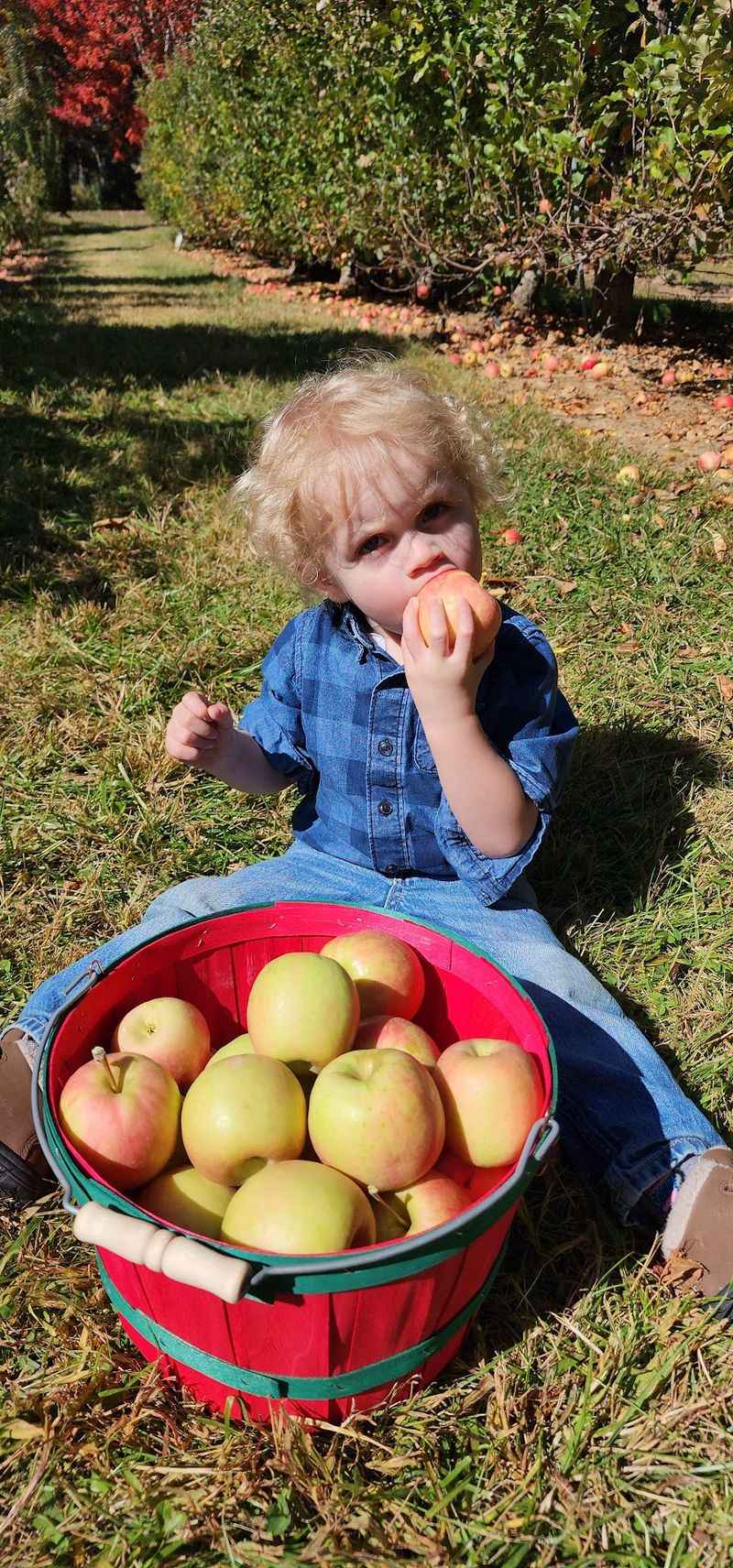
Ever left a fall farm feeling like you survived something rather than enjoyed it? Parking lot shuttles, ticket lines, amplified music, forty acres of ground to cover before you find the trees you drove out for.
That’s not the experience here.
Quiet is the operating mode. Everything sits close together, the pace stays unhurried, and you can hear the wind through the rows instead of a loudspeaker.
Families with toddlers benefit most from the compact footprint. Two young kids can walk the entire orchard without a meltdown, which is a genuinely different proposition from the sprawling destinations closer to Omaha.
Grandparents do well here too. Short distances, shade, benches, and a wagon ride cover most of what a multi-generation outing needs.
Couples show up for the same reason, using the afternoon as a slow walk with apples attached rather than an event to conquer.
Traditional is the fair word for it. Pick fruit, pick a pumpkin, eat a donut, go home.
Nebraska has plenty of bigger fall attractions, but few this calm.
Planning Your Drive to Ceresco
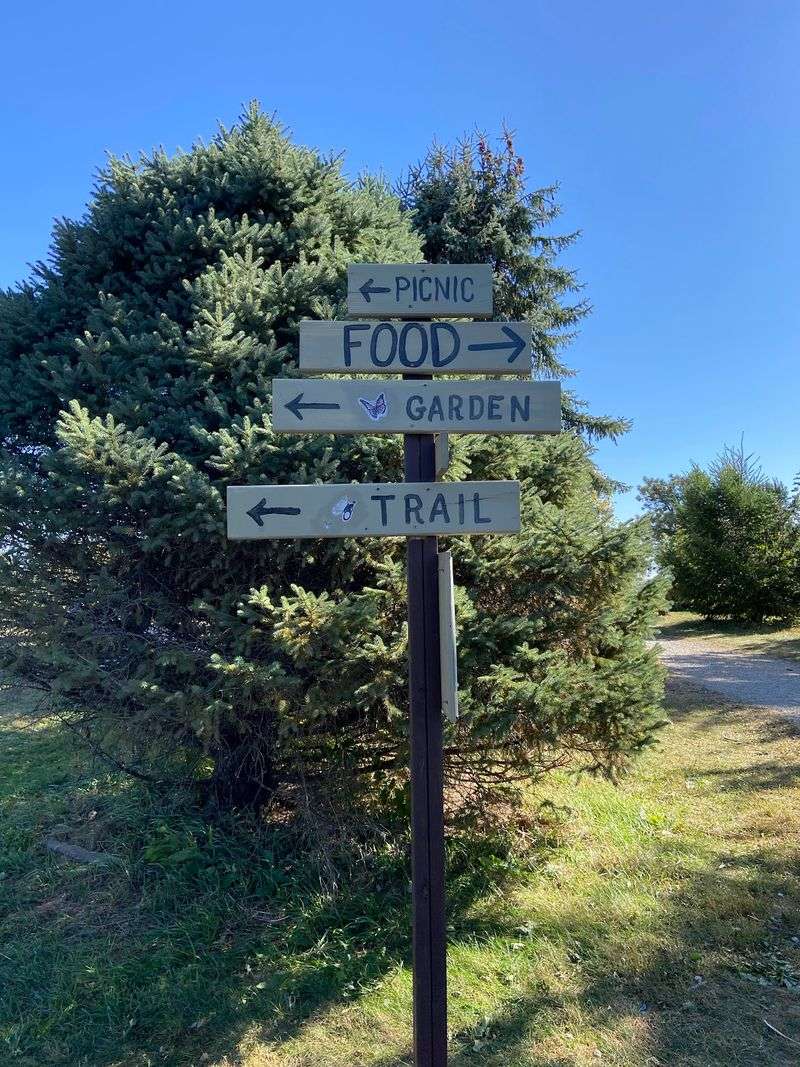
Find it at 2024 Ashland Rd in Ceresco, northeast of Lincoln in Saunders County, with the Omaha metro roughly an hour east. The last stretch runs through farm country, so keep an eye on the mailbox numbers rather than trusting the odometer.
Doors open mid-morning and stay open into the evening most days during the season, with Monday off. Calling ahead or checking the website before loading the car is smart, because what’s ripe changes week to week and weather closes farms without warning.
There is an entry charge on top of what you pick, which occasionally catches people who expect to pay only for fruit. It stays modest, and it covers the play areas, the maze, and the grounds.
A mailing list keeps regulars posted on what’s ready, from June strawberries through late-October apples. Signing up saves a wasted drive.
Closed-toe shoes, cash or card, a wagon if you own one, and an empty back seat will serve you well. The apples take up more room than you think.
Why Late October Is the Smart Window
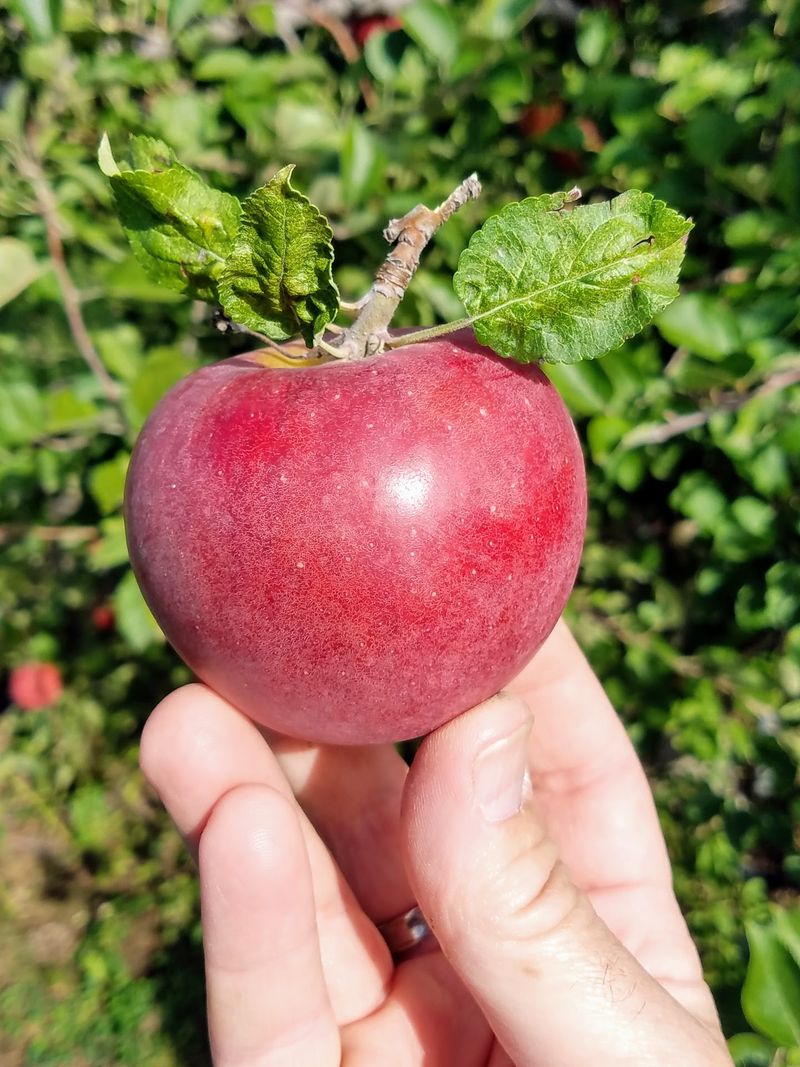
By the last week of October, most fall attractions in the state have gone quiet or pivoted entirely to costumes and corn mazes. Apples still hang on the trees out here, and the crowds have thinned to almost nothing.
That combination is the argument. Late varieties taste their best after a few cool nights, the light turns gold by mid-afternoon, and the pumpkin patch still has plenty left for anyone who waited.
Value holds up too. Fruit prices stay low, the entry fee stays reasonable, and a family can spend a full afternoon here for less than a single round of tickets at a bigger operation.
What you get is straightforward and hard to improve on: a hillside of apple trees, a wagon rolling past, kids buried in a corn bin, apple butter on the shelf inside, and a cider slush for the drive home.
Season closes with the apples, so the window is real. Check what’s ripe, pick a clear Saturday, and point the car toward Saunders County before the trees go bare.