This Sacred North Carolina Soapstone Site Preserves Ancient Cherokee Symbols
Mountain roads have a sneaky way of turning ordinary drives into history lessons, but this North Carolina stop takes that trick to another level.
Deep in a western valley, an ancient soapstone boulder sits covered with more than 1,500 petroglyphs, making the whole scene feel like history carved a message and dared time to erase it.
Nothing about this site needs noise, drama, or tourist glitter to feel powerful. The stone does all the talking.
Cherokee stories surround the carvings, and the setting carries the kind of presence that makes people slow down before they even understand why. One quick stop can turn unexpectedly humbling.
Directions get checked, phones get lowered, and suddenly the modern world feels a little too proud of itself for inventing notifications.
Stand near those carved symbols long enough, and centuries stop feeling distant. Mystery does not whisper here.
It waits.
Cherokee Stories Still Echo Across This Soapstone Boulder
Long before Cullowhee became a university town, the surrounding mountain valleys were part of a Cherokee cultural landscape filled with stories, trails, hunting grounds, and named places. Judaculla Rock sits within that deeper geography, and its meaning reaches well beyond the carved surface.
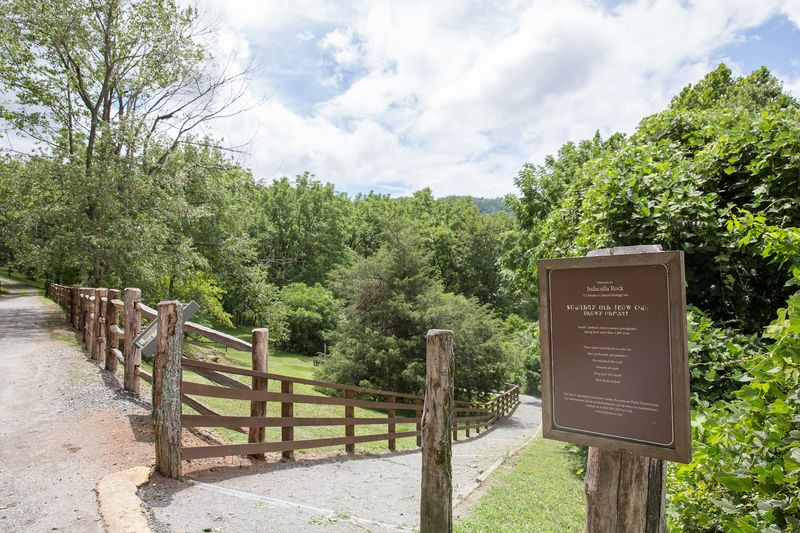
At 552 Judaculla Rock Road, the boulder is not presented as a polished museum object but as a protected outdoor site where visitors stand near something still tied to living Cherokee heritage.
Soapstone’s workable surface helped ancient carvers leave marks that remain visible centuries later, though many meanings are not fully known or reducible to one explanation.
Some designs overlap, suggesting use across long periods rather than one single moment. Every groove feels like evidence of attention, memory, and relationship to land.
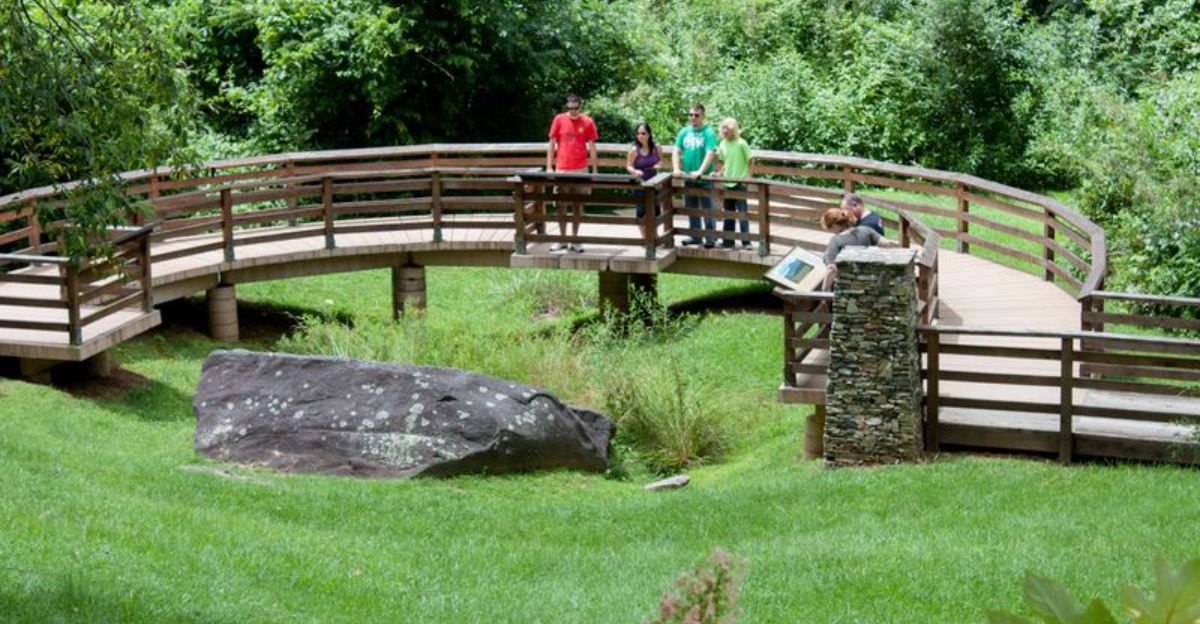
Standing beside the boardwalk, visitors can sense why the rock has inspired both scholarship and reverence. Its power comes from layered history, not simple answers, and that mystery deserves careful handling.
Ancient Symbols Turn One Quiet Rock Into A Sacred Landmark
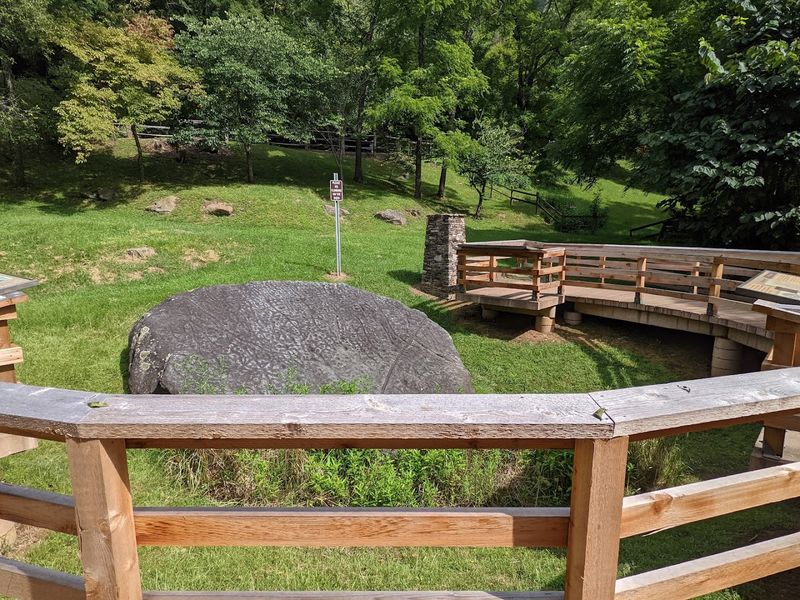
Size alone does not explain why Judaculla Rock matters so deeply.
A quiet boulder in Jackson County becomes extraordinary because its surface holds one of the densest known collections of petroglyphs in the region. More than 1,500 recorded motifs are etched, pecked, or carved into the stone.
Researchers have documented cup marks, curving lines, figures, tracks, rings, and other forms. Cherokee tradition also gives the site cultural significance that cannot be separated from the surrounding landscape.
Some interpretations connect the markings with spiritual meaning, movement through terrain, hunting traditions, or maps of place, but no single reading should be treated as complete.
That uncertainty makes the site more powerful, not less. Visitors do not need to solve every symbol to appreciate the care behind them.
A protected viewing platform keeps people close enough to study the rock while limiting damage to its vulnerable surface. Quiet attention becomes the best way to experience a landmark this rare.
Cullowhee’s Past Feels Carved Directly Into The Stone
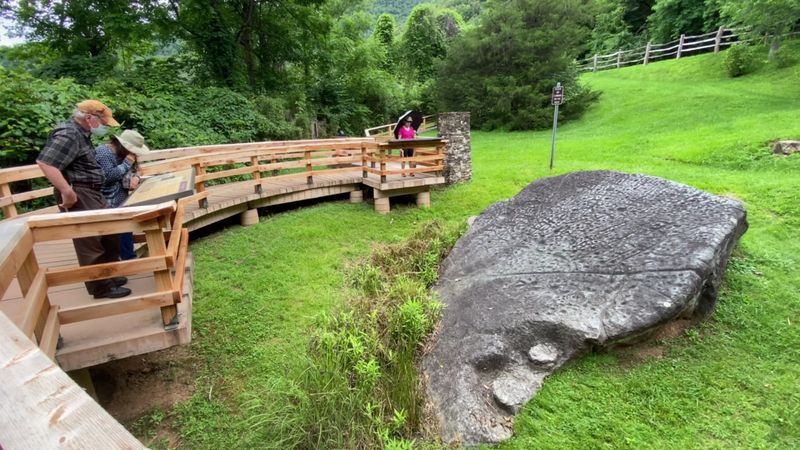
Mountain scenery makes the approach to Judaculla Rock feel naturally slower, as if the road wants visitors to arrive in the right frame of mind.
The site rests in the Caney Fork area near Cullowhee, with 552 Judaculla Rock Road leading to a small, protected space rather than a large tourist complex.
That modest setting works in the rock’s favor. Pasture, ridgelines, and the surrounding rural valley keep the focus on the boulder and the stories attached to it.
Preservation has depended on local stewardship, including the Parker family’s long association with the land. Broader partnerships also involve Jackson County, Cherokee representatives, preservation groups, and researchers.
Such collaboration matters because petroglyph sites can be damaged easily by touching, climbing, weathering, and careless visitation.
Here, access and protection exist together. People can experience the site without standing on the stone or treating it casually.
Cullowhee’s past does not feel distant here; it feels carved into a landscape still asking for care.
More Than 1,500 Petroglyphs Give The Site Its Mystery
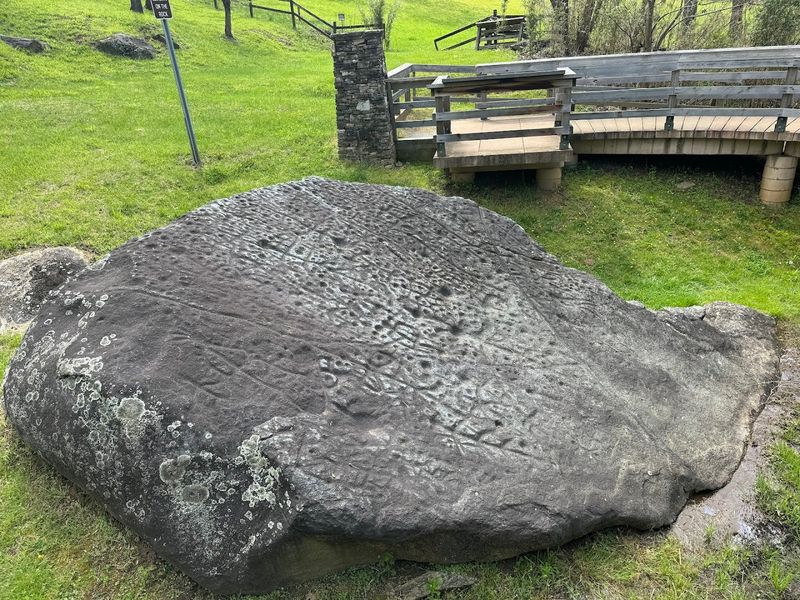
Numbers become easier to understand once you stand beside the boulder and realize how crowded its surface truly is.
Judaculla Rock contains more than 1,500 recorded petroglyph motifs, a remarkable concentration that makes the site especially important for southeastern rock art studies.
Researchers have used documentation methods to study the carvings, including overlapping marks and weathered details that are difficult to read with the naked eye. Some shapes suggest tracks, rings, lines, or human-like forms, while others resist simple labels.
That ambiguity is part of the experience. A visitor expecting one clear translation may leave with something better: a sense of how much history can survive without becoming fully explainable.
The carvings likely developed across long spans of time, and the surface reflects repeated attention rather than a single isolated act. Each return to the rock can reveal a different detail, especially when changing light brings shallow grooves into stronger relief.
Mystery here feels earned, grounded, and deeply human.
Tsul ‘Kalu’s Legend Gives The Rock Its Powerful Name
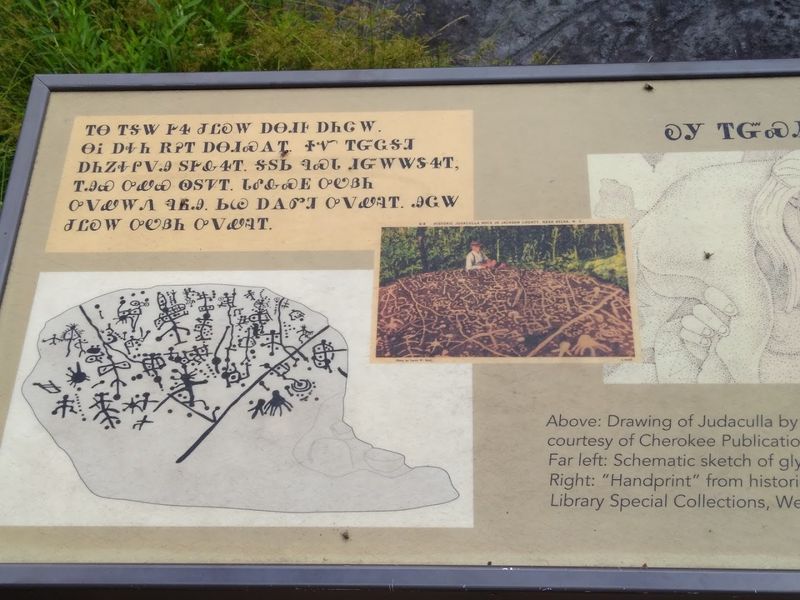
Cherokee oral tradition gives Judaculla Rock a presence that archaeology alone cannot fully capture.
The name Judaculla is commonly understood as an anglicized form connected to Tsul ’Kalu. This figure in Cherokee tradition is associated with hunting, animals, wilderness, and the mountain landscape.
Stories link him to the marks on the rock and to places across western North Carolina, making the boulder part of a wider cultural geography rather than an isolated object. For visitors, learning that context changes the visit completely.
The rock stops feeling like a puzzle left in stone and starts feeling like a meeting point between story, place, memory, and belief. Careful wording matters here because the legend belongs to a living culture, not a tourist script.
No brief article can contain its full meaning. Still, even a basic understanding of Tsul ’Kalu helps visitors approach the site with more humility.
The carvings become more than ancient marks; they become part of a continuing relationship between Cherokee people and land.
Jackson County Preserves A Rare Window Into Cherokee Heritage
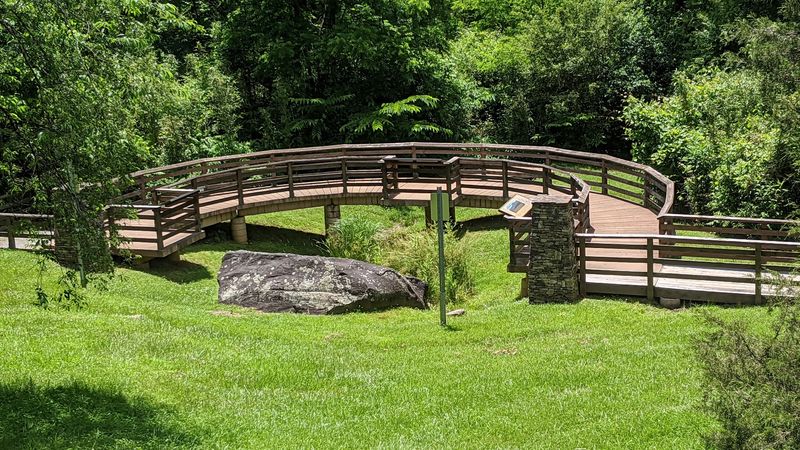
Preservation gives modern visitors access to Judaculla Rock without asking the boulder to absorb unlimited impact.
Jackson County now owns the small site.
Conservation efforts have included a raised viewing platform, interpretive signage, and partnerships involving local stewards, Cherokee representatives, researchers, and preservation agencies.
That balance is important because the rock remains outdoors, exposed to weather and vulnerable to damage from direct contact. At 552 Judaculla Rock Road, the visit is intentionally simple: arrive, step onto the boardwalk, read the signs, and take time with the surface.
Nothing feels commercialized, which helps preserve the seriousness of the place. Nearby communities such as Cullowhee, Sylva, and Dillsboro can easily round out the day with food, mountain scenery, and local shops, but the rock itself should remain the center of attention.
Its value does not come from amenities. It comes from the rare chance to stand near a protected Cherokee cultural landmark and understand how much responsibility comes with public access.
Mountain Silence Makes The Carvings Feel Even More Striking
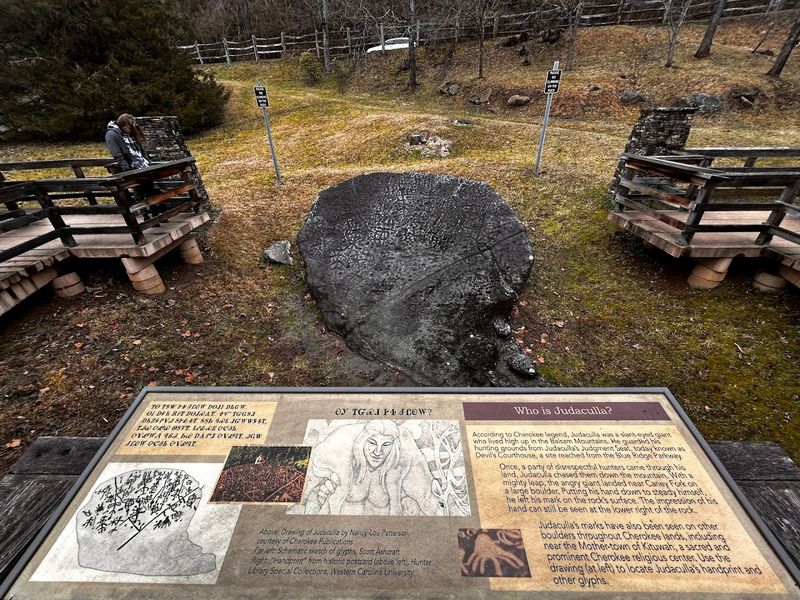
Stillness changes the way Judaculla Rock is experienced. A busy attraction can hurry people along, but this small mountain site encourages slower looking.
Wind, birds, distant road sounds, and the hush of the valley create a setting where the carvings feel more present. Low natural light can make shallow lines easier to notice, which is why daylight visits are usually best for appreciating the surface clearly.
The boardwalk also shapes the visit in a helpful way, keeping people close enough to observe without inviting damage.
Photographers may find the rock most legible when angled light creates shadow across the grooves, but respectful distance should always matter more than the perfect image.
No one needs to dramatize the place for it to feel moving. The surrounding landscape already gives the boulder a quiet gravity.
Standing there for a few extra minutes can make the difference between glancing at a historic site and actually absorbing the care, time, and memory held in stone.
Respect Matters At A Site This Culturally Significant
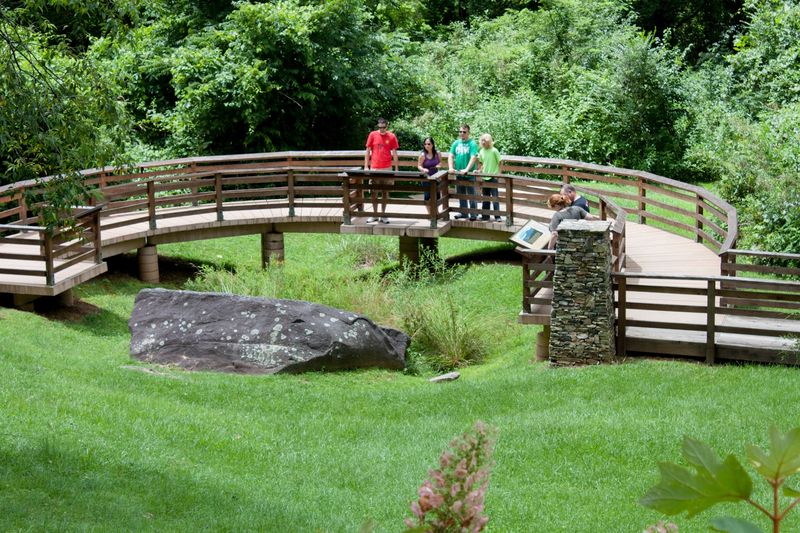
Respect should shape every visit to Judaculla Rock because the site is not simply an old boulder with interesting carvings. For Cherokee people, it remains tied to cultural memory, oral tradition, and spiritual meaning, while archaeologists also recognize it as an important rock art site.
Staying on the boardwalk, avoiding contact with the stone, keeping noise low, and leaving the area undisturbed are basic ways to honor both the place and the people connected to it.
Even soapstone can be vulnerable when exposed to weather, erosion, and human impact, so preservation depends on visitor behavior as much as official protection.
A thoughtful visit does not need to take long, but it should not feel rushed. Bring water, wear shoes suitable for a rural outdoor stop, and give yourself enough time to read the signs before leaving.
Judaculla Rock rewards humility more than checklist tourism. The most meaningful souvenir is a better understanding of why some places should be approached gently.