This Under-the-Radar California Coastal Trail Has Pacific Views Around Every Bend
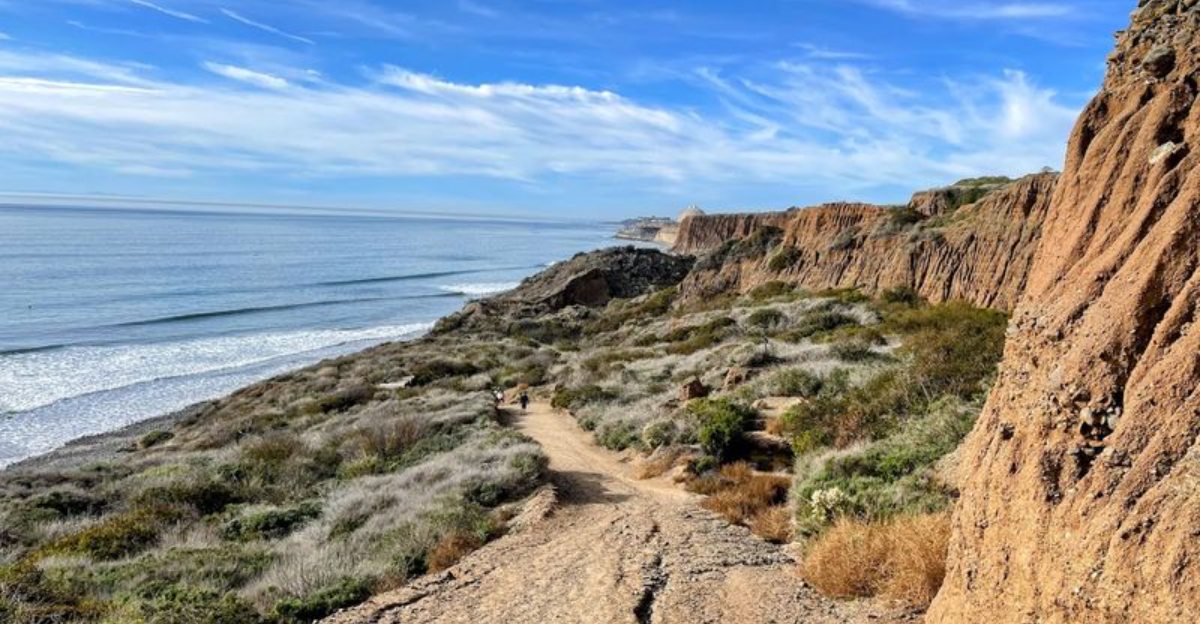
Coastal hikes usually make you work for the grand reveal. This one keeps handing over ocean views before you have even settled into a proper walking rhythm.
The trail follows sandstone bluffs above the Pacific, where every curve seems to rearrange the coastline.
Waves roll below. Pelicans pass at eye level. Farther ahead, narrow paths drop toward beaches that feel much farther from Southern California traffic than they actually are.
Few walks capture California’s coast so well without demanding an all-day expedition or a heroic climb.
Stretch the route into a longer outing, or keep it casual and turn around whenever the breeze, the view, or lunch plans say so.
Bring water and resist rushing. The Pacific keeps appearing from new angles, and each one makes the last photo feel slightly premature.
A Bluff-Top Setting Above The Pacific
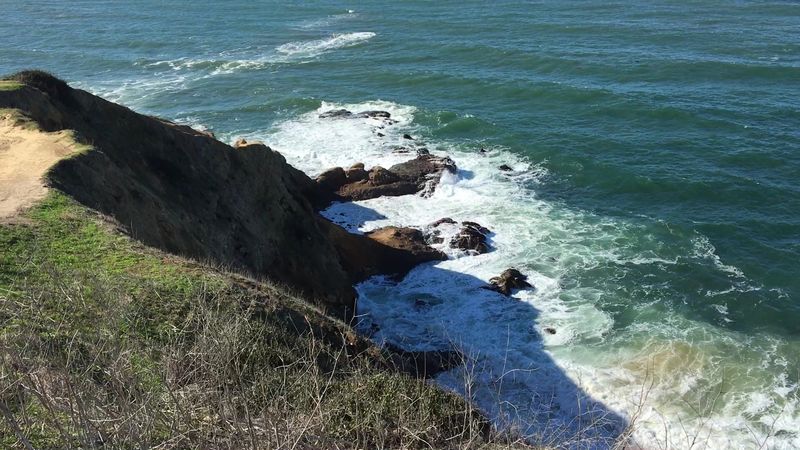
Standing at the edge of the bluffs here, the Pacific Ocean fills the entire view from left to right with nothing blocking the sightline.
The sandstone bluffs at San Onofre State Beach can reach heights of up to 100 feet, placing visitors well above the shoreline and giving every glance outward a sweeping, almost cinematic quality.
That elevated vantage point is part of what makes this trail feel so different from a flat beach walk.
The bluff-top path runs parallel to the ocean, so the view stays consistent throughout the hike rather than appearing only at certain overlooks.
There is a grounded, windswept energy up here that feels calming rather than dramatic.
The sound of waves carries up from below, and the open sky seems wider than usual when standing above the water like this.
Day-use parking is available along Old Highway 101 right next to the bluffs, so the views begin almost immediately after stepping out of the vehicle.
No long approach hike is needed to reach the scenery. For a coastal trail that delivers its reward from the very first moment, this bluff-top setting is hard to match anywhere along the Southern California coast.
Several Numbered Trails Create Different Routes
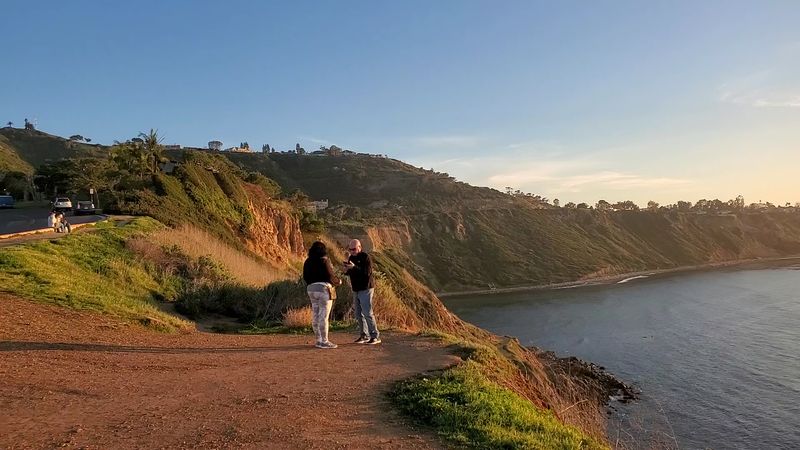
One of the more practical and underappreciated features of this area is how the trail system is laid out.
Rather than a single defined loop, the Bluffs area offers a series of short numbered trails that drop from the bluff top down to the sand below, typically numbered from one through six or seven.
That setup gives visitors real flexibility in planning how far to walk and which section of beach to explore.
Each numbered path is roughly a quarter mile long, with total lengths generally ranging from about 0.1 to 0.3 miles depending on the specific route.
Hikers can walk the bluff-top trail in one direction, descend to the beach, explore the shoreline, and then return via a different numbered trail.
That kind of open-ended routing makes the area feel more like an adventure than a standard out-and-back path.
Families, solo hikers, and groups with different fitness levels can all find a rhythm that works for them without feeling locked into one fixed course.
The numbered system also makes navigation straightforward, which helps first-time visitors feel oriented quickly.
Knowing which trail leads where before arriving tends to make the whole outing run more smoothly and comfortably.
Trails 1, 4, And 6 Reach The Beach
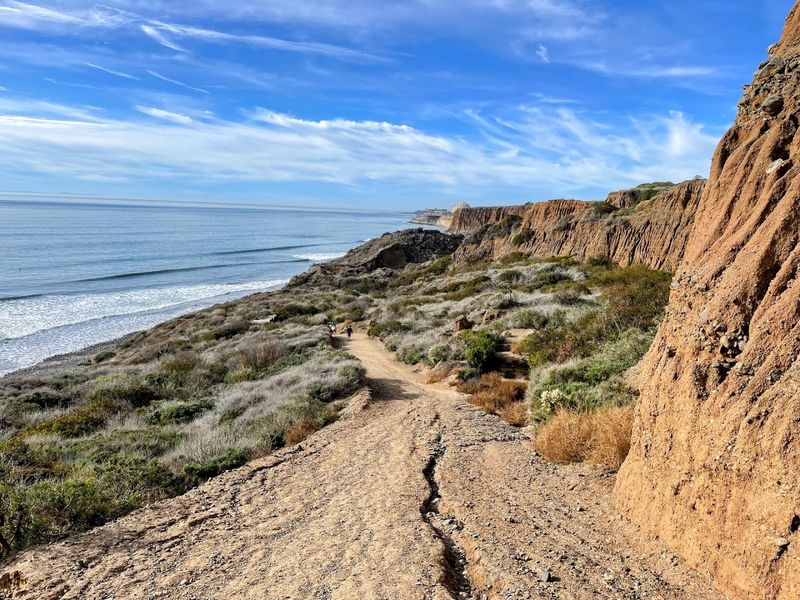
Not every numbered trail at the Bluffs area leads all the way down to the water, so knowing which ones do makes a meaningful difference in planning.
Trails 1, 4, and 6 are specifically noted as providing direct access to the beach, making them the go-to routes for anyone heading down to swim, surf, or walk the shoreline.
Those three paths are worth identifying on a map before starting out.
There is also a practical detail worth knowing about dogs. Leashed dogs are permitted on Beach Trails 1 and 6, but not on the beach areas accessible from the trails in between.
That distinction matters for anyone bringing a pet along, since the rules vary depending on which trail is used for beach access.
Trail 1 is sometimes noted as offering a more manageable descent compared to some of the other routes, though it still involves a steep and uneven surface.
Starting at Trail 1 and returning via Trail 6 creates a natural one-way route along the beach with a clear beginning and end point.
Planning the descent in advance helps avoid any surprises once the trail starts heading downhill toward the sand.
Sandstone Cliffs Shape The Scenery
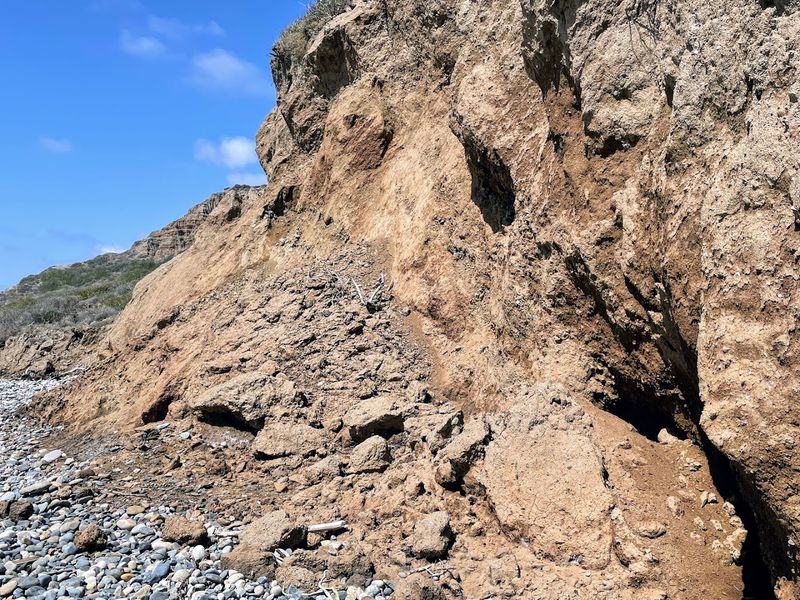
Few geological features along the Southern California coast are as visually striking as the sandstone cliffs found here.
These formations were built from sedimentary rock deposited over 20 million years ago from ancient seafloors, and the layering and color variations in the rock face tell that long story in a way that is easy to see.
Wind and sea have been shaping these cliffs ever since, carving out curves, ledges, and textures that change slightly with every season.
The result has drawn comparisons to a miniature Bryce Canyon by the sea, which is a surprisingly accurate description when standing at the base looking upward.
The warm amber and tan tones of the sandstone contrast sharply against the blue of the ocean and sky, creating a color palette that photographers tend to find irresistible.
Morning light hits the cliffs at an angle that brings out the texture in the rock face particularly well.
Because erosion is an ongoing process here, the cliffs are not static. Visitors may notice small changes in the rock face over time, and some areas closer to the edge require care.
Staying on marked paths and keeping a respectful distance from the cliff edge is always the right approach for both safety and preservation.
The Descents Are Short But Rugged
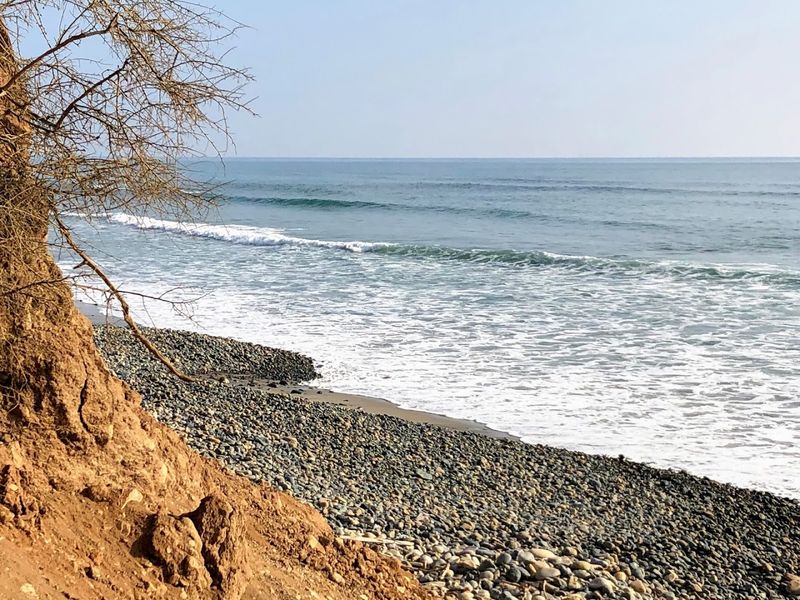
Getting from the bluff top to the beach requires a bit more effort than simply strolling down a paved ramp.
The descent trails are relatively short, often less than half a mile, but they tend to be steep, uneven, and unmaintained in the polished sense that more developed parks might offer.
Loose dirt, exposed roots, and rocky patches are all part of the experience on the way down.
Footwear matters more here than at many beach destinations. Flip-flops and bare feet can make the descent genuinely uncomfortable and increase the chance of slipping on loose terrain.
Closed-toe shoes or sturdy sandals with good grip make the whole trip down and back up considerably more manageable and enjoyable.
The ruggedness of the descent is actually part of what keeps this beach feeling less crowded than others in the region.
Visitors who are not prepared for a bit of a scramble may turn back, which naturally filters the shoreline toward those who came ready to explore.
For anyone with reasonable mobility and appropriate footwear, the challenge is minor and the payoff at the bottom is well worth the effort.
Trail 1 tends to be slightly more forgiving than some of the other numbered descents.
Low Tide Opens More Room For Exploring
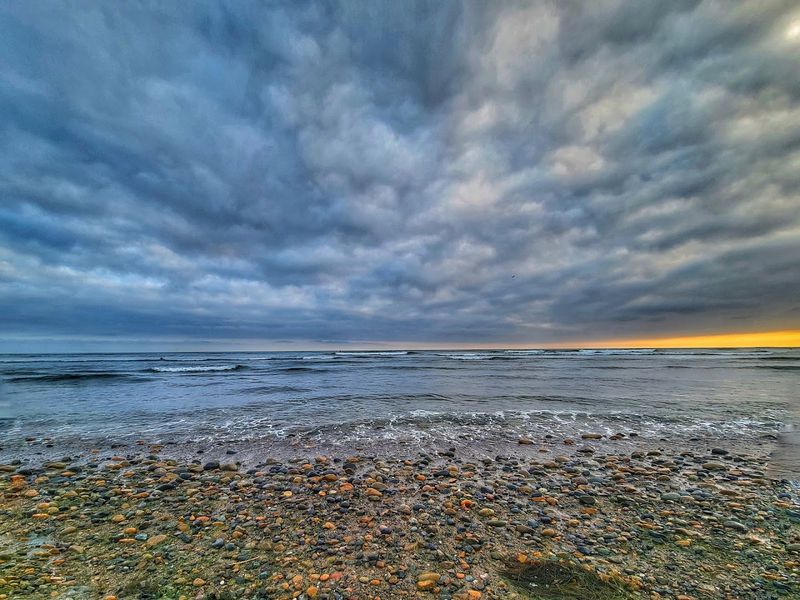
Timing a visit around the tides can completely change what the beach experience looks like here.
At high tide, certain sections of the shoreline become narrow or difficult to pass due to patches of cobblestone that sit right at the water line.
During low tide, those same stretches open up considerably, making it much easier to walk long distances along the beach without doubling back or getting cut off.
Low tide also brings out the tide pools and rock reefs that stay submerged for much of the day.
These areas can reveal sea anemones, hermit crabs, small fish, and other marine life tucked into the crevices of exposed rock.
Exploring tide pools requires patience and careful footing, but the reward is a close-up look at a coastal ecosystem that most beach visitors never get to see.
Checking a reliable tide table before heading out is one of the most useful things a visitor can do when planning a trip to this stretch of coast.
Many free tide chart apps and websites cover the San Onofre area specifically.
Aiming to arrive around low tide and giving enough time to walk the shore before the water rises again tends to produce the most satisfying and complete beach experience possible.
The Shoreline Feels Surprisingly Remote
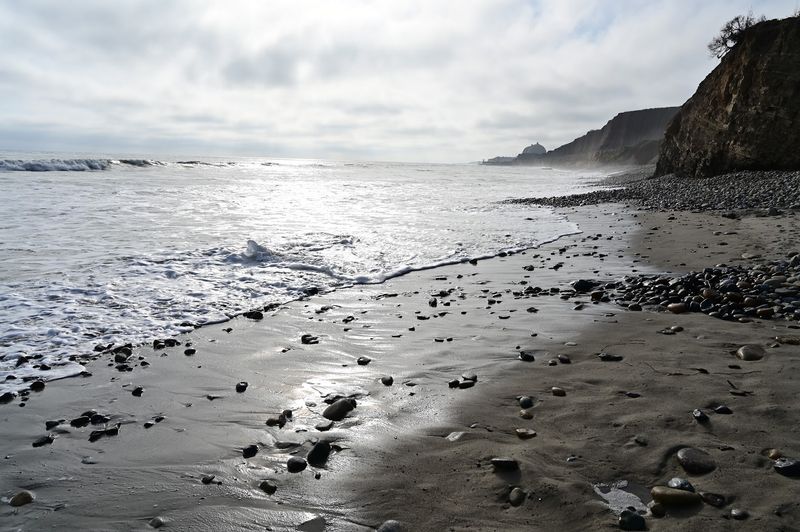
Walking the beach below the bluffs, it is easy to forget how close the highway and surrounding development actually are.
The shoreline here carries a quietness that is genuinely uncommon for Southern California, where most accessible beaches tend to fill up quickly on warm weekends.
The lack of commercial development, food stands, or built-up amenities along the waterline contributes directly to that feeling of having found something undisturbed.
Part of the reason this stretch has stayed so preserved comes down to history.
The land surrounding San Onofre State Beach was once used as a military site, and its proximity to a decommissioned nuclear power plant kept significant development away for decades.
That combination of factors created conditions where the natural landscape was largely left alone, and the result today is a coastline that resembles what this region may have looked like long before Southern California became so densely settled.
That sense of remoteness is not manufactured or marketed. It simply exists because the usual forces of commercial development never fully arrived here.
For visitors who find crowded beaches more exhausting than relaxing, this section of coast offers a genuine alternative. The quiet here tends to settle in quickly and stay for the entire visit.
Surfers Add Plenty Of Action Below
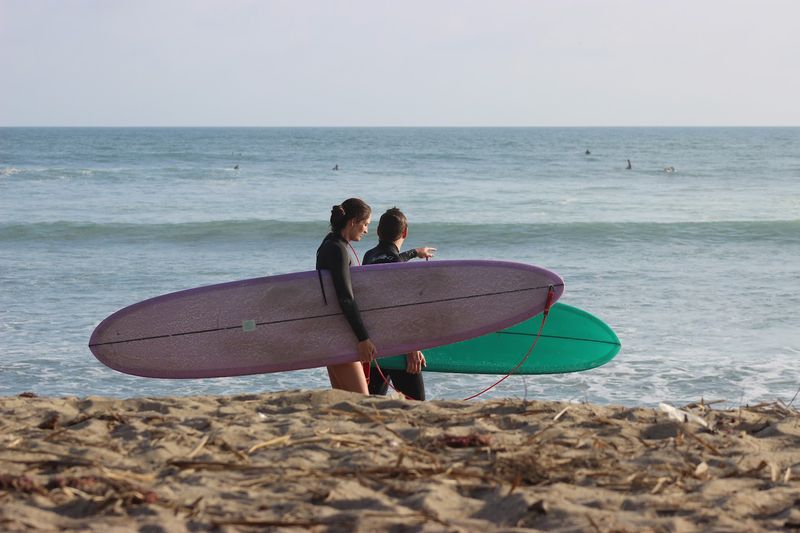
The beaches below the bluffs have earned a devoted following among surfers, and that culture adds a lively, unhurried energy to the shoreline that feels distinct from typical swim beaches.
San Onofre State Beach is celebrated for its surf breaks, and the Trails area that encompasses the Bluffs beaches is part of that legacy.
The waves here tend to roll in at a more forgiving pace compared to steeper breaks elsewhere on the coast.
The mix of rock and sand on the ocean floor creates a somewhat unique break that experienced surfers appreciate for its consistency.
Watching from the bluff top before heading down gives a good sense of the water conditions and the rhythm of the sets coming in.
The view from above also makes it easy to spot which sections of the beach are most active.
Surfers have been coming to this coastline since at least the 1940s, and that long history has shaped the relaxed, community-oriented atmosphere that still exists here today.
Boards of all shapes and eras show up in the lineup, from vintage longboards to modern shortboards.
Even for visitors who have no intention of paddling out, watching the surf from the sand or the bluff adds a genuinely enjoyable dimension to any visit.