This Virginia Museum Holds An Enormous Collection Of Ancient Egyptian Artifacts
A linen-wrapped Egyptian official named Tjeby has been resting in a museum gallery for years.
He’s roughly 4,000 years old, and I find that wonderfully bizarre.
Tjeby held titles like count and seal-bearer back home. Now he shares a building with paintings, sculpture, and jeweled treasures in Virginia.
The ancient art around him covers thousands of years. Think carved statues, painted coffins, papyrus, and a little bronze cat goddess.
The variety feels bigger than the room should allow. The best part is that general admission costs nothing.
A world-class meeting with ancient Egypt is free, while parking costs extra.
Tjeby probably never pictured himself becoming a budget-friendly outing.
A Free Ticket To Ancient Egypt Sounds Made Up, But It Is Real
Few big art museums let you wander in without paying, and the Virginia Museum of Fine Arts is one of them. General admission is free, which means ancient Egypt is basically on the house.
Special exhibitions sometimes require tickets, and the museum’s parking garage charges a fee. The permanent collection galleries are available without purchasing general admission.
The museum is open every day of the year, including major holidays. Saturday through Tuesday hours run from 10 AM to 5 PM.
Wednesday through Friday stretch later, until 9 PM. Those evening hours are handy if your weekdays are packed with work or school.
That schedule makes spontaneous trips easy. You could decide over breakfast to visit an Egyptian mummy and actually follow through by lunch.
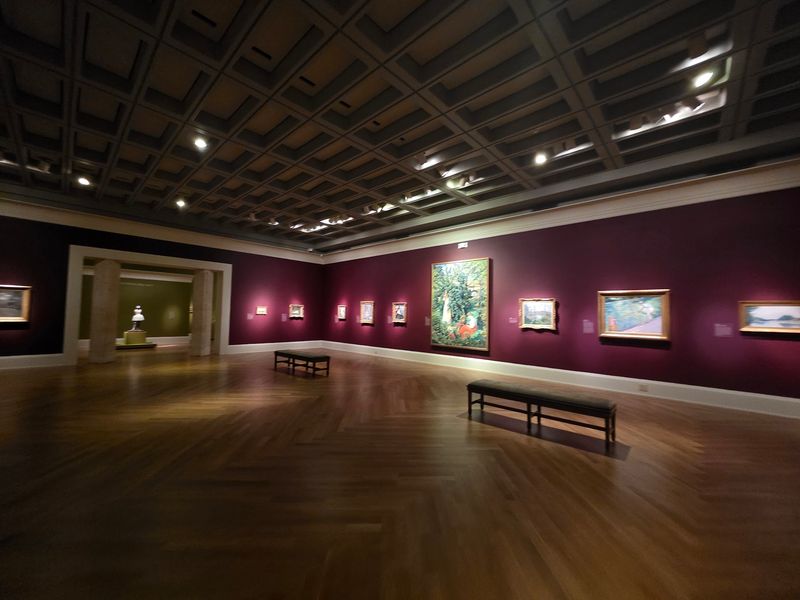
The collection beyond Egypt is huge too, with more than 50,000 artworks spanning approximately 6,000 years of history.
Plan for more than a quick lap, because the galleries cover multiple floors. Temporary closures may occur during the museum’s ongoing expansion and renovation.
Tjeby The Mummy Has Been Waiting About 4,000 Years To Meet You
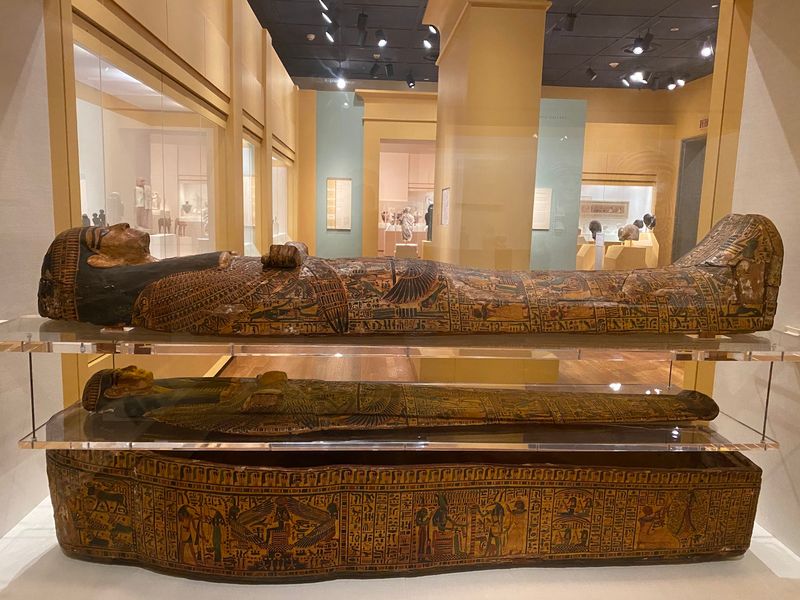
Four thousand years is a long time to hold still. Tjeby manages it beautifully inside the Egyptian collection of this Richmond museum.
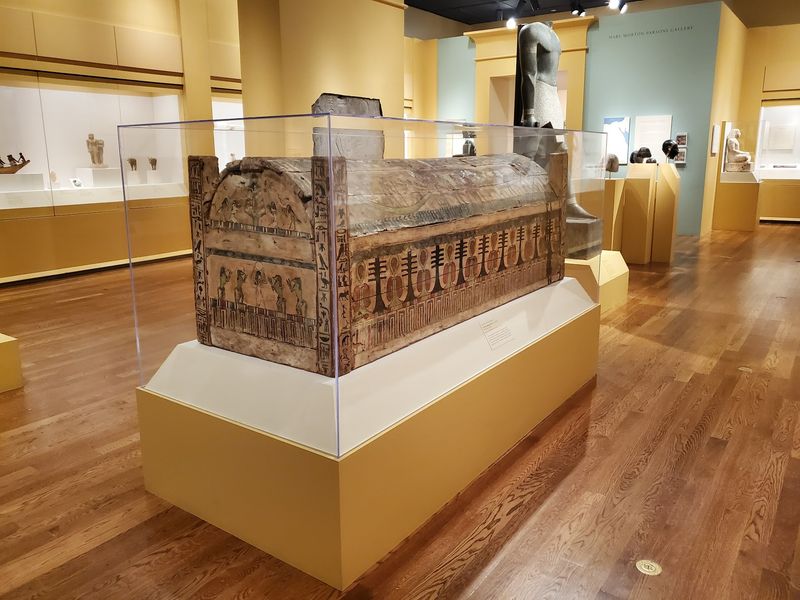
He was a count and a seal-bearer of the king of Lower Egypt. Those titles appear in hieroglyphic inscriptions on his wooden coffin, identifying him as an important official.
His linen wrappings remain part of the preserved collection. The coffin itself dates to approximately 2258–2052 BC, making the entire display an extraordinary connection to ancient Egyptian history.
The painted decorations deserve attention. Protective symbols, inscriptions, and carefully arranged patterns reveal the importance Egyptians placed on spiritual traditions.
Look for the distinctive painted eyes on the coffin. Known as wedjet eyes, these symbols represented protection and were associated with the god Horus.
Tjeby has also been examined with modern scanning technology, allowing specialists to study the ancient preservation techniques while keeping the original materials intact.
Kids usually head straight for mummies, and adults aren’t far behind. There’s no shame in it, since a real mummy is pretty hard to beat.
Five Thousand Years Of Egyptian Art Fit Under One Roof Somehow
Here’s a timeline that makes your family tree look tiny. The museum’s ancient Mediterranean collection spans more than 5,000 years, beginning with prehistoric Egypt.
It continues through the age of the pharaohs, the later Egyptian kingdoms, and centuries of Greek and Roman cultural influence.
That range lets you watch styles shift over time. Early pieces feel different from later ones, and comparing them is half the fun.
The Egyptian holdings include pottery, carved figures, jewelry, decorative objects, and ceremonial artifacts.
Some pieces are particularly ancient. A pottery vase in the collection dates to approximately 4000–3100 BC, long before many of Egypt’s most recognizable monuments appeared.
Small amulets and necklaces demonstrate the importance of personal decoration and symbolism.
One fascinating object is a figure of Thoth, the Egyptian god associated with writing and learning. The small sculpture dates to approximately 525–342 BC and was made from faience, a glazed ceramic material.
These objects also reveal the extraordinary range of Egyptian craftsmanship, from carefully shaped clay to detailed decorative work.
Try picking one object from the oldest era and one from a later period. Then compare their forms, materials, and decoration.
A Bronze Cat Goddess Proves Cat Lovers Have Always Ruled
Cats have been getting special treatment for a very long time. Ancient Egyptians went further than most and honored a cat goddess named Bastet.
The museum’s Egyptian holdings include a statuette of Bastet dating to approximately 663–525 BC. It’s a small piece with a big personality.
Bastet was associated with protection, family, and the home in Egyptian religious traditions.
She could appear as a domestic cat or as a woman with a feline head. Her connection to household life made her a particularly recognizable figure in Egyptian culture.
Cats also held a practical place in everyday society. Their ability to keep rodents away from stored crops made them valuable companions in agricultural communities.
Look closely at the familiar feline form. Ancient artists understood that proud, upright posture that modern cat owners recognize immediately.
The collection features other animal-associated deities too. Thoth appears with an ibis head, while Horus is represented by a falcon.
Those animal forms carried specific meanings, connecting recognizable creatures with religious ideas.
It’s a great subject for children who love animals, particularly when they discover how differently cultures have represented them through art.
Ancient Wall Paintings Tell Stories Older Than Most Countries
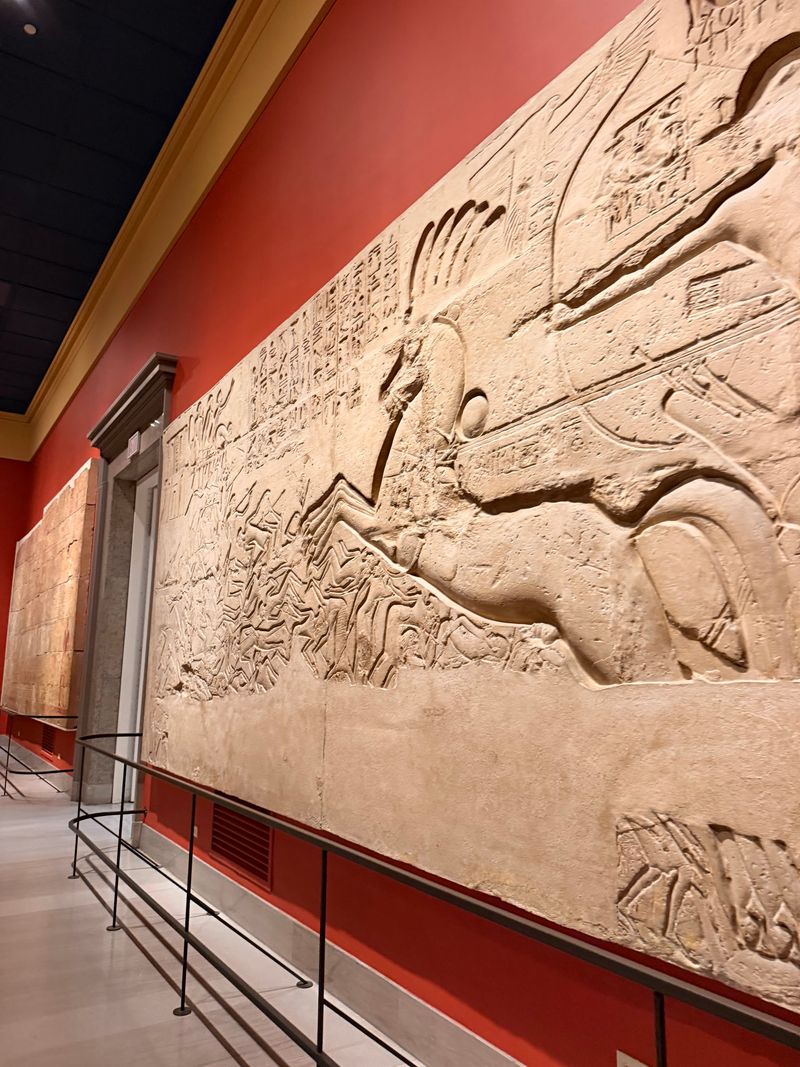
Color can survive a surprisingly long time. Among the Egyptian treasures associated with the museum is an ancient wall-painting fragment dating back approximately 3,000 years.
Painted scenes played an important role in Egyptian art. They appeared across temples, elaborate buildings, and ceremonial spaces, often communicating stories about rulers, spiritual beliefs, and everyday activities.
Notice the distinctive way figures are drawn in profile. Egyptian artists followed established conventions, frequently showing heads from the side and shoulders from the front.
That style can look unusual at first. Once you recognize the pattern, you’ll start spotting it throughout Egyptian art.
Natural pigments helped create vibrant reds, yellows, blues, and greens. Mineral-based colors could remain visible for centuries when preserved under favorable conditions.
The museum also holds painted objects and decorative reliefs that reveal how important color was to ancient craftsmanship.
Some designs feature carefully organized patterns, while others combine figures with hieroglyphic writing.
Look for the small details. Hairstyles, clothing, symbols, and hand gestures often communicate information that isn’t immediately obvious.
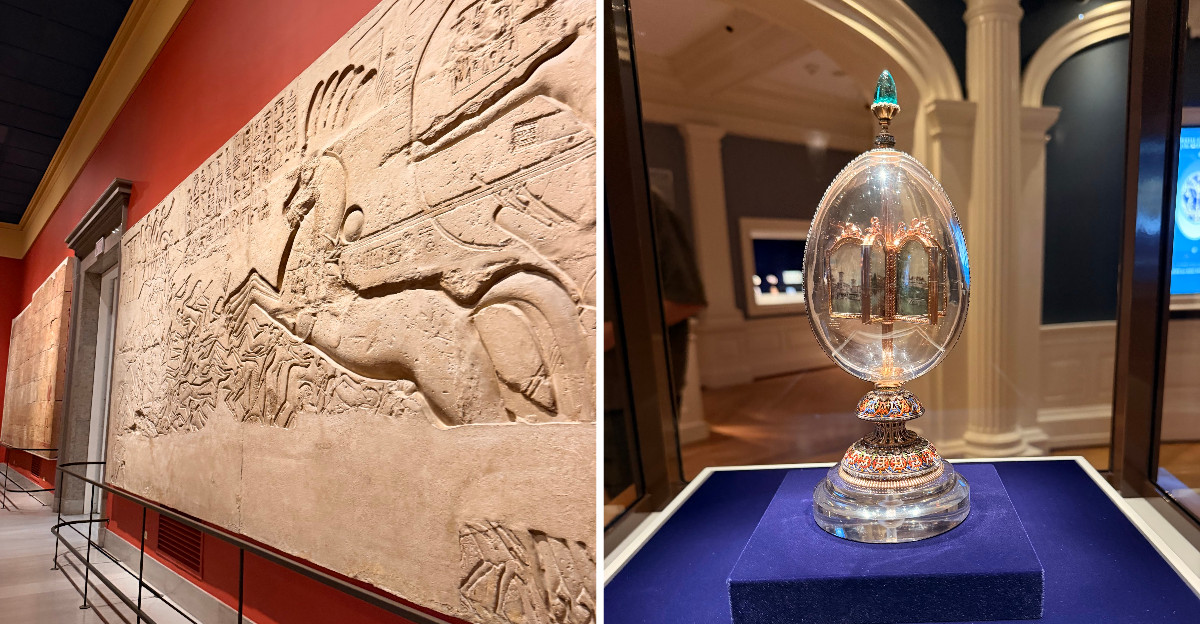
Your Egyptian Adventure Comes With Faberge Eggs Down The Hall
Ancient mummies and Russian imperial eggs make an odd couple. At this museum in Virginia, they share the same address.
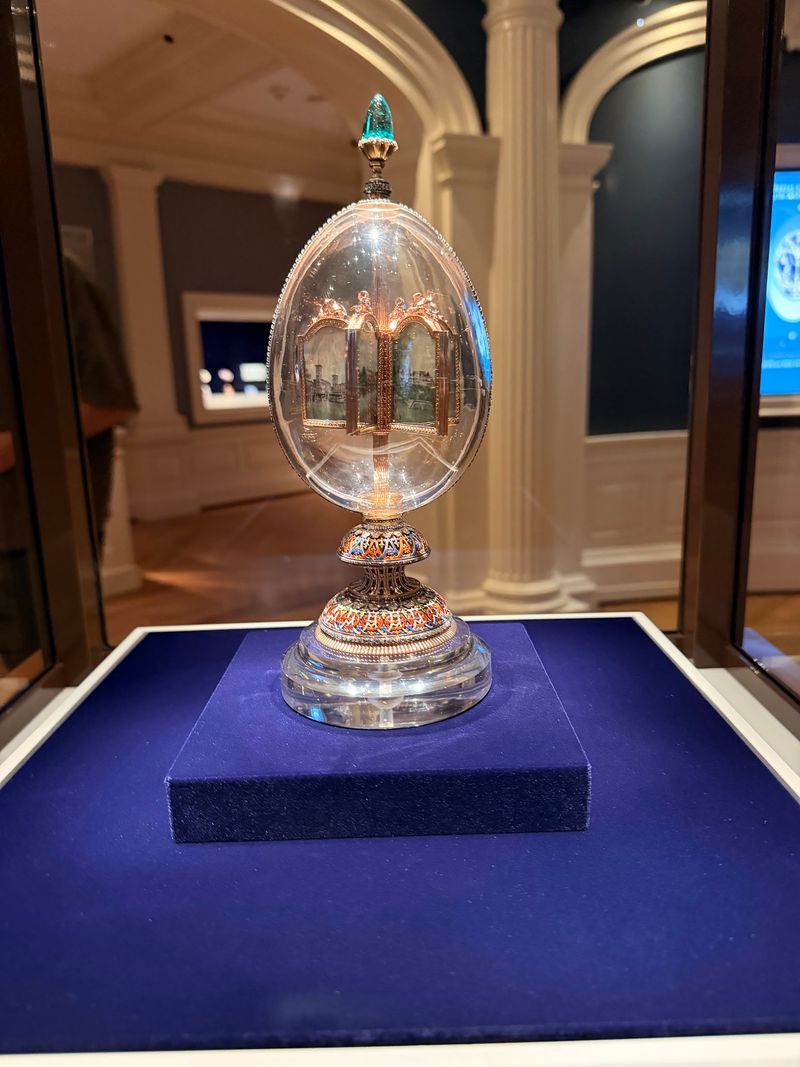
The museum holds the largest public collection of Fabergé objects outside Russia, including five Imperial Easter eggs.
These dazzling creations came from the celebrated jewelry workshop of Carl Fabergé, whose artisans produced elaborate decorative pieces for Russia’s imperial family.
Each egg showcases craftsmanship that feels almost impossible. Gold, enamel, and precious stones come together in designs that reward a slow, careful look.
Some contain intricate miniature surprises, making the artistry extend far beyond the outside shell.
The galleries include interactive features that help visitors examine the objects and understand how they were constructed.
The collection is much broader than the famous eggs. Decorative boxes, miniature figures, jewelry, and other ornamental treasures demonstrate the workshop’s remarkable variety.
Going from Tjeby to Fabergé is a fun jump in time. You travel from ancient Egypt to imperial Russia in a few minutes of walking.
Save Some Energy For The Sculpture Garden Outside
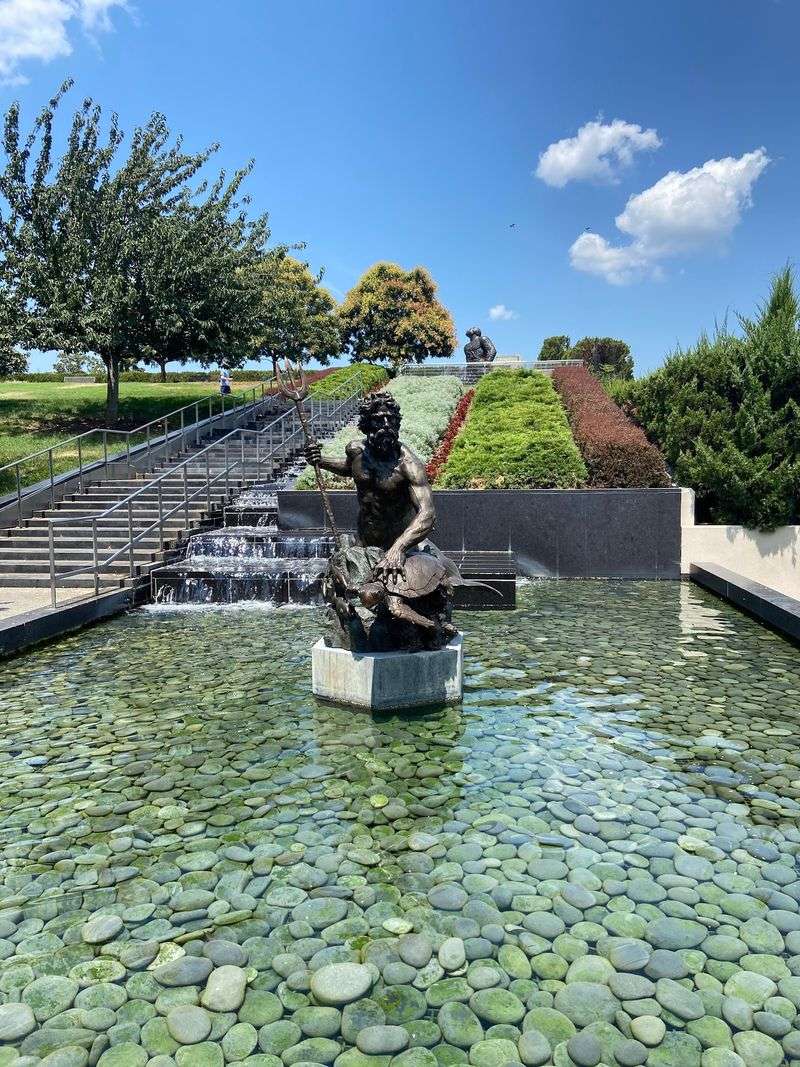
Fresh air helps after hours of staring at glass cases. The museum’s grounds include a sculpture garden that’s open to explore.
The Claiborne and Lora Robins Sculpture Garden features modern and contemporary artworks arranged throughout landscaped outdoor spaces.
Large sculptures stand among lawns, pathways, and planted areas. They provide a refreshing contrast after thousands of years of ancient art indoors.
The grounds also feature a reflecting pond and waterfall. It’s a calm spot to rest your feet and enjoy a different kind of scenery.
One of the pleasures of this Virginia garden is the relationship between artwork and its surroundings. Shapes and colors change depending on where you stand.
Walking outside also makes the visit feel less rushed. You can pause between galleries without leaving the property.
Families with energetic kids will find it especially useful. A short garden break can make the next part of the museum visit more enjoyable.
The outdoor spaces also host occasional programs and community events, adding another dimension to the museum’s calendar.
Getting There Is Easier Than Crossing The Sahara
Reaching ancient Egypt usually means a long flight. Here, you just head to 200 N Arthur Ashe Blvd, Richmond.
The museum sits in Richmond’s Museum District. That location puts other cultural attractions close by, including the Virginia Museum of History and Culture next door.
An on-site parking garage makes arriving convenient. Parking requires a fee for general visitors, while museum members receive complimentary parking.
The entrance connects to the museum’s galleries, public spaces, and visitor services. Elevators provide access to the different levels, and wheelchairs are available for visitors who need assistance.
Personal photography is permitted throughout most permanent collection galleries, although flash, tripods, and selfie sticks aren’t allowed.
Arriving early can help on busy weekends. Morning visits give you more time to explore before the afternoon crowds arrive.
Evening hours are another option. With late openings Wednesday through Friday, you can enjoy the Egyptian collection after work.
The museum is undergoing a major expansion and renovation, so individual gallery access may occasionally change. Check the available galleries before planning a visit around one particular artifact.