Thousands Of Birds Fill The Skies Above This Hidden Nebraska Wildlife Sanctuary
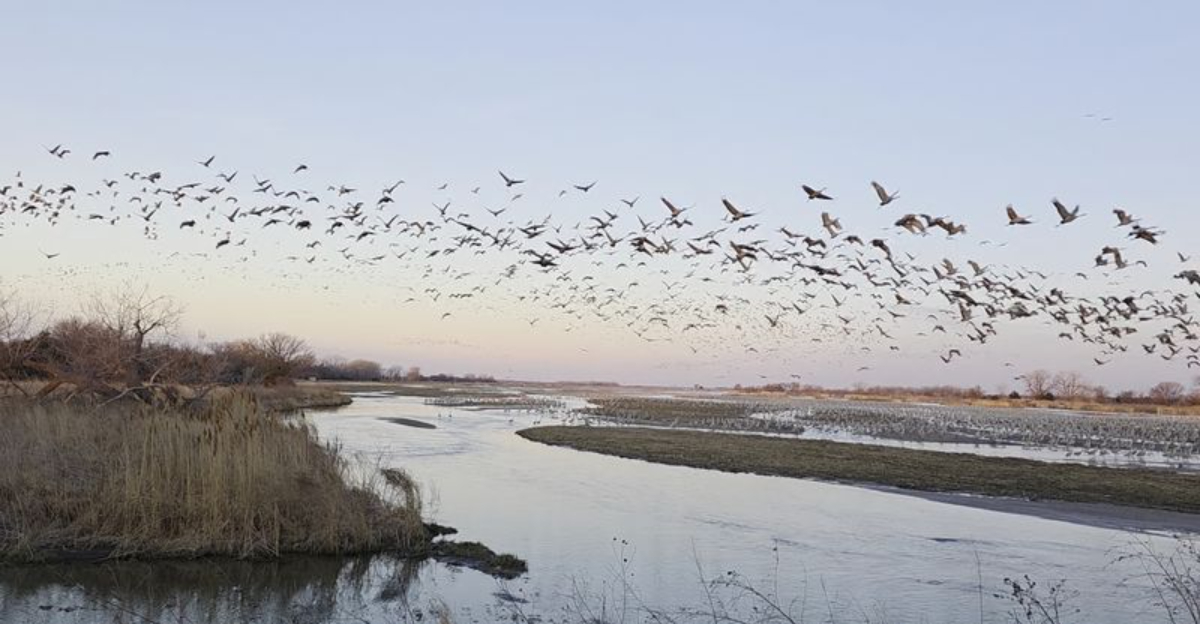
At first, the sky looks normal. Then the sound starts.
A few calls become hundreds, then thousands, and suddenly you are staring upward instead of ahead.
Birds sweep across the horizon in shifting waves, turning an ordinary stretch of open land into something that feels almost choreographed.
Nebraska offers few wildlife experiences as dramatic as watching enormous flocks gather over the Platte River.
Stand still for a minute and let the scale sink in. Follow one group with your eyes, lose track of it, then notice another arriving behind it.
The movement never seems to stop for long, and the quiet landscape becomes unexpectedly electric.
Bring binoculars if you have them, but do not spend the whole visit staring through lenses. Some moments are better taken in all at once.
Watch Thousands Of Sandhill Cranes Fill The Sky At Sunrise
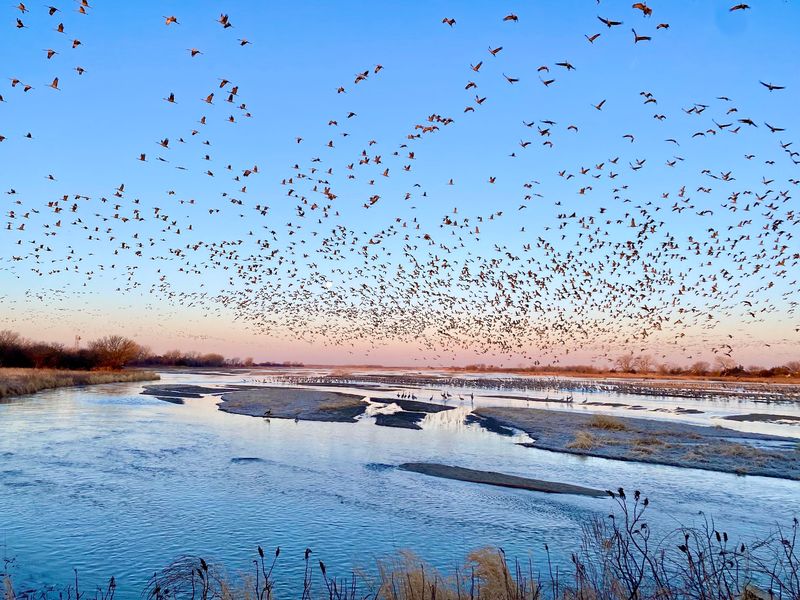
Nothing quite prepares a first-time visitor for the moment when thousands of Sandhill Cranes rise from the Platte River at first light.
The horizon turns gray, then pale gold, and then the air above the water simply erupts with motion.
Guided sunrise crane viewing experiences are available daily during the migration season, giving visitors a structured and respectful way to witness this extraordinary event.
Tours focus on watching cranes as they leave their overnight river roosts, which tends to produce the most concentrated gatherings of birds in one place.
The crane-viewing season generally runs from mid-February through April, with March typically offering the highest numbers.
Reservations are strongly recommended because spots fill quickly once the booking window opens each January.
Seeing around 100,000 cranes take flight at once is the kind of experience that tends to leave people speechless.
The combination of motion, sound, and soft morning light creates a sensory moment that photographs cannot fully replicate.
For anyone visiting Nebraska during spring, a sunrise tour at Rowe Sanctuary is worth planning an entire trip around.
Return At Sunset To See The River Come Alive Again
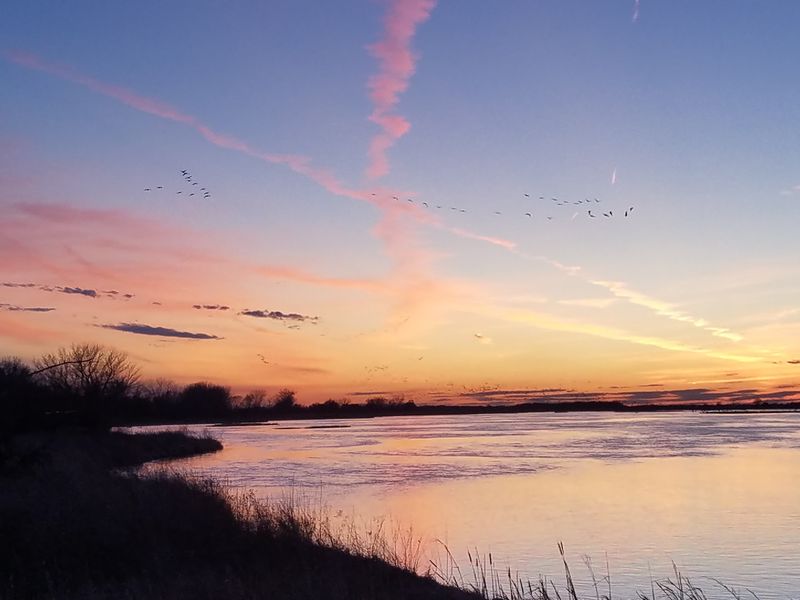
Mornings get most of the attention during crane season, but evenings along the Platte River carry their own kind of quiet drama.
As daylight fades, thousands of cranes begin circling overhead in wide, sweeping arcs before dropping down to roost on the river for the night.
Guided evening experiences at Rowe Sanctuary let visitors observe this return flight from specially positioned viewing areas.
The light during the final hour before dark softens everything, casting a warm glow over the water and the birds settling onto exposed sandbars.
Unlike the explosive liftoff of a sunrise tour, the evening experience tends to build gradually, with more and more cranes arriving in waves over the course of an hour or two.
Groups are kept to a manageable size, which helps keep noise low and wildlife disturbance minimal.
Both sunrise and sunset tours offer something distinct, and many visitors choose to attend one of each during a single trip.
The evening tour provides a slower, more meditative pace that allows time to really absorb the scale of what is happening on the river.
Step Inside A Viewing Station Along The Platte River
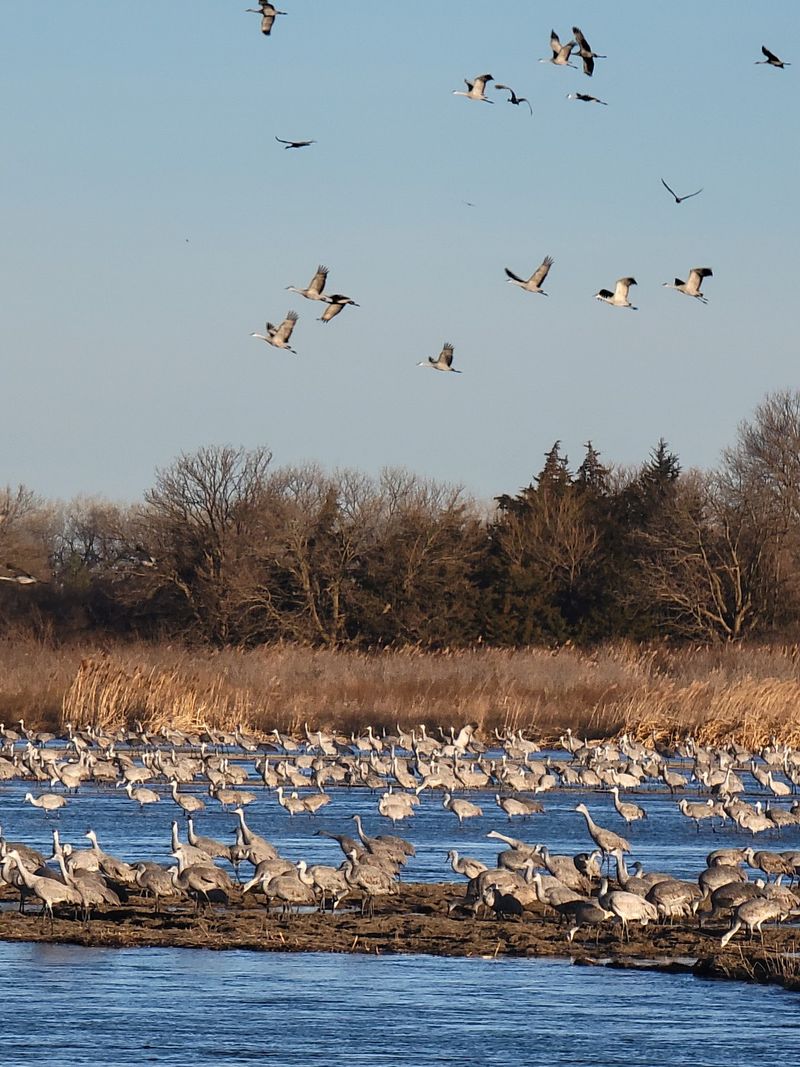
Getting close to tens of thousands of cranes without disturbing them requires a bit of thoughtful engineering, and Rowe Sanctuary has figured it out.
The sanctuary uses specially positioned structures called discovery stations, commonly referred to as viewing blinds, placed near key crane roosting areas along the river.
These stations are designed so that visitors can observe birds at close range without triggering a stress response in the flock.
Access to the discovery stations is typically included as part of a guided viewing experience rather than being available for independent drop-in use during crane season.
The walk from the visitor center to a station is generally a quarter to half a mile, and the trails leading there are designed to keep visitors screened from the river until they reach the blind.
Each station includes a warming room, which makes cold early-morning visits considerably more comfortable.
The sanctuary also provides golf cart assistance for visitors who have mobility challenges, ensuring the experience remains accessible to a wide range of guests.
Sitting inside a blind while thousands of cranes move just a short distance away is an entirely different experience from watching birds in an open field.
Listen To A Soundscape You Will Not Hear Anywhere Else Nearby
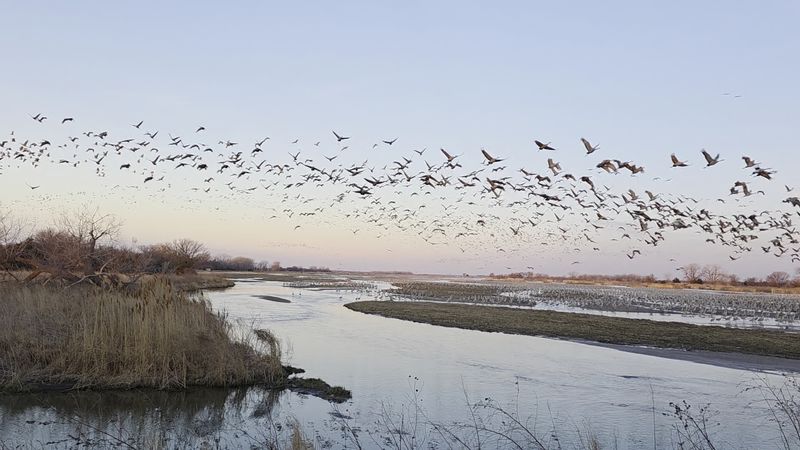
Sound is one of the most underappreciated parts of the crane migration, and many visitors say the noise is what they remember most vividly long after returning home.
Sandhill Cranes produce a rolling, rattling call that carries remarkably far, and when tens of thousands of birds are calling at once, the effect is genuinely overwhelming in the best possible way.
The combined chorus can reportedly be heard from up to a mile away under the right conditions.
Each individual crane has a slightly different pitch, and the overlapping calls create a texture of sound that feels almost atmospheric rather than simply loud.
During a sunrise tour, the noise builds gradually as birds wake and begin moving, reaching a peak when a large group takes flight all at once.
That moment, when the sound surges and the air fills with wings, tends to be the one that leaves the deepest impression.
Even visitors who arrive with no particular interest in birds often find themselves caught off guard by the emotional impact of that soundscape.
Bringing earplugs is not necessary, but the experience does benefit from simply standing still and listening rather than talking. The Platte River in March sounds like nothing else in the region.
Explore The Iain Nicolson Audubon Center
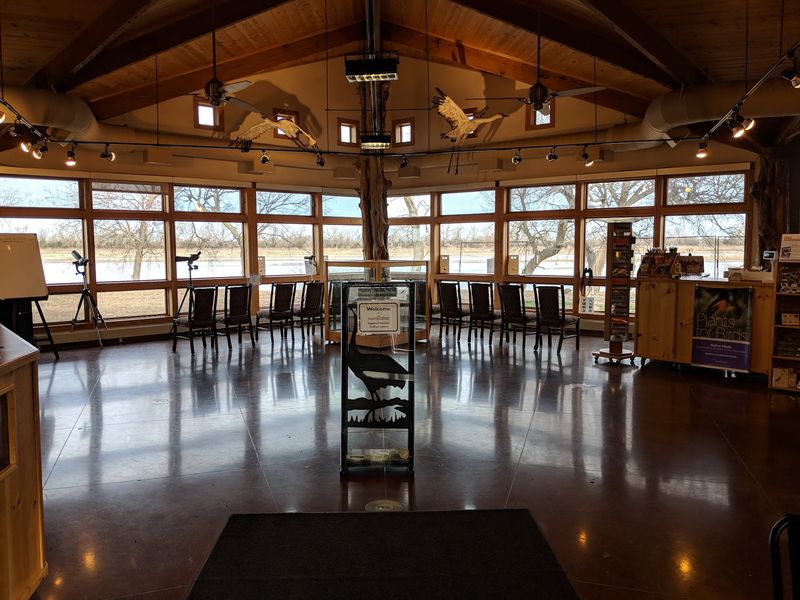
Before heading out toward the river, spending time inside the sanctuary’s main building adds real context to everything else a visitor will see.
The Iain Nicolson Audubon Center is located at 44450 Elm Island Rd, Gibbon, NE 68840, and serves as the primary gateway to the Platte River ecosystem and surrounding grassland habitat.
The building itself is visually distinctive, constructed with native stone and wood that blends naturally into the surrounding landscape.
Originally built in 2002 and 2003 using sustainable straw-bale construction methods, the center underwent a significant renovation completed in 2024 that expanded its capacity for visitors and educational programming.
Inside, guests will find educational displays about local flora and fauna, a river-viewing area, a gift shop, restrooms, and a small self-serve coffee bar.
The Anne M. Hubbard Education Center is also part of the complex, offering dedicated space for school groups and organized programs.
Admission to the building and its trails is free, which makes stopping in a low-commitment decision for travelers passing through on Highway 80.
The staff and volunteers are consistently noted for being knowledgeable and approachable, making the center a good first stop for anyone unfamiliar with the sanctuary or the migration.
Walk The Sanctuary Trails Outside Crane Season
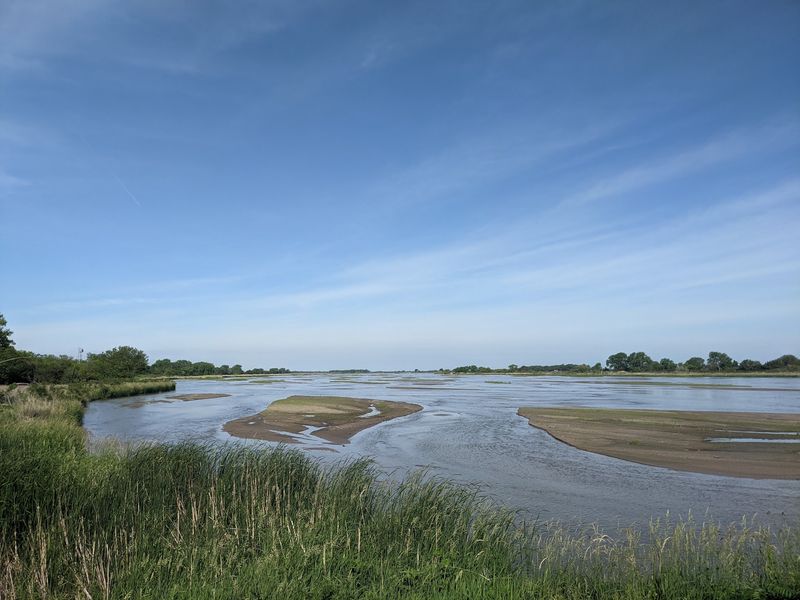
Spring crane season draws the biggest crowds, but the sanctuary holds its own appeal throughout the rest of the year.
Miles of trails are generally open from dawn to dusk outside the restricted crane viewing period, winding through mixed-grass prairie and along the edges of the Platte River corridor.
The landscape shifts noticeably with the seasons, offering a different kind of beauty depending on when a visit takes place.
Summer visits tend to reveal prairie wildflowers in bloom, including milkweed covered in pink blossoms and prickly pear cactus flowering in full color.
The boardwalk near the first viewing building provides a quiet spot to watch for marsh birds, riparian species, and occasionally deer coming to the water’s edge.
Fall migration, which begins at the very end of September and runs through October, brings a different set of bird activity to the river corridor.
Pets are welcome in the parking lot and a designated exercise area but are not permitted on the trails, which helps keep the experience peaceful for wildlife and other visitors alike.
Trail signage is available near the visitor center to help with navigation. A visit outside of crane season tends to be quieter and more reflective, with the grassland and river doing most of the work.
Discover The Woman Whose Gift Helped Create The Sanctuary
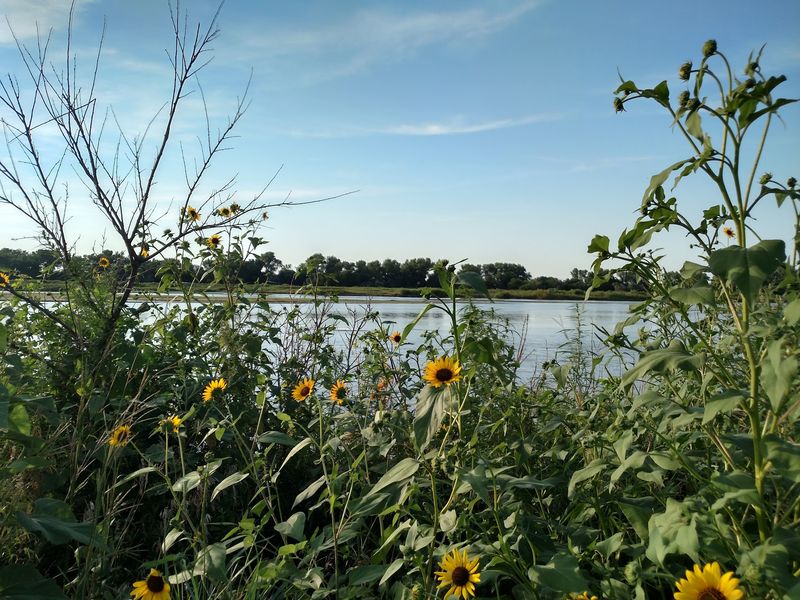
Behind every conservation landmark there tends to be a story of generosity, and the founding of Rowe Sanctuary is no exception.
Lillian Annette Rowe was a psychologist who served during World War II and left a lasting mark on American conservation through a decision made late in her life.
In 1967, she left much of her estate to the National Audubon Society with a clear and open-ended instruction: use the funds to establish a bird sanctuary somewhere in the United States.
That gift set in motion the search for an appropriate location, and the Platte River corridor in Nebraska was ultimately chosen for its exceptional value to migrating Sandhill Cranes.
The Lillian Annette Rowe Sanctuary was formally established in 1974, named in her honor to recognize the foundational role her bequest played in making it possible.
Her decision to leave that kind of discretion to the Audubon Society allowed the organization to identify and protect habitat where it was most urgently needed.
The story of how the sanctuary came to exist adds a layer of meaning to every visit, connecting the present-day experience of watching thousands of cranes to a single act of foresight made more than five decades ago.
Knowing that history tends to make the landscape feel a little less accidental and a little more intentional.
Bring Binoculars For A Quiet Day Of Nebraska Birding
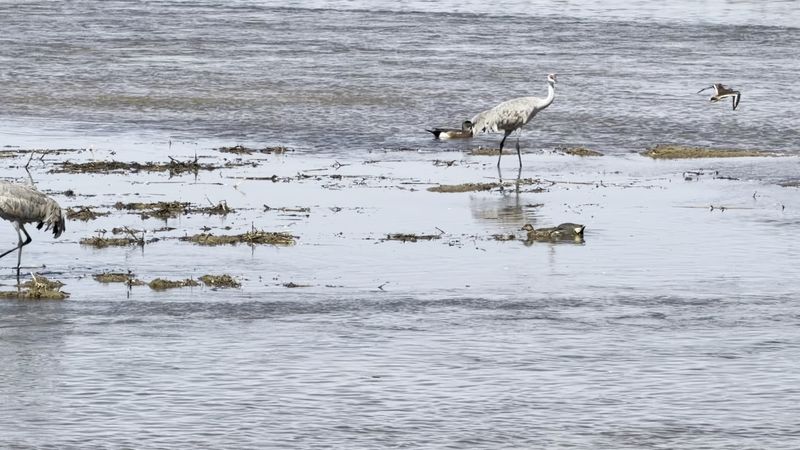
A good pair of binoculars transforms a visit to Rowe Sanctuary from a passive outing into an active and rewarding experience, regardless of the season.
Outside the peak crane migration, the sanctuary still offers consistent birding across a range of habitats, from the river’s edge to open grassland and the shrubby edges near the visitor center.
The feeders maintained near the Audubon Center provide reliable close-up views of sparrows, finches, and woodpeckers that are easy to overlook during the drama of crane season.
The wetland observation deck is worth a slow visit, particularly during warmer months when marsh birds and riparian breeding species are active along the river corridor.
Trails leading west from the visitor center pass through areas where grassland birds like meadowlarks and bobolinks can be heard and seen during the breeding season.
Fall migration, beginning in late September, brings another round of activity as birds move south through the Central Flyway.
Birding here outside of March tends to be a quieter and more personal experience, with fewer crowds and more time to simply watch and listen.
A field guide specific to Great Plains species pairs well with a visit at any time of year. The sanctuary’s mix of habitat types means the species list can shift considerably from one month to the next.