11 Unique Things To Do In Texas At Least Once In Your Lifetime
Texas does not do anything small. Not the land, not the sky, and certainly not the experiences it has to offer.
There is a version of this state that most visitors never see because they stick to the obvious stops and miss everything in between. The real Texas is stranger, wilder, and more surprising than any postcard gives it credit for.
Some of these experiences will leave you genuinely speechless. Others will make you laugh, shake your head, or pull over the car just to make sure you are seeing what you think you are seeing.
Texas has earned its reputation as a place that plays by its own rules, and these are the moments that prove it. Every single one belongs on a list of things worth doing at least once.
Start planning now, because this state rewards the curious.
1. Cadillac Ranch, Amarillo
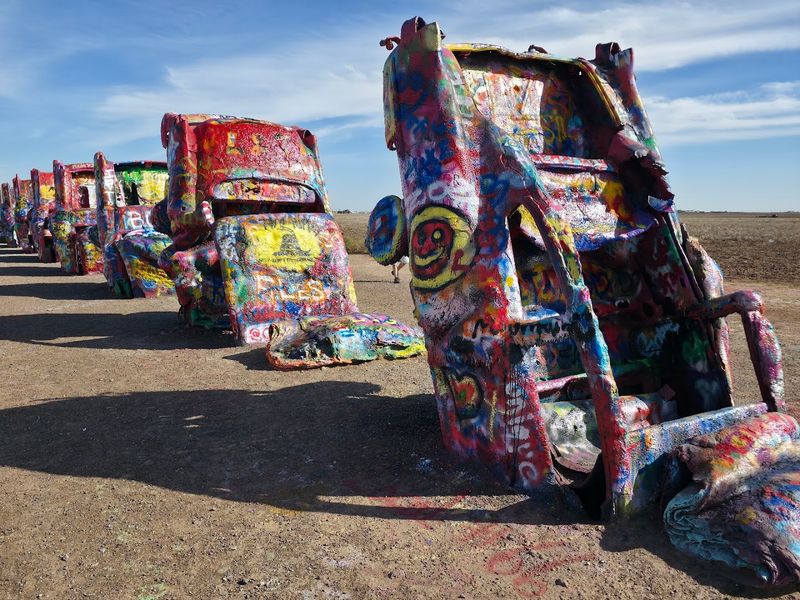
Nobody warns you how strange it feels to stand in a dusty field staring at ten buried Cadillacs. It just hits differently in person.
Cadillac Ranch sits off Interstate 40 in Amarillo at 13651 I-40 Frontage Rd, and it has been collecting spray paint since 1974.
Artists Stanley Marsh 3 and the art group Ant Farm planted these cars nose-first into the ground. The angle matches the slope of the Great Pyramid of Giza, which is a detail that makes the whole thing feel intentional and wild at the same time.
You are encouraged to bring a can of spray paint and add your own mark. Every visit looks completely different from the last.
The cars get repainted so often that layers of color build up like geological strata.
Go at sunrise if you can manage the early alarm. The light turns the metal into something almost beautiful.
There is no entry fee, no gift shop, and no velvet rope. Just wind, open sky, and ten very colorful Cadillacs pointing at the ground.
2. Prada Marfa, Valentine
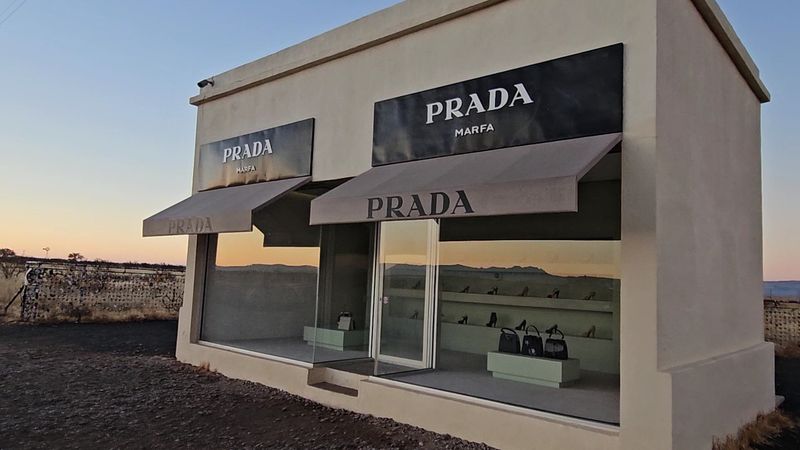
Imagine driving through an empty West Texas desert and spotting a Prada store in the middle of nowhere. No town nearby.
No parking lot. Just a perfect little boutique standing alone in the scrub.
That is exactly what you find at 14880 US-90 in Valentine.
Prada Marfa is a permanent art installation created by artists Elmgreen and Dragset in 2005. It was designed to slowly decay over time, though it has been maintained far better than originally planned.
The shoes and handbags inside are real Prada products from the 2005 fall collection.
The building is not a real store and never opens. That is the whole point.
It forces you to think about consumerism, luxury, and the absurdity of placing a high-end brand in a place where almost no one lives.
Stop for photos and let the strangeness sink in. The backdrop of flat desert and open sky makes every shot look surreal.
It is roughly 26 miles northwest of Marfa and well worth the detour. Few art pieces in the country generate this kind of double-take reaction from passing drivers.
3. Palo Duro Canyon State Park, Canyon
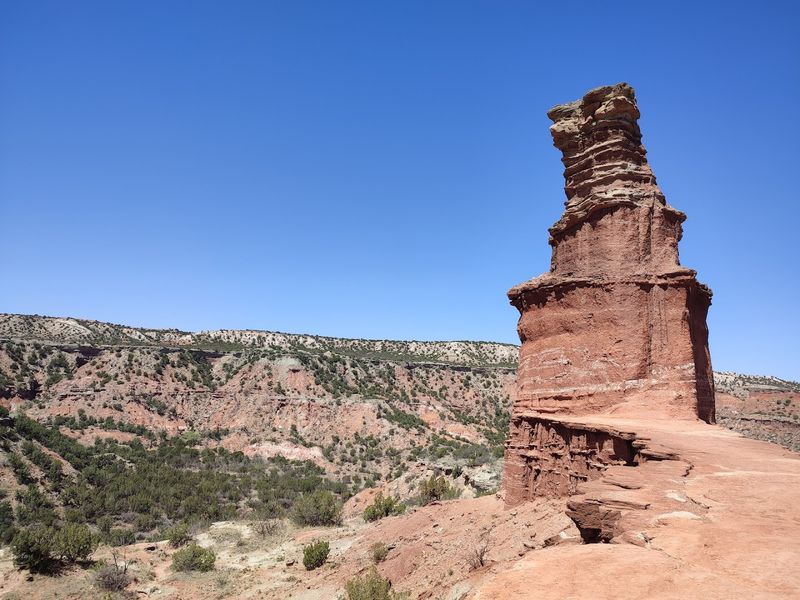
People call it the Grand Canyon of Texas, and once you see it, that nickname makes complete sense. Palo Duro Canyon drops nearly 800 feet and stretches over 120 miles through the Texas Panhandle.
The colors of the rock walls shift from deep red to orange to purple depending on the time of day.
Located at 11450 State Park Hwy in Canyon, the park offers hiking, mountain biking, horseback riding, and camping. The Lighthouse Trail is the most popular hike, leading to a dramatic 310-foot rock formation that looks like something from another planet.
Every summer the park hosts an outdoor musical called TEXAS, performed in a natural amphitheater carved into the canyon wall. It has been running since 1965 and is one of the longest-running outdoor musicals in the country.
Get there early in the morning when the canyon is quiet and the light is golden. The heat builds fast in the afternoon.
Bring plenty of water, good shoes, and a camera with a wide lens. Palo Duro rewards anyone willing to put in a little effort to explore its trails.
4. McDonald Observatory, Fort Davis
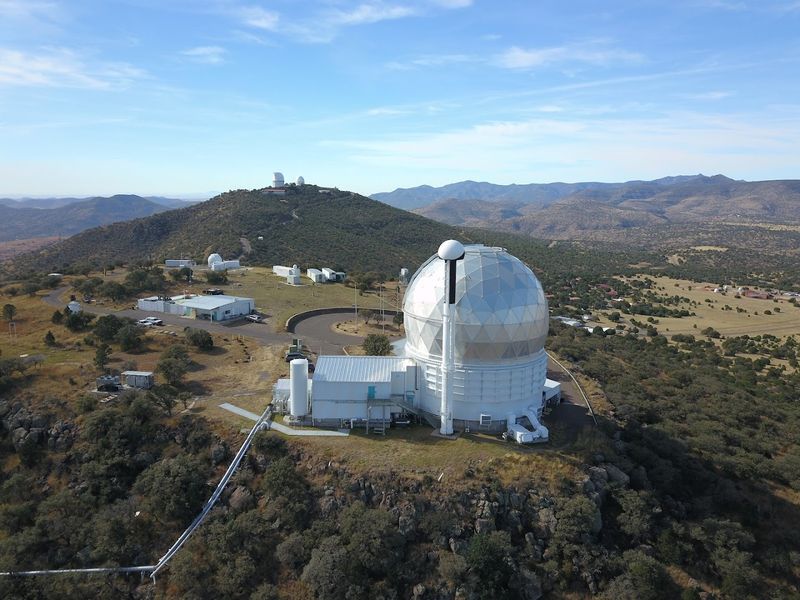
Standing under a sky so thick with stars that you lose your sense of direction is genuinely disorienting. Most people never experience true darkness anymore.
McDonald Observatory at 3640 Dark Sky Drive in Fort Davis sits in one of the darkest regions in the entire continental United States.
The observatory sits atop Mount Locke in the Davis Mountains at an elevation of about 6,791 feet. It operates multiple research telescopes and hosts public programs throughout the year.
The Star Party events on Tuesday, Friday, and Saturday nights are the best way to see the universe up close.
During a Star Party, staff guide you through the sky using laser pointers and let you peer through telescopes at planets, nebulae, and star clusters. Seeing Saturn’s rings clearly for the first time does something to your brain that is hard to explain.
The Visitors Center is open daily and offers solar viewing during daytime hours. You can watch live sunspot activity through specially filtered telescopes.
Fort Davis itself is a charming small town worth exploring before or after your visit. Plan to stay at least one night to fully appreciate the darkness.
5. Enchanted Rock State Natural Area, Fredericksburg
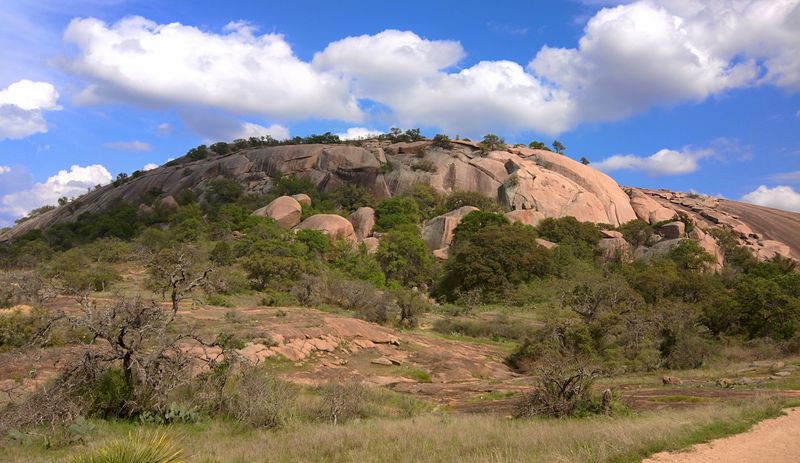
There is something primal about climbing a giant bare rock with your hands and feet. No ropes, no gear, just you and 425 million years of geology.
Enchanted Rock in Fredericksburg at 16710 Ranch Rd 965 is one of the largest exposed granite domes in the United States.
The dome rises about 425 feet above the surrounding Hill Country floor. The hike to the summit is only about half a mile but it is steep and uneven.
Once you reach the top, you get a 360-degree view of rolling hills and oak trees stretching to every horizon.
Native American tribes considered this rock sacred for thousands of years. On cool nights the granite creaks and groans as it contracts, which likely contributed to the legends of spirits living inside the dome.
That detail alone makes the place feel electric.
Reservations are strongly recommended because the park reaches capacity quickly on weekends. Arrive early and bring sunscreen because the rock reflects heat intensely in summer.
The wildflower blooms in spring around the base of the dome are spectacular. Stargazing from the summit after dark is an experience that is hard to top anywhere in the Hill Country.
6. Natural Bridge Caverns, San Antonio
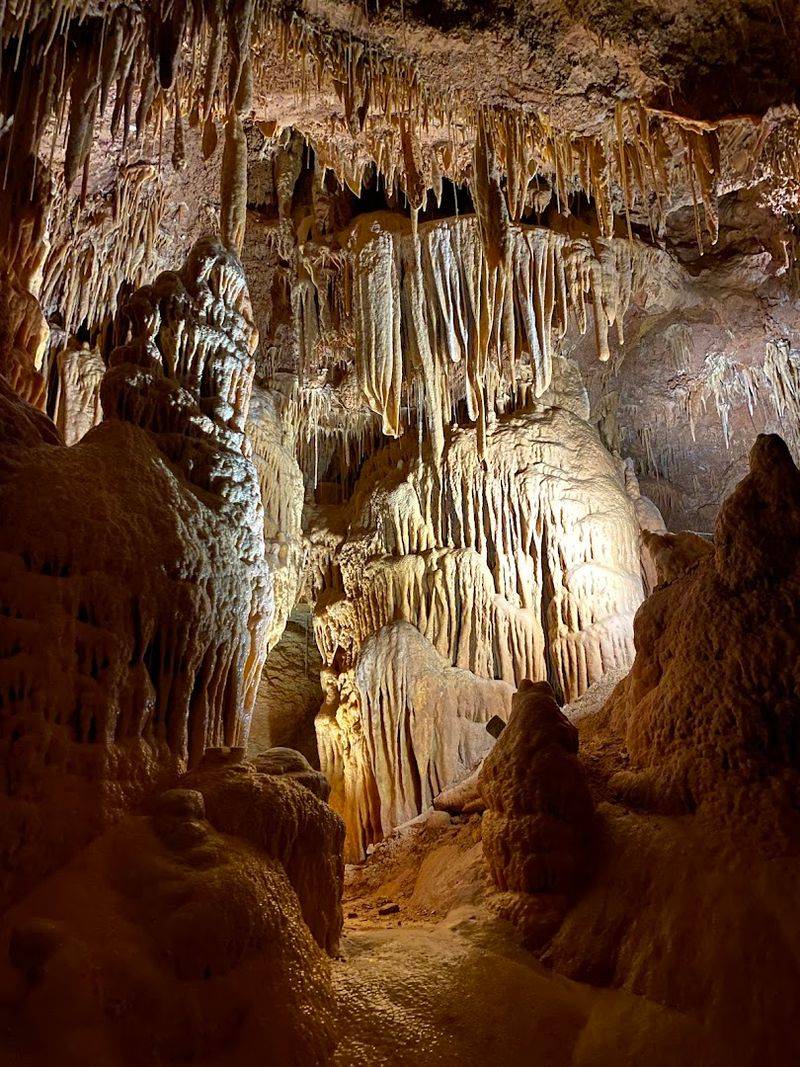
Going underground on a hot Texas afternoon feels like the smartest decision you will ever make. Natural Bridge Caverns stays at a constant 70 degrees year-round, which is its own kind of magic.
The caverns are located at 26495 Natural Bridge Caverns Rd in San Antonio and are the largest commercial caverns in the state.
The caverns were discovered in 1960 by college students from St. Mary’s University. The name comes from a 60-foot natural limestone bridge that spans the entrance.
Inside, formations called stalactites and stalagmites have been growing for millions of years at a rate of roughly one cubic inch per 100 years.
Multiple tour options are available ranging from the classic Discovery Tour to more adventurous routes that take you off the main path. The Hidden Wonders tour goes deeper into the cave system and rewards those who do not mind tight spaces.
Every chamber reveals something unexpected.
The property also includes a gem and fossil dig, an adventure maze, and a zip line area above ground. It makes for a full day of activity for families or curious adults.
Natural Bridge Caverns is one of the most well-developed cave experiences available to the public anywhere in the South.
7. Dinosaur Valley State Park, Glen Rose
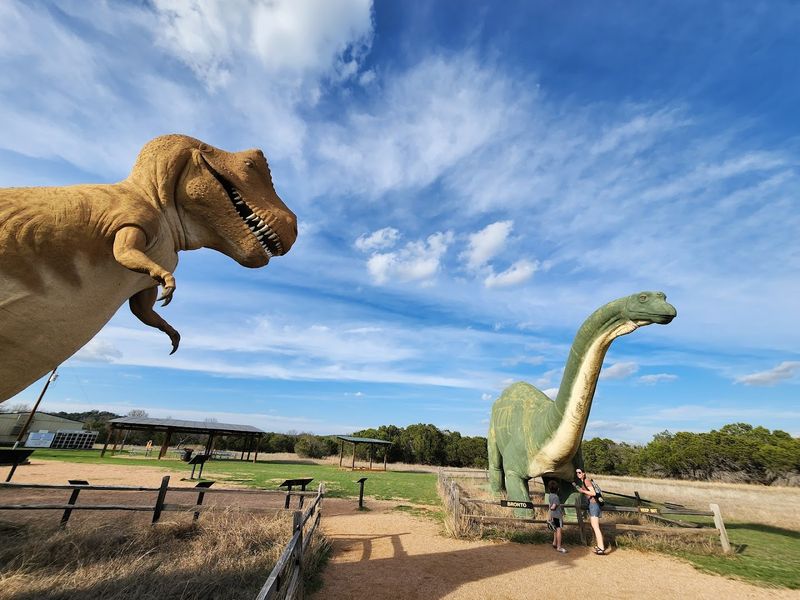
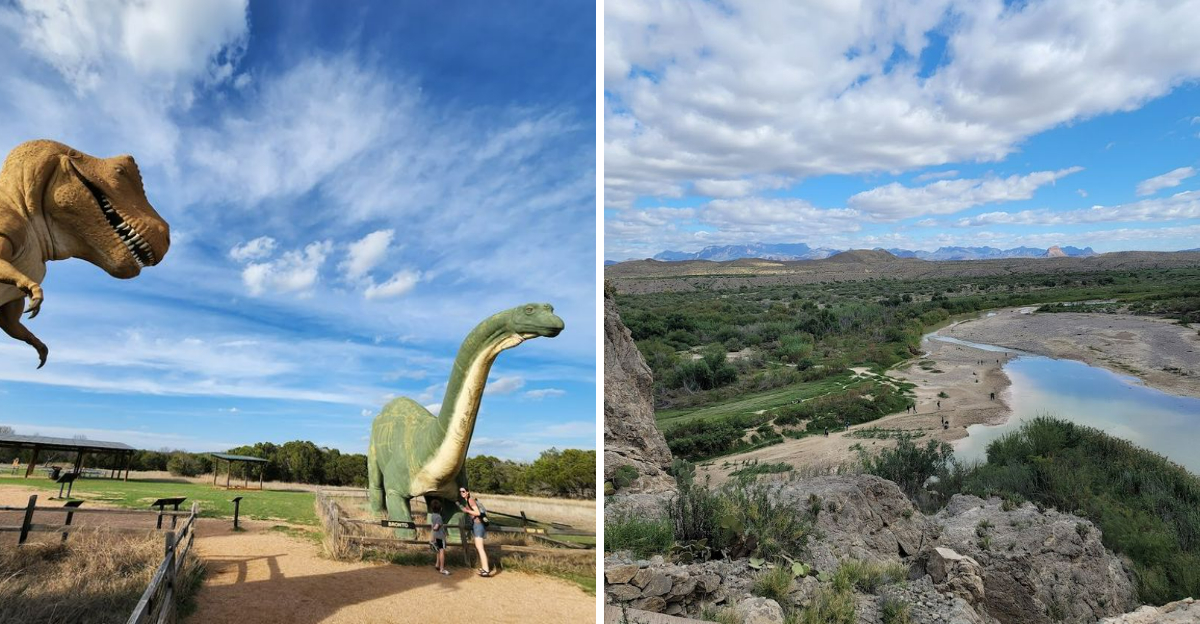
Walking where a dinosaur walked 113 million years ago is one of those experiences that makes your brain short-circuit in the best way. The tracks are not replicas or reconstructions.
They are the actual impressions left by sauropods and theropods in what was once a coastal mudflat.
Dinosaur Valley State Park at 1629 Park Rd 59 in Glen Rose preserves some of the best-documented dinosaur tracks in the world. The Paluxy River runs through the park and exposes the limestone trackways during low water periods.
Some individual tracks measure over three feet across.
The park has two large fiberglass dinosaur models near the entrance that were originally built for the 1964 World’s Fair in New York. They are wonderfully outdated in terms of scientific accuracy, which gives them a charming retro quality.
Kids absolutely love them.
Hiking trails wind through cedar and oak forests alongside the river. Swimming in the Paluxy near the tracks is allowed and popular during summer months.
Check the park website before visiting because high water can cover the trackways completely. Glen Rose is about an hour and a half southwest of Dallas and makes for an easy day trip from the city.
8. Ann W. Richards Congress Avenue Bridge Bat Colony, Austin

Watching a million and a half bats pour out from under a bridge at sunset is one of the most spectacular wildlife events in North America. It sounds chaotic but it is surprisingly graceful.
The Ann W. Richards Congress Avenue Bridge at 305 S Congress Ave in Austin hosts the largest urban bat colony in the world.
Mexican free-tailed bats roost under the bridge from March through October each year. At peak season the colony reaches around 1.5 million individuals.
Every evening just after sunset, the bats emerge to feed on insects and can consume up to 30,000 pounds of bugs in a single night.
The best viewing spots are on the bridge railing, along the hike and bike trail below, or from the grassy lawn of the Long Center nearby. Bat Conservation International operates a small information kiosk near the bridge during peak season.
Staff can answer questions about bat behavior and ecology.
The emergence lasts anywhere from 20 minutes to over an hour depending on conditions. Bring binoculars for a closer look at the swirling columns of bats against the fading sky.
It is completely free to watch and happens every evening throughout summer. Few cities in the world offer this kind of wildlife spectacle right in the urban core.
9. Big Bend National Park
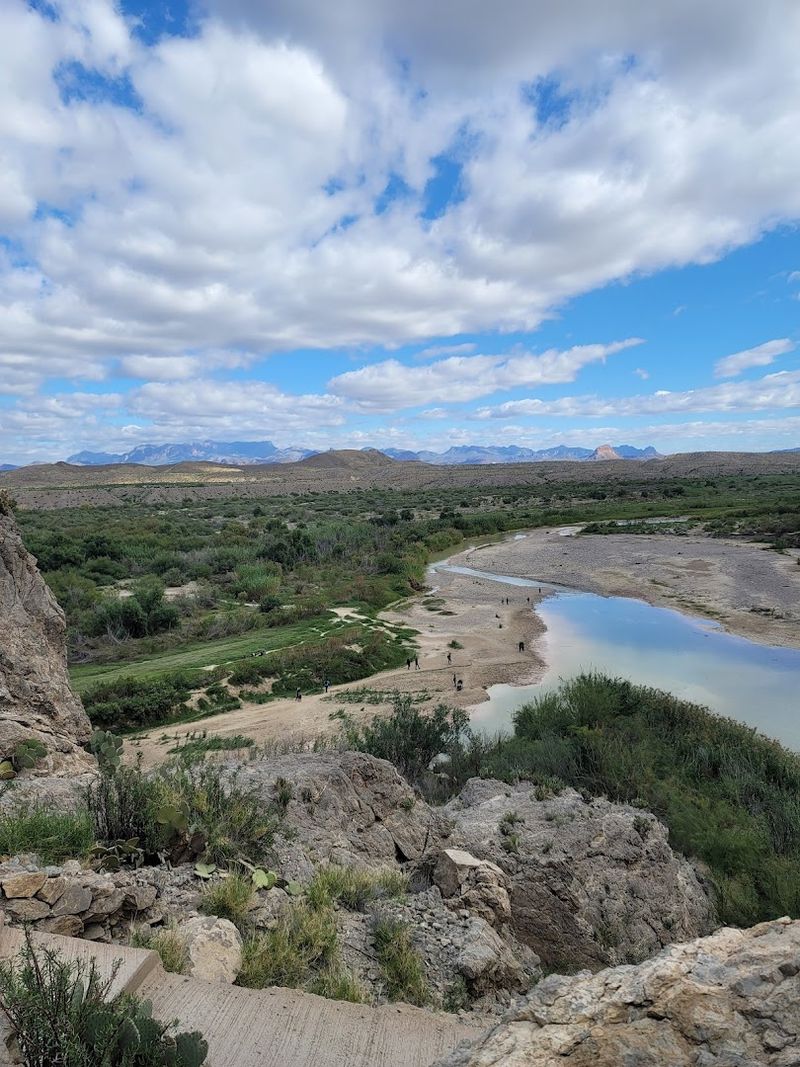
Big Bend is the kind of place that makes you feel genuinely small. In a good way.
Located at 1 Panther Junction, Big Bend National Park covers over 800,000 acres of Chihuahuan Desert, mountain terrain, and river canyon along the Rio Grande.
The park is one of the least visited national parks in the lower 48 states due to its remote location, which means trails feel uncrowded and skies stay brilliantly dark. The Chisos Basin is the most visited area and offers access to excellent hiking trails including the popular Lost Mine Trail.
The Santa Elena Canyon hike leads you into a slot canyon where limestone walls rise 1,500 feet on both sides of the Rio Grande. Standing at the mouth of that canyon and looking up is an experience that does not translate well to photographs.
You simply have to be there.
Wildlife is abundant and includes roadrunners, javelinas, black bears, mountain lions, and over 450 species of birds. Spring and fall are the best seasons for visiting due to milder temperatures.
Summer heat in the desert sections can be extreme. Plan at least two full days because the park is enormous and rushing through it would be a genuine shame.
10. Natural Bridge Wildlife Ranch, San Antonio
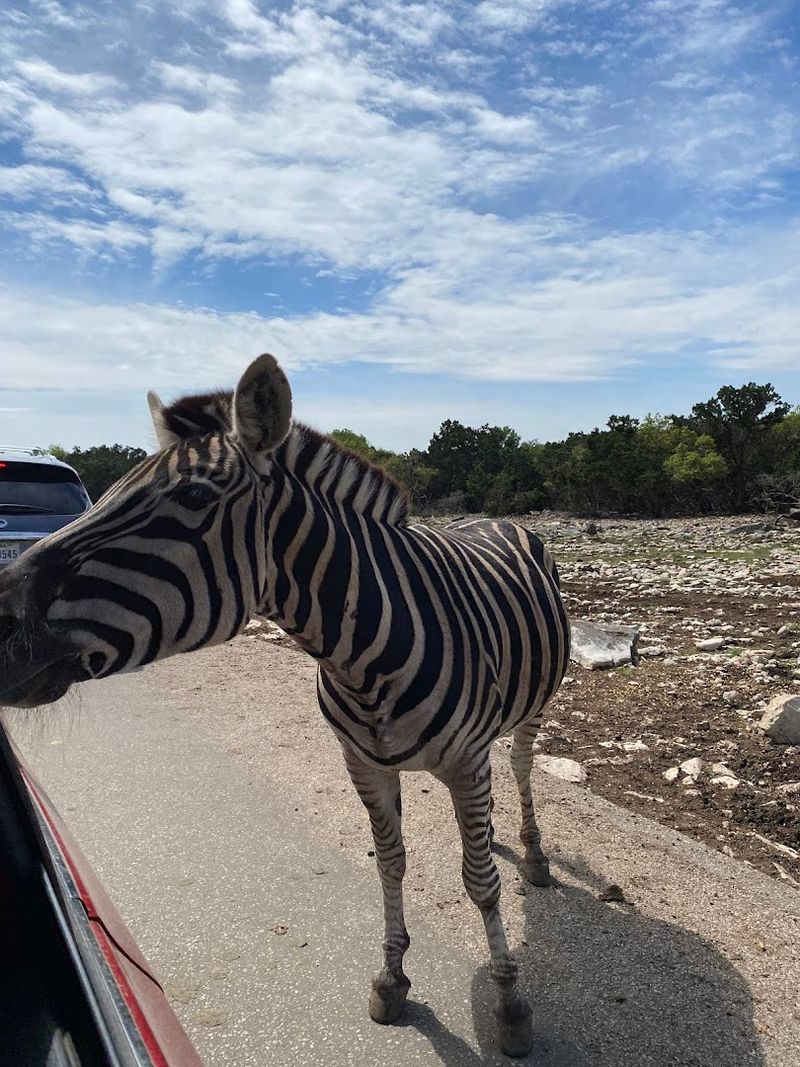
Having a giraffe stick its head through your car window is not something most people put on their bucket list until it actually happens to them. Natural Bridge Wildlife Ranch at 26515 Natural Bridge Caverns Rd in San Antonio is a drive-through safari experience that genuinely surprises first-time visitors.
The ranch covers over 450 acres and is home to more than 500 animals representing 40 different species from around the world. Guests drive their own vehicles along a winding road through open pasture where animals roam freely.
Zebras, ostriches, rhinos, and wildebeest wander right up to your car.
Feed buckets are available for purchase at the entrance and the animals know exactly what those buckets mean. Bison are the most assertive feeders and can get surprisingly close to your door.
Keeping your windows partially open adds to the adventure without losing complete control of the situation.
The ranch also has a walk-through section near the entrance with smaller animals and a petting area. It is one of the most visited wildlife ranches in the entire country and has been operating since 1984.
The experience works equally well for families with young children and adults who just want something genuinely fun to do on a weekend afternoon.
11. Jacob’s Well Natural Area, Wimberley
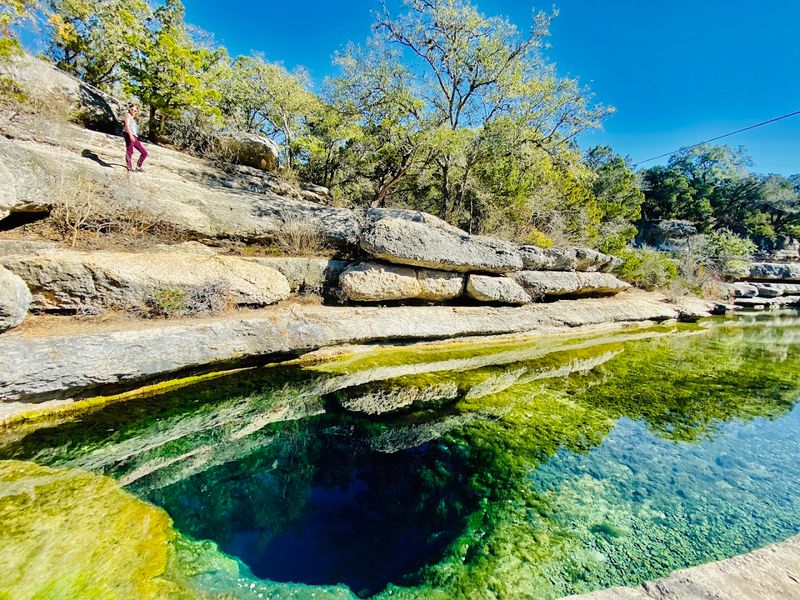
Staring down into a spring that drops 140 feet straight into the earth while standing in water so clear it looks like liquid glass is genuinely surreal. Jacob’s Well at 1699 Mt Sharp Rd in Wimberley is one of the most visually striking natural swimming holes in the entire country.
The well is a fully submerged karstic spring that discharges water from the Trinity Aquifer. The opening is about 13 feet in diameter and the water stays around 68 degrees year-round.
Swimmers can float above the spring opening and feel the cool water rising from deep underground.
Swimming is currently not permitted at Jacob’s Well due to low water levels and unsafe conditions, though visitors can still explore the natural area and hiking trails. The Hays County park system manages the site carefully to protect the ecosystem.
Only a limited number of visitors are admitted per session to keep the experience special and preserve the habitat.
Cypress trees line Cypress Creek just downstream from the well, creating a shaded and peaceful atmosphere. The surrounding natural area has hiking trails that wind through the Hill Country landscape.
Visiting early in the morning gives you the best light for photos and the most peaceful experience before the crowds arrive later in the day.