Why Does A Sphinx Sit Beside An Ancient-Looking Monastery Deep In The Florida Countryside?
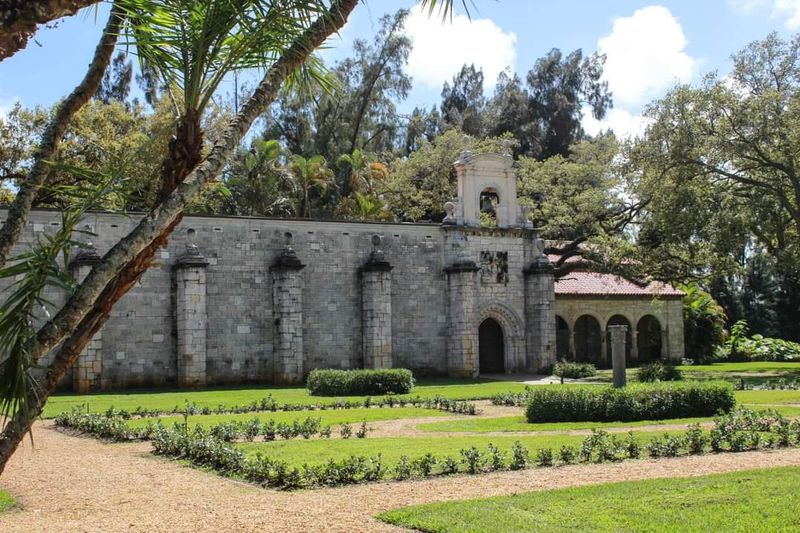
Somebody once packed a 12th-century monastery into roughly 11,000 wooden crates. Then customs officials burned the hay that cushioned the stones.
I can’t imagine opening those crates afterward. The numbering system was a mess, and the pieces sat in a New York warehouse for decades.
Eventually, two businessmen hauled the whole puzzle to Florida and rebuilt it.
The result looks like it belongs on a Spanish hillside, not beside a busy road near Miami. Stone arches, a quiet cloister, medieval stained glass, and lush gardens all share one surprisingly compact property.
It’s still an active church, too.
I like how the story feels half history lesson and half comedy of errors. The building survived monks, a granary, a stable, and a shipping disaster.
So how did it end up here?
A Medieval Cloister Next To A Busy Florida Highway
Let’s clear up the title’s twist right away. The building in question doesn’t sit in rural farmland, and it sits in a busy part of South Florida instead.
That’s what makes The Ancient Spanish Monastery so delightfully strange. Its stones were cut in Spain during the 1100s, yet today they stand along a road lined with ordinary city traffic.
The site also carries a second identity. It serves as the Episcopal Parish Church of St. Bernard de Clairvaux, so this isn’t a frozen museum piece.
Services still happen here, in both English and Spanish. That gives the old stones a pulse that a roped-off display never could.
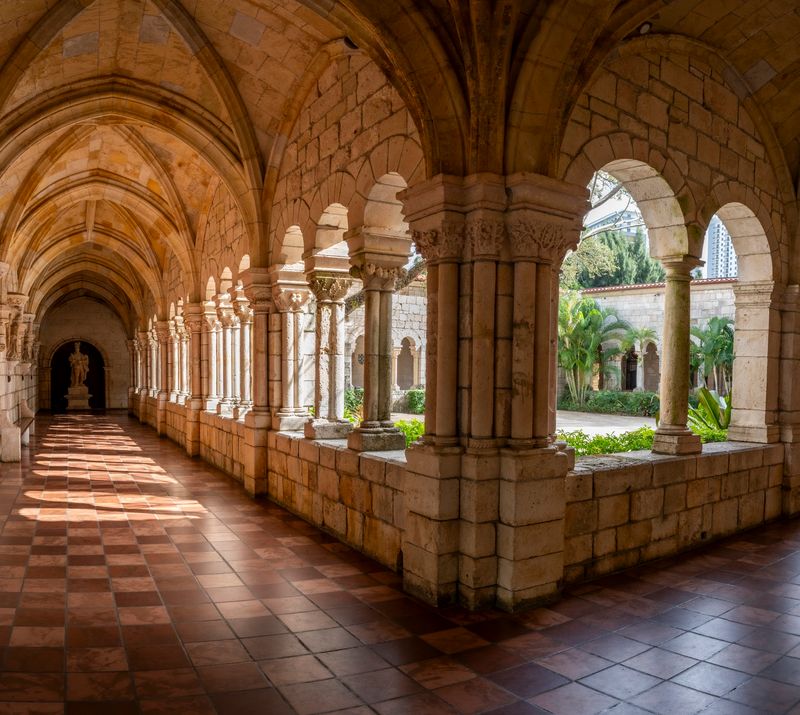
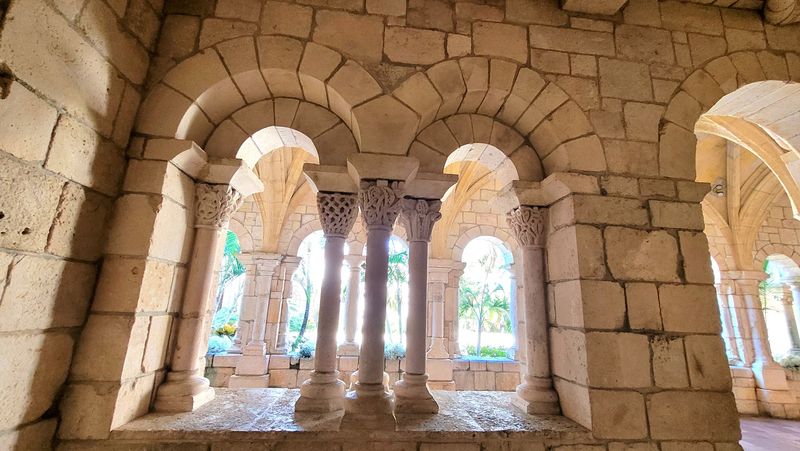
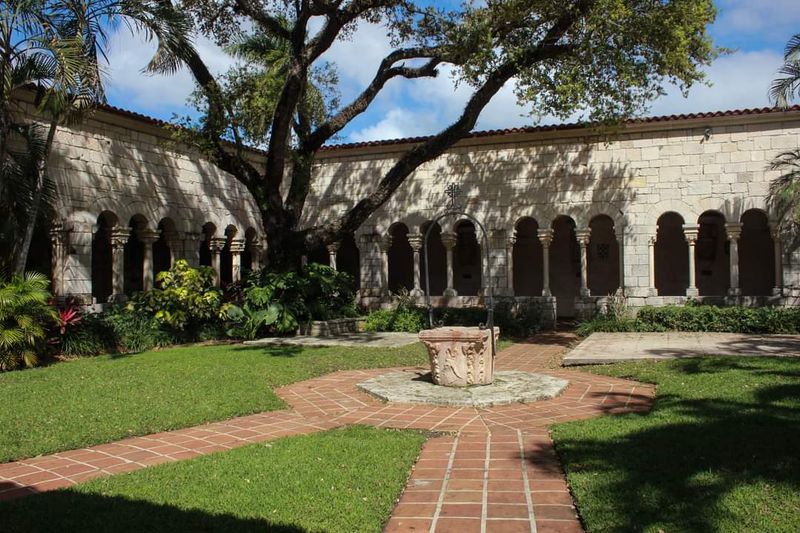
Visually, you get Romanesque and early Gothic design working together. Think heavy stone walls, rounded arches, carved columns, and a cloister wrapped around an open courtyard.
The property isn’t huge, and that works in its favor. You can take in the whole place without a map, a tram, or blistered feet.
Many people drive past for years without realizing what hides behind the gates. Once you know, Florida’s oldest-looking building becomes very hard to ignore.
Nine Centuries Of Stories Before Florida Ever Came Calling
Construction began in 1133, in the Spanish village of Sacramenia. Cistercian monks finished the monastery around 1141 and made it their home.
The community first dedicated it to the Blessed Mother. Later, the monastery took the name of Bernard of Clairvaux, an influential church leader who became a saint in 1174.
For roughly 700 years, monks prayed, worked, and walked these same cloister paths. The covered walkways around the courtyard were the heart of daily monastic life.
Then the 1830s arrived and flipped everything upside down. Social upheaval in Spain led to the seizure of many monastic properties, including this one.
What happened next feels almost comic in hindsight. The sacred building became a granary and a stable, so grain sacks and livestock replaced quiet prayer.
Somehow the stones held on through all of it. Thick medieval walls, it turns out, don’t care much whether they shelter monks or mules.
That long, bumpy résumé is part of the charm today. Few Florida buildings can say they worked as a farm shed before they ever saw an ocean.
The Newspaper Tycoon Who Bought A Building By The Crate
William Randolph Hearst never met a European treasure he didn’t want to ship home. In 1925, the newspaper giant bought the cloisters and other monastery buildings.
His plan sounded simple on paper. Take the whole thing apart, send it across the Atlantic, and rebuild it at his California estate.
Workers dismantled the structure stone by stone. Each piece got a number, and the stones went into roughly 11,000 wooden crates padded with hay.
Here’s where the plan wobbled badly. Spain was dealing with an outbreak of hoof-and-mouth disease, and that made American agriculture officials nervous.
Officials ordered the hay removed and burned as a precaution. When workers repacked the stones, they didn’t always return them to the correct crates.
So a carefully numbered puzzle turned into a scrambled one. Picture a box of ten thousand jigsaw pieces with half the lids swapped.
Money troubles soon made things worse for Hearst. Many of his collected treasures went to auction, and the crates landed in a Brooklyn warehouse.
They stayed put for about 26 years. California never got its monastery, which turned out to be Florida’s lucky break.
Nineteen Months Of Solving History’s Strangest Puzzle
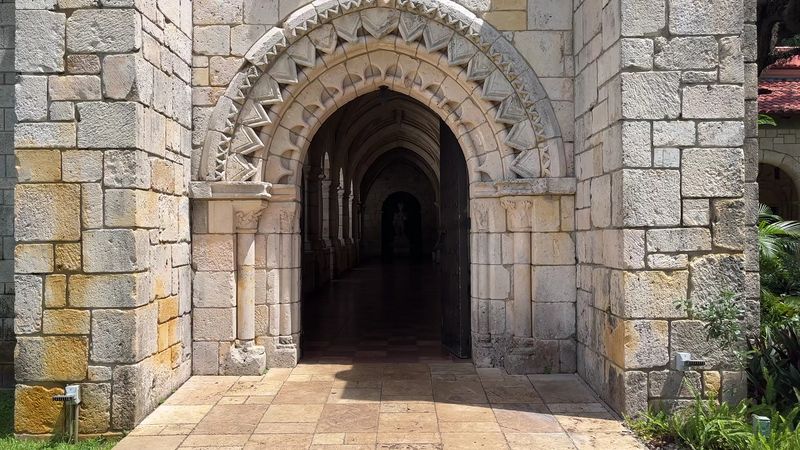
In 1952, two Miami businessmen saw opportunity in a warehouse full of mislabeled stones. William Edgemon and Raymond Moss bought the crates and brought them south.
Their goal was a tourist attraction in Florida. First, though, someone had to figure out which arch went where.
Reconstruction took about 19 months. Time magazine famously called the project the biggest jigsaw puzzle in history, and that label still fits.
Remember, the original numbering had been badly scrambled. Builders had to match carved stones by shape, style, and plenty of patient guesswork.
Honestly, that context changes how the finished building looks. Every column and arch represents a small victory over chaos.
The monastery later found its spiritual footing again. Today it operates as an active Episcopal church, which brings the story full circle in a satisfying way.
Monks built it for worship in the 1100s. Now, after a granary, a stable, a warehouse, and a cross-country move, worship continues inside those same walls.
Not bad for a building that once sat forgotten in Brooklyn. Few comebacks in Florida history involve this much limestone.
Stone Arches, Stained Glass, And Walls That Carry A Whisper
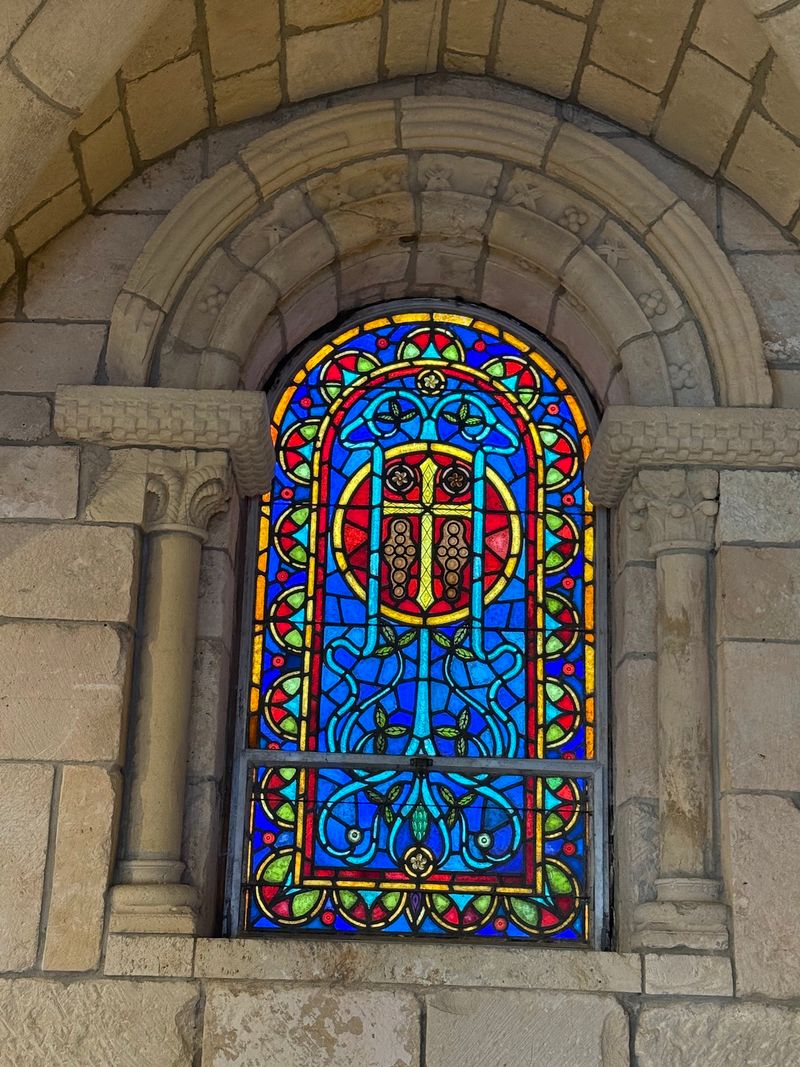
Sound behaves differently in here. The stone rooms carry voices so well that even a quiet prayer seems to linger in the air.
That acoustic quality matches the setting beautifully. The cloister walkways frame an open courtyard, and colorful coats of arms decorate the walls.
Look up as you move through the halls. Carved ceilings, sturdy columns, and rounded stone arches show off centuries of skilled handwork.
The chapel deserves extra time. Medieval stained glass adds rich color to the stone, and it’s one of the details history fans tend to love most.
Several distinct spaces share the property. There’s a main chapel, a chapter house, and a more intimate French altar to find.
Near the ticket area, a small museum fills in the backstory. Displays include historic Spanish artifacts that connect the building to its European past.
Grab the paper brochure when you pay admission. It turns a pleasant stroll into a self-guided tour, so you’ll know what you’re looking at.
You don’t need to be religious to appreciate the calm. Slow footsteps on old stone have a way of quieting even busy minds.
Gardens, Fountains, And A Labyrinth For Slow Wandering
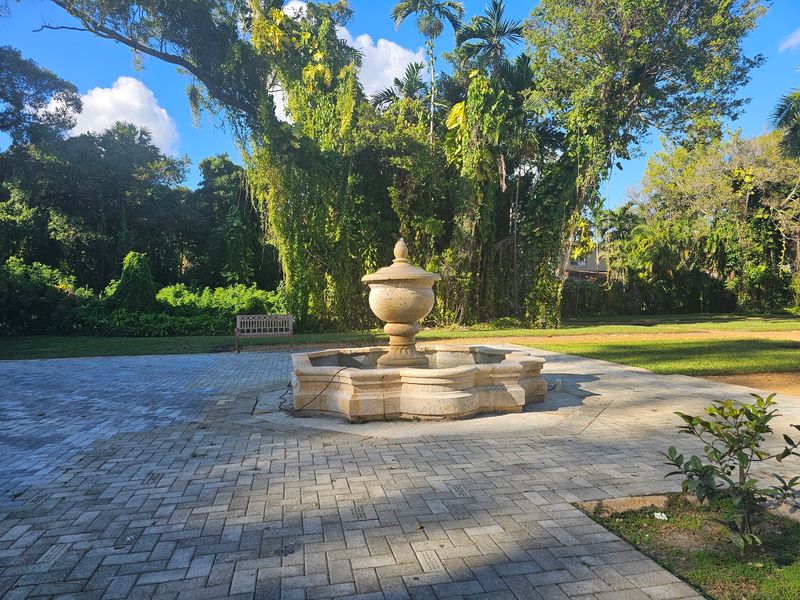
Palm trees and a medieval cloister make an odd couple, yet they get along wonderfully. The gardens wrap the old stones in tropical green.
Expect rare palms, broad oaks, and sprawling banyan trees. Flowering plants add pops of color against the weathered gray stone.
Paths lead past religious statues and fountains. The gentle sound of running water helps drown out the city just beyond the walls.
Wide lawns give you room to sit and do absolutely nothing. In South Florida, that counts as a rare and underrated activity.
A labyrinth offers something more intentional. It’s a meditative walking path, and following its curves invites a slower pace.
Keep an eye out for a few furry residents. The monastery helps feed a community of cats that live on the grounds.
Animal lovers sometimes bring cat food as a donation. It’s a small gesture, but it fits the welcoming mood of the place.
Photographers will find no shortage of frames here. Arches peeking through palm fronds might be the most Florida-meets-Spain image possible.
Why So Many Brides And Quinceañeras Pick These Ancient Walls
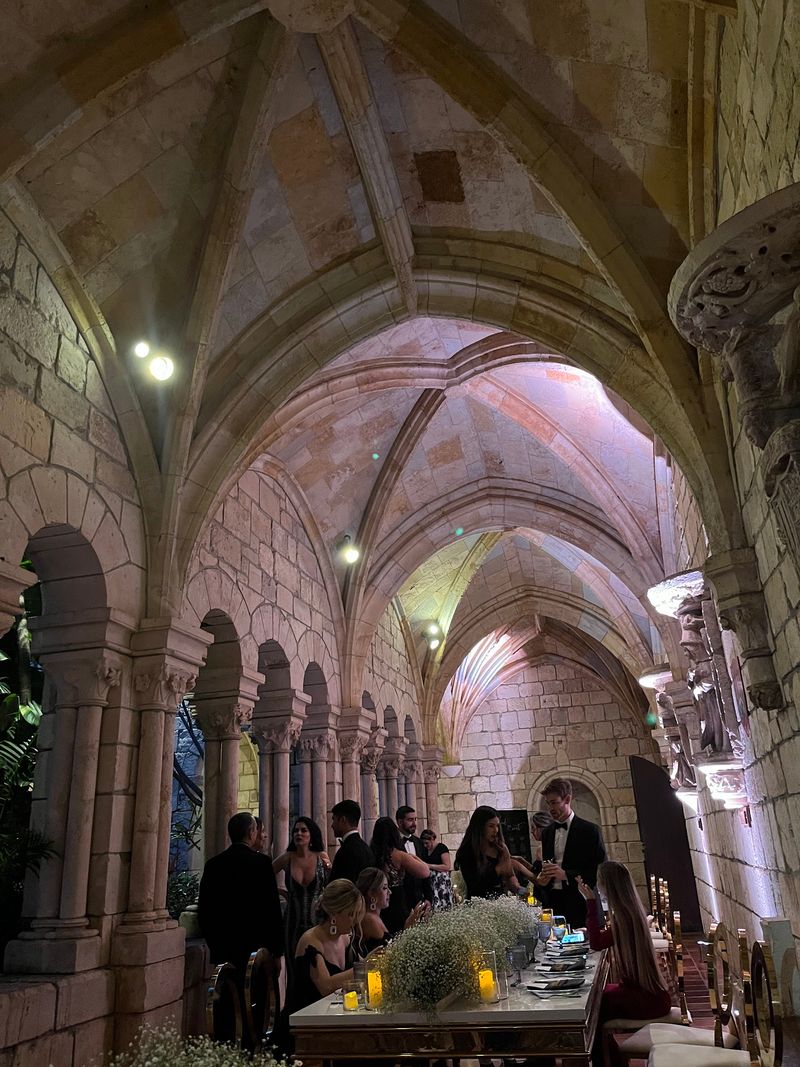
Spot a gown swishing past a stone column, and you’ve learned something about this place. Weddings are a huge part of life at the monastery.
Couples can choose between chapel ceremonies and several outdoor settings. Options include the loggia, the courtyard, the banyan tree, and named garden spaces.
Quinceañeras bring plenty of celebration here too. Formal photo shoots happen often, since the arches make a striking backdrop.
Fair warning for casual visitors, though. You may need to step around a camera crew or two, even on a weekday afternoon.
Those photography fees help support upkeep of the historic site. So that patient detour around a posing couple actually helps preserve the stones.
Events beyond weddings appear on the calendar as well. The grounds have hosted community gatherings, including food-focused events.
Faith remains central, too. Easter services have been held in the courtyard, which sounds like a memorable way to mark the holiday.
Whether you’re planning a big day or just visiting, the mix works. Old walls, new celebrations, and a lot of happy people in fancy clothes.
Easy Parking, A Modest Ticket, And An Hour Well Spent
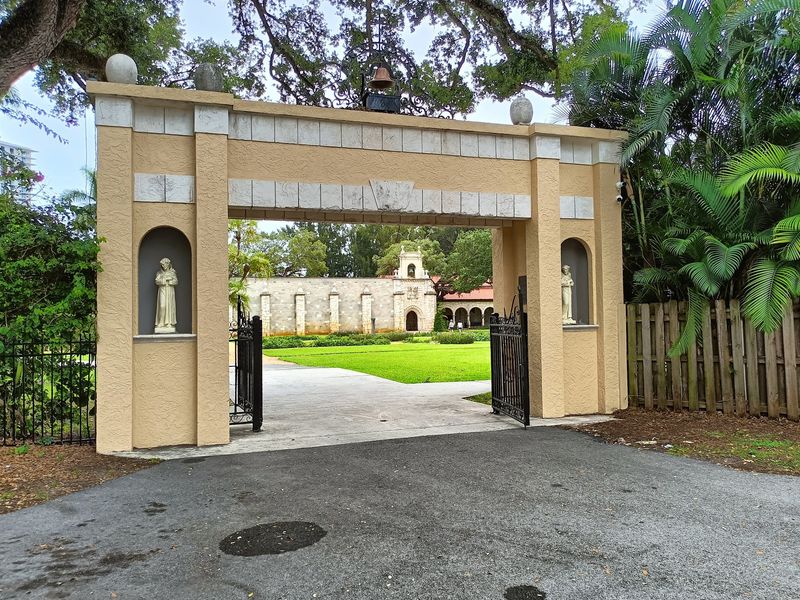
Plan on roughly an hour to see everything at a relaxed pace. Linger longer if the gardens or the labyrinth pull you in.
You’ll find The Ancient Spanish Monastery at 16711 West Dixie Highway, North Miami Beach, Florida 33160. It’s a short drive from I-95, and Fort Lauderdale sits about a half hour north.
Free parking makes arrival simple. Admission is a modest fee, and it helps maintain this remarkable old building.
Hours run shorter than many attractions, and the site closes on certain weekdays. Check the schedule before driving out, especially since weddings and events can affect access.
Weekday visits may feel quieter, though photo shoots happen then too. Bring comfortable shoes, water, and maybe some cat food for the resident felines.
Summer in Florida means humid heat and afternoon storms. A morning visit lets you enjoy the gardens before the sky gets dramatic.
So, any sphinx? Forget mythical guardians and focus on the real marvel.
A 900-year-old monastery that survived a stable, a hay fire scare, and a scrambled puzzle is plenty. Honestly, that’s more than enough story for one afternoon.