Your First Visit To This Rare 28-Acre North Carolina Garden Will Feel Like Finding A Secret Wonderland
Turn off the road near Raleigh and the afternoon suddenly feels like it found a hidden chapter.
This garden does not ease first-time visitors in gently, because the place opens around you with the confidence of a secret that has been waiting to be noticed.
Twenty-eight acres may sound manageable until the paths begin pulling your attention in every direction.
Then the real number lands: more than 27,000 plant species, which is enough to make even confident plant people blink like their brain needs a map.
For a North Carolina garden, the first impression feels less like a casual stroll and more like discovering someone quietly built a living encyclopedia outdoors.
You arrive expecting beauty, then leave wondering how many secrets were hiding just past the road.
The First Garden Path Feels Like It Knows A Secret
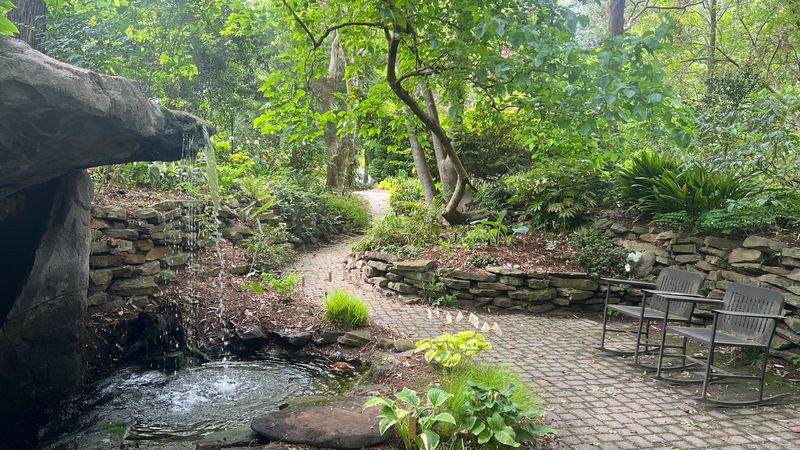
Something about the first few steps changes the pace immediately. Juniper Level Botanic Garden does not greet visitors with a stiff, predictable row of bedding plants or a flat lawn that explains itself in ten seconds.
Instead, the paths pull you into layered plantings where color, texture, form, height, and odd botanical personalities compete for attention in the best possible way.
The garden’s own design notes explain that most beds follow a “drifts of one” principle, because the collection is so large that plants are rarely repeated in mass plantings unless they naturally spread.
That choice makes the walk feel unusually alive. Every bend can introduce a new leaf shape, a strange flower, a sculptural stem, or a plant you have probably never seen in a neighbor’s yard.
The effect is secretive without being messy. Beds feel intentional, but never boring.
A first-time visitor may start by admiring the path itself, then quickly realize the real fun is how many surprises are hidden along its edges. Comfortable shoes matter, because this is a place that rewards wandering rather than quick box-checking.
The garden also asks visitors not to step off the paths, which makes sense when so many rare treasures are growing close enough to tempt curious eyes. This opening stretch sets the whole mood: not polished sameness, but living discovery.
You Start Spotting Plants That Look Almost Unreal
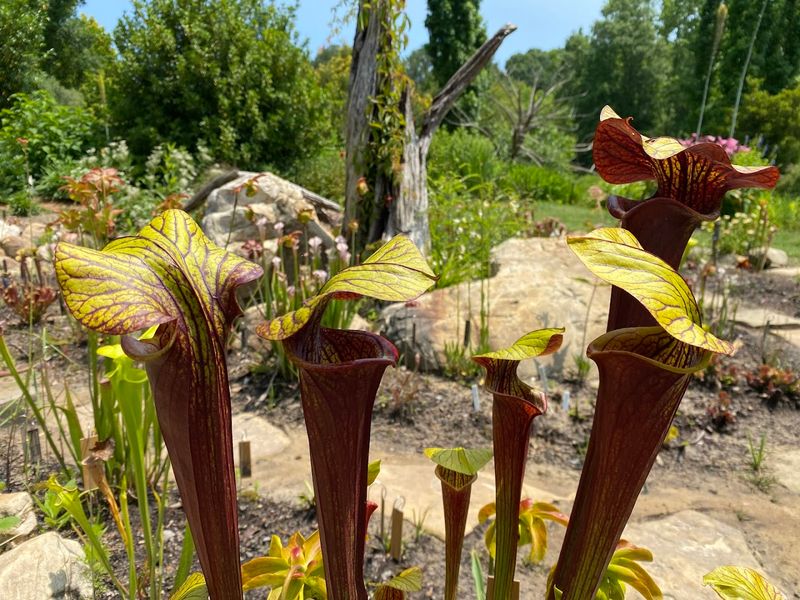
Odd leaves, prehistoric textures, sharp silhouettes, and strange blooms make this garden feel like a field trip for people who did not know they needed one.
Juniper Level Botanic Garden’s collection spans more than 27,000 taxa. The garden also notes its plant quest has involved over 80 botanical expeditions alongside leading plant explorers and breeders worldwide.
That background explains why so many plants here look unfamiliar even to people who already spend time in nurseries. The goal is not just to display pretty flowers.
It is to test, conserve, breed, and share plants that push the possibilities of gardening in East Coast zone 7b. One section may offer bold tropical-looking leaves.
Another may lean dry, spiky, and architectural. Ferns, yuccas, agaves, hardy perennials, woodland plants, and rare specimens all help create the feeling that the garden keeps changing genres.
Visitors who normally walk quickly through plant labels may suddenly slow down because the labels become part of the adventure. What is that thing?
Where did it come from? Could it actually survive here?
The garden makes those questions feel natural. Children may be drawn to the weird shapes first, while adults may notice the design and rarity.
Either way, the collection makes a strong case that plants can be just as strange, dramatic, and memorable as anything in a museum.
Rare Blooms Make Every Turn Feel Different
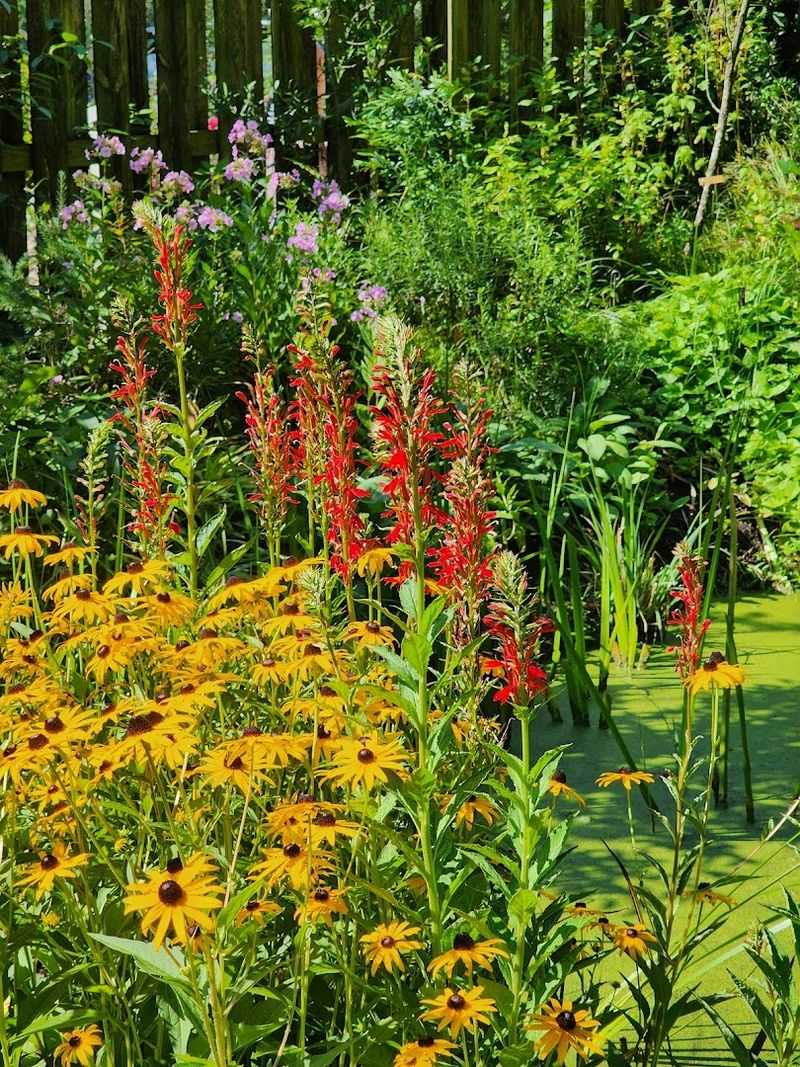
Flowers are only part of the story here, but when the blooms arrive, they know how to steal attention. Juniper Level Botanic Garden designs for every season, using plant combinations that rely on color, texture, form, structure, flow, and elevation rather than one short window of prettiness.
That means a visit can feel completely different depending on timing. Spring may bring the easiest drama, with fresh growth and flowering plants making the garden feel newly awake.
Summer leans lush, bold, and full of texture. Fall can shift toward seedheads, foliage, and late-season surprises.
Winter still has value because the garden does not depend only on petals; evergreen structure, bark, stems, and sculptural shapes keep the paths interesting even when bloom is quieter. That all-season approach is one reason returning visitors often talk about the place as if it changes costumes.
A favorite corner in May may be almost unrecognizable in July. A plant that barely registered on one visit may become the main character the next time.
Photographers benefit from that constant movement, because the garden offers close-up details, wider views, water features, shadows, and odd botanical textures that keep the camera busy. The best strategy is to arrive without expecting one specific show.
Let the garden choose what it wants to reveal that day.
This Raleigh Garden Rewards Slow Wandering
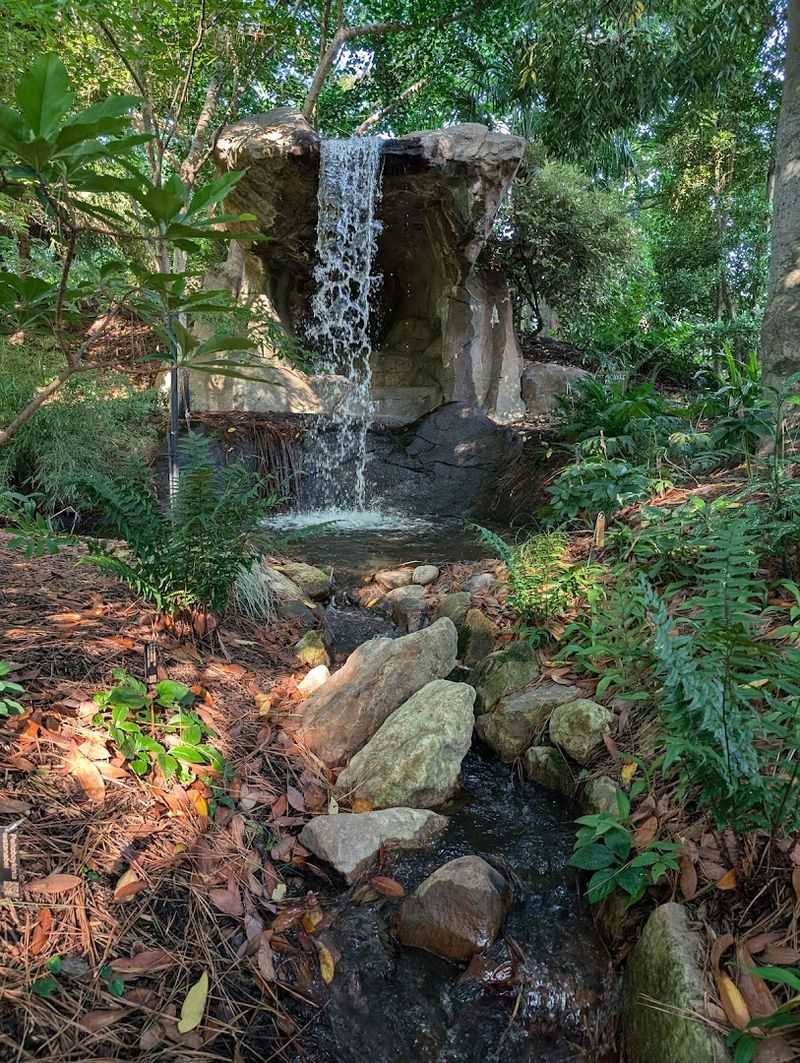
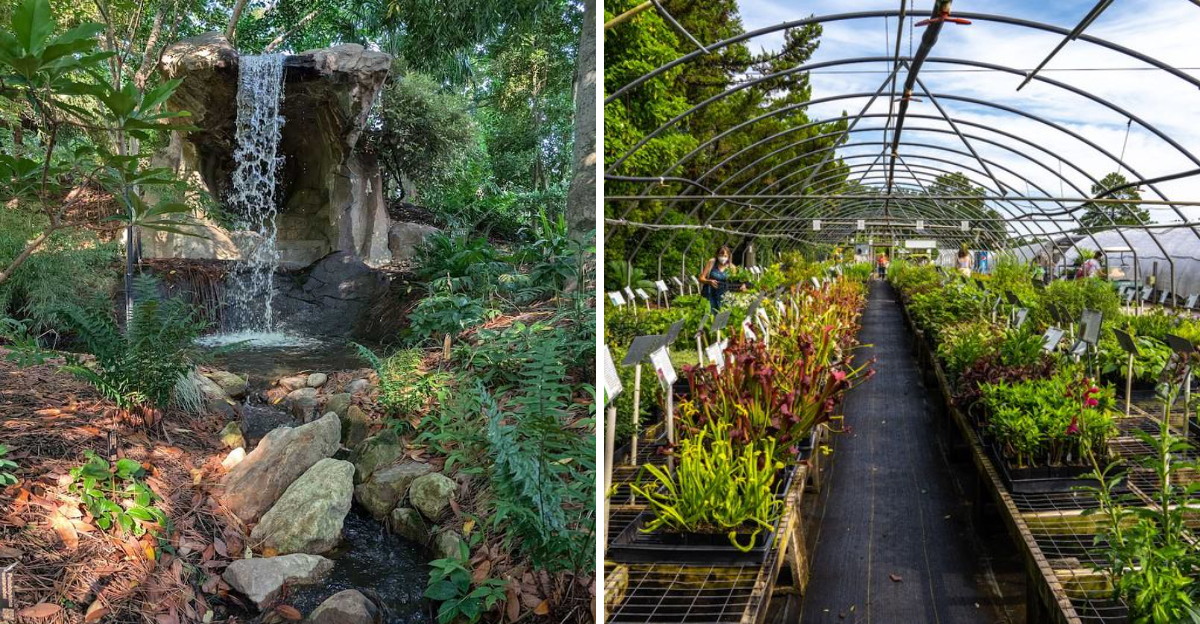
Rushing through this place would be like speed-reading a book written in rare leaves. Juniper Level Botanic Garden’s public display areas include distinctive gardens, bogs, rock gardens, waterfalls, creeks, and other features designed to show what is possible in the region’s climate.
Layered over time, the property has grown through additions like woodland, bog, rock, southwest, and hardy tropical gardens. Evolving further, features such as a sunken garden, waterfall, grotto, creeks, and mixed borders shape its overall landscape.
That variety makes slow movement almost mandatory.
A quick lap shows the garden’s scale, yet it misses its best details, from unexpected plant pairings to hidden water sounds and unusual leaf textures. Deeper wandering reveals small rock garden treasures and sudden shifts in mood, from shaded calm to bright, architectural spaces.
Visit Raleigh notes that average visitors may spend between 45 minutes and two hours on site, including time for shopping.
Plant people may need even longer, especially if they stop to read tags, compare specimens, or ask staff questions during open days. The garden’s magic is not loud.
It builds in layers. Walk, pause, look closer, repeat.
That is how the place starts feeling less like a destination and more like a secret system you are slowly learning.
Plant Lovers Get Lost In The Best Possible Way
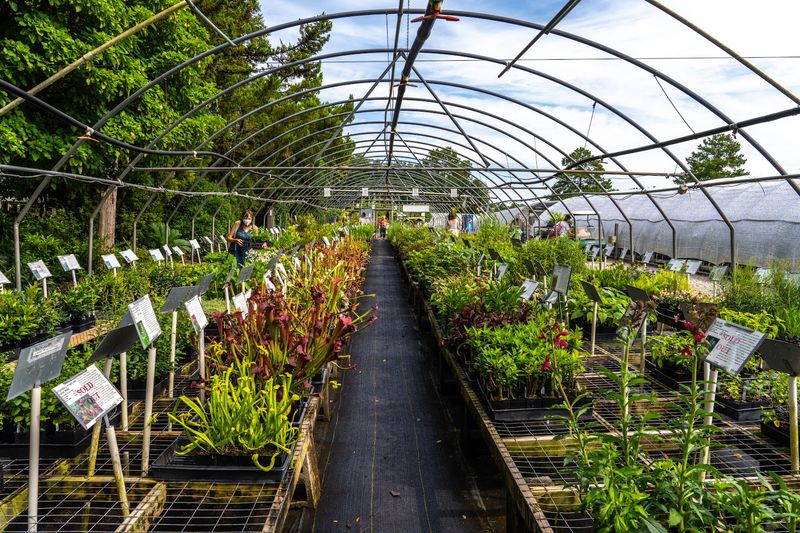
Anyone who has ever lost track of time reading plant tags is in real danger here. Juniper Level Botanic Garden shares its site and story with Plant Delights Nursery, the rare-plant nursery that helps make the garden possible.
Established in 1986, Plant Delights Nursery was created to offer unique, unusual, and native perennials while also funding Juniper Level Botanic Garden’s research, exploration, breeding, and maintenance.
During open nursery and garden days, visitors can shop plants, ask expert staff questions, and attend educational programs meant to help gardeners understand what grows well in the region.
That connection is what makes the experience feel especially dangerous for anyone with an empty spot in the yard. You are not just looking at pretty plants in isolation.
You may be seeing mature possibilities before wandering toward nursery benches where unusual perennials and rare finds are available to buy.
Visit Raleigh notes that Plant Delights ships more than 100,000 plants per year and calls it one of the country’s largest online retail outlets for rare, unusual, and exotic perennials.
The result is part garden visit, part research mission, part temptation. Even casual visitors may leave with new opinions about shade, texture, and plant combinations.
Serious gardeners may leave with a wagon, a receipt, and a sudden need to reorganize the backyard.
The Open Days Make A Visit Feel Extra Special
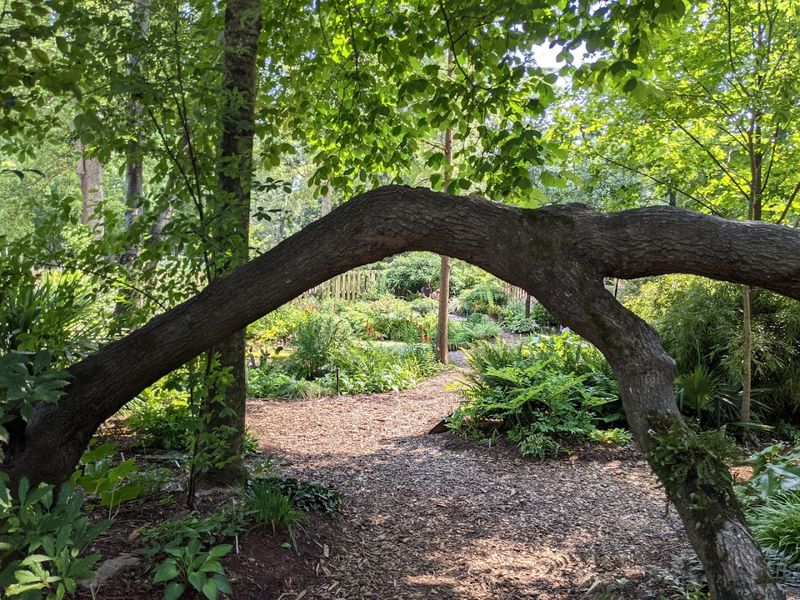
Limited access gives Juniper Level Botanic Garden part of its secret-wonderland feeling. This is not a garden where visitors can wander in every random afternoon without checking the calendar first.
The official visit page notes the garden is open to the public eight weekends a year, rain or shine. Those open garden and nursery days are also highlighted as the best time for visits, plant shopping, staff conversations, and educational programs.
The garden also welcomes visits by appointment during regular business hours for those who cannot make the open events.
For 2026, the garden’s Open Garden and Nursery Days page lists summer public dates of July 10–12 and July 17–19, with the full year divided into winter, spring, summer, and fall open weekends.
Visit Raleigh’s 2026 guide notes that open-house visits are free, generally run from 9 a.m. to 5 p.m., and do not require reservations.
That schedule makes timing important, but it also makes a visit feel like an event instead of an ordinary errand. Staff are on hand.
Gardeners arrive ready to ask questions. Shoppers hunt for rare plants.
First-timers wander around trying to process what they have found. Because the garden changes so much by season, one open weekend rarely feels like enough.
Winter, spring, summer, and fall each bring a different version of the same hidden place.
Unexpected Textures Turn The Garden Into A Living Gallery
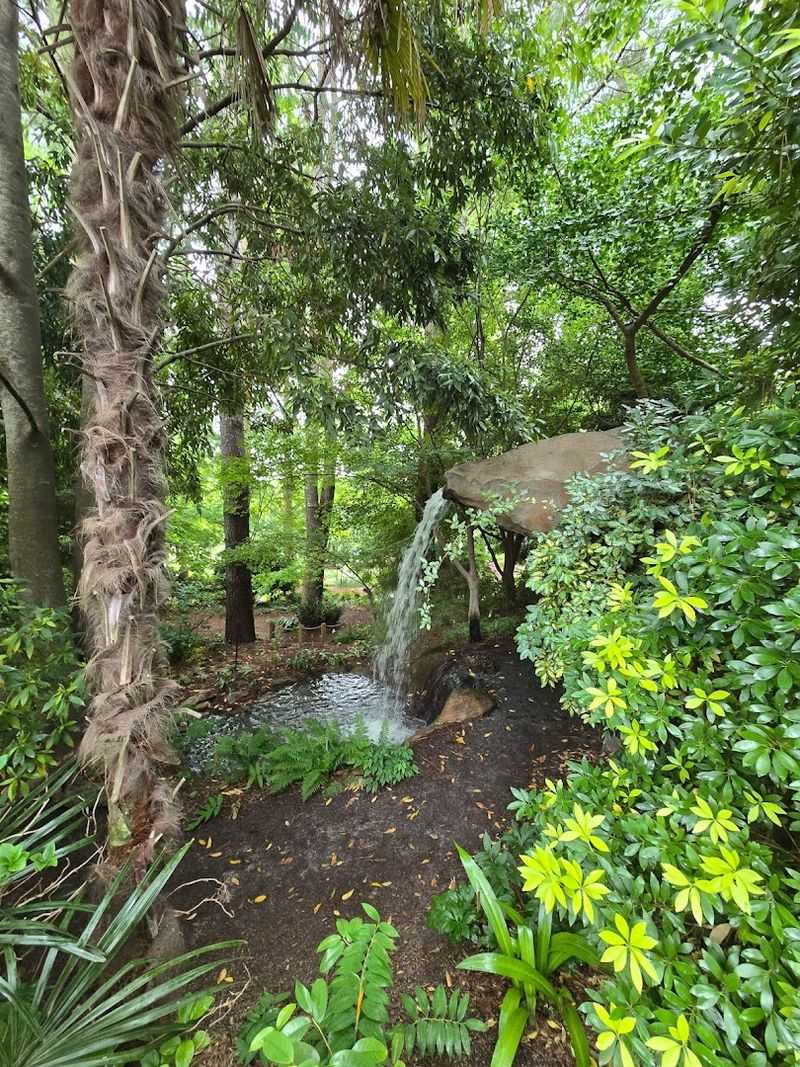
Flowers may draw the first gasp, but texture keeps the eye working. Juniper Level Botanic Garden’s design philosophy intentionally uses color, texture, form, spacing, soil preparation, and proper placement to show each plant at its best.
That means the garden does not go flat when something stops blooming. Smooth succulent rosettes, stiff yucca leaves, fern fronds, chunky bark, glossy foliage, delicate stems, bold tropical shapes, crevice-garden geometry, and soft grasses all create a living gallery of surfaces and silhouettes.
One section might feel dry and sculptural, while another feels lush and almost jungle-like. A rock garden can make tiny plants look monumental.
A shady border can turn leaf shape into the main attraction. This is where non-plant people often get surprised.
They may not know the names. They may not understand the collection’s rarity.
But they can still feel the visual drama of contrast, scale, and structure. The garden is also known for special features such as bogs, rock gardens, waterfalls, and creeks, which add movement and sound to all that texture.
Personal photography is a natural fit here, though visitors should stay out of planting beds and protect the specimens while framing a shot. The best images may not be wide postcard views.
They may be close-ups: a leaf edge, a strange flower spike, a rough trunk, or one plant looking completely impossible in the Raleigh sun.
You Leave With A New Definition Of Backyard Goals
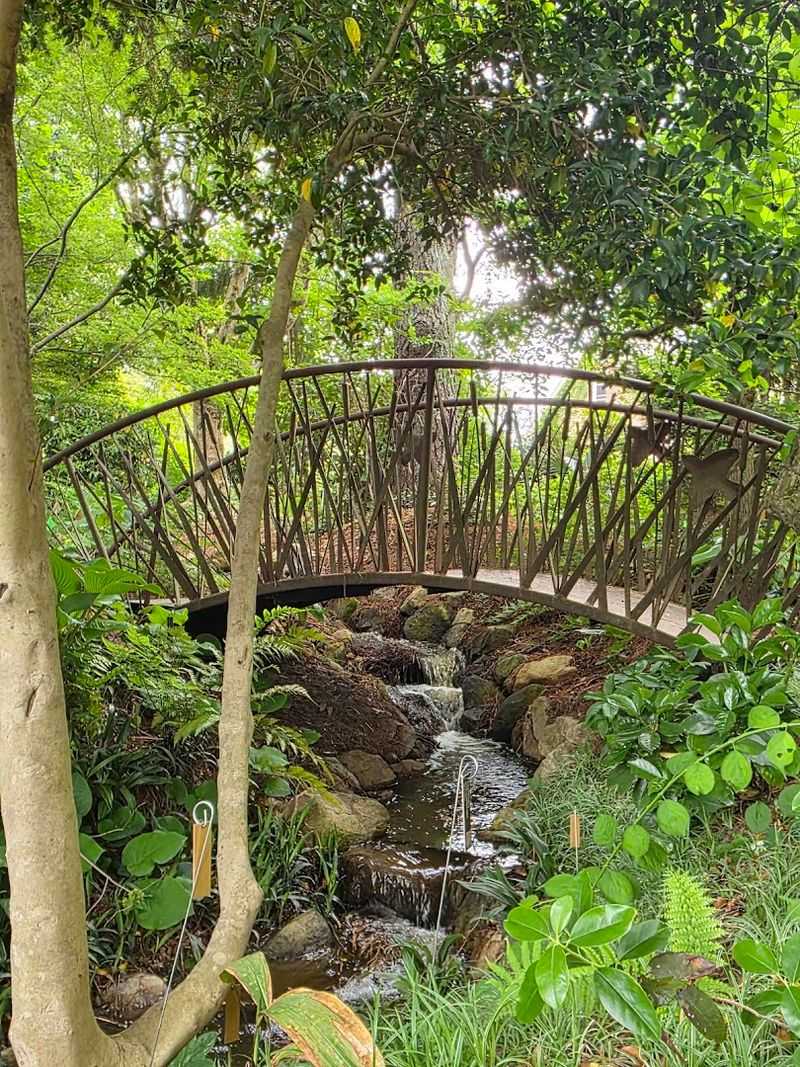
Garden envy hits differently after a visit like this. A plain patch of lawn can suddenly look suspiciously underused.
A shady corner starts begging for ferns. A soggy spot no longer seems like a problem, because the garden’s bog areas show how water can become part of the design.
Juniper Level Botanic Garden is not just a pretty escape; it is an enormous idea machine for anyone who has ever wondered what a yard could become with more imagination.
Designed for East Coast zone 7b, the property’s display gardens highlight plant combinations, structure, flow, elevations, and specialty features that reshape how home landscapes can be imagined.
Plant Delights Nursery carries that inspiration into practice, offering unusual plants while supporting the garden through sales.
Just 12 miles south of downtown Raleigh at 9241 Sauls Road, Raleigh, NC 27603, Visit Raleigh notes a $5 parking fee that may be redeemed during open-house visits.
That small detail feels dangerously clever. By the time visitors reach the nursery, many have already mentally redesigned half their yard.
A first visit may begin as a pretty afternoon out, but it can end with new plants, new plans, and a much higher standard for what “backyard goals” should mean. Head to North Carolina and see it yourself.