These California Castles Look Like They Belong In Another World
Castles seem like they belong to fairy tales, don’t they? Majestic fortresses with towering spires and sprawling estates, full of history and secrets.
California, known for its beaches and sunshine, hides these enchanting castles that feel like they’ve been plucked straight from a dream.
From grand structures tucked within wine country to others perched above sparkling lakes, each one offers a taste of a world where luxury and mystery intertwine.
These castles weren’t just built – they were envisioned by eccentric millionaires and passionate artists who sought to create something beyond ordinary.
Every room, every archway, and every stone is steeped in stories of ambition, art, and opulence.
Visiting them is like stepping back in time, where the grandeur of European history meets the rugged beauty of California.
These hidden gems invite you to discover the untold tales and breathtaking beauty that make them feel almost unreal.
1. Hearst Castle
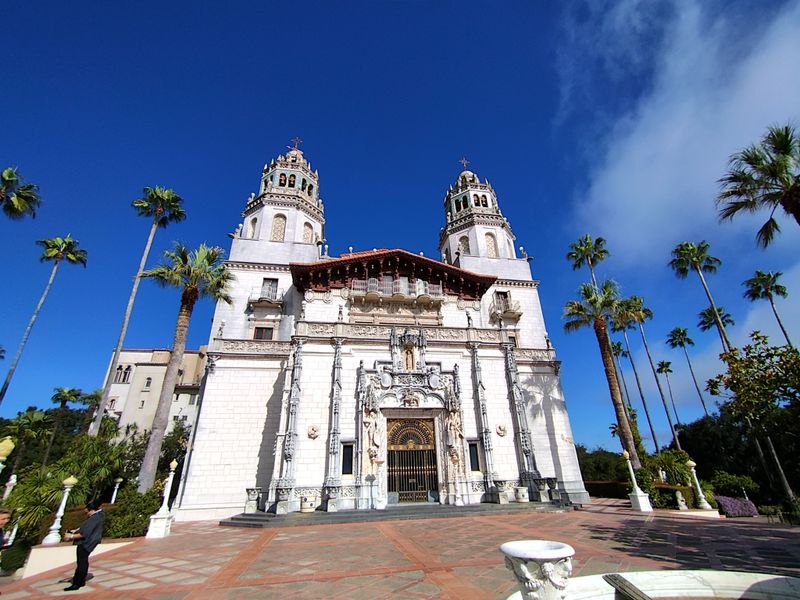
Perched high above the Pacific Ocean on a hilltop in San Simeon, this Mediterranean Revival masterpiece contains 165 rooms spread across a sprawling estate that feels more European than Californian.
Media mogul William Randolph Hearst commissioned architect Julia Morgan to design this palatial residence, which took nearly three decades to complete starting in 1919.
The estate sits at 750 Hearst Castle Road, San Simeon, CA 93452, where visitors can tour opulent guest houses, terraced gardens, and shimmering pools that reflect the sky.
Two stunning swimming pools anchor the property – the outdoor Neptune Pool features ancient Roman-inspired colonnades, while the indoor Roman Pool dazzles with intricate blue and gold mosaic tiles.
Art and antiques from around the globe fill every corner, creating a museum-like atmosphere that transports guests to a bygone era of wealth and grandeur.
Tours run year-round, though booking ahead during summer and holidays ensures entry to this California State Park attraction that continues to captivate architecture enthusiasts and history lovers alike.
2. Scotty’s Castle
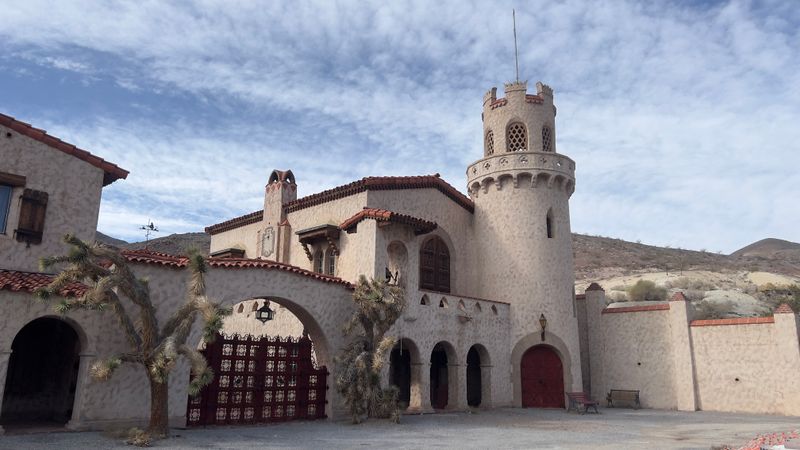
Rising from the desert floor in Death Valley like a Spanish Colonial mirage, this two-story villa blends Moorish and Mediterranean architectural elements in one of the most unlikely locations imaginable.
Chicago millionaire Albert Johnson built this desert retreat in the 1920s, though colorful prospector Walter Scott claimed ownership and spun tall tales that gave the castle its enduring nickname.
The structure sits at 123 Scotty’s Castle Rd, CA, though flash flood damage in 2015 closed the site for extensive restoration work that continues today.
When open, visitors could explore rooms filled with hand-painted tiles, carved wooden beams, wrought iron details, and a music room housing a massive pipe organ that once filled the desert air with melodies.
The castle’s red tile roof and cream-colored stucco walls contrast dramatically with the surrounding barren landscape, creating a visual impact that seems almost fantastical.
Tours that were once available showcased the eccentric blend of luxury and isolation, where wealthy visitors once escaped city life in air-conditioned comfort despite the harsh desert environment outside.
3. Sam’s Castle
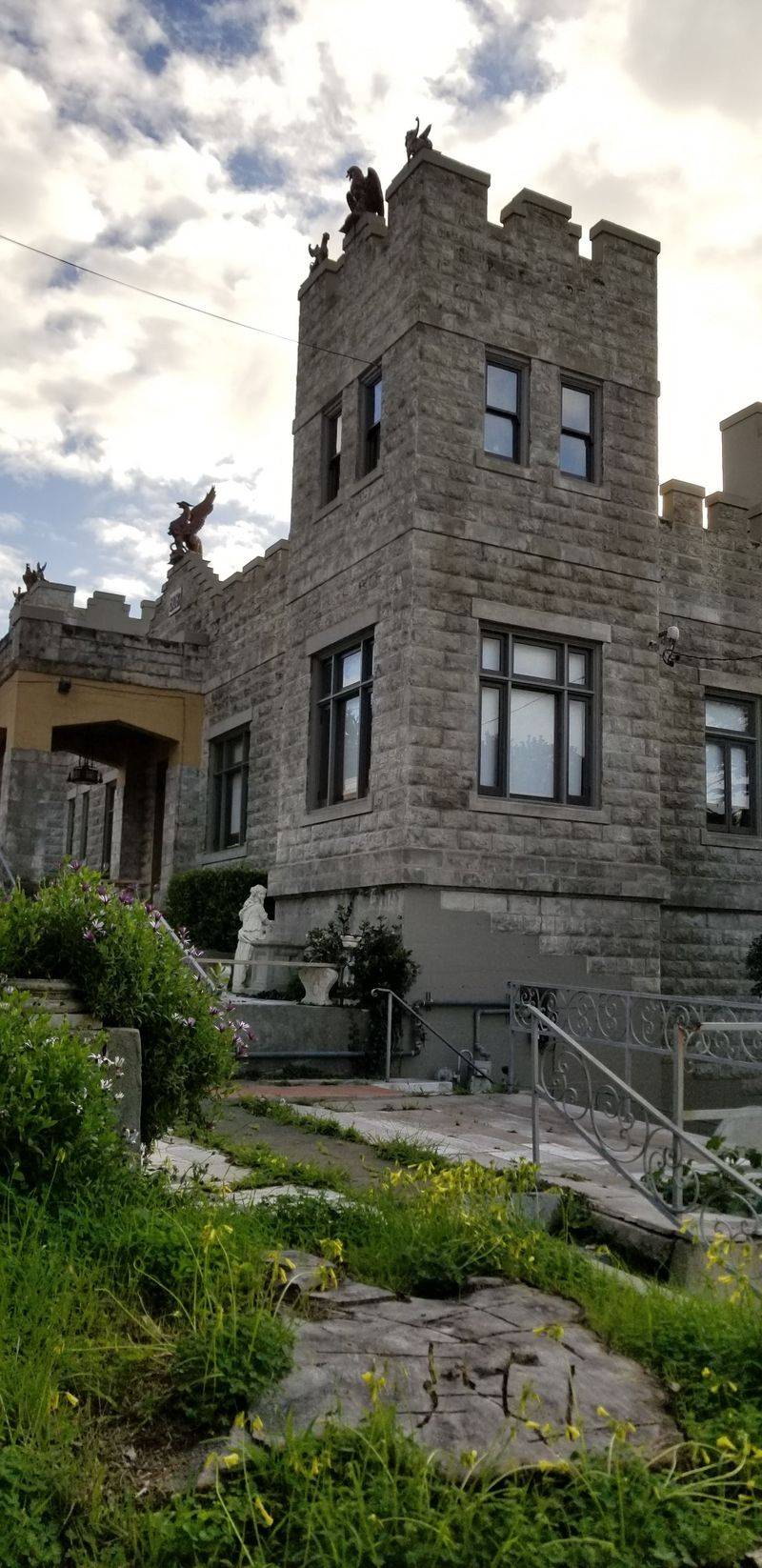
Gray stone walls rise dramatically from the coastal cliffs of Pacifica, where this fortress-like structure has stood guard over the Pacific Ocean since 1908.
Henry Harrison McCloskey originally built this residence, which later became known as Sam’s Castle after subsequent owner Sam Mazza transformed it during the Prohibition era.
The building overlooks Esplanade Avenue at 900 Mirador Terrace, Pacifica, CA 94044, perched on bluffs where crashing waves and salt spray create an atmospheric backdrop that enhances its castle-like mystique.
During Prohibition, the castle allegedly served as a speakeasy, with secret passages and hidden rooms that helped bootleggers avoid detection while entertaining thirsty patrons.
The structure’s thick stone walls, turret-style corners, and narrow windows give it a defensive appearance that seems ready to repel invaders rather than welcome seaside visitors.
The castle include various tours and remains visible from nearby roads and beaches, where its imposing silhouette against ocean sunsets creates photo opportunities that capture California’s unexpected architectural diversity and colorful past.
4. Castle Green
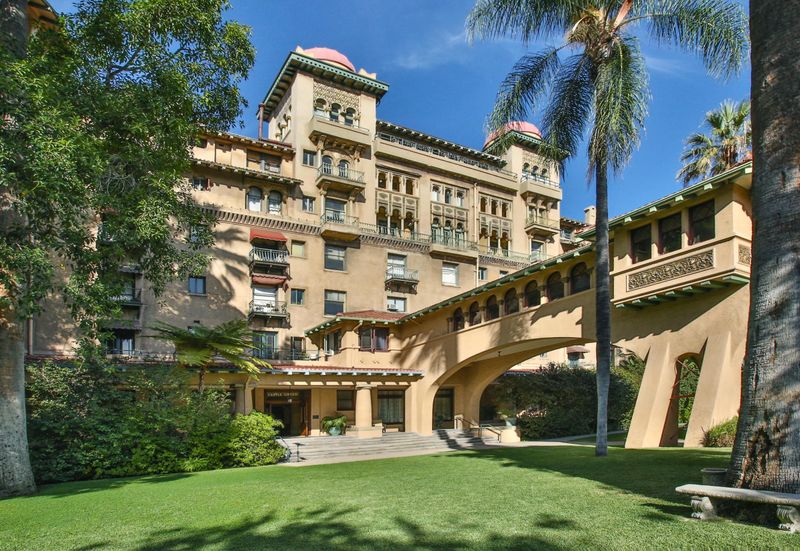
Standing proudly in Old Pasadena since 1898, this Moorish Colonial Revival apartment building showcases ornate towers, arched windows, and decorative details that transport residents and visitors to an exotic realm.
Architects Frederick Louis Roehrig and J. Lyman Silsbee designed this distinctive structure during Pasadena’s golden age as a winter resort destination for wealthy East Coast visitors.
The building rises at 99 South Raymond Avenue, Pasadena, CA 91105, where its distinctive green-tiled roof and cream-colored facade stand out among modern neighbors.
Originally part of a larger resort complex, Castle Green served as an elegant apartment hotel where guests enjoyed panoramic views of the San Gabriel Mountains from rooftop terraces.
Intricate plasterwork, stained glass windows, carved woodwork, and period light fixtures fill the interior spaces, creating an atmosphere of turn-of-the-century elegance that persists today.
The building now functions as private apartments, though occasional tours and events allow the public to glimpse its grand ballroom, sweeping staircases, and architectural details that exemplify Pasadena’s historic charm and architectural ambition.
5. Vikingsholm
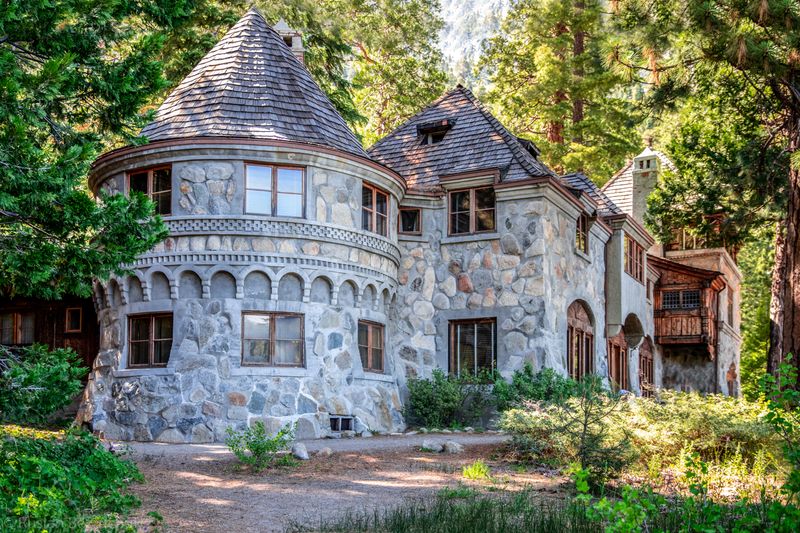
Nestled on the shore of Emerald Bay at Lake Tahoe, this 38-room Scandinavian castle represents one of North America’s finest examples of Nordic architecture outside of Scandinavia itself.
Lora Josephine Knight commissioned Swedish architect Lennart Palme to design this summer retreat in 1929, insisting on authentic details that honor traditional Norse building techniques.
The mansion sits at 1 Emerald Bay Rd, South Lake Tahoe, California 96150, accessible via a steep one-mile trail that descends 500 feet from the parking area to the lakeshore below.
Hand-hewn timber beams, sod roofs planted with wildflowers, carved dragon heads, and hand-forged iron hardware create an authentic Scandinavian atmosphere that feels worlds away from California.
Inside, visitors discover intricately carved furniture, woven textiles, painted ceiling beams, and stone fireplaces that replicate the interiors of medieval Scandinavian manor houses.
Tours run during summer months, allowing visitors to explore both the main house and a small stone teahouse built on a nearby island, accessible by boat, where Knight entertained guests against the backdrop of Tahoe’s crystalline waters.
6. Rubel Castle
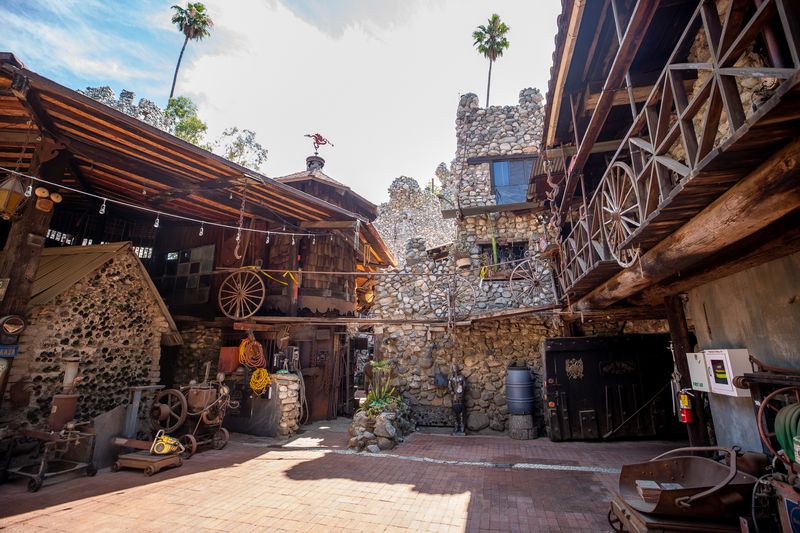
What began as a simple backyard project in 1959 evolved into a sprawling three-story castle constructed almost entirely from salvaged materials, river rocks, and recycled objects.
Michael Rubel spent decades building this folk art masterpiece in Glendora, creating towers, turrets, archways, and rooms without formal architectural plans or professional assistance.
Located at 844 North Live Oak Avenue, Glendora, CA 91741, the castle sprawls across the property with additions that seem to grow organically from the hillside.
Beer bottles, tiles, bricks, stones, scrap metal, and countless other found objects form walls and decorative elements that give the structure a whimsical, outsider-art quality.
Visitors can tour the property on select days, climbing narrow staircases, exploring hidden rooms, and discovering the creative genius of a man who turned trash into architectural treasure.
The castle continues to evolve under the care of volunteers who maintain Rubel’s vision, hosting community events and art exhibitions that celebrate unconventional creativity and the belief that castles need not require royal budgets or formal training.
7. Preston Castle
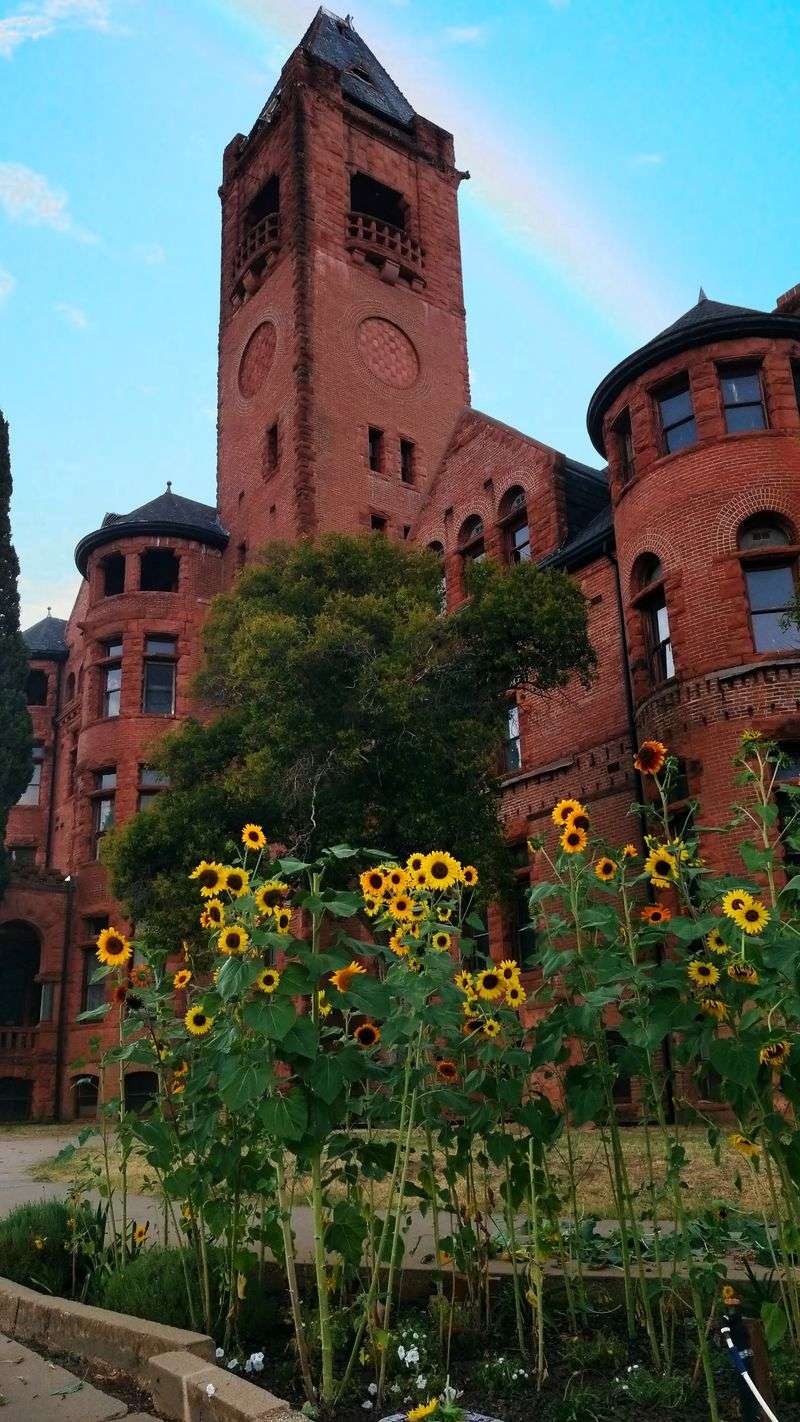
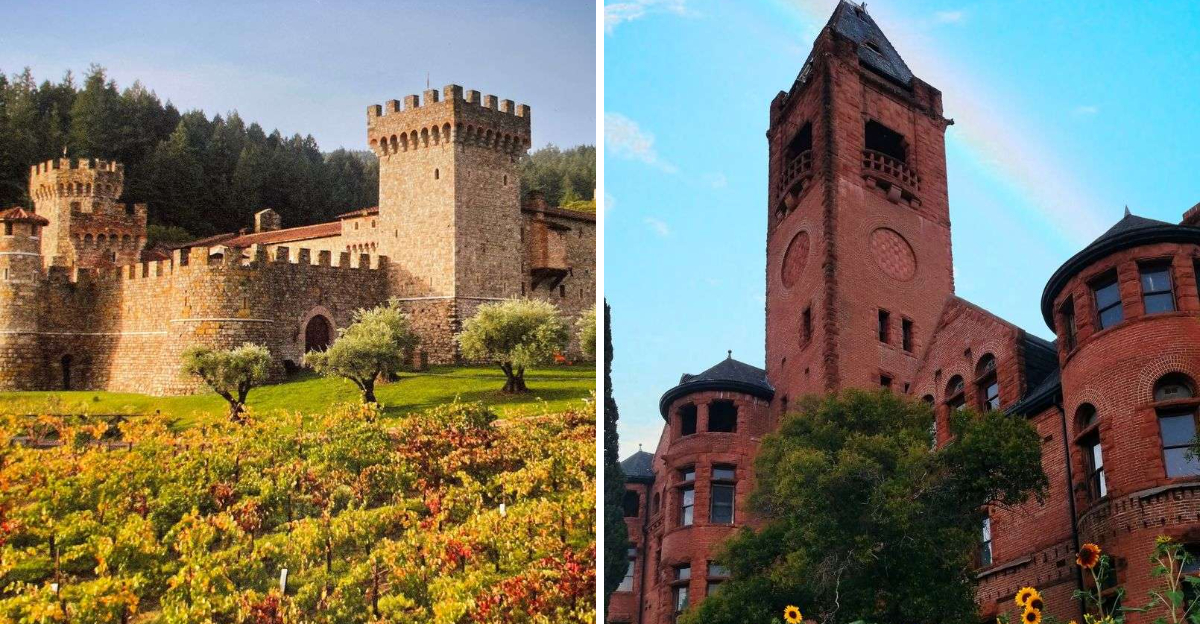
Gothic Revival towers rise against the Sierra Nevada foothills in Ione, where this imposing red brick structure served as a reform school for troubled youth from 1894 until 1960.
Architect Clinton Day designed this Romanesque castle to house the Preston School of Industry, creating an institution that resembled a European fortress more than a typical California building.
The castle stands at 900 Palm Drive, Ione, CA 95640, where its deteriorating grandeur attracts history enthusiasts, paranormal investigators, and preservationists working to save the historic landmark.
Thick brick walls, arched doorways, a central clock tower, and warren-like interior corridors create an atmosphere both majestic and melancholy, reflecting the building’s complex history.
Guided tours offered on weekends allow visitors to explore portions of the castle, learning about the boys who lived here and the building’s ongoing restoration challenges.
The structure’s isolated hilltop location and weathered appearance contribute to its haunting beauty, making it a favorite subject for photographers drawn to abandoned architecture and the stories these crumbling walls continue to tell.
8. Dunsmuir-Hellman Historic Estate
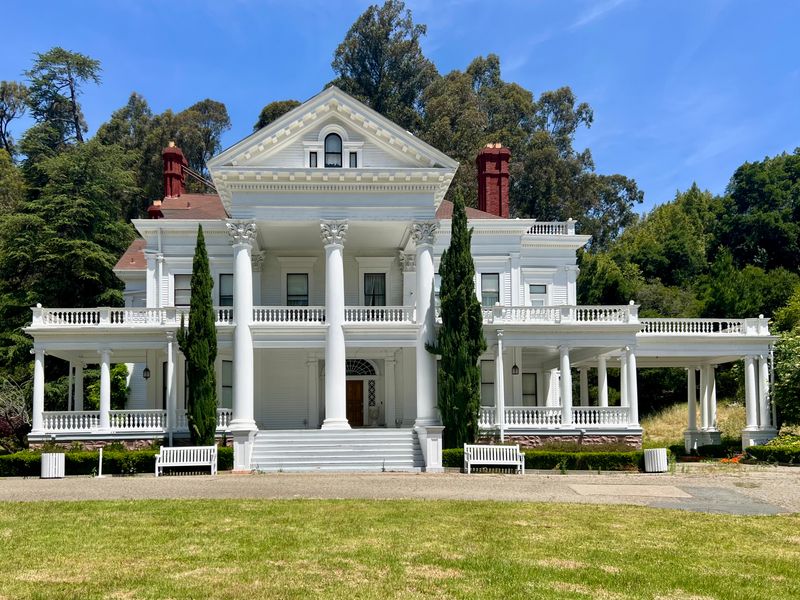
A white Colonial Revival mansion rises from manicured lawns in Oakland’s hills, featuring a distinctive round tower and wraparound porches that give it a castle-like presence.
Coal baron Alexander Dunsmuir built this 37-room estate in 1899 as a wedding gift for his bride, though tragedy struck when he died before the couple could move in.
The estate sits at 2960 Peralta Oaks Court, Oakland, CA 94605, surrounded by 50 acres of landscaped grounds that include formal gardens, a carriage house, and walking paths.
Tiffany-style glass domes, carved wooden staircases, ornate fireplaces, and period furnishings fill the interior, creating an atmosphere of Gilded Age elegance that persists through careful preservation.
The mansion now operates as a historic house museum and event venue, offering tours that explore the lives of the families who called this estate home.
Visitors can wander through reception rooms, bedrooms, and service areas while learning about Oakland’s history and the architectural trends that defined California’s wealthiest residents during the turn of the 20th century.
9. Magic Castle
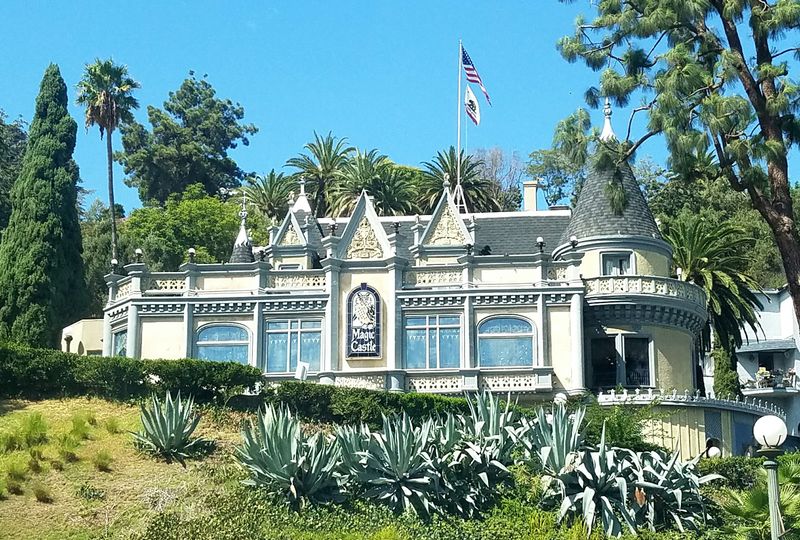
Hidden in the Hollywood Hills, this Victorian mansion serves as the exclusive clubhouse for the Academy of Magical Arts, where magicians gather to practice their craft and entertain invited guests.
The building at 7001 Franklin Avenue, Los Angeles, CA 90028 combines Queen Anne and Châteauesque architectural elements, creating a theatrical setting appropriate for its magical purpose.
Founded in 1963, the club transformed this 1909 mansion into a venue where close-up magic, stage illusions, and sleight-of-hand performances happen nightly in multiple showrooms.
Turrets, gables, ornate woodwork, and Victorian-era furnishings create an atmosphere of mystery and old-world charm that enhances the magical performances within.
Access remains strictly limited to members and their guests, maintaining an air of exclusivity that adds to the castle’s mystique and allure.
The dress code requires formal attire, and reservations for dinner and shows must be secured in advance, ensuring that every visit feels special and removed from everyday Los Angeles life outside the castle’s enchanted walls.
10. Castello Di Amorosa
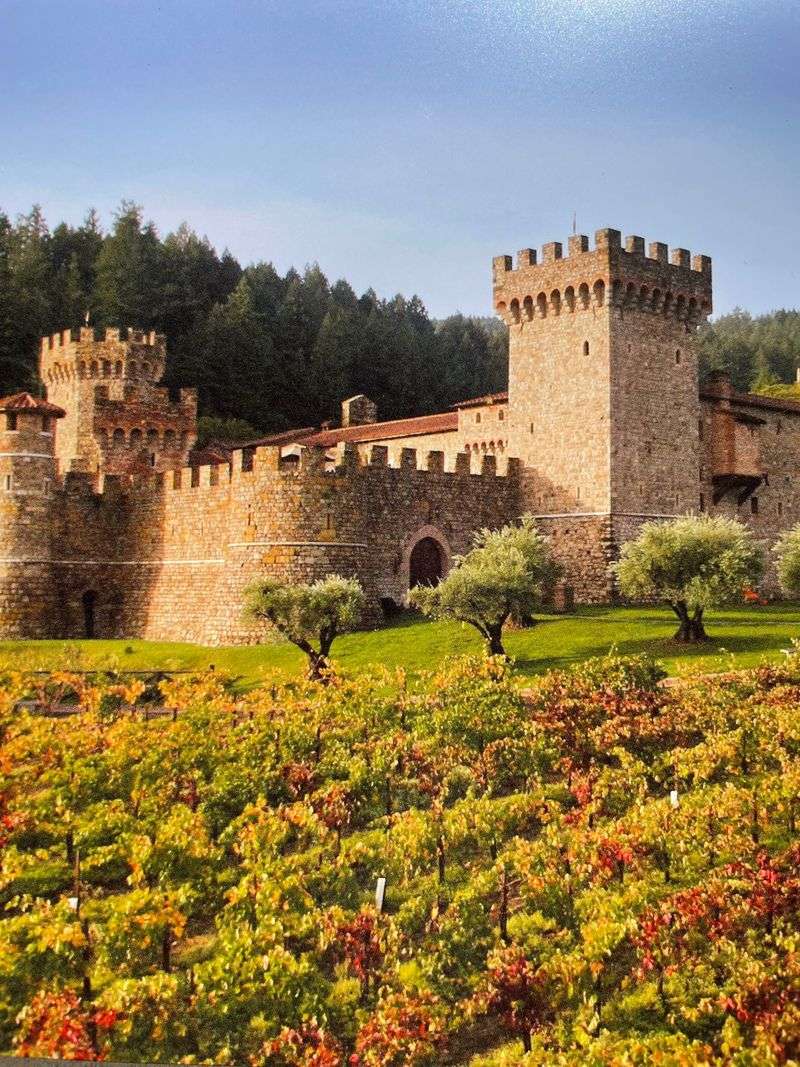
Stepping through the iron gates of this 13th-century Tuscan-style fortress in Napa Valley feels like entering a time machine that whisks you straight to medieval Italy.
Winemaker Dario Sattui spent 14 years and millions of dollars constructing this authentic castle using traditional methods, hand-chiseled stones, and reclaimed materials imported from Europe.
Located at 4045 St Helena Highway, Calistoga, CA 94515, the castle sprawls across 121,000 square feet with over 100 rooms, including four underground levels carved into the hillside.
A working drawbridge, defensive towers, a chapel with frescoed ceilings, and even a torture chamber complete with period equipment make this more than just a pretty facade.
Visitors can tour the winemaking facilities housed within the castle walls, exploring barrel rooms and tasting rooms that maintain the medieval atmosphere while producing award-winning wines.
The attention to detail extends to hand-forged iron chandeliers, brick archways, and stone staircases that creak underfoot, creating an immersive experience that appeals to wine lovers and history buffs equally.
11. Castle Crags
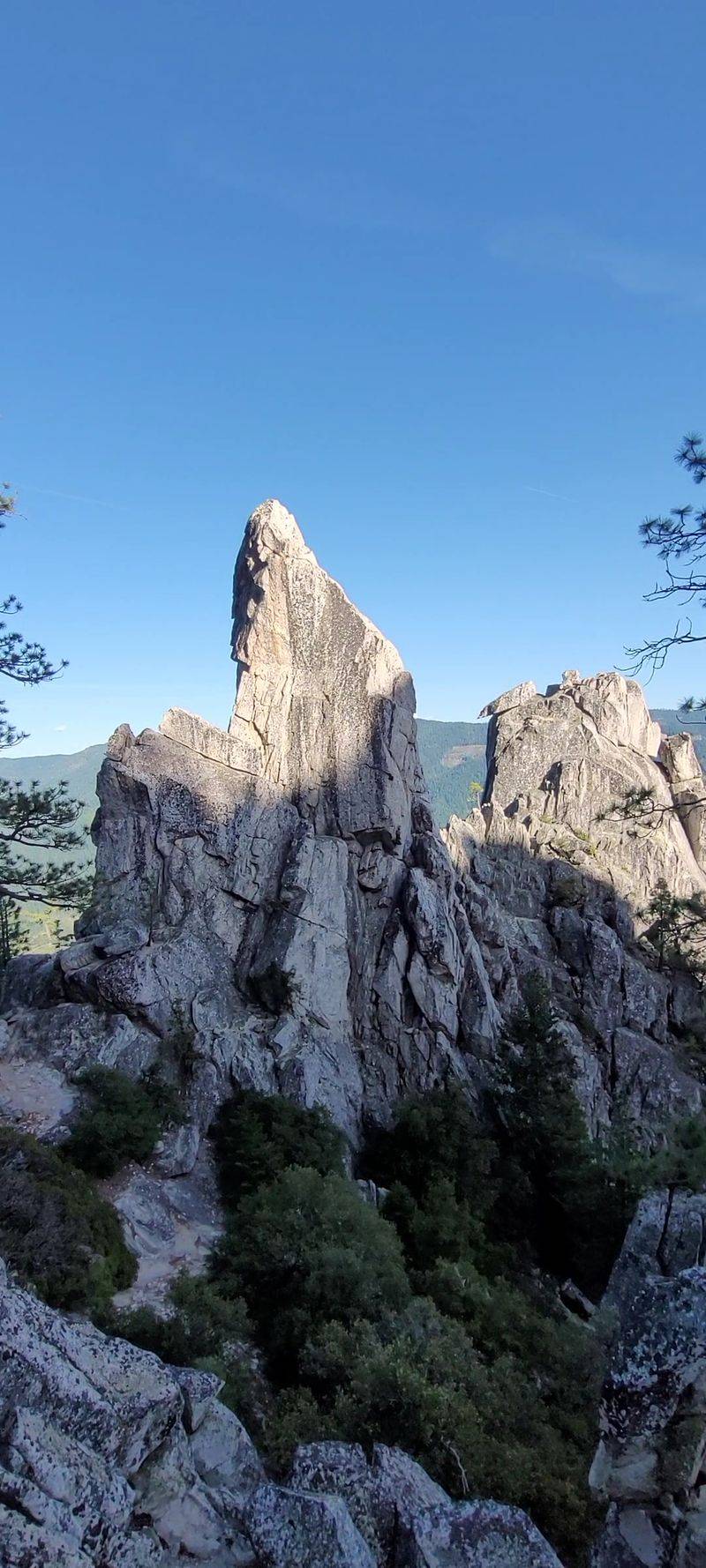
Though not a man-made castle or what you might have expected, this dramatic rock formation in Northern California resembles a natural fortress with granite spires that tower over 6,000 feet above the Sacramento River canyon.
Castle Crags State Park at 20022 Castle Creek Rd, Castella, CA 96017 protects these ancient granite formations located near Dunsmuir, where hiking trails wind through forests to viewpoints overlooking the jagged peaks.
The park entrance sits along Interstate 5, providing easy access to trails that range from easy riverside walks to strenuous climbs toward the base of the crags themselves.
Granite towers and spires create silhouettes that inspired the castle name, with peaks that catch morning and evening light in ways that enhance their fortress-like appearance.
Camping facilities, picnic areas, and trail access make this a popular destination for outdoor enthusiasts who appreciate both geological wonders and the recreational opportunities they provide.
The crags’ dramatic profiles against the sky, especially when dusted with snow during winter months, create scenes that rival any human-built castle for sheer visual impact and the sense of entering a landscape that belongs to another, more mythical world entirely.