This Historic California Mansion Was The Real-Life Chilton Academy On Gilmore Girls
Fans usually remember the uniforms first. Long hallways, stone arches, and an atmosphere that felt intimidating by design.
Chilton Preparatory School shaped some of the most pivotal moments in Gilmore Girls, setting the tone for Rory’s ambition and sense of discipline.
What made those scenes feel so convincing was not a studio set, but a real place with presence and history.
California filming locations become unforgettable when a single mansion can define an entire fictional world.
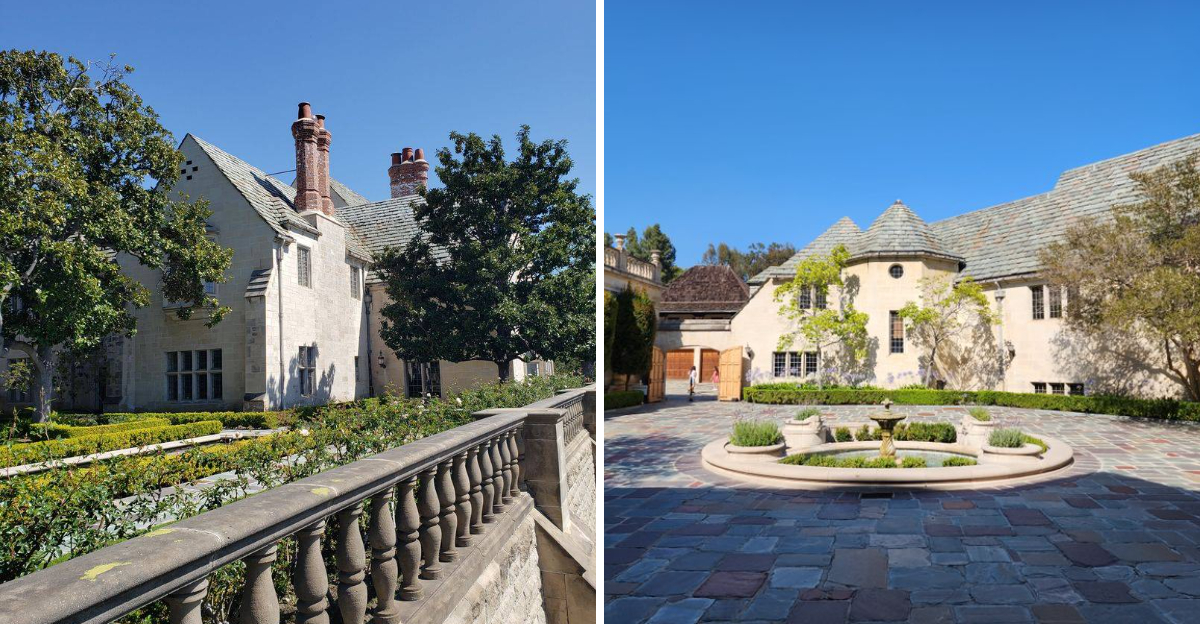
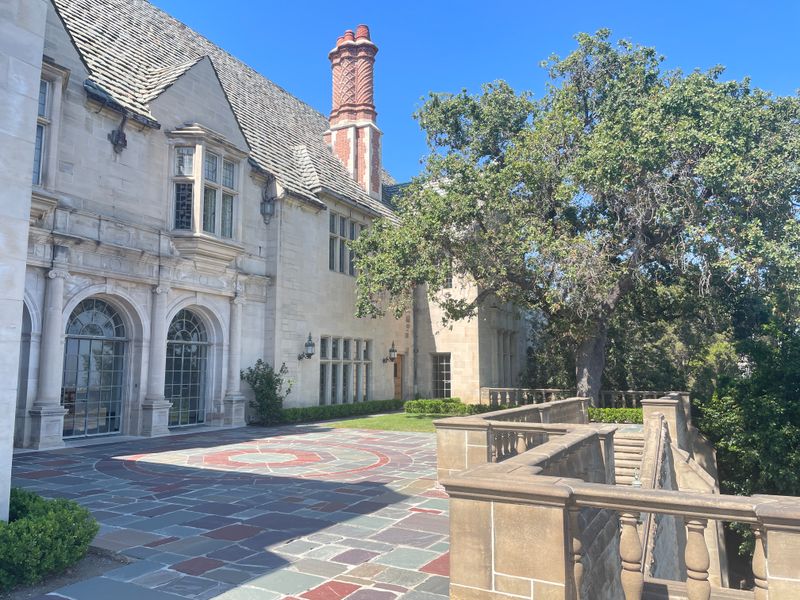
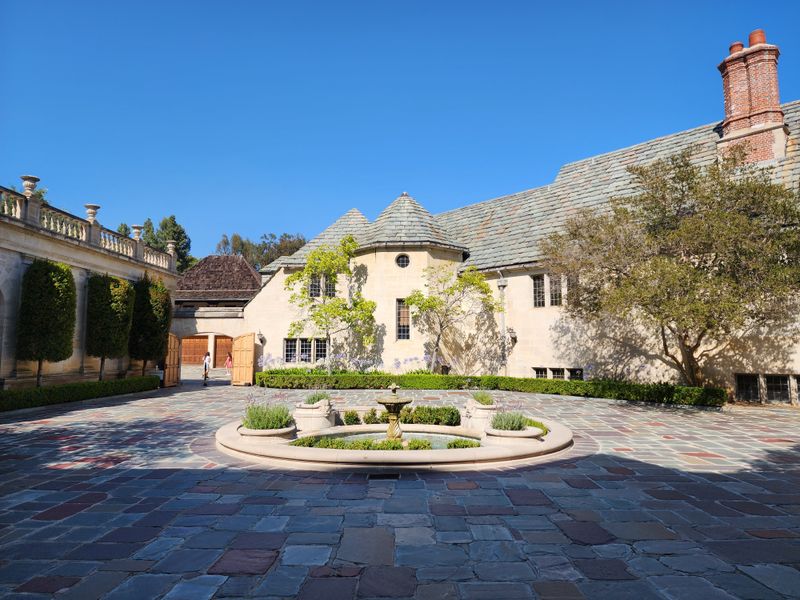
The stately exterior of Chilton was filmed at Greystone Mansion, a grand Tudor Revival estate built in 1928.
Its stone façade, formal staircases, and imposing scale perfectly captured the prestige and pressure associated with Rory’s elite school. The house brought weight to every scene before a word of dialogue was spoken.
Long before television crews arrived, the mansion carried its own legacy tied to wealth, power, and drama. That depth translates effortlessly on screen.
Walking the grounds today feels familiar even to first-time visitors, because the image has already lived in viewers’ minds for years.
Few houses manage to feel both iconic and timeless, yet this one continues to do exactly that.
1. The Doheny Family Built This Estate As A Gift
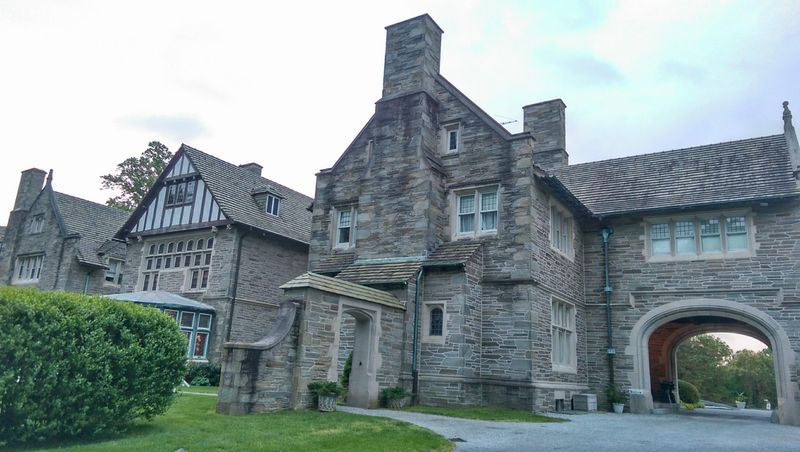
Edward L. Doheny, one of the wealthiest oil tycoons of the early 20th century, commissioned this magnificent estate as a wedding gift for his son, Edward “Ned” Doheny Jr. Construction began in 1927 and was completed in 1928, representing the pinnacle of luxury and architectural ambition during the Roaring Twenties.
The elder Doheny spared no expense in creating a home that would reflect his family’s wealth and status in Los Angeles society.
The mansion sits at 905 Loma Vista Drive in Beverly Hills, California, on what was originally a much larger parcel of land.
The total cost of construction reached approximately $3 million at the time, equivalent to tens of millions in today’s currency.
The estate was designed to accommodate not just the family’s living needs but also their extensive entertainment requirements and staff.
Ned Doheny and his wife Lucy moved into the completed mansion with their five children in 1928. The family enjoyed the estate for only a brief period before tragedy struck the following year.
The mansion stands as a testament to the wealth and ambition of the oil boom era in Southern California, when fortunes were made almost overnight and spent just as quickly on lavish displays of prosperity.
2. Gordon B. Kaufmann Designed This Architectural Masterpiece
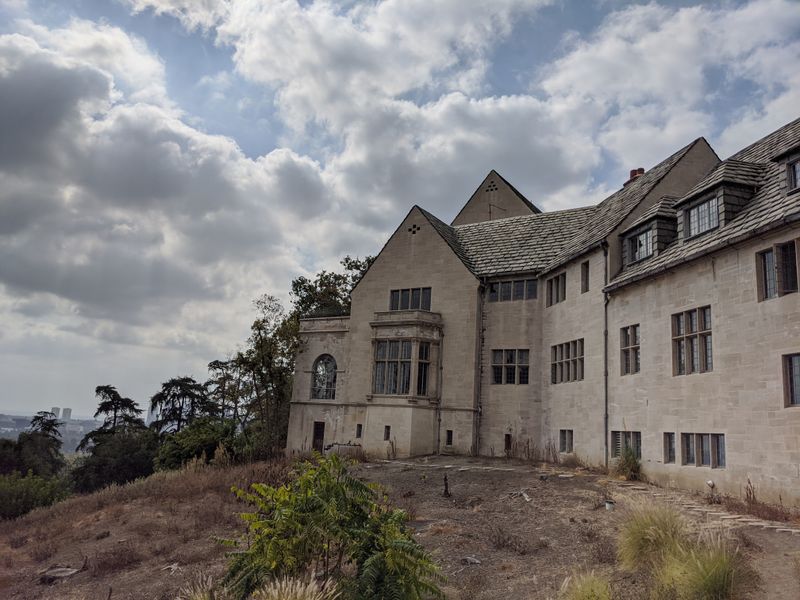
Gordon B. Kaufmann, one of the most celebrated architects of his era, brought the Doheny family’s vision to life with a design that blended Tudor Revival style with Gothic and neoclassical elements.
Kaufmann was known for his meticulous attention to detail and his ability to create structures that were both grand and functional.
His portfolio included other notable Southern California landmarks, making him the natural choice for such an ambitious project.
The mansion features steel-reinforced concrete construction, an innovative technique for residential buildings at the time, which provided both strength and fire resistance.
The exterior walls are faced with Indiana limestone, chosen for its durability and elegant appearance, while the roof is covered with Welsh slate that has weathered beautifully over the decades.
These premium materials ensured the structure would stand the test of time.
Kaufmann incorporated distinctive architectural features throughout the design, including leaded glass windows, intricate stonework, and carefully proportioned spaces that balance grandeur with intimacy.
The architect’s skill is evident in how the mansion sits on its hillside location, taking advantage of views while maintaining privacy.
His design created a home that felt both imposing and welcoming, a difficult balance to achieve in such a large structure.
3. The Estate Encompasses Over Eighteen Acres Of Grounds
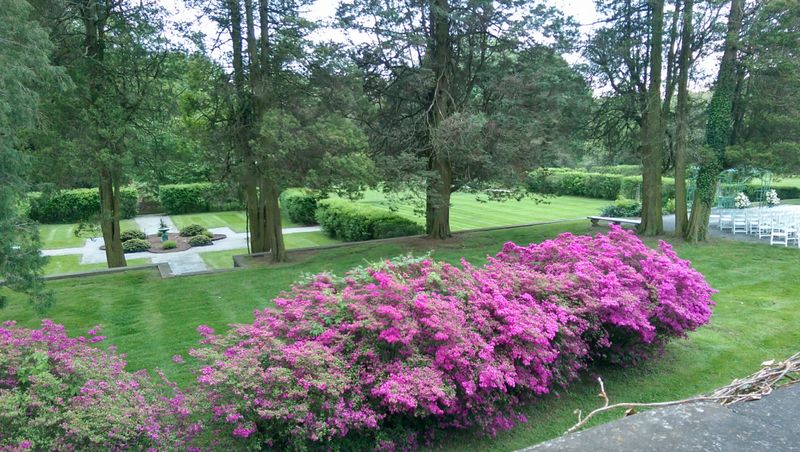
The original Greystone estate covered an impressive 18.3 acres of prime Beverly Hills real estate, offering the Doheny family both privacy and room for extensive gardens and recreational spaces.
The grounds were meticulously planned and landscaped to create distinct outdoor areas that complemented the mansion’s grandeur.
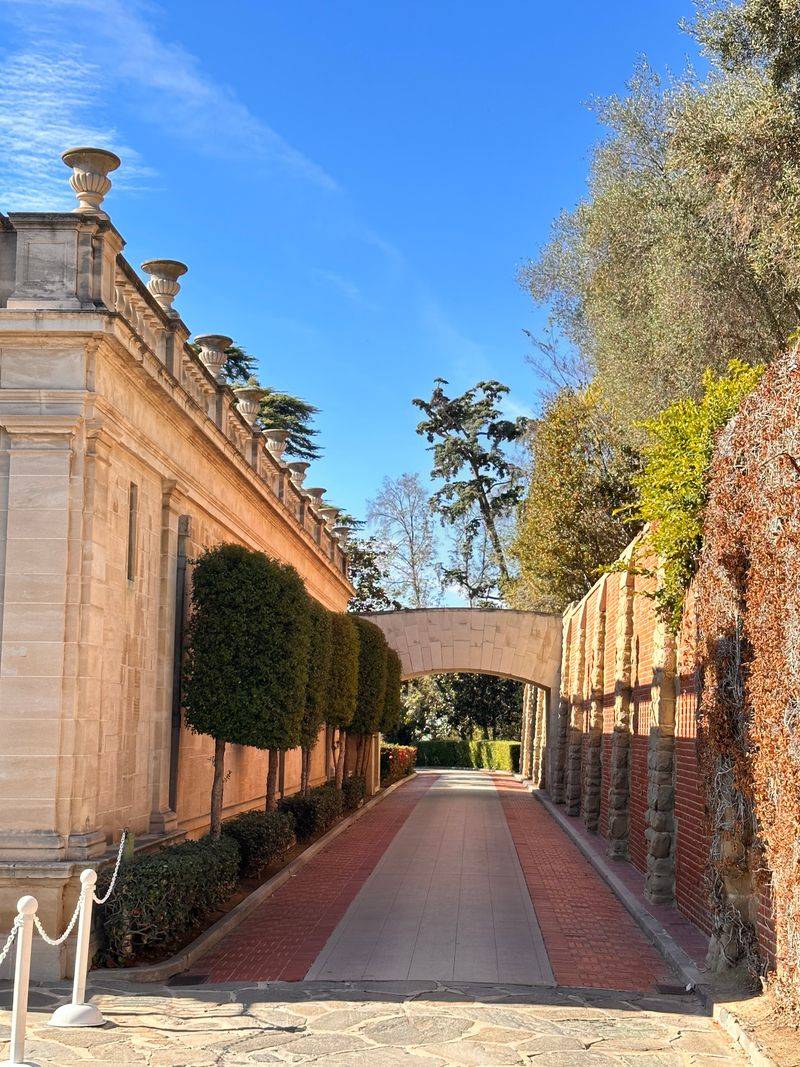
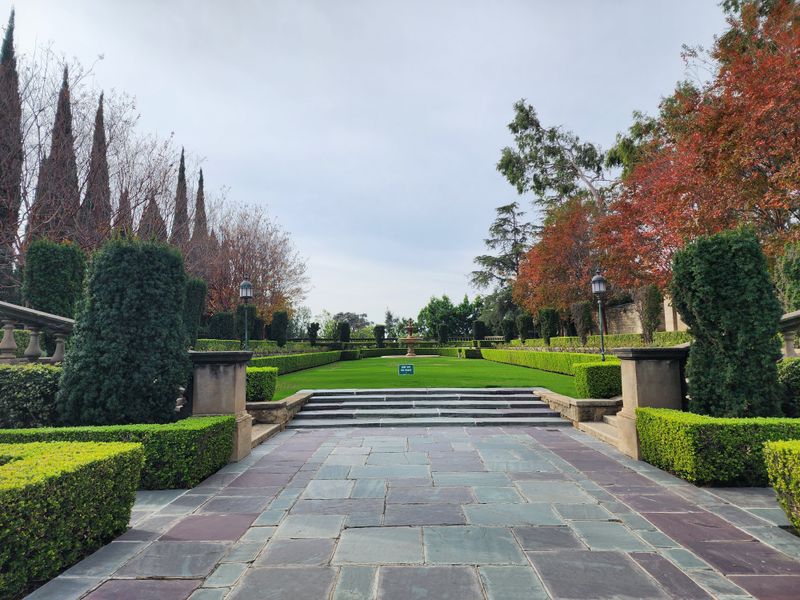
Today, visitors can still explore these historic gardens and appreciate the thoughtful design that has been preserved and maintained by the City of Beverly Hills.
Terraced gardens cascade down the hillside, featuring a variety of plantings that reflect both the original 1920s design and later additions.
Walking paths wind through the property, offering different perspectives of the mansion and views of the surrounding area.
The teaching garden, added in more recent years, provides educational opportunities for visitors interested in sustainable gardening practices and California-appropriate plantings.
Multiple outdoor spaces throughout the grounds serve different purposes, from intimate seating areas perfect for quiet reflection to large lawns suitable for events and gatherings.
The estate’s size allows for both public access and private events to coexist without disrupting the visitor experience.
These gardens have become popular venues for weddings, corporate gatherings, and community events, generating revenue that helps maintain the historic property while sharing its beauty with the public.
4. Fifty-Five Rooms Fill The Mansion’s Interior
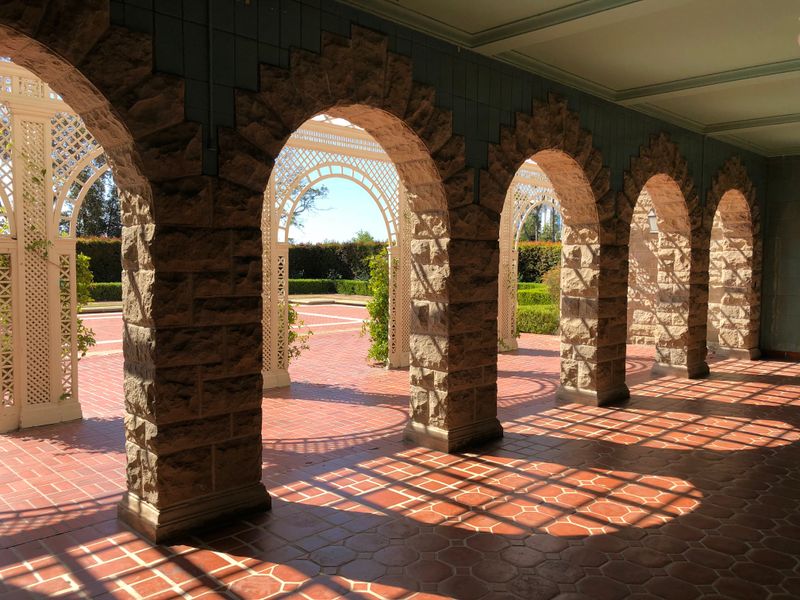
Behind the imposing limestone facade, Greystone Mansion contains 55 rooms spread across 46,000 square feet of living space, making it one of the largest private residences ever built in Beverly Hills.
The sheer scale of the interior reflects the lifestyle of extreme wealth during the 1920s, when large staffs were required to maintain such properties and families entertained on a grand scale.
Each room was designed with specific purposes in mind, from formal entertaining spaces to private family quarters.
The interior features hand-carved oak banisters that showcase the craftsmanship of the era, with intricate details that demonstrate the level of artistry involved in the mansion’s construction.
Black and white inlaid marble floors create striking geometric patterns in the main living areas, adding visual interest while maintaining an elegant aesthetic.
The grand staircase serves as a focal point, designed to make an impression on visitors from the moment they entered the home.
Room layouts range from intimate spaces perfect for family gatherings to vast ballrooms capable of hosting hundreds of guests.
High ceilings, large windows, and carefully considered proportions ensure that even the largest spaces feel comfortable rather than overwhelming.
The mansion’s interior has been preserved to reflect its original grandeur, though it now serves primarily as a filming location and special event venue rather than a private residence.
5. Entertainment Amenities Included A Movie Theater And Bowling Alley
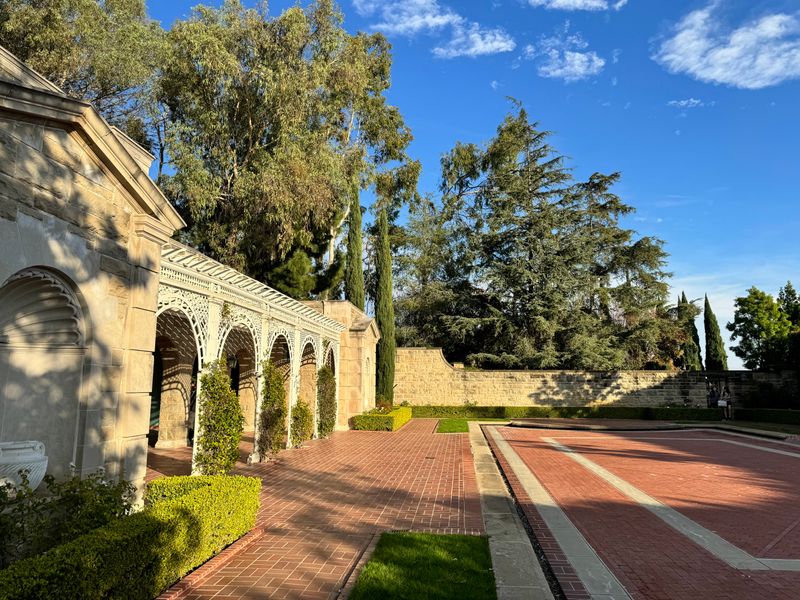
The Doheny family spared no expense when it came to entertainment options within their new home, installing amenities that were considered the height of luxury in the 1920s.
A private movie theater allowed the family and their guests to enjoy the latest films in comfort and privacy, reflecting the growing importance of cinema in American culture during that era.
This feature was particularly notable given Los Angeles’s emerging role as the center of the film industry.
A bowling alley provided recreational opportunities for family members and visitors, representing a popular pastime among wealthy Americans of the period.
The mansion also featured a billiard room, where gentlemen could retire after dinner for games and conversation, following social customs of the time.
These spaces were designed not just for function but also to impress, with the same attention to architectural detail found throughout the rest of the home.
Perhaps most intriguing was the hidden bar, a feature that takes on added significance considering the mansion was completed during Prohibition.
The presence of such a space reflects the reality that wealthy Americans often found ways around the restrictions of the Volstead Act.
These entertainment amenities demonstrate how the mansion was designed as a complete world unto itself, where the family rarely needed to venture outside for recreation or socializing.
6. A Tragedy Occurred Just Months After Move-In
In February 1929, only months after the Doheny family settled into their long-awaited home, the household was shaken by a devastating and unexpected incident.
Ned Doheny was discovered in a guest bedroom alongside his personal secretary, Hugh Plunkett, under circumstances that immediately stunned Beverly Hills society and cast a lasting pall over the estate.
Authorities at the time concluded that the situation involved an act of violence initiated by Plunkett, followed by a final act against himself.
However, the official account has never fully put questions to rest. Over the decades, historians and true-crime researchers have continued to examine the event, noting inconsistencies and unanswered questions that have fueled ongoing speculation.
At the time, Ned Doheny had been experiencing intense pressure connected to his father’s involvement in the Teapot Dome scandal, a major political controversy surrounding oil leases on federal land.
Whether that strain contributed in any way to what unfolded remains an open question, debated to this day.
Lucy Doheny and her children remained in the mansion for several years afterward, though the home was forever marked by what had occurred.
After Edward Doheny’s passing in 1935, the family eventually sold the property in 1955. The episode adds a somber dimension to the mansion’s legacy, underscoring how even the grandest and most beautiful homes can carry deeply complicated histories.
7. The City Of Beverly Hills Purchased The Property In 1965
After changing hands several times following the Doheny family’s departure, Greystone Mansion faced an uncertain future as developers eyed the valuable Beverly Hills property.
Paul Trousdale purchased the estate in 1955 and developed much of the surrounding land into what is now known as Trousdale Estates, one of the city’s most exclusive neighborhoods.
Henry Crown acquired the mansion itself in 1956, but by the mid-1960s, questions remained about the historic structure’s long-term preservation.
The City of Beverly Hills stepped in to purchase the property in 1965 for $1.3 million, recognizing the mansion’s architectural and historical significance to the community.
This acquisition represented a commitment to preservation at a time when many historic properties were being demolished to make way for new development.
City officials understood that Greystone represented an irreplaceable link to Beverly Hills’s past and the early days of Southern California’s oil boom.
The mansion officially opened to the public as a park in 1971, allowing residents and visitors to experience the grounds and gardens that had previously been private.
This transformation from private estate to public resource ensured that future generations would be able to appreciate the property’s beauty and historical importance.
The city’s ongoing maintenance and preservation efforts have kept the mansion in excellent condition for over five decades.
8. National Register Recognition Came In 1976
Recognition of Greystone Mansion’s historical and architectural significance reached the national level in 1976 when the property was added to the National Register of Historic Places.
This designation acknowledges structures that possess exceptional importance to American history, architecture, or culture.
The listing process involves detailed documentation and review by historic preservation experts who evaluate the property’s integrity and significance.
The National Register designation provides certain protections and recognition but does not restrict what private owners can do with their property.
However, since Greystone is city-owned, the designation reinforces the commitment to preservation and appropriate maintenance.
The recognition also makes the property eligible for certain grants and tax incentives that support historic preservation work, though these benefits vary depending on the specific circumstances.
Being listed on the National Register has enhanced Greystone’s reputation as one of California’s most important historic estates.
The designation attracts scholars, architects, and history enthusiasts who appreciate the mansion’s role in representing early 20th-century American wealth and architectural achievement.
This formal recognition has helped ensure that preservation remains a priority as the property continues to serve the public through tours, events, and filming activities that generate revenue for ongoing maintenance.
9. Gilmore Girls Featured The Mansion As Chilton Preparatory School
When the creators of Gilmore Girls needed a location to represent Chilton Preparatory School, the elite private institution where Rory Gilmore would spend her high school years, Greystone Mansion provided the perfect backdrop.
The mansion’s imposing Tudor Revival architecture conveyed exactly the right sense of tradition, prestige, and old-money establishment that the fictional school required.
Exterior shots of students arriving for classes and various outdoor scenes were filmed at the estate throughout the show’s run from 2000 to 2007.
The mansion appears at 905 Loma Vista Drive in Beverly Hills, California, though of course the show’s fictional Chilton was supposedly located in Hartford, Connecticut.
This geographic sleight of hand is common in television production, where Southern California locations frequently stand in for settings across the country.
Most viewers accept this convention without question, focused on the story rather than the actual filming location.
For fans of the beloved series, visiting Greystone offers a chance to walk the same grounds where Rory, Paris, and other characters were filmed during exterior scenes.
The mansion’s role in Gilmore Girls has introduced the historic property to a new generation of visitors who come specifically to see the real-life Chilton.
This connection to popular culture has helped maintain public interest in the estate while generating revenue through increased tourism and location fees.
10. Over One Hundred Films And Shows Have Been Shot Here
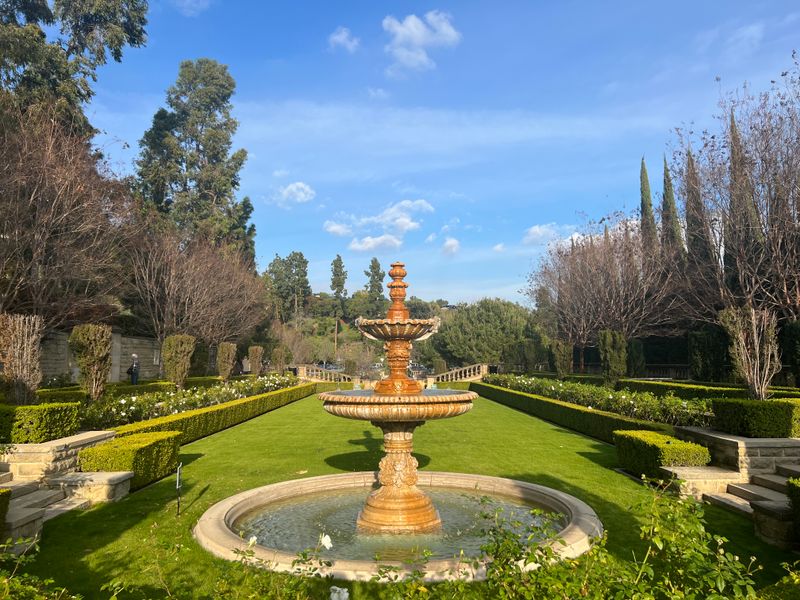
Greystone Mansion’s cinematic legacy extends far beyond its role in Gilmore Girls, having appeared in well over 100 films and television productions since the 1950s.
The estate’s versatile architecture and well-maintained grounds make it an ideal filming location that can represent different time periods and settings with minimal modification.
Location scouts and production designers appreciate the property’s ability to convey wealth, history, and drama through its imposing presence and beautiful details.
Notable films shot at Greystone include The Big Lebowski, where the mansion served as the Lebowski estate, and There Will Be Blood, in which it represented the home of oil baron Daniel Plainview.
The mansion has also appeared in X-Men, Spider-Man, The Prestige, and numerous other major productions.
Each film has used the property differently, sometimes featuring it prominently and other times using it as background for specific scenes.
Television productions have been equally drawn to Greystone, with the mansion appearing in shows ranging from period dramas to contemporary series.
The revenue generated from filming fees helps support the property’s ongoing maintenance and preservation, creating a sustainable model where Hollywood’s needs align with historic preservation goals.
This symbiotic relationship has helped ensure that Greystone remains in excellent condition while serving the entertainment industry that has become such an important part of Los Angeles’s economy and identity.
11. Public Access Hours Run Daily From Morning To Evening
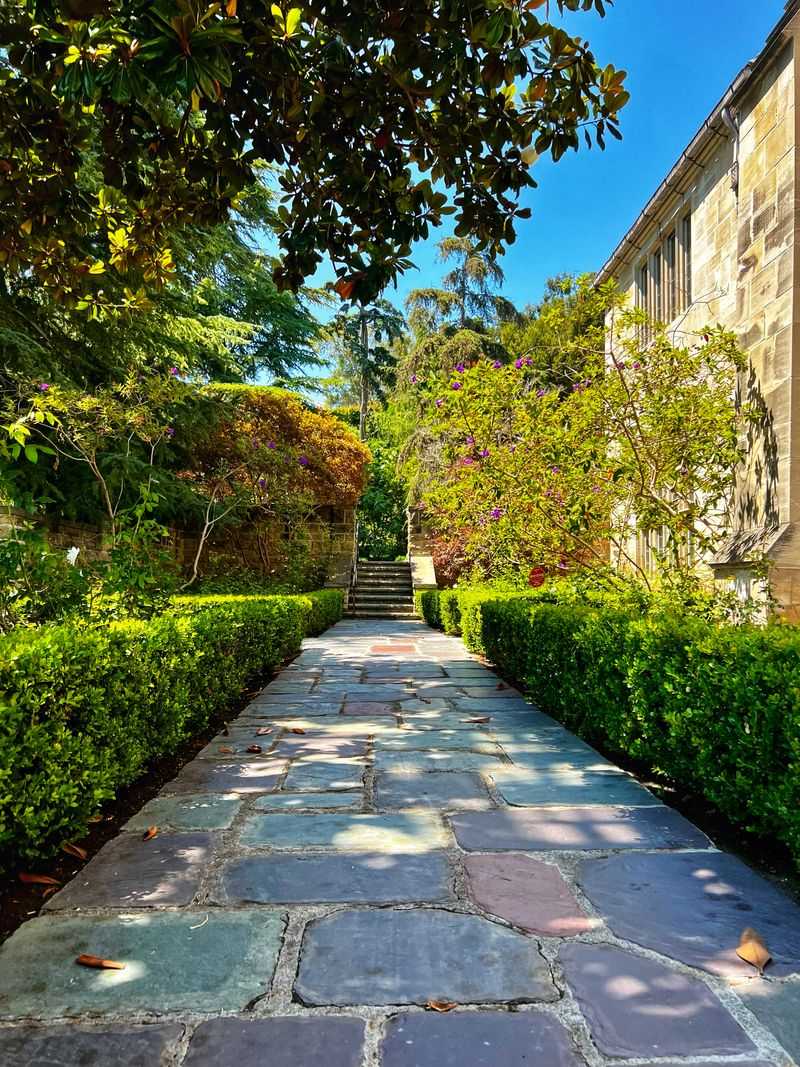
The City of Beverly Hills maintains Greystone Mansion & Gardens as a public park open daily from 10 a.m. to 5 p.m., allowing residents and tourists to explore the historic grounds free of charge.
These consistent hours make it easy for visitors to plan their trips, though it’s worth noting that the mansion’s interior is generally not accessible during regular park hours.
The gardens and exterior grounds provide plenty to see and experience, with walking paths, seating areas, and photo opportunities throughout the property.
Visitors should be aware that filming activities sometimes require temporary closures of certain areas or even the entire property.
The city posts closure information on the official website and at the park entrance, so checking ahead can prevent disappointment.
Weekday visits tend to be quieter than weekends, when families and tourists are more likely to explore the grounds.
Early morning hours offer the best light for photography and the most peaceful atmosphere for those seeking a contemplative experience.
The park’s accessibility makes it a valuable community resource, offering a tranquil escape from urban life without requiring reservations or admission fees.
Dog walkers, photographers, history enthusiasts, and casual visitors all share the space, creating a diverse mix of users who appreciate the property for different reasons.
The grounds are well-maintained with clearly marked paths, though the hillside location means some walking is required to fully explore the estate.
12. Special Events And Weddings Take Place Throughout The Year
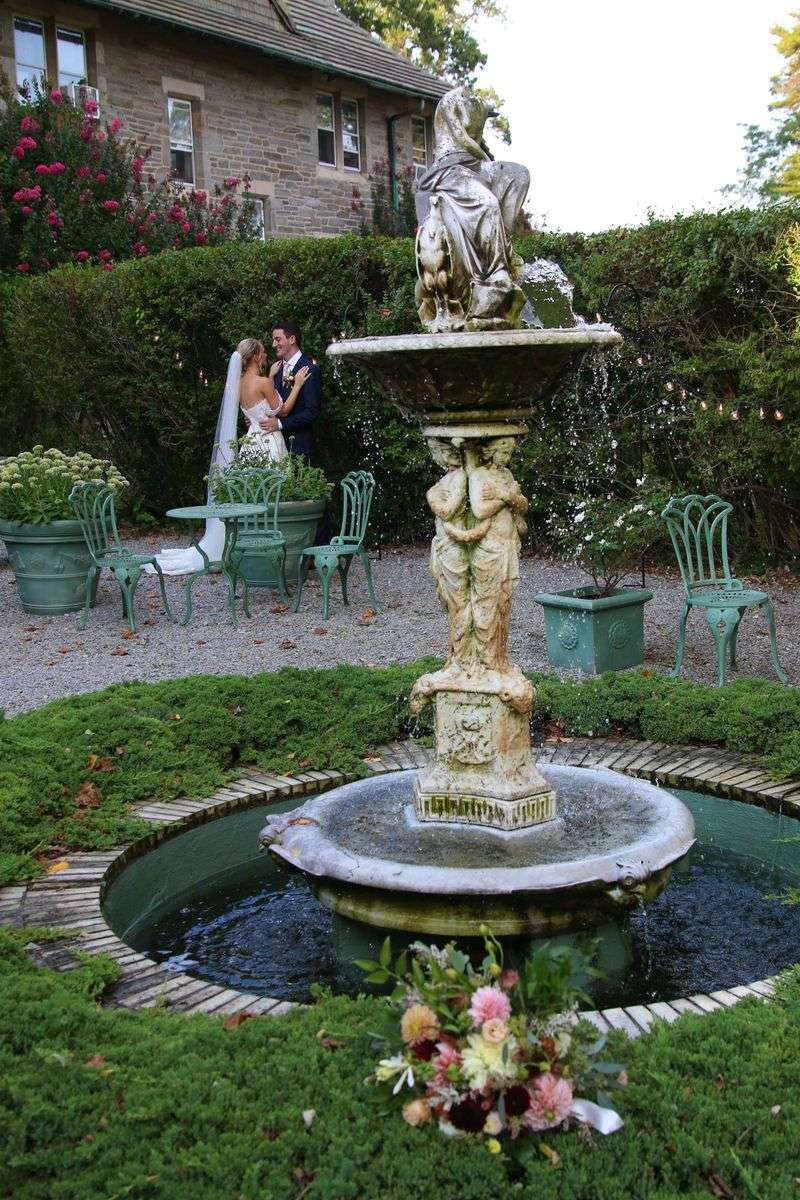
Beyond its role as a public park and filming location, Greystone Mansion serves as a premier venue for private events, particularly weddings that take advantage of the romantic setting and stunning architecture.
The various outdoor spaces can accommodate events of different sizes, from intimate gatherings to large celebrations with hundreds of guests.
Couples who choose Greystone for their wedding gain access to professionally maintained gardens, dramatic architecture for photos, and a sense of history that few venues can match.
The annual Greystone Mansion Concours d’Elegance brings classic and exotic automobiles to the estate, attracting car enthusiasts from across the region.
This juried car show transforms the grounds into a showcase for automotive excellence, with carefully selected vehicles displayed against the mansion’s elegant backdrop.
The event raises funds for local charities while celebrating automotive design and the estate’s connection to the oil industry that built it.
Interactive theatrical productions have also found a home at Greystone, with shows like “The Manor” using the mansion and grounds as a stage for immersive performances.
These events allow visitors to experience the property in new ways while learning about the Doheny family history through dramatic interpretation.
Corporate gatherings, film premieres, and community events round out the calendar, ensuring the mansion remains an active part of Beverly Hills cultural life rather than simply a preserved relic.
13. The Surrounding Area Became Trousdale Estates
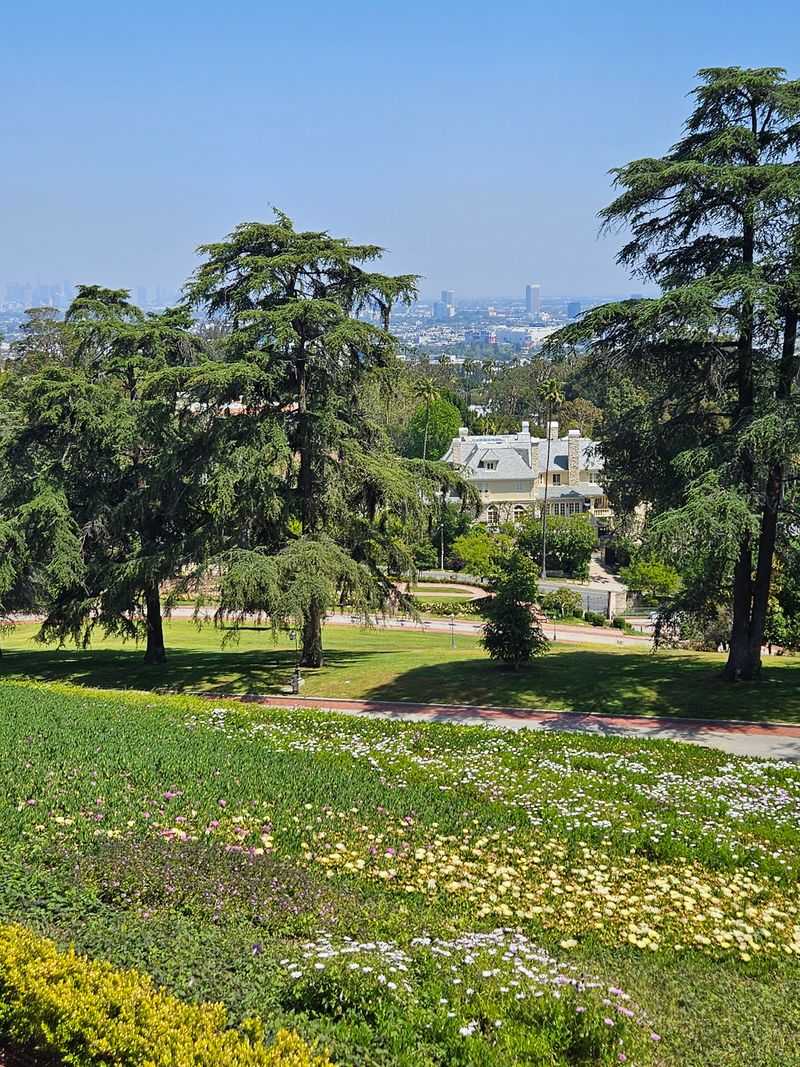
When Paul Trousdale purchased the Greystone estate in 1955, he recognized that the surrounding acreage represented valuable development opportunity in rapidly growing Beverly Hills.
He retained the mansion itself while subdividing much of the original property into residential lots that would become Trousdale Estates, one of the city’s most exclusive neighborhoods.
This development transformed the hillside above Beverly Hills into a community of modern homes designed by notable architects of the mid-century period.
Trousdale Estates quickly attracted wealthy buyers who appreciated the area’s privacy, views, and proximity to Beverly Hills amenities.
The neighborhood’s modernist architecture contrasts sharply with Greystone’s Tudor Revival style, representing a different era and aesthetic philosophy.
Many of the original homes have been replaced or extensively remodeled over the decades, though the neighborhood maintains its reputation as one of Southern California’s most desirable addresses.
The relationship between Greystone Mansion and Trousdale Estates illustrates the tension between preservation and development that has shaped Beverly Hills and Los Angeles more broadly.
While the mansion was saved and eventually became public property, the surrounding land was developed to meet housing demand and generate profit.
This compromise allowed both preservation and progress, though it reduced the estate’s original acreage significantly.
Today, the mansion stands as a public oasis surrounded by private luxury, a reminder of how land use priorities have evolved over time.
14. Gothic And Neoclassical Elements Mix With Tudor Revival Style
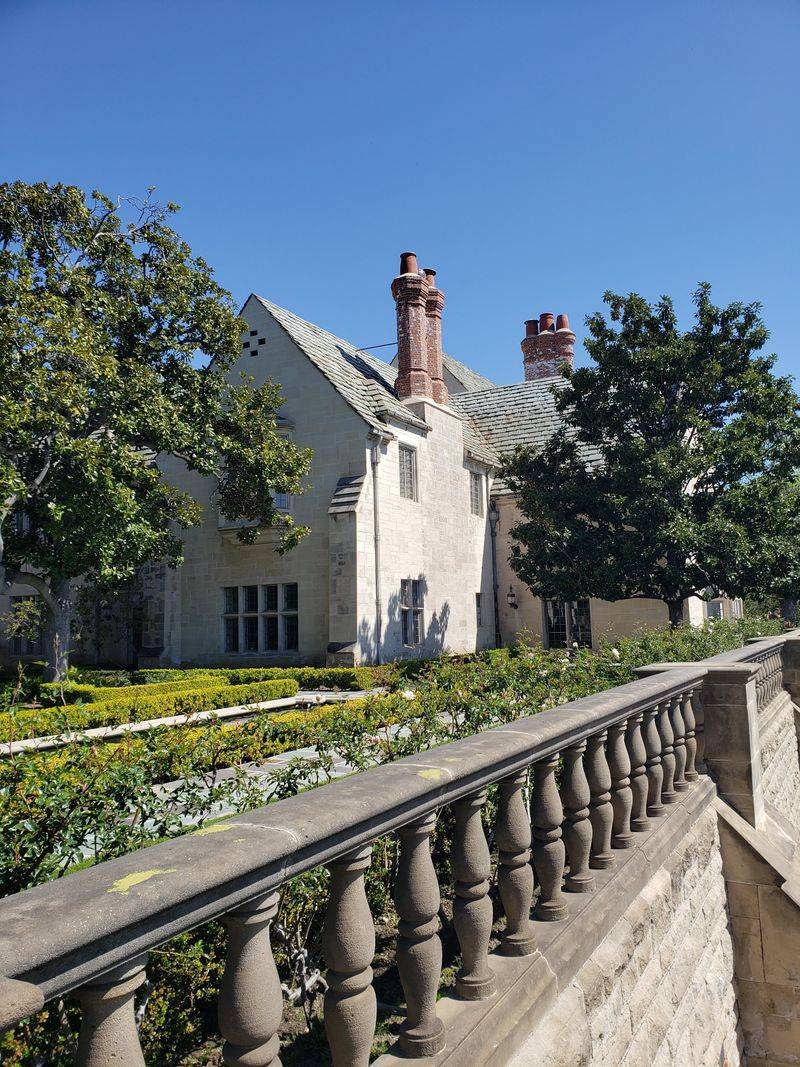
While Greystone Mansion is primarily classified as Tudor Revival architecture, Gordon Kaufmann incorporated Gothic and neoclassical design elements that create visual interest and demonstrate his sophisticated understanding of historical styles.
Gothic influences appear in pointed arches, vertical emphasis, and decorative stonework that adds drama to the facade.
These elements reference medieval European architecture while serving the practical needs of a 20th-century American home.
Neoclassical touches bring balance and proportion to the design, with symmetrical arrangements and classical details that convey stability and permanence.
The mixing of these styles was typical of grand estates built during the 1920s, when architects drew freely from historical precedents to create eclectic designs that impressed through their complexity and craftsmanship.
Kaufmann’s skill lay in blending these influences seamlessly rather than creating a jarring hodgepodge of competing styles.
The leaded glass windows throughout the mansion demonstrate the quality of materials and craftsmanship that went into every aspect of construction.
These windows provide both beauty and function, filtering light while offering views of the surrounding grounds.
The intricate stonework visible throughout the exterior showcases the skill of the masons who shaped each piece of Indiana limestone to fit perfectly.
Modern visitors can appreciate these details up close, understanding how much hand labor and expertise went into creating a building of this caliber during an era before modern construction equipment.
15. The Estate Represents Early Twentieth Century California Opulence
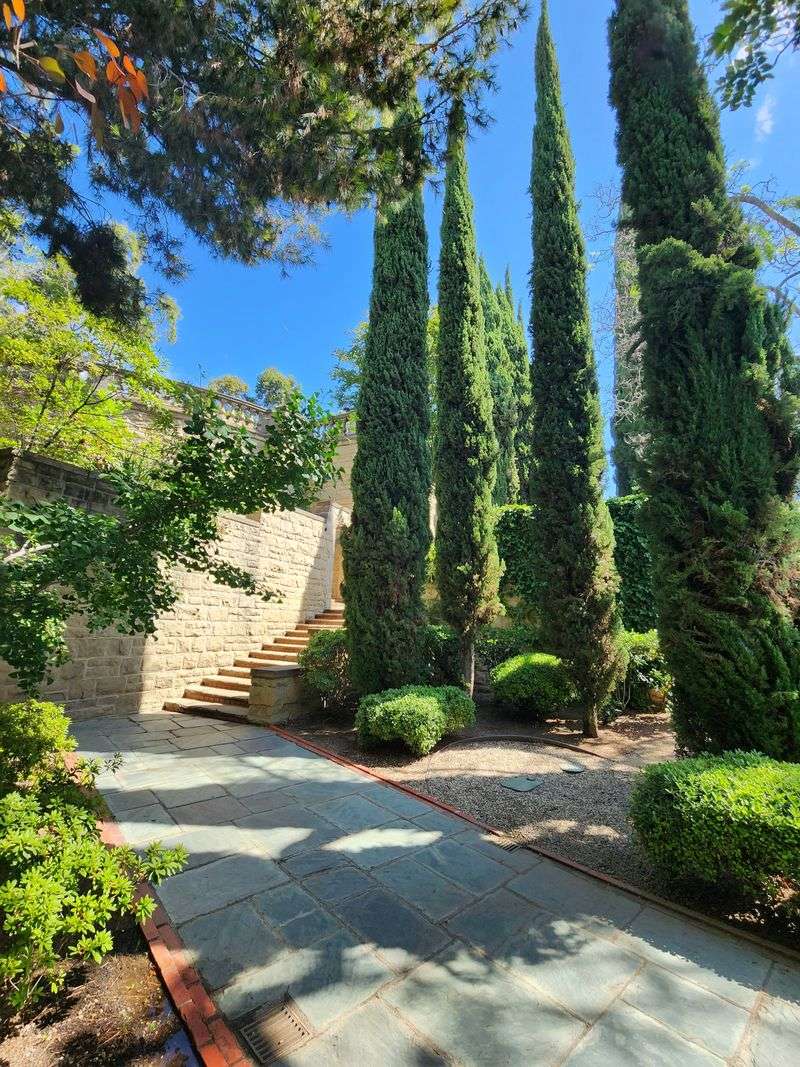
Greystone Mansion stands as perhaps the finest surviving example of the extreme wealth generated by California’s oil boom in the early decades of the 20th century.
Edward L. Doheny’s fortune came from oil fields across California and Mexico, making him one of the richest men in America during the 1920s.
The mansion he built for his son represents not just personal wealth but an entire era when fortunes were made quickly and spent lavishly on displays of status and taste.
The estate reflects the cultural values and aspirations of wealthy Americans during the Roaring Twenties, when European architectural styles conveyed sophistication and social standing.
Building a home of this scale required enormous resources, from the imported materials to the armies of skilled craftsmen who worked for years on construction and finishing details.
The result was meant to establish the Doheny family among California’s social elite, creating a legacy that would last for generations.
Today, Greystone serves as a window into this vanished world of pre-Depression luxury, when wealthy families maintained large staffs and entertained on a scale difficult to imagine in contemporary life.
The mansion’s preservation allows modern visitors to understand how the wealthiest Americans lived during this pivotal period in California history.
The estate’s story encompasses not just architecture and design but also the social, economic, and cultural forces that shaped Southern California’s development into the region we know today.