This California Thrift Store Has Weekly Sales And Half Price Days That Keep Shoppers Coming Back
Bargain hunting in Fresno feels competitive in the best way. Thrift Center turns secondhand shopping into something people actively plan for.
Sale days bring full parking lots and busy aisles. Regular shoppers arrive early because they know the best pieces do not sit for long.
Half-price events change the pace inside the store. Carts fill quickly. Racks thin out. Shoppers move with purpose, scanning for brand names, quality fabrics, and hidden gems before someone else grabs them.
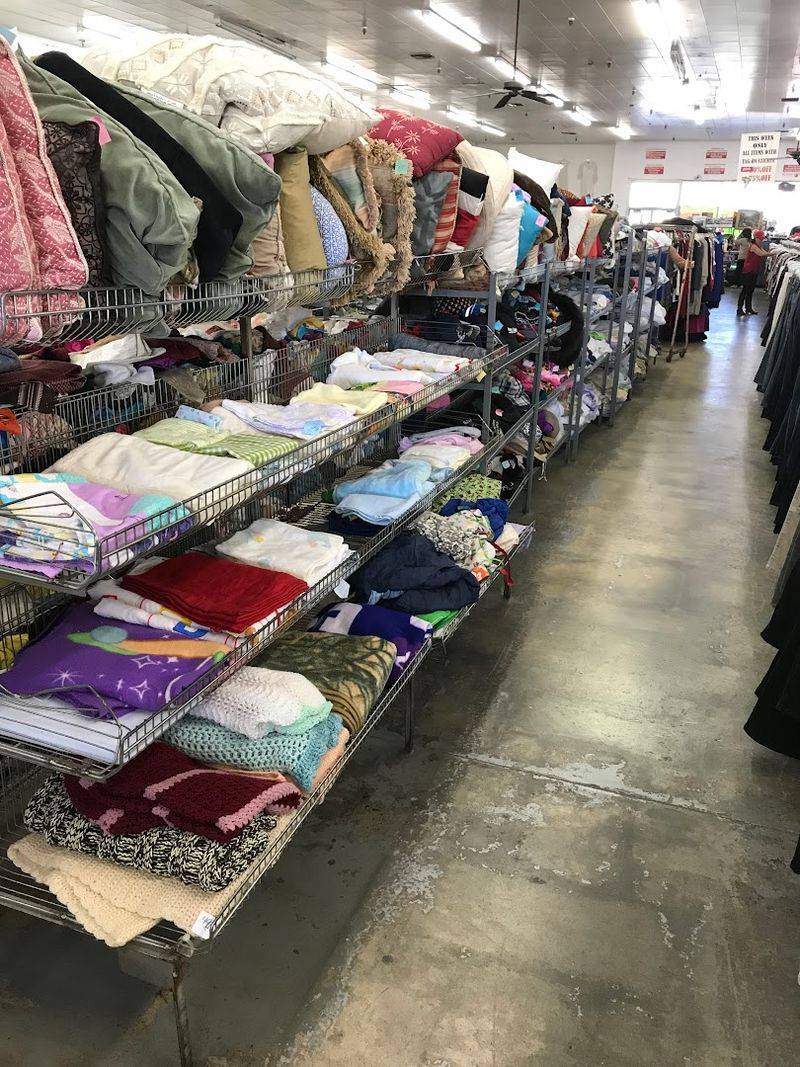
The space stays organized and easy to navigate. Wide aisles and clearly sorted sections make it simple to focus on the hunt instead of fighting through clutter.
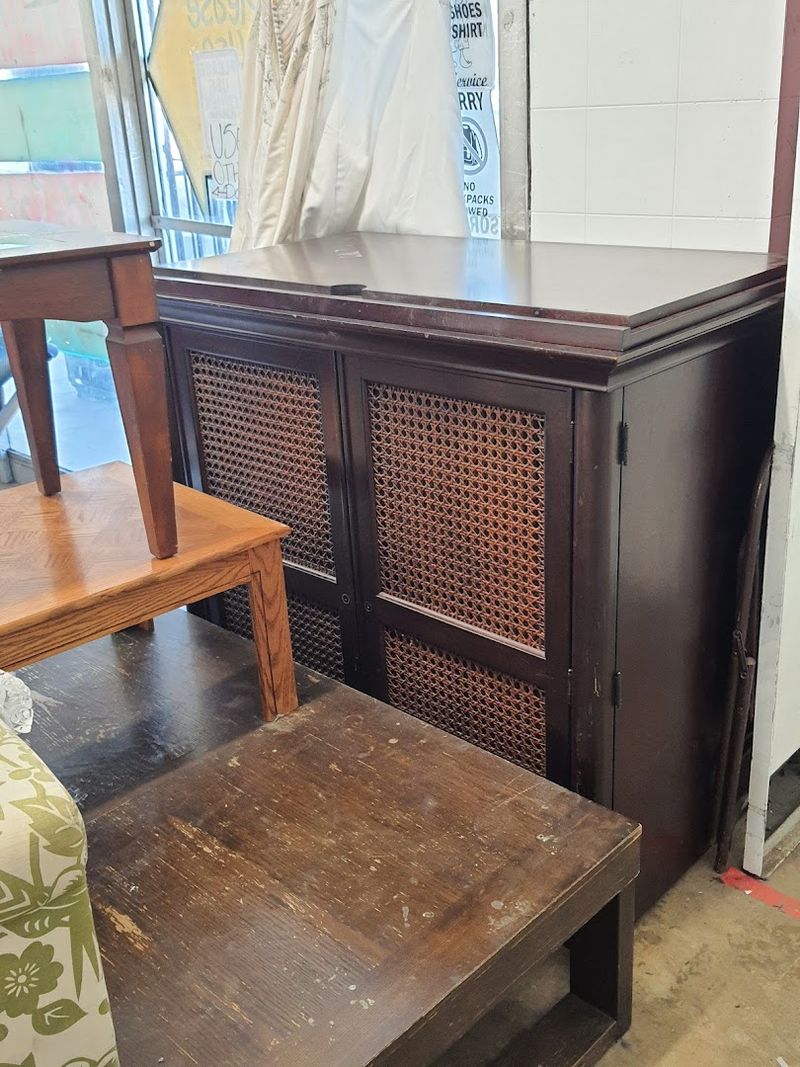
Clothing, furniture, and home goods rotate constantly, so each visit offers something different.
Central Valley residents return because the discounts feel real. Prices drop low enough to justify taking a chance on something unexpected. Sustainable shopping becomes practical, not just trendy.
California living often comes with high costs. Thrift Center gives shoppers a way to stretch their budgets without lowering their standards.
People do not stumble in by accident. They watch the promotional calendar, plan their trips, and show up ready to score.
1. Regular Half-Price Days Create Shopping Anticipation
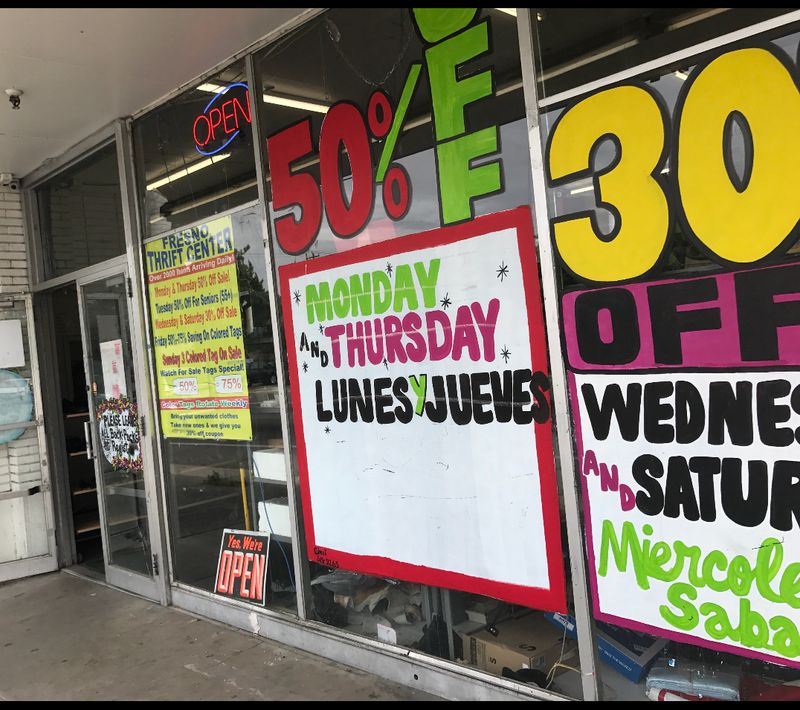
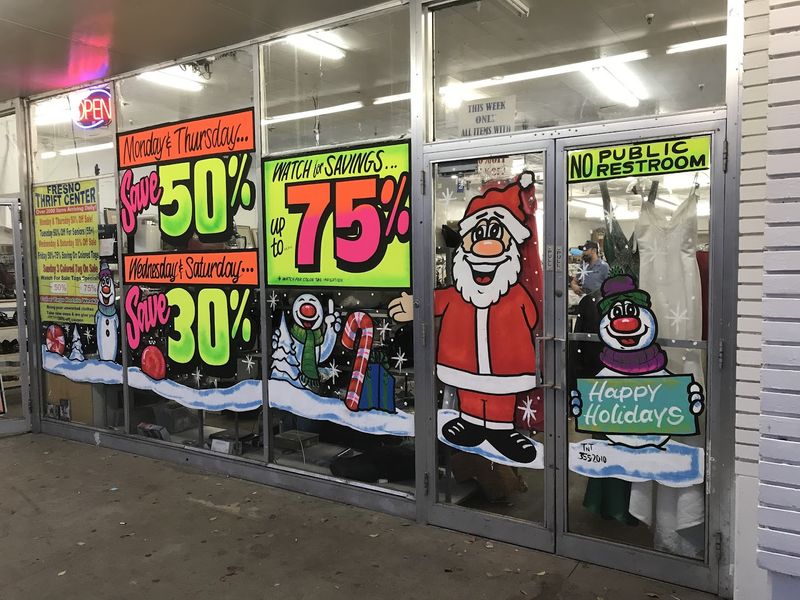
Mondays, Thursdays, and Saturdays bring something special to Thrift Center when select merchandise gets marked down by fifty percent.
The rotating selection means that what qualifies for the discount changes regularly, keeping each visit fresh and unpredictable.
Customers who understand the schedule often plan their shopping trips to coincide with these promotional days, knowing that patience and timing can lead to exceptional deals.
The half-price system works differently than many discount structures because not all items qualify simultaneously.
Staff members tag eligible merchandise with colored tags or stickers that correspond to the current promotion, creating a scavenger hunt atmosphere as shoppers search for marked items.
This approach allows the store to move inventory strategically while giving customers genuine savings on quality goods.
Experienced shoppers arrive early on discount days because popular items in good condition disappear quickly.
The store opens at 9:00 AM on weekdays and Saturdays, giving morning visitors first access to newly tagged merchandise.
By mid-afternoon, the selection shifts as items sell, but patient browsers can still discover overlooked treasures that others missed during the initial rush.
2. Spacious Layout Makes Browsing Comfortable
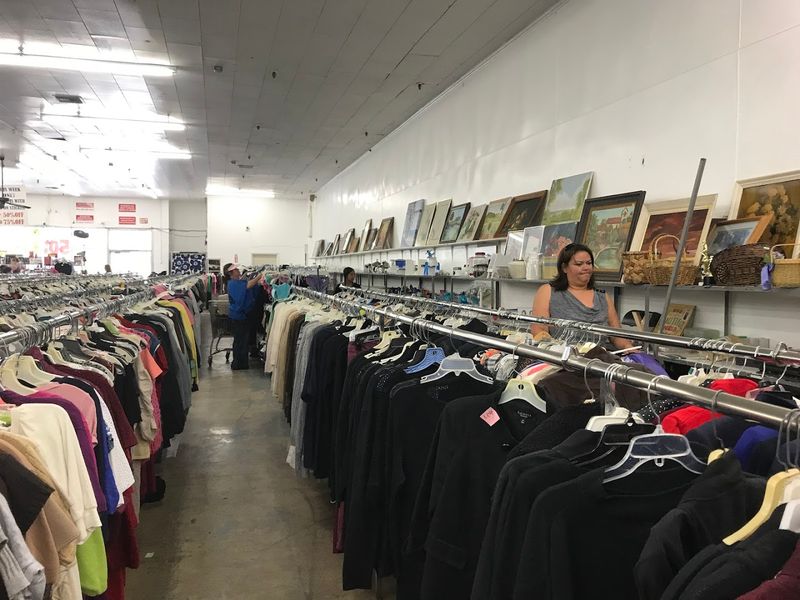
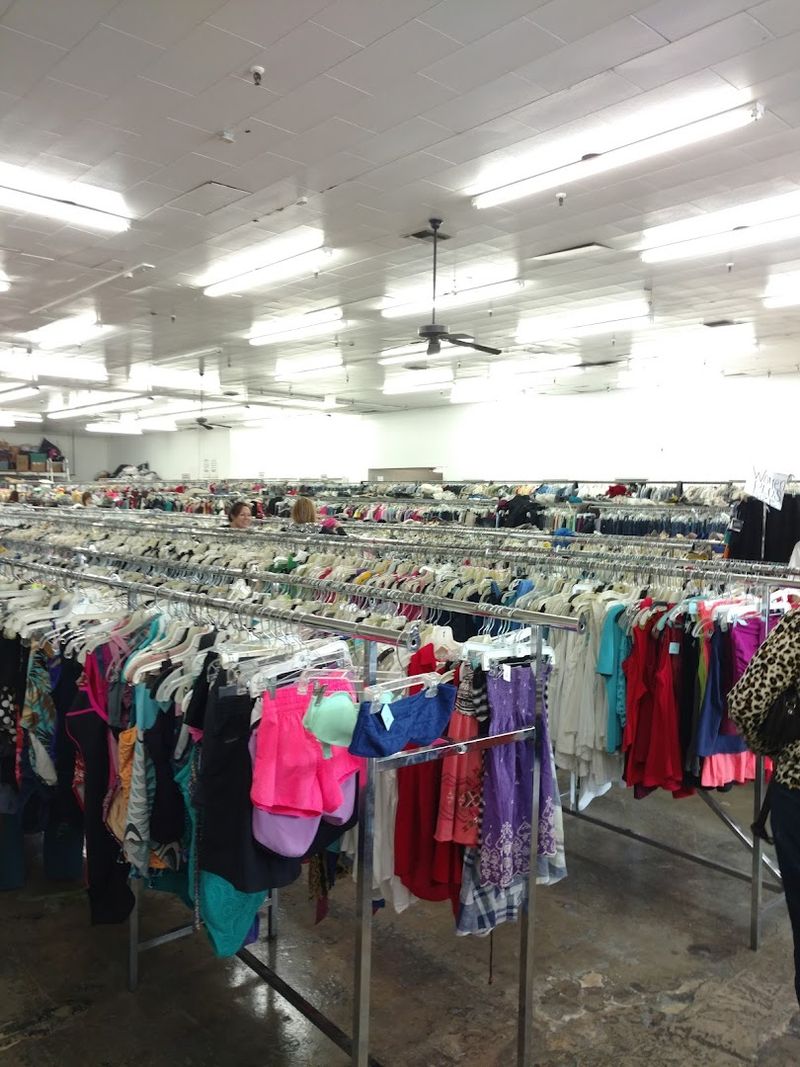
The store at 820 E Shields Ave in Fresno provides ample room for customers to move through departments without feeling cramped or overwhelmed.
Unlike smaller thrift operations where merchandise gets packed tightly into limited space, Thrift Center uses its square footage to create clear pathways between sections.
This thoughtful arrangement means that even during busy sale days, shoppers can navigate the store without constantly maneuvering around other customers or squeezing past displays.
Clothing racks stand organized by category and size, making it easier to locate specific items rather than sorting through jumbled collections.
Home goods occupy dedicated areas where fragile items sit safely displayed rather than stacked precariously.
The separation of departments helps shoppers focus on their primary interests without getting distracted by unrelated merchandise, though the layout still encourages exploration for those who enjoy browsing multiple sections.
Adequate spacing between displays also means that customers can examine items properly before deciding to purchase.
Trying to assess clothing quality or checking home goods for damage becomes simpler when there’s room to hold items up to the light or inspect them from different angles without blocking pathways or disturbing other shoppers.
3. Extended Hours Accommodate Different Schedules
Operating until 8:00 PM Monday through Saturday gives customers flexibility that many thrift stores don’t offer.
People finishing work shifts at 5:00 or 6:00 PM still have several hours to shop without rushing, making the store accessible to those who can’t visit during typical daytime hours.
The extended schedule acknowledges that bargain hunters keep various schedules and that limiting hours to standard retail times excludes potential customers.
Sunday hours run shorter, from 10:00 AM to 6:00 PM, providing a weekend option while giving staff a more reasonable closing time.
This seven-day schedule means that no matter which day works best for someone’s routine, the store remains available.
Parents managing school schedules, shift workers with rotating hours, and anyone else juggling commitments can find a time slot that fits their week.
Late afternoon and evening visits offer a different experience than morning shopping trips.
The store feels calmer after the initial rush of morning bargain hunters, and merchandise has been picked through enough that remaining items represent either overlooked treasures or goods that didn’t appeal to earlier shoppers.
Some customers prefer this quieter atmosphere even if selection has diminished, finding that focused browsing without crowds makes decision-making easier.
4. Diverse Inventory Covers Multiple Shopping Needs
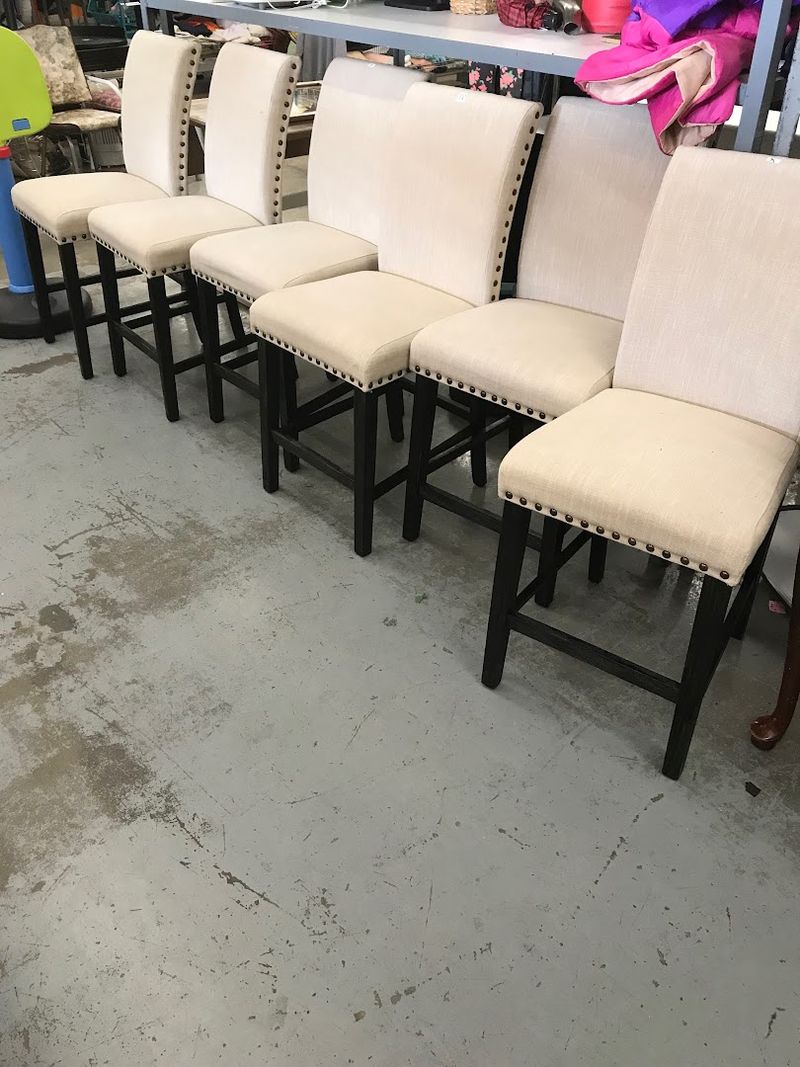
Walking through Thrift Center reveals sections dedicated to clothing, household goods, books, electronics, and decorative items that cover a wide range of shopping purposes.
Someone furnishing an apartment can find dishes, small appliances, and linens alongside furniture pieces that change with donation cycles.
The clothing departments stock options for different ages and styles, from professional wear to casual basics, though specific availability fluctuates based on what comes through donations.
Home goods sections often yield unexpected finds like vintage kitchenware, picture frames, vases, and seasonal decorations that add character to living spaces.
The inventory doesn’t follow predictable patterns because donations arrive constantly, meaning that one visit might feature abundant glassware while the next week brings an influx of books or craft supplies.
This unpredictability frustrates shoppers seeking specific items but delights those who enjoy discovering things they didn’t know they wanted.
The variety means that multiple family members can shop simultaneously for different needs rather than one person waiting while others browse.
A teenager looking for trendy clothing pieces can explore fashion sections while a parent checks kitchenware or someone else examines books, making the store a practical destination for group shopping trips where everyone has different objectives.
5. Friendly Staff Enhance The Shopping Experience
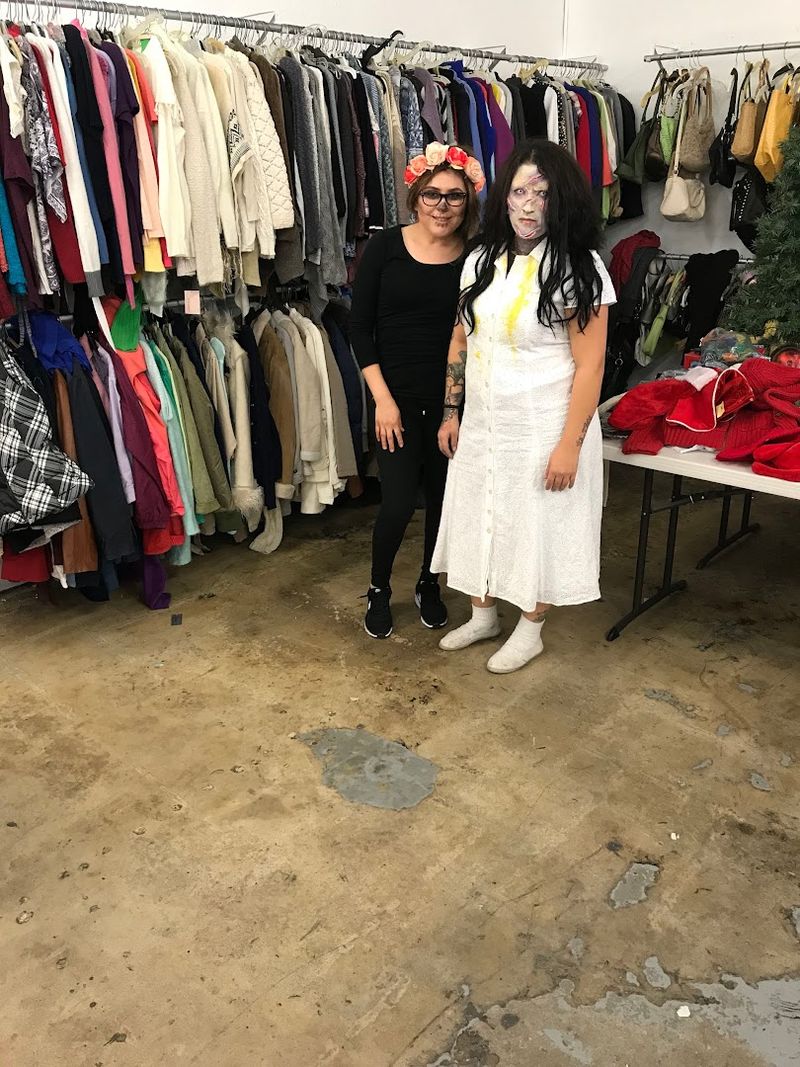
Customer reviews consistently mention helpful staff members who contribute to a welcoming atmosphere rather than simply processing transactions.
Employees who recognize regular shoppers and remember their preferences create a sense of community that transforms routine thrift shopping into something more personal.
This familiarity matters especially for customers who visit weekly or multiple times per month, as friendly faces make the store feel less like an anonymous retail space.
Staff members answer questions about current promotions, help locate specific departments, and sometimes offer insights about when new merchandise typically arrives.
Their willingness to assist without hovering creates a balance between available help and independent browsing.
Customers who need guidance receive it, while those who prefer exploring on their own can do so without feeling monitored or pressured.
The checkout process moves efficiently even during busy periods because staff members work steadily through lines while maintaining pleasant interactions.
Quick transactions matter when customers have limited time, but the efficiency doesn’t come at the expense of courtesy.
Employees manage to keep things moving while still acknowledging each person, creating an experience that feels respectful rather than rushed, even when the store gets crowded during popular sale days.
6. Strategic Location Serves Central Valley Shoppers
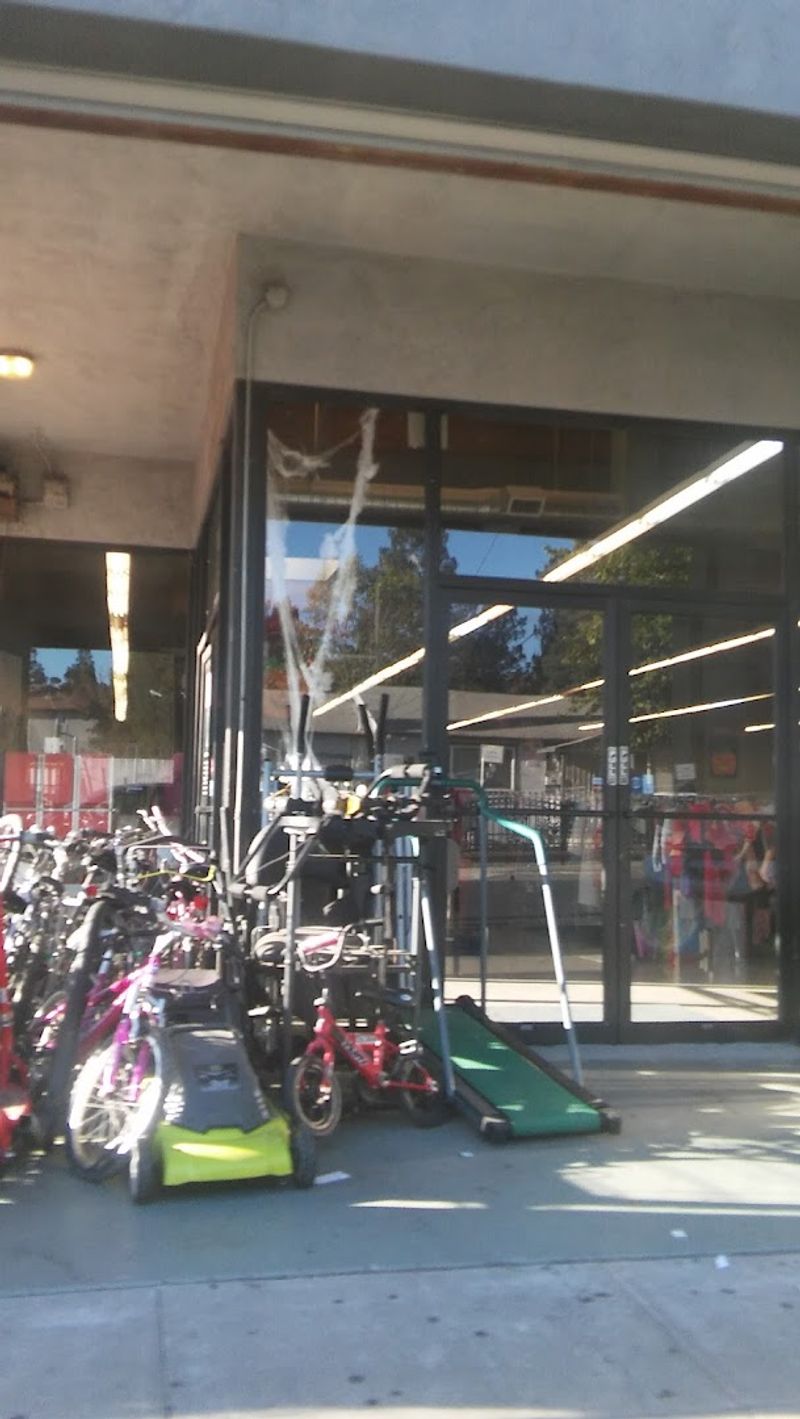
Shields Avenue provides convenient access for Fresno residents and visitors from surrounding Central Valley communities.
The location sits in an area with other retail options, making it easy to combine thrift shopping with other errands rather than requiring a dedicated trip.
Adequate parking accommodates the customer volume, though spaces fill quickly during peak hours on discount days when the store attracts larger crowds.
The store at 820 E Shields Ave in Fresno benefits from visibility and accessibility that help draw both regular customers and first-time visitors.
People driving along Shields Avenue can spot the storefront easily, and the straightforward access means that getting in and out doesn’t require navigating complicated parking lots or confusing entrances.
This practical consideration matters for shoppers carrying purchases to their vehicles or visiting with children who need simple, safe pathways.
Being located in Fresno rather than a smaller outlying community means the store serves a larger population base, which in turn supports better inventory turnover and more frequent donations.
The urban setting provides enough customer traffic to justify the extended hours and regular sales, creating a sustainable business model that benefits shoppers through consistent operations and reliable discount schedules that they can plan around.
7. Quality Control Maintains Merchandise Standards
Not every donated item makes it to the sales floor because staff members evaluate condition, cleanliness, and functionality before pricing and displaying merchandise.
This screening process means that while selection varies, the overall quality remains higher than stores that accept everything regardless of condition.
Shoppers spend less time sorting through damaged or unusable items and more time finding goods worth purchasing.
Clothing gets checked for stains, tears, missing buttons, and excessive wear before reaching the racks.
Household items undergo similar inspection to ensure that dishes aren’t chipped beyond use, small appliances show signs of working condition, and books remain readable rather than falling apart.
The standards aren’t perfectionist—this remains a thrift store with used goods—but basic quality control protects customers from wasting time on merchandise that can’t serve its intended purpose.
This approach benefits both the store and shoppers because it builds trust in the inventory.
Regular customers learn that while they still need to inspect items before purchasing, the initial screening eliminates the worst donations.
That confidence encourages more thorough browsing because people know their time investment has reasonable chances of yielding usable finds rather than requiring them to wade through mostly unusable castoffs to discover occasional treasures.
8. Sustainable Shopping Appeals To Environmentally Conscious Buyers
Choosing secondhand goods reduces demand for new manufacturing and keeps usable items out of landfills, making thrift shopping an environmentally responsible choice.
Customers who prioritize sustainability appreciate that Thrift Center provides an alternative to fast fashion and disposable household goods.
Each purchase represents something that continues serving a purpose rather than becoming waste, aligning shopping habits with environmental values without requiring major lifestyle changes.
The circular economy model that thrift stores support means that goods move through multiple owners before reaching the end of their useful life.
Someone’s donated kitchen supplies become another family’s starter set, and outgrown children’s clothing serves new kids rather than filling garbage bins.
This extended use cycle maximizes the value extracted from manufactured goods while minimizing the environmental impact of constant new production.
For shoppers balancing environmental concerns with budget limitations, thrift stores offer a practical solution that addresses both priorities simultaneously.
Buying secondhand costs less than purchasing new items while also reducing environmental footprint, proving that sustainable choices don’t always require spending more money.
The combination of affordability and environmental benefit makes thrift shopping appealing to a broad range of customers rather than limiting it to those who can afford premium eco-friendly products.
9. Bargain Hunting Becomes A Rewarding Activity
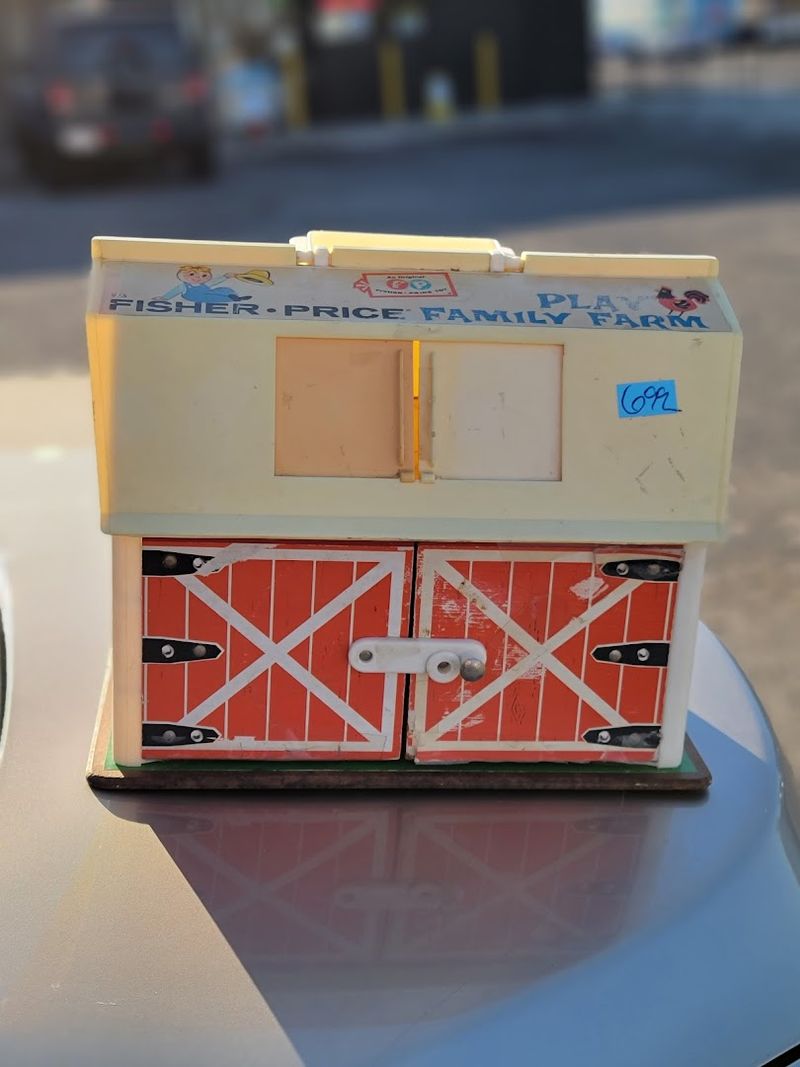
The unpredictable nature of thrift store inventory transforms shopping from a routine task into something more like a treasure hunt where patience and persistence get rewarded.
Unlike conventional retail where merchandise remains consistent and predictable, thrift stores offer the possibility of discovering unexpected items at remarkable prices.
This element of chance appeals to people who enjoy the process of searching rather than simply acquiring specific predetermined items.
Regular visitors develop strategies for maximizing their success, learning which days bring new inventory, understanding the discount schedule, and knowing which sections typically yield the best finds for their interests.
These tactics turn bargain hunting into a skill that improves with practice and experience.
The satisfaction of finding a perfect item at a fraction of retail price creates positive reinforcement that keeps customers returning even when some visits produce nothing worth buying.
The financial savings add up significantly over time for families or individuals who make thrift shopping a regular habit rather than an occasional activity.
Someone furnishing a home, building a wardrobe, or simply maintaining household supplies can reduce expenses substantially by choosing secondhand options.
Those savings free up money for other priorities while still meeting practical needs, making thrift shopping a smart financial strategy beyond just the immediate enjoyment of finding good deals.
10. Community Connection Through Shared Shopping Experiences
Regular customers often recognize each other during repeated visits, creating informal connections based on shared interest in bargain hunting.
These casual relationships don’t necessarily extend beyond the store, but they add a social dimension to shopping that makes visits more enjoyable.
Exchanging tips about good finds or commenting on items creates brief interactions that transform solo shopping into a more communal activity.
The store functions as a gathering place where people from different backgrounds come together around the common goal of finding good deals.
Economic diversity characterizes thrift store customers, with some shopping from necessity and others from choice, but the shared experience of browsing and discovering creates common ground.
This mixing of different community members in a non-judgmental environment contributes to social cohesion in small but meaningful ways.
For some shoppers, particularly retirees or people with flexible schedules, regular thrift store visits provide structure and routine beyond just acquiring goods.
The activity gets them out of the house, offers light physical activity through walking and browsing, and provides opportunities for casual social interaction.
These secondary benefits make thrift shopping valuable beyond the merchandise itself, serving social and psychological needs alongside practical shopping purposes for customers who value the complete experience.