8 Covered Bridge Towns In Indiana Where Old-School Food Traditions Still Live On
I pulled over for funnel cake and stayed for three hours. That is what Parke County does to you.
Indiana has 92 counties, but this one figured out something the rest of the state is still catching up on. When October arrives, the covered bridges stop being just photo stops.
They become markers on a food trail that locals have been running for generations. Cast iron, copper kettles, recipes nobody ever wrote down.
The county fair food here is not a novelty. It is an inheritance, served hot from the same spots your great-grandmother probably stood in line for.
Indiana keeps surprising people who think they already know it. Each town on this list carries the same century-old tradition.
And there is absolutely zero reason to skip dessert.
1. Rockville
Every great food tradition needs a home base, and Rockville has held that role since 1957. The Parke County Covered Bridge Festival draws around two million visitors each year, making it the largest festival in Indiana by a wide margin.
It sounds like an exaggeration until you see the crowds for yourself.
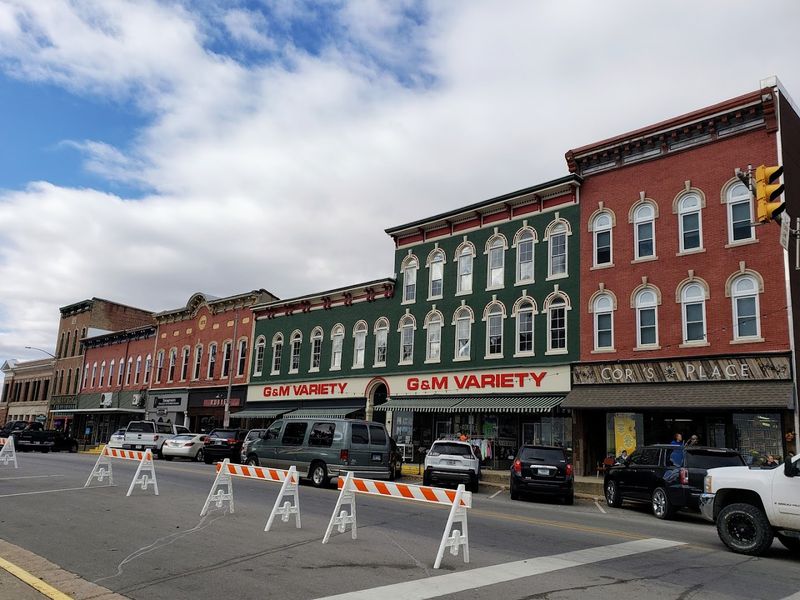
At the center of it all is the 1882 courthouse, a landmark that pulls your attention even if you are halfway through a bite. Booths wrap around the square in every direction, packed with antiques, handmade goods, and food you are not going to find anywhere near a chain restaurant.
It feels busy, but never random. Everything has its place.
Then there is the food. Persimmon pudding leads the way, and once you try it, you understand why.
It is dense, lightly spiced, and made from wild persimmons that only show up when fall settles in. It does not try to impress.
It just works.
If you have never had it before, the first bite feels like discovering something that should have been on your radar much earlier. That is part of the appeal here.
Recipes like this have stayed the same for a reason.
Walk the square long enough and you start noticing the same thing everywhere. People come back to the same booths year after year.
Lines form early, and they do not slow down much.
Rockville does not reinvent anything. It keeps doing what it has always done, and that consistency is exactly what makes it stand out.
2. Mansfield
You smell Mansfield before you see it. Smoke from turkey leg grills drifts down the road long before the village comes into view, and your stomach reacts before your brain catches up.
Turkey legs are the signature here, and during festival days, vendors line the area from morning to evening.
The Mansfield Roller Mill has a story that goes back further than most visitors expect. Milling activity here dates to the early 1820s, and the site evolved into a roller mill later in the 19th century.
It was eventually recognized on the National Register of Historic Places, and today you can still walk through it and see how everything worked. The space feels real, not staged.
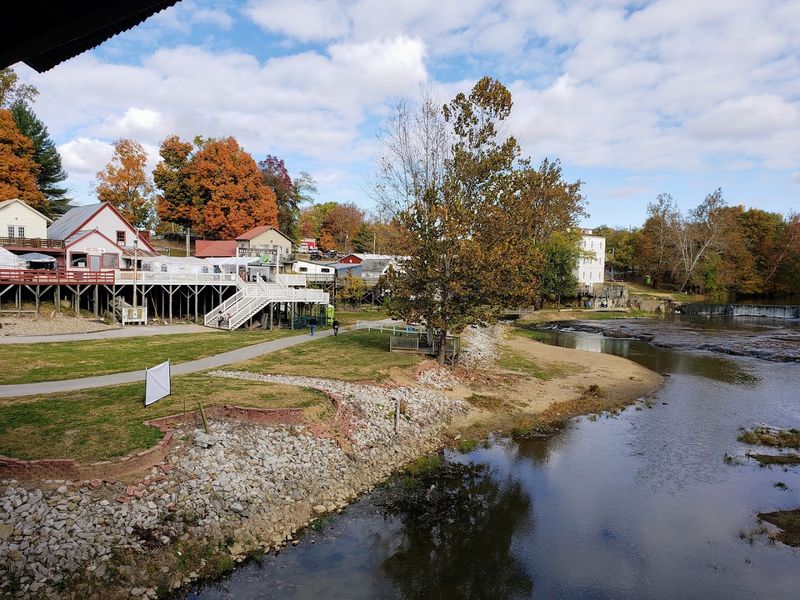
Step outside with a hot turkey leg and you are right next to Big Raccoon Creek. The setting does a lot of the work.
Water moving below, wood beams above, and the smell of smoke still hanging in the air. It is simple, but it sticks with you.
Nothing here tries to be polished. Mansfield leans into the noise, the crowds, and the constant motion of people coming for the same thing.
Good food, made in plain sight, in a place that has been doing it for generations.
That kind of consistency is hard to fake. It is also why people keep coming back.
3. Bloomingdale
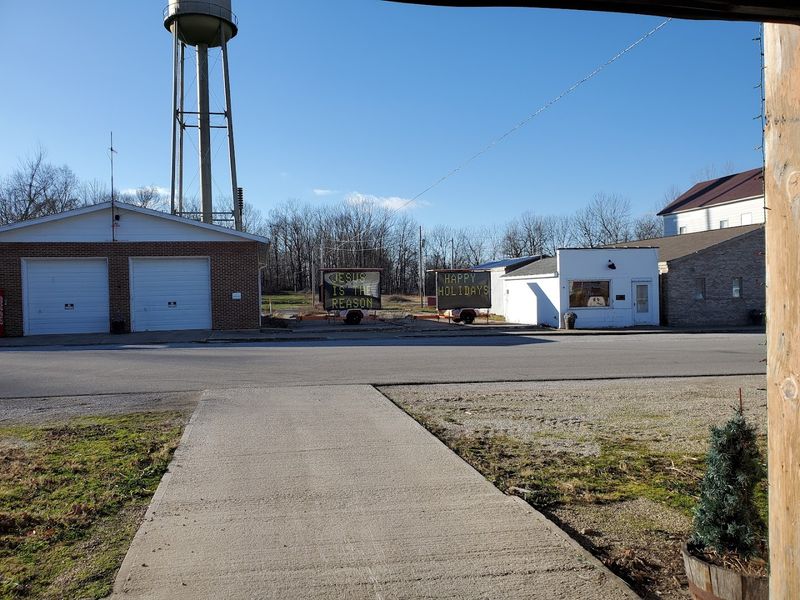
Not every great food tradition starts in a restaurant kitchen. In Bloomingdale, a small Quaker community with deep roots, the apple butter comes from the Bloomingdale Friends Church, made in copper kettles over open fires by people who learned the process from those before them.
The smell of cinnamon and slow-cooked apples reaches you before you even step out of the car.
Stand there for a minute and you will see it. The kettles bubble steadily while someone stirs with a long wooden paddle, moving at a pace that has not changed in decades.
Nothing about it feels staged. It is not a performance.
It is simply how things are done here every October.
Time moves differently around those kettles. Conversations drift, people gather, and the process unfolds without any rush.
You start to realize the experience is just as important as the final product.
Beyond the apple butter, Bloomingdale offers a full spread at the Friends Meeting House. Chicken and noodles, ham and beans, barbecue, and fresh vegetables show up on plates that feel familiar in the best way.
The flavors are simple, but they land exactly where they should.
A bowl of ham and beans with fresh bread and a spoonful of apple butter ties everything together. It is filling without trying too hard.
Honest without needing explanation.
Bloomingdale is easy to miss if you are moving quickly between bigger stops. Slow down here.
This is the kind of place people remember long after the festival ends.
4. Montezuma
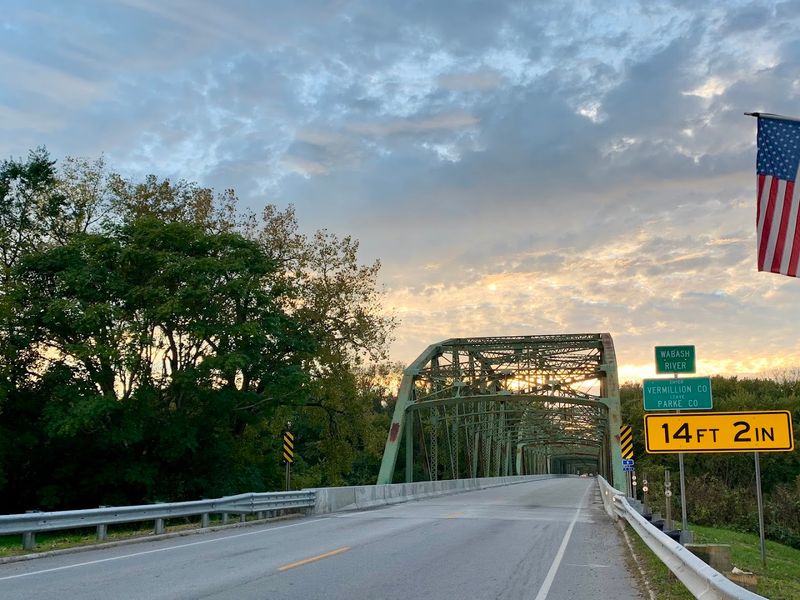
The cruller is one of those foods that has quietly disappeared from most county fairs, replaced by flashier fried options that look better than they taste. Montezuma never followed that trend.
Twisted, golden pastries made the old way still take center stage here, and the line forms early for a reason. People know exactly what they are coming for.
You will smell them before you see them. Light, crisp on the outside, soft on the inside, and just sweet enough to keep you going back for another bite.
It is not complicated food. It just happens to be done right.
The rest of the menu holds its own. Roast hog and iron pot ham and beans turn a quick stop into a full meal, spread across a few different booths that each bring something solid to the table.
Nothing feels rushed. Nothing feels like a shortcut.
A cup of cold apple cider ties everything together. It cuts through the richness and resets your palate in the best possible way.
It is the kind of simple detail that makes the whole experience feel more complete.
Take a break from eating and walk toward the canal. The Wabash and Erie Canal still runs through town, and tractor-pulled wagon rides give you a slow look at how the area once moved goods and people.
It adds context without taking over the moment.
Montezuma sits along the Wabash River, and that setting matters. Food and movement have always been connected here.
Spend a little extra time. This stop is easy to rush, but it is better when you do not.
5. Mecca
Some stops on the festival circuit feel like they exist in a slightly older version of time, and Mecca is absolutely one of them.
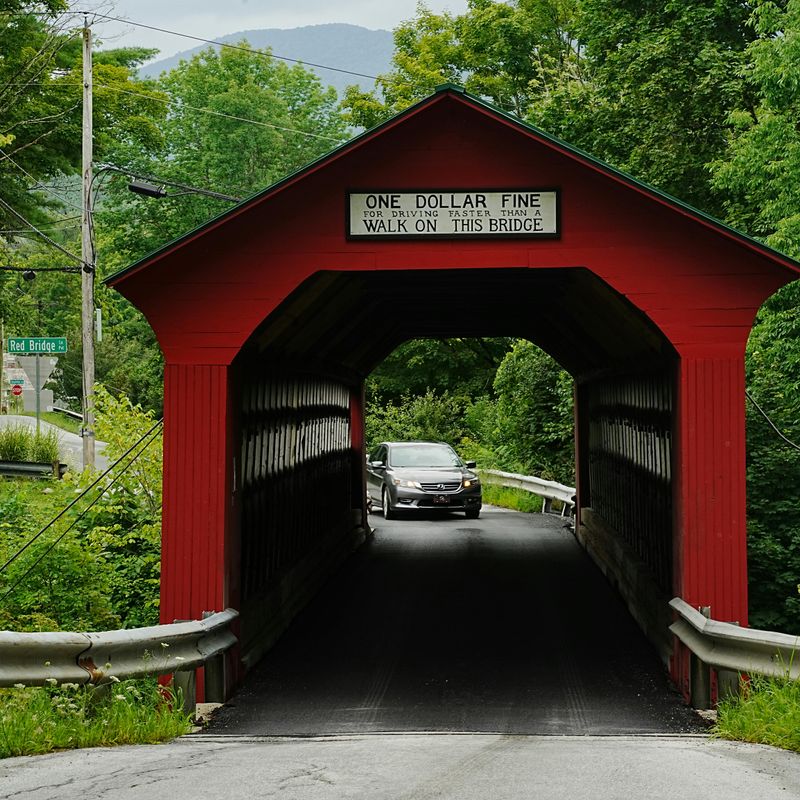
The historic Mecca Covered Bridge, a one-room schoolhouse, and the county’s oldest operating tavern all share the same small footprint, creating a concentration of 19th-century atmosphere that is hard to find anywhere else in the region.
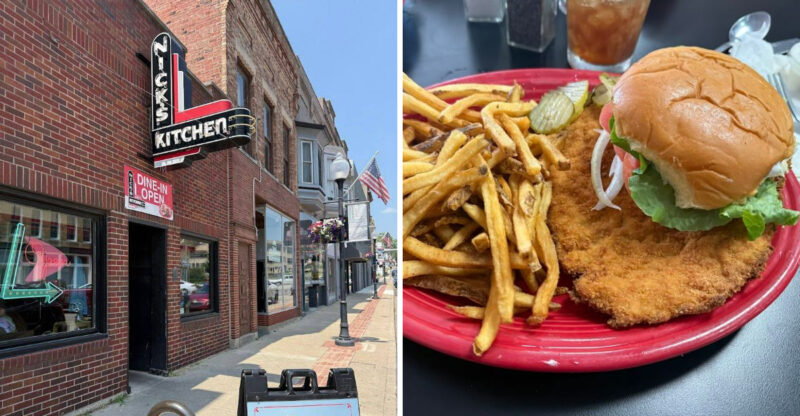
The breaded tenderloin sandwich served here has achieved a kind of legendary status among festival regulars. It is the size of a dinner plate and overhangs the bun on all four sides, which is exactly the correct proportion for this particular sandwich.
Anyone who has grown up eating Midwestern tenderloins understands immediately. Anyone who has not is about to have a formative experience.
Mecca draws visitors who want a quieter corner of the festival without sacrificing food quality or historic atmosphere. The tavern has been serving the community for well over a century, and its continued operation feels like a quiet act of cultural preservation.
The covered bridge here is one of the oldest on the festival circuit and worth a long look before you eat. Standing on the bridge planks with the creek below and the tavern just steps away, you get a clear sense of how connected food, community, and place have always been in this part of the state.
6. Rosedale
Chicken and noodles over mashed potatoes is the kind of dish that no restaurant chain has ever truly matched, no matter how many times they have tried. The version served at the Rosedale Civic Center during festival season comes very close to perfect.
Thick egg noodles sit in a rich, slow-cooked broth, ladled generously over a scoop of real mashed potatoes. It is simple, filling, and exactly what you want on a cool fall day.
There is nothing complicated about it, and that is the point. Every bite feels familiar in a way that does not need explanation.
You sit down, take a few bites, and suddenly the noise of the festival fades into the background for a minute.
The Civic Center turns into a busy country market during the festival, filled with handmade crafts, quilts, and homemade goods. People move slowly through the space, stopping between booths, talking, looking, and occasionally heading back for another plate.
The rhythm here is easy to fall into.
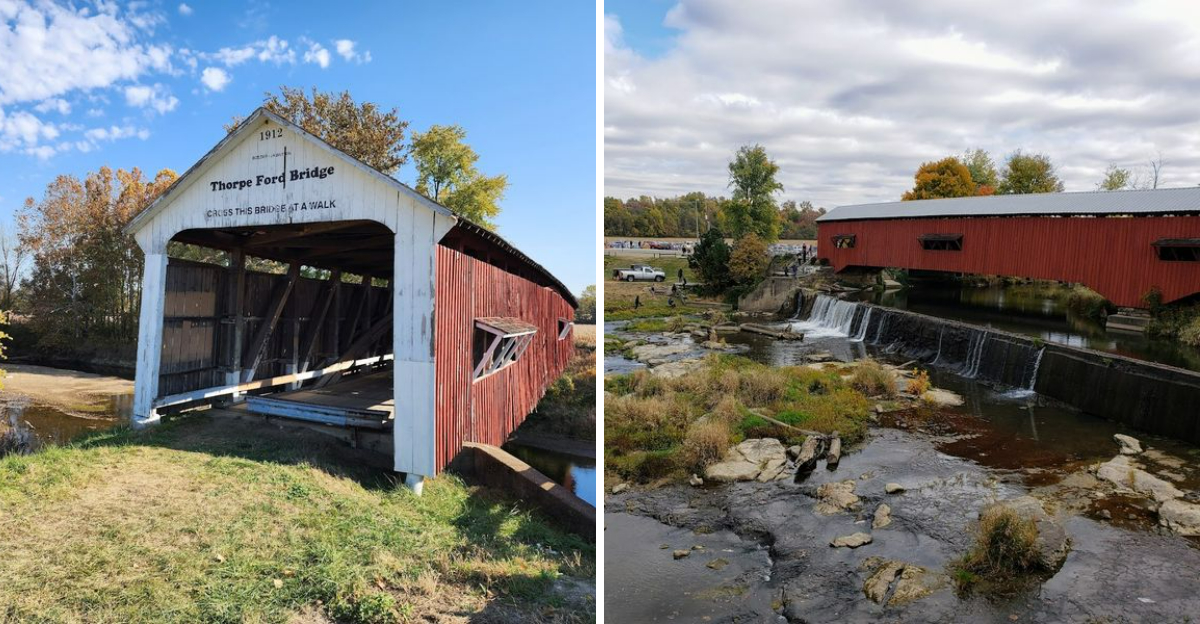
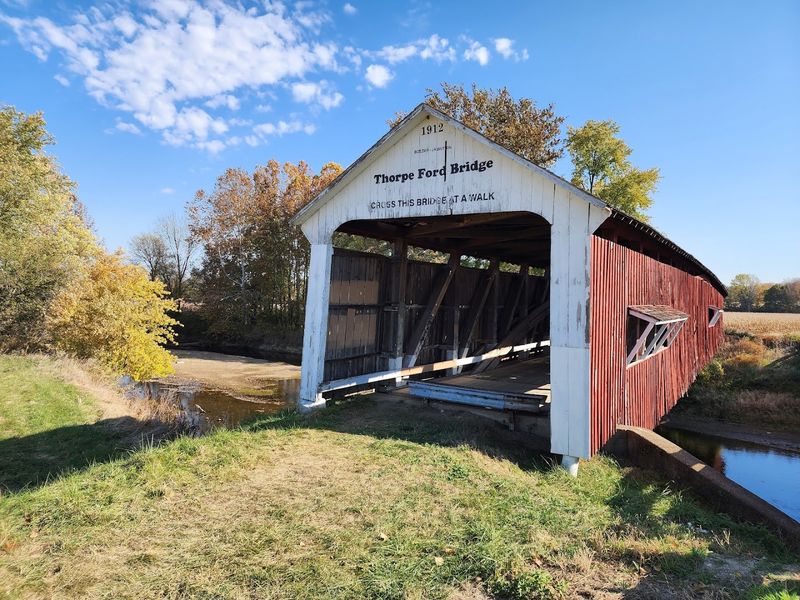
Take a break from the table and step outside. Two covered bridges, Thorpe Ford and Roseville, sit just a short drive away and make this an easy stop to pair with a longer route through the area.
The scenery does the rest.
Rosedale does not try to stand out. It simply delivers what it promises, and does it well.
Good food, made with care, in a place that feels genuinely connected to the people who keep it going.
7. Bellmore
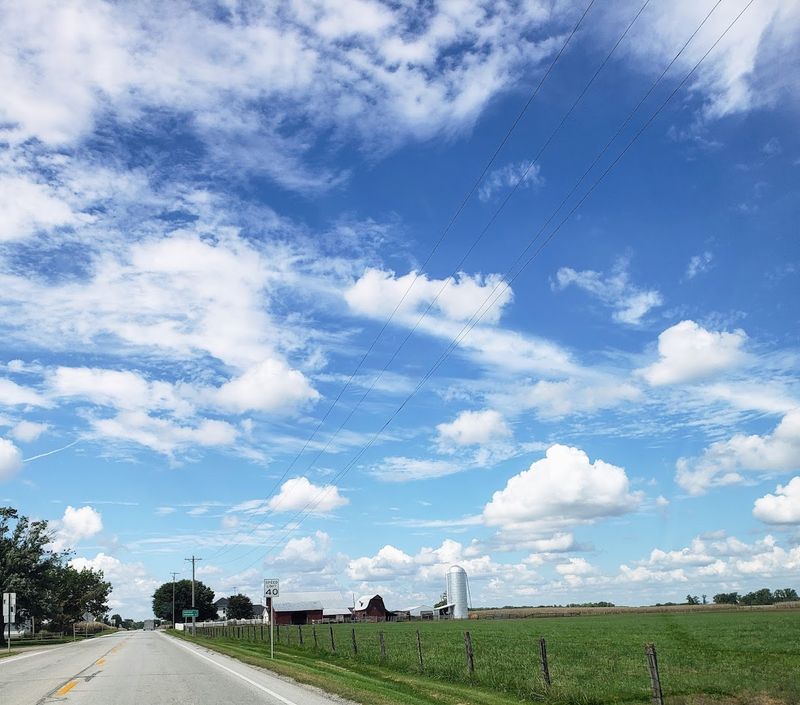
Not every great festival stop needs a historic mill or a legendary sandwich to justify the detour. Bellmore earns its place on the circuit by being exactly what it is: the smallest, quietest, most genuinely local stop of the entire festival, and that is its entire appeal.
Pumpkins, mums, primitives, and family yard sales line the streets in a way that feels more like a neighborhood event than a tourist attraction.
While visitors crowd the bigger towns for turkey legs and persimmon pudding, Bellmore is where the actual locals tend to shop. The scale is human-sized.
Conversations happen easily. Nobody is rushing anywhere.
The homemade fudge sold out of someone’s garage is frequently the best thing you will eat all weekend, which is a bold statement on a circuit that includes buried beef and crullers.
Bellmore is the antidote to festival overwhelm. If the crowds in Rockville start to feel like too much, a twenty-minute drive to Bellmore resets the whole experience.
The fall florals here are genuinely beautiful, and the pumpkin selection is the kind that makes you wish you had brought a bigger car. Small does not mean lesser.
Bellmore proves that the quietest stop on a great road trip is sometimes the one you remember most clearly when you get home.
8. Bridgeton
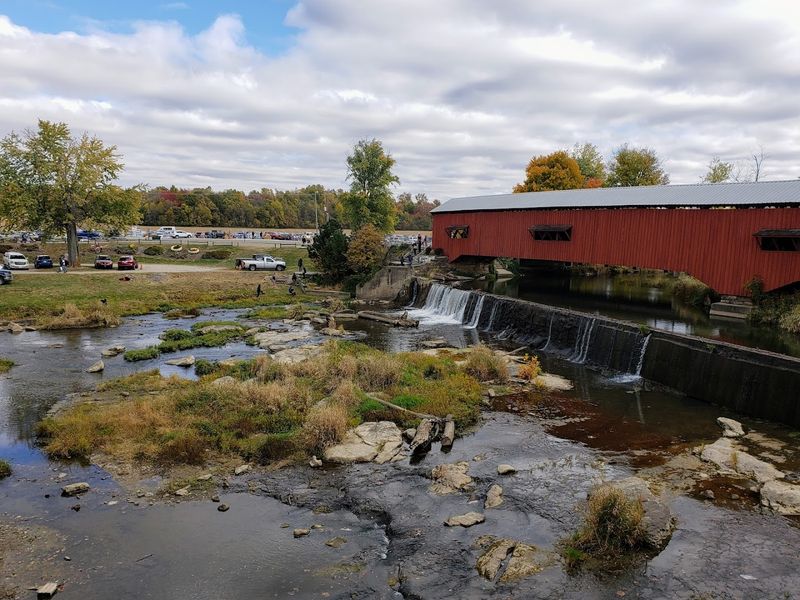
Some buildings earn their reputation quietly, over time. The Bridgeton Mill has been operating since 1823, making it the oldest continually running mill in Indiana and possibly one of the oldest in the Midwest.
That is not a slogan. It is simply what happens when something is preserved with care for generations.
Right beside it, the Old Mill Snack Shop keeps things just as grounded. The menu leans into what the mill does best.
Fresh-ground grain shows up in homemade bread, simple baked goods, and warm, filling sides that feel closer to home cooking than anything else. You can taste the difference almost immediately.
The millstones are still turning, and watching them work is part of the experience. It is not fast, and that is exactly the point.
People stand there longer than they planned to, following the rhythm of the process without even realizing it.
Step outside and the covered bridge completes the setting. Water moves slowly beneath it, and the wooden structure frames the entire scene in a way that feels almost too perfect.
Nothing here feels forced.
Take your time here. Walk around. Look at the details.
Bridgeton is not built for quick stops. It rewards people who slow down, pay attention, and stay a little longer than they intended.