This Iconic Mystic Seaport Museum In Connecticut Feels Like Stepping Back In Time
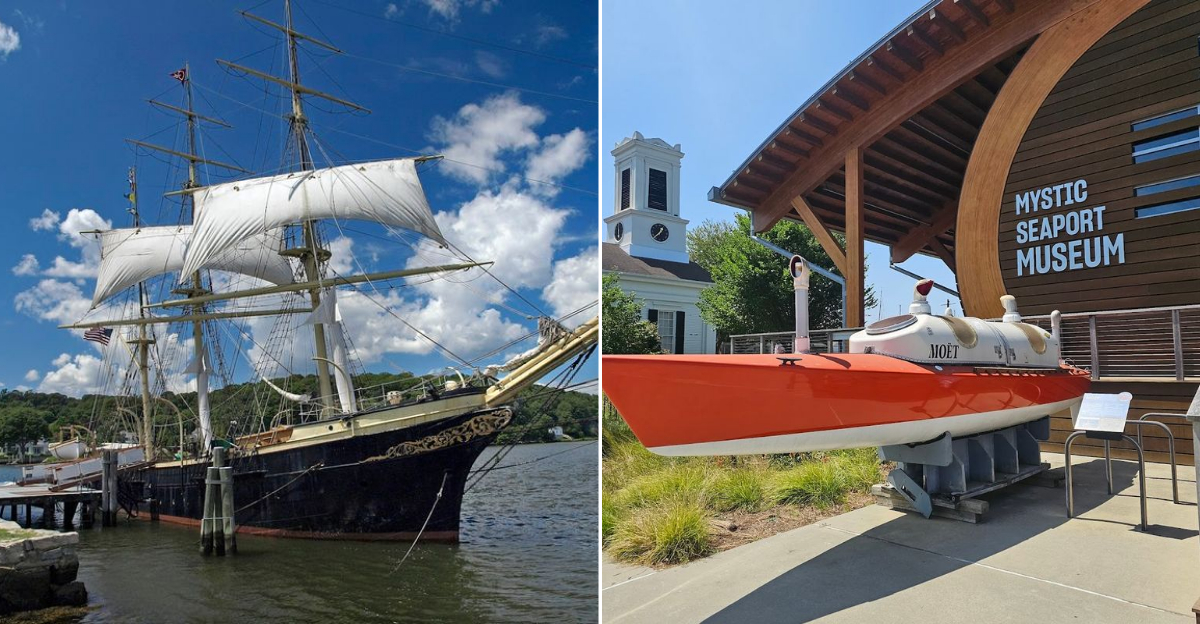
The shift happens gradually, almost without you noticing. One moment you’re in the present, and the next you’re surrounded by the sights, sounds, and textures of another era.
Wooden pathways guide you forward, boats rock gently along the water, and every detail feels thoughtfully preserved.
It’s not just something to observe from a distance. You become part of it, wandering through spaces that feel alive with stories.
There’s a sense of discovery around every turn, whether you’re peeking into a workshop or watching the water stretch out in front of you. You might find yourself lingering a little longer than expected, drawn in by the atmosphere and the steady rhythm of life unfolding around you.
In Connecticut, experiences like this feel rare in the best way. It’s immersive, peaceful, and just interactive enough to keep you completely engaged from start to finish.
1. A Living Maritime Village Frozen In Time
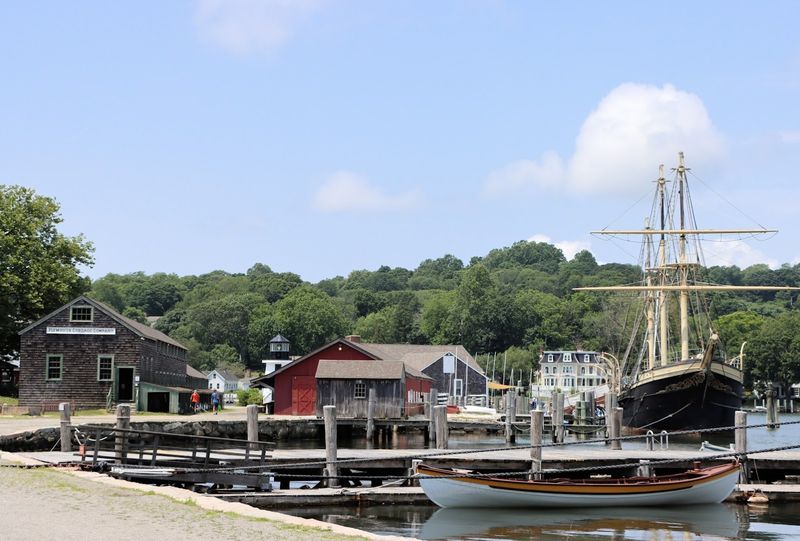
Stepping through the entrance of Mystic Seaport Museum feels less like entering an attraction and more like slipping through a gap in time. The museum sits at 75 Greenmanville Ave, Mystic, CT 06355, and its grounds stretch across 19 carefully maintained acres along the Mystic River.
More than 60 historic structures line the paths, many of which were relocated from their original sites and painstakingly restored to reflect life as it was lived in the 1800s.
A commercial bank built in 1833 still stands here, as does an 1885 ironwork shop that is believed to be the only surviving example from the American whaling industry.
Walking past a general store, a cooperage, and a printing house gives a grounded sense of how tightly knit a working maritime community once was.
The textures of weathered wood, hand-forged iron, and salt-worn rope are everywhere.
The layout encourages slow wandering rather than rushing, so comfortable footwear is genuinely helpful. Crowds tend to thin out on weekday mornings, which could make for a calmer experience overall.
Arriving early also means more time to absorb each building before the day fills up with other visitors.
2. Historic Ships You Can Step Right On Board
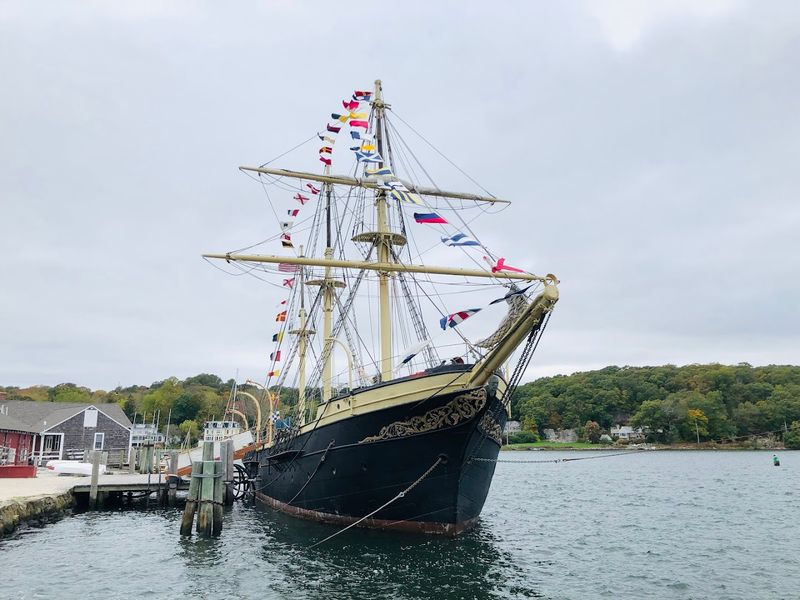
There are not many places in the world where a person can walk the deck of a ship built in 1841, but Mystic Seaport Museum makes that possible. The Charles W.
Morgan is America’s oldest surviving commercial vessel and the last wooden whaling ship in existence anywhere on earth. Visitors can explore its decks, peer into the captain’s quarters, and get a sense of what months at sea actually looked like for the men who worked these ships.
Three other National Historic Landmark vessels are also part of the collection. The 1908 steamboat Sabino, which runs on coal and is the oldest wooden coal-fired steamboat still in operation in the United States, offers captained river cruises during warmer months.
The 1866 Noank smack Emma C. Berry and the 1921 fishing schooner L.A.
Dunton round out the landmark fleet, each telling a different chapter of American seafaring history.
A replica of the schooner Amistad, tied deeply to the abolitionist movement, is also housed at the museum. The 1882 full-rigged ship Joseph Conrad serves educational programs and adds yet another layer to an already remarkable collection.
Plan to spend significant time just on the ships alone.
3. Costumed Interpreters Bringing History To Life
History can sometimes feel distant when it lives only inside glass cases, but at Mystic Seaport Museum it tends to feel surprisingly close.
Staff historians, storytellers, musicians, and craftspeople move through the village in period-appropriate dress, engaging visitors in conversations that make the past feel genuinely accessible.
A blacksmith hammering iron at an open forge or a chanteyman singing working songs on the waterfront adds a layer of authenticity that photographs simply cannot capture.
The museum’s own chanteymen perform regularly, especially during events like the annual Sea Music Festival, where traditional sea songs fill the air throughout the grounds.
Guides stationed at specific buildings are notably knowledgeable and tend to speak with real enthusiasm about their particular area of focus.
Staying close to these interpreters rather than self-touring is consistently noted as a way to get much more out of a visit.
Demonstrations in traditional trades like sailmaking, open-hearth cooking, and letterpressing happen throughout the day, though schedules can vary by season. Checking the museum’s daily program upon arrival helps visitors plan which demonstrations to prioritize.
Children tend to respond especially well to the hands-on and interactive nature of these living history moments.
4. Hands-On Exhibits That Go Beyond Typical Museums
Most museums ask visitors to look but not touch, and Mystic Seaport Museum does things a bit differently.
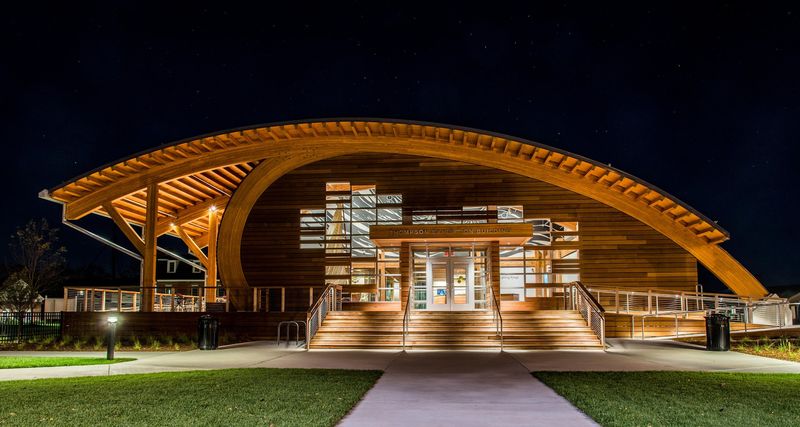
Indoor galleries hold world-class exhibitions that go well beyond static displays, covering topics from the 19th-century American whaling industry to shipwreck recreations built entirely from LEGO bricks.
The Treworgy Planetarium on the grounds offers programs on celestial navigation, which ties directly into the seafaring theme in a way that feels cohesive rather than random.
The museum’s permanent collection includes over two million artifacts, among them marine paintings, scrimshaw carvings, ship models, hand tools, and one of the largest collections of maritime photography in the country.
The Rosenfeld Collection alone is a remarkable archive of images documenting American sailing history across decades.
Rotating exhibitions mean that repeat visitors often find something new waiting for them.
Hands-on classes in traditional trades like woodworking, blacksmithing, and sailmaking are available for those who want to go even deeper. Youth workshops and family-oriented programming make the exhibits accessible to younger visitors without oversimplifying the content for adults.
The indoor spaces also provide welcome shade and rest during warmer months, making them a natural midday stop during a full-day visit.
5. A Working Shipyard With Real Craftsmanship
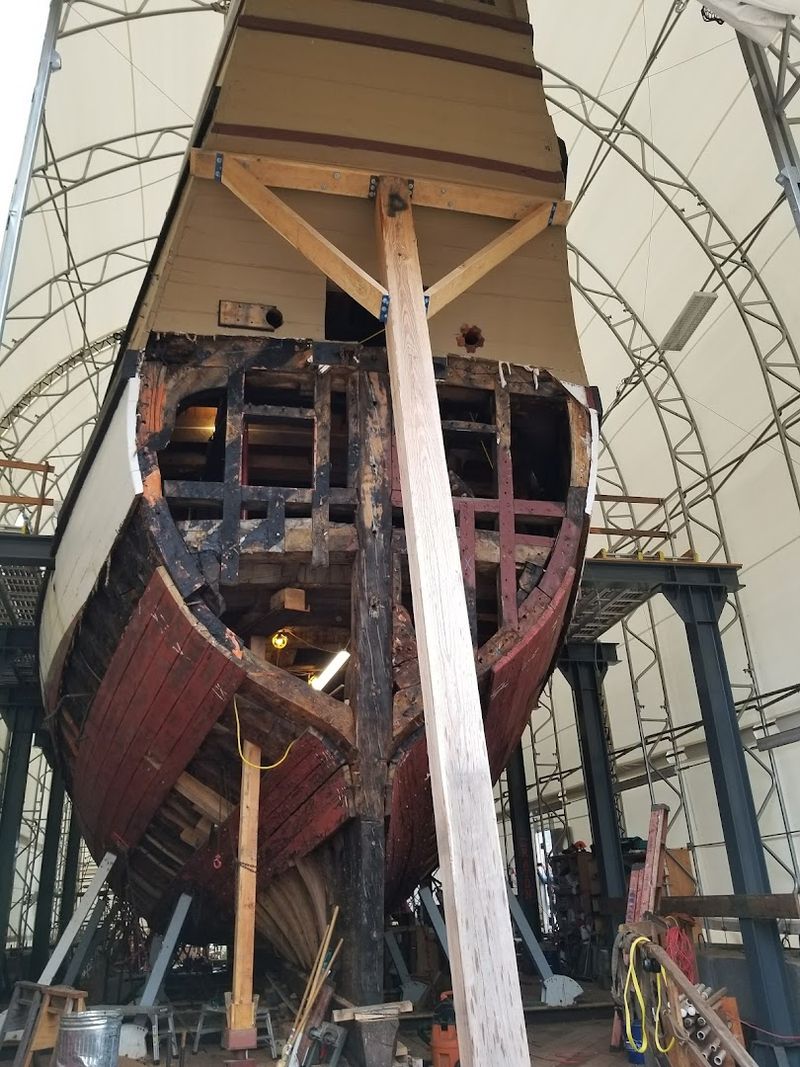
Watching a centuries-old wooden ship being carefully brought back to life is not something most people expect to see on a museum visit.
The Henry B. duPont Preservation Shipyard at Mystic Seaport Museum is the first facility ever built specifically for maritime preservation in the United States, and possibly the world.
Skilled shipwrights work here using traditional tools and hand techniques, maintaining and restoring the museum’s historic wooden vessels with a level of care that reflects deep respect for the craft.
The L.A. Dunton, the 1921 fishing schooner, is currently undergoing a seven-year restoration project that visitors can observe as it progresses.
The Emma C. Berry has also seen restoration work here, and the Charles W.
Morgan receives routine maintenance in this same shipyard. Watching someone shape a timber or caulk a hull joint with hand tools is a quietly absorbing experience that tends to hold attention longer than expected.
The shipyard is not just a backdrop but an active, functioning workspace where traditional knowledge is being preserved alongside the vessels themselves. The smell of fresh-cut wood and linseed oil drifts through the open structure, grounding the experience in something tangible.
It stands as one of the most distinctive features of the entire museum complex.
6. Scenic Waterfront Views Around Every Corner
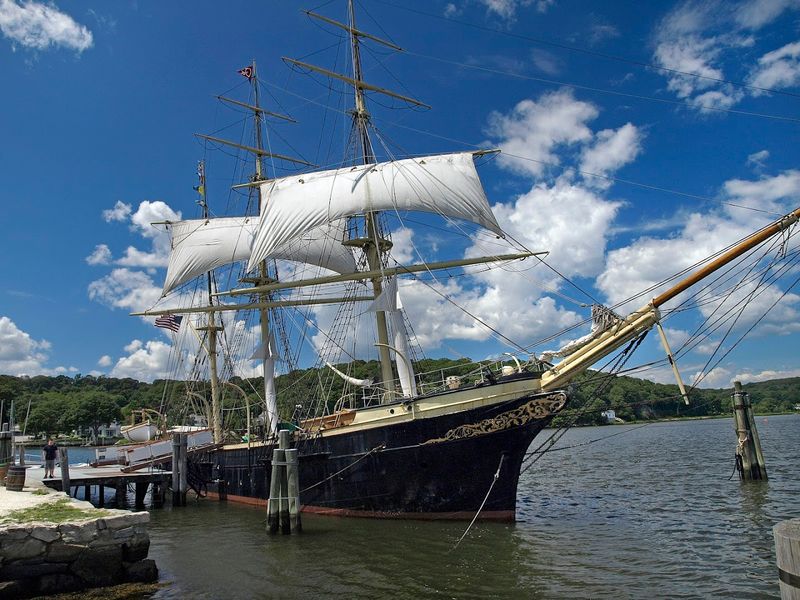
Positioned along the banks of the Mystic River, the museum offers waterfront scenery that feels like a natural extension of its maritime story. Tall ship masts rise against the sky from nearly every vantage point on the grounds, and the river itself stays visible through much of the walk.
The combination of historic architecture, wooden docks, and open water creates a visual rhythm that is easy to settle into.
On-the-water experiences add another dimension to what visitors can see from the shore. Captained river cruises aboard the Sabino offer a different perspective of the grounds from the water, while the Crosby catboat Breck Marshall takes smaller groups out for a more intimate sail.
Rowboats, sailboats, and pedal boats are available for rent from the Boathouse for those who prefer to navigate on their own terms.
The waterfront areas tend to catch a consistent breeze, which makes them a comfortable place to pause during warmer months. Benches and open spaces along the river edge offer natural stopping points without feeling crowded or rushed.
The museum also maintains docking facilities for visitors who choose to arrive by boat, which adds a practical and characterful touch to the overall experience.
7. Seasonal Events That Make Each Visit Different
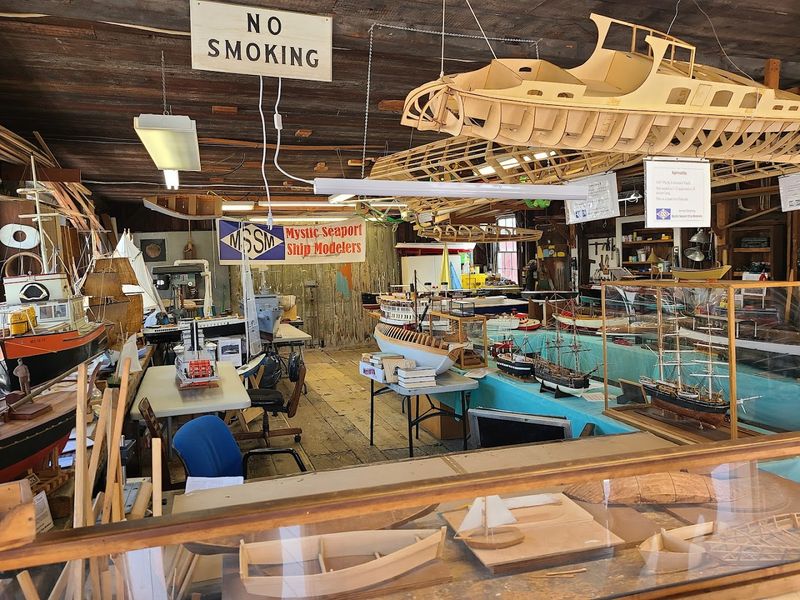
Returning to the same place more than once usually requires something new to pull visitors back, and the museum’s event calendar tends to deliver that reliably. Throughout the year the grounds host a rotating lineup of special events that shift the atmosphere in meaningful ways.
Pirate Days brings a lively and theatrical energy, while the WoodenBoat Show draws enthusiasts of traditional boat building from well beyond Connecticut.
The Sea Music Festival is one of the most beloved annual traditions, filling the waterfront with chanteys and traditional sea songs performed by the museum’s own chanteymen and invited artists.
The Sea Glass Festival offers a more relaxed and artisan-focused atmosphere that appeals to a different kind of visitor entirely.
Each event tends to draw a crowd that reflects genuine enthusiasm for the theme rather than just passing curiosity.
Visiting in late spring, summer, or early fall generally means more demonstrations, more ships open for tours, and more energy throughout the grounds. Winter visits are quieter and some areas may have limited access, though the scenery and core exhibits remain.
Checking the museum’s event schedule before planning a trip helps ensure the visit lines up with whatever experience feels most appealing at that time of year.
8. Quiet Corners Perfect For A Relaxing Stroll
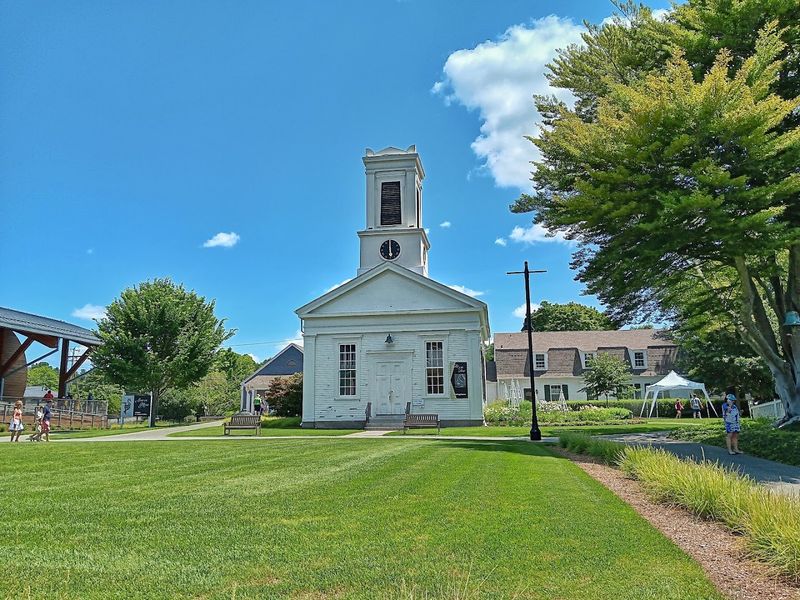
Not every moment at a large museum needs to be packed with activity, and the grounds at Mystic Seaport Museum offer plenty of space for a slower pace.
Paths wind between historic buildings, past garden plots, and along stretches of the riverbank where the noise of the main areas fades into something quieter.
The scale of the site means that even on busier days there are tucked-away spots that feel genuinely unhurried.
Some visitors find that the most memorable moments happen between the scheduled stops, while simply wandering and noticing small details like hand-lettered signage, stacked barrels, or a weathervane on a restored rooftop.
The layout does not force a single direction or route, which allows for a more personal and self-paced exploration.
Gravel walkways cover much of the grounds, so comfortable and sturdy footwear is worth keeping in mind before arrival.
Leashed pets are welcome in certain outdoor areas of the museum, though they are not permitted near the exhibits or aboard the ships. Spring and early fall tend to offer the most pleasant walking conditions, with mild temperatures and less intense sun than midsummer.
Those who enjoy photography will find that the softer light of morning and late afternoon brings out the best in the historic textures and waterfront reflections throughout the site.
9. Tips For Making The Most Of Your Day
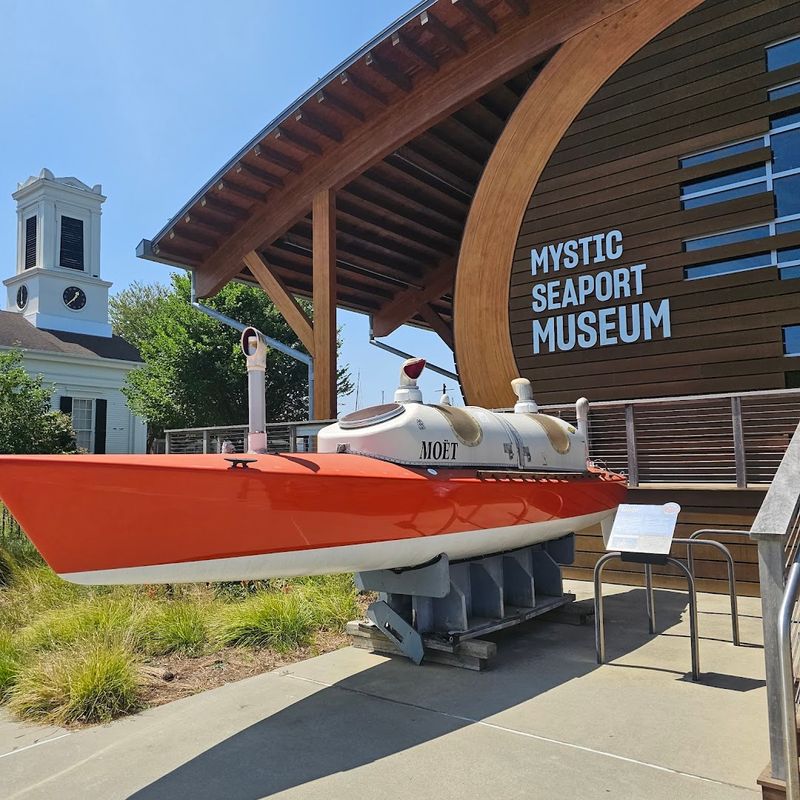
A full day at Mystic Seaport Museum is genuinely easy to fill, and many visitors find they still have not seen everything by closing time.
The museum is open daily from 10 AM to 5 PM, which gives roughly seven hours to explore, though arriving closer to opening tends to mean fewer crowds and a calmer start.
Spending at least three hours is commonly recommended, and four to five hours allows for a more relaxed pace without rushing through key areas.
Dining options inside the grounds include Schaefer’s Spouter Tavern, which is modeled after a 19th-century tavern, as well as Greenman’s Landing, Propeller Coffee Bar, and The Anchor Cafe.
Having a meal or snack on-site means less time lost leaving and returning, which matters when there is so much spread across 19 acres.
The Museum Store carries nautical gifts, books, apparel, and children’s toys for those who want to bring something home.
The museum is ADA compliant overall, though gravel walkways in some areas may present challenges for those with mobility considerations. Guided tours are available for groups and can enrich the experience with structured context.