This 2-Mile Florida Trail Is Our July Hike Of The Season
Let us be honest about hiking in Florida in July. The heat is not a suggestion, it is a full body experience.
So the smart move is a short trail, not a heroic one.
Two miles is exactly the sweet spot. It is long enough to feel like a real adventure.
It is short enough that you still like your family at the end. This one earns our pick for the whole season.
The shade actually shows up when you need it most. You get the good scenery without the survival situation.
Bring water, bring bug spray, and bring zero shame about going slow.
Early morning is your best friend here. Beat the sun and the trail rewards you.
You will finish sweaty, happy, and weirdly proud of yourself.
Then you can spend the rest of the day doing nothing. That, in the middle of July, is a perfect plan.
The Trail That Started It All
Audubon Corkscrew Swamp Sanctuary is one of those places that resets your brain the moment you step onto the boardwalk. The air smells different here.
Earthy, green, thick with moisture and something older than you can quite name.
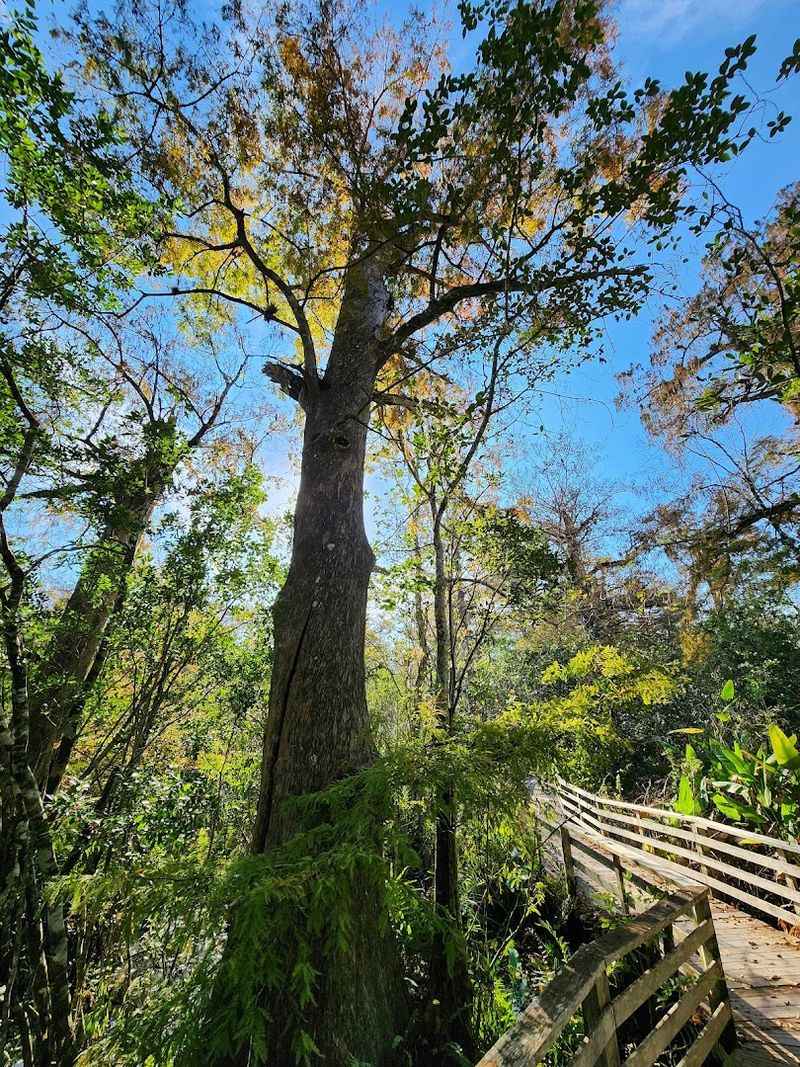
The sanctuary protects the largest old-growth bald cypress forest in North America. Some of these trees are over 500 years old.
Standing under them feels less like hiking and more like being a guest in someone else’s ancient living room.
The main boardwalk loop runs just over two miles and is completely flat. That makes it accessible for almost everyone, including families with younger kids and visitors who are not regular hikers.
You do not need special gear or serious fitness to complete it.
The trail at 375 Sanctuary Rd W, Naples, Florida, opens at 7 a.m. and the morning hours are genuinely the best time to visit in July.
The heat is more manageable, the wildlife is more active, and the light through the cypress canopy is absolutely worth the early alarm.
Plan for at least two hours to fully enjoy the experience without rushing.
Engineering Meets Ecosystem
Not all boardwalks are created equal. The one at Corkscrew winds, curves, and occasionally narrows in ways that make you feel like the trail is guiding you rather than the other way around.
It is thoughtfully designed to move visitors through distinct ecosystems without disturbing the ground below.
You pass through wet prairie, pine flatwoods, and the famous cypress cathedral all within the same two-mile loop. Each zone feels distinct.
The air changes, the plant life shifts, and suddenly you are somewhere completely new without having walked very far at all.
The boardwalk sits elevated above the water level, which means you get a bird’s-eye view of cypress knees poking up from the dark water below.
Those knobby root structures are fascinating to look at and even more interesting once you learn that scientists still debate their exact function.
Railings line most of the trail, making it safe and comfortable even for younger visitors. The wood is maintained regularly by the sanctuary staff.
You will notice interpretive signs placed at key spots along the route, each one offering a focused explanation of what you are seeing at that exact moment.
Wildlife You Will See, Not Just Hope For
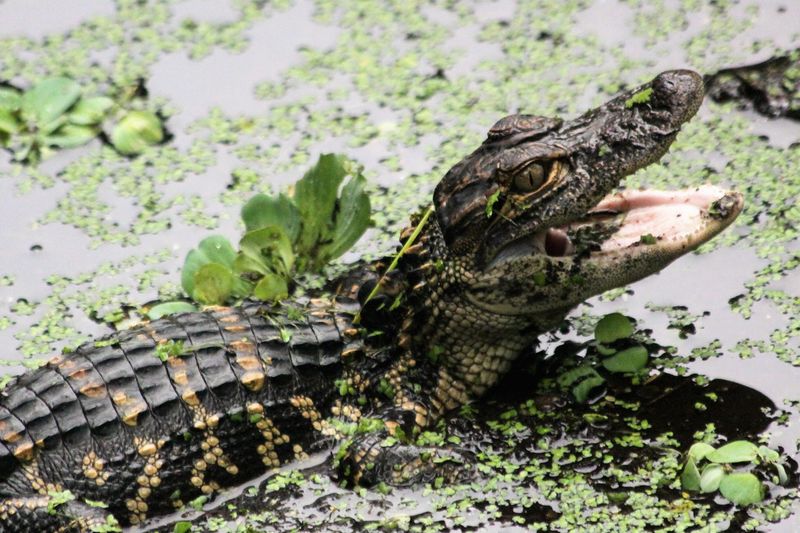
July at Corkscrew is not a slow season for wildlife.
It is actually one of the more active months, partly because the summer rains concentrate animals near the water and partly because the dense canopy provides cover that keeps many species comfortable and visible.
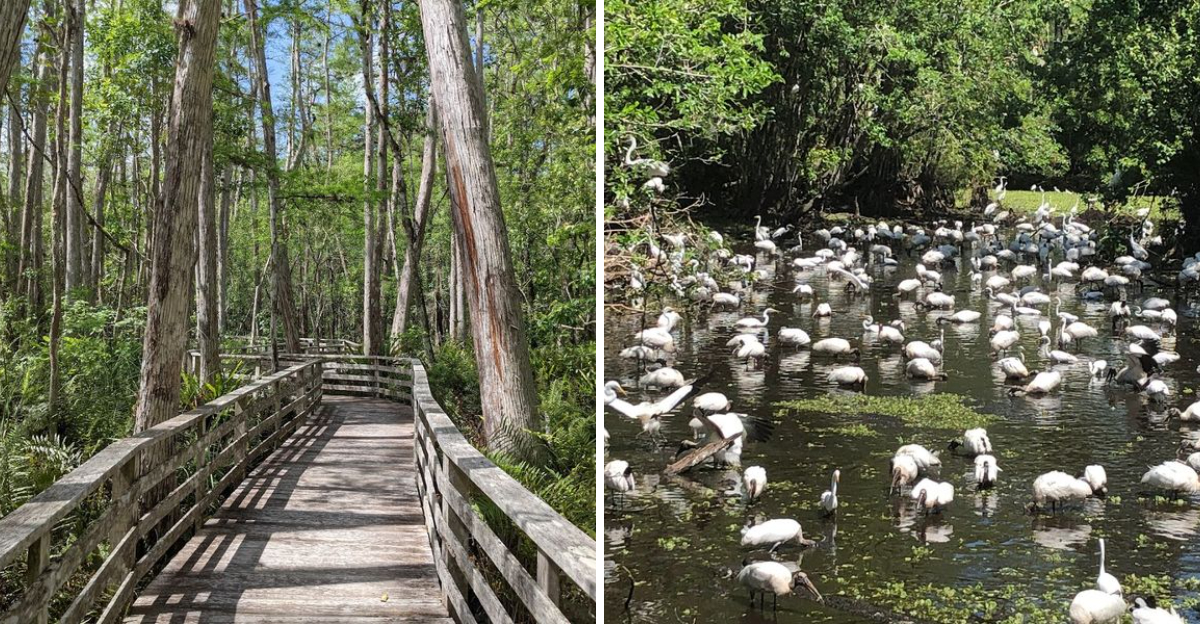
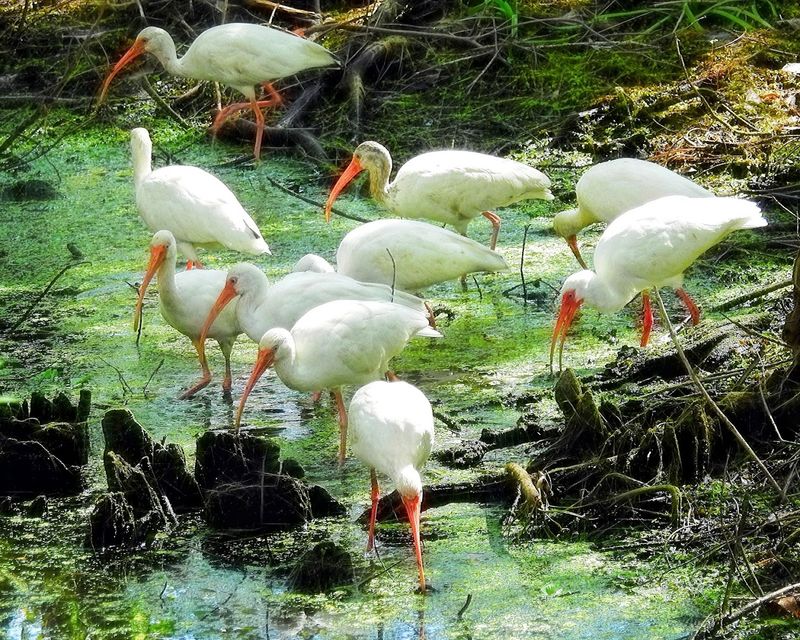
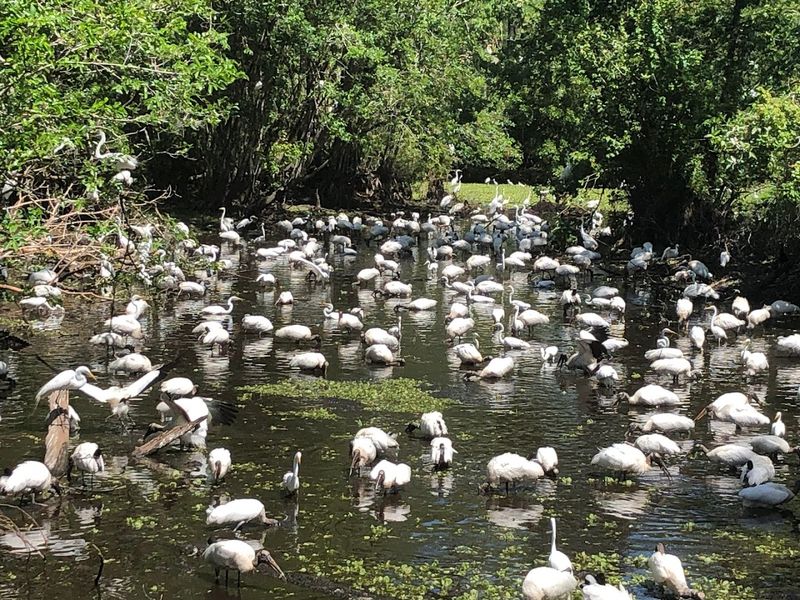
Wood storks are a consistent highlight. These large wading birds nest at the sanctuary and are often spotted standing motionless in shallow water or flying overhead in slow, deliberate arcs.
Seeing one up close is genuinely impressive. They are big birds with a prehistoric quality that photographs do not fully capture.
Alligators are present and visible year-round. In July, they tend to stay near the water edges, which means you will likely see at least one from the boardwalk.
They are not a threat when you stay on the trail, and watching them rest in the dappled shade is oddly peaceful.
Anhingas, great blue herons, barred owls, and river otters also make regular appearances. Bring binoculars if you have them.
A basic pair makes a real difference when you spot something high in the canopy and want a closer look without disturbing the animal.
The Ancient Cypress Cathedral
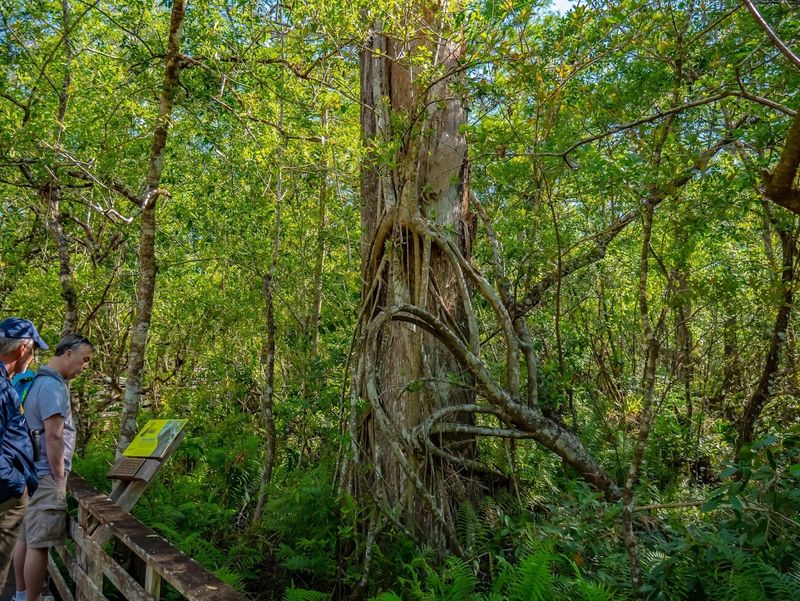
There is a section of the trail where the cypress trees close in from all sides and the canopy seals overhead like a vaulted ceiling.
Most visitors slow down here without being told to. Something about the scale of it prompts a kind of instinctive quiet.
These bald cypress trees can reach heights of over 130 feet. The trunks are massive, with deeply furrowed bark and flaring bases that spread wide into the water below.
Spanish moss drapes from the branches in long curtains, filtering the light into something soft and almost theatrical.
The dark water beneath the boardwalk reflects the trees perfectly on calm mornings. If you visit early enough, before other hikers arrive, the silence in this section is remarkable.
You can hear individual drips of water and the occasional bird call echoing through the trees from a surprising distance.
This is the section that most people photograph, and for good reason. But photographs do not fully communicate the scale.
Standing inside the cypress cathedral is one of those experiences that works best when you put the phone down for a few minutes and simply look up. It is genuinely worth the pause.
What To Wear And Bring For A July Hike Here
July in southwest Florida is hot and humid without exception. The sanctuary sits in a natural bowl surrounded by wetlands, which means the air holds moisture in a way that feels heavier than a typical Florida afternoon.
Dressing right makes a meaningful difference in how much you enjoy the experience.
Lightweight, moisture-wicking clothing in light colors is the practical choice. Long sleeves are worth considering because they offer sun protection and a small amount of bug defense without adding significant heat.
A wide-brimmed hat is genuinely useful, not just stylish.
Bring more water than you think you need. There is a small visitor center at the trailhead with restrooms and basic facilities, but no water refill stations along the trail itself.
A 32-ounce bottle per person is a reasonable minimum for the two-mile loop in July heat.
Insect repellent is not optional in July. Mosquitoes are active, especially in the shaded, wet sections of the trail.
Apply repellent before you start walking rather than waiting until you notice the bugs.
Closed-toe shoes with good grip are recommended since the boardwalk can get slippery in humid conditions.
The Visitor Center And What You Need To Know Before You Go
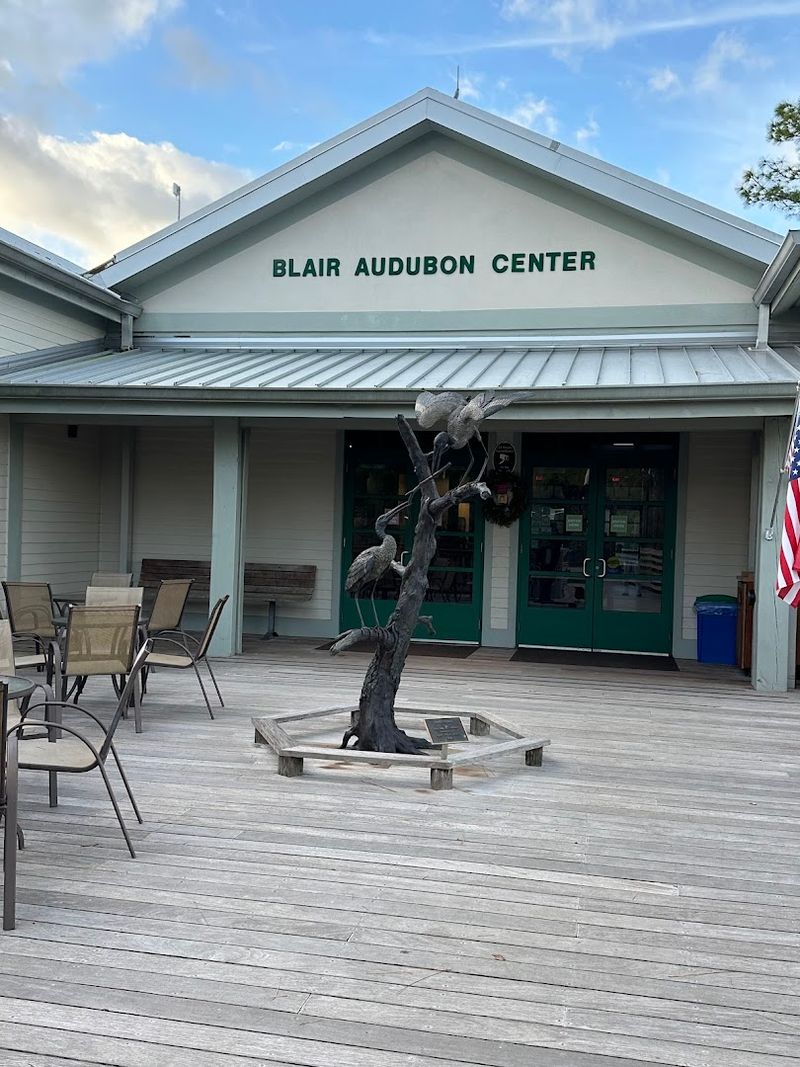
The Blair Visitor Center sits right at the trailhead and is worth a few minutes of your time before you head out onto the boardwalk.
It has exhibits explaining the ecology of the sanctuary, the history of cypress logging in Florida, and the conservation work that saved this particular forest from being cleared in the mid-20th century.
Admission is required and goes directly toward maintaining the sanctuary and its education programs. Audubon members receive a discount.
The fee is reasonable for what you get, and the organization has been protecting this land since 1954, which is a track record worth supporting.
The center also has knowledgeable staff and volunteers who can answer specific questions about what you might see on the trail that day.
They often know which areas have had recent wildlife sightings, which is genuinely useful information before you set out.
Parking is free and the lot is reasonably sized, though it fills up on weekend mornings during peak season.
Plants Along The Trail That Are Worth Stopping For
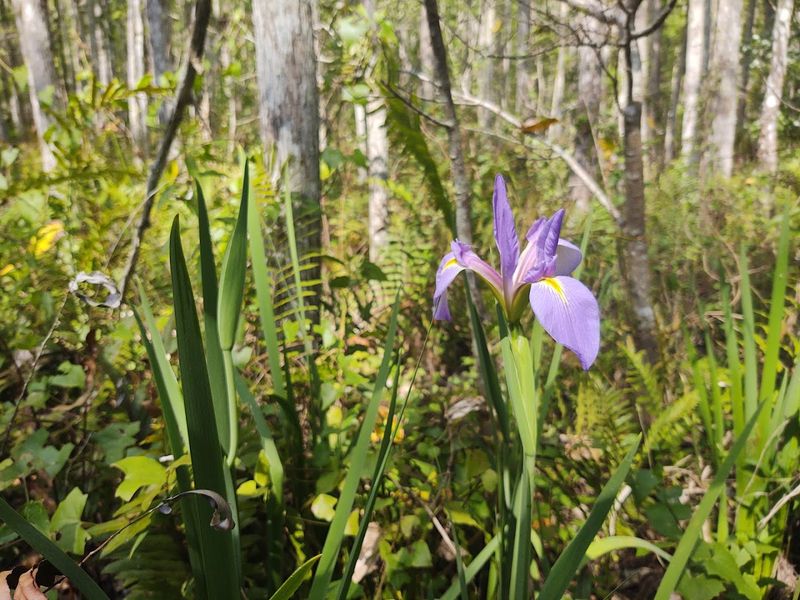
Most people come to Corkscrew for the wildlife and leave talking about the plants.
The botanical variety packed into two miles of boardwalk is genuinely impressive, and the interpretive signs do a solid job of pointing out species you would otherwise walk right past.
Resurrection fern is one of the standout plants along the trail.
It grows on the branches of cypress trees and has the remarkable ability to survive complete dehydration, appearing brown and dead during dry periods, then returning to vivid green within hours of rain.
In July, after summer storms, it looks spectacular.
Swamp lilies, pickerelweed, and various species of native orchids also appear along the route. The orchids are small and easy to miss, but the signage helps you find them.
Spotting a native Florida orchid in the wild feels like a small reward for paying attention.
The strangler fig is another plant worth pausing for. It grows by wrapping itself around a host tree and slowly expanding until it forms its own trunk.
Mature specimens at Corkscrew are dramatic in scale and slightly unsettling in the best possible way. The ecosystem here rewards curiosity at every level, from the canopy down to the waterline.
Why July Is A Great Month To Visit
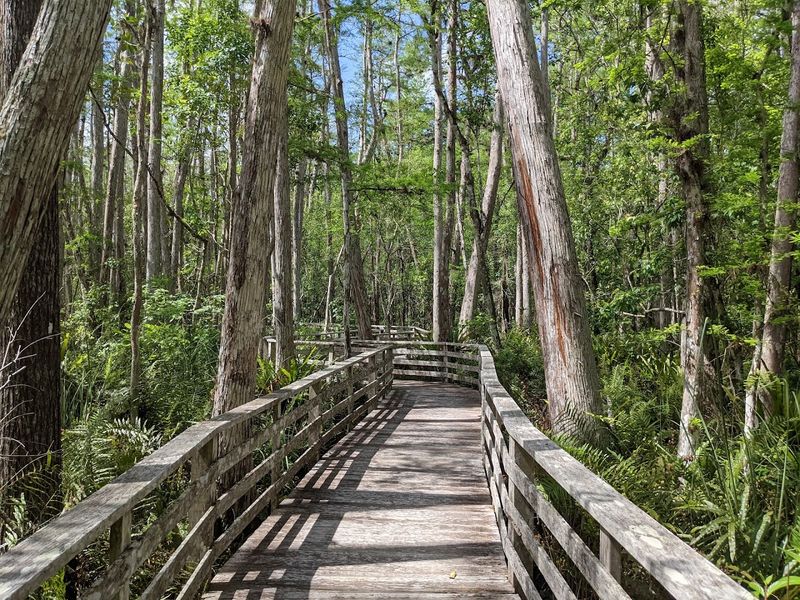
July gets overlooked as a travel month in Florida because of the heat and the afternoon storms. But at Corkscrew, those same conditions create something genuinely special.
The summer wet season fills the marsh to its fullest, which means more water, more wildlife movement, and a landscape that looks completely different from its dry-season version.
The crowds thin out significantly compared to winter and spring. You can walk sections of the boardwalk in near solitude, which changes the experience entirely.
The sounds become more prominent.
The pace slows naturally. The whole thing feels less like a tourist attraction and more like an actual wilderness experience.
Afternoon thunderstorms are common in July, typically arriving between 2 p.m. and 4 p.m. If you start your hike early, you will finish well before the storms roll in.
The light just after a morning rain is extraordinary, and the air smells remarkable when the humidity mixes with the organic richness of the swamp.
For anyone living in or visiting southwest Florida during the summer, this trail offers something that most air-conditioned indoor options simply cannot match.
It is two miles of real Florida, the kind that existed long before the parking lots and resort pools showed up. That alone makes it worth the early alarm.