This No-Frills Central California Seafood Market Serves A Cioppino Famous Far Beyond The Coast
The best seafood meals do not always arrive beneath white tablecloths.
Sometimes they come with paper napkins, a busy counter, and the unmistakable aroma of something simmering nearby.
The room may be casual, but the reaction to the first spoonful is usually anything but.
In Central California, this longtime market has built a reputation that reaches far beyond its modest surroundings.
Travelers arrive curious. Regulars already know what they are ordering.
Before long, bowls begin landing on tables and conversation pauses just enough for everyone to understand why people keep talking about the place.
Can one seafood stew really justify a detour? The loyal crowds seem to think so.
What looks like a simple roadside stop may turn out to be the dish everyone remembers after the trip is over.
Cioppino Is Still The Main Event
Few dishes carry the weight of a restaurant’s entire identity, but the cioppino at Phil’s Fish Market and Eatery comes remarkably close.
The recipe traces back to a family matriarch known as Mama Nina, and that generational origin gives the stew a depth that feels earned rather than manufactured.
Guests who arrive having heard about it from a television show or a friend’s enthusiastic recommendation tend to leave with the same look of quiet satisfaction.
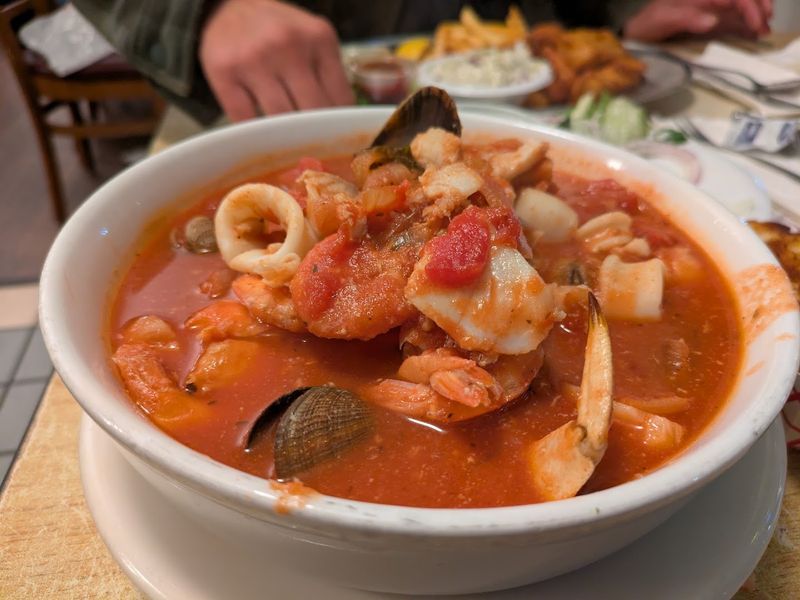
The broth is tomato-based, rich with layered seasoning, and substantial enough to stand on its own before the seafood even enters the picture.
Clams, mussels, white fish, scallops, and calamari all contribute to a bowl that rewards slow eating. Nothing feels rushed or thrown together.
The portion size is generous enough that many guests split a single bowl between two people, especially when ordering alongside other menu items.
Prices may vary, but the cioppino has historically been considered fair given what arrives at the table.
Its fame on the Food Network brought in curious visitors from across the country, and many of those first-time guests eventually become regulars who return specifically for this dish and nothing else.
The Bowl Arrives Loaded
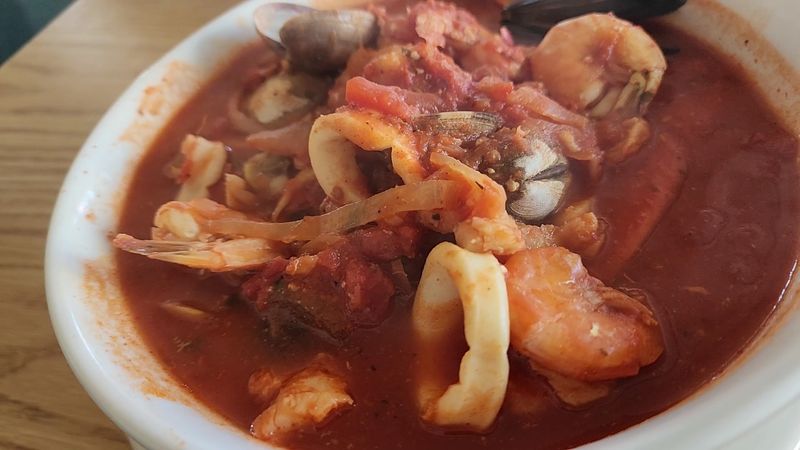
Opening a bowl of cioppino at this market feels a little like uncovering a treasure chest at the bottom of a harbor.
The tomato broth barely has room to breathe once the kitchen finishes loading in the shellfish, fish, and calamari.
Clams and mussels arrive still in their shells, scallops add a tender sweetness, and white fish contributes a clean, flaky texture that balances the heavier elements.
Calamari threads through the bowl in a way that adds chew without overwhelming the other components.
Each ingredient stays distinct even after simmering together, which speaks to the care taken in timing and preparation. The broth itself carries a complexity that builds from the first spoonful to the last.
Sharing the bowl between two diners is a practical approach, especially when adding a salad or a side to the order.
The quantity of seafood packed into a single serving tends to surprise first-time visitors who expect a more modest portion. Arriving hungry is genuinely good advice here.
The kitchen does not cut corners on volume, and the experience of working through a fully loaded bowl at a relaxed pace is a large part of what keeps people coming back to Phil’s.
The Fish Market Opens Early
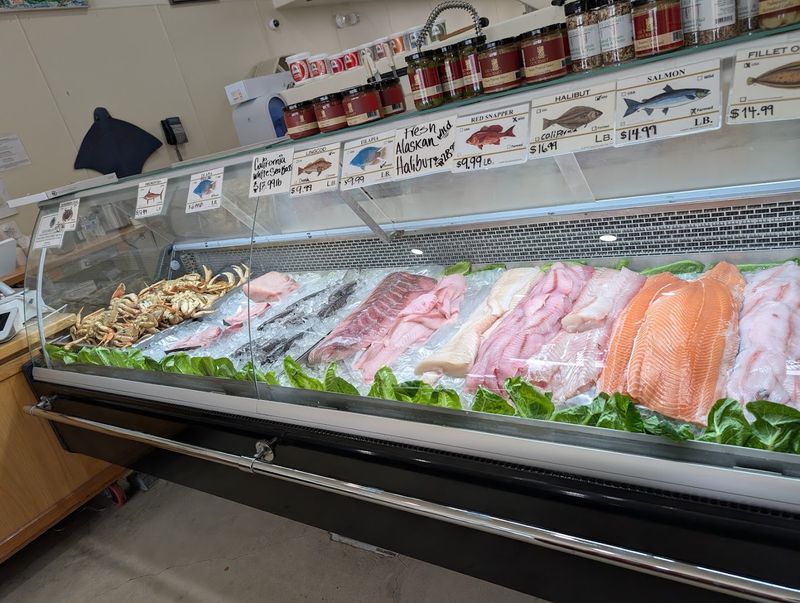
Before the restaurant fills up with lunch crowds, the fish market side of Phil’s is already open and ready for business.
The market section operates with its own rhythm, catering to early shoppers who want to pick up fresh seafood for home cooking rather than sit down for a full meal.
Getting there early in the day tends to mean more variety and the best selection before popular items sell out.
Phil’s Fish Market and Eatery sits at 10700 Merritt Street in Castroville, California 95012, and the market portion of the business opens at 8:30 in the morning.
That early start gives home cooks a meaningful head start on planning dinner, especially those who prefer to shop before the day gets busy.
The staff at the counter can typically help with questions about preparation and cooking times, which is useful for anyone trying a new type of fish or shellfish.
The selection may depend on what came in fresh that day, so flexibility helps. Regulars often arrive with a loose idea of what they want and let the available catch guide the final decision.
The market functions as a genuine neighborhood resource for fresh seafood and not just an add-on to the restaurant next door.
The Menu Runs Deep
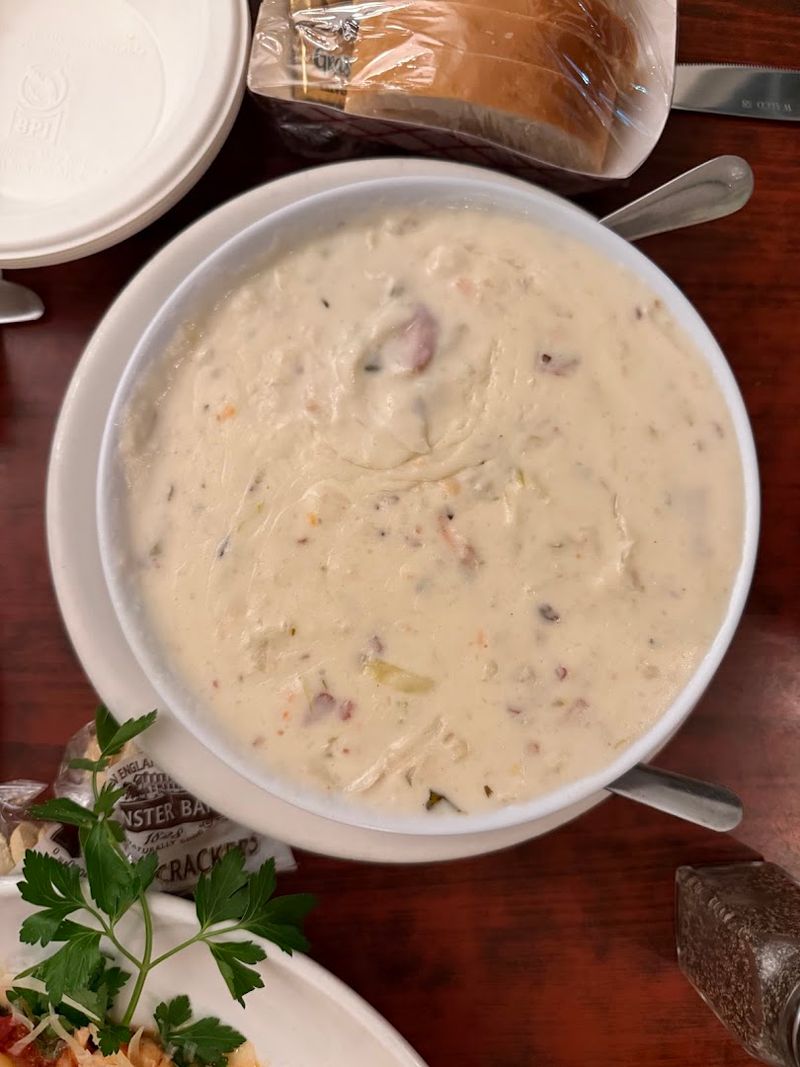
Cioppino gets most of the attention, but the menu at Phil’s Fish Market and Eatery stretches considerably further than one famous stew.
Clam chowder is available in both New England and Manhattan styles, giving visitors a choice between the thick creamy version and the lighter tomato-based one.
Halibut tacos and charbroiled salmon round out the lighter end of the menu for those who prefer something less heavy.
Pasta dishes incorporate fresh seafood in ways that feel hearty and satisfying, with options like linguine and rock shrimp pasta appearing alongside more traditional preparations.
The range of the menu reflects a kitchen that has spent decades learning what its customers want and building a selection broad enough to accommodate different appetites and preferences.
For those who are not seafood enthusiasts, a few non-seafood options are available, which makes the restaurant a workable choice for groups with mixed preferences.
The menu is displayed on a large board above the ordering counter, which can take a moment to navigate on a first visit.
Taking a few minutes to read through everything before stepping up to order tends to make the process smoother.
The depth of the menu is one of the genuine surprises for first-time visitors who arrived expecting a limited selection.
Fried Seafood Gets Plenty Of Love
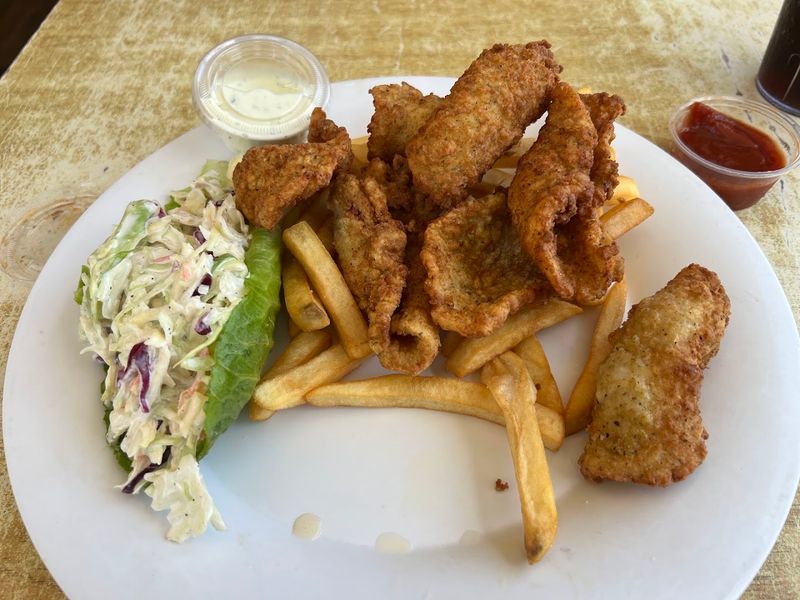
Fried seafood has its own dedicated following at Phil’s, and the kitchen takes it seriously enough to keep the options varied and the execution consistent.
Fried oysters, scallops, prawns, and calamari all appear on the menu, offering a range of textures and flavors within the fried category alone.
The goal with each item is a golden exterior that gives way to something tender and moist inside, which is harder to achieve consistently than it sounds.
Calamari at Phil’s is worth noting specifically because it is prepared from calamari steak rather than rings, which changes the texture significantly.
The pieces have more body and chew than the typical battered ring version, and the preparation leans toward a satisfying bite rather than a delicate one.
Opinions on this style vary among guests, but it is a deliberate choice rather than an accident.
Fried items are often served with coleslaw and fries, making them a complete and filling plate without needing much added to the order.
Sharing a fried platter alongside a bowl of cioppino is a popular approach for groups who want to cover more of the menu in a single visit.
The fried seafood section of the menu holds its own and does not feel like an afterthought compared to the more celebrated stew.
Pasta Comes Packed With Catch
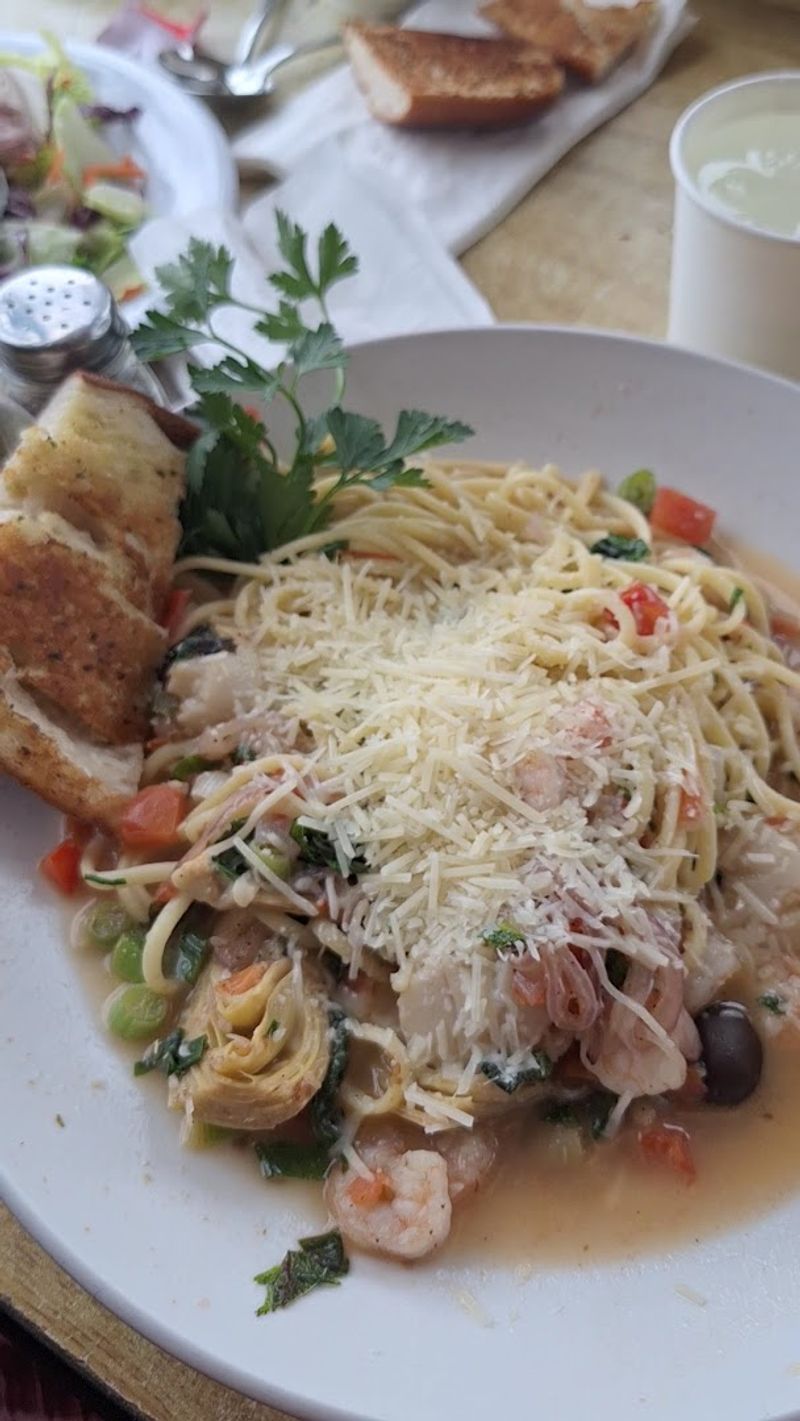
Pasta dishes at Phil’s are built around the same fresh seafood that drives the rest of the menu, which means they tend to feel substantial rather than filler-heavy.
Linguine with mixed seafood and rock shrimp pasta are among the options that blend Italian-American cooking traditions with the coastal ingredients the kitchen knows best.
The pasta serves as a base that holds onto the sauce and seafood without competing with either.
Mediterranean pasta has earned particular appreciation from guests who try it, and it tends to be mentioned as one of the standout dishes beyond the cioppino.
The combination of fresh seafood with pasta and a well-seasoned sauce creates a comfort-food quality that feels appropriate for the casual, relaxed atmosphere of the restaurant.
These dishes are filling enough that most diners do not need much else alongside them.
For visitors who have already tried the cioppino on a previous visit and want to explore a different part of the menu, the pasta options offer a natural next step.
The kitchen’s familiarity with seafood carries over into these dishes in a way that makes them feel cohesive with the rest of the menu rather than added on as an afterthought.
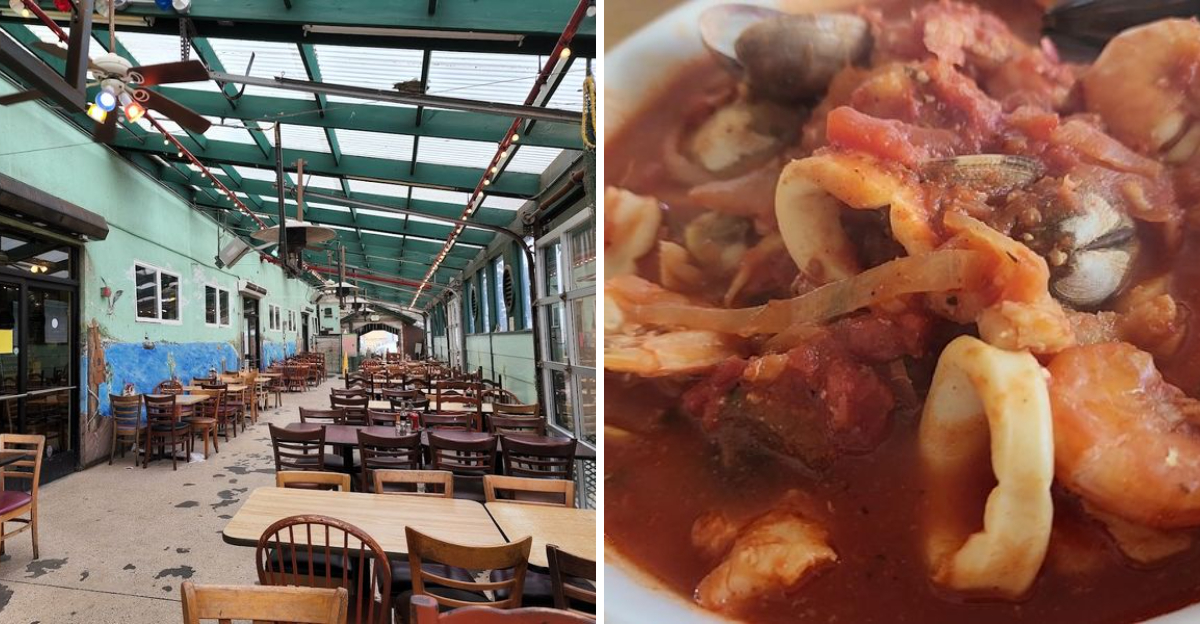
Outdoor Tables Add Breathing Room
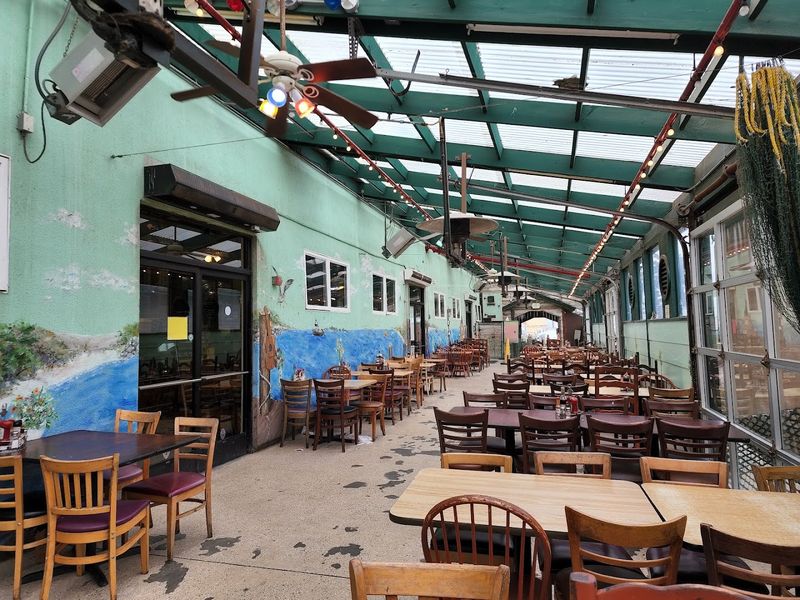
Eating outside at Phil’s is a genuinely different experience from sitting indoors, and on a mild Central California day it can be the better choice for many visitors.
The outdoor tables provide additional seating capacity and a more open, airy feel that suits the casual nature of the restaurant well.
Families with children and groups that prefer a little more space tend to gravitate toward the patio area.
The outdoor setting also accommodates guests who bring dogs, as the exterior seating area is dog-friendly.
That detail matters to a meaningful number of visitors who might otherwise need to leave a pet behind or skip the visit entirely.
Having the option to include a dog in the outing without sacrificing a meal at a place this well-regarded is a practical convenience worth knowing about.
Noise levels outdoors are naturally lower than inside during busy periods, which makes conversation easier and the overall pace of the meal feel more relaxed.
The outdoor area does not offer coastal views the way the previous Moss Landing location did, but it provides a comfortable and functional alternative that works well across most of the year given the mild regional climate.
Seating availability outdoors can vary depending on the time of day and the size of the visiting crowd.
The Historic Building Fits Right In
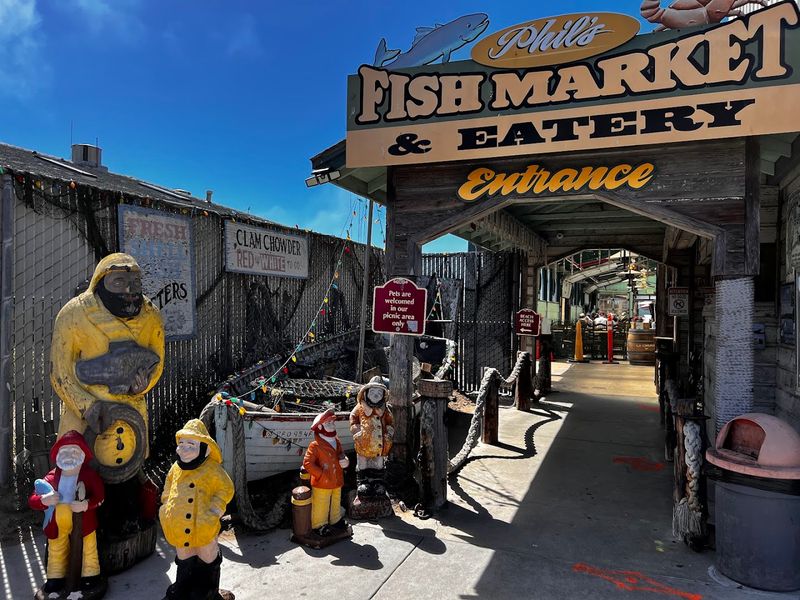
Something about eating in a building that has stood since 1869 adds a layer of character that newer construction simply cannot replicate.
The current home of Phil’s Fish Market and Eatery was originally built as the first schoolhouse in Castroville, and that history is woven into the structure in ways that feel present rather than merely decorative.
The worn surfaces and settled proportions of the building communicate a sense of permanence that suits a restaurant built on decades of tradition.
Phil’s Fish Market and Eatery is located at 10700 Merritt Street in Castroville, California 95012, and the building’s age gives the space a texture that newer restaurant constructions rarely achieve.
The interior carries a no-frills quality that matches the food and the service style perfectly.
Nothing about the space is trying to impress through design, which makes the food itself the clear focal point from the moment a guest walks in.
The transition from schoolhouse to seafood market to beloved eatery is an unusual arc for any building, but it works here because the unpretentious character of the structure aligns so naturally with the restaurant’s identity.
Guests who appreciate a sense of place in their dining experiences tend to find the setting quietly satisfying even if they arrive knowing nothing about its history.