This North Carolina City Has A Healthcare System So Advanced It’s Ranked Among America’s Best

Serious medical breakthroughs do not always happen in places that look like science fiction.
Inside one North Carolina city, researchers, surgeons, nurses, and specialists work on cases that can change the direction of a patient’s life.
Complex treatments, clinical research, and highly focused care have made the local healthcare system known far beyond the state.
Patients travel long distances for expertise that may be difficult to find closer to home. Medical professionals arrive for the same reason.
New ideas are tested, difficult questions are studied, and discoveries made here can eventually influence care elsewhere.
The surrounding city has earned the nickname “City of Medicine,” and the title is not simply civic bragging. Healthcare has shaped its identity, economy, and global reputation for generations.
Anyone expecting world-class medicine to exist only in America’s largest cities may be surprised by what has been built here.
See Why Durham Earned Its “City Of Medicine” Nickname

Healthcare influences Durham through employment, education, scientific research, neighborhood clinics, public-health programs, and companies developing new medical tools.
Duke Health remains Durham’s most recognizable healthcare institution, but it is only one part of the city’s broader medical network.
That network also includes the Durham County Department of Public Health, Lincoln Community Health Center, veterans’ healthcare services, specialty practices, university laboratories, and life-science businesses across the Triangle.
Duke University Hospital’s national profile attracts patients and medical professionals, while the university trains physicians, nurses, researchers, and other specialists who may later work throughout the region.
Durham’s medical reputation also has a longer history than the modern Duke campus.
Watts Hospital opened in 1895 as the city’s first hospital, decades before Duke University Hospital welcomed its first patients. Calling Durham the “City of Medicine” does not mean every resident has equal access to healthcare.
Duke researchers have documented continuing racial, economic, and geographic health disparities across the city, adding important context to the nickname.
Durham’s real distinction comes from its unusually dense network of care, education, research, and medical innovation, along with continuing efforts to make those resources more useful to the surrounding community.
Walk Into A Hospital Known Far Beyond North Carolina
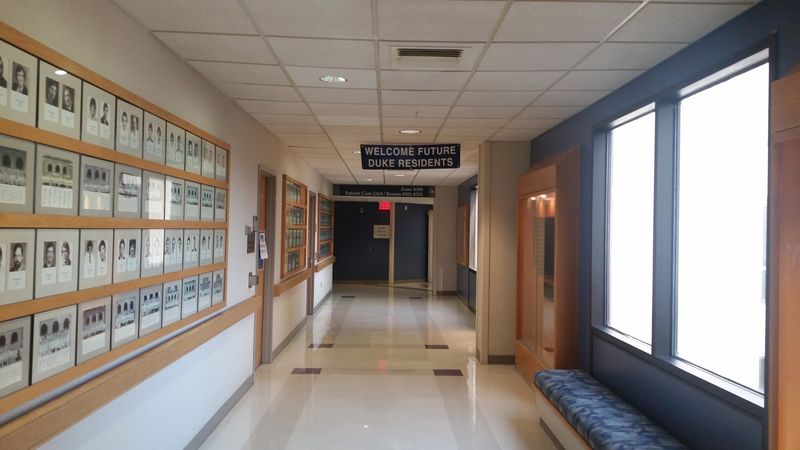
Duke University Hospital serves as a tertiary and quaternary medical center for patients who need advanced care beyond what smaller community hospitals typically provide.
Its main campus at 2301 Erwin Road includes more than 1,000 inpatient beds, a regional emergency and trauma center, extensive radiology facilities, specialized surgical departments, and dozens of operating rooms.
Duke’s official pages currently publish different bed totals based on how capacity is counted. One hospital profile lists 1,062 inpatient beds, while a Duke Health corporate page reports 1,106 licensed beds.
Those figures should not be combined into one supposedly definitive total. More meaningful than the number alone is the range of teams working within the system.
Surgeons, imaging specialists, nurses, pharmacists, rehabilitation professionals, and physicians from several departments can collaborate when one condition affects multiple parts of the body.
The emergency department treats more than 80,000 people annually and operates around the clock for serious illnesses and injuries.
Large facilities do not guarantee the right answer for every patient, but they give Duke the infrastructure required to evaluate unusually complicated cases.
Follow The National Rankings Behind Duke’s Reputation
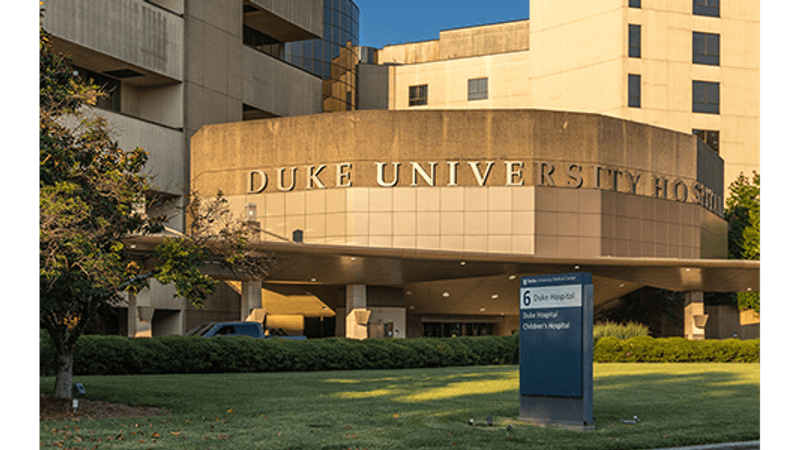
National rankings provide useful context for Duke University Hospital’s reputation, though they should be read carefully and never treated as a substitute for medical advice.
Duke’s current official materials identify the hospital as North Carolina’s highest-ranked medical center and report national recognition in 11 adult specialties for the 2025–2026 U.S.
News & World Report evaluation. Duke Children’s programs were also nationally recognized across multiple pediatric specialties during that ranking period.
Assessments of this kind may consider outcomes, patient volume, specialist opinions, nursing resources, technology, patient experience, and the difficulty of cases handled by each institution.
Methodologies and results can change every year, which makes it inaccurate to describe any placement as permanent.
As of July 28, 2026, Duke’s official hospital pages continue displaying the 2025–2026 results rather than a newer 2026–2027 hospital ranking.
Individual departments may hold different positions, and a highly ranked hospital is not automatically the best choice for every diagnosis.
Insurance networks, referral requirements, appointment availability, travel demands, and a physician’s direct experience with the condition may matter more than an overall ranking.
Duke’s broad recognition remains notable because it reflects strength across several clinical fields rather than dependence on one celebrated specialty.
Notice How Research Shapes The Care Story
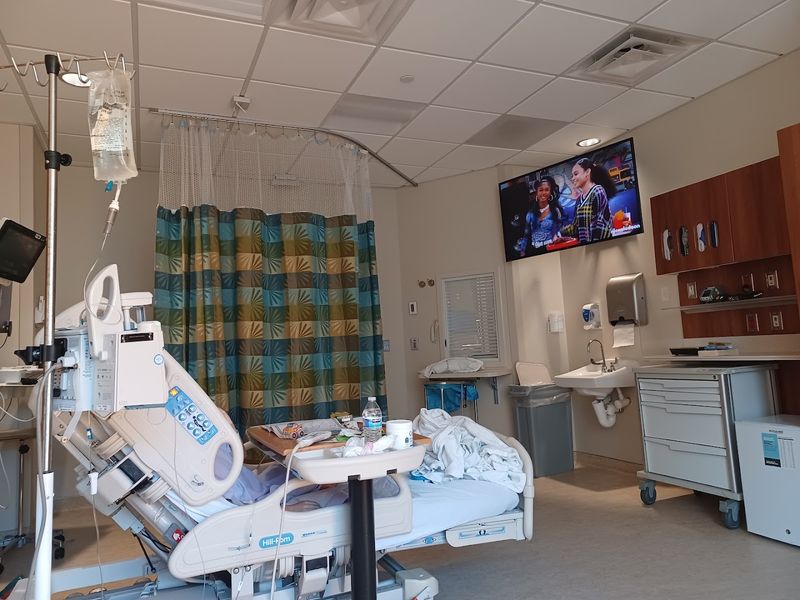
Laboratories, clinical departments, data teams, and research organizations operate close to the hospital, allowing questions raised during patient care to influence future scientific studies.
Duke researchers investigate disease mechanisms, compare existing treatments, test potential therapies, operate patient registries, and coordinate clinical trials involving medical centers around the world.
Research participation is never automatic. Trials have strict eligibility requirements, risks, informed-consent procedures, and oversight designed to protect participants.
Most patients visiting Duke receive established care rather than experimental treatment. The scale of the research enterprise is still substantial.
Duke University School of Medicine received more than $514 million in National Institutes of Health funding during 2025, placing ninth among American medical schools in data compiled by the Blue Ridge Institute for Medical Research.
Eleven Duke departments reached the national top 10 within their respective NIH funding categories.
Funding totals alone do not prove that every project will produce an immediate medical breakthrough, but they indicate the breadth of ongoing investigation.
That research-centered environment encourages clinicians and scientists to study outcomes carefully, challenge existing practices, and explore better approaches to conditions that remain difficult to diagnose or treat.
Look At The Specialty Programs That Built The Buzz
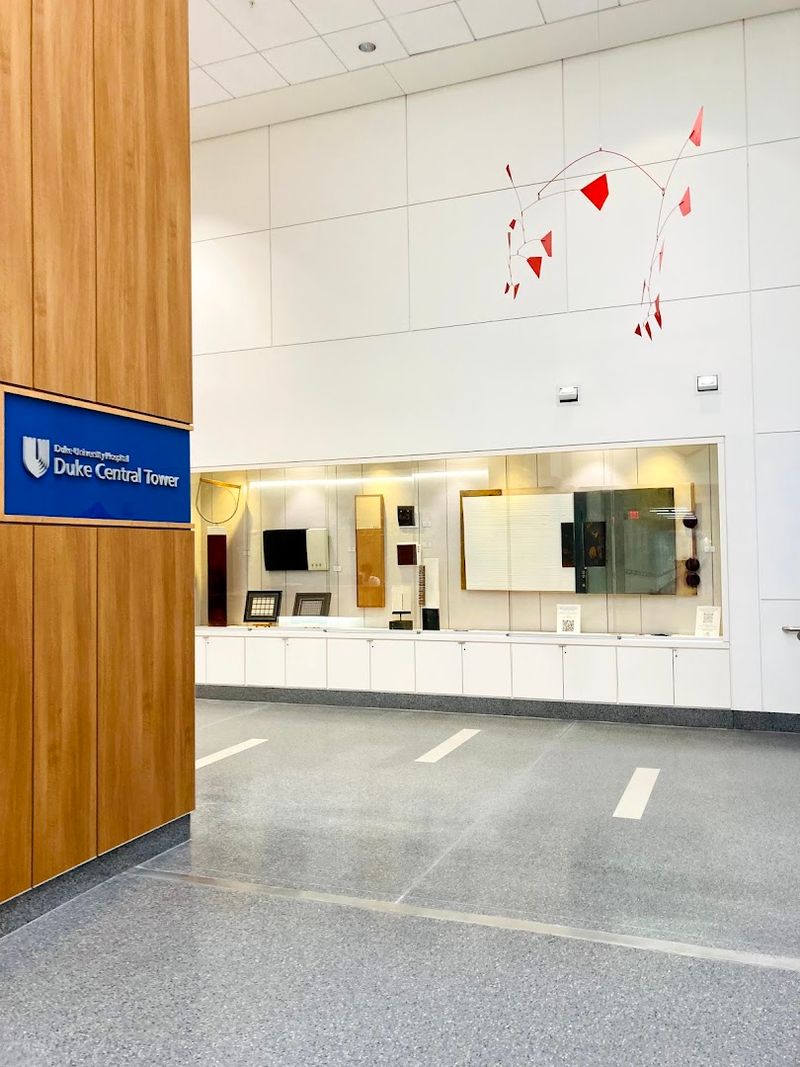
Duke’s clinical reach spans cancer care, cardiology, neurology, neurosurgery, transplantation, pulmonology, ophthalmology, orthopaedics, urology, rheumatology, rehabilitation, and numerous additional fields.
Such breadth becomes especially valuable when a patient’s condition cannot be managed by one department alone.
A complex cancer case, for example, may involve medical oncologists, surgeons, radiation specialists, genetic counselors, radiologists, pathologists, nurses, pharmacists, and rehabilitation professionals.
Similar collaboration can occur in heart care, organ transplantation, neurological treatment, and advanced surgery.
Duke University Hospital’s current national recognition across 11 adult specialties reflects that broad clinical capacity rather than the success of only one program.
Duke Children’s also maintains nationally recognized pediatric services, including a highly ranked cardiology and heart-surgery program.
Hospital-care rankings should not be confused with rankings assigned to the Duke University School of Medicine’s academic departments or educational programs. They measure different things and use separate methods.
Patients should confirm that a clinic treats their exact diagnosis, accepts their insurance, and is accepting referrals.
Still, having many specialties within one connected system can make testing, consultations, and treatment planning easier to coordinate when several experts need to contribute.
Connect Duke University To The Medical Campus Next Door

Duke’s hospital, medical school, and nursing education programs grew from the same early plan. James B.
Duke created the Duke Endowment in 1924 and directed funding toward transforming Trinity College into Duke University.
After his death, additional money supported the development of a medical school, hospital, and nurses’ home.
Duke University Hospital opened in 1930, beginning the close relationship among education, research, and clinical care that still shapes the campus.
Medical students learn near active hospital departments, while faculty members may divide their work among teaching, scientific investigation, and patient treatment.
Nurses, therapists, researchers, pharmacists, and other professionals train within the same wider academic environment. That proximity allows clinical questions to reach research teams while new scientific findings can be evaluated for possible medical applications.
The wider university also includes libraries, gardens, museums, performance spaces, and distinctive architecture, but the hospital campus remains a working healthcare environment rather than a tourist attraction.
Patient privacy, restricted areas, quiet spaces, and posted access rules must be respected.
Durham’s medical strength does not come simply from placing a famous hospital beside a university. It comes from decades of interaction among students, faculty members, clinicians, research staff, and patients working within one extensive academic system.
Understand Why Patients Travel To Durham For Care

Community hospitals handle most everyday medical needs, but unusual diagnoses or highly complicated procedures may require referral to a larger academic center.
Duke University Hospital receives patients seeking advanced surgery, transplantation, cancer care, neurological treatment, cardiovascular services, rare-disease expertise, and second opinions.
Its tertiary and quaternary role allows teams to manage cases referred by physicians and hospitals throughout the region. Traveling to Durham can also create practical difficulties.
Families may need transportation, lodging, meals, time away from work, childcare, insurance authorization, medical-record transfers, and plans for follow-up care after returning home.
A famous hospital name does not remove those burdens or guarantee a specific outcome.
Patients should begin with their own healthcare professional, who can help determine whether Duke has the relevant specialist and whether a referral is medically appropriate.
Duke offers remote second-opinion services for certain needs, although availability, costs, insurance treatment, and eligibility should be confirmed directly.
Financial-assistance programs may help qualifying patients, but policies and individual circumstances vary. Durham’s value as a medical destination ultimately depends on matching each person with a team that has meaningful experience treating the exact condition involved.
Let The Hospital District Show A Different Side Of The City

Families spending hours or days near Duke University Hospital can find useful services and quieter spaces within a short distance of the medical campus. Erwin Road and surrounding streets include hotels, pharmacies, casual restaurants, and other businesses used by patients and caregivers.
Nearby Ninth Street offers locally owned shops, cafés, bookstores, and dining options that provide a change of setting between appointments. Sarah P.
Duke Gardens can offer peaceful walking paths when time, weather, mobility, and medical circumstances allow.
The Nasher Museum of Art presents another calm destination on the university campus, while downtown Durham adds restaurants, cultural venues, public spaces, and repurposed industrial buildings.
American Tobacco Campus reflects the city’s transition from a tobacco-manufacturing center into a community increasingly associated with education, technology, medicine, food, and the arts.
None of these places eliminates the stress that can accompany medical travel, and visitors should never feel pressure to turn a hospital stay into sightseeing.
They simply provide options for meals, short walks, or time away from clinical spaces. Duke Health remains central to Durham’s national identity, but the city surrounding it has developed its own character through history, neighborhoods, universities, creative businesses, and community life.