Set On 722 Acres, This Connecticut Park Is Made For Quiet Walks And Scenic Views
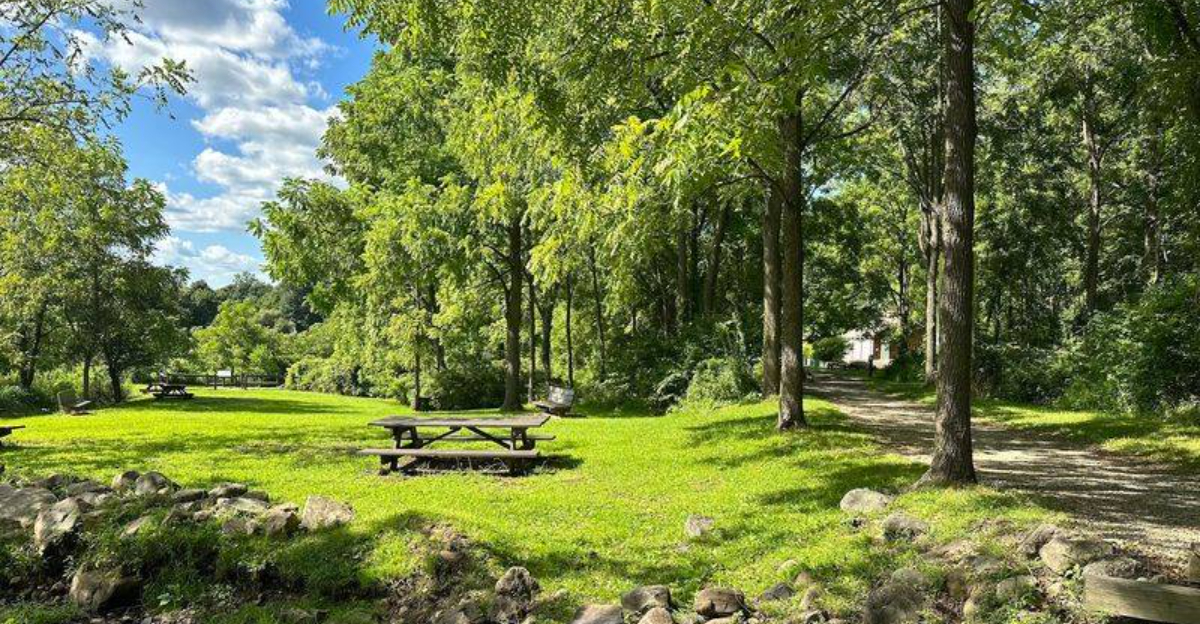
Seven hundred and twenty two acres of genuine peace and quiet is hard to find. This Connecticut park has it figured out. The scale here makes every visit feel like a proper escape, not just a walk around the block.
The trails wind through scenery so beautiful that the outside world fades out almost immediately. That shift happens without any effort.
Quiet walks and sweeping views wait around every corner. People who have discovered this place treat a visit like something worth protecting in a busy schedule.
Nothing here demands your attention loudly. The whole place just invites you to slow down, look around, and breathe for a while.
Some come with a book. Others just wander without much of a plan. Either way, the pace of the day tends to shift on its own.
An afternoon here resets things in a way a regular weekend simply can’t replicate.
1. A Historic Estate Surrounded By Nature
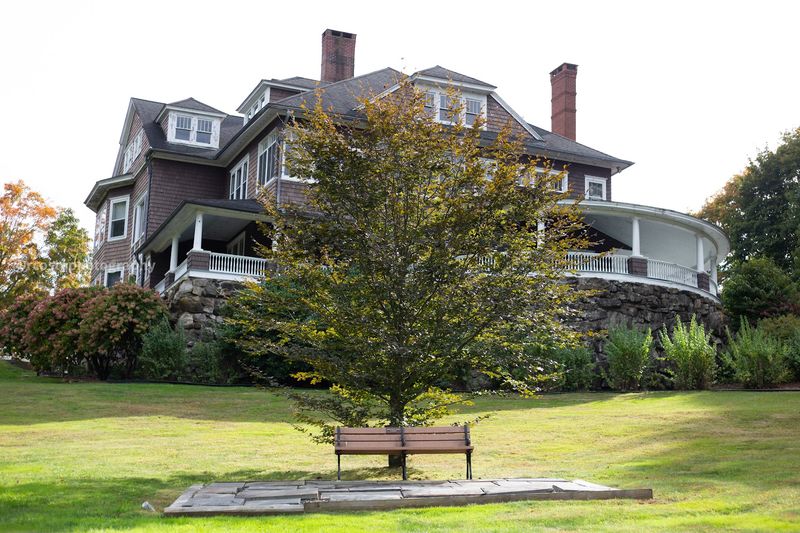
Long before the trails were blazed and the benches were placed, this land had a very different kind of life. The property now known as Tarrywile Park was once the Charles D.
Parks Estate, a working dairy farm and fruit orchard that stretched across rolling state countryside. Parks expanded the grounds significantly over time, adding a lake, several ponds, a greenhouse, and a conservatory attached to the main house.
The estate’s original design reflected a refined English park aesthetic, complete with ornamental trees, manicured flower beds, and even a Japanese garden. Of the 19 buildings originally standing on the property, 14 have since been restored, including the carriage house, gatehouse, and farmhouse.
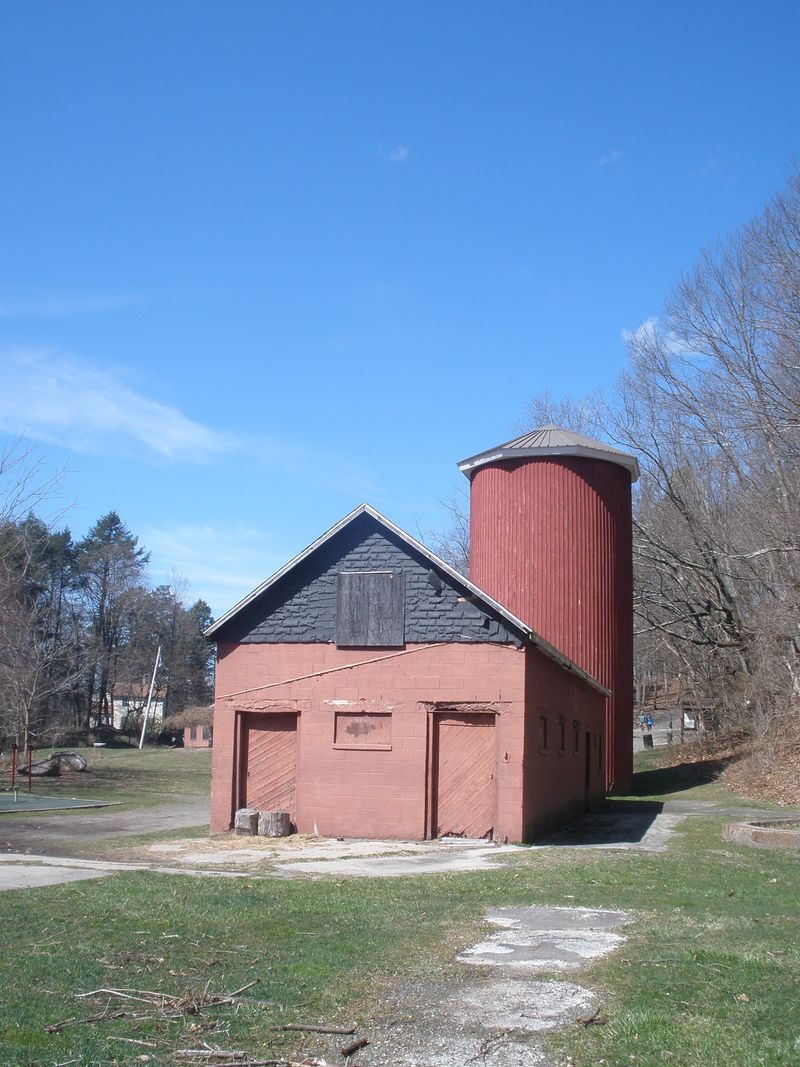
The old hay barn found a new purpose as an environmental education center.
The City of Danbury acquired the land in 1985 after a community-driven effort successfully prevented the property from being converted into condominiums. That decision preserved not just a beautiful piece of land but also a living piece of local history.
Visitors walking the grounds today can still sense the estate’s layered past beneath the natural growth, making each step feel connected to something larger than a simple afternoon outing.
2. Trails Stretching Across 722 Acres
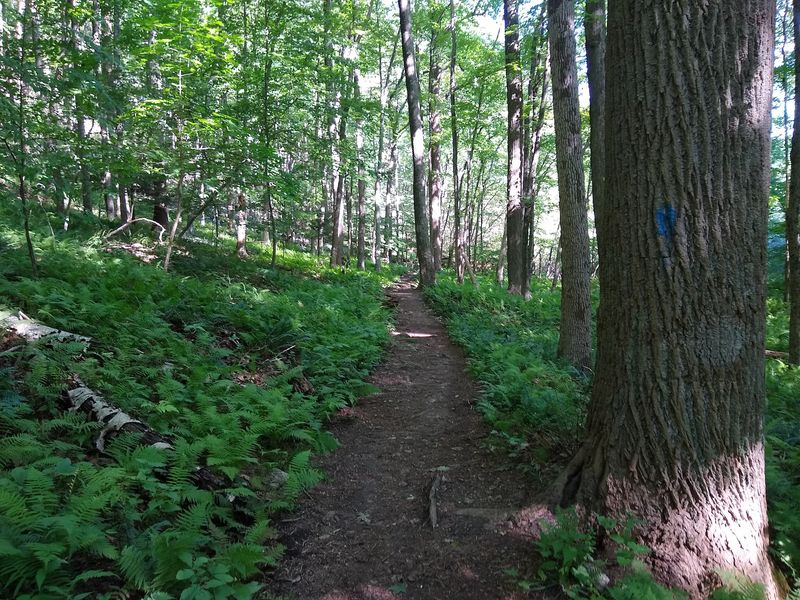
Marked trails stretch across 21 continuous miles at Tarrywile Park, a scale that few state parks can match. Each path gets its own color-coded blazes painted right onto the trees, which keeps navigation simple even for someone visiting for the first time.
Maps are also posted near the entrances for extra peace of mind.
Casual walkers tend to gravitate toward the White Trail, which loops around Parks Pond with barely any elevation change. Those looking for more of a challenge can head for the Blue or Yellow Trails, the latter climbing sharply toward Mootry Point for hikers who don’t mind rougher terrain.
Somewhere in between sits the Green Trail, a shorter option that splits the difference between an easy stroll and a genuine workout.
Because conditions shift with the seasons, older printed maps don’t always match what’s currently on the ground, so it’s worth checking the park’s official website before setting out.
Mountain bikers and horseback riders share parts of the network too, so staying alert on the busier paths is a good habit.
With this much variety built in, no two visits here tend to feel quite the same. The main entrance sits at 70 Southern Boulevard, where parking remains free year-round.
3. The Mansion At The Heart Of The Park
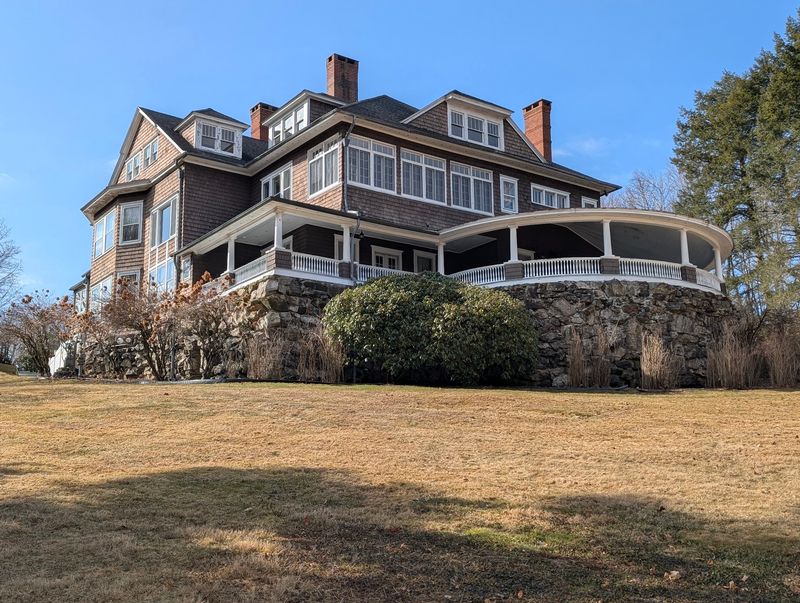
Built in 1897, the Tarrywile Mansion carries the kind of quiet dignity that comes from more than a century of history. The building represents a well-preserved example of Shingle-style architecture, and it holds a recognized spot on the National Register for Historic Preservation.
The mansion is located at 70 Southern Boulevard, Danbury, CT 06810, and has served as a community gathering space for the City of Danbury since opening to the public in 1990.
The grounds surrounding the mansion include formal gardens, a working orchard, and distinctive specimen trees that have grown to impressive sizes over the decades. A children’s garden sits along the front lawn, adding a welcoming touch for younger visitors.
A gazebo added in 1999 to the upper orchard area hosts small concerts, story hours, and outdoor ceremonies during warmer months.
A meditation garden established in 2004 provides a calm corner for those seeking quieter reflection away from the main paths. Tours of the mansion interior are available by appointment, and the space can be rented for private events.
On most general visit days, the exterior and surrounding grounds are freely accessible, offering plenty of visual interest even without stepping inside the building itself.
4. Lakes, Forests, And Wildlife Habitats
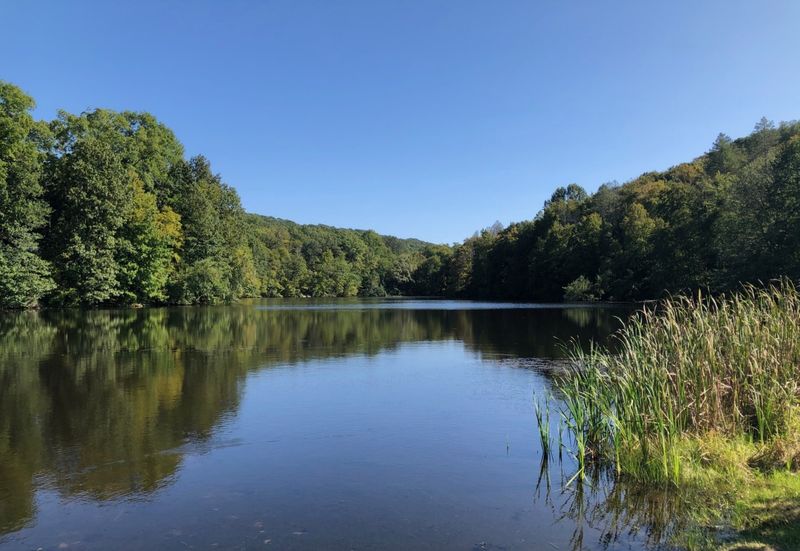
Water, forest, and open sky meet across Tarrywile Park in a way that supports a surprisingly wide range of wildlife. The park contains two ponds, Parks Pond and Back Pond, along with the larger Tarrywile Lake, all fed by streams that wind through hemlock, oak, and maple woodlands.
Granite outcrops break through the hillsides in places, giving the landscape a rugged texture that contrasts nicely with the softer meadow areas.
Parks Pond is a particularly pleasant spot, with picnic tables and benches arranged nearby for relaxed outdoor meals or quiet breaks. Fishing is permitted there during designated seasons, though a valid Connecticut fishing permit is required.
The aquatic areas attract mallard ducks, wood ducks, geese, and swans, while frogs and several snake species also make their home around the water’s edges.
Deeper into the park, the forests support whitetail deer, red foxes, chipmunks, rabbits, and an impressive variety of birds including pileated woodpeckers, hawks, wild turkeys, and vultures.
From May 1st through July 15th, certain bird nesting areas are protected, and visitors are asked to stay on marked trails during that period.
Bears have also been spotted in the park, and Connecticut DEEP guidelines recommend observing them from a safe distance.
5. Hidden Bridges And Scenic Overlooks
Elevation changes across the park create natural vantage points that reward hikers willing to push a little further along the trail. The Yellow Trail leads up to Mootry Point, where the Mootry Peak Lookout offers an expansive view across the surrounding landscape.
A tall beacon near the summit serves as a navigational guide for pilots at the nearby Danbury Airport, adding an unexpected industrial detail to an otherwise deeply natural setting.
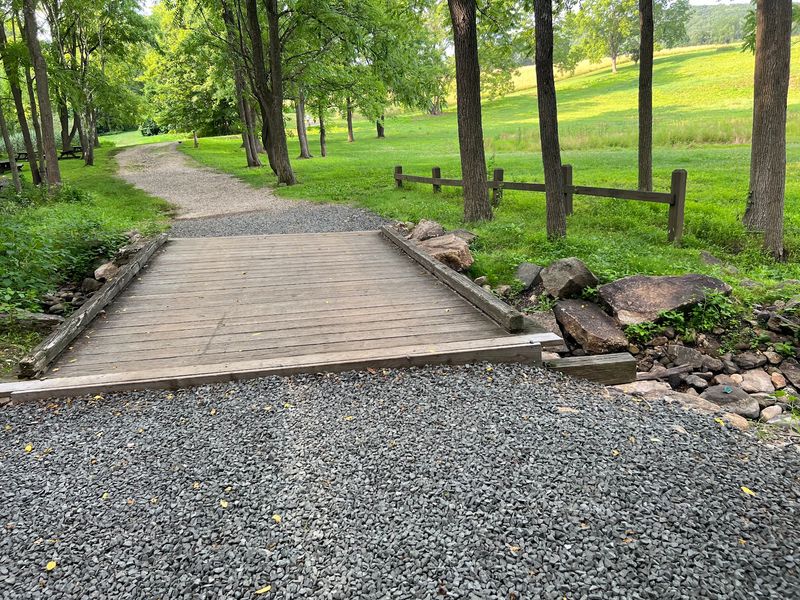
Stream crossings exist throughout the trail network, including one at the southern end of Back Pond that links the Blue and Red Trails.
During periods of high water, particularly in early spring, these crossings can be more challenging to navigate, so sturdy footwear with good grip makes a real difference.
The crossings add a small sense of adventure to routes that might otherwise feel straightforward.
Hearthstone Castle, a ruined stone structure within the park, is fenced off for safety and marked with signage, but its weathered walls are still visible from nearby trails and carry a quiet, atmospheric presence. An adaptive reuse study funded by a grant from the CT Trust for Historic Preservation has been completed, and a task force is exploring restoration possibilities.
The castle’s aged silhouette against the tree line gives certain trail sections a genuinely distinctive character.
6. Seasonal Beauty Across The Landscape
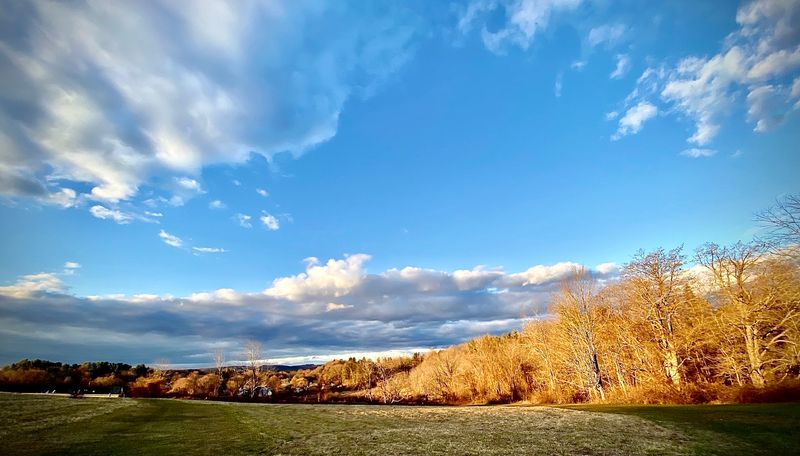
Each season at Tarrywile Park brings a noticeably different mood to the same 722 acres. Autumn is perhaps the most visually striking time to visit, when the oak, maple, and hemlock canopy shifts into deep reds, burnt oranges, and warm yellows.
The trails take on a crunchy, leaf-covered texture that makes even familiar paths feel refreshed.
Spring arrives with wildflowers pushing up through the meadows and woodland floors, and birdsong picks up noticeably as migratory species return to the area.
Summer brings longer daylight hours, denser shade along the forested trails, and the chance to fish at Parks Pond or spread out a picnic blanket in the apple orchard near the mansion.
Insect repellent is worth carrying during warmer months, especially on paths that run close to the water bodies.
Winter transforms the park into a quieter, more contemplative space, with snow-covered fields and frozen pond edges creating a stillness that feels rare this close to a city center. The trails remain open year-round, weather permitting, and the groomed sections are used for cross-country skiing and snowshoeing when conditions allow.
Visiting across multiple seasons gives a much fuller picture of what the park genuinely has to offer throughout the year.
7. Quiet Paths For Nature Exploration
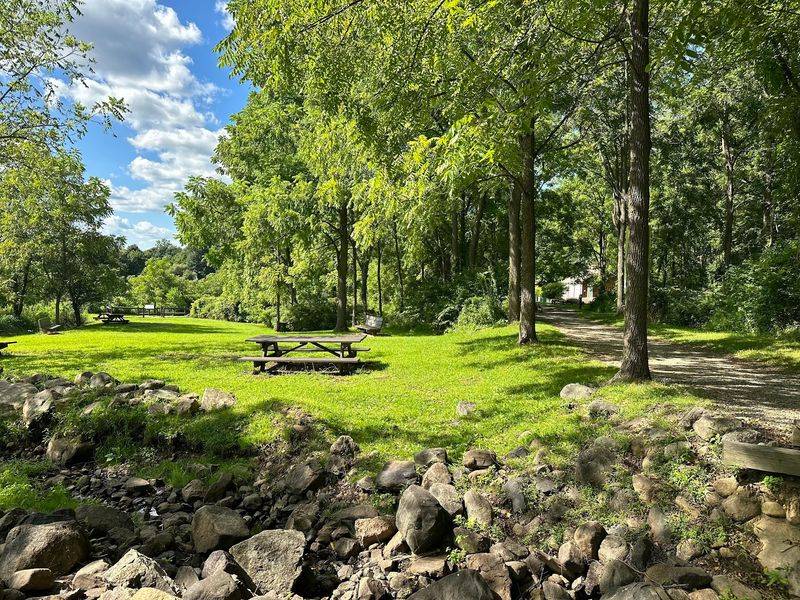
Nature parks don’t have to mean a full-blown workout, and Tarrywile Park gets that balance just right. Near the mansion, the paths stay smooth and well-kept, making for easy walks that work for almost any fitness level.
Benches and picnic tables show up throughout the area too, so stopping to sit and take everything in feels effortless rather than like an afterthought.
For those after a shorter outing with barely any climbing, the White Trail around Parks Pond is a dependable place to start. At about a mile long, it delivers a satisfying loop complete with pond views, the occasional bird sighting, and plenty of shade for warmer days.
Visitors drawn more to stillness than movement can also check out the meditation garden near the mansion.
Push further into the park’s southwestern stretches, though, and the terrain shifts noticeably, growing steeper as the crowds thin out. Mountain bikers and horseback riders share these trails too, so activity levels can vary quite a bit depending on the day and time.
Weekday mornings tend to run much quieter than weekend afternoons, worth keeping in mind for anyone hoping to find a little solitude among the trees and open fields.
8. Conservation Behind This Outdoor Escape
The story of how Tarrywile Park came to exist is as much about community action as it is about nature. When the Charles D.
Parks Estate faced potential development into condominiums, Danbury residents pushed back, and the city purchased the land in 1985 to preserve it as open space.
Subsequent voter-approved acquisitions in 1999 and 2000 expanded the park’s protected boundaries further, reinforcing a long-term commitment to conservation.
The estate’s former hay barn was renovated and repurposed as the Tarrywile Environmental Education Center, giving the park a dedicated space for learning about local flora, fauna, and ecological systems.
An environmental education library housed within the Mansion Conference Room provides additional resources for curious visitors.
A historic silo on the property has been preserved, with future plans to convert it into a gallery space.
The Tarrywile Park Authority oversees the park’s management on behalf of the city, with significant support from volunteers including Eagle Scout and Girl Scout troops who contribute to maintenance and upkeep.
Bird nesting areas are actively protected from May through mid-July each year as part of ongoing conservation efforts.
A Master Plan of Development guides future improvements, keeping the focus firmly on passive recreation, environmental education, and the long-term preservation of the park’s historic and natural resources.