This Old-School Idaho Fabric Shop Has Been Serving Quilters For More Than 80 Years
Eighty-five years is a long time for any shop to keep people coming through the door.
A fabric store has to work even harder.
This Idaho spot has managed it by becoming the kind of place quilters remember long after the project is finished. The counter has seen decades of fabric choices and last-minute thread emergencies, which gives the whole shop a sense of history without making it feel stuck in the past.
There is something satisfying about walking into a store that still understands why people like to browse slowly.
Nobody needs to rush a good fabric decision.
Patterns catch your eye. A color starts an entirely new project in your head.
Suddenly the thing you came in for is no longer the only thing leaving with you.
That is probably how a sewing shop survives for more than eight decades.
It keeps giving people one more reason to come back.
Browse A Main Street Shop That Has Served Southeast Idaho Since 1941
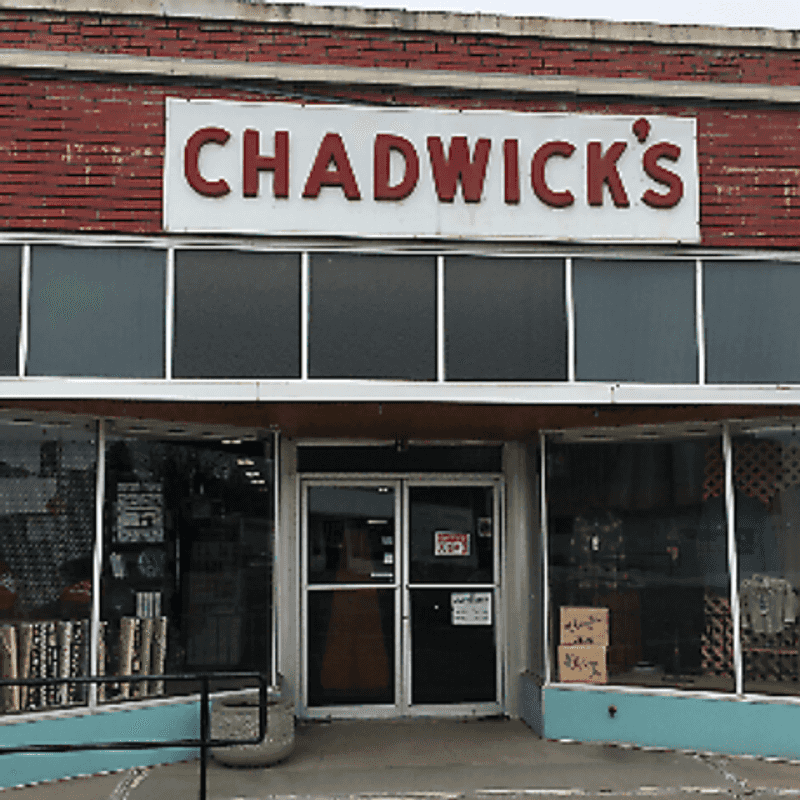
Eighty-plus years is a long run for any small business, and a fabric counter that opened in 1941 has seen plenty of change roll past its front windows. You will find the shop at 20 S Main St in Grace, right on the main drag where parking is easy and the pace stays slow.
Family owned and family run, it has passed sewing supplies across the same counter for generations.
Doors open Monday through Friday from 9 AM to 5 PM, with shorter Saturday hours of 9 AM to 3 PM. Sundays are quiet, so plan your fabric run accordingly.
Wooden shelves, tidy aisles, and a mix of dry goods alongside bolts give the place an old-fashioned mercantile feel. Staff know the stock well, which helps when you walk in with a half-finished project and only a vague idea of what will fix it.
Small-town shops like this one survive on that kind of memory and patience.
A quick call to 208-425-3903 confirms hours before a long drive, handy if you are coming from out of town.
Check The Precuts When You Want To Skip Hours Of Cutting At Home
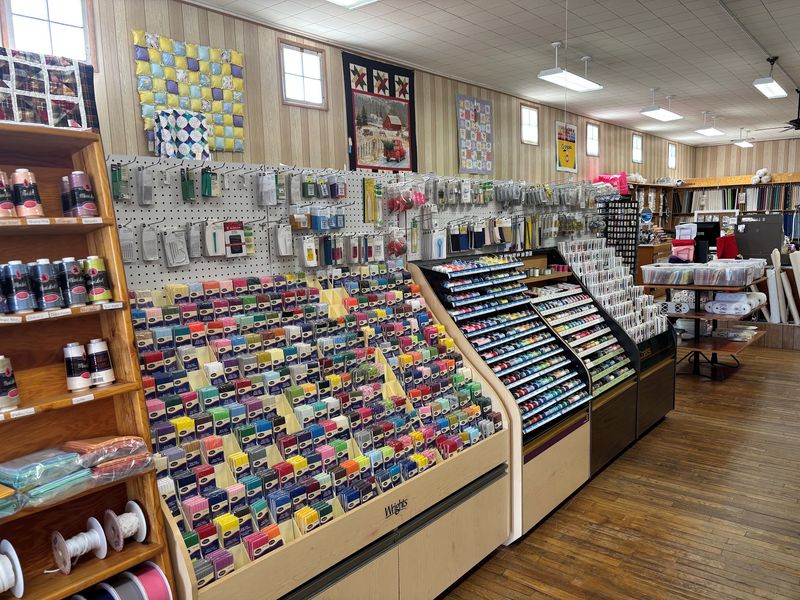
Anyone who has spent a Saturday afternoon squaring up squares knows how much cutting eats into sewing time. Precut bundles solve that problem before you ever thread a needle, arriving already trimmed to a uniform size.
Selections here include coordinated bundles pulled from the same fabric lines, which means the colors already agree with one another. That coordination saves a second kind of work, the fussy business of deciding whether a print clashes.
Practical upside: precuts travel well. A stack fits in a tote bag for a weekend at a cabin or a long car ride, and you can piece rows without hauling a cutting mat and ruler along.
Newer quilters often find precuts less intimidating, since a simple pattern of squares sewn into rows produces a finished top surprisingly fast. Experienced sewists use them differently, treating a bundle as a ready-made color study for a scrappy design.
Either way, fewer minutes with a rotary cutter means more minutes at the machine. The shop’s Saturday hours end at 3 PM, so a morning stop leaves room to start sewing that same day.
Dig Through Shelves Packed With Quilting Cotton And Fresh Fabric Lines
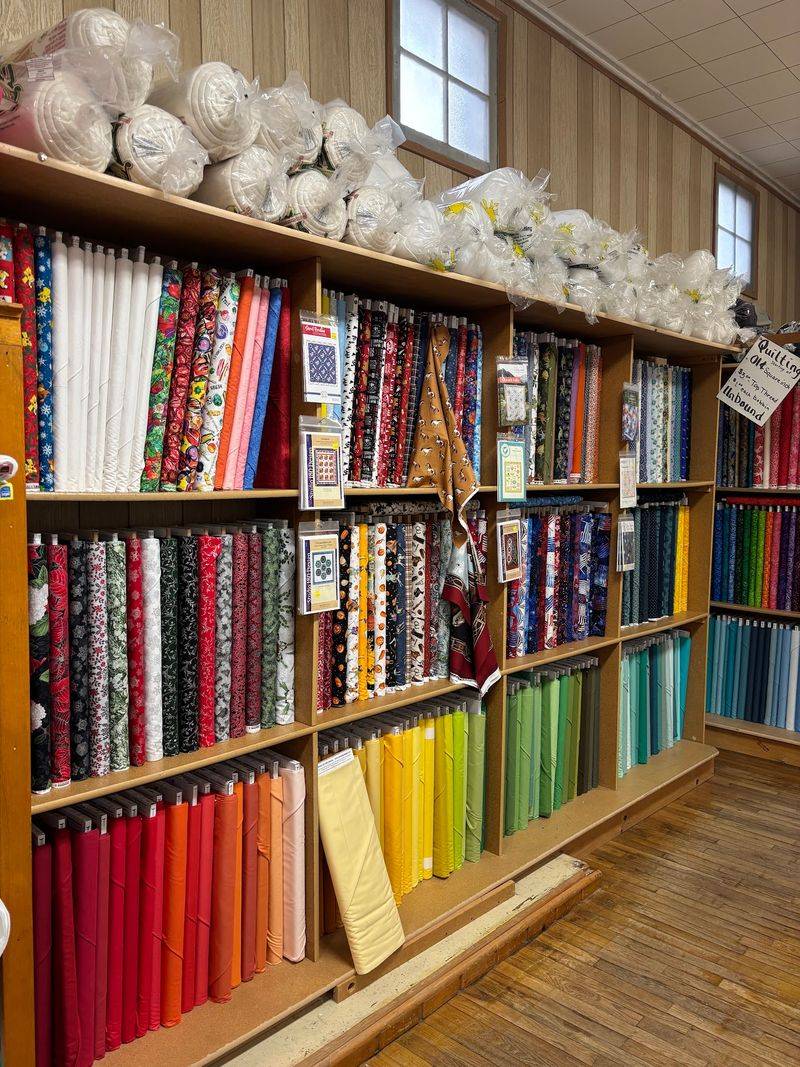
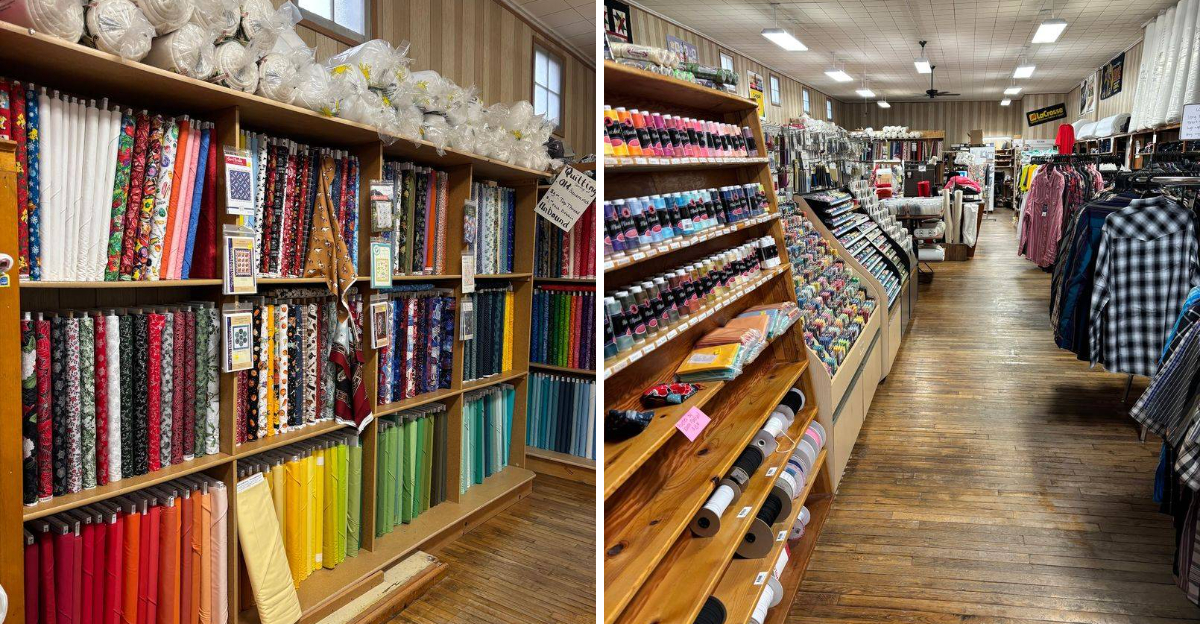
Color hits first. Bolts of quilting cotton stand in rows, blues drifting into greens and then into warm reds that catch the overhead light.
New fabric lines arrive regularly, so the mix shifts through the year, and shoppers who visit every few weeks notice fresh prints near the front. Reproduction florals, crisp solids, novelty prints for baby quilts, and blenders that quietly hold a design together all share space here.
Beyond cloth, the store keeps a broad range of dry goods, fitting for a business that still carries the mercantile name.
Give yourself time. Pulling three or four bolts, standing them upright, and stepping back a few feet is the fastest way to see whether your palette actually works.
If a print feels wrong beside the others, that hesitation usually means something.
Beginners have room to experiment too, since a quarter yard of something cheerful costs little and teaches a lot about how prints behave once cut. Bring a photo of your work in progress on your phone; matching against a real block beats guessing from memory.
Match Your Fabric With Notions Thread And Other Sewing Essentials
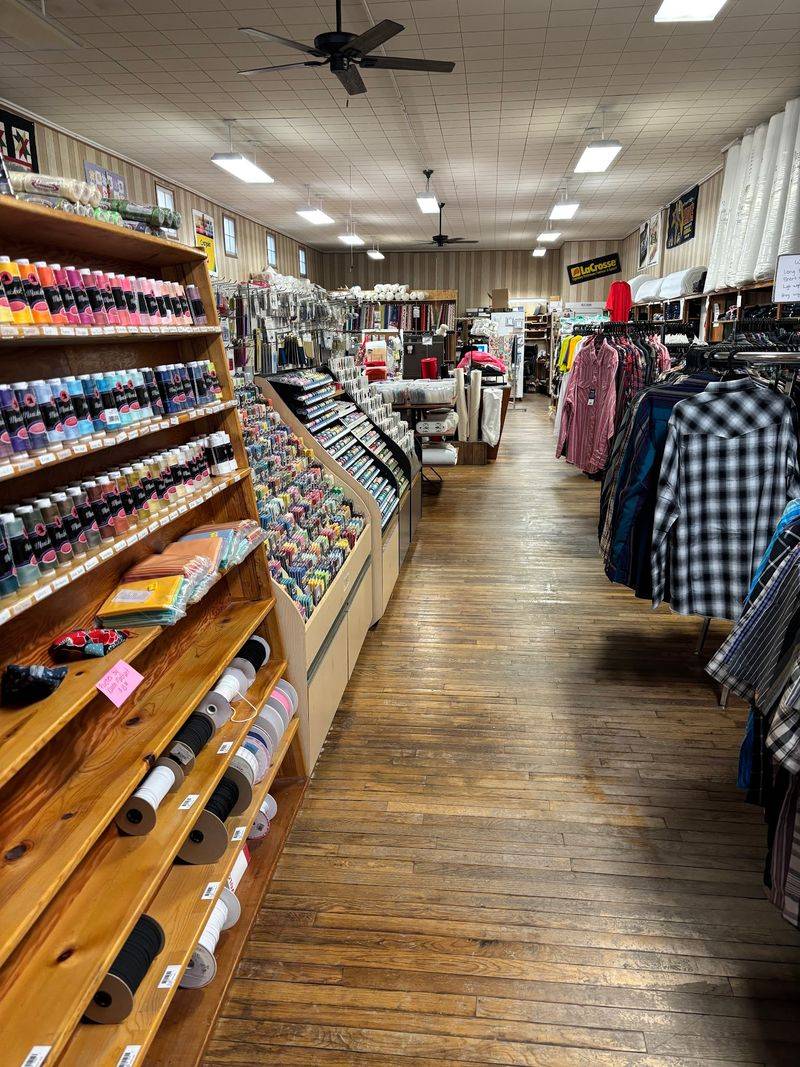
A quilt lives or dies by the small stuff: the right thread weight, a fresh needle, buttons that suit the fabric. Notions fill a good share of the shelf space here, from spools in a wide range of shades to the little tools that keep piecing accurate.
Running out mid-project is the usual reason people walk in. Finding a matching thread nearby, rather than driving across southeast Idaho to a larger town, is the sort of convenience a country fabric store provides.
Bring a scrap of your fabric when you shop for thread. Hold the strand across the print in natural light; if it disappears, you have a match, and if it stands out, save it for topstitching.
Other essentials worth a look include marking tools, pins, and hand-sewing supplies for binding. Buttons deserve a slow browse too, since one unexpected choice can lift an otherwise plain project.
Small purchases like these often prevent a stalled afternoon, and they cost far less than the gas money a longer trip would burn. Keep a running list on your phone so nothing gets forgotten on the next visit.
Look Through Quilt Kits When You Need A New Project Without The Guesswork
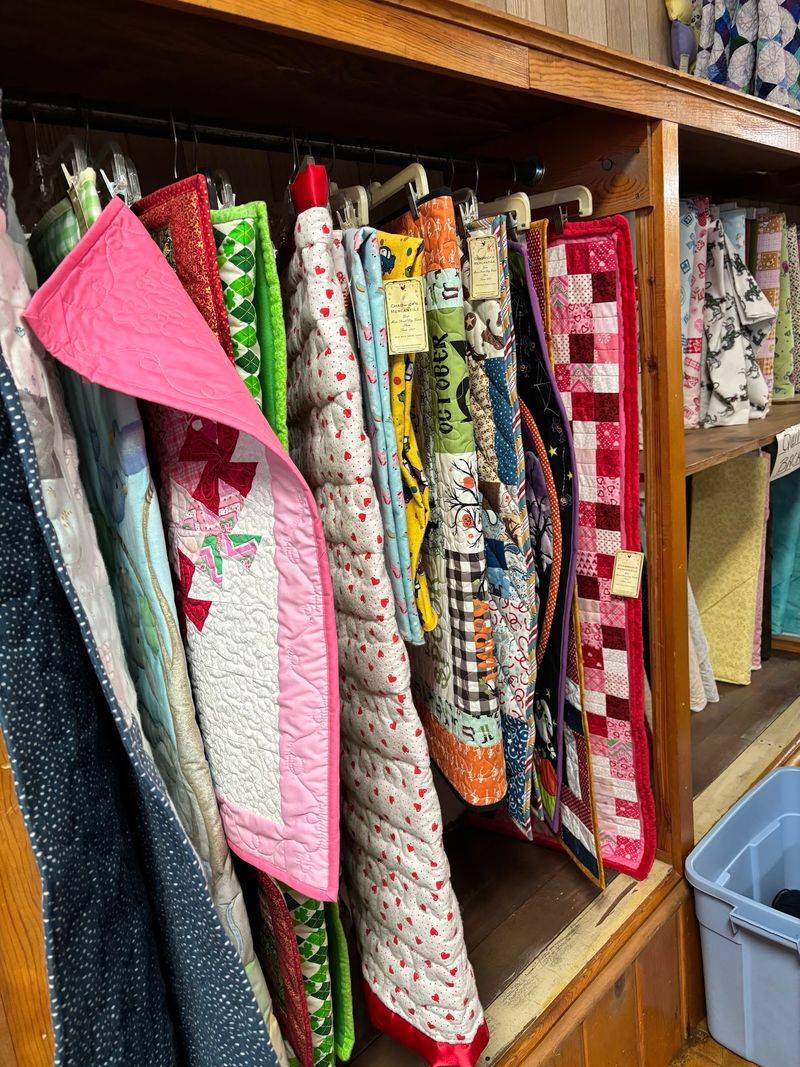
Decision fatigue is real, especially when a wall of prints offers a thousand possible combinations. Kits cut straight through it by bundling a pattern with fabrics chosen to work together.
The counter at 20 S Main St in Grace stocks project kits for exactly this reason, giving you a finished plan in a single bag.
Yardage is already calculated, which removes the arithmetic that trips up many quilters. No more standing at the cutting table doing mental math about borders and binding.
Kits also make thoughtful gifts for a friend who sews, or a reliable starting point for a first quilt. Following someone else’s color plan teaches how values, contrast, and scale work, lessons that carry into your own designs later.
Storage is simpler as well: one bag, one pattern, no orphan fat quarters wandering off into the stash. When a rainy weekend arrives, pulling a kit off the shelf beats an hour of second-guessing.
Phone ahead at 208-425-3903 if you have a particular pattern in mind, since kit selection changes as fabric lines come and go.
Ask About Longarm Quilting Once Your Quilt Top Is Finally Finished
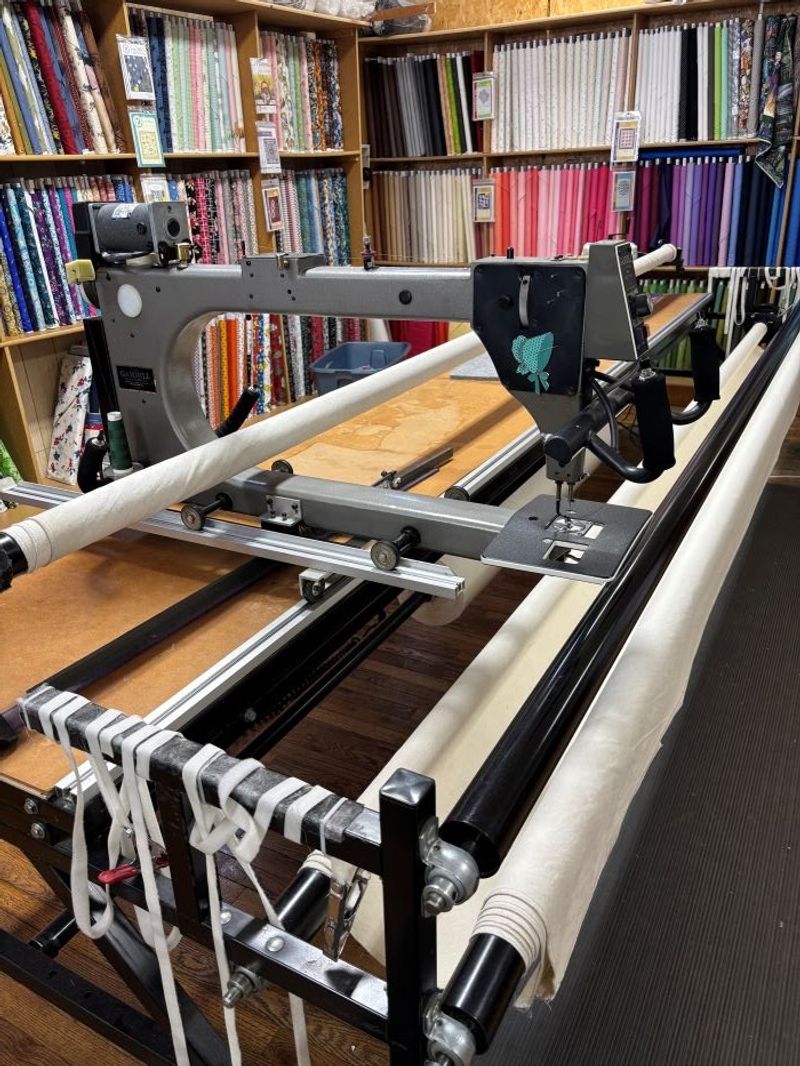
Piecing a top is one job; quilting the three layers together is another, and a domestic machine can make it feel like wrestling a mattress. Longarm service solves that, and the shop runs a hand-guided Gammill machine for the work.
Hand-guided means a person steers the design rather than a computer, so the stitching carries a slight human variation across the surface.
Preparing a drop-off is straightforward. Bring the finished top, backing fabric, and batting, or purchase batting at the shop if you would rather not shop twice.
Backing needs to be larger than the top, so ask about sizing before you cut.
Options range from edge-to-edge patterns that flow evenly across the whole quilt to denser designs that add texture and hold layers tightly. Denser stitching makes a firmer quilt, while looser work stays softer and drapes more easily over a bed.
Turnaround times shift with the season, so asking early helps if a quilt is meant to be a birthday or holiday gift. A quick conversation at the counter also clears up thread color choices, which change how a pattern reads.
Stop By During Shop Hop Season For Even More Fabric-Hunting Excitement
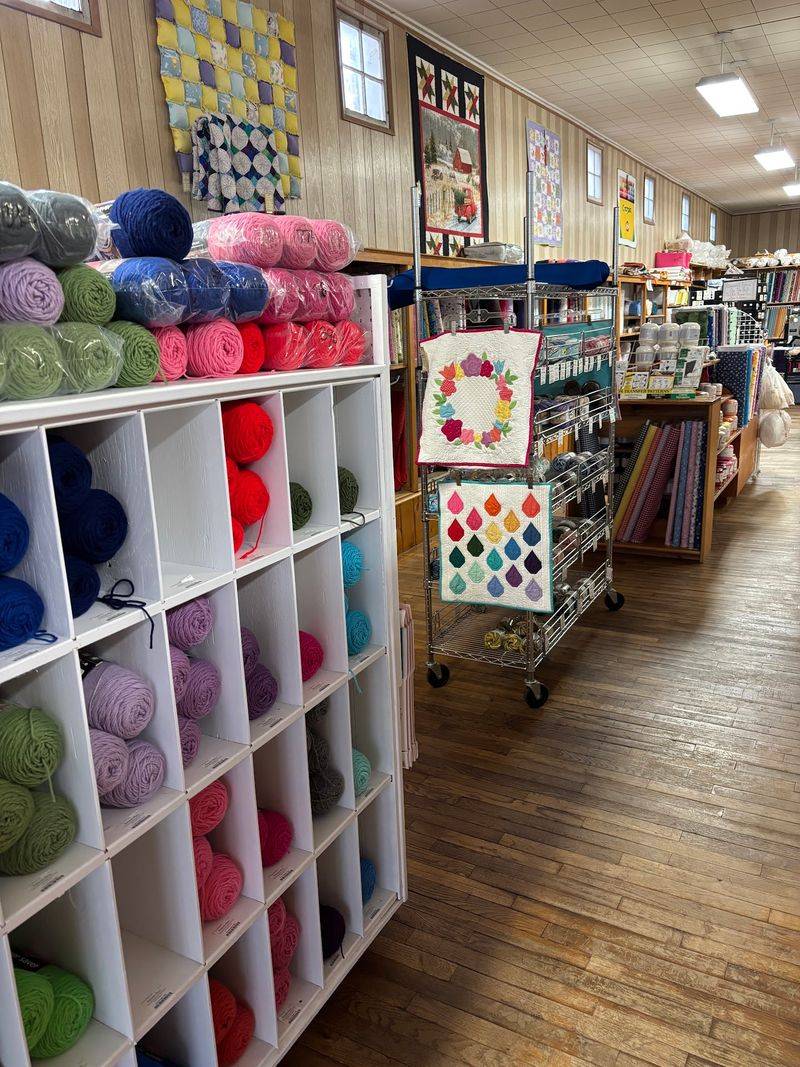
Quilters plan road trips the way other people plan fishing weekends, mapping shops instead of streams. Chadwick’s takes part in the All Pacific Northwest Shop Hop, an event that sends fabric lovers from store to store across a wide region.
Shop hop season brings extra energy through the door, with travelers comparing notes and special items set out for the occasion.
Timing matters if crowds are not your thing. Early mornings tend to be calmer, and weekdays move at a gentler pace than Saturday, when hours run only until 3 PM.
Meeting other quilters is half the fun. Conversations in the aisles turn up pattern suggestions, tips on batting, and stories about projects that took a decade to finish.
Grace sits in rolling farm country, so the drive itself adds something, with hay fields, grain silos, and open sky along the way. Pair the stop with a picnic and the shop hop becomes a full day out rather than a quick errand.
Check the event dates ahead of time, since the hop runs during a set window each year.
Leave With Enough Material To Keep Your Sewing Table Busy For Weeks
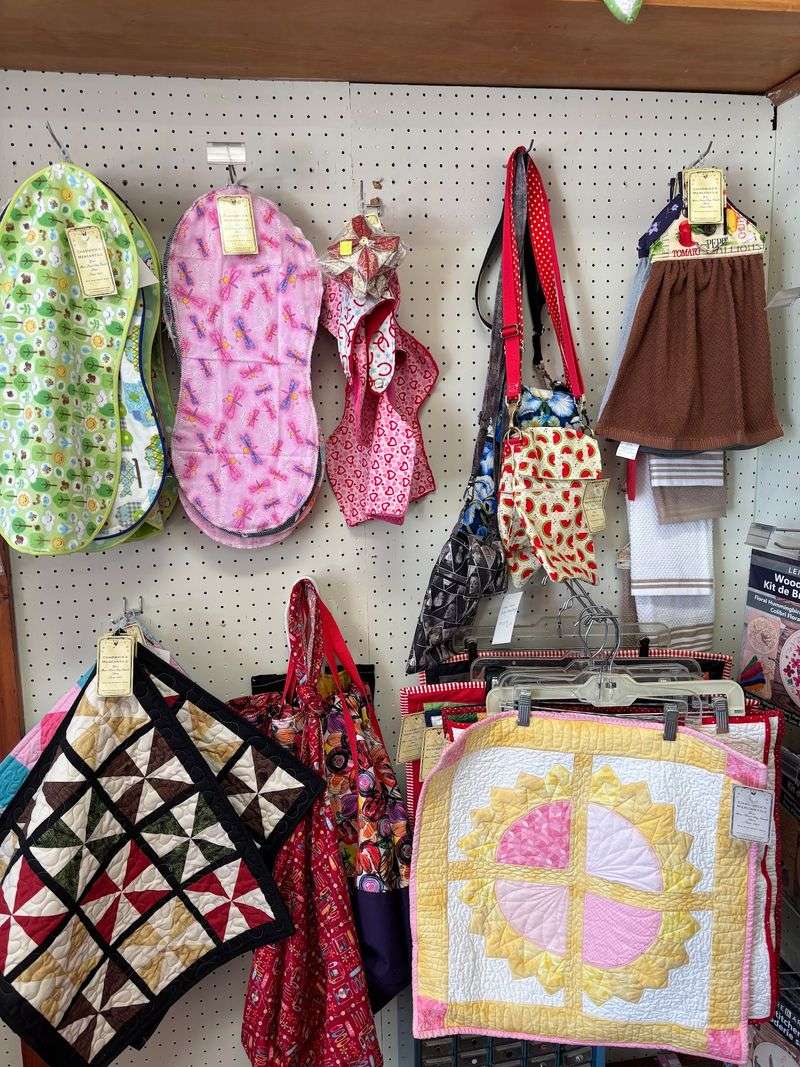
Bags rustle, the door swings shut, and somewhere in the car a stack of new fabric waits for scissors. Leaving with a full load happens easily, whether that means yardage, a finished kit, or notions you did not know you needed.
Plans tend to multiply on the drive home.
Once home, press the fabric before cutting and label kit bags so pieces stay with their patterns. A little order at the start saves confusion three blocks in.
Keeping purchases in plain sight helps as well. A shelf of folded cotton where you pass it daily nudges you toward the machine on evenings when motivation runs thin.
Small-town supply runs like the one to Grace carry a different rhythm than big-box shopping, with time to talk, compare, and change your mind twice. Weekday hours run from 9 AM to 5 PM, which leaves plenty of afternoon for the trip.
A full sewing table is proof enough that the drive across this stretch of Idaho was time well spent. Weeks of stitching usually follow, one block at a time.