The Arizona Ghost Town Where The Past Still Has Stories To Tell
Ghost towns usually make me expect a few foundations and a sun-faded sign. This one has considerably more up its sleeve.
Arizona has an old mining settlement where restored buildings, mining equipment, demonstrations, and desert history make the past surprisingly easy to explore.
Instead of simply imagining what once stood here, visitors can wander among preserved structures and see artifacts connected to daily life.
The old mineshaft adds another layer to the story. Then come the unexpected extras, including special events and demonstrations on select days.
It feels part museum, part desert outing, and part time capsule. Suddenly that dusty road leading there seems considerably more intriguing.
Gold Strike That Built A Town
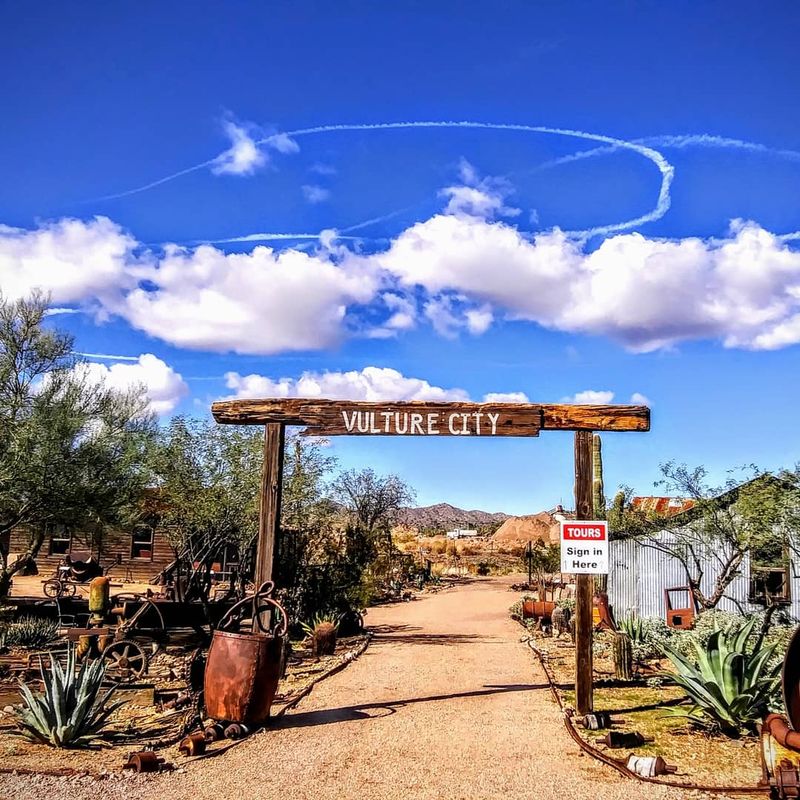
Back in 1863, a prospector named Henry Wickenburg found a rich gold deposit in the open desert. That single discovery lit the fuse for one of the most productive mines in Arizona history.
Word traveled fast, and fortune seekers poured in from every direction. A rough camp swelled into a working settlement of roughly 5,000 people at its busiest.
The Vulture Mine eventually gave up around 340,000 ounces of gold and 260,000 ounces of silver. Those numbers built roads, trade routes, and towns across the territory.
Walking the grounds, I kept thinking about the sheer effort involved. Crews laid a water pipeline for miles just to keep the operation running in a place with almost no water.
The town had a post office, boarding houses, a school, and shops. Miners, merchants, and families all shared the same dusty streets.
When the gold slowed, so did everything else, and the buildings were left to the desert. That quiet ending is exactly why the site feels so honest today.
You will find this piece of Arizona history at 36610 N 355th Ave, Wickenburg, about twenty minutes from downtown Wickenburg.
Sonoran Desert Sets The Stage
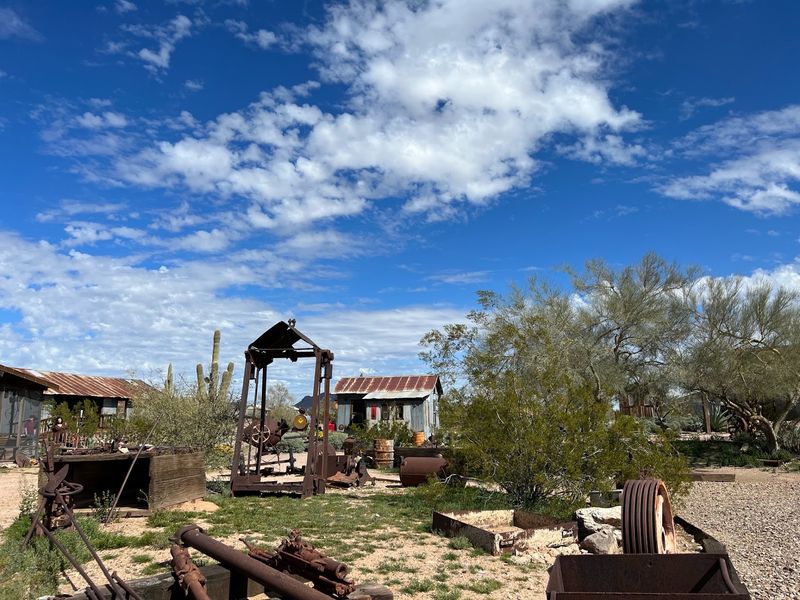
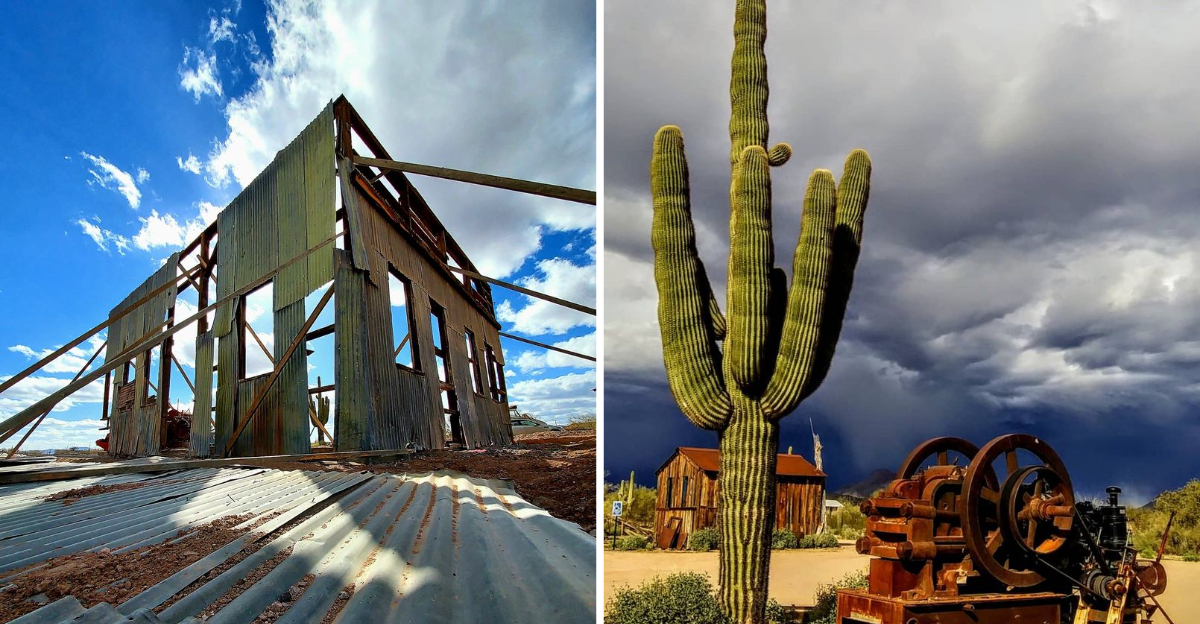
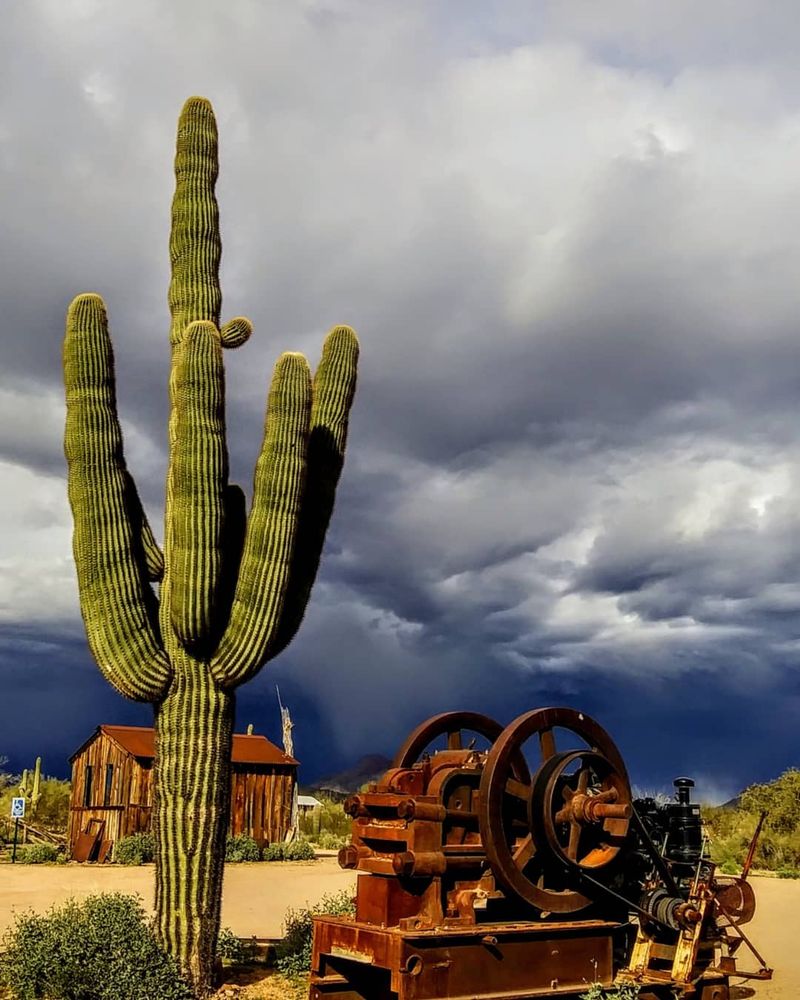
Scenery does half the storytelling out here. Tall saguaros stand around the old buildings like they have been assigned guard duty since the 1870s.
The drive alone is worth the gas. Desert hills roll past your window, and the crowds thin out the closer you get.
Sunlight in this corner of Arizona has a habit of showing off. Early morning and late afternoon stretch shadows across adobe walls and turn weathered wood a warm amber.
Air out here is dry and still, and sound carries strangely. I could hear the blacksmith’s hammer from several buildings away.
Twelve to fifteen acres of open ground means you are never crowded. Paths are mostly flat and easy, with shaded spots where you can stop and read.
Weather changes fast, though. A cool Phoenix morning can feel downright chilly up here, especially when the wind picks up.
Photographers, take note. The mix of rusted equipment, wooden porches, and cactus-studded ridges gives you a new frame at every turn.
Sixteen Buildings You Can Enter
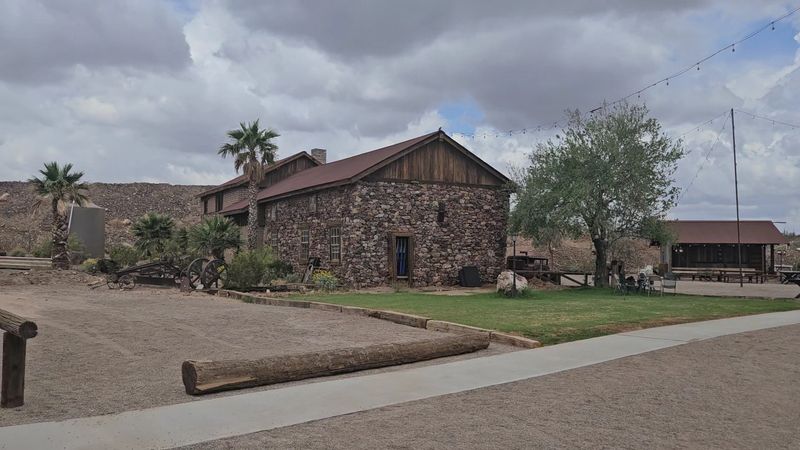
Most historic sites keep you behind glass. Here, you get a laminated map and permission to walk right in.
Roughly sixteen restored structures line the marked path, each with signs explaining who used it and why. I spent close to three hours and still missed details.
The Assay Office is where raw ore was tested and valued, and it remains one of the most important rooms on site. Nearby sits the doctor’s office, tucked right beside the old brothel building with its original hardwood floor slats.
Henry Wickenburg’s cabin still stands too, small and plain, which says plenty about frontier living. Original furnishings and equipment fill many rooms.
Restrooms sit at both the front and back of the property, which matters more than you think on a long walk. Parking and the entrance are wheelchair accessible, and several buildings have ramps, though original structures cannot all be adapted.
Bring water and sunscreen, and skip the flip flops. Real shoes make the uneven ground far more pleasant.
Hands-On History And Gold Panning
Ever tried swirling gravel in a pan hoping for a gold fleck? That small thrill explains why thousands once uprooted their lives for this desert.
Gold prospecting and panning workshops let visitors try the exact skill that started everything. Kids especially lose track of time at the water trough.
Over at the forge, the blacksmith works real iron with real fire. He often shares history far beyond metalwork, including how Native communities lived in this region long before the mine existed.
Blacksmith workshops are available for those who want to swing a hammer themselves. Watching sparks fly beats reading a plaque every single time.
Old west comedy gunfight shows run on select Saturdays between October and May, staged by local reenactors. Timing your visit around one adds a burst of noise and laughter.
Guided history tours run on Sundays, led by folks who know the small details that never make it onto signs.
Mini ponies and farm animals share a corner of the grounds, an easy win with younger visitors.
Arizona history rarely gets this participatory, and honestly, that is the whole appeal.
The Ironwood Tree Everyone Asks About
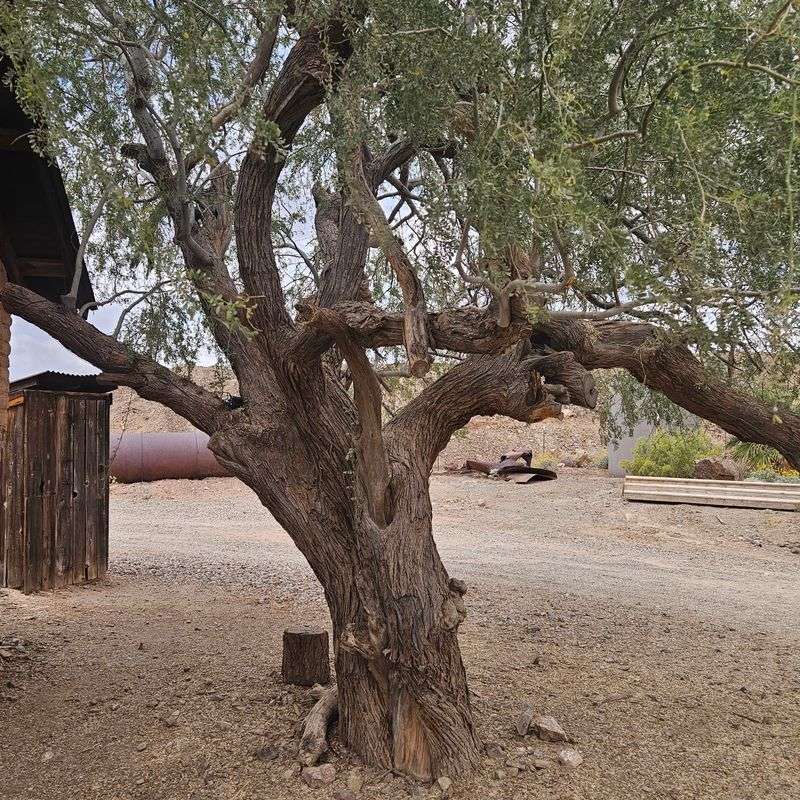
One landmark draws more questions than all the rest combined. The gnarled ironwood known as the Hanging Tree sits near the center of the grounds, twisted and ancient.
Local lore has added its share of embellishment over the decades, but the core history is well documented: 18 men were hanged from this tree, accused of stealing gold from the mine.
Standing beneath those branches, the mood shifts a little. The desert goes quiet, and you understand why the tree became the town’s most photographed feature.
Not far off, the Nichols Raise opens into a 170-foot mineshaft. Peering down that dark column gives you real respect for the crews who worked below with candles and hand tools.
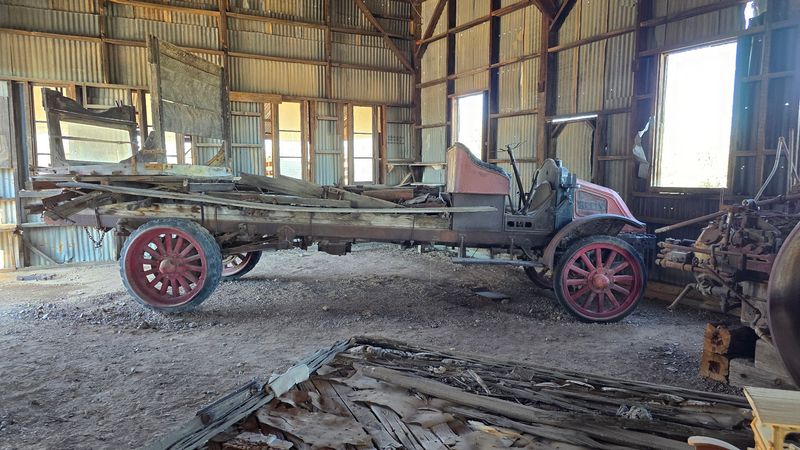
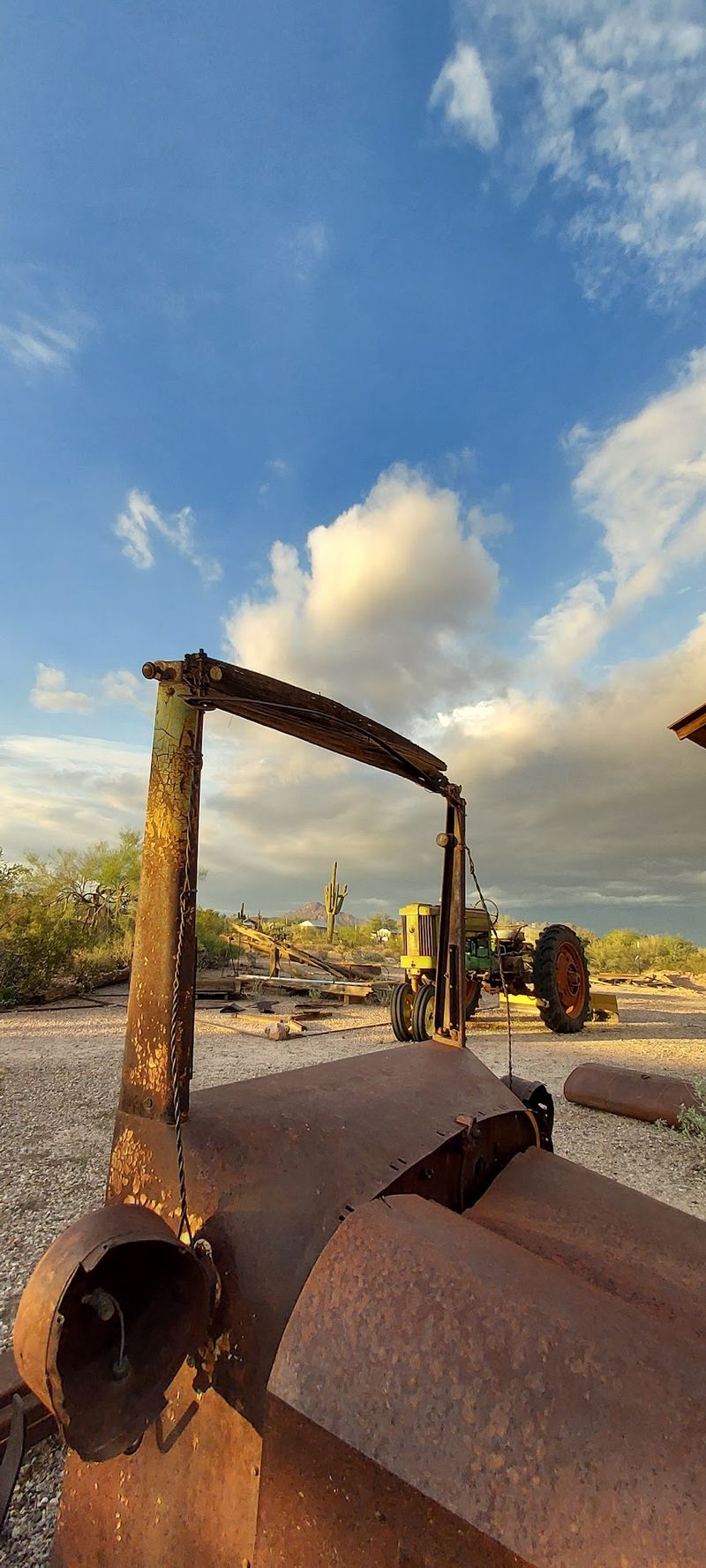
Mining equipment scattered around the site fills in the rest of the picture. Ore carts, gears, and heavy machinery sit exactly where they were left.
I found the generator building oddly compelling, all rusted metal and dim corners. Landmarks like these turn a pleasant walk into something you keep thinking about on the drive home through Arizona’s back roads.
After Dark Flashlight Tours
Sunset flips the whole mood of the place. Flashlight ghost tours send small groups through the same buildings you toured in daylight, only now the beams do all the revealing.
Guides mix documented history with the stories that have followed this site for generations. Tales of a young girl named Lizzy and a teenager named Joseph come up often.
The generator building and the brothel tend to unsettle people the most. A room full of antique dolls has ended more than one brave streak.
Private paranormal investigations are also available for groups who want hours of unhurried access. Hosts keep a fire pit going and coffee ready for the late-night crowd.
What impressed me was the respectful approach. Nobody leans on cheap scares, and the history always comes first.
Even skeptics get value here, because darkness makes the isolation of frontier living painfully clear. No streetlights, no neighbors, just stars over the Sonoran floor. Bring a jacket, since desert nights cool off fast.
Whatever you believe walking in, the night version of this Arizona town leaves a mark.
When To Go And What To Pack
Timing matters more here than at most attractions. The town operates seasonally, generally opening in early October and closing around mid-May.
Summer months from June through September are closed to regular visitors, though special events and evening tours sometimes happen. Calling ahead is always smart.
October through April brings the friendliest weather for walking. Weekdays feel calmer, with fewer people and more room to linger.
Pack water, snacks, sunscreen, and a hat. Water bottles are sold in the office if you arrive unprepared, but planning saves you the errand.
Closed-toe shoes beat sandals on this terrain, hands down. Long pants help on windy days when dust kicks up.
Plan on two to three hours minimum. Families with curious kids often stretch it longer, especially with animals and panning in the mix.
Check the events calendar before you commit to a date. Gold Days, Wild West Days, Halloween happenings, and Christmas in the Desert each add something different.
The site sits about twenty minutes from Wickenburg, making it an easy half day trip from the Phoenix area.
Preservation, Weddings, And What Comes Next
Keeping a 160-year-old mining town upright is not a casual hobby. Crews here work continuously on structures, artifacts, and pathways without polishing away the rough edges.
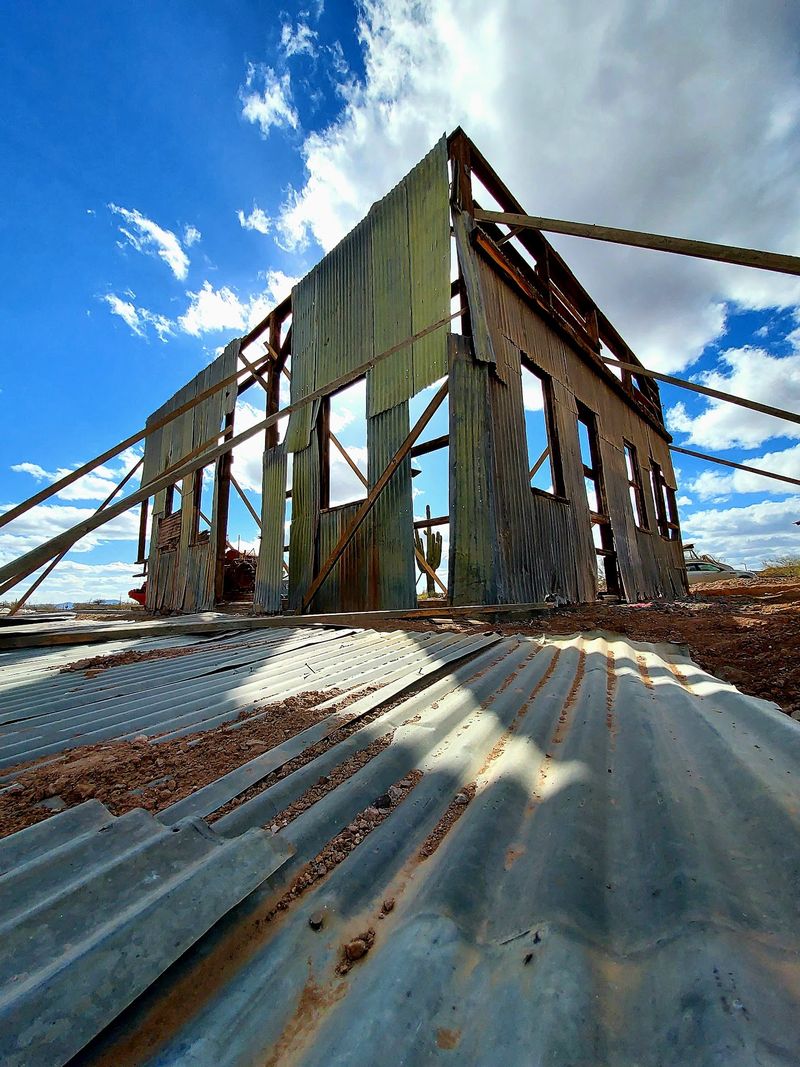
That restraint is the point. Nothing feels turned into a theme park, and original wear stays visible on floors and walls.
Educational programs welcome school groups and homeschool families, treating the whole property as a classroom. Students learn about mining, trade, and daily survival by touching the actual objects.
The site also doubles as a wedding venue, complete with dressing rooms for couples. Exchanging vows among 1870s buildings certainly beats a hotel ballroom for atmosphere.
Plans have been mentioned for a restaurant in the old Cook House, which would give visitors a reason to stay even longer. Gunfight shows are expanding too, moving toward four Saturdays monthly starting in late 2026.
Worth knowing: the active mining area operated by a separate company stays closed to the public. Only the historic townsite is open for exploring.