This Nebraska Alpaca Farm Lets You Head Into The Pasture And Feed The Herd
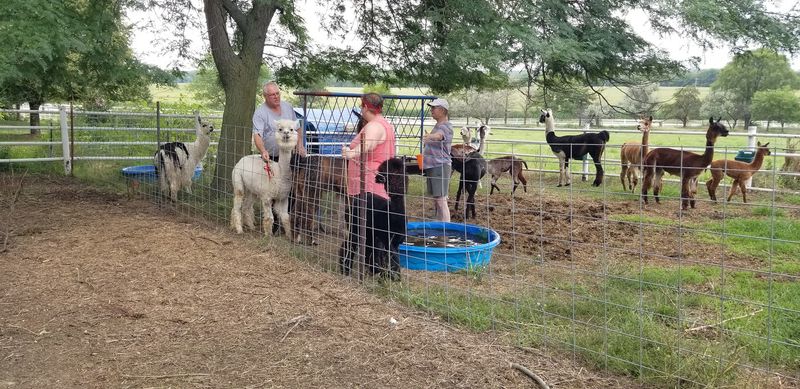
The gravel crunches, a gate swings open, and suddenly there are fuzzy heads swiveling your way like you just walked into someone’s living room uninvited. Nebraska has plenty of farms you can look at from the road, but very few that hand you a bucket of treats and let you walk right in among the animals.
On the eastern edge of Lancaster County, past the last subdivision and into open pasture, a small family operation does exactly that. Bring flat shoes, an hour or two, and zero expectations about staying tidy.
A Working Alpaca Farm on Lincoln’s Eastern Edge
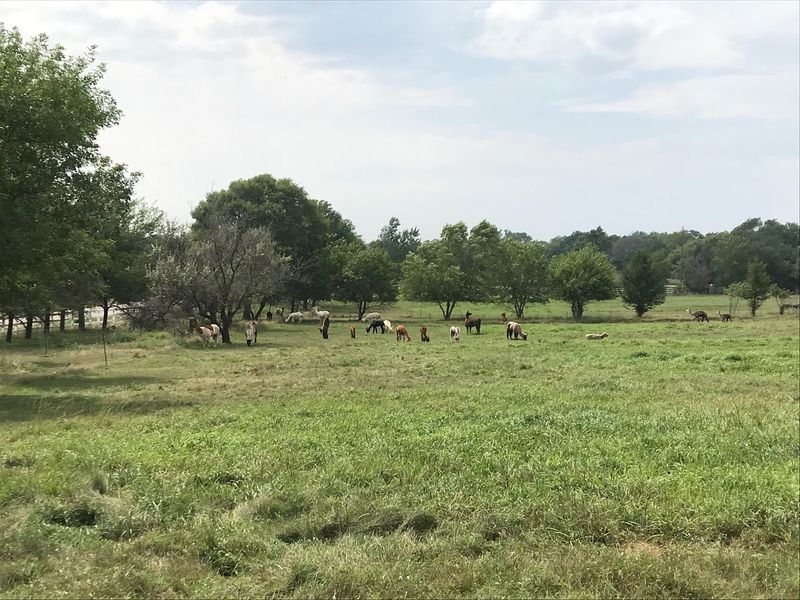
Pasture, fence line, barn, and a herd of alpacas with ears pointed straight at whoever pulls in. That’s the whole setup at J.P.Acres, a small family farm sitting at the far eastern edge of Lincoln where the city street grid gives up and Lancaster County farmland takes over.
The operation is modest by design. There’s no ticket window, no gift shop maze, no paved parking lot with painted lines.
What exists instead is a working property where alpacas and llamas live, eat, and occasionally lean in for a sniff.
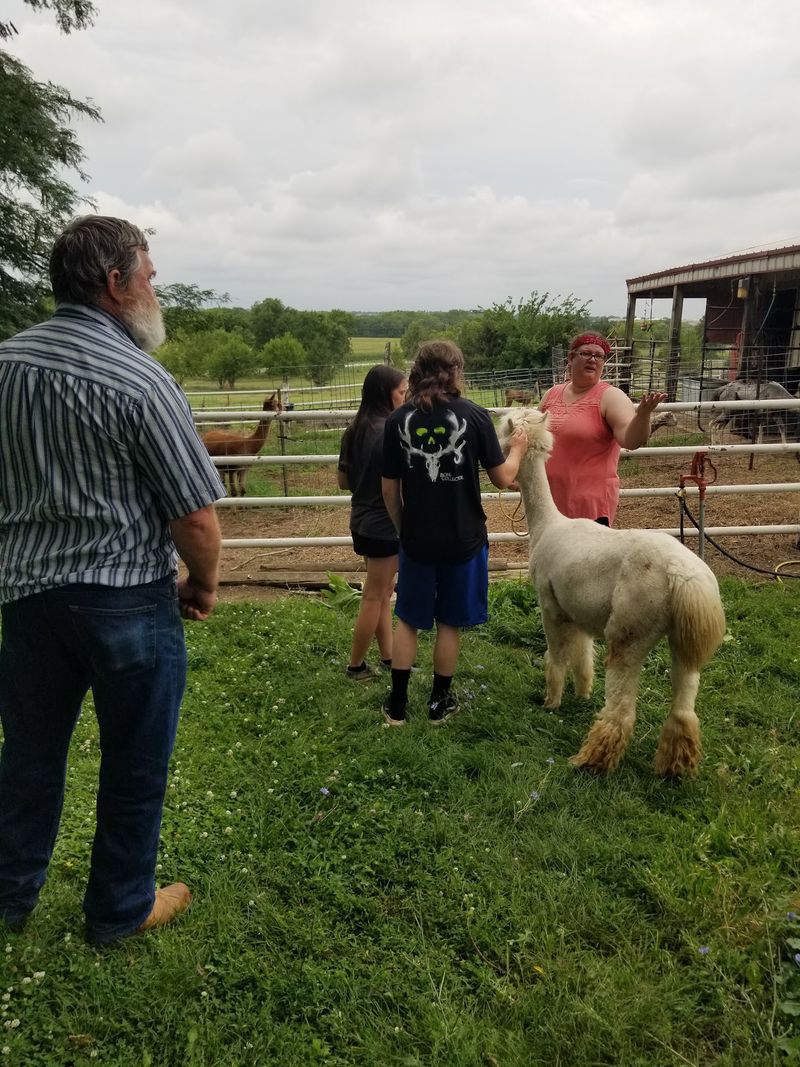
Guests don’t watch from a viewing platform or a fenced walkway. They go into the pasture, treats in hand, and let the herd decide how close it wants to get.
Some animals bolt over immediately. Others hold back, chewing, deciding whether you’re interesting.
Because the farm keeps things small, each group essentially gets the place to itself. That arrangement is what separates a stop here from a petting zoo line, and it’s the reason an hour tends to stretch into two without anyone noticing.
Meeting Romeo, Doc Holiday, and the Rest
Alpacas here have names, and the names stick with people long after the drive home. Romeo has been greeting groups for years.
Doc Holiday is another regular in the lineup, the kind of animal that attaches himself to one guest and follows along for the whole visit.
Personalities vary more than the fleece colors do. A few individuals are bold enough to nose into a treat bucket before it’s fully open.
Others prefer a slow introduction, circling wide and then easing in once the noise level settles.
Llamas share the property too, which makes for a useful side-by-side comparison. Standing next to both animals at once, the size difference and the shape of the ears become obvious in a way no photo quite delivers.
Timing occasionally gifts a group something extra. Newborn alpacas have shown up during visits, hours old and wobbly on new legs.
Fleece is another small souvenir. Tufts pull loose and collect in the grass, and children pick them up like treasure.
Feeding the Herd by Hand
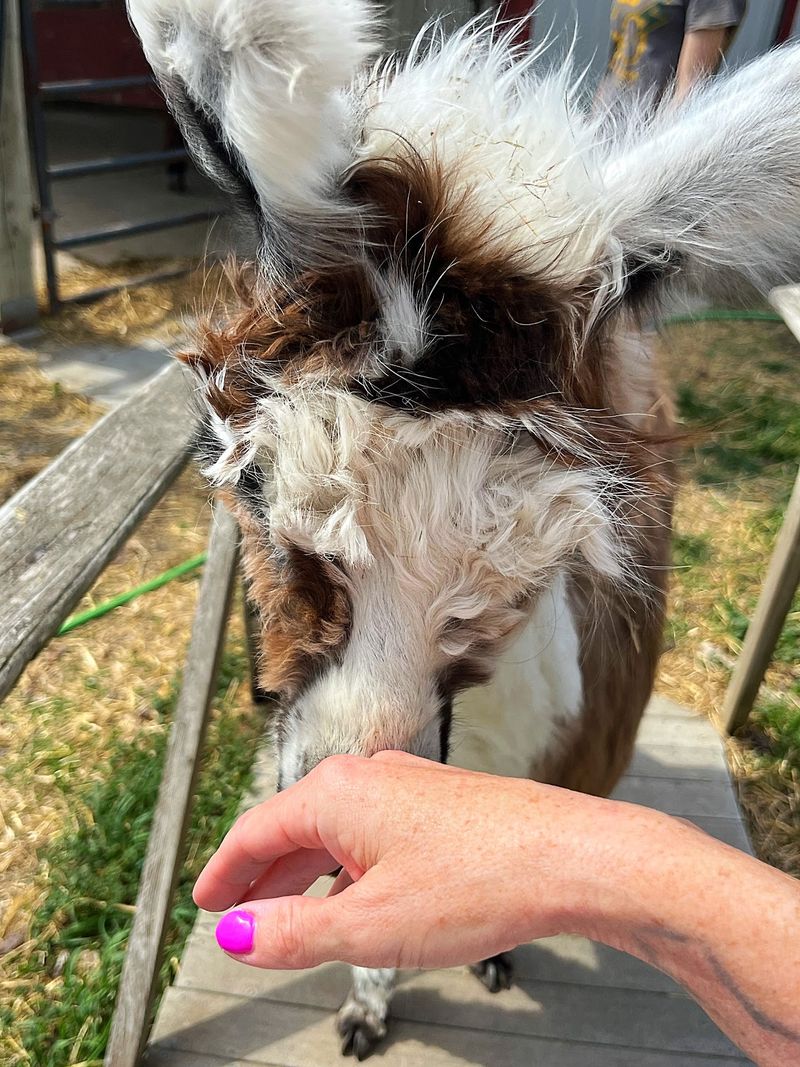
Flat palm, fingers together, hold still. That’s the entire technique, and it takes about four seconds to learn before the first alpaca arrives to test your form.
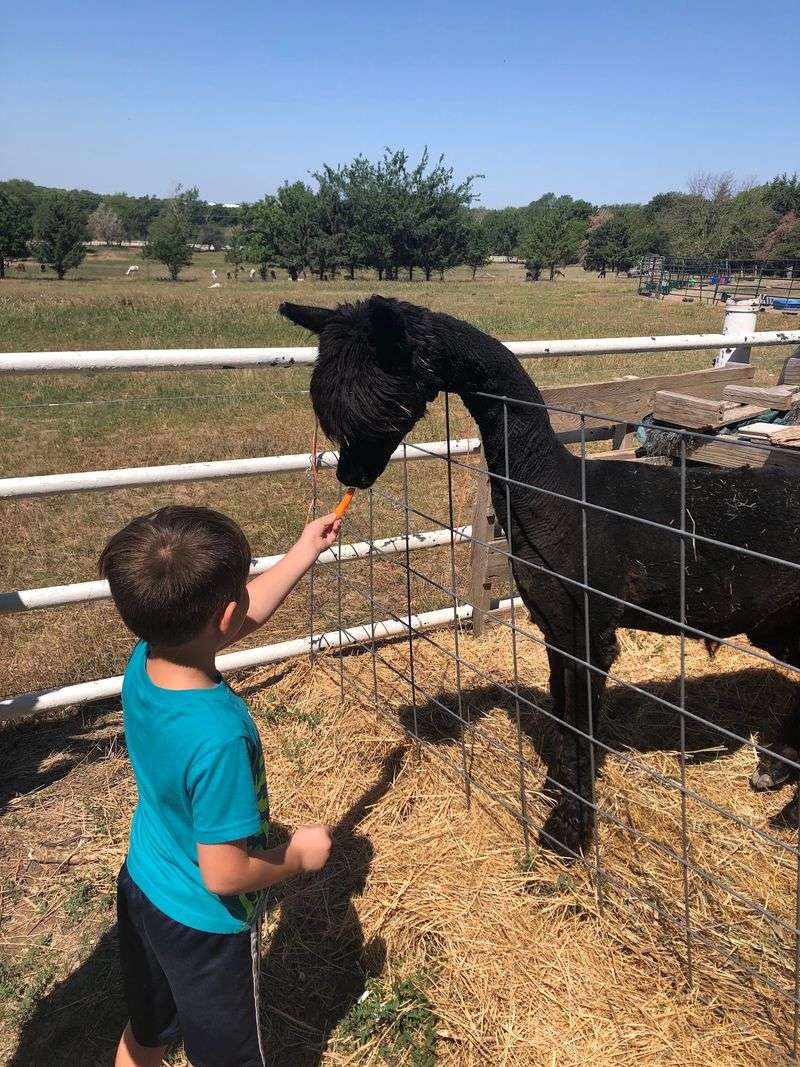
Hand-feeding is the centerpiece of a visit, and it happens out in the open rather than through a fence gap. Treats go out, heads come down, and the herd rearranges itself around whoever is holding the most.
Alpacas have no upper front teeth, so the sensation is more of a soft sweep than a nibble.
What surprises people is how quiet it all is. No braying, no shoving.
A little humming, some cautious jostling for position, and the occasional standoff between two animals who both wanted the same handful.
Kids take to it fast. Adults who arrived planning to hold the camera usually end up with a fistful of feed instead, because standing back while everyone else gets mobbed by friendly animals loses its appeal in a hurry.
It’s simple, tactile, and completely different from watching livestock from a car window.
Taking an Alpaca for a Walk
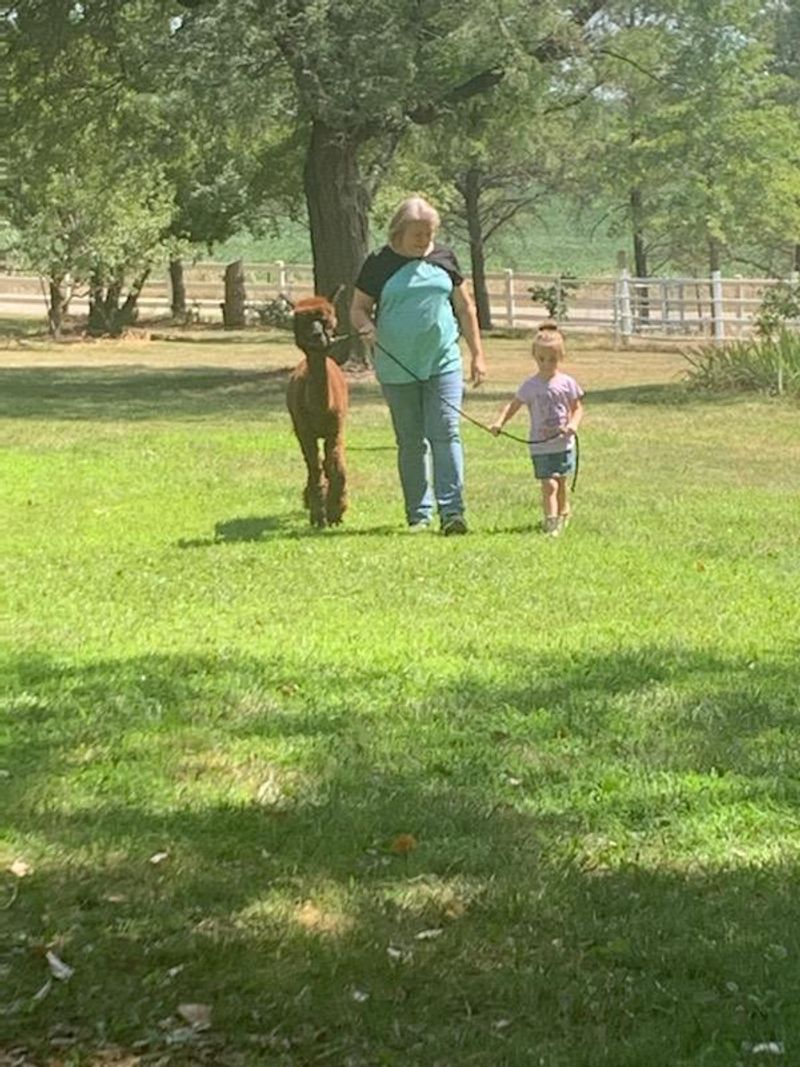
Handing someone a lead rope attached to a 150-pound animal sounds like a bad idea until you try it. Alpaca walks are part of the experience here, with a halter, a rope, and a short lesson on how to hold both.
The pace is unhurried. Alpacas stop to inspect grass, glance back at the barn, then continue on as though the whole outing was their idea.
Walking alongside one, at eye level with that long neck, changes how the animal registers. It stops being a fluffy curiosity and becomes a companion on a stroll.
Children manage it fine with supervision, and the walks rank among the most talked-about parts of a stop. Romeo in particular has logged plenty of laps with first-timers.
Cold weather doesn’t shut the walks down either. People have bundled up and done them in genuinely bitter Nebraska conditions, which says something about how the animals handle winter compared to the humans holding their ropes.
Bring shoes you don’t mind scuffing through pasture grass.
What You Learn While You’re Out There
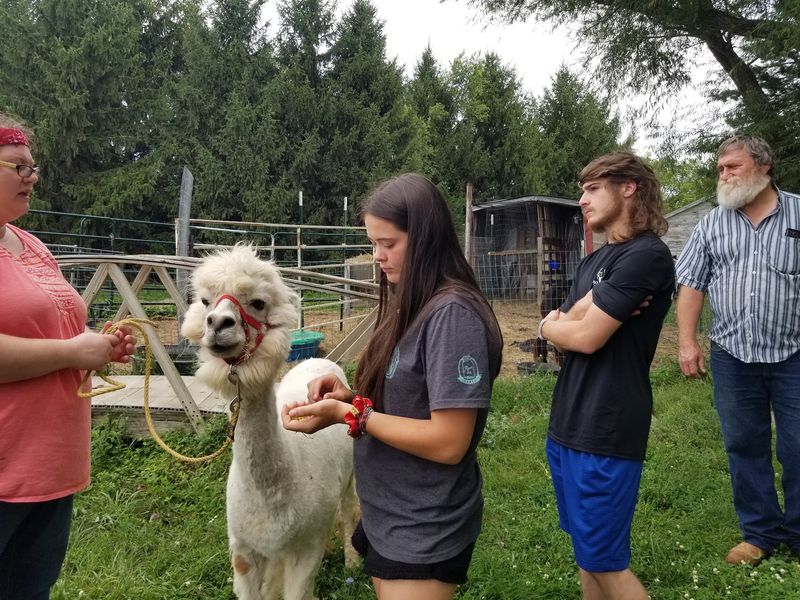
Ask a question about fleece grades and you’ll get a real answer. The owners walk groups through alpaca and llama basics as the visit unfolds, folding information into the time rather than delivering a scripted talk.
Topics cover the obvious things people wonder about: how the two species differ, what the animals eat, how shearing works, why the fiber is prized. Then come the details nobody expects, like herd hierarchy and how alpacas communicate with each other through posture and soft humming.
Knowledge runs deep because this is a working farm, not an attraction built around animals. The Jacoby-style Nebraska alpaca community is tight, and J.P.Acres has hosted people during National Alpaca Farm Days, sharing husbandry advice with anyone considering the animals themselves.
For families, the teaching lands at the right level. Kids absorb facts without realizing they’re learning, mostly because a llama is standing three feet away while the explanation happens.
Curious adults get more than the surface version. Push a little and the conversation goes as far as you want it to.
The Barn, the Pasture, and the Picnic Spot
Inside the barn, the air smells like hay and warm animal, and the light comes in through the open door in a wide slab. Groups get a look in there as part of the visit, which fills in the practical side of how the herd lives through a Nebraska winter.
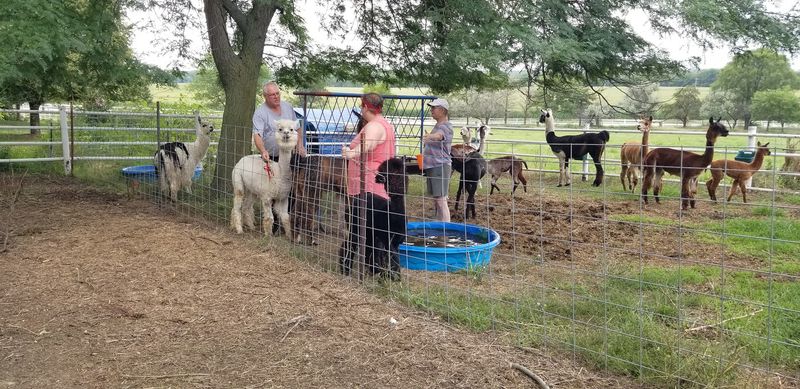
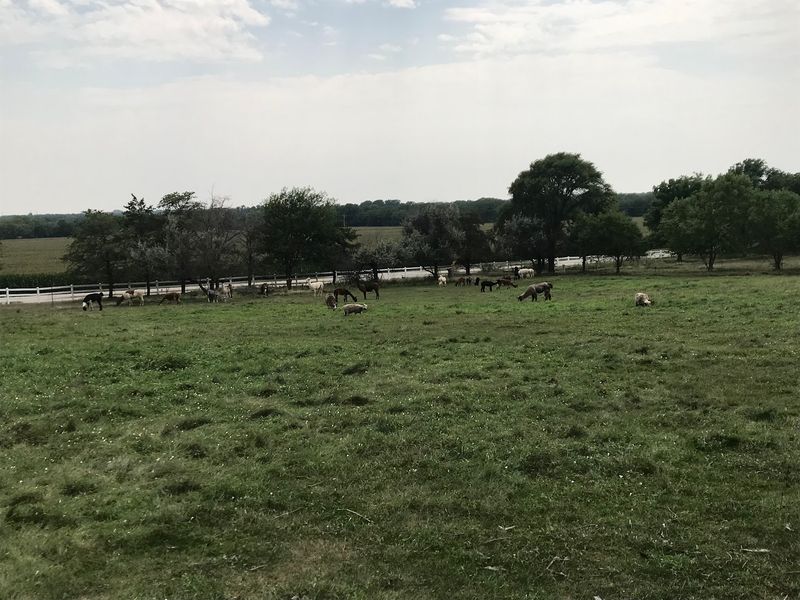
Outside, the pasture opens up across the property with room for the animals to spread out. Shade trees break up the grass.
Fence lines run straight, and beyond them is farmland in every direction.
Bringing a picnic works well here. Families have spread out lunch and turned a quick animal visit into an unhurried afternoon, alpacas grazing in the background the whole time.
Nothing about the grounds is polished for tourism. Buckets sit where buckets go, tools lean where they’re needed, and that lack of staging is part of why the place feels honest.
Closed-toe shoes make sense. So does a jacket in spring and fall, when wind sweeps across open Lancaster County ground with nothing to slow it down.
Alpacas That Travel to Your Party
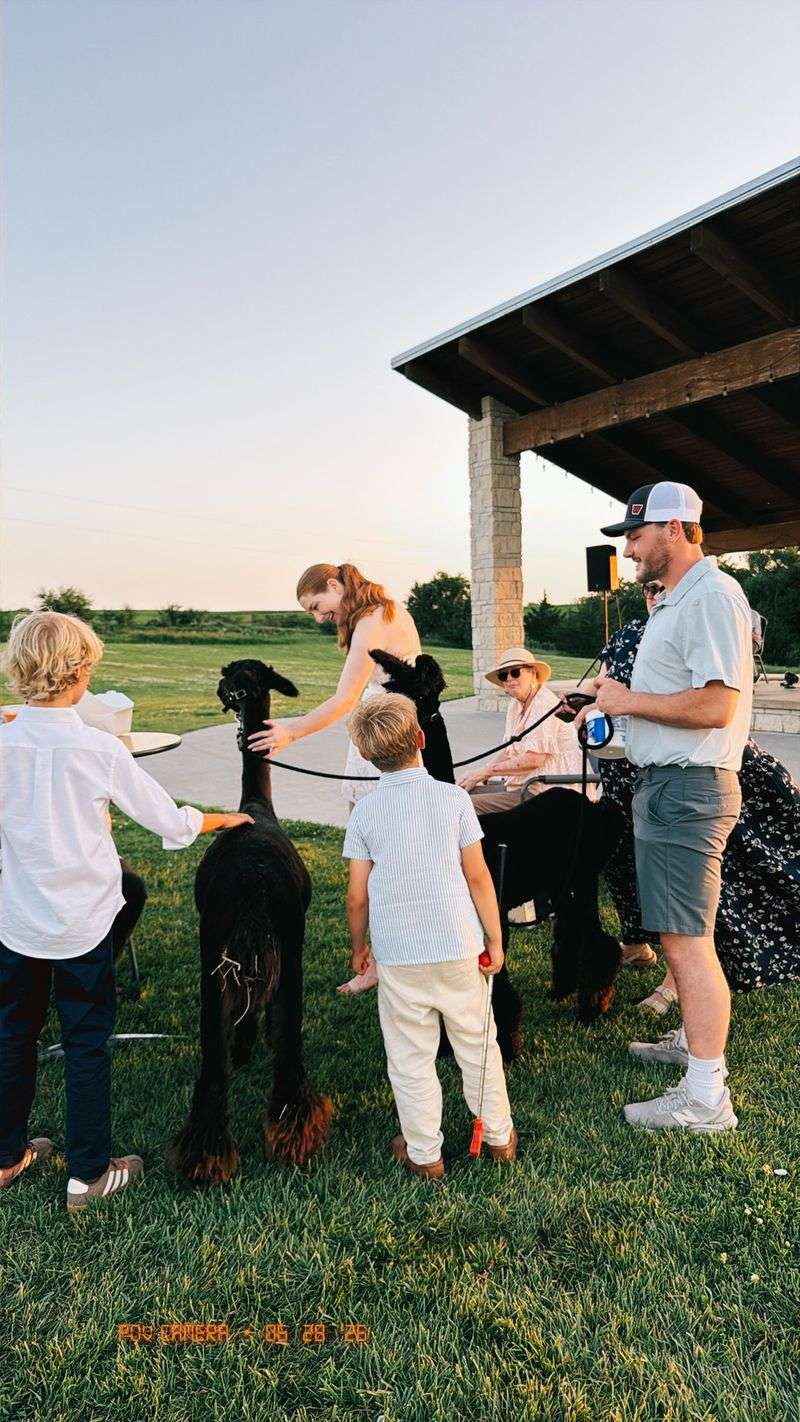
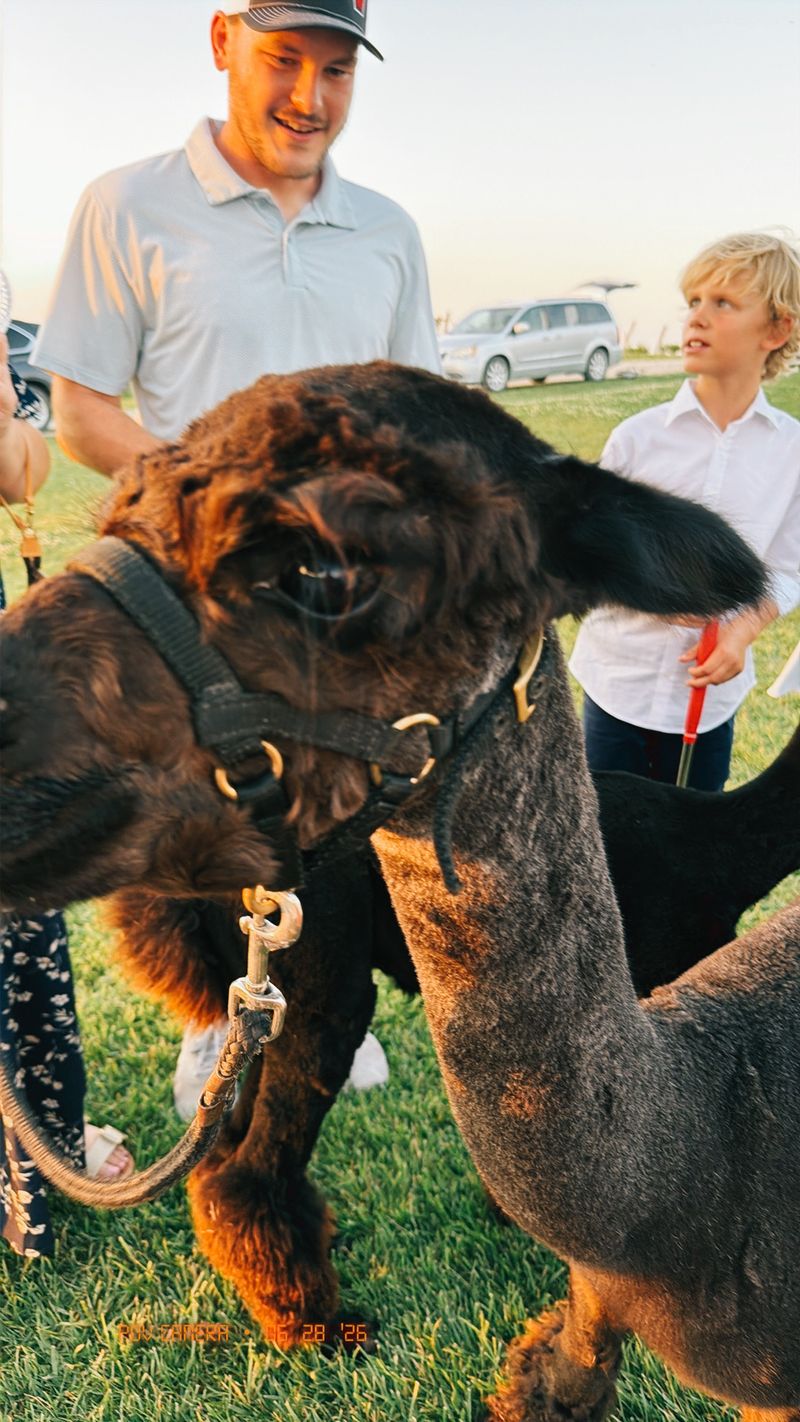
Picture an outdoor celebration in Nebraska where the guest list includes two alpacas on halters. That happens, because the farm brings animals out to events, and an elopement send-off party is exactly the kind of gathering they’ve shown up for.
Friendly animals plus owners who can answer questions makes for an easy addition to a party. Guests get something to gather around that isn’t a table, and the pricing has been described as a solid value for what shows up.
Alpacas handle crowds better than you might expect. They’re calm, curious, and far less demanding than most animals you could invite to a lawn party.
Photographs from these events tend to be the ones people keep. A formal outfit next to a fluffy alpaca face is hard to beat, and the animals cooperate reasonably well with a camera pointed at them.
Anyone considering it should reach out well ahead. Scheduling depends on the farm’s calendar, the weather, and the herd, so early conversations beat last-minute hopes.
Who Has the Best Time Here
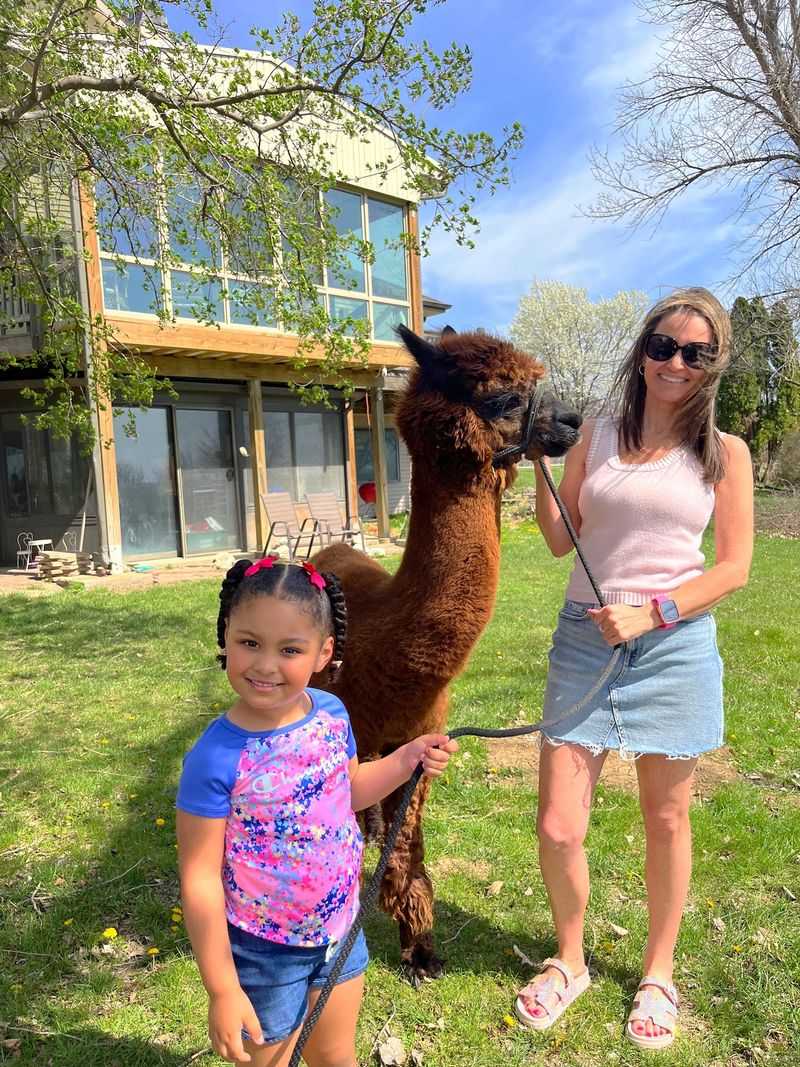
Five-year-olds and nine-year-olds both do great, which is a narrow-looking claim until you consider how rarely one activity holds two very different attention spans. Feeding occupies the little ones.
Walking an animal on a rope satisfies the older ones.
Grandparents fit in without effort. The ground is flat, the pace is slow, and there’s nothing to climb or squeeze through.
Adults arriving without children shouldn’t feel out of place either. Plenty of grown visitors come for the quiet, and quiet is what a pasture full of humming alpacas delivers.
Phones go in pockets. Shoulders drop.
People weighing whether to raise alpacas themselves get a different kind of value, since the owners talk openly about care and management with anyone genuinely curious.
Photographers do well here too. Backlit fleece at the end of the day looks remarkable, and the animals hold still more than most livestock.
The one group that may struggle is anyone hoping for structured entertainment with a schedule. This is animals in a field, and that’s the appeal.
Appointments, Donations, and Other Practical Bits
Showing up unannounced is the one mistake to avoid. Visits run by appointment, and people have found the farm on a map, driven out hopefully, and only then discovered arrangements come first.
Email or a phone call sorts it out, and setting up a time has been straightforward for people who reach out. Because the farm is small, booking ahead also means you aren’t sharing the pasture with three other groups.
Entry has been handled on a donation basis rather than a set admission charge, which keeps the outing affordable for families. Bring something to contribute and treat it as supporting the animals’ upkeep.
The property opens mid-morning and closes by late afternoon, so plan for daylight hours and confirm specifics when you book. Weather shifts things, particularly in early spring and late fall.
Budget more time than you think you need. Ninety minutes is a common length, and people routinely stay past their original plan because the animals keep drawing them back.
The address is 10000 Benton St, Lincoln, NE 68527.
Finding Benton Street From Anywhere in Nebraska
Ten thousand Benton Street sounds like a downtown address and absolutely is not. The farm sits northeast of Lincoln proper, out where the numbered streets keep climbing and the houses stop, roughly in the direction of Waverly and the I-80 corridor.
From central Lincoln the drive is short, maybe twenty minutes depending on where you start. From Omaha it’s an easy run down the interstate and then a few turns onto county roads.
Anyone coming from farther west along Highway 6 or from the Platte valley can fold the stop into a bigger day out. Seward, Ashland, and Nebraska City all sit within comfortable reach.
Watch for the gravel transition and slow down. Rural roads east of Lincoln pick up dust fast in dry spells and soften after heavy rain.
Mapping apps handle the address fine. Cell coverage holds out there, though it’s worth pulling up directions before you leave the pavement.
Parking is informal, which means you park on the grass or the drive like everyone else.
Why an Afternoon With the Herd Sticks With You
Something odd happens on the drive home from a place like this. Kids who spent the morning asking about screens spend the ride recounting which alpaca did what, and the recounting keeps going for the rest of the day.
Nebraska has bigger attractions and flashier ones. Few of them put a person inside a pasture with animals that will walk over, lean in, and eat out of an open hand while somebody explains fiber grades over their shoulder.
Cost is low, the commitment is an appointment and a couple of hours, and the payoff is tactile in a way most outings never manage. That combination is rare anywhere, let alone twenty minutes from a state capital.
Spring and fall bring the most comfortable conditions, though people have happily walked alpacas in cold that would send most of us indoors.
Call ahead, wear boots, bring a picnic, and leave room in the schedule. The herd sets the pace, and that turns out to be the best part of the whole arrangement.