10 Secret Places In New York City Where The Crowds Seem To Disappear
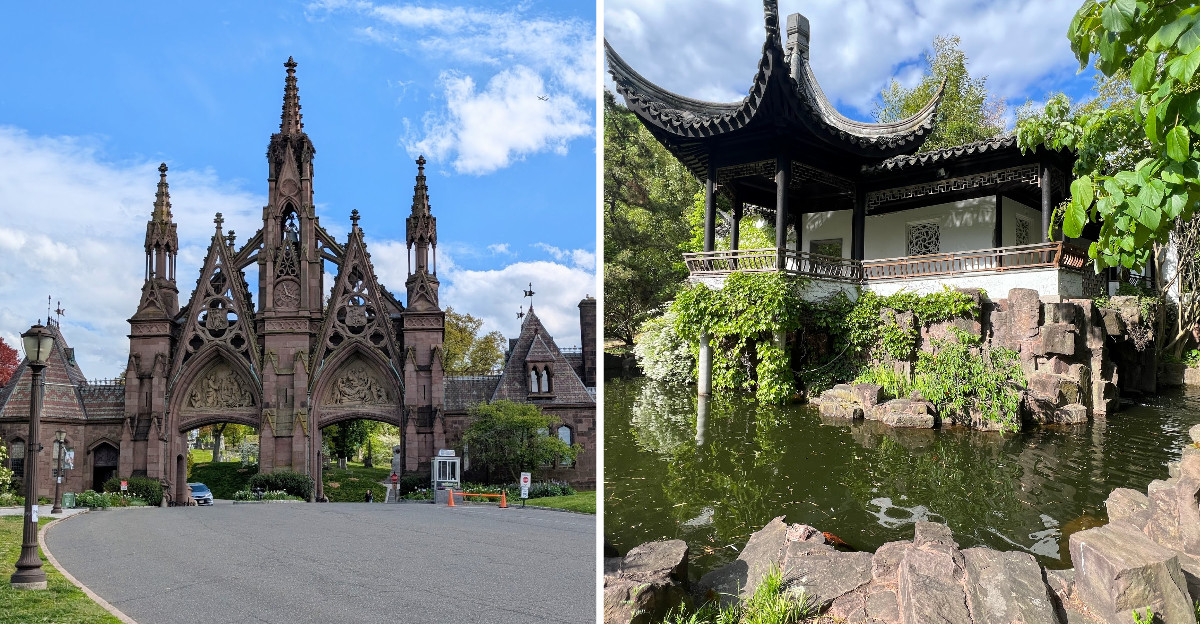
The city can be loud enough to make five minutes of silence feel suspicious.
Then New York reveals a hidden garden, a quiet waterfront corner, or a tucked-away space where the crowd somehow thins out.
The change feels almost magical after hours of horns, sidewalks, and constant motion.
These secret-feeling spots are not about escaping city life completely. They show you a softer version of it.
A bench suddenly becomes valuable real estate. A patch of green feels enormous. An unexpected view can reset the whole afternoon.
Sometimes the best urban discovery is simply finding a place where nobody bumps into you for a while.
1. Elevated Acre, Financial District
Wait, did everyone else miss the stairs? I nearly walked past them myself.
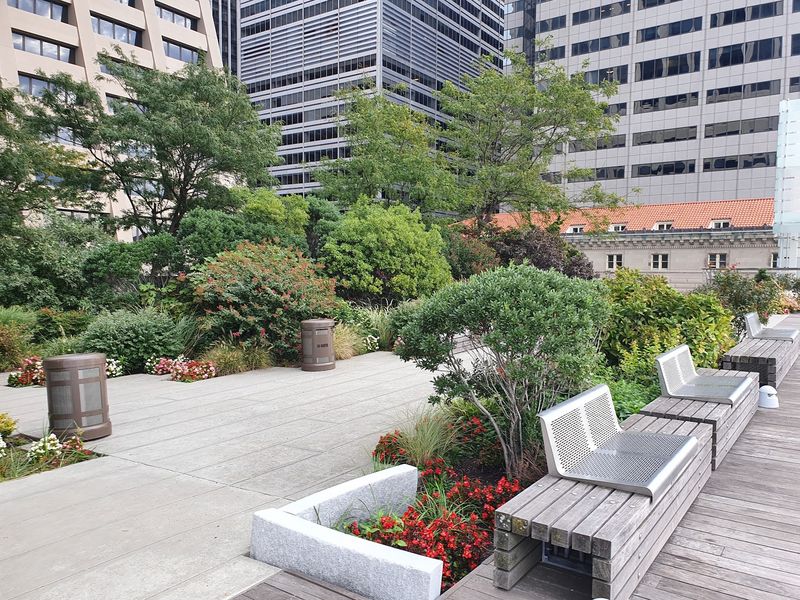
Elevated Acre in the Financial District rewards a little curiosity with an unexpected green space above street level.
The public plaza sits at 55 Water Street, about 30 feet above the surrounding streets and on top of a parking structure.
Access from Water Street leads upward to a one-acre landscape designed for sitting, eating lunch, attending occasional events, or simply taking a short break from Lower Manhattan.
A broad lawn forms the center, while planted slopes, seating areas, and terraced spaces create smaller places to pause.
The design gradually opens views toward the East River, New York Harbor, and the Brooklyn Bridge instead of revealing everything from the entrance.
That change in elevation also softens the sense of being surrounded by office towers. The Financial District remains close, but the traffic and sidewalks no longer dominate the view.
Seasonal plantings change the look through the year, while the lawn gives warmer-weather visits a more open feel. Public access is part of the site’s required use, although posted hours and temporary event closures can affect a visit.
This is not a deserted rooftop, especially around lunch. Still, arriving outside the busiest weekday period can make the one-acre retreat feel surprisingly removed from the streets below.
A short climb changes the entire rhythm of downtown.
2. Greenacre Park, Midtown East
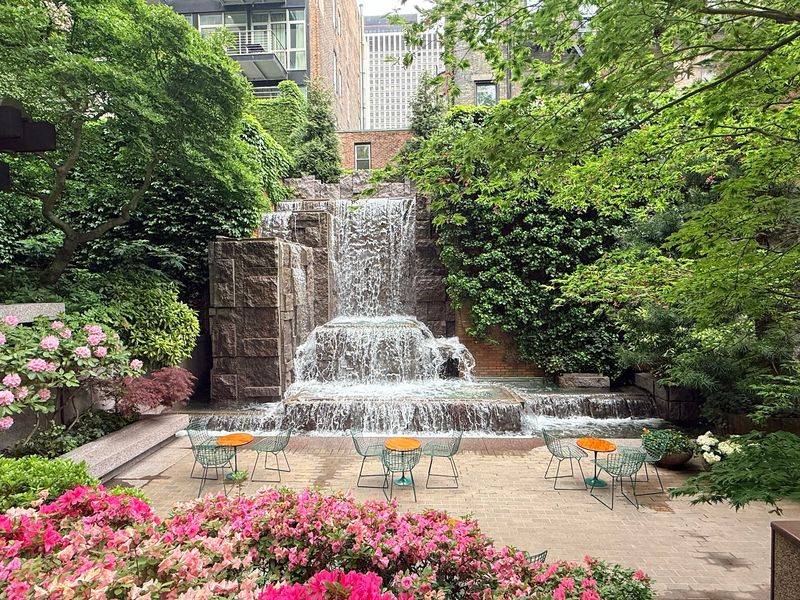
Hear that? For once, it is not a horn. I followed the sound of falling water and found a pocket of calm.
Greenacre Park sits at 217 East 51st Street between Second and Third avenues, where a compact entrance opens into a carefully layered Midtown retreat.
The privately maintained public park covers about 6,000 square feet, yet its design uses several levels to make the space feel larger than its footprint suggests.
A broad waterfall forms the visual and acoustic center. Its steady rush helps mask surrounding traffic, while trees, planted beds, a brook, and built-in seating soften the narrow space between neighboring buildings.
The park opened in 1971 and remains an important example of the pocket-park movement that transformed small urban lots into places for rest rather than active recreation.
Tables and chairs make it easy to stop for lunch, read, or talk without committing to a long visit.
Greenacre Park is currently open daily from April through December, with seasonal hours posted by the foundation. A small concession operates for much of that period, but there are no public restrooms or Wi-Fi.
Lunch hours can be busy because the park is small, so quiet is never guaranteed. Earlier visits usually leave more room to notice the waterfall, changing light, and greenery without feeling pressed to move along.
3. Paley Park, Midtown
Could a waterfall rescue a lunch break? I was curious enough to stop and listen.
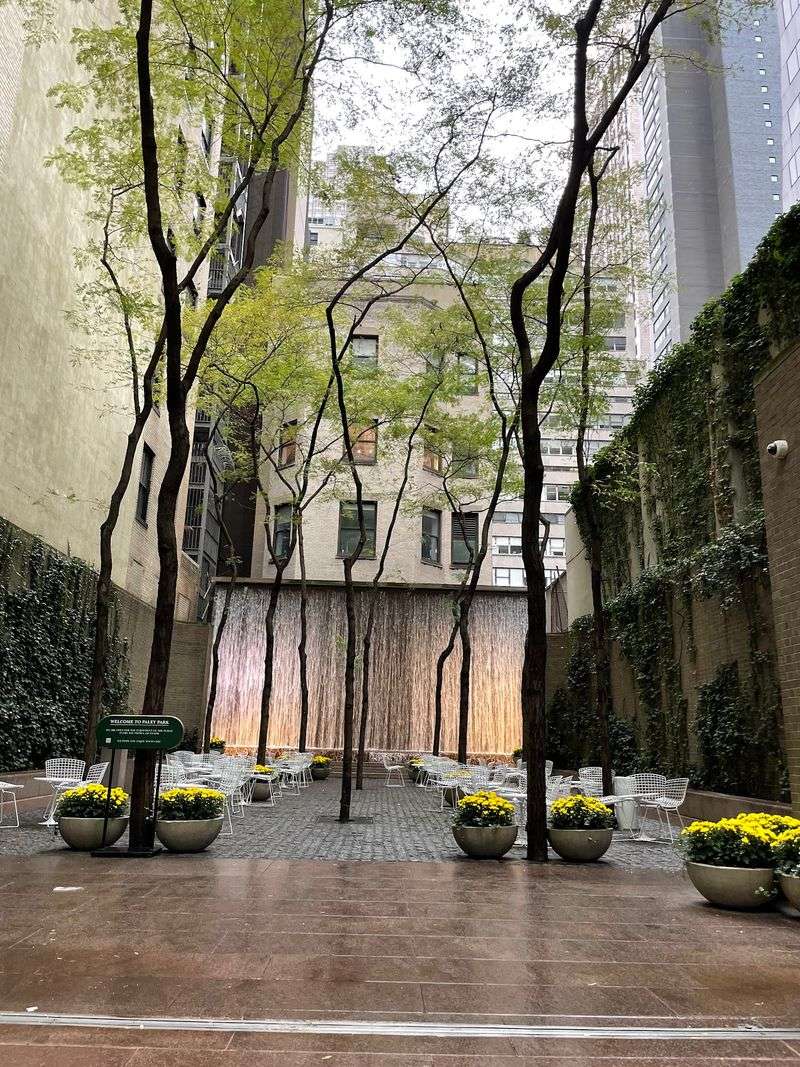
Paley Park in Midtown answers with a broad cascade at the back of its compact space.
The pocket park is at 3 East 53rd Street between Fifth and Madison avenues.
It opened in 1967 as a memorial park and was designed to offer a brief retreat from one of Manhattan’s busiest districts.
A 20-foot water wall dominates the rear of the site. The falling water helps mute surrounding street noise, while honey locust trees, ivy-covered walls, seasonal flowers, movable chairs, and small tables soften the hard edges around it.
The layout is intentionally simple. There is no long path to follow and no large lawn to cross. Visitors can choose a seat, eat something from the refreshment stand or bring outside food, and spend as much or as little time as the day allows.
Paley Park is currently open from 8 a.m. to 8 p.m. seven days a week, although it closes on national holidays and winter hours can vary. Pets are not permitted, aside from service animals, and there is no public restroom.
The park’s size also means crowd levels can change quickly. A quieter visit depends more on timing than secrecy, but the combination of shade, water, and movable seating still creates a distinct pause in Midtown.
4. Ford Foundation Atrium Garden, Turtle Bay
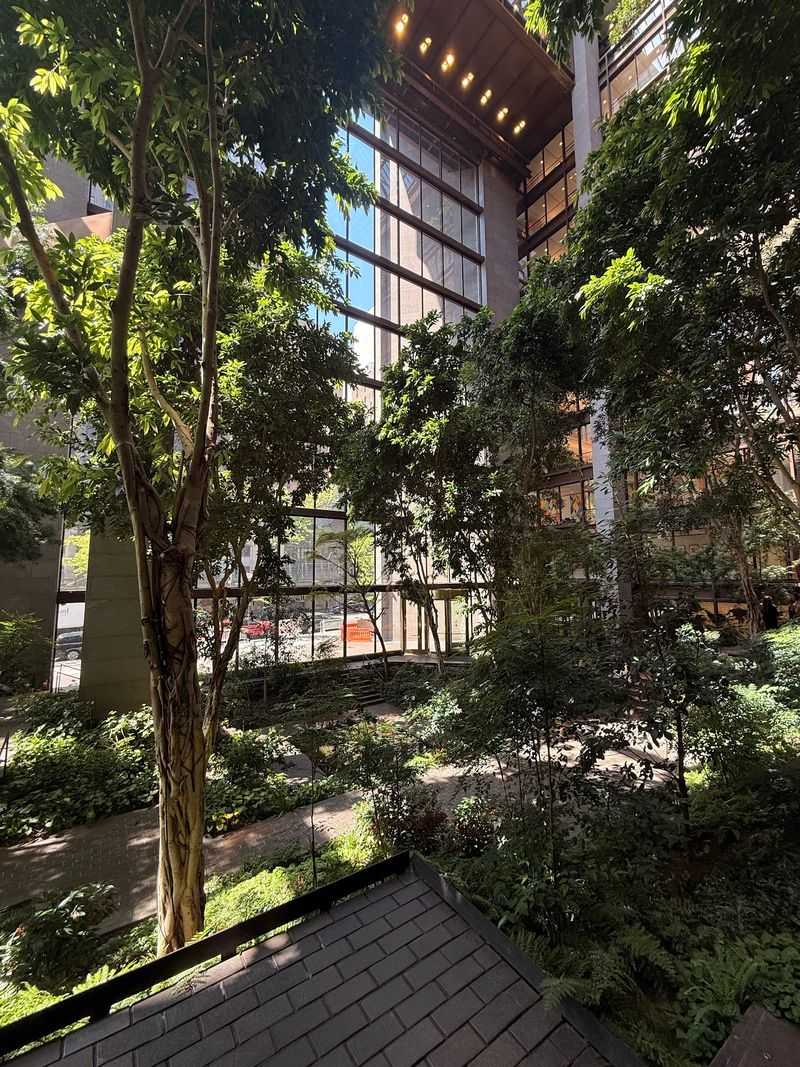
Rain on the forecast? I have an indoor answer. A garden sheltered by glass can make a gray afternoon much more interesting.
The Ford Foundation Center for Social Justice at 320 East 43rd Street contains a 12-story enclosed atrium garden, one of the building’s defining architectural features since it opened in 1967.
The space combines mature plants, smaller understory growth, a reflecting pool, granite, glass, and Corten steel within a soaring interior.
The landmark building underwent a major renovation that reopened in 2018, preserving the original character while improving accessibility.
Today, the garden includes a wheelchair-accessible route, a sensory section with tactile plants, braille signage, and audio interpretation.
This is a public garden, but it is not a drop-in space in the same way as an outdoor city park. Visitors must preregister by 5 p.m. the day before, bring photo identification, and complete security screening at the East 43rd Street entrance.
Current public hours are generally Monday through Friday from 11 a.m. to 6 p.m. Saturday access is tied to gallery exhibitions, and special events can alter normal availability.
The garden offers a rare combination of architecture and greenery without depending on good weather.
Its controlled setting also makes it quieter than many outdoor Midtown spaces, though advance planning is essential before making the trip that day.
5. Socrates Sculpture Park, Long Island City
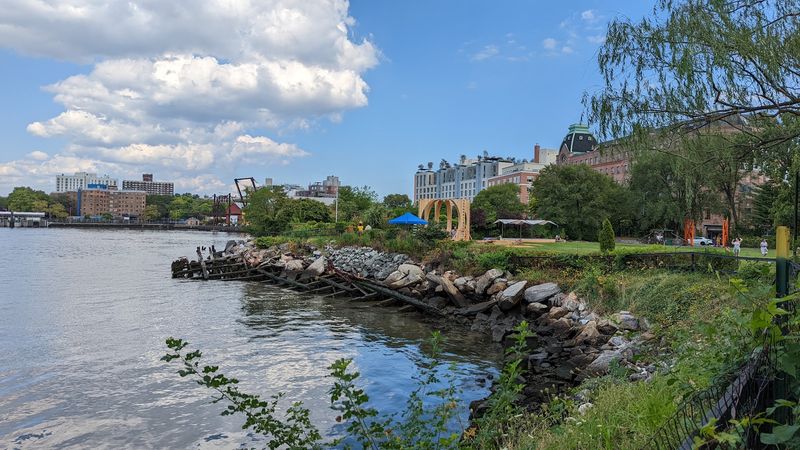
Art does not always stay behind a doorway. I prefer finding it under open sky, with plenty of room to circle around.
Socrates Sculpture Park at 32-01 Vernon Boulevard in Long Island City is a waterfront public-art space built on land that had been used as an illegal dumping site.
Artists and neighborhood residents began clearing the property in the mid-1980s, and the first exhibition opened in 1986.
The park still centers on changing outdoor installations rather than a permanent collection.
Large-scale sculpture, landscape projects, performances, education programs, and seasonal events use the open grounds in different ways throughout the year.
Its East River location normally adds broad views toward Manhattan, but 2026 brings an important change.
A major seawall reconstruction project has closed much of the north lawn and coastline while work restores the shoreline damaged over time after Superstorm Sandy.
The park remains open from 9 a.m. to sunset, and programming continues, but construction can limit waterfront access and alter familiar views. That makes checking current conditions especially useful before visiting.
Socrates is free to enter, and there is no need to approach it like a conventional museum. The strongest reason to return is that the art keeps changing.
Even during construction, the mix of public space, working landscape, and contemporary sculpture gives this Queens waterfront a character that feels very different from a gallery visit.
6. Alice Austen House, Rosebank
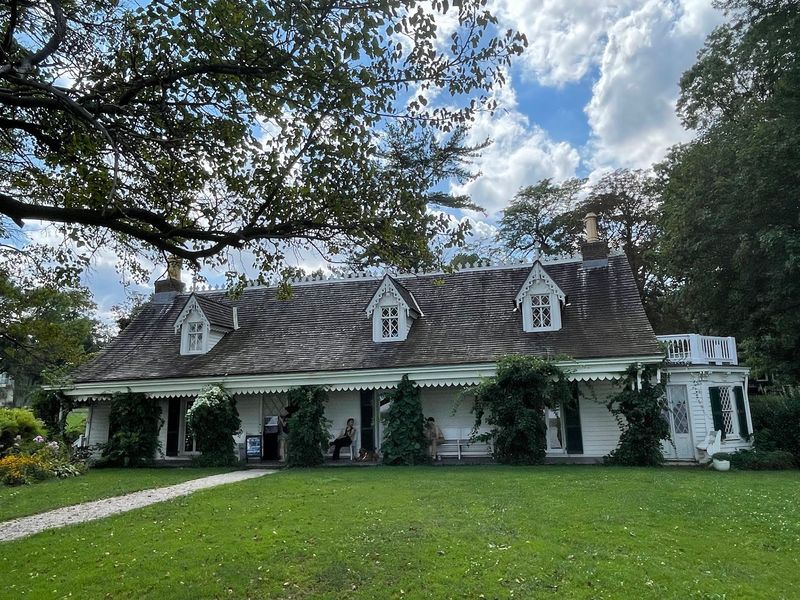
A camera can reveal an entire era. I came for a quiet waterfront break and stayed curious about the photographs.
Alice Austen House at 2 Hylan Boulevard on Staten Island is both a historic home and a photography museum.
The Victorian Gothic cottage, known as Clear Comfort, sits beside New York Harbor with views toward Brooklyn and the Verrazzano-Narrows Bridge.
Inside, exhibitions explore the work of an early American photographer who documented city life, immigration, quarantine stations, streets, friends, and changing social customs.
The museum also presents contemporary photography, so the displays are not limited to one period or one artist.
Current museum hours are Wednesday through Friday from noon to 5 p.m. and Saturday from 11 a.m. to 5 p.m. General admission is suggested rather than mandatory, while some programs require separate registration.
Parking on site is extremely limited, so street parking is the more reliable option. The lawn and waterfront setting add a second reason to visit, especially for anyone interested in photography, architecture, or harbor views.
This stop works best when the house and grounds are treated as one experience rather than two unrelated attractions.
7. Wave Hill, Riverdale
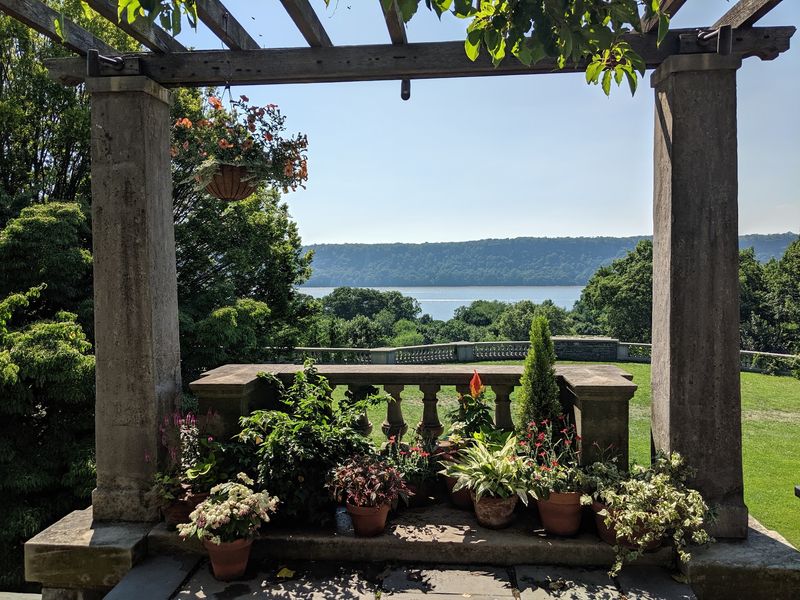
Some views make me slow down without trying. Here, flowers and a broad river scene reward an afternoon with no hurry.
Wave Hill in Riverdale is a 28-acre public garden and cultural center overlooking the Hudson River and the Palisades.
Its grounds combine formal planting areas, greenhouses, lawns, historic houses, and an eight-acre woodland, so the experience shifts noticeably from one section to the next.
The garden’s living collection includes more than 4,000 varieties of trees, shrubs, vines, and herbaceous plants.
Seasonal change matters here: spring bulbs, summer borders, autumn foliage, and winter structure all give repeat visits a different character.
The Pergola frames some of the strongest river views, while the Marco Polo Stufano Conservatory adds an indoor stop when weather turns less cooperative. Art exhibitions and cultural programs can add another layer beyond the horticulture.
Wave Hill is currently open Tuesday through Sunday from 10 a.m. to 5:30 p.m. Admission is required on most days, while Thursdays are free for individual visitors. The conservatory and indoor buildings follow their own shorter schedules.
This is a cultivated garden rather than an ordinary recreation park, so visitors should follow signs around lawns, beds, and planted areas.
The combination of scale, river views, and carefully designed gardens makes Wave Hill feel spacious without losing the intimacy that defines its best corners.
8. The Met Cloisters, Washington Heights
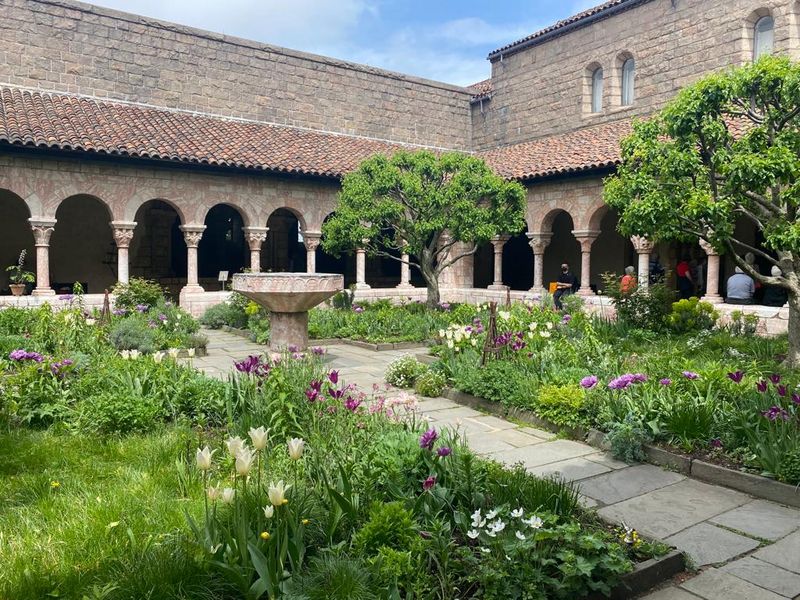
Stone arches invite a different pace. I find myself looking closely here, even before reaching the first gallery.
The Met Cloisters at 99 Margaret Corbin Drive is inside Fort Tryon Park in Upper Manhattan.
Opened in 1938, it is the branch of The Metropolitan Museum of Art devoted to the art and architecture of medieval Europe.
The building is not a copy of one medieval monastery. Instead, it incorporates architectural elements from several European cloisters and other historic sites into a modern museum arranged to create a coherent setting for the collection.
About 2,000 works are displayed across the galleries, including sculpture, tapestries, metalwork, stained glass, manuscripts, and architectural fragments.
Three cloister gardens use plant choices informed by medieval texts, herbals, and historical garden sources, linking the outdoor spaces directly to the museum’s subject.
The surrounding park adds Hudson River views and greenery before or after an indoor visit. Free public parking is available around the museum in Fort Tryon Park, and a step-free entrance is available from the courtyard.
Current hours are 10 a.m. to 5 p.m. Thursday through Tuesday, with the museum closed on Wednesdays and several major holidays. Crowd levels vary, especially on weekends.
A slower visit works well here because the architecture, gardens, and collection reward close attention rather than a race through every gallery.
9. Green-Wood Cemetery, Greenwood Heights
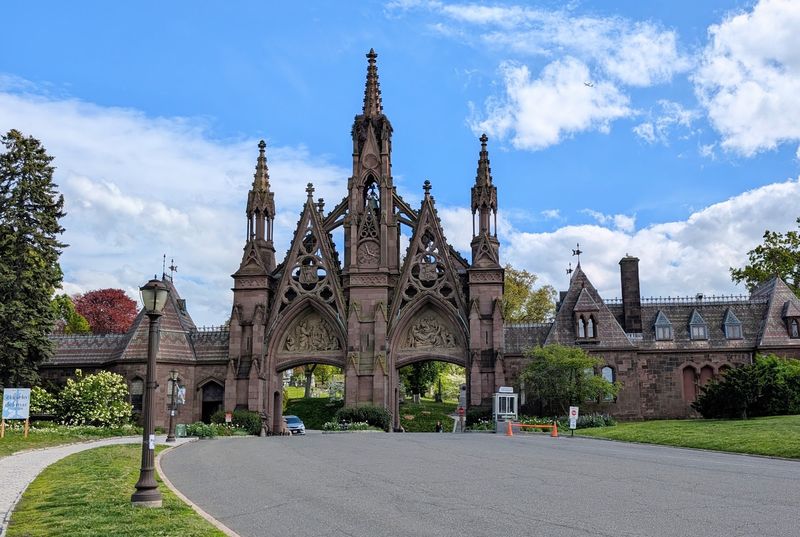
Quiet can be beautiful without being flashy. I come here for tree-lined paths, thoughtful history, and long stretches of open space.
Green-Wood Cemetery in Brooklyn carries several roles.
Founded in 1838, it became one of the country’s early rural cemeteries and later earned National Historic Landmark status for its landscape, architecture, and cultural importance.
The grounds cover 478 acres of hills, valleys, glacial ponds, winding roads, monuments, and mature plantings. Green-Wood also operates as a Level III arboretum, with thousands of trees and shrubs spread across the property.
The main entrance at 25th Street is beneath the Gothic Revival gateway. From there, visitors can follow a paper map or use the cemetery’s free mobile guide to plan a manageable route instead of trying to cover everything in one visit.
Because Green-Wood remains an active cemetery, the atmosphere depends on respectful behavior.
Walking, history, birding, art, and landscape appreciation are welcome, but visitors should stay mindful of services, gravesites, and posted rules.
Opening hours change seasonally. In late September 2026, the main entrance is open from 7 a.m. to 7 p.m., with other gates following different schedules.
The scale helps absorb visitors, so some paths can feel remarkably quiet even when others are active. A modest loop is often enough to appreciate the trees, ponds, sculpture, and long views without turning the visit into a mileage challenge.
10. New York Chinese Scholar’s Garden, West New Brighton
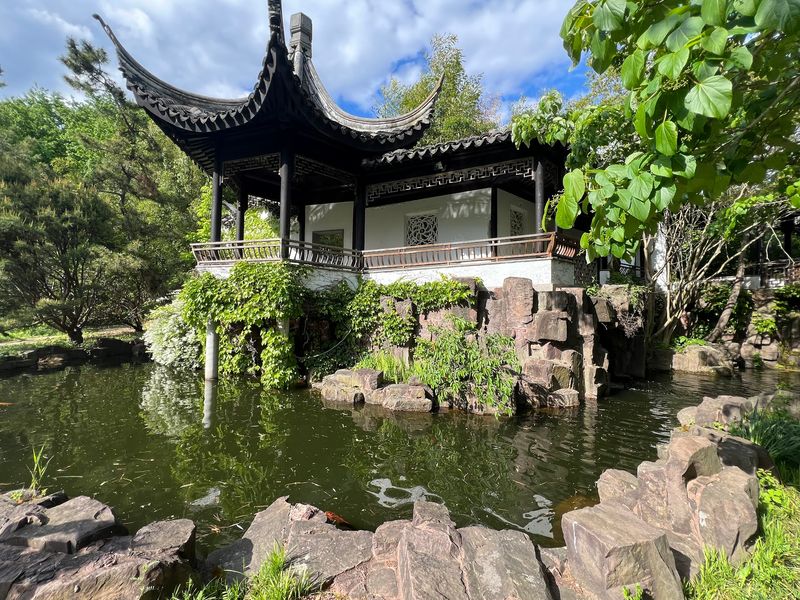
Turn one corner, and the view changes. I enjoy how each short path asks me to look again.
The New York Chinese Scholar’s Garden is within Snug Harbor Cultural Center and Botanical Garden on Staten Island.
Opened in 1999, it was created through a partnership involving New York institutions, the local Chinese American community, and landscape specialists from China.
The garden is based on classical Ming Dynasty traditions and organizes the experience around four essential elements: rocks, water, plants, and architecture.
Zigzagging bridges, framed views, pavilions, courtyards, and carefully placed stones make a relatively compact space feel layered rather than repetitive.
Traditional construction methods are part of the appeal. Wooden elements use mortise-and-tenon joinery instead of nails or glue, while decorative details combine Chinese craftsmanship with references to the garden’s New York setting.
The wider Snug Harbor grounds are free to enter, but the Chinese Scholar’s Garden requires separate admission during its operating season.
In 2026, summer hours ended September 26, and fall hours resume October 4 on weekends through early December.
The entrance is at Cottage E on the Snug Harbor campus, reached from 1000 Richmond Terrace. Because opening days change seasonally and private events or weather can affect access, checking the current schedule matters.
A slower walk works best here. The shifting sightlines are designed to reveal something different with nearly every turn.