You Can Step Inside A Cabin That Served Pony Express Riders In Gothenburg, Nebraska
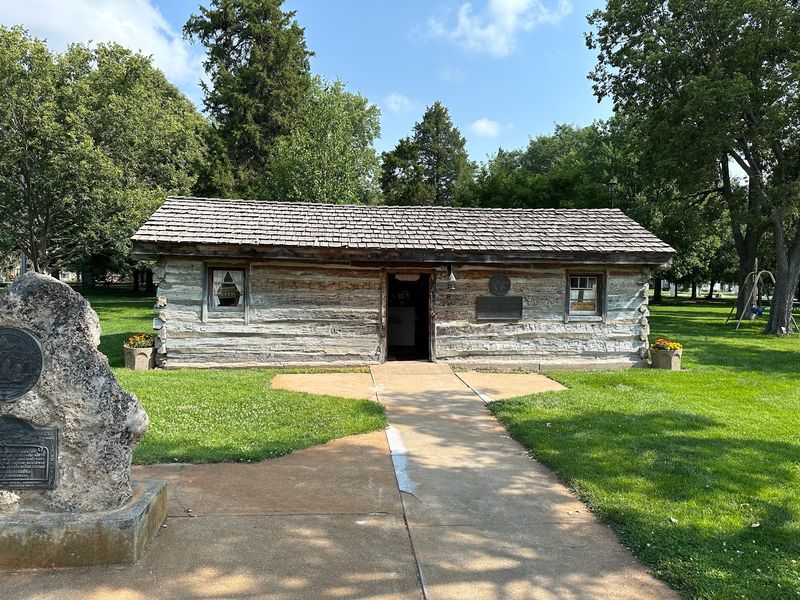
You can still drop a postcard into a mail pouch hanging from the door of a real Pony Express station. The cabin served riders from 1860 to 1861, and it still welcomes visitors today.
The log walls are older than that famous mail run. The cabin started out as a fur trading post and ranch house along the Oregon Trail.
I like how small it is. You can see the whole building in a few minutes, yet the stories inside could fill an afternoon.
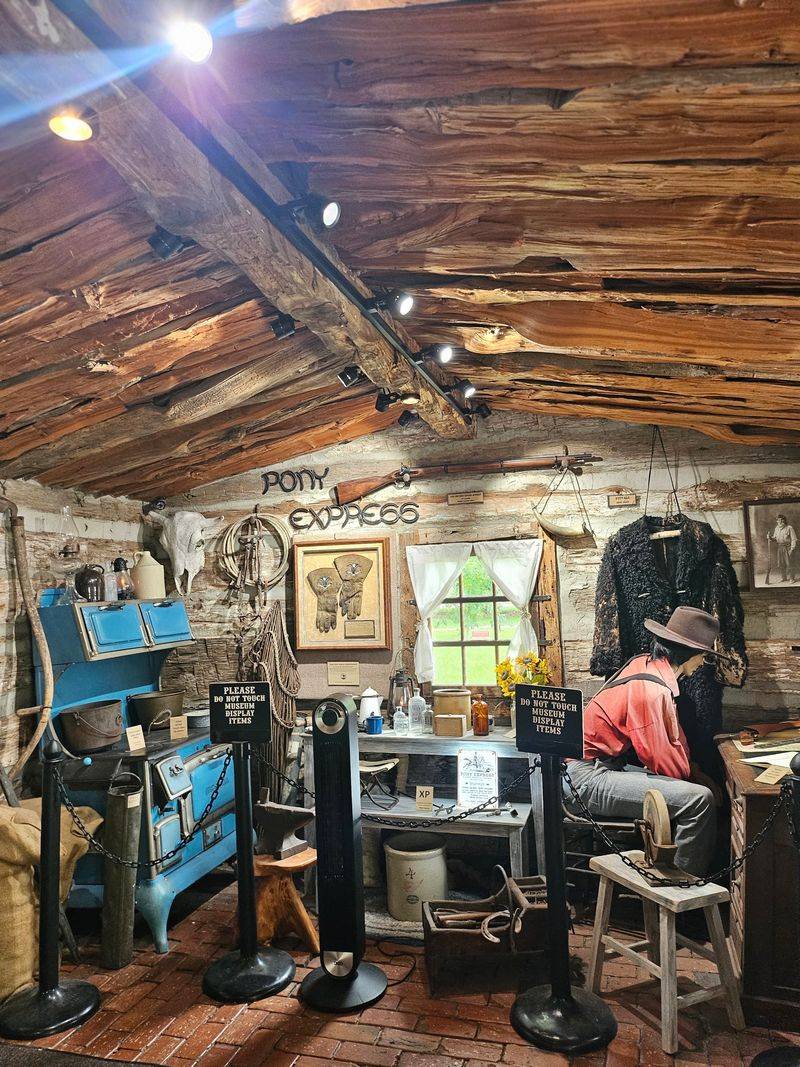
Old saddles, mailbags and photos of actual riders share space with a cozy little gift shop.
It sits in central Nebraska, just a short hop off I-80. I can’t imagine a better excuse to stretch your legs.
So why does one modest cabin hold so much of the Old West?
A Real Pony Express Cabin Waiting In A Shady Park
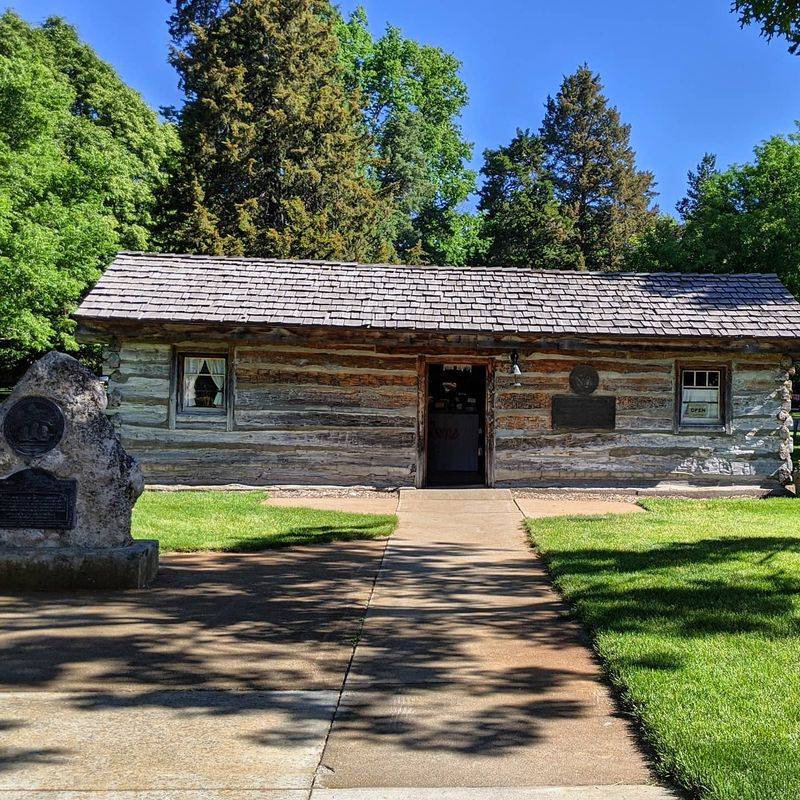
Log cabins don’t usually come with a mail-carrying resume. The Pony Express Station Museum in Gothenburg is the rare exception, and it has paperwork going back to 1860.
The cabin served as a Pony Express station from 1860 to 1861. Riders rushed mail across the West during those months, and this building was part of that chain.
Today it stands in Ehmen City Park, a leafy green spot in the heart of town. The setting feels calm, with trees, picnic tables and open lawn surrounding the old logs.
Inside, the Pony Express Station Museum works as both a museum and a gift shop. One side holds artifacts and photos, while the other side offers books and souvenirs.
The building is compact, so nobody needs a map or a long afternoon. Still, it packs a surprising amount of history between those rough walls.
That’s what makes it such a fun Nebraska stop. You get a genuine piece of the 1860s without hiking, tickets or a big detour.
It’s history you can touch, standing right where families picnic. Not a bad combination for a quiet roadside break.
Fur Trading Post, Ranch House And Stage Stop Before Its Museum Days
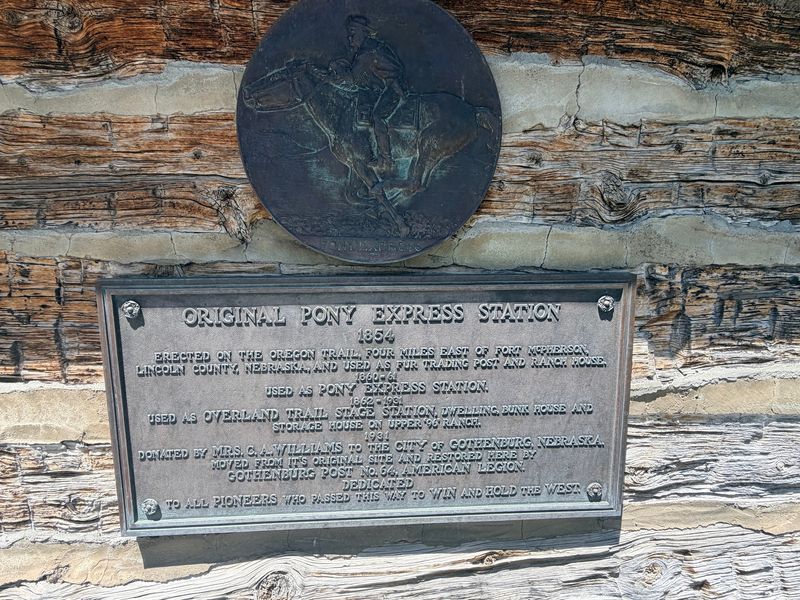
Long before anyone sold souvenirs inside, this cabin was hard at work on the prairie. It first stood near Fort McPherson as a fur trading post and ranch house along the Oregon Trail.
The cabin dates to 1854. That makes it older than the Pony Express itself, which didn’t launch until April 1860.
After the riders came through, the building kept busy. It served as an Overland Trail stage station and later as a ranch building until 1931.
Talk about a long career. Few buildings switch jobs that many times and still stay standing.
Once its working days ended, the cabin needed a new purpose. Its next chapter would come from a generous gift to the town.
Every era left its own story on those logs. Trappers, travelers, riders and ranchers all passed through the same doorway.
Knowing that backstory changes how the cabin feels. It isn’t just a Pony Express relic but a record of nearly eighty years of life on the Nebraska plains.
That’s a lot of history for one modest structure. The logs have earned their retirement.
The Day A Whole Cabin Packed Up And Moved To Town
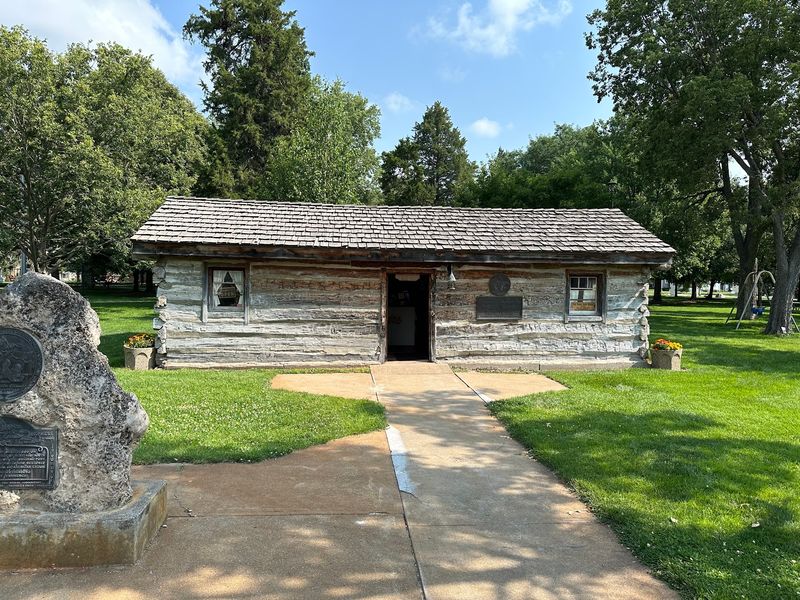
Moving a house is hard enough. Moving a log cabin piece by piece takes real dedication.
Mrs. C.A. Williams donated the cabin to the City of Gothenburg.
Crews then carefully took it apart, hauled it to town and put it back together in Ehmen City Park.
A few changes came along with the move. The cabin was once two stories, but it became a one-story building in its new home.
The American Legion played a part in preserving it. That effort helped save a building that might otherwise have faded away on a ranch.
The museum officially opened to the public in 1954. That means the cabin has now welcomed visitors for more than seventy years.
It’s a neat twist in the story. A building that once helped mail travel quickly ended up taking a slow, careful journey of its own.
Without that donation and hard work, this piece of Nebraska history could easily have been lost. Instead, it sits safely in town where anyone can stop by.
Every family visit today traces back to that one big decision.
Eighteen Months Of Lightning Mail That Changed The Country
Here’s a wild fact. The Pony Express only ran from April 3, 1860, to October 24, 1861.
That’s roughly eighteen months, barely long enough to wear out a good pair of boots. Then the transcontinental telegraph arrived and made the riders unnecessary almost overnight.
Still, those months mattered. The service sped up news traveling between the East and California at a time when the country badly needed faster communication.
Riders handed mail from station to station across huge stretches of open land. Places like this cabin gave them a vital stop along the way.
The museum even honors those dates in its schedule. It opens on April 3 and closes on October 24, matching the service’s first and last days.
I love that detail. It quietly ties every visit back to the real calendar of the Pony Express.
The service became famous far beyond its short life. Books, movies and legends still celebrate the riders today.
Standing beside an actual station makes that legend feel real. It turns a classroom story into something you can see in Nebraska.
Saddles, Mailbags And Faces Of The Riders Inside
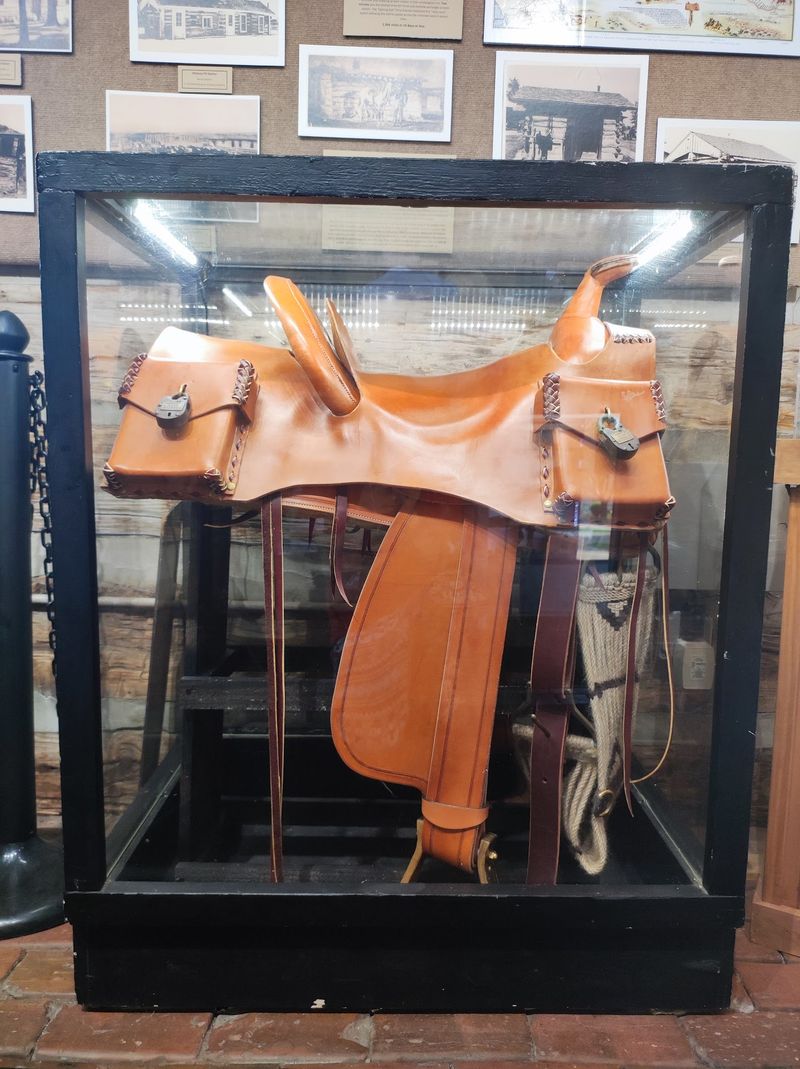
Old saddles always seem smaller than you expect. Seeing one up close makes the riders’ long journeys feel even tougher.
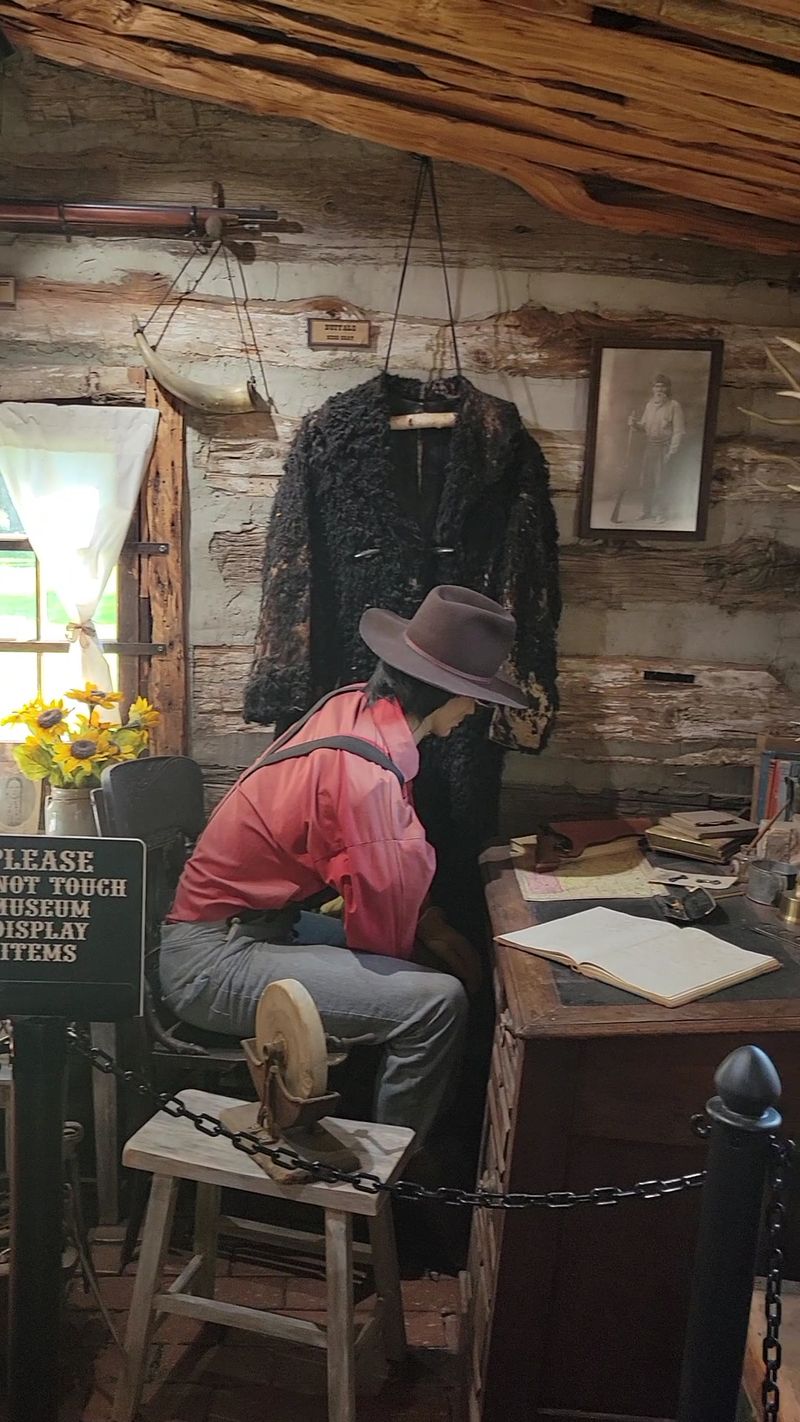
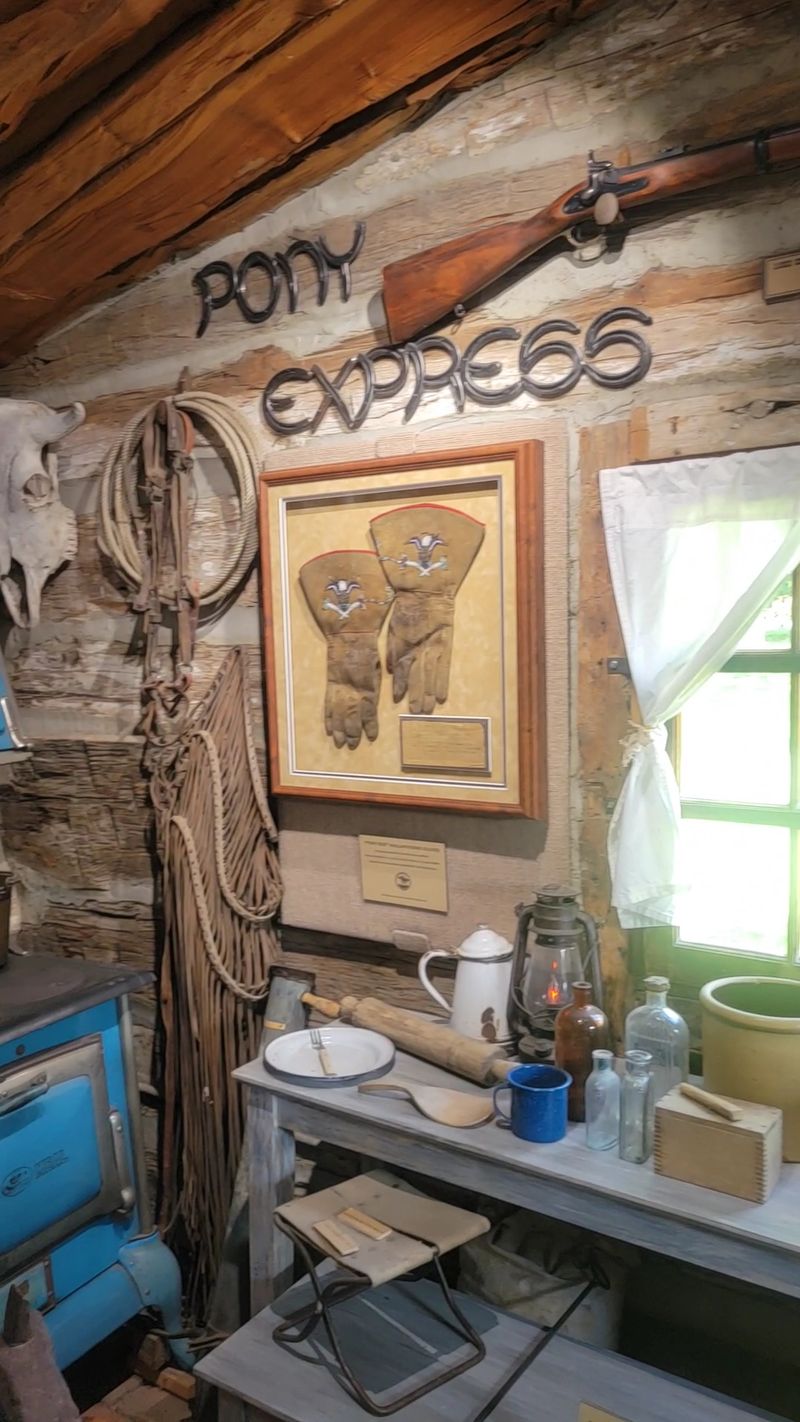
The exhibit side of the cabin holds saddles, maps and mailbags from the 1860 to 1861 period. Pioneer tools and cooking utensils add a glimpse of everyday frontier life.
Historical photographs show actual Pony Express riders. Their stories appear alongside images of other log cabin stations from the route.
There’s also a reproduction of the kind of Bible given to Pony Express riders. It’s a small item, yet it says a lot about the era.
Plaques share stories you can read at your own pace. Old guns and bags help show what riders carried on the trail.
The whole display fits into a very small space. Somehow, it never feels thin on content.
Kids can connect with the objects quickly. A real mailbag is far more memorable than a paragraph in a textbook.
Give yourself time to read the faces in those photos. Many riders were remarkably young, which makes their work even more impressive.
You Can Still Send Mail From A Pony Express Door
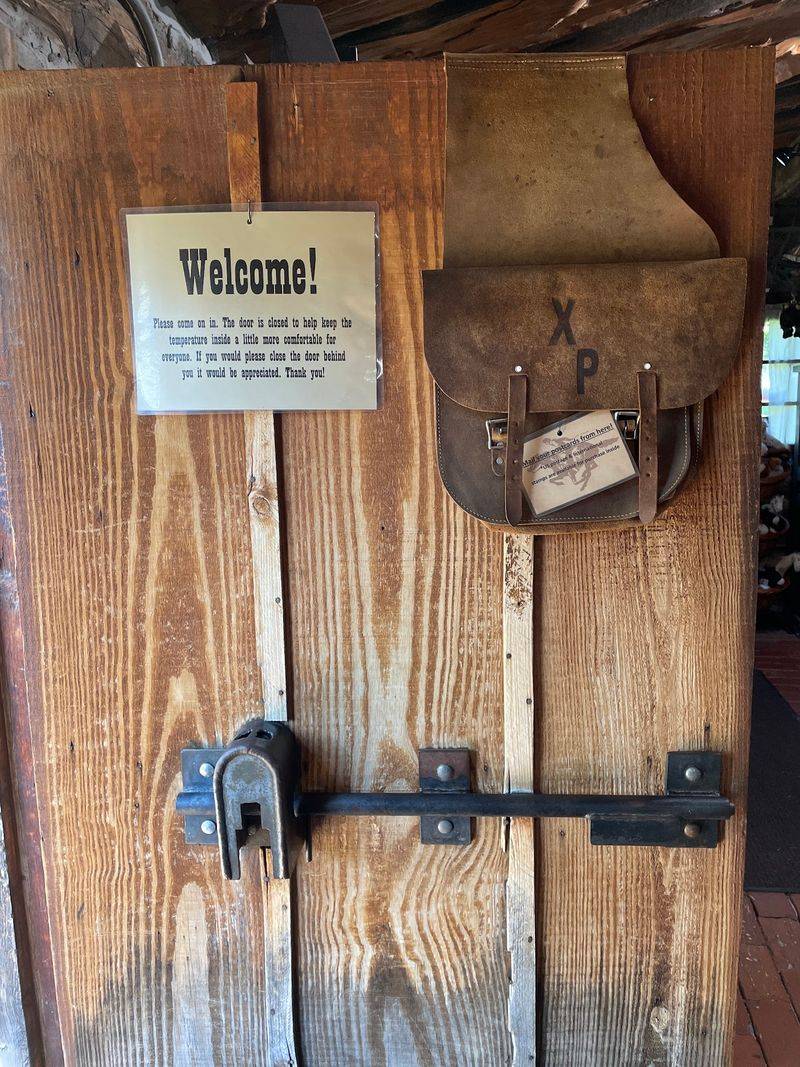
Postcards rarely come with this much backstory. At this cabin, your note home gets a special Pony Express seal.
A mail pouch hangs on the old door of the station. Visitors can buy postcards and stamps inside, write them out and drop them right in.
That little ritual turns a quick stop into a keepsake. Grandparents, pen pals and kids at summer camp will all get a story with their mail.
Want another souvenir? The gift shop has a pressed penny machine, so bring a couple of quarters and a penny.
Books, shirts and postcards fill the shop shelves. The book selection leans heavily into Pony Express and Western history.
Shopping here also feels connected to the place. You’re buying a memento inside the very building the story is about.
It’s a smart way to bring history home without spending much. A postcard costs very little and travels a long way.
Honestly, mailing a letter from a former Pony Express station is hard to top. The riders would probably approve, even if delivery is a bit slower than a galloping horse.
Friendly Docents Who Bring The Trail To Life
A good guide can make history feel like gossip from 1860. That’s exactly the kind of help waiting inside this little cabin.
Volunteers and staff greet visitors and share stories about the riders and the station. Informative, knowledgeable docents come up again and again as a highlight of the stop.
They answer questions and tailor the history to what interests each visitor. Some even help pick out a book for a grandchild back home.
The Gothenburg Pony Express Association, Inc. manages the station. Its work keeps the doors open and the exhibits in good shape each season.
That human touch matters in a small museum. Objects tell part of the story, while people fill in the rest.
Curious kids will have plenty to ask. How far did riders go, and what did they eat on the trail?
Teachers will find it especially handy. The stories here make perfect material for a classroom lesson on the Old West.
Leave a few minutes for conversation. The best tidbits often come from simply asking, and the docents seem happy to share.
Picnic Tables, Playgrounds And A Night Glow Outside
Plenty of museums end at the exit door. This one keeps going once you step outside.
Ehmen City Park surrounds the cabin with shade, picnic tables and a play structure for kids. Restrooms in the park make it an easy break on a road trip.
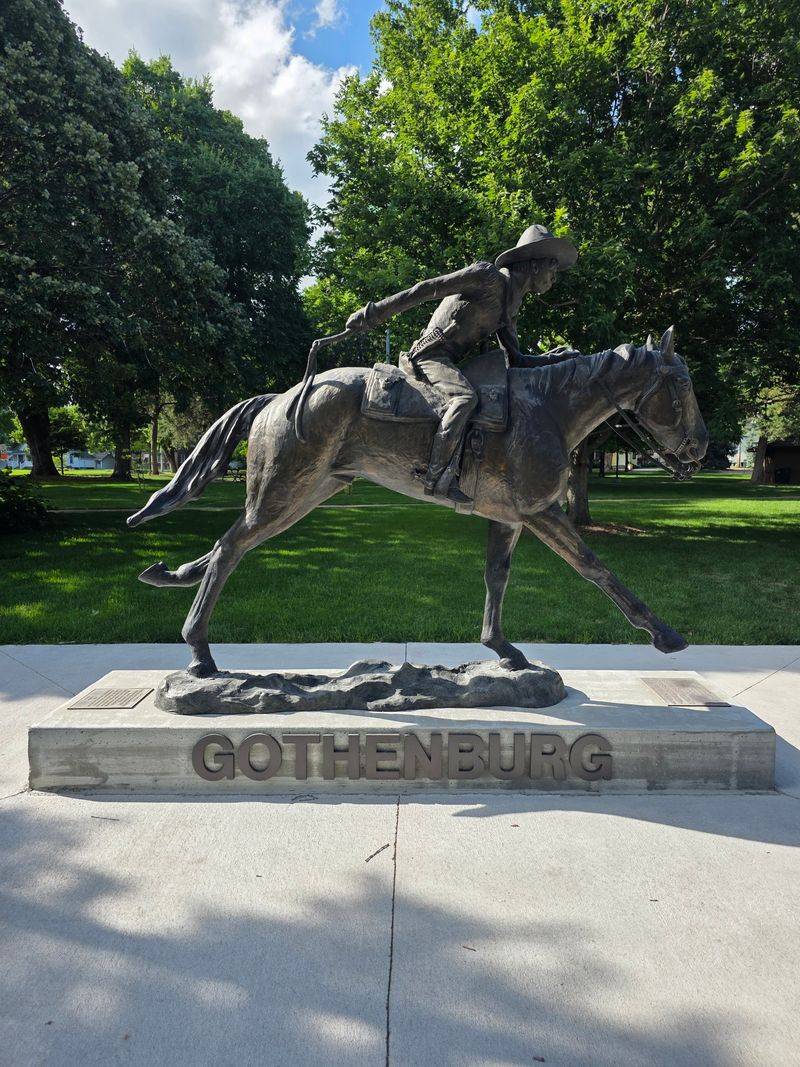
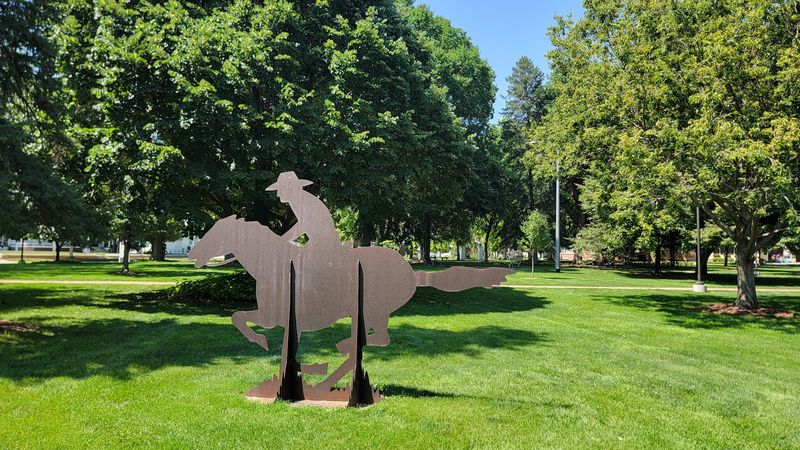
A newer sculpture by a Nebraska artist adds a fresh look to the grounds. It pairs nicely with the old logs nearby.
Arrive after hours, and the park is still worth a stroll. Lights brighten the area in the evening, and the restrooms stay open after the museum closes.
The exterior is accessible all year, around the clock. An interpretive broadcast on 88.1 FM shares the story when the doors are shut.
That’s a clever setup for night drivers on I-80. You can tune in from your car and still learn something.
Families can easily turn the visit into a longer outing. Pack sandwiches, let the kids play and then head inside for history.
It’s a relaxed, low-key setting. Nobody rushes you, and the park makes lingering feel natural.
Why This Town Claims Two Original Stations
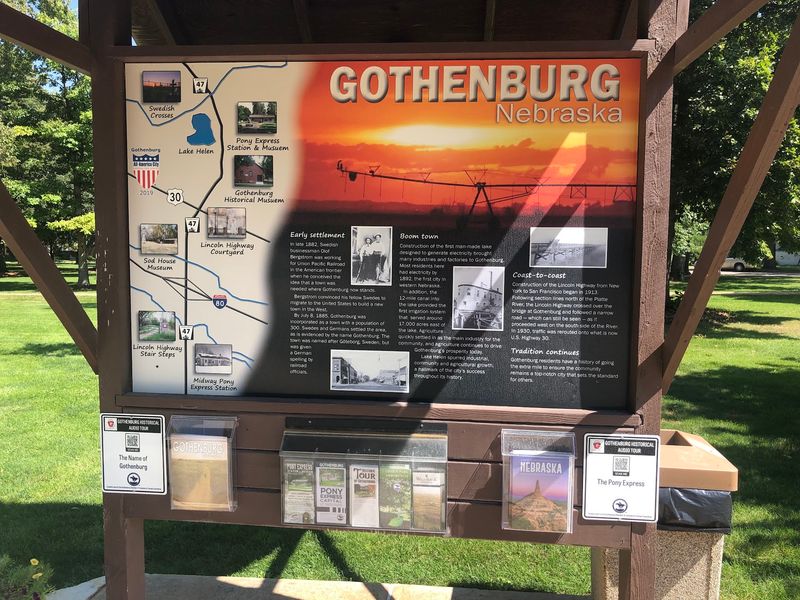
Most towns are thrilled to have one Pony Express link. Gothenburg has two original stations, which explains its proud title as the Pony Express capital of Nebraska.
The first is the cabin in Ehmen Park. The second is the Midway Station, located south of town.
Midway Station still sits on its original foundations. It’s on private property, so access is mainly by appointment or during special events.
One of those events is the annual Pony Express Re-Ride. That celebration honors the riders and gives fans another chance to connect with the route.
Having two stations nearby gives the town a strong claim on this chapter of history. Few places anywhere can say the same.
The town also has a free historical society museum across the street from the cabin. History fans can easily stack two stops into one visit.
That makes Gothenburg a sneaky-good spot for a history day. You can learn about riders, settlers and the town all within a short walk.
Not bad for a place many people zip past on the interstate.
Free Admission, Seasonal Hours And A Quick Exit Off I-80
Good news for budget travelers: admission is free. That makes this one of the easiest history stops to say yes to.
The Pony Express Station Museum sits at 510 15th St, Gothenburg, NE 69138. It’s inside Ehmen City Park, just a short drive from I-80.
The museum opens daily from April 3 through October 24. Hours run longer in late spring and summer, then shorten in April and October.
A small free parking area sits across the way. Street parking is also available nearby.
Signs can be a little tricky after leaving the interstate. Plugging the address into your phone will save some extra wandering.
Need picnic supplies? Fresh Seasonal Market in town is a handy option before heading to the park.
The visit itself can be quick or leisurely. Some folks pop in for fifteen minutes, while others stay to read every plaque.
Since it’s open seven days a week during the season, timing is flexible. Just remember the doors close for winter, though the outdoor grounds stay open.
A Small Cabin Worth Pulling Off The Highway For
Some road trip stops fade from memory by the next exit. This one tends to stick, maybe because you mailed yourself proof.
The Pony Express Station Museum offers a rare chance to stand inside a real station from 1860. That alone makes it special for anyone who loves Nebraska history.
It works for nearly every kind of traveler. Grandparents, kids, teachers and history buffs can all find something to enjoy.
The free admission helps, too. So do the shady park, clean restrooms and playground right outside.
Between 30,000 and 50,000 people visit each year. That steady stream keeps the riders’ stories alive for new generations.
I believe its charm comes from the scale. The cabin is small enough to feel personal, yet full enough to surprise you.
If you grew up near Gothenburg, you may have passed it a hundred times. Maybe it’s time to finally step through that old doorway.
Bring a postcard, a few coins and a little curiosity. The Pony Express may have ended in 1861, but this Nebraska cabin is still delivering.