Fifty Thousand Objects Fill The Buildings Of This Pioneer Village Along The Highway In Minden, Nebraska
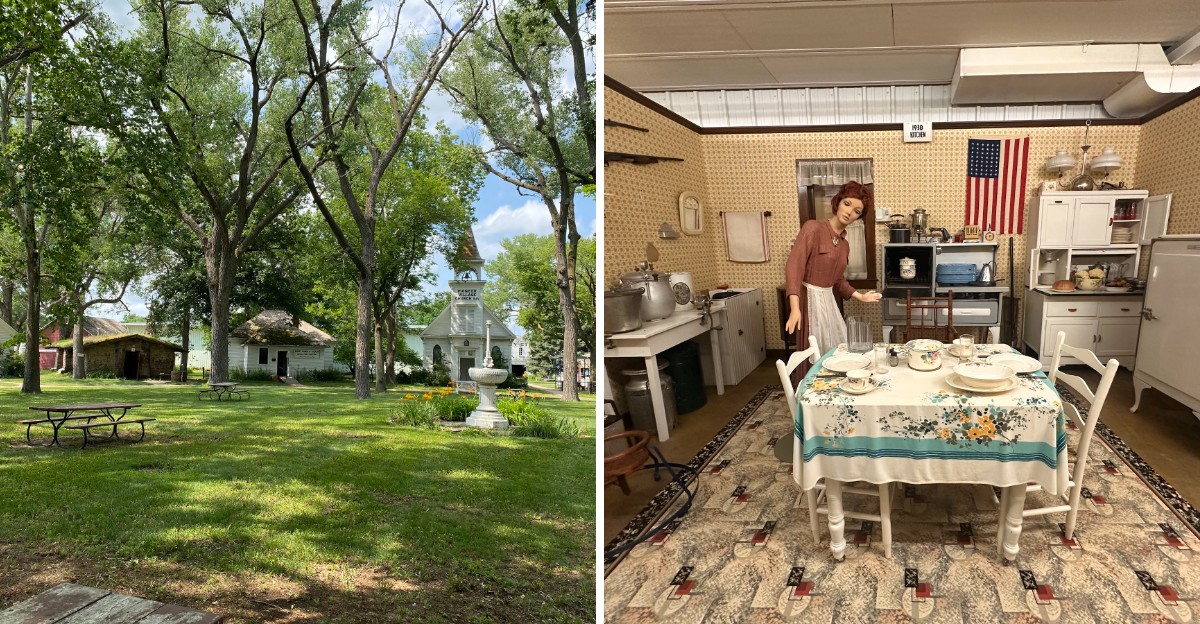
More than 350 antique cars share one property with 17 flying machines and about 100 old tractors. Add a steam carousel, three steam locomotives and a sod house, and the count climbs past 50,000 objects.
One man gathered nearly all of it. He was born in a sod house in 1903, and he later bought back the one-room schoolhouse he attended as a boy.
That purchase started a collecting streak that never really stopped.
I like how the whole place reads like a giant family scrapbook of America. The rooms go in order, so you can watch kitchens, cars and gadgets change decade by decade.
It sits right along a Nebraska highway, a short hop off the interstate.
So how many hours do you think it takes to see 50,000 things? Most people guess too low.
Twenty Acres Of Americana Waiting Just Off The Interstate
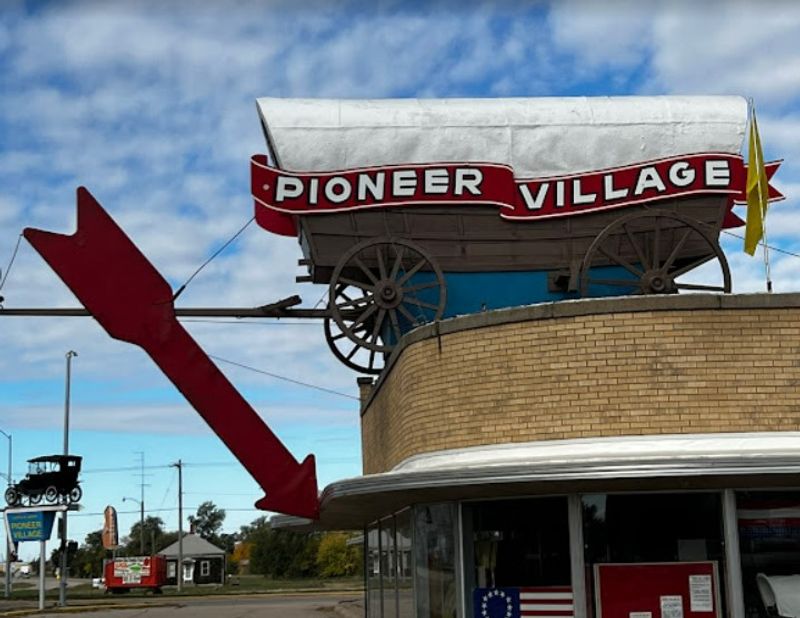
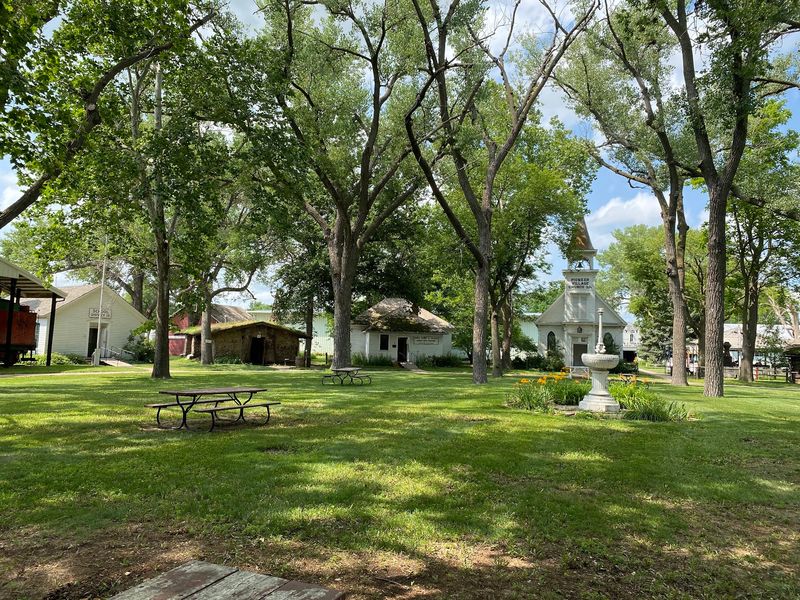
Harold Warp Pioneer Village spreads across 20 acres in Minden, a small town in south-central Nebraska. Most folks simply call it Pioneer Village, and the name fits the place like a well-worn work glove.
The grounds hold 28 buildings packed with more than 50,000 historic items. The collection follows one big theme, which the museum sums up as How America Grew.
That story starts around 1830 and rolls forward through the decades. You get covered wagons, steam engines, early cars, airplanes and everyday household goods, all arranged so progress unfolds right before your eyes.
Getting there is refreshingly simple. The village sits about 12 miles south of Interstate 80 from Exit 279, which makes it an easy detour on a long cross-state drive.
Some people call it the Smithsonian of the Plains. That nickname sounds bold until you start counting buildings and realize you’ve lost track somewhere around number twelve.
The modest exterior gives little warning about what waits inside. Plan for that surprise, and plan for comfortable shoes too.
A Sod House Boy Who Bought Back His Own Schoolhouse
Born in a sod house near Minden in 1903, Harold Warp grew up with very little. He later found success in business, yet he never stopped thinking about home.
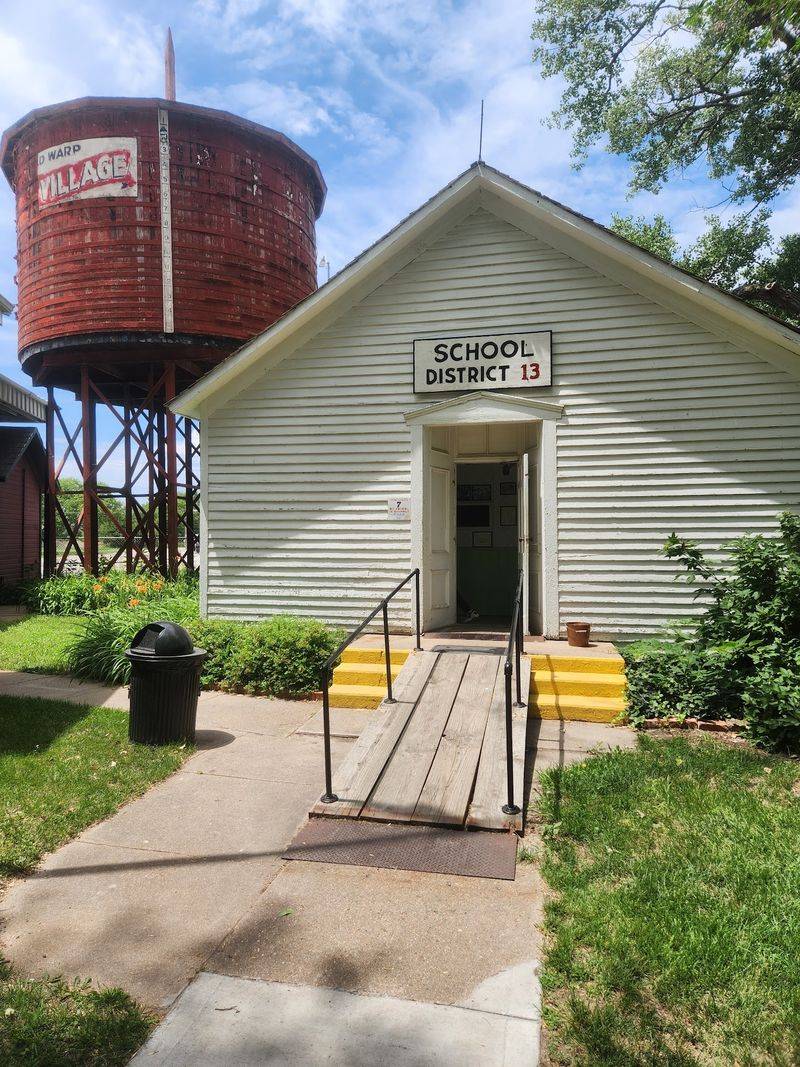
In 1948, he purchased the one-room schoolhouse he had attended as a child. That single building lit the spark for everything that followed.
Warp kept collecting, and he collected with purpose. He wanted visitors to see how ordinary life changed through new tools, machines and ideas.
Pioneer Village opened in 1953 as his vision of a living history museum. Exhibits were arranged in chronological order, so each generation leads naturally into the next one.
Three decades later, in 1983, Warp donated the museum to the nonprofit Harold Warp Pioneer Village Foundation. The village has stayed family-operated ever since, with his grandchildren taking over in 2020.
I love that the same schoolhouse still stands on the grounds today. You can see where a curious Nebraska farm kid first sat at a desk.
Not many museums can point to the exact room where their founder learned to read. That detail makes the whole collection feel deeply personal.
Car Barns Stacked Two Stories High With Over 350 Antique Autos
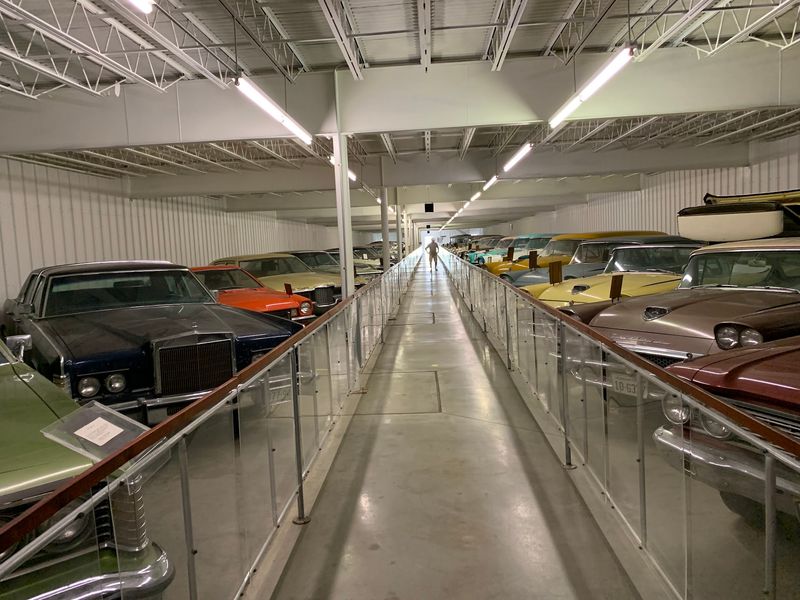
Over 350 antique cars live at Pioneer Village. Cars are easily the most talked-about part of the whole collection, and the numbers explain why.
Highlights include a 1902 Cadillac and a 1903 Ford. The village also displays what is claimed to be the oldest Buick in the world.
Many of the car barns have two floors. That means stairs, plus a lot more chrome and brass than one level could ever hold.
The vehicles run in a rough timeline, much like the rest of the village. You can follow the automobile from wobbly early buggies to sleek later models in a single stroll.
Trucks share the spotlight too, along with carriages and wagons from before engines took over. Covered wagons appear here, reminders of how travel looked before anyone pumped gasoline.
One standout is an early motor home built by an inventor years before such vehicles were manufactured. Road-trippers tend to give that one a long, knowing look.
Gearheads should budget extra time here. Pulling yourself away from the Model T rows takes more willpower than most of us admit.
Steam Locomotives, Tractors And Flying Machines Under One Sky
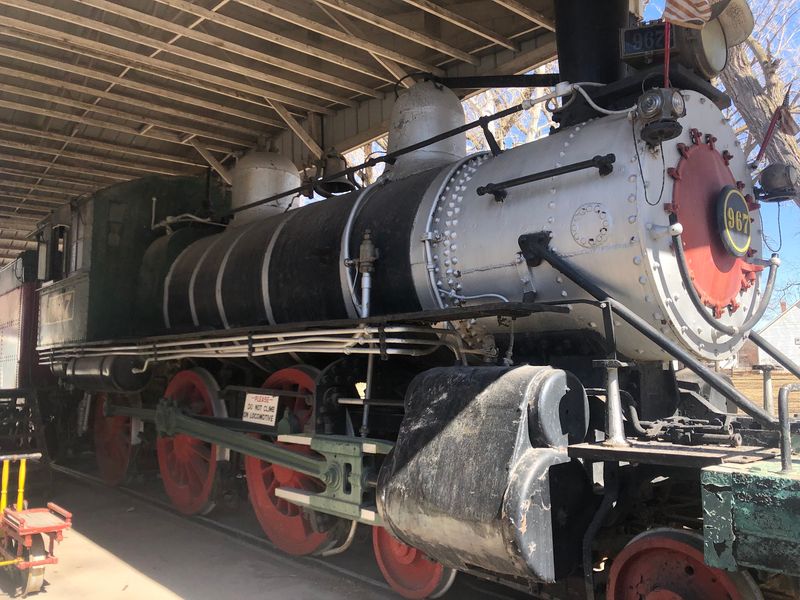
Railroad fans get a treat in the Iron Horse exhibit. Early locomotives fill the space, including an 1889 Baldwin steamer with plenty of iron and character.
The village holds three steam locomotives in all. Climbing near those massive wheels gives you a real sense of how they powered settlement across Nebraska.
Up next, the farm machinery steals the show. Around 100 antique tractors sit on display, along with sod cutters and rare corn harvesting equipment.
For a farm state, that collection hits close to home. Many visitors will spot a model just like the one Grandpa once drove.
Then the story leaves the ground. Seventeen historic flying machines trace the rise of aviation, from early experiments to the jet age.
The Main Building even holds the oldest jet airplane, a 1942 P-59. Nearby sits an 1876 Otto engine, recognized as the oldest internal combustion engine on site.
Trains, tractors and planes rarely share a single address. Here they sit within a short walk of each other, telling one connected story about getting things moving.
Twenty Rooms Where Kitchens Change Every Generation
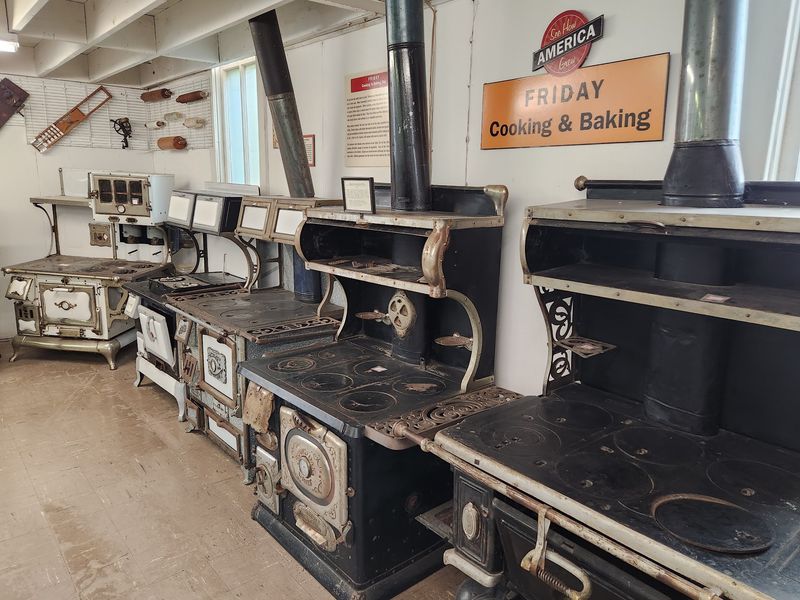
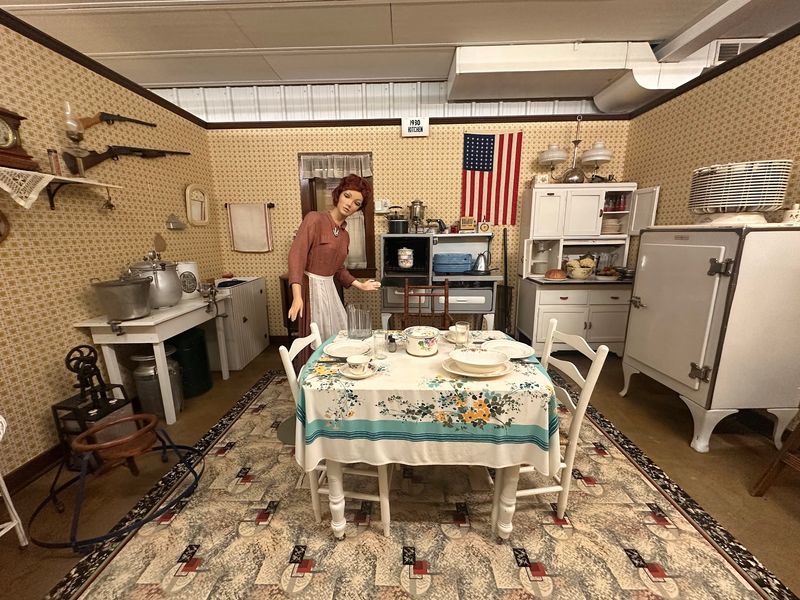
Kitchens tell family history better than most textbooks. The Homes and Shops Building proves it with twenty full-sized rooms from every generation since 1830.
Each room shows a kitchen, living room or bedroom from its era. Period furniture, appliances and everyday items fill every corner.
Walking from one decade to the next feels like flipping a photo album. Iceboxes give way to refrigerators, and wood stoves slowly turn into modern ranges.
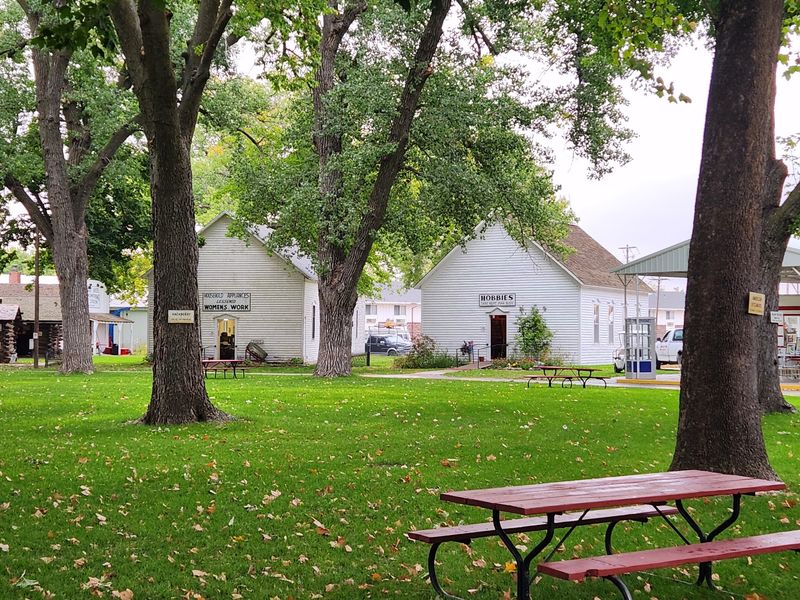
The same building also holds a row of classic small-town businesses. You’ll find a music shop, doctor’s office, print shop, drug store and barbershop.
Elsewhere on the grounds, collections cover radios, film equipment, musical instruments and early computers. That computer exhibit tends to catch modern visitors completely off guard.
I believe this section works best with mixed generations. Grandparents can point to the rooms they remember, and kids can ask what on earth a party line was.
Bring patience for reading the signs. The details reward slow looking, and rushing through means missing the clever little objects tucked on every shelf.
A Steam Carousel, A Sod House And A Church That Still Holds Services
Few rides carry more history than the steam carousel at Pioneer Village. The village notes it as the oldest in the country, and it sits in its very own building.
Rides famously cost just a nickel. The original steam engine that once powered it is on display too, which mechanical fans will appreciate.
Not far away stands a replica of Harold Warp’s childhood sod house. Seeing those thick earthen walls makes prairie life suddenly feel very real.
A Frontier Fort adds another layer of pioneer history. So does an authentic Pony Express Station that once served as the Pumpkinseed relay station.
The 1884 Country Church is another original building on the grounds. Remarkably, it still hosts summer services, so the history here keeps working.
Rounding things out are a General Store, a Toy Store and a Blacksmith Shop. The General Store shelves hold examples of original goods from long ago.
Kids can even ring a steam engine bell. Good luck getting them to stop at just one clang.
Summer Demonstrations And A Few Smart Tips For Your Visit
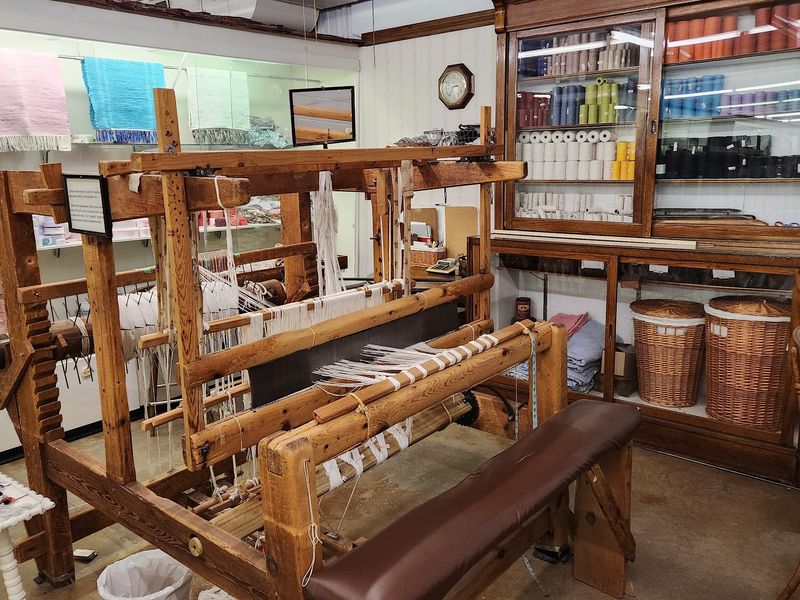
Summer brings hands-on history to Pioneer Village. Demonstrations of yarn spinning, weaving and broom making show old skills in action.
Those crafts once kept Nebraska homesteads running. Watching them done by hand gives the collection a heartbeat.
One practical note matters during warm months. Many exhibit buildings are not air conditioned, so hot afternoons can feel heavy indoors.
Cooler days make longer exploring much easier. Water bottles and breaks help a lot when the prairie sun gets serious.
Time is the other big factor. Plenty of families spend three to five hours here, and some still miss a few back buildings.
Admission includes an arm stamp, so you can leave for lunch and return. That handy policy makes a full day far more manageable.
Stairs come with the two-story car barns, so pace yourself. A map from the front desk helps you plan a route before your legs start voting.
All ages can enjoy the place. Still, curious older kids and adults usually get the most out of reading every display.
Hours, Food And A Campground Right Next Door
Planning ahead pays off with a collection this large. Pioneer Village sits at 138 E.
Hwy 6, Minden, NE 68959, right along US-6.
The museum opens Tuesday through Sunday during the day. It closes Mondays, so build your Nebraska road trip around that schedule.
Hungry explorers have options on site. The village offers concessions and a restaurant, plus a gift shop for souvenirs.
Food service can vary by time of day, so a packed snack never hurts. A cooler in the car also makes the arm-stamp lunch break even easier.
Travelers with campers get a real bonus. The Pioneer Village Campground sits next door and stays open year-round.
It offers 47 sites, ranging from primitive spots to 50-amp hookups. Pull-through options fit large rigs, and showers plus Wi-Fi add comfort.
Staying overnight lets you split the museum across two days. Honestly, that might be the smartest way to tackle 50,000 objects without rushing.
Check current details before heading out. Seasonal schedules can shift, and nobody wants a long drive to a locked gate.
Why This Collection Deserves A Spot On Your Nebraska Bucket List
Minden carries a second claim to fame beyond the museum. The town is known as Nebraska’s Christmas City, thanks to its glowing courthouse lights.
Bright displays cover the Kearney County Courthouse each season. An annual Christmas Pageant adds even more reason to visit when the holidays roll around.
Pair that with Pioneer Village, and the town becomes a full day trip. History by daylight and sparkling lights after dark sounds like a fine plan.
I can’t imagine a better place to show kids how fast the world changed. Sod houses and jet airplanes share the same grounds, which says it all.
The collection is not a polished, modern museum, and that’s part of its appeal. It reflects one man’s lifelong passion and a family still caring for it.
Some exhibits show their age, yet work continues to keep things in shape. Restoring the carousel and diner showed a clear commitment to the future.
So take the exit and slow down for an afternoon. Somewhere among those 50,000 objects, you’ll likely spot something that once belonged in your own family’s home.