Arizona’s Best Steakhouse Has An Old-School 1940s Vibe In The Heart Of Phoenix
Phoenix has a steakhouse where the story starts long before the first steak reaches the table.
This longtime Arizona favorite opened in 1947 on land connected to the city’s cattle industry, and plenty of that Old West character still remains.
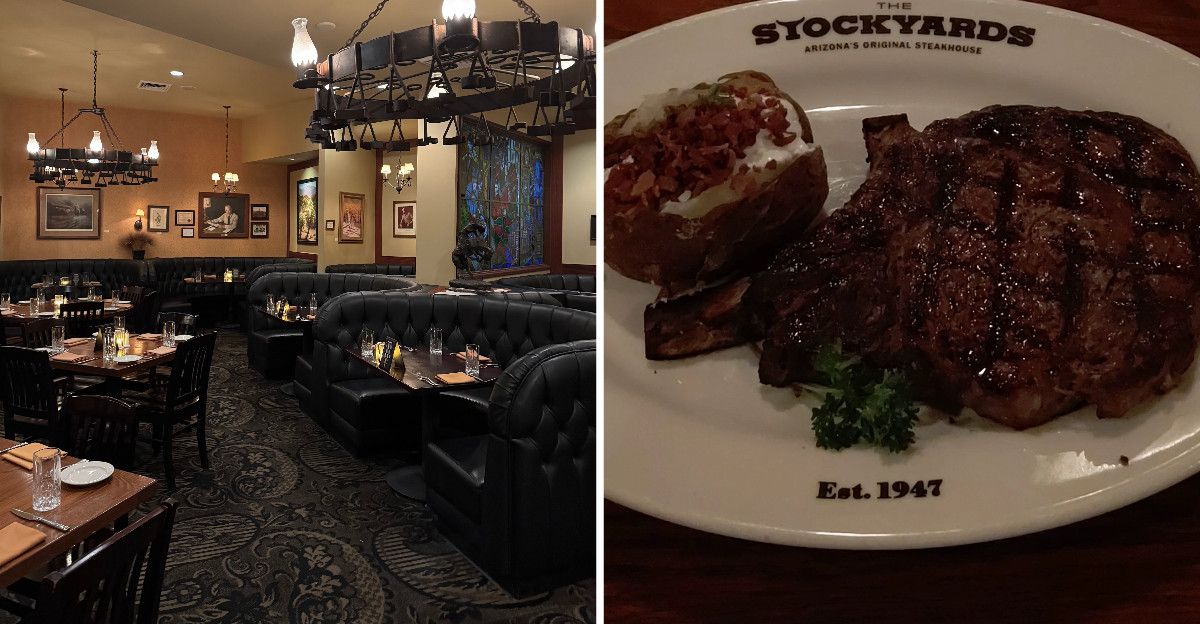
The dining room leans into it beautifully. Leather booths, dark wood, chandeliers, and ranching details make dinner feel like more than a regular night out.
Then the menu brings the history back to the plate with aged beef and Southwestern touches.
It is polished without feeling stiff, historic without feeling dusty, and just unusual enough to make the meal feel worth planning around.
Born On Cattle Baron Ground
Few dinner spots come with a background this closely tied to Phoenix history.
The Stockyards Steakhouse first opened its doors back in 1947. The story of the site reaches further back.
In 1919, cattle entrepreneur Edward Tovrea established a major cattle operation near Washington Street, and the surrounding stockyards eventually held nearly 40,000 cattle across about 200 acres.
The restaurant arrived during the period when cattle remained a major part of the local economy. It soon became a gathering place for cattlemen, bankers, public officials, and other people doing business in the growing city.
That connection still shapes the building today. Historic photographs, Western artwork, and design details throughout the property keep the cattle-era setting visible without turning the dining rooms into a museum.
A careful restoration in 2004 renewed the property while retaining many of its defining features.
The restaurant is now part of the City of Phoenix Historic Property Register because of its connection to Arizona’s cattle industry and its architectural significance.
The address is 5009 E Washington St in Phoenix, close to Sky Harbor and directly along the Valley Metro Rail corridor.
A Feedlot Bigger Than Most
Forty thousand cattle in one place is difficult to picture now that this part of Phoenix is surrounded by modern development.
The cattle operation established in 1919 expanded into roughly 200 acres of pens. Historical accounts place it among the largest feedlots in the world during its peak years.
That scale helps explain why the restaurant became such a natural part of the property. The surrounding cattle business brought a steady stream of ranchers, workers, buyers, and other visitors through this section of the city.
By the late 1950s, the enormous pens were gradually disappearing as Phoenix expanded. Roads, businesses, offices, and other development changed the landscape around Washington Street. The steakhouse remained.
The surrounding city looks completely different from the landscape that existed when the restaurant opened, yet the interior still carries strong visual reminders of that earlier period.
Old photographs help make the scale easier to understand. They show just how closely the restaurant’s history was connected to the cattle industry that once dominated this stretch of Phoenix.
Hand-Carved Mahogany And Crystal Light
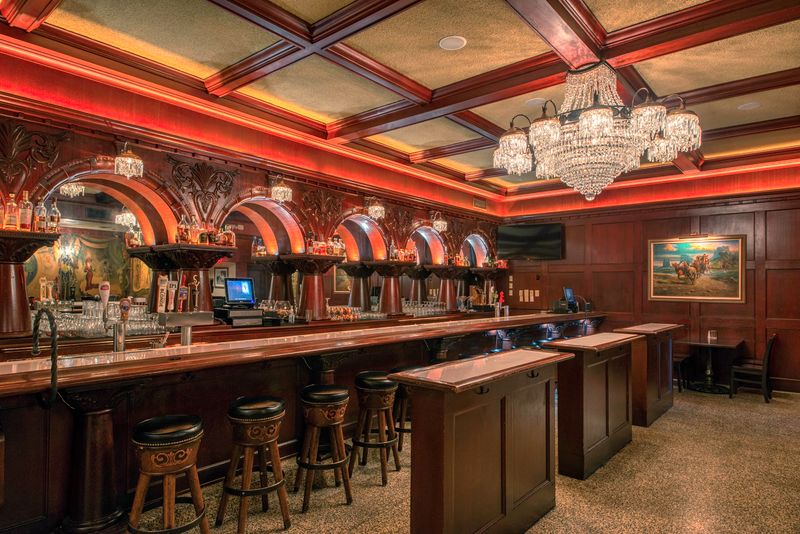
One of the most elaborate historic rooms dates to the restaurant’s 1954 redesign.
A local craftsman spent about three months carving its large mahogany centerpiece, matching back cabinet, and twelve stools from close-grain Honduran mahogany. The detailed carving remains one of the room’s strongest visual features.
Crystal chandeliers were designed for the remodeled interior and crafted in Europe before being brought to Phoenix.
Their more formal look creates an interesting contrast with the Western artwork and cattle-era history found elsewhere in the building.
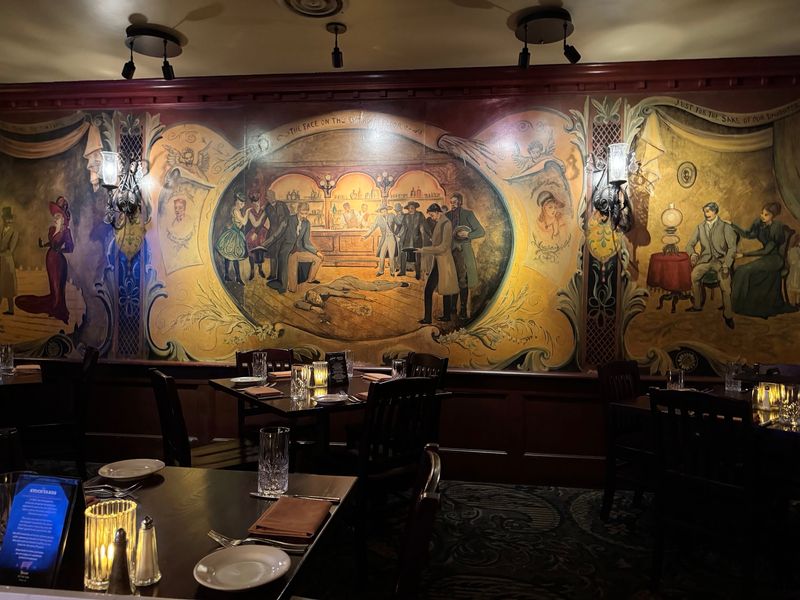
Hand-painted murals from the same period cover large wall panels. The scenes draw from Victorian melodramas and turn-of-the-century theatrical imagery, giving the space a decorative style that feels very different from a modern steakhouse.
The Rose Room carries related details, including crystal lighting, wood finishes, and historic murals.
These surviving features help explain why the 2004 restoration focused on preserving the older character rather than replacing it with a contemporary design.
The result is a restaurant where the architecture and decorative work remain part of the experience long after the menu arrives.
Steaks With A Southwestern Twist
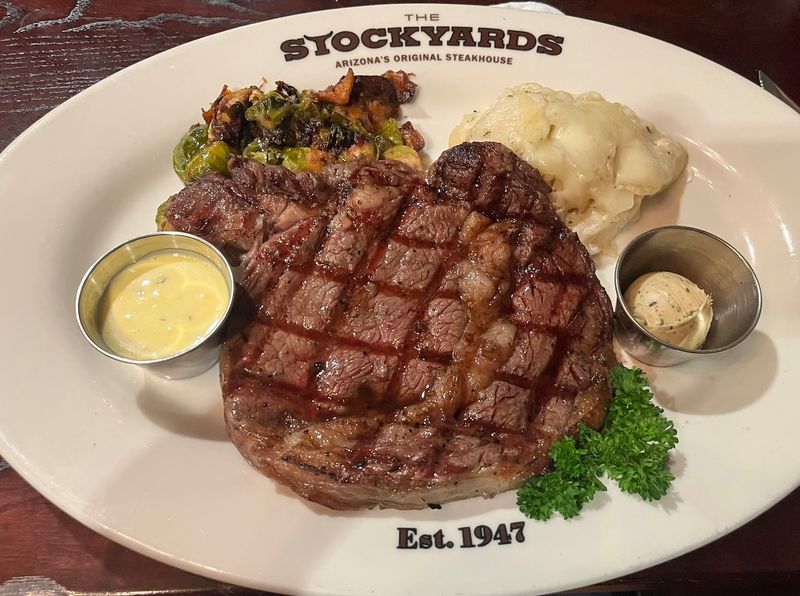
Beef remains the center of the menu, just as it was when the restaurant opened.
The kitchen continues to focus on corn-fed aged steaks and slow-roasted prime rib. Current steak choices include ribeye, filet mignon, New York strip, top sirloin, and bone-in cuts, while prime rib remains a longtime house specialty.
The menu calls its broader approach New West Cuisine. Traditional steakhouse dishes sit beside ingredients and preparations connected to the Southwest, giving the selection more range than a simple meat-and-potatoes lineup.
A current regional option is the K4 Copper State Reserve prime-grade ribeye, raised in Prescott, Arizona. It is served with Parmesan potatoes and asparagus.
Parmesan potatoes remain one of several substantial sides, alongside garlic whipped potatoes, rice pilaf, seasonal vegetables, mushrooms, and green chile macaroni and cheese.
Dinner also follows an old-school format. Entrées include a choice of soup or house salad and a side, while baskets of baking soda biscuits and cornbread muffins continue a tradition that has lasted for decades.
Lunch is served Monday through Friday, while dinner is offered every day.
More Than Steaks On The Menu
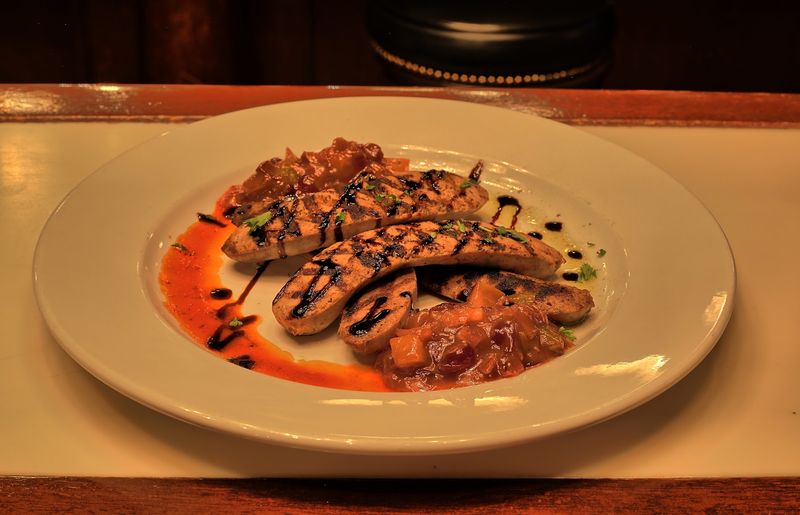
The menu reaches well beyond the steak selections without losing its Western focus.
Grilled elk medallions remain a current dinner option, served with rosemary sauce and chive potato cakes. American bison meatloaf brings a familiar comfort-food format to another meat associated with the West.
Wild boar and venison sausages also appear among the starters, paired with apple-cranberry chutney.
Guests looking beyond those choices can find roasted chicken, pork ribs, pork chops, salmon, scallops, sea bass, shrimp, and other seafood dishes. That range makes the menu more flexible for groups with different preferences.
The traditional dinner structure adds to the old-school character. A soup or house salad and one side come with dinner, while the complimentary biscuits and cornbread muffins arrive before the main course.
Dessert keeps the selection classic. Strawberry shortcake, chocolate mousse, sour cream cheesecake, seasonal sorbet, and seasonal ice cream are all on the current menu.
The combination feels intentionally traditional rather than frozen in the past. The basic steakhouse identity remains recognizable, while the current menu offers enough variety for a modern dinner.
Copper Doors And Cattle-Brand Chandeliers
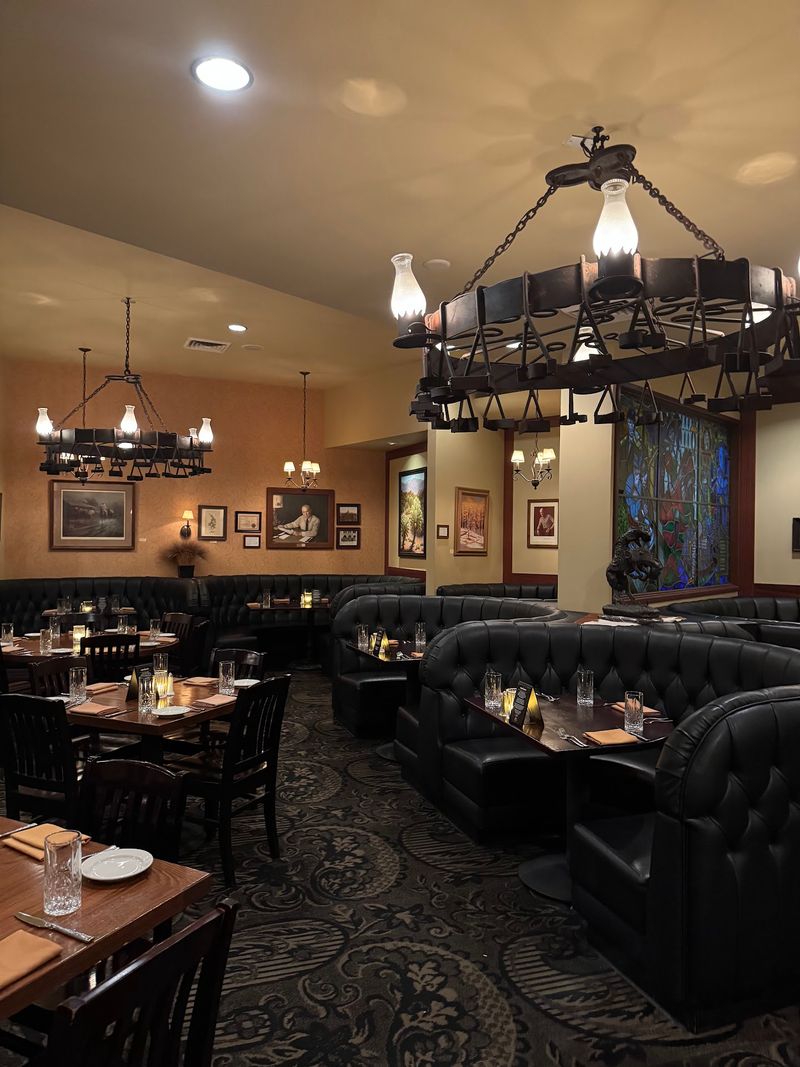
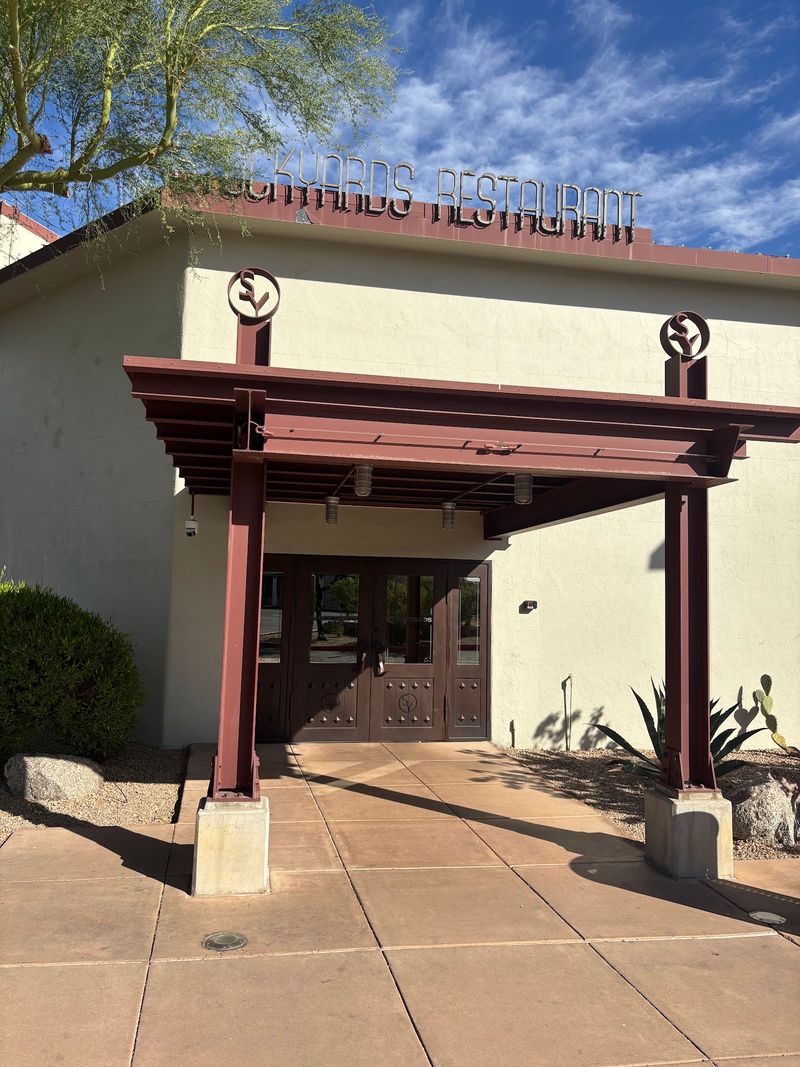
Copper entry doors set the tone before the main dining rooms come into view.
Inside, black diamond-tufted booths, dark wood, historic photographs, Western artwork, and vintage decorative pieces continue the cattle-era theme.
The atmosphere feels formal enough for a special dinner without losing the relaxed character of a long-running local restaurant.
Some of the most unusual lighting appears in the private dining rooms. The Cattleman’s Room has original pressed-tin ceilings, a two-sided masonry hearth, Western art, and rustic chandeliers built around cattle-brand designs.
The Gold Coast Room uses similar chandeliers alongside a hand-painted stained-glass wall and additional Western artwork.
The Rose Room takes a softer approach with murals, crystal lighting, and warm wood finishes.
These rooms do not all look the same, which keeps the historic design from feeling repetitive. Each emphasizes a different part of the building’s midcentury character.
The mixture of copper, mahogany, leather, stained glass, pressed tin, and ranch-inspired details creates a layered interior that could not be reproduced simply by adding a few Western decorations to a newer dining room.
Murals And Midcentury Details
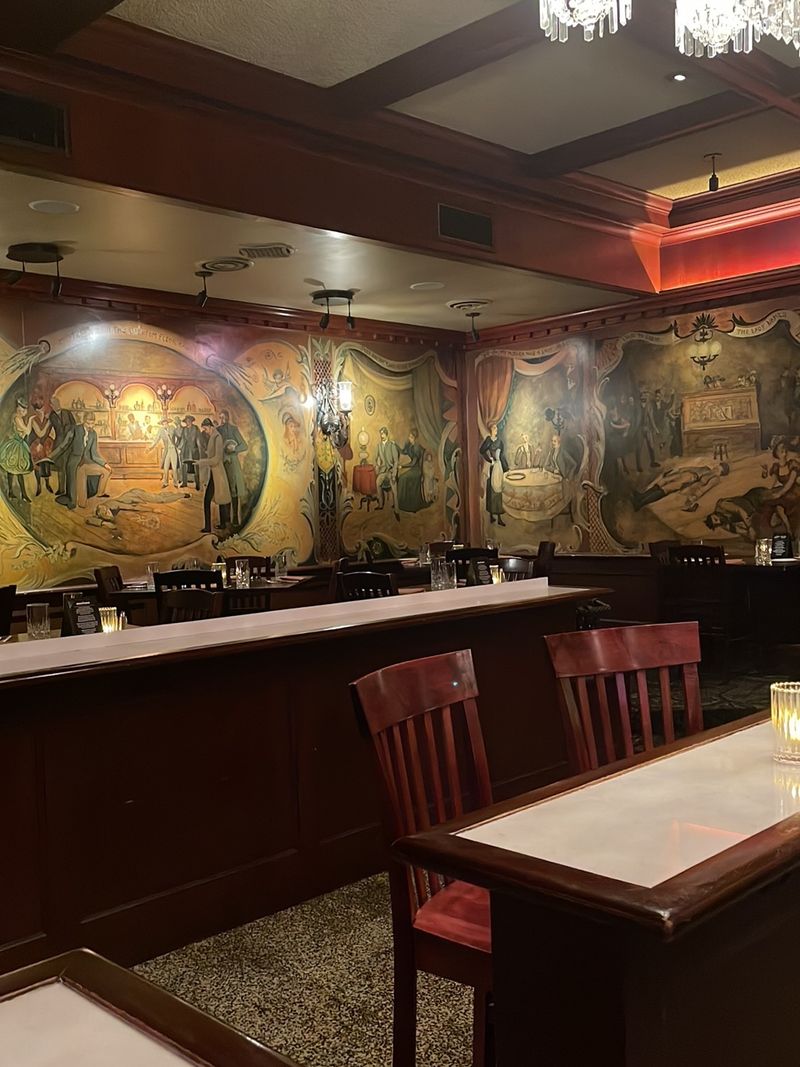
The restaurant’s historic appeal goes deeper than dark booths and old photographs.
Large painted panels created during the 1954 redesign remain among the most distinctive features. Their theatrical scenes add color and movement to rooms otherwise dominated by dark wood and leather.
An antique upright piano in the Rose Room adds another period detail. Along with the murals and crystal fixtures, it helps the room retain a strong midcentury identity.
Other areas display historic menus, cattle photographs, Western paintings, prints, and sculptural pieces. Together, they trace the restaurant’s connection to the cattle business and the city that grew around it.
The 2004 restoration preserved that material while updating the property for continued use.
That balance matters. The building still functions as a busy restaurant rather than a preserved exhibit, yet much of the original visual character remains easy to see.
The old-fashioned atmosphere is not limited to one corner or one decorative feature. It appears in the lighting, furniture, artwork, room layouts, and the continued emphasis on classic steakhouse dining.
Booths With A Place In State History
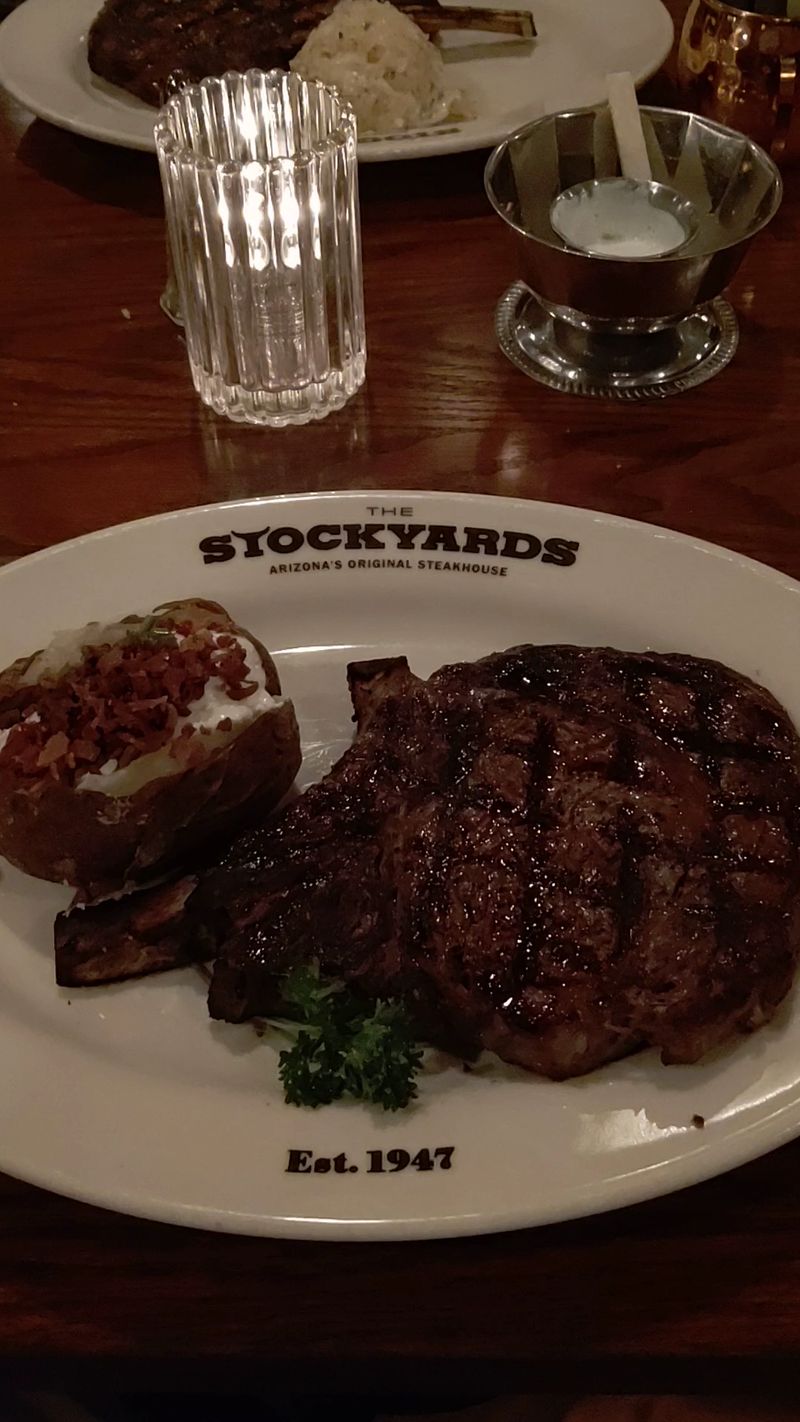
Some of the black diamond-tufted booths carry another layer of local history.
When the restaurant was selected as the official Arizona Centennial Restaurant in 2012, several booths were dedicated to influential figures connected to the state’s public life and cultural history.
That recognition fits naturally with a property that had already spent decades hosting business leaders, public officials, ranching figures, and other prominent guests.
The Centennial designation also highlighted the restaurant’s connection to the traditional Five Cs: cattle, cotton, citrus, climate, and copper.
Those industries and resources were long used to summarize the foundations of the state economy. Cattle remains the clearest connection here.
The restaurant’s current branding still uses the phrase Original Steakhouse, while the menu continues to emphasize aged beef and prime rib.
The current 2026 menus still center aged beef and prime rib, while the historic rooms remain available for regular dining and private events.
That combination of documented history and an active modern menu is what keeps the place from feeling like a restaurant surviving only on nostalgia.