14 California Places Where The Scenery Feels Edited Even When It Is Not
Some views look suspicious before the camera even comes out.
Colors seem too sharp. Water looks too blue. Mountains start acting like they know exactly where the light should land.
A road bends or a field suddenly looks as if someone quietly adjusted the saturation while nobody was watching.
There are places in California where nature feels like it got into the editing room and refused to leave.
That is what makes these spots so hard to believe in person.
No filter explains the glow. No perfect angle creates the whole effect. The drama is already sitting there in the landscape.
Desert shapes, alpine lakes, and strange rock formations can make a normal outing feel unreal within minutes.
People stop talking. Phones come out. Then the same sentence usually follows: it really looks like that.
1. Big Sur Coastline
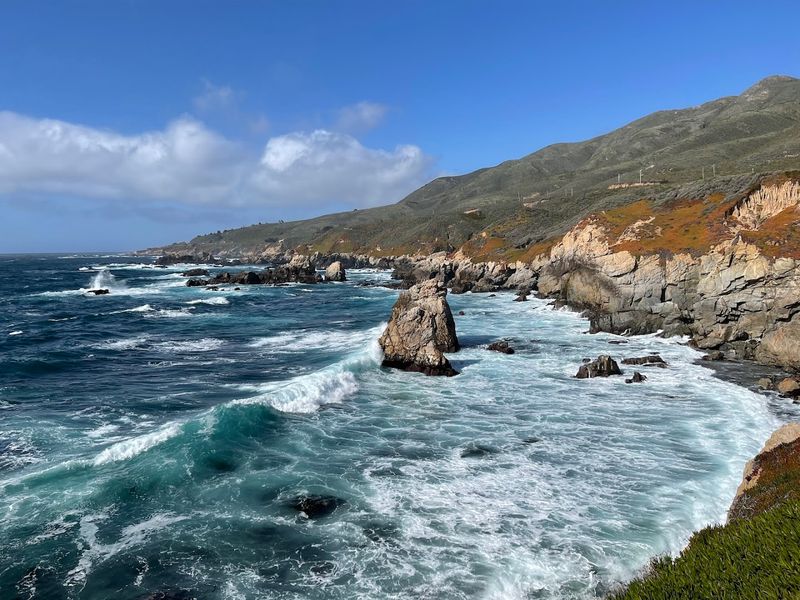
Few stretches of road in the country produce the same jaw-dropping reaction that Highway 1 through Big Sur tends to deliver on a clear afternoon.
The cliffs drop sharply into the Pacific, and the ocean below shifts between deep navy and pale green depending on how the light hits.
Cypress trees cling to the rocky edges with a sculptural quality that looks almost deliberately placed.
The sound of the surf below is constant, and the mist that rolls in from the water softens the edges of everything just enough to make the whole scene feel cinematic.
Pullouts along the highway offer overlooks where the view stretches for miles in both directions, with no buildings or infrastructure interrupting the frame.
Early morning tends to offer clearer skies before the coastal fog builds.
Big Sur has no single town center, so planning ahead with fuel and snacks is a practical move before heading into the corridor.
Each bend reveals something slightly different, which is part of why so many people return more than once.
2. Yosemite Valley
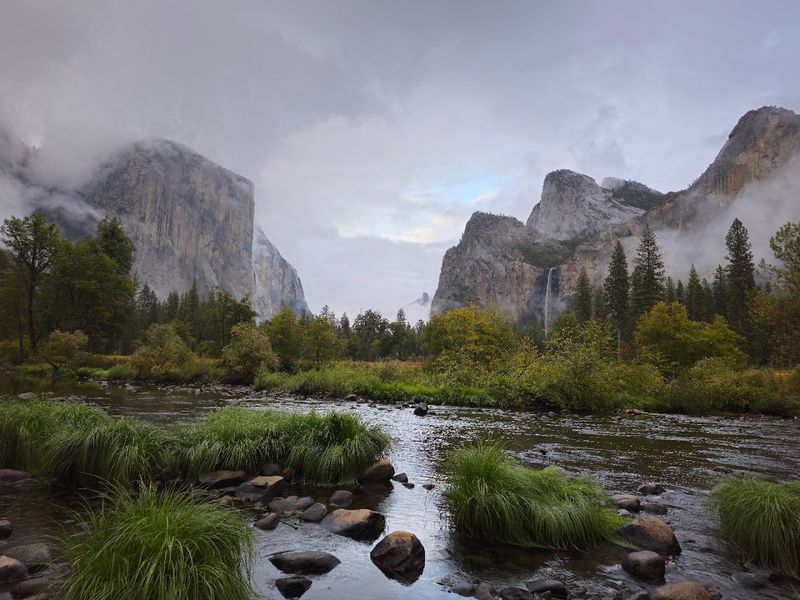
Granite walls that rise thousands of feet on both sides of a flat green valley create a visual effect that feels almost mathematically perfect.
Yosemite Valley sits inside Yosemite National Park in the Sierra Nevada and draws millions of visitors each year, yet the scenery manages to feel overwhelming no matter how many times someone has seen it in photographs.
The waterfalls, especially in late spring when snowmelt is at its peak, pour down the rock faces in long white ribbons.
El Capitan and Half Dome are the two formations that tend to anchor every wide shot of the valley, and both look genuinely unreal when seen in person for the first time.
The meadows at the valley floor reflect the cliffs in the Merced River during calm mornings, adding a mirrored quality to an already striking view.
Light changes quickly here, and golden hour bathes the granite in warm amber tones that no filter could realistically replicate.
Shuttle buses run through the valley and make accessing most major viewpoints manageable without a car once inside.
3. Mono Lake
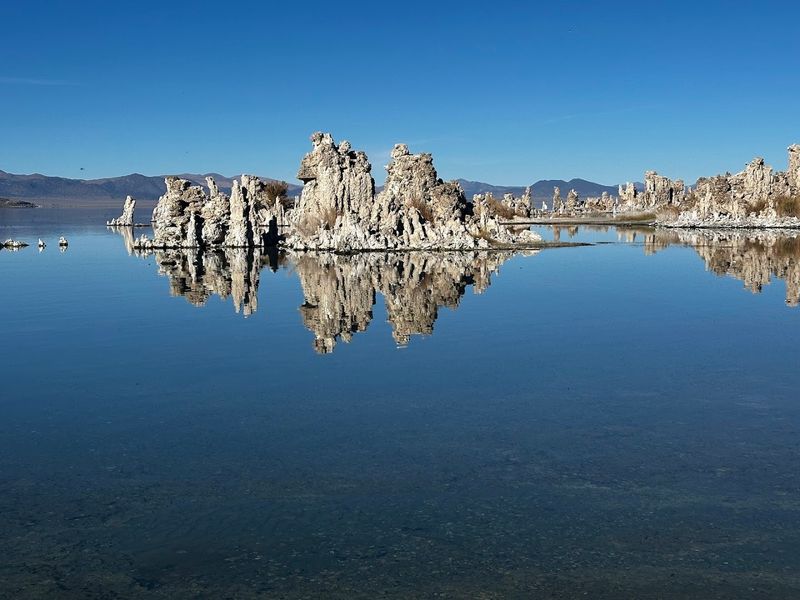
Rising from still, alkaline water like columns from a forgotten civilization, the tufa towers at Mono Lake create one of the most genuinely strange landscapes in the American West.
These calcium carbonate formations built up slowly over thousands of years as freshwater springs bubbled up through the salty lake bed.
The result is a shoreline that looks more like a science fiction set than a natural body of water.
Located along the eastern edge of the Sierra Nevada near the town of Lee Vining, Mono Lake sits at a high elevation and offers big open skies that make photography especially rewarding around dawn and dusk.
The water is too salty and alkaline for fish, but brine shrimp thrive in it and attract enormous flocks of migratory birds each year.
Watching thousands of birds move across the lake surface adds a layer of movement to an otherwise still and eerie scene.
The Mono Lake Tufa State Natural Reserve has boardwalk trails that lead visitors close to the formations without damaging them.
Informational signs along the trail explain how the towers formed and why water levels matter for their preservation.
4. Antelope Valley California Poppy Reserve
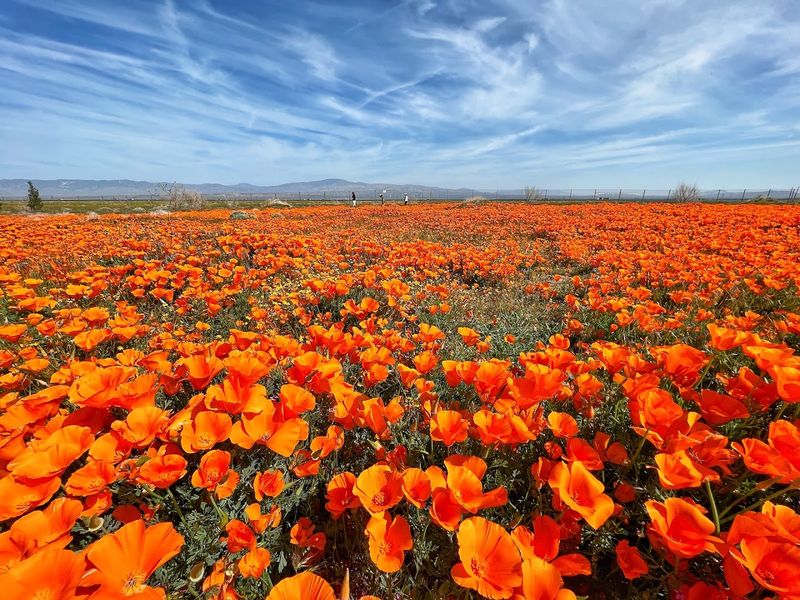
When conditions align in late winter or early spring, the hills of Antelope Valley turn a shade of orange so saturated it genuinely looks like someone cranked up the color slider on a photo editing app.
The California Poppy Reserve in Lancaster protects one of the most reliable and stunning wildflower displays in the state, though bloom intensity varies significantly from year to year depending on winter rainfall.
Peak bloom typically falls somewhere between late February and mid-April, and the best displays tend to happen after wet winters.
On a bright day with blue skies above and orange covering every visible hillside, the contrast is almost disorienting in the best possible way.
Trails wind through the reserve and give visitors a chance to walk directly through the color rather than just viewing it from a distance.
Arriving early in the morning on a weekday offers both better light and a far more relaxed experience.
Poppies close up in cold, cloudy, or windy conditions, so a warm and sunny day gives the best chance of seeing the full display in its most vivid form.
5. Lake Tahoe
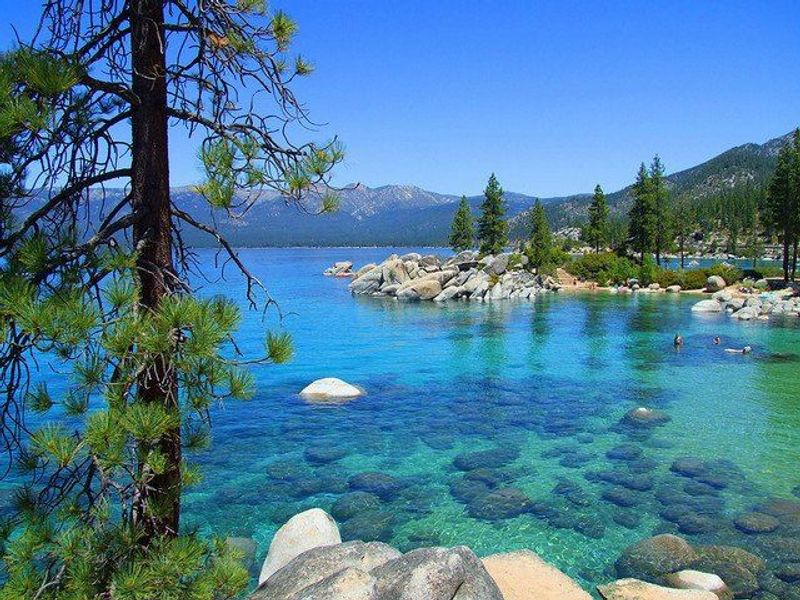
Water that clear and that blue does not look like it belongs to a real lake, yet Lake Tahoe delivers that visual on most sunny days without any help from filters or editing.
Straddling the California-Nevada border in the Sierra Nevada, Tahoe is one of the largest and deepest alpine lakes in North America, and its clarity comes from the cold temperature and relatively low nutrient levels.
Emerald Bay on the California side is perhaps the most photographed corner of the lake, with its vivid green-blue water, surrounding granite peaks, and Fannette Island sitting in the center like a natural focal point.
Inspiration Point above the bay offers a sweeping elevated view that tends to stop people mid-step.
The color of the water shifts throughout the day as sunlight angles change, moving from pale turquoise in the morning to deep sapphire by midday.
Summer brings crowds to the beaches and boat ramps, while winter transforms the area into a snow-covered alpine scene that looks equally unreal.
Fall is often overlooked but can be especially beautiful when the surrounding aspens turn gold.
6. Death Valley National Park
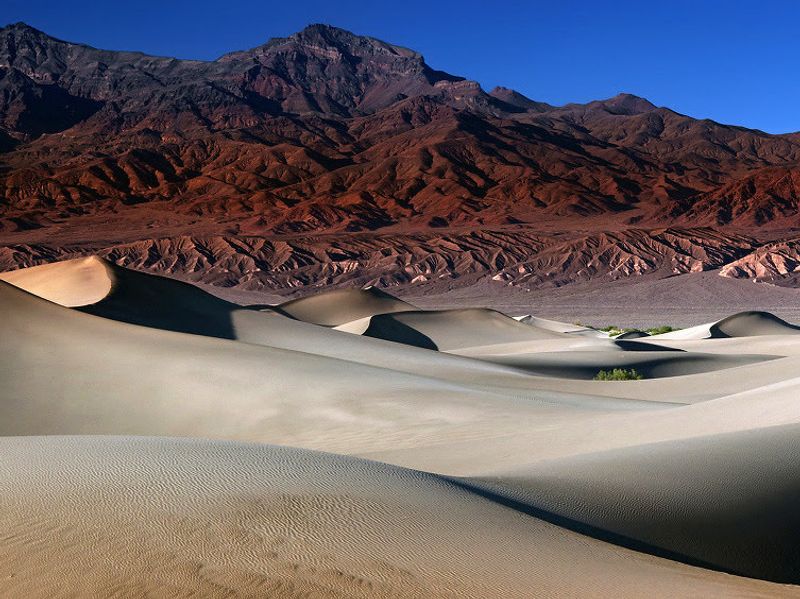
Nothing quite prepares a first-time visitor for the sheer variety of landscapes packed into a single national park.
Its scenery is so visually complex that the place feels more like a collection of different planets than a single desert valley.
Salt flats stretch flat and white toward distant mountains, badlands ripple in shades of brown and red, and sand dunes pile up in golden curves near Stovepipe Wells.
Artist’s Palette is a hillside area where oxidized metals in the soil produce streaks of pink, green, purple, and yellow across the rock surface in a way that looks hand-painted.
Badwater Basin sits at 282 feet below sea level and offers an almost infinite-feeling expanse of white salt crust.
The Mesquite Flat Sand Dunes catch the light at sunrise and sunset in a way that makes them glow like something from a film set.
The park entrance fee is required, and cell service is limited throughout most of the park. Carrying extra water beyond what seems necessary is not optional in this environment.
7. Redwood National and State Parks
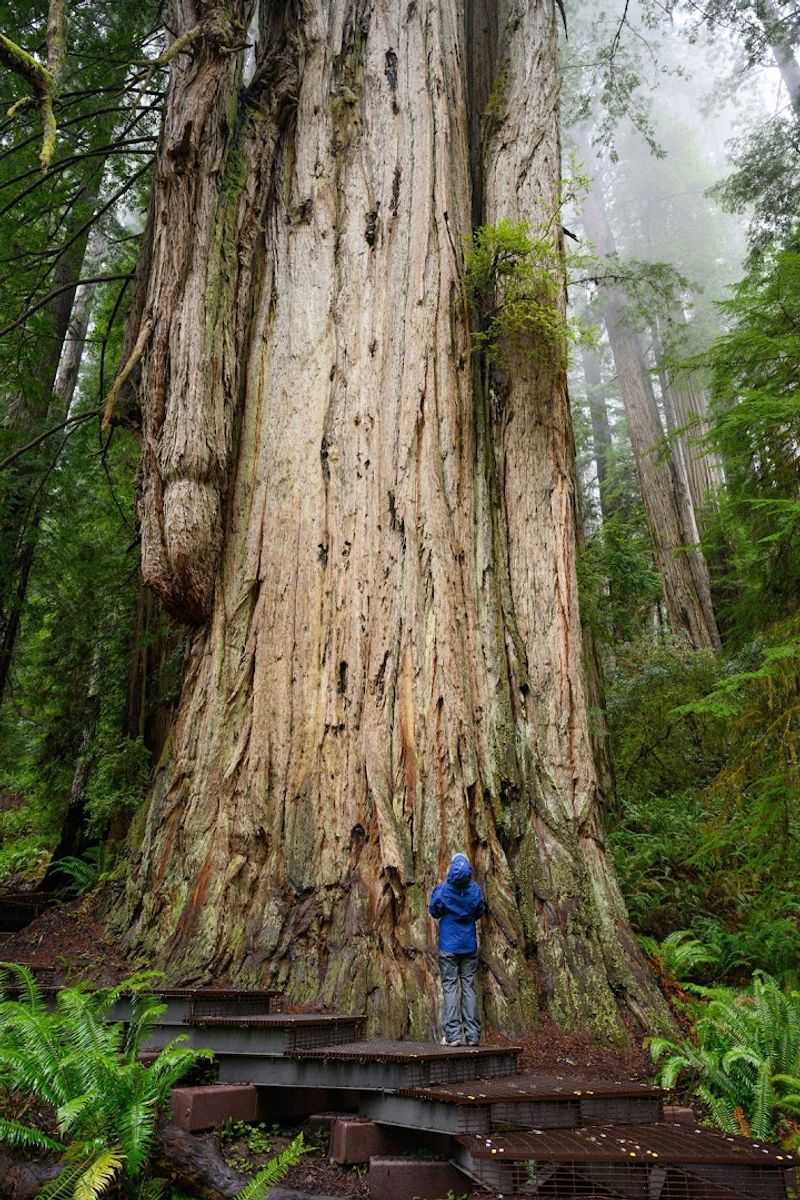
Standing at the base of a coast redwood and looking up is one of those experiences that genuinely reshapes a person’s sense of scale.
The trees in Redwood National and State Parks along California’s northern coast are the tallest living things on Earth, and the forest they create feels more like a cathedral than a woodland.
Shafts of light filter down through the canopy from hundreds of feet above, and the air carries a cool, earthy dampness that feels completely different from any other forest.
Roads and trails that wind through the groves look almost artificially small next to the trunks, which can reach diameters of more than twenty feet.
The Avenue of the Giants, a scenic byway that runs through Humboldt Redwoods State Park nearby, offers a driving experience through old-growth groves that produces the same edited feeling without leaving the car.
Hiking trails range from easy paved paths to more rugged backcountry routes, and most major groves are accessible without a strenuous hike.
8. Joshua Tree National Park
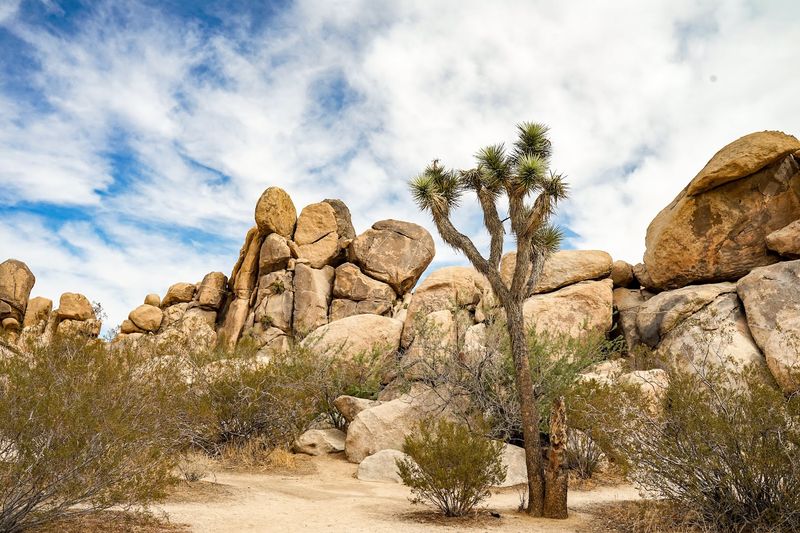
There is a particular strangeness to Joshua Tree that is hard to put into words but immediately obvious in person.
The park sits at the intersection of two distinct desert ecosystems in Southern California, which means the plant life and terrain shift noticeably depending on which section a visitor is exploring.
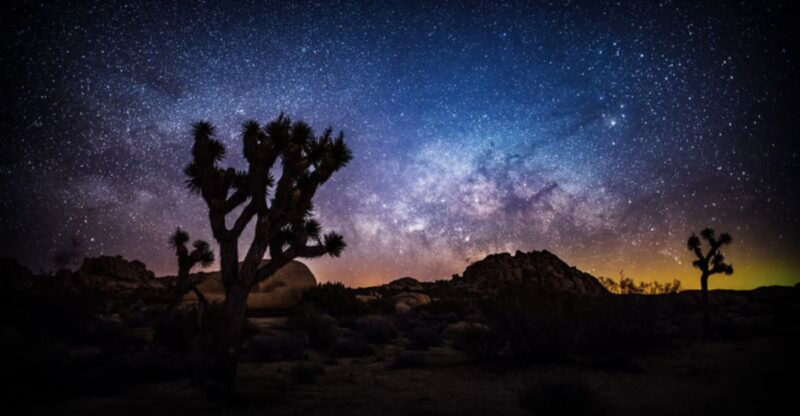
Joshua trees themselves are not actually trees at all but a species of yucca, and their twisted, spiky silhouettes against a wide desert sky look like something drawn rather than grown.
The rock formations scattered throughout the park are equally hard to categorize.
Massive rounded boulders stack on top of each other in configurations that seem structurally impossible, and climbers come from around the world specifically to work those surfaces.
The Cholla Cactus Garden is a dense patch of jumping cholla that glows almost neon at sunrise and sunset when backlit by low-angle light.
Stargazing at Joshua Tree ranks among the best in Southern California due to the park’s distance from major light pollution sources.
9. Point Reyes National Seashore
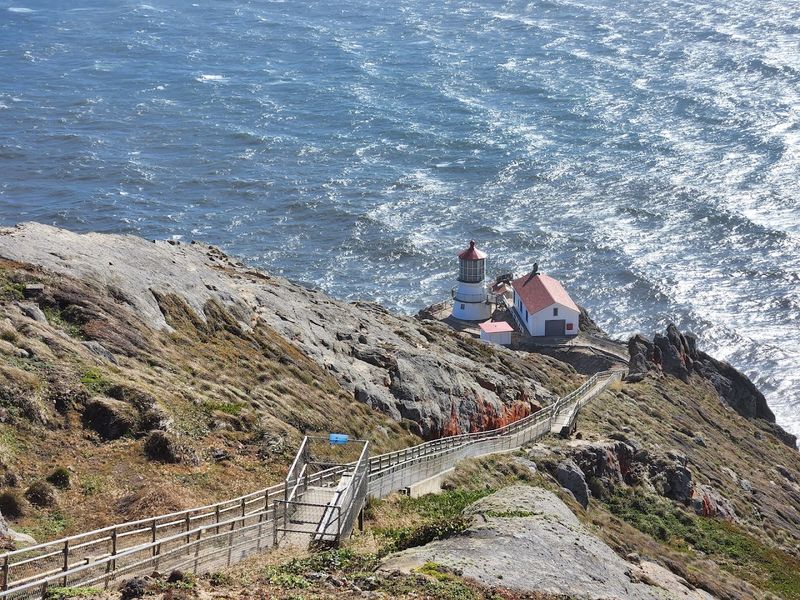
Fog behaves differently at Point Reyes than almost anywhere else along the California coast, rolling in thick and fast and then pulling back to reveal cliffs, beaches, and open grasslands in a slow dramatic reveal.
Located about an hour north of San Francisco in Marin County, Point Reyes National Seashore covers more than 71,000 acres of extraordinarily diverse coastal terrain.
The combination of fog, wind, and varied landscape gives the whole area a moody, cinematic quality that changes hour by hour.
Tule elk roam the Tomales Point area in herds, and seeing large wild animals moving across open coastal headlands with the Pacific in the background creates a scene that feels almost too composed to be accidental.
Limantour Beach is a long, wide stretch of sand backed by dunes and lagoon habitat, and on a clear day the light there has a particular softness that photographers seek out specifically.
The Point Reyes Lighthouse sits at the far tip of the peninsula and peers out over some of the foggiest and windiest coastline on the continent.
10. McWay Falls in Julia Pfeiffer Burns State Park
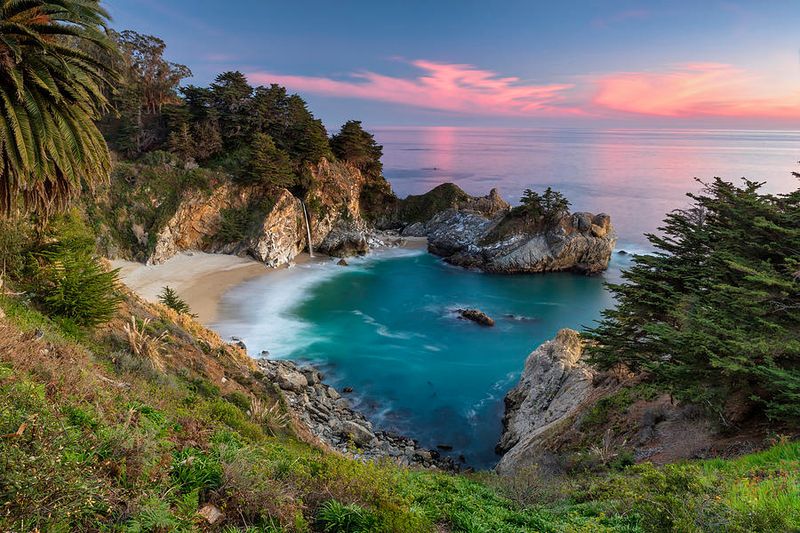
An 80-foot waterfall dropping directly onto a small sandy beach tucked inside a turquoise cove sounds like something from a movie, but McWay Falls in Julia Pfeiffer Burns State Park is entirely real.
The falls flow year-round off a coastal bluff into the cove below, and the color of the water in that sheltered pocket tends toward a vivid blue-green that looks almost tropical against the surrounding brown cliffs and pale sand.
Located along Highway 1 in Big Sur, the state park offers a short and relatively easy trail that leads to the Overlook Trail viewpoint above the falls.
The beach itself is not accessible to visitors, which actually enhances the visual effect since the cove remains pristine and undisturbed.
Viewing from above gives a perspective that frames the waterfall, beach, and ocean together in a single clean composition.
Parking at the park fills quickly, especially on weekends and during summer, so arriving early in the morning improves the chances of finding a spot without a long wait.
11. Alabama Hills
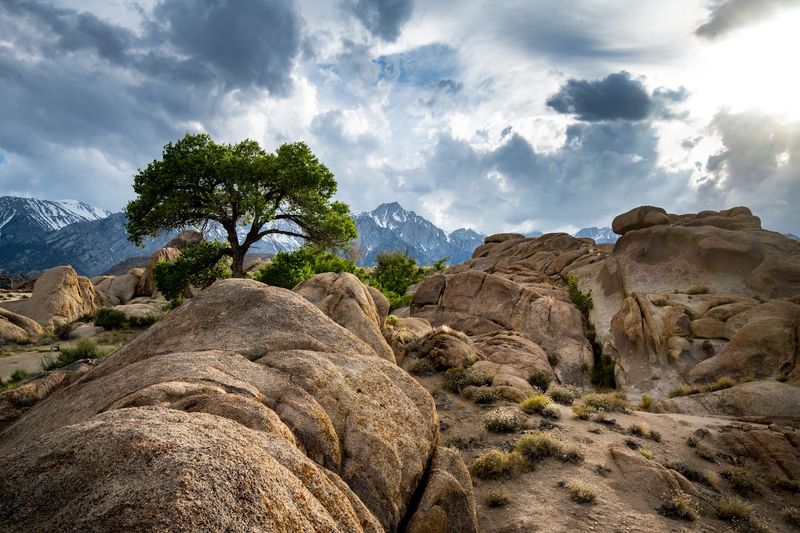
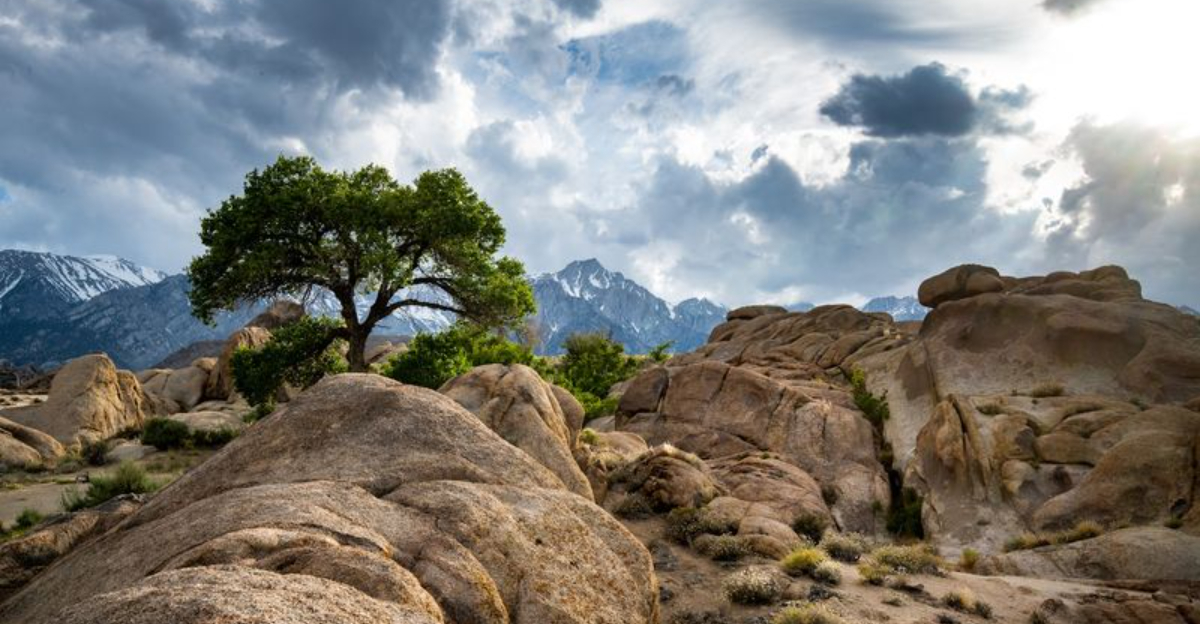
Rounded, rust-colored boulders sitting in the foreground with snow-capped Sierra Nevada peaks rising sharply behind them create a contrast very dramatic.
In fact, it’s so dramatic that it has made Alabama Hills one of the most filmed outdoor locations in the country.
Located just outside the small town of Lone Pine in Inyo County, the area has served as a backdrop for hundreds of Western films, car commercials, and television productions over the decades.
The rock formations look like they were arranged by a set designer, but they are the result of millions of years of weathering and erosion.
The Mobius Arch is a natural stone arch in the hills that perfectly frames Mount Whitney when viewed from the right angle, creating a photograph that looks almost too deliberate to be natural.
Sunrise light turns the rocks a deep orange-red that contrasts sharply with the blue-gray of the mountains behind.
The town of Lone Pine has basic services including fuel, food, and lodging, making it a practical base for a visit to the area.
12. Morro Bay
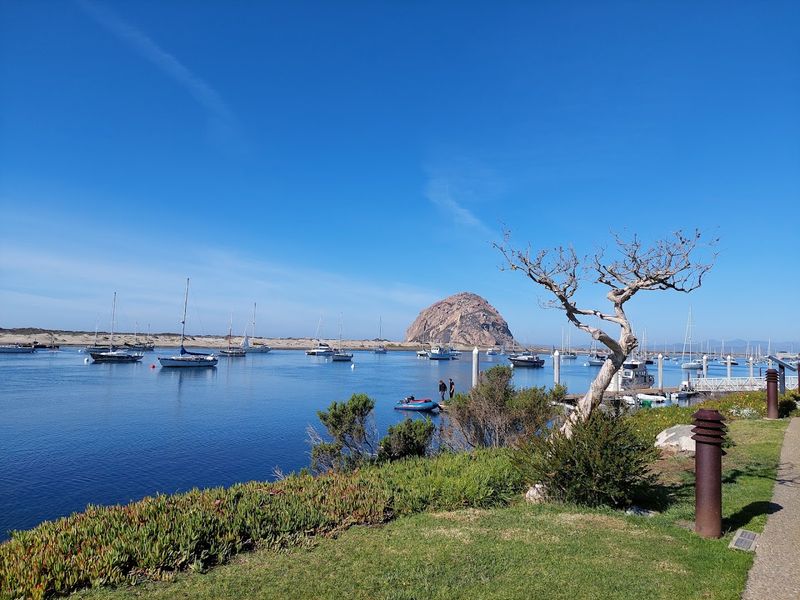
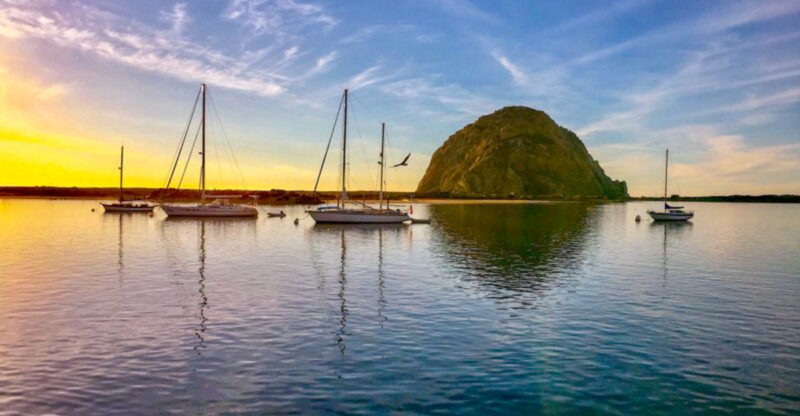
A volcanic plug rising 581 feet from the edge of the bay gives Morro Bay an instant focal point that no other California coastal town can claim.
Morro Rock sits just offshore from the town of Morro Bay in San Luis Obispo County and is visible from almost every angle along the waterfront, making it nearly impossible to take a bad photograph in the area.
The rock has a solidity and presence that anchors the whole scene in a way that feels almost architectural.
The estuary behind the rock is a protected natural area and one of the most significant bird habitats on the California coast, with herons, egrets, and shorebirds visible year-round.
Sea otters float in the bay near the rock and along the waterfront, adding an unexpected layer of wildlife to what is already a visually rich environment.
The Embarcadero along the waterfront has a relaxed, unhurried pace that suits the setting well.
Kayaking and paddleboarding in the bay offer a water-level perspective on the rock that is quite different from the view from shore.
13. Burney Falls
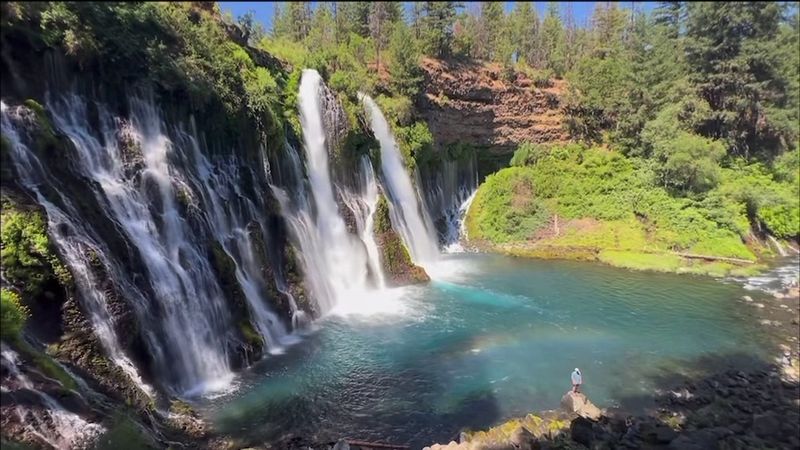
Water does not simply pour over the edge at Burney Falls the way most waterfalls do.
Instead, it seeps through the porous volcanic rock face across a wide surface and emerges in dozens of separate streams simultaneously, creating a curtain of falling water that looks almost too evenly distributed to be natural.
The falls drop about 129 feet into a pool below, and the sheer volume of water moving through the rock face gives the whole scene a kind of quiet power that is hard to describe until seen in person.
The falls flow consistently year-round because the water source is fed by underground springs rather than surface runoff alone.
That consistency means the falls look impressive even during dry summer months when many California waterfalls slow to a trickle.
The pool at the base is a vivid blue-green color that contrasts sharply with the dark basalt rock surrounding it.
A loop trail descends to the base of the falls and offers close-up views of both the falling water and the spring seeps visible in the cliff face.
14. Trona Pinnacles
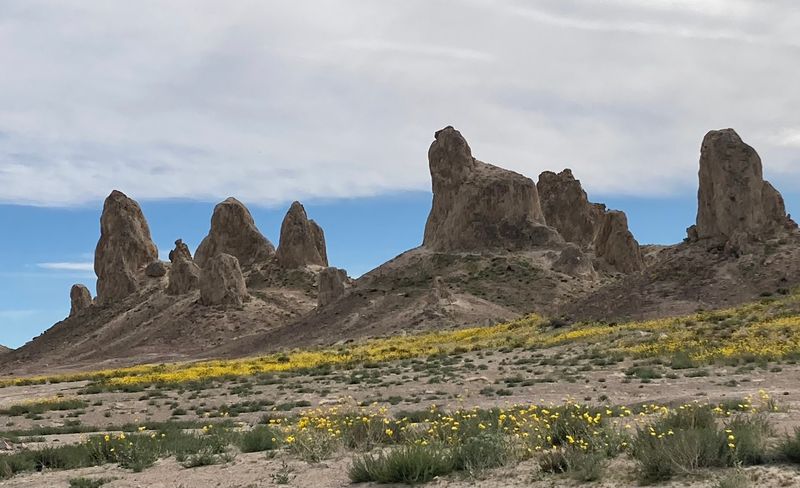
Roughly 500 tufa spires rising from a dry lakebed in the middle of the Mojave Desert is the kind of landscape that makes people stop and reconsider what they thought they knew about California.
The Trona Pinnacles in the California Desert Conservation Area east of Ridgecrest formed underwater between 10,000 and 100,000 years ago when calcium-rich spring water reacted with the carbonate-saturated water of an ancient lake.
Now fully exposed and standing on cracked, pale lakebed sediment, the spires range in height from a few feet to nearly 140 feet.
The formations vary wildly in shape, with some looking like narrow columns, others like rounded mushrooms, and still others like tangled clusters of mineral growth.
The overall effect is so alien that the location has been used as a filming site for science fiction productions.
At sunrise and sunset, low-angle light casts long shadows across the lakebed and turns the pinnacles golden, which makes the scene even more visually striking.
Access requires driving several miles on an unpaved road, and a high-clearance vehicle is recommended though not always strictly necessary in dry conditions.
There are no facilities at the site, so carrying water and supplies is essential. The area is managed by the Bureau of Land Management and is open to the public year-round.