Mormon Pioneers Wintered Here In 1846 And Their Cemetery Still Overlooks The Missouri In Nebraska
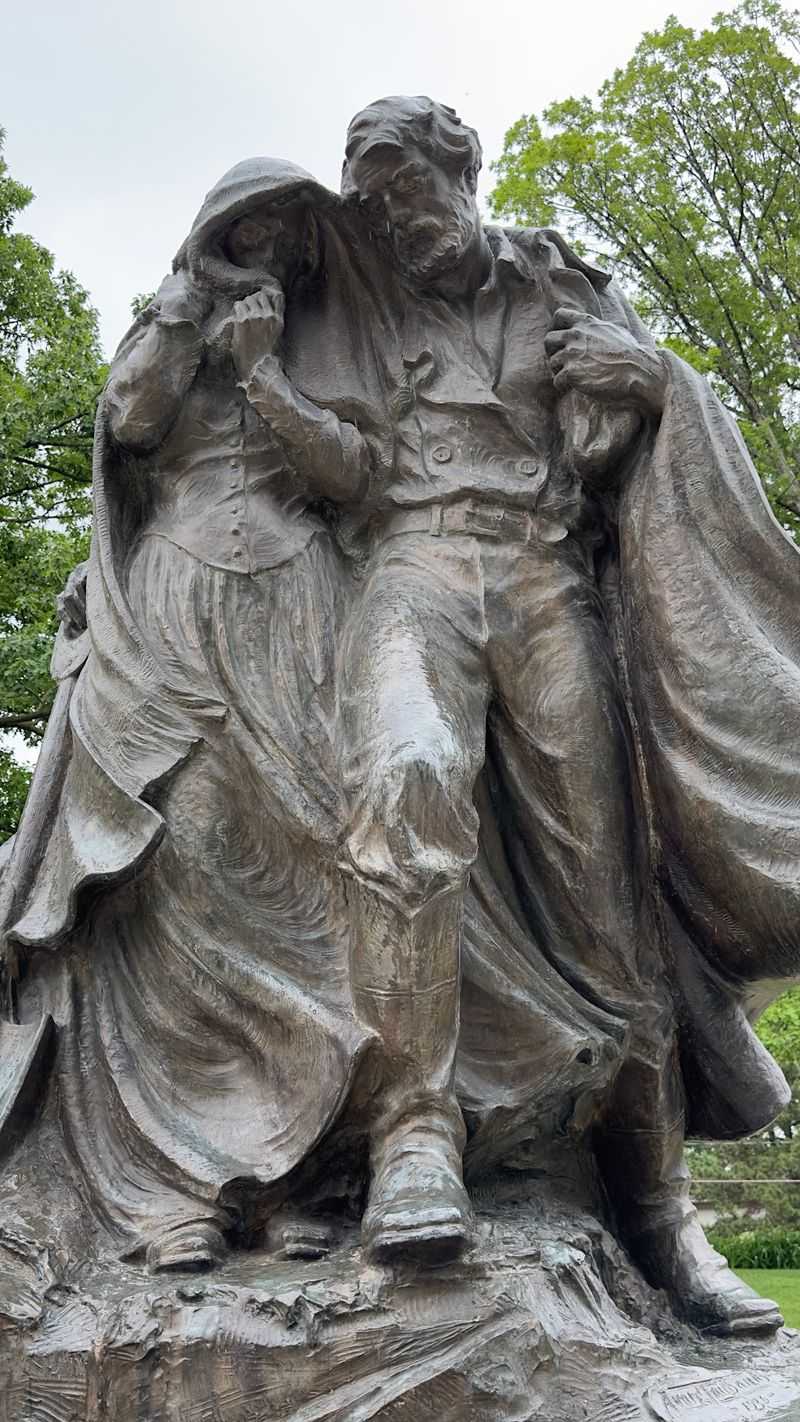
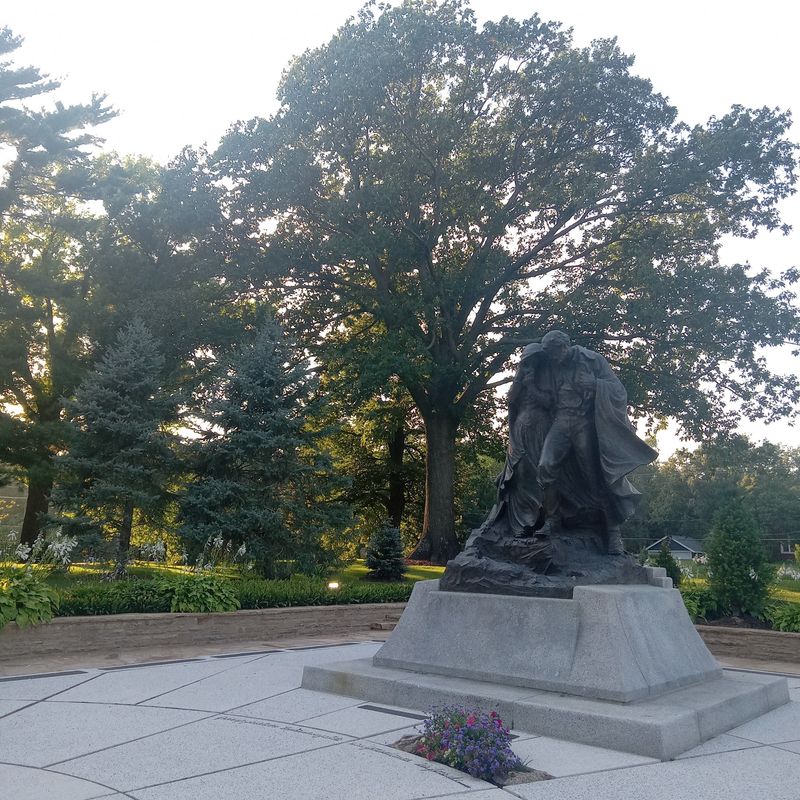
A bronze mother and father bend over a tiny grave on a bluff above the Missouri River, and they’ve held that pose since 1936. The sculptor was Avard Fairbanks, and the hilltop behind the statue holds 359 documented pioneer burials from one hard winter.
About 3,500 travelers camped here in 1846. They threw up log cabins and sod houses, then waited out the cold before heading for the Salt Lake Valley.
Today the spot sits inside a Nebraska city neighborhood, with a free museum just across the street. Kids can grab a real handcart and haul it like an 1840s family, which seems like a fair way to learn humility.
I like that the story stays honest here, quiet in some places and hands-on in others. How many of us have driven past without knowing it?
A Free Museum Next To One Of Nebraska’s Most Meaningful Hilltops
North Omaha’s Florence neighborhood holds a story most commuters never notice. The Mormon Trail Center at Winter Quarters tells it, and admission costs nothing at all.
The center is a museum and visitor center run by The Church of Jesus Christ of Latter-day Saints. It focuses on the pioneers who camped along the Missouri River during the winter of 1846 and 1847.
Across the street sits the Mormon Pioneer Cemetery, a grassy hilltop that still overlooks the river. The Winter Quarters Temple stands right beside it, so three sites share one easy stop.
You don’t need to belong to any church to enjoy it. The exhibits work as straight history, packed with artifacts, paintings, maps and models from the trail years.
The building is not huge, which is honestly part of the charm. You can see it well in an hour or two, then wander outside without feeling rushed.
That size makes it a smart Nebraska afternoon for families, history buffs and anyone curious about the neighborhood. Florence itself is one of Omaha’s oldest corners, so the setting fits the subject nicely.
The Winter That Turned A Riverbank Into A Town
Thousands of travelers reached the west bank of the Missouri in the fall of 1846. They had left Illinois and needed somewhere to wait out the cold before the long push west.
The answer was Winter Quarters, a camp that quickly grew into a working town. Around 3,500 people lived there during that first season.
They built hundreds of log cabins and sod houses in a hurry. Picture a whole community appearing on a Nebraska riverbank in a matter of weeks, with winter breathing down everyone’s neck.
Supplies ran thin, and illness spread through the camp. Scurvy, malaria and measles all left their mark on families that had already traveled hundreds of miles.
Winter Quarters was always meant as a pause, not a permanent home. When spring arrived, the first companies rolled out toward the Great Salt Lake Valley.
The Mormon Trail Center at Winter Quarters lays out that whole season in clear, approachable exhibits. You walk away understanding why a muddy stretch of riverbank became one of the most important stops on the entire trail.
Start With The Short Film Before Anything Else
Every good museum visit needs a warm-up, and this one comes in the form of a movie. Visits typically open with a short film, roughly 15 to 20 minutes long, that sets the scene.
It covers the experiences of the pioneers and why they ended up camped by the Missouri. By the time the lights come up, the names and dates on the walls start to make sense.
Skipping it would be like starting a novel at chapter six. You could manage, but you’d spend the next hour wondering who everyone is.
The film is especially handy for visitors with no background in Latter-day Saint history. It explains the journey from Illinois, the stop in Nebraska and the long road to Utah without assuming you already know the story.
Families with younger kids may appreciate the format too. A quick video buys a few calm minutes before the hands-on exhibits take over.
Once it wraps, you can head into the galleries with a mental map already in place. That small investment of time pays off in every room that follows at the Mormon Trail Center.
Friendly Guides Who Bring The Plains Stories To Life
Missionaries from The Church of Jesus Christ of Latter-day Saints serve as tour guides here. They walk groups through the galleries and share stories about families who crossed the plains.
Those stories add detail beyond the short placards on the walls. A good guide can turn a faded photograph into a real person with a name and a hometown.
Prefer to roam solo? You can explore the exhibits on your own at whatever pace suits you.
The guided option works well for groups with mixed ages. Guides can point kids toward the hands-on pieces while adults linger over maps and artifacts.
The atmosphere stays relaxed rather than preachy. The focus remains on the pioneers and the hardships they faced on the trail.
A thorough tour can run about an hour, so plan accordingly if you want the full version. It’s a nice fit for scout troops, homeschool groups and school field trips looking for something more lively than a textbook chapter.
You Can Grab A Handcart And Feel The Pioneer Workout
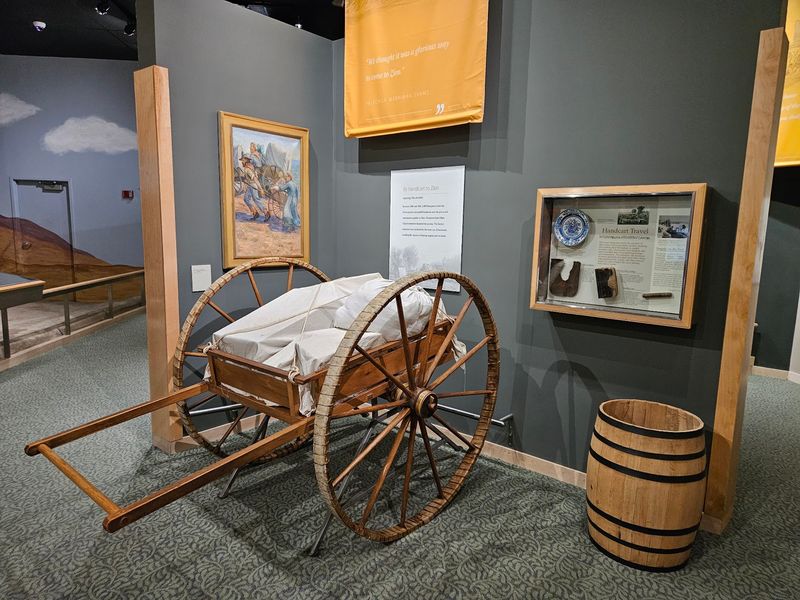
Some museums say look but don’t touch. This one hands you a handcart and basically dares you to pull it.
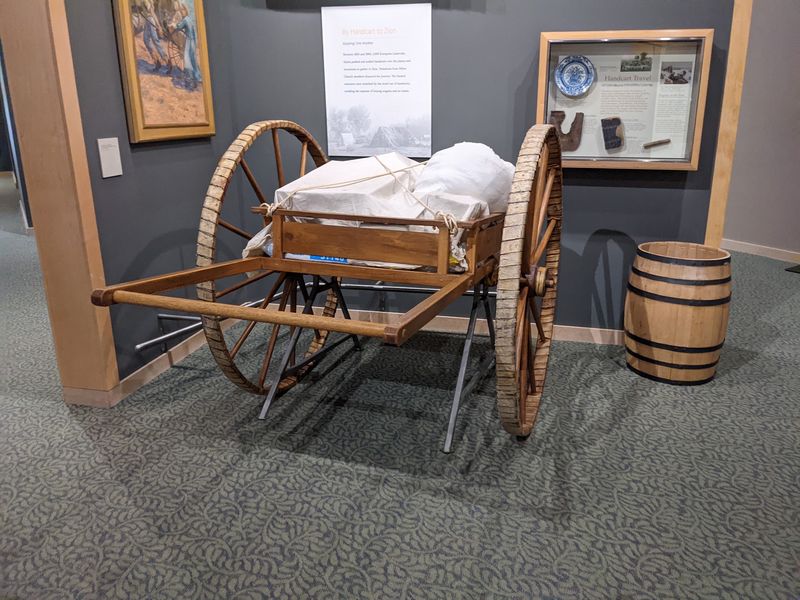
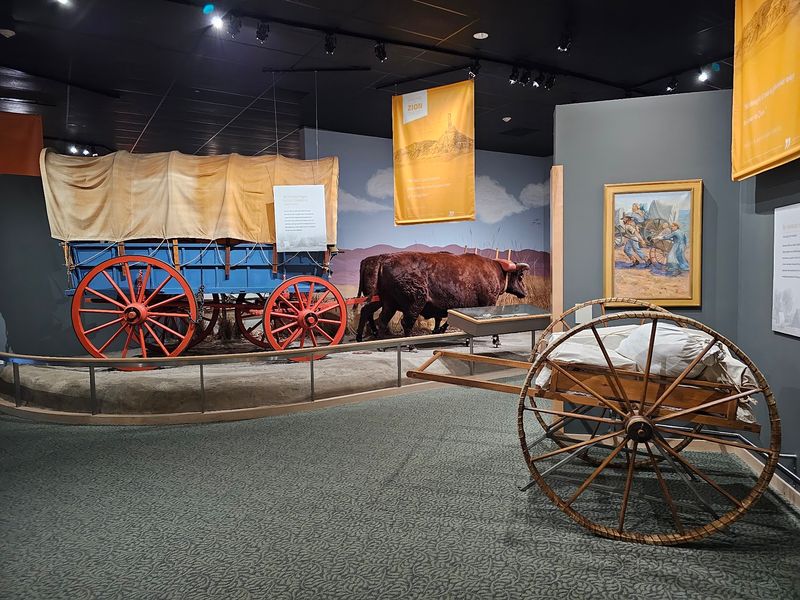
The handcart display ranks among the most popular stops inside the Mormon Trail Center at Winter Quarters. Later pioneer companies used handcarts like these to haul their belongings west on foot.
Giving one a tug makes the history feel a lot less abstract. Now imagine dragging it across Nebraska, then Wyoming, then into the mountains.
Hats and bonnets are on hand for photos, which turns the moment into a family souvenir. Expect at least one person in your group to strike a dramatic, weary-pioneer pose.
Kids tend to treat it like a game, and that’s perfectly fine. The lesson sneaks in anyway, right around the second or third step.
Adults may find it surprisingly thought-provoking too. One short pull across a smooth museum floor is enough to make 1,300 miles of prairie sound downright wild.
Life-Size Cabins, Wagons And Even An Emigrant Ship
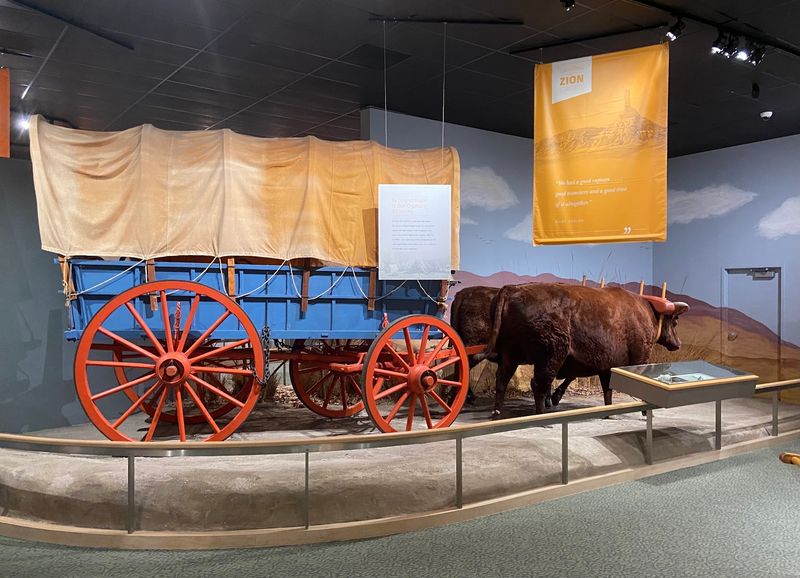
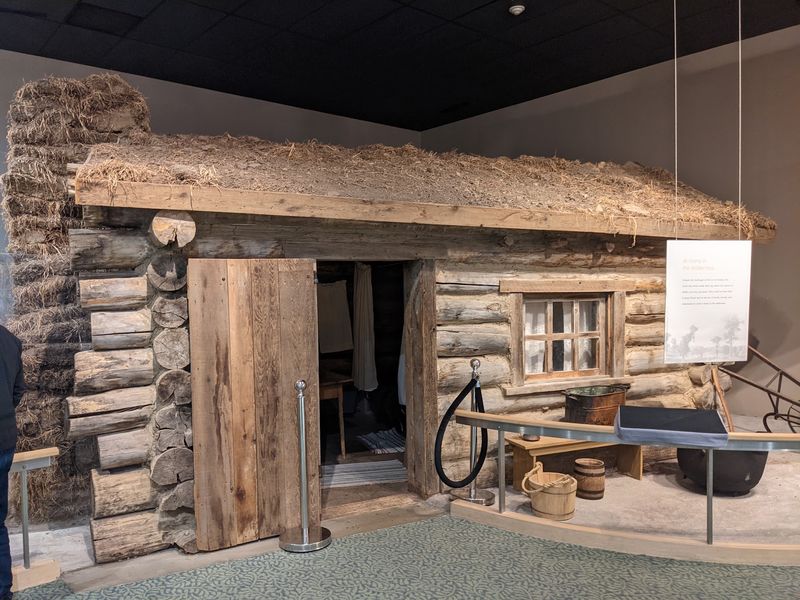
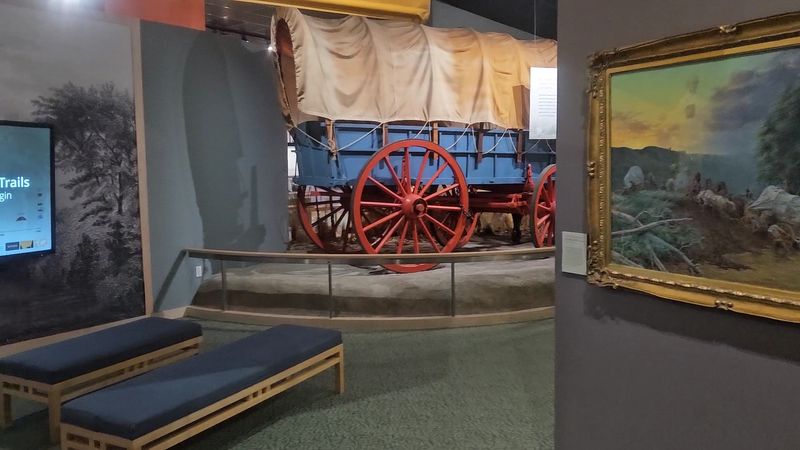
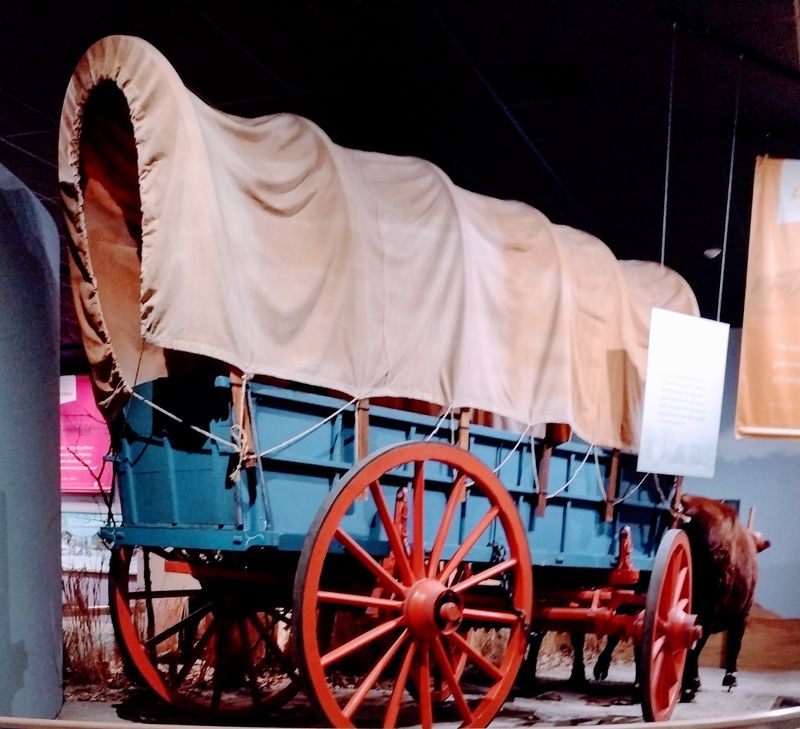
Scale matters when you’re telling a story this big. The exhibits include a life-size cabin and a full wagon, so you can stand where a pioneer family would have stood.
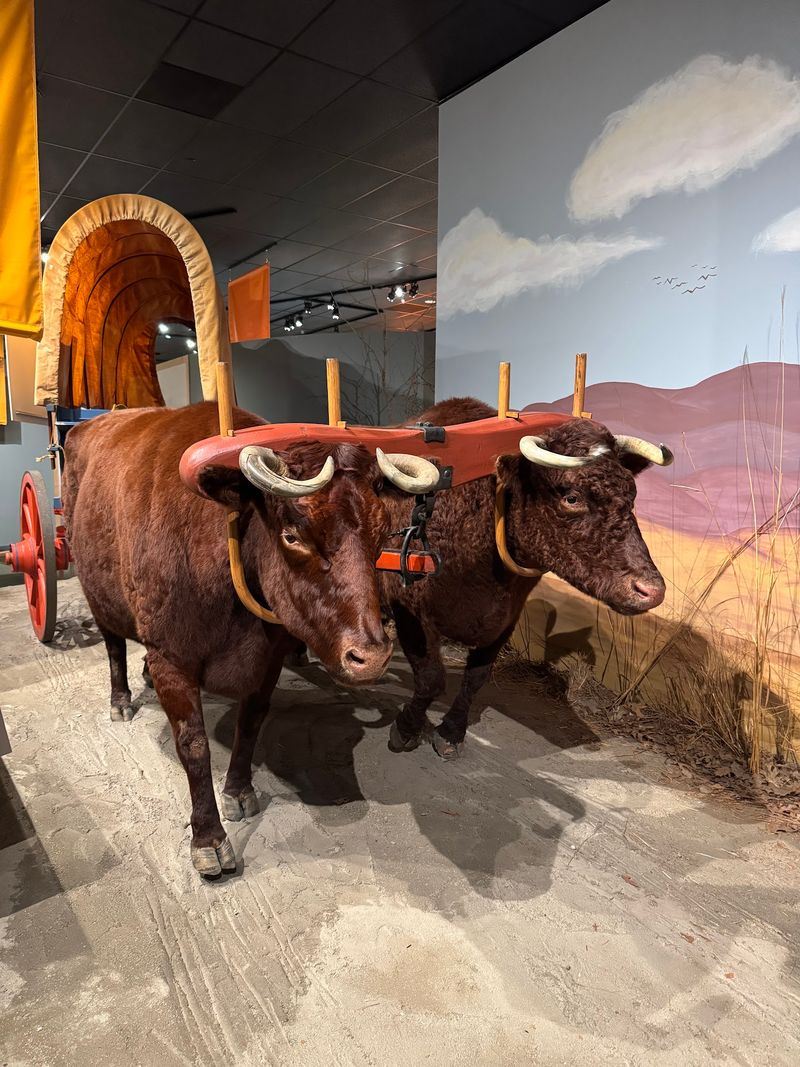
Model oxen help show what really powered most of those wagons. They’re a good reminder that the trip west moved at roughly walking speed.
Another display features the emigrant ship Wyoming. It connects the trail to the many converts who sailed from overseas before ever reaching the plains.
That ocean piece surprises plenty of people. The migration was not just a Nebraska and Utah story, but a global one with roots across the Atlantic.
Charts and maps trace the different routes people took to reach the valley. Some visitors have even spotted the names of relatives on those migration displays.
Authentic artifacts that belonged to pioneers round out the galleries. Between the full-size builds and the small personal objects, the museum balances big picture and tiny detail remarkably well.
Felt Cow Pies And Homemade Odometers Keep Kids Busy
Few museums ask kids to gather cow pies, even felt ones. Here it counts as education, since pioneers burned dried dung for fuel on the treeless plains.
Children can pick up those soft stand-ins and learn why the trick mattered. Expect giggles first and actual understanding a few seconds later.
A handmade odometer replica shows how travelers tracked miles from a turning wagon wheel. It’s a clever bit of frontier engineering that kids can test with their own hands.
Interactive displays are scattered throughout the galleries. Toys and simple activities help wiggly younger visitors stay engaged while parents read.
Families with kids from preschool through middle school get plenty out of the place. Teens may roll their eyes at the bonnets, then quietly try one on anyway.
Because admission is free, it’s an easy pick for a rainy Nebraska day or a summer break outing. You get a solid educational stop without a ticket booth or a gift-shop guilt trip.
Paintings Downstairs Deserve More Than A Quick Glance
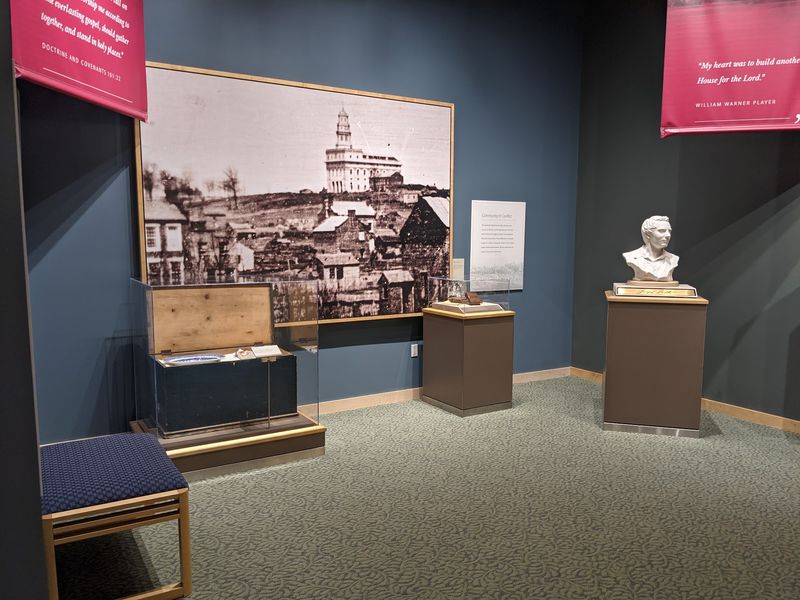
Plenty of visitors finish the main floor and head for the door. That’s a mistake, because the lower level holds an art display worth seeing.
Paintings appear throughout the Mormon Trail Center at Winter Quarters. They show pioneer scenes, trail life and moments from the 1846 and 1847 encampment.
Art fills in what artifacts can’t. A spoon or a quilt tells you what people owned, while a painting hints at what they felt.
Old photographs and models add another layer. Together they give the story texture without leaning on long blocks of text.
Take your time down there if the crowd is light. The quieter setting makes a nice break after the busier hands-on exhibits upstairs.
Art lovers who come mainly for history might be pleasantly surprised. Even a quick lap through the gallery adds color, quite literally, to everything you learned in the film and on the tour.
The Bronze Statue That Stops People In Their Tracks
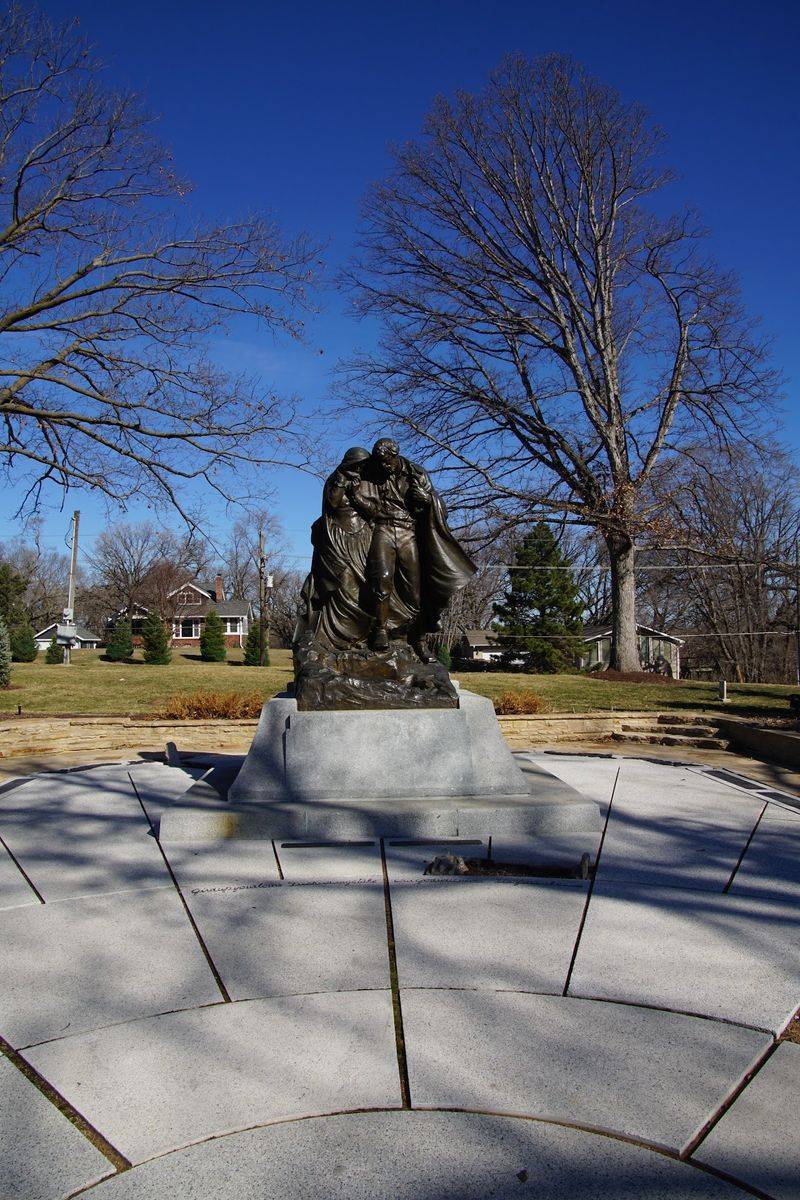
Avard Fairbanks created the bronze called Tragedy at Winter Quarters, and it was erected in 1936. It shows two grieving parents at an infant’s grave, and it anchors the Mormon Pioneer Cemetery.
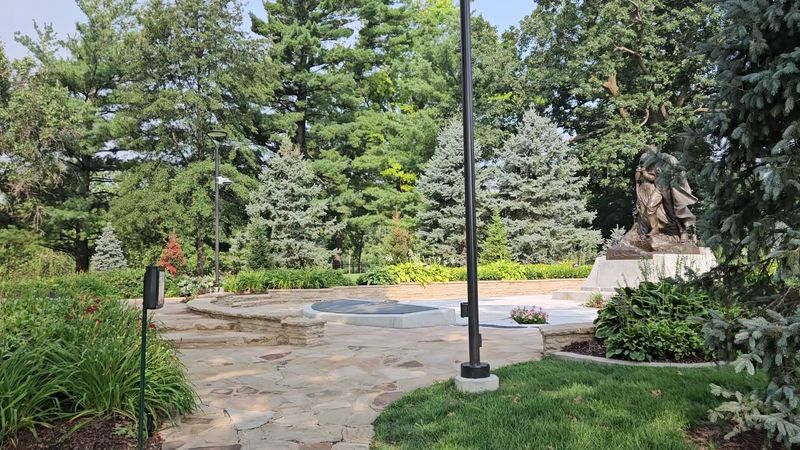
The cemetery sits across the street from the trail center, behind the Winter Quarters Temple. A short walk gets you there.
Records document 359 pioneers buried on this hilltop from the Winter Quarters years. Some estimates run higher, and most graves are no longer marked.
That absence of headstones makes the statue even more important. It stands in for hundreds of families whose names now live mostly in records.
Omaha named the cemetery a local landmark in 1990. The grounds are kept tidy and green, with the Missouri River still in view as it was for the original settlers.
Give yourself some quiet minutes here. The museum explains the winter, but this hilltop makes it personal in a way no exhibit quite can.
Your Own Ancestors Might Be On This Hill
Here’s a twist most cemeteries can’t offer. With a free FamilySearch account and a phone, you may be able to locate relatives buried on this hilltop.
Small handouts near the sculpture explain how to use the app on site. The directions are simple enough for first-timers.
Visitors with deep pioneer roots sometimes discover several ancestors resting here. That turns a history lesson into a family reunion of the most reflective kind.
The trail center can help too, with maps that point toward approximate grave locations. Staff can explain how to get started if technology isn’t your thing.
Having a well-built family tree in FamilySearch makes the search work best. If you’re planning a visit, filling in a few branches beforehand is a smart move.
Even without a personal link, watching the process feels meaningful. Every name tied to this ground once belonged to someone who hoped to see the valley out west.
One Stop On A 1,300-Mile Trail Through Five States
Zoom way out and Winter Quarters becomes one bead on a very long string. The Mormon Pioneer National Historic Trail stretches about 1,300 miles across five states.
Nearly 70,000 Latter-day Saints traveled the route between 1846 and 1869. Winter Quarters in Nebraska served as a major staging ground along the way.
That bigger picture is what makes the trail center so useful. It ties a single neighborhood in Omaha to a migration that reshaped the American West.
The hilltop has more layers than one era, too. After the pioneers moved on, the Florence community began using the cemetery for its own residents.
The Winter Quarters Temple now stands beside the cemetery, adding a modern chapter to the old story. Its landscaped grounds make the short walk between sites pleasant.
Road-trippers following the trail across Nebraska can treat this as a natural starting point. It frames everything you’ll see farther west along the Platte.
Plan A Relaxed Afternoon And Leave Time For The Hill
Getting there is easy from anywhere in the Omaha metro. The Mormon Trail Center at Winter Quarters sits at 3215 State St, Omaha, NE 68112.
The center opens every day of the week, with shorter afternoon hours on Sunday. Checking times before you go is always smart.
Admission is free, which makes this a generous Nebraska outing for families on a budget. Plan about an hour inside, plus another 30 to 45 minutes for the cemetery and temple grounds.
Start with the film, then choose a guided tour or wander on your own. Save the walk across the street for last so the hilltop gets your full attention.
Families, history fans and anyone with pioneer ancestry will find plenty here. Quiet reflection and hands-on fun share the same visit surprisingly well.
So is it worth the trip? For a few free hours, you get a riverbank winter, a famous bronze and maybe a long-lost relative, and that’s a pretty rich afternoon.