These 12 California Destinations Feel Built Around One Strange Local Legend
Local legends make travel more fun because they add a little side-eye to the scenery.
A lake is just a lake until someone says a creature might live there. A road feels normal until the ghost story starts.
A small town changes fast once a strange rumor has been passed around long enough to feel almost official.
The facts matter, of course. So does the fun of not knowing exactly where the story ends and the exaggeration begins.
California has plenty of beautiful places, but the most interesting ones come with rumors that refuse to behave.
They turn landmarks into conversation starters and make visitors look closer.
Maybe the legend is spooky. Maybe it is funny.
Maybe it sounds completely ridiculous until you hear it from someone who tells it with full confidence.
These 12 destinations prove a strange local story can shape the whole way a place feels.
1. Winchester Mystery House, San Jose
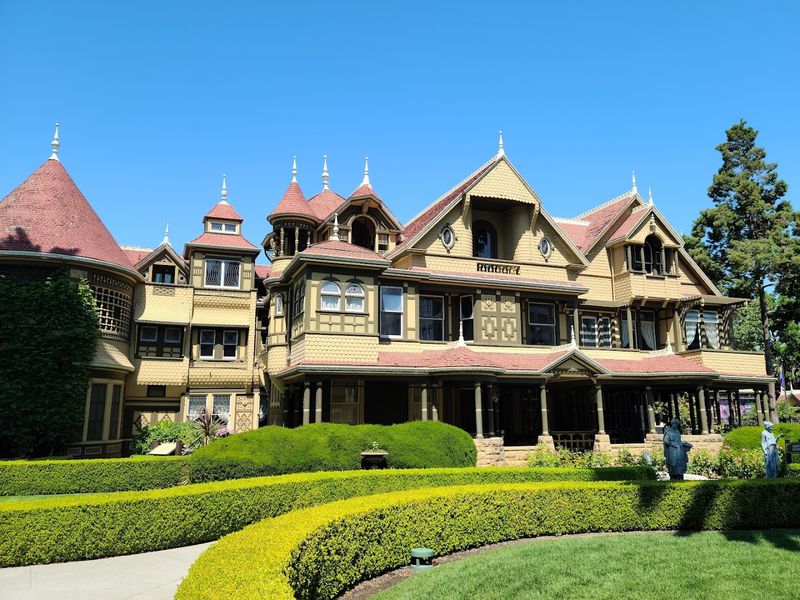
Few buildings in the country carry as much architectural mystery as this sprawling Victorian mansion in San Jose.
Located at 525 South Winchester Boulevard, the house was built by Sarah Winchester starting in 1884 and construction continued nonstop for 38 years until her passing in 1922.
The legend holds that she believed spirits were haunting her and that building continuously would keep them at bay.
The result is a labyrinth of over 160 rooms, staircases that lead into ceilings, doors that open onto walls, and corridors that twist back on themselves for no logical reason.
The architectural oddities feel less like mistakes and more like deliberate attempts to confuse something unseen. Touring the house tends to raise more questions than it answers, which may be exactly the point.
Guided tours run regularly throughout the year and cover different parts of the property depending on the tour type.
Flashlight tours are available on select evenings and attract visitors specifically interested in the paranormal side of the legend.
Parking is available on site and the attraction is accessible by public transit from downtown San Jose.
2. The Queen Mary, Long Beach
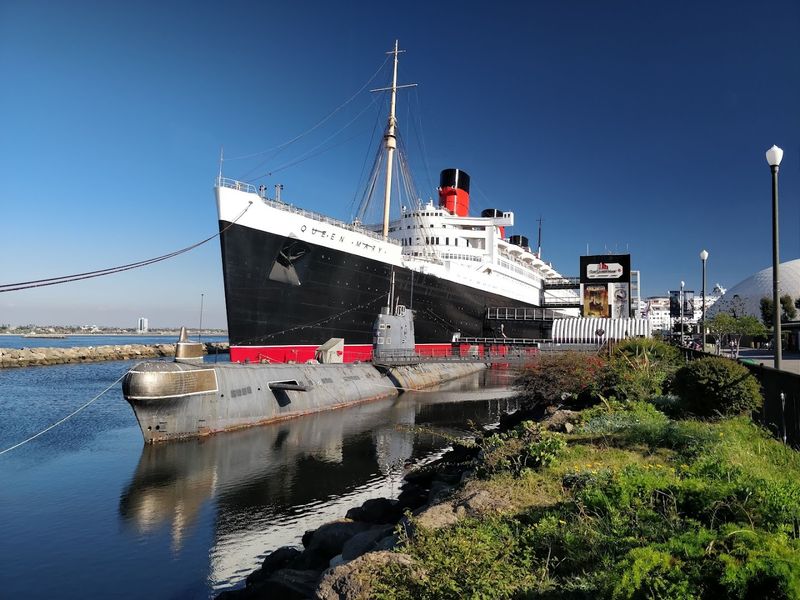
Docked permanently in Long Beach Harbor, the Queen Mary is one of the most recognizable ships in the world and one of California’s most visited legend-driven attractions.
The vessel served as a luxury ocean liner and then a troop transport ship before being retired and converted into a floating hotel and museum.
Its long history across multiple eras means it carries stories from many different periods of human activity.
Paranormal tours have been a central part of the Queen Mary experience for decades, with certain areas of the ship said to produce unexplained sounds, temperature drops, and visual anomalies.
The engine room, the first-class pool, and several cabin corridors are frequently mentioned in ghost-tour descriptions.
Whether visitors come as true believers or curious skeptics, the atmosphere of the ship tends to feel genuinely heavy in certain sections.
Hotel accommodations are available on board for those who want to spend the night, and the experience of sleeping inside a historic ocean liner is unusual regardless of one’s stance on the paranormal.
3. The Mystery Spot, Santa Cruz
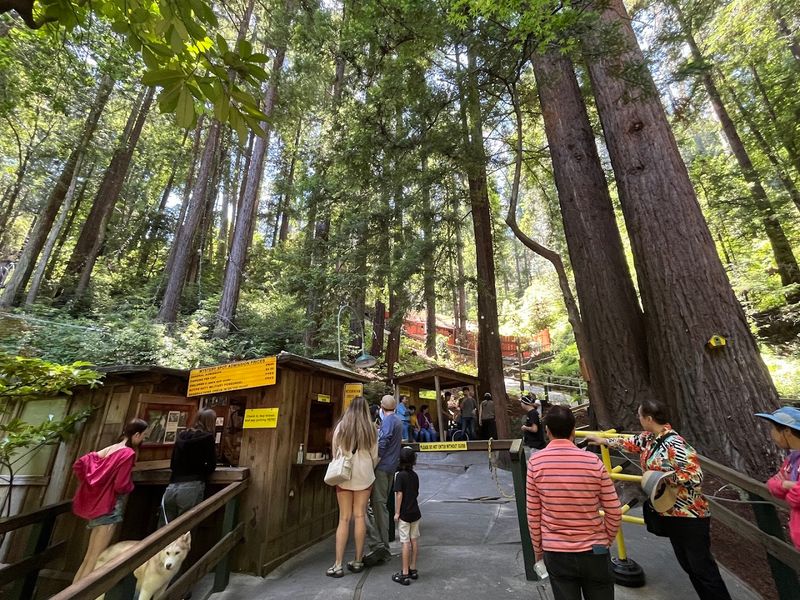
In the redwood hills above Santa Cruz, the Mystery Spot has been drawing curious visitors since it opened in 1940.
The attraction is centered on a roughly 150-foot circular area where compasses reportedly behave erratically and people standing side by side seem to change height depending on where they position themselves.
The legend surrounding the spot has shifted over the decades, with various explanations offered ranging from gravitational anomalies to underground carbon dioxide emissions to magnetic disturbances in the earth.
None of these have been scientifically confirmed, and the Mystery Spot has never officially endorsed a single explanation.
That ambiguity is part of what keeps the experience feeling genuinely strange rather than staged.
Tours are guided and run in small groups, lasting around 45 minutes. The path through the property involves some uneven terrain and mild inclines so comfortable shoes are recommended.
The site is located a short drive from downtown Santa Cruz and parking is available on site. B
4. Confusion Hill, Piercy
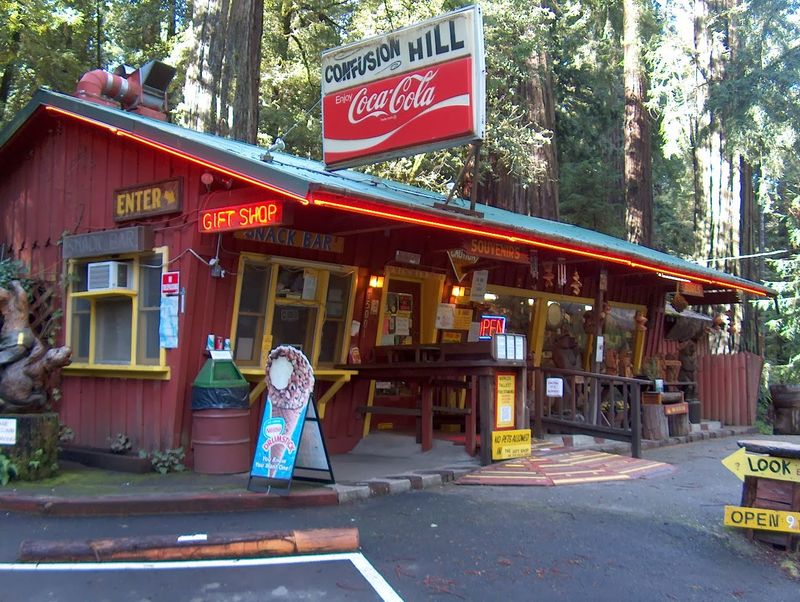
Sitting along the Avenue of the Giants corridor in Humboldt County, Confusion Hill is one of California’s oldest roadside oddities and a beloved stop for travelers heading through the redwoods.
The gravity house at the center of the attraction plays with perception in ways that feel genuinely disorienting even when a visitor knows the science behind it.
Water appears to flow uphill, chairs balance on two legs against the wall, and the floor itself seems to slope in contradictory directions.
Beyond the gravity house, the property features a small redwood-themed park with carved figures and the site’s quirky mascot, the Chipalope, a half-chipmunk half-antelope creature that has become a recognizable symbol of the attraction’s playful personality.
The Chipalope lore is entirely local and entirely earnest, which gives Confusion Hill a charm that larger theme parks tend to lack.
A miniature train ride through the redwoods is also available on site and tends to be popular with families.
The attraction is open seasonally and hours can vary so checking ahead before visiting is a practical idea. The location is accessible from Highway 101 near Piercy in Northern California.
5. Mount Shasta, Siskiyou County
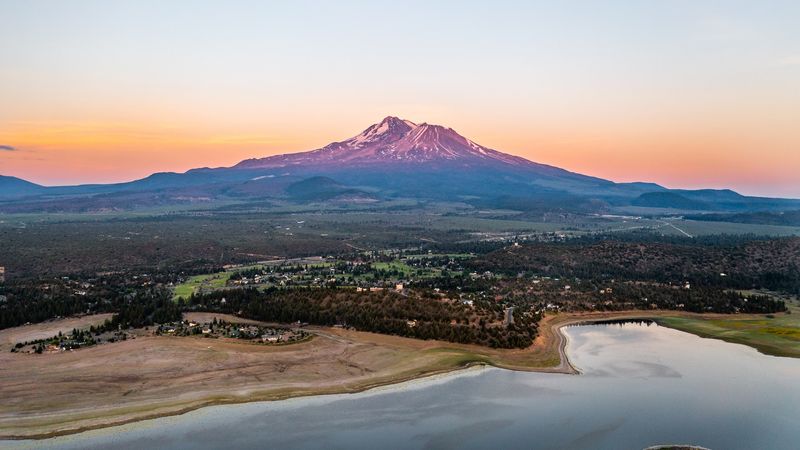
Standing at over 14,000 feet in Northern California’s Siskiyou County, Mount Shasta is one of the most visually commanding peaks in the entire state.
The mountain is an active stratovolcano surrounded by forests, glaciers, and a deeply layered set of legends that have attracted spiritual seekers, researchers, and curious travelers for well over a century.
The stories attached to Shasta are unusually specific and unusually persistent.
The most widely known legend involves a hidden underground city called Telos said to be inhabited by Lemurians, described as tall, wise beings who survived the sinking of an ancient continent.
Sightings of robed figures near the mountain’s base have been reported on and off for decades, and the area is frequently associated with UFO activity and spiritual vortex energy by those who visit with that intention.
Native Klamath legends also describe powerful spirit beings connected to the mountain’s summit.
The town of Mount Shasta at the base of the peak has embraced the mystical reputation openly with metaphysical shops, crystal stores, and guided spiritual tours available throughout the year.
Hiking trails on the mountain itself range from accessible lower-elevation paths to technical summit routes requiring permits and proper gear.
6. Big Sur And The Santa Lucia Mountains, Central Coast
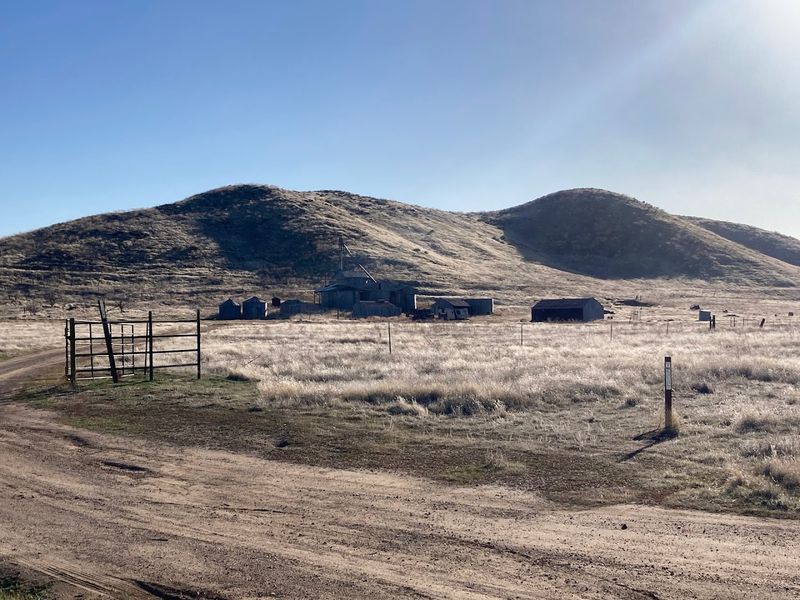
Along the rugged Central Coast stretch of California, the Santa Lucia Mountains rise sharply from the sea and create one of the most remote and visually dramatic landscapes in the state.
The legend attached to this range is called the Dark Watchers, known in Spanish as Los Vigilantes Oscuros, and it describes tall shadowy figures that appear on ridgelines at dusk and disappear when approached or observed too closely.
Accounts of these figures date back at least 300 years and appear in Chumash cave art as well as written accounts from the 19th century.
Hikers on trails through the Santa Lucias frequently report a sensation of being observed from above even when no other people are visible.
The figures are generally described as wearing dark cloaks and wide-brimmed hats and are said to face away from observers as if watching something beyond the visible horizon.
No physical evidence has ever been found and no confirmed explanation has been offered.
The Big Sur coastline itself is accessible via Highway 1 and offers numerous trailheads into the mountains.
Visiting at dusk along ridgeline trails is when the landscape feels most aligned with the legend, though trail conditions and daylight should always be accounted for before heading out.
7. Bodie State Historic Park, Near Bridgeport
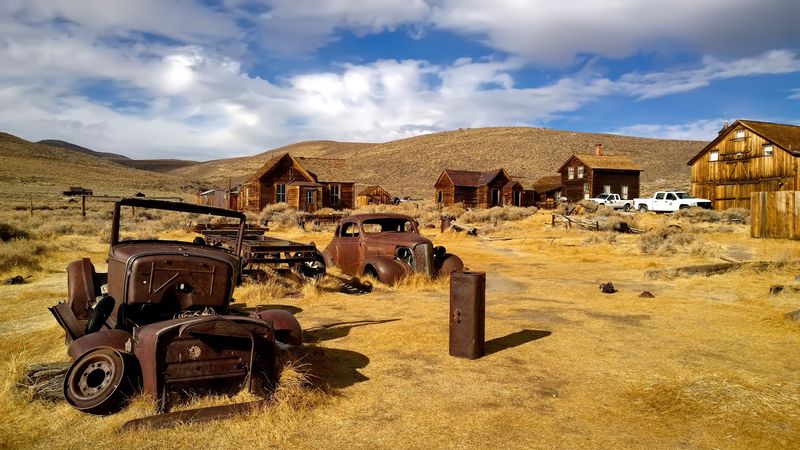
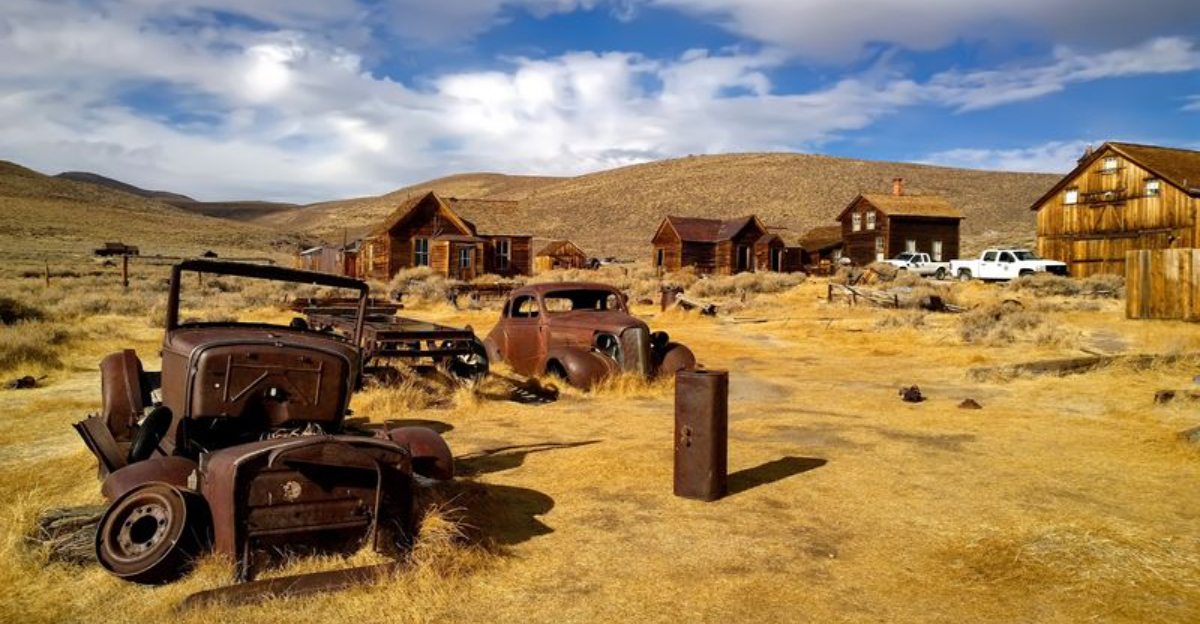
Preserved in a state of arrested decay in the high desert near Bridgeport, Bodie is one of the most atmospheric ghost towns in the American West.
At its peak in the late 1870s the town had a population of nearly 10,000 people and a reputation for lawlessness that spread well beyond California.
Today the remaining buildings stand largely as they were left, with furniture still inside and personal belongings still visible through dusty windows.
The Bodie Curse is the legend that defines the modern visitor experience here.
The story holds that anyone who removes even the smallest object from the park, a nail, a shard of glass, a fragment of wood, will be followed by a string of bad luck until the item is returned.
Park rangers reportedly receive packages in the mail on a regular basis from people sending back items they took, sometimes accompanied by letters describing the misfortunes that followed.
The park is open year-round though winter access may be limited due to snow and road conditions at the elevation of nearly 8,400 feet.
Walking through the town feels genuinely eerie in a way that is difficult to manufacture, and the sheer volume of preserved detail makes Bodie unlike almost any other historic site in the state.
8. Black Star Canyon, Silverado, Orange County
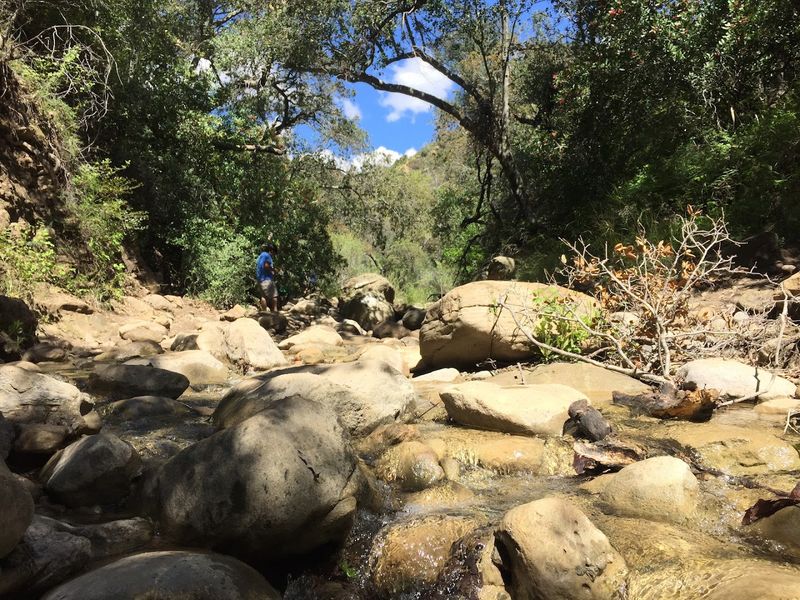
Cutting through the Santa Ana Mountains in Orange County, Black Star Canyon is a rugged and largely undeveloped trail corridor that has accumulated a dense collection of local legends over the years.
The canyon is accessible from Silverado Canyon Road and draws hikers looking for a challenging and genuinely remote experience within reach of the greater Los Angeles area.
The trail itself passes through chaparral, oak woodland, and rocky creek beds before climbing into more exposed terrain.
The stories attached to Black Star Canyon include accounts of strange sounds heard after dark, a persistent sensation of being watched from the ridges above, and historical events involving conflict in the canyon.
Some visitors report hearing unexplained noises along the lower sections of the trail even during daylight hours.
The canyon’s relative isolation compared to more developed Orange County parks gives these stories a bit more atmospheric weight.
Parking near the trailhead is limited and the road leading to the canyon entrance is narrow. Visiting on a weekday tends to result in a quieter and more solitary experience.
The trail involves creek crossings that may be impassable after heavy rain and the terrain is uneven throughout so sturdy footwear is a practical necessity rather than a suggestion.
9. Whaley House, Old Town San Diego
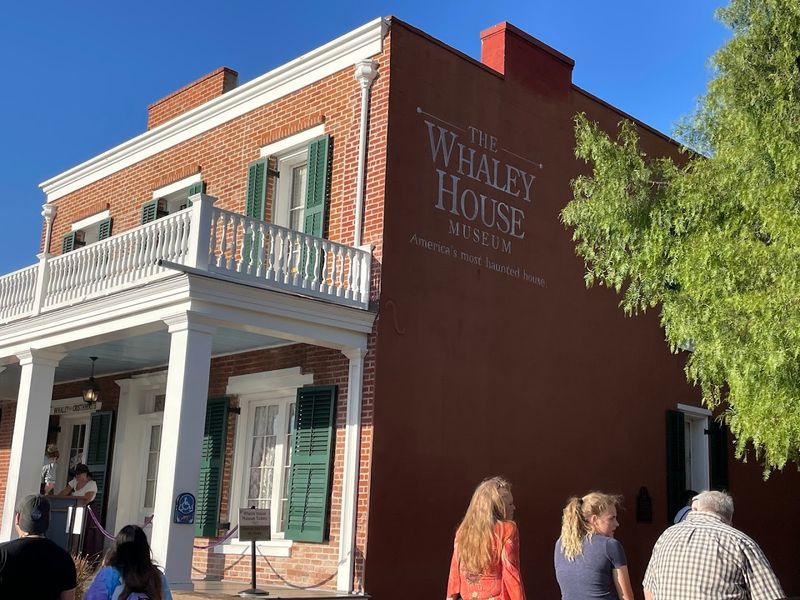
Built in 1857 on the site of a former gallows, the Whaley House in Old Town San Diego carries a legend-to-history ratio that is hard to match anywhere else in the state.
The building at 2476 San Diego Avenue served as a home, a theater, a courthouse, and a general store during its active years, meaning it absorbed a remarkable amount of human activity across multiple generations.
That layered history is a significant part of what makes the haunted reputation feel less like marketing and more like genuine accumulation.
The house is considered one of the most documented haunted locations in the United States.
The experiences reported by visitors tend to be sensory rather than dramatic, including unexplained scents, sounds of footsteps, and temperature variations in specific rooms.
The courtroom area and the upstairs bedroom are the spaces most frequently mentioned in visitor accounts.
The building has been preserved carefully and tours reflect both the architectural history and the paranormal lore with equal attention.
Daytime and evening tours are available and the Old Town San Diego State Historic Park surrounding the house offers additional historical context for the neighborhood.
10. Altadena Gravity Hill, Altadena
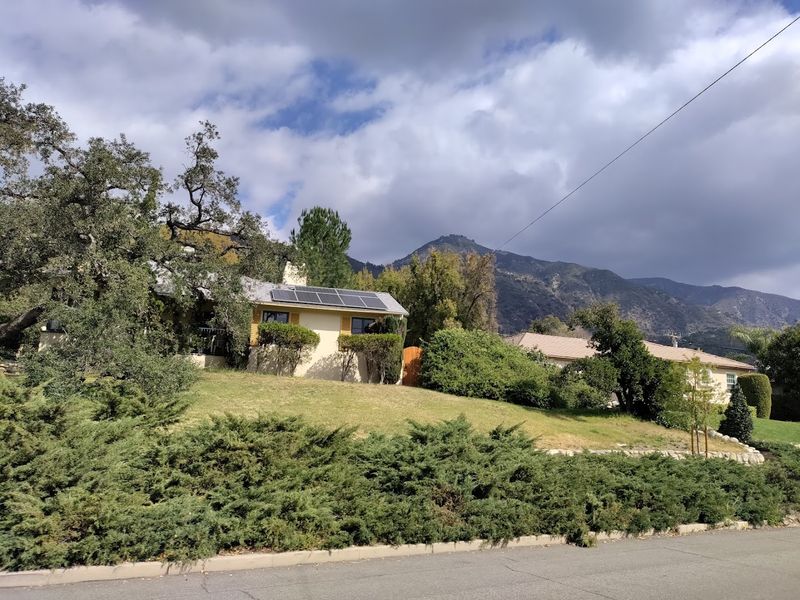
Gravity Hill in Altadena is one of those places that works better when encountered without a full explanation in advance.
The road, located near the intersection of Mount Curve Avenue and Mariposa Street, appears to defy gravity by making cars seem to roll uphill when placed in neutral.
The optical illusion is convincing enough that first-time visitors often get out of their cars to check whether the road is actually flat.
The ghost story attached to the hill involves a school bus accident from the past in which children were said to have died on the slope.
According to the legend, the spirits of those children push vehicles uphill to keep them from danger.
The story follows a template common to gravity hills across the country but the Altadena version has developed its own local character over the decades and remains a regularly visited curiosity in the foothills community.
No admission is charged and the experience requires nothing more than a car and a willingness to put it in neutral on a quiet street.
Visiting during daylight hours is practical for a first visit since the surrounding neighborhood is residential and traffic can be a factor after dark.
11. Devil’s Gate Dam, Pasadena / Altadena
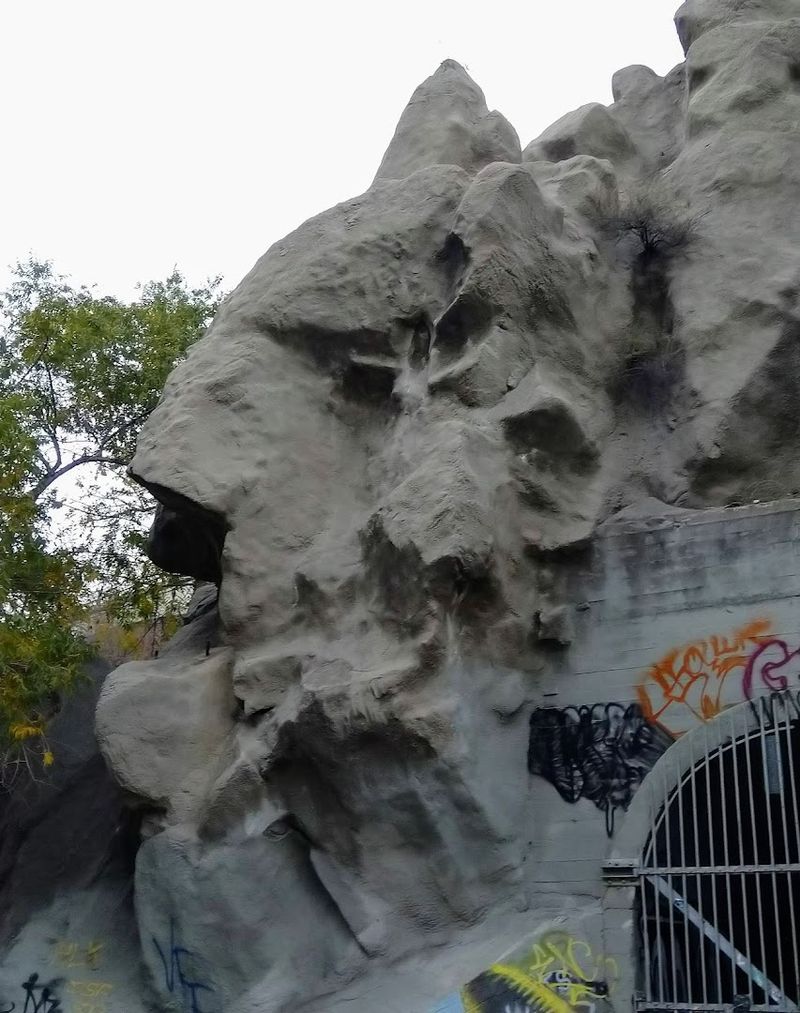
Sitting in the Arroyo Seco canyon just north of Pasadena, Devil’s Gate Dam is a concrete flood-control structure with a name that has fed local legend for over a century.
The rock formation near the dam’s north side bears a natural profile that resembles a horned face when viewed from a certain angle, and that image has attached itself to the area’s folklore in ways that go beyond simple geology.
The dam was completed in 1920 and the surrounding parkland is now part of the Hahamongna Watershed Park.
The occult associations connected to this location are more specific and more documented than most California legends.
In the late 1940s a group associated with early rocket science and ceremonial magic reportedly conducted rituals in the Arroyo Seco near the dam.
That chapter of local history has become intertwined with the broader folklore of the site in ways that are genuinely strange and historically verifiable rather than purely invented.
The area around the dam is accessible by trail from the Hahamongna Watershed Park parking area off Foothill Boulevard in La Canada Flintridge.
The trails are open to hikers and cyclists and the terrain near the dam includes rocky washes and exposed canyon walls.
The combination of industrial infrastructure and wild canyon landscape gives the site an atmosphere that is hard to categorize.
12. Camp Comfort / Creek Road, Ojai
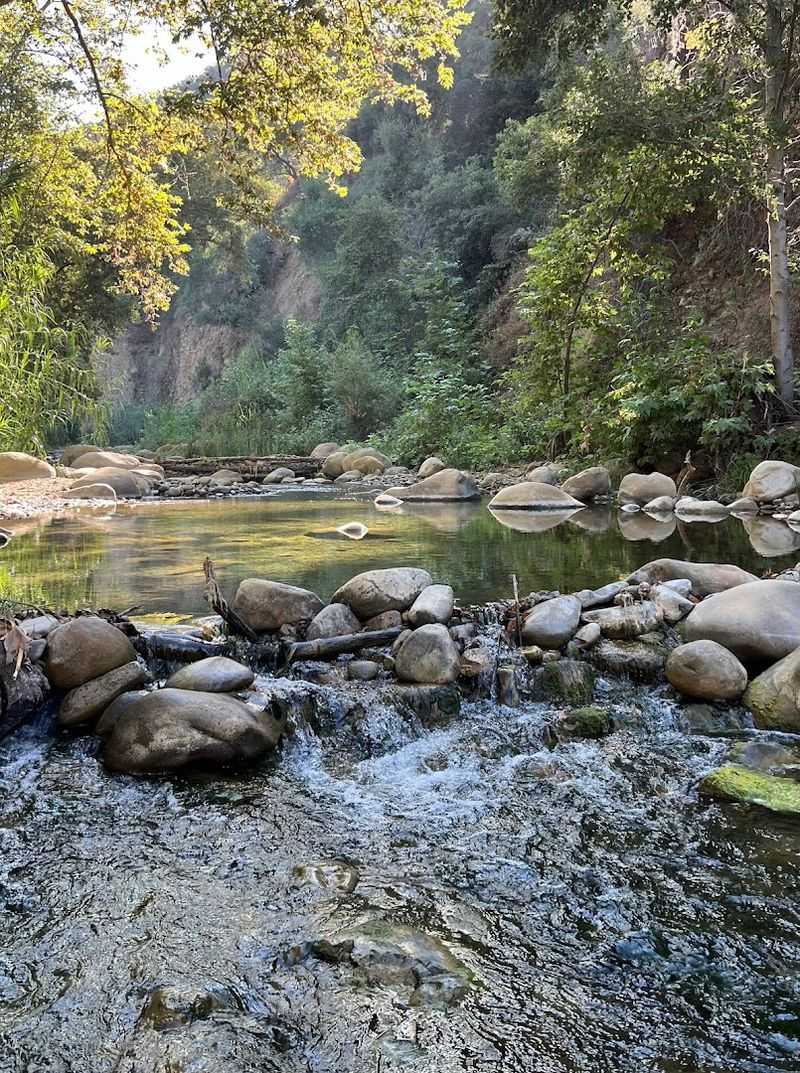
Creek Road outside of Ojai winds through a narrow oak-canopied corridor that feels genuinely isolated even though the town itself is only a few minutes away.
The road runs past Camp Comfort County Park and follows the Ventura River through terrain that changes character noticeably after sunset.
The legend tied to this stretch of road involves a figure known as the Char-Man, described as a severely burned survivor of a 1948 wildfire who is said to still wander the area near the creek and the old bridge.
The Char-Man story has been part of Ojai Valley culture for generations and tends to circulate among locals with a familiarity that suggests deep roots in the community’s storytelling tradition.
The figure is described as aggressive and territorial in most versions of the tale, which gives the legend a sharper edge than many California ghost stories.
Whether the origin event actually occurred as described has never been confirmed but the 1948 Ojai fire was real and the emotional weight behind the story reflects that.
Camp Comfort County Park itself is a legitimate camping and day-use facility with creek access and shaded picnic areas.
Visiting the park during the day gives a completely different impression of the landscape than driving Creek Road after dark.
The contrast between those two experiences is part of what makes this Ojai legend feel more layered than a simple roadside ghost story.