This 50-Foot Florida Tower Was Built With A Stone From Every State
I pulled over in central Florida expecting nothing more than a leg stretch and a place to finish my iced coffee. Instead I found myself squinting at a lopsided stone tower covered in hundreds of rocks, each one hauled in from somewhere far away.
It turns out this thing holds a piece of all fifty states, plus chunks from other countries, stacked up by volunteers during World War II. Florida is full of polished attractions, but this one is free, strange, and stubbornly homemade.
A Stone Tower on a Kissimmee Corner
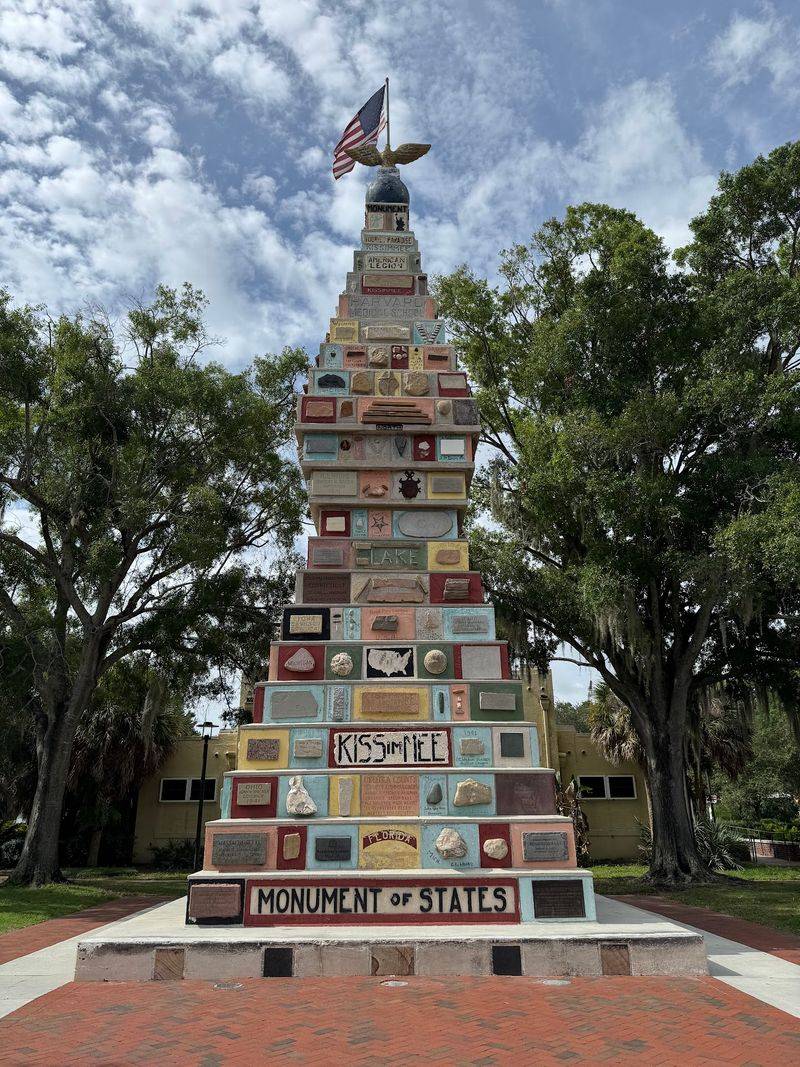
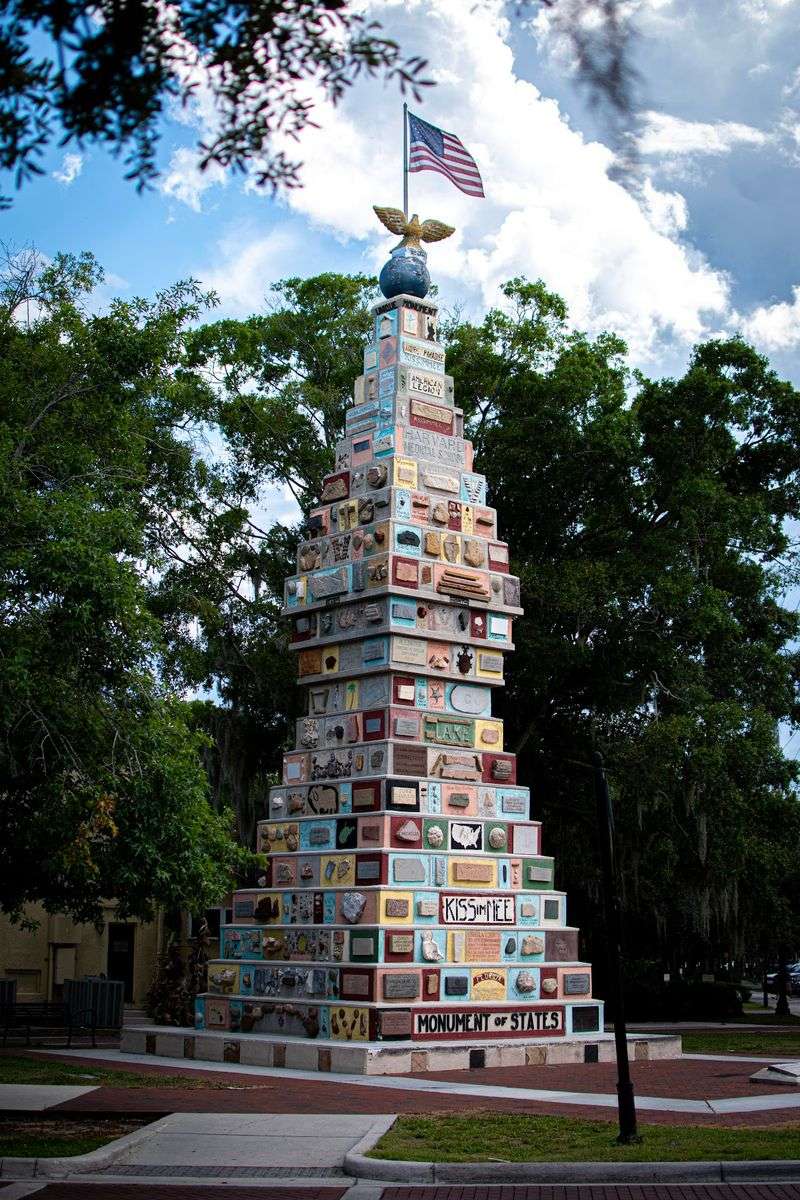
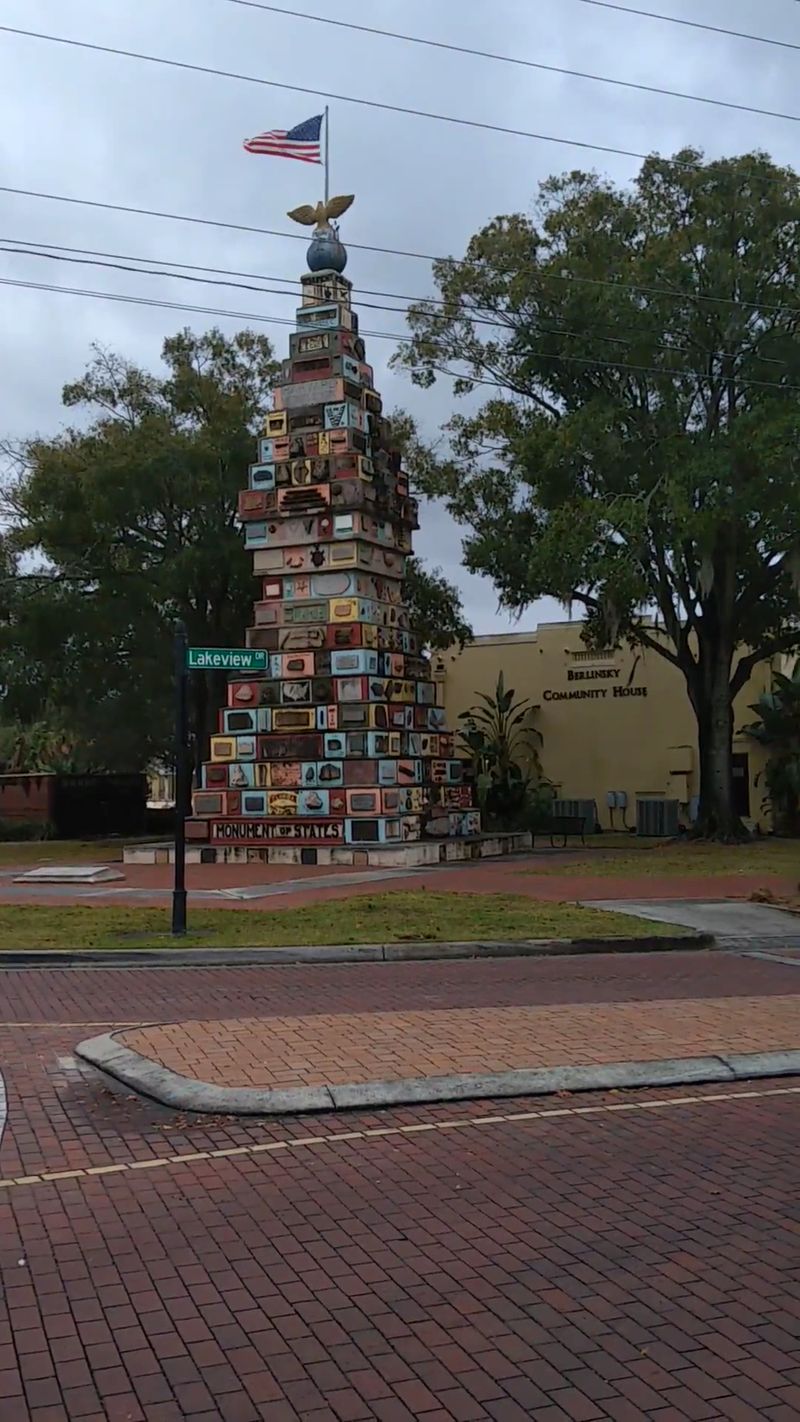
Drive through downtown Kissimmee and the tower shows up the way a lighthouse shows up on a flat coast: suddenly, and taller than anything around it. Roughly 50 feet of stacked, tapering stone, shaped like a step pyramid, crowned with a concrete eagle and a flag snapping overhead.
It goes by the Monument of States, and the address is 300 E Monument Ave, Kissimmee, Florida 34741.
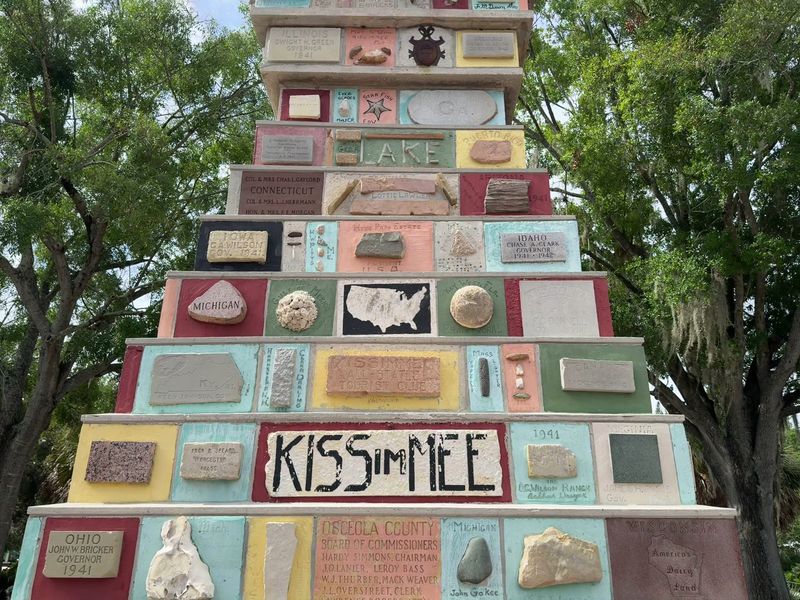
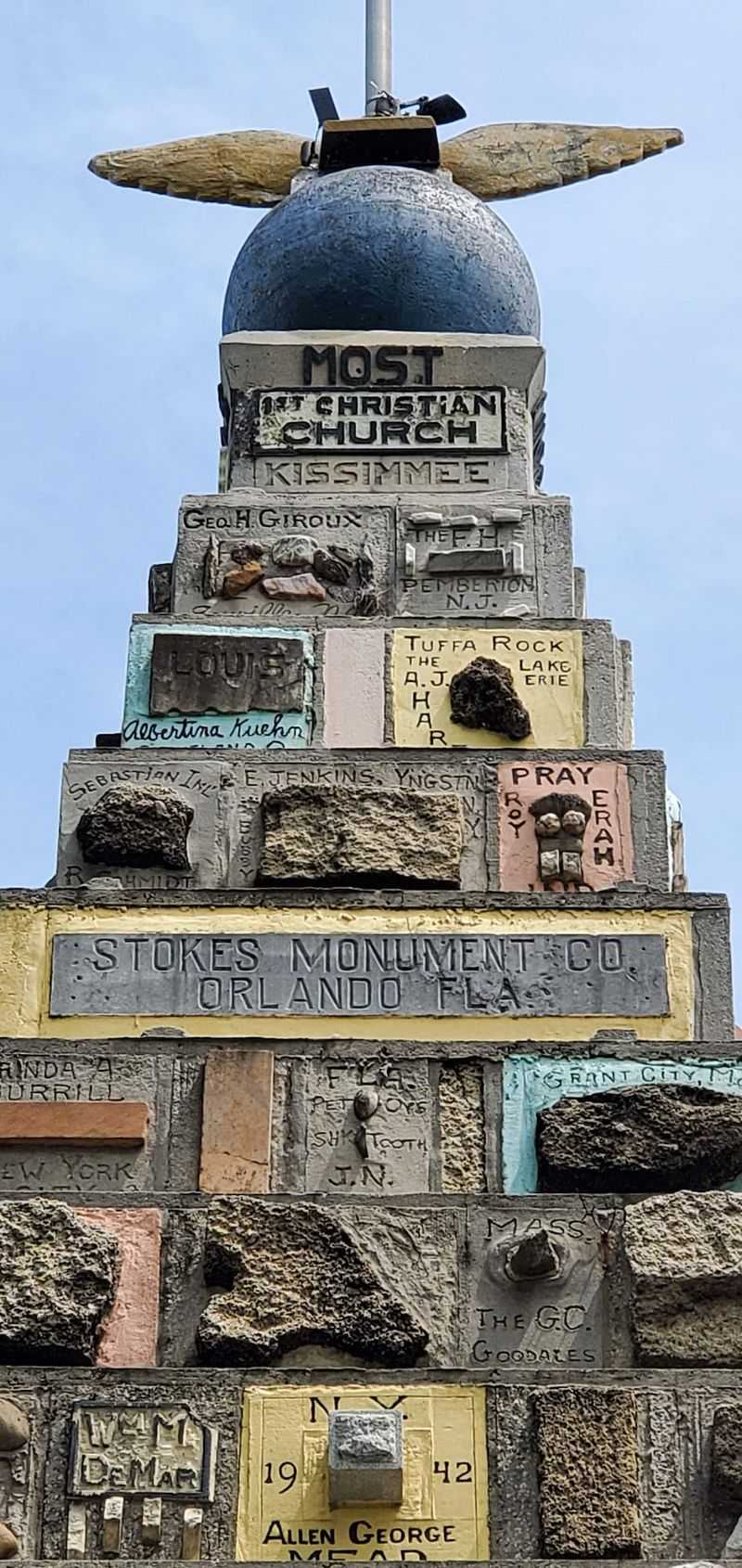
The surface is what stops people. Instead of smooth masonry, the sides are studded with hundreds of individual rocks, plaques, and slabs, each one labeled, each one from somewhere else.
Gray granite butts up against red sandstone, coral, petrified wood, and lumps of mineral nobody can quite identify.
Parking sits right beside it, and it costs nothing to walk up and put your hand on the thing.
What makes the first impression stick is the scale mismatch. A monument this ambitious belongs on a capitol lawn somewhere, not on a quiet corner near a community center and a library.
Florida has a way of putting big ideas in small places, and this may be the clearest example of it standing anywhere in the state.
Born From a Wartime Idea
December 1941 changed what people in Kissimmee thought a pile of rocks could mean. Work on the monument began in 1942, in the months after the attack on Pearl Harbor, and the whole point was to show that a scattered country could hold together.
Dr. Charles Bressler-Pettis, a retired physician who led the Kissimmee All-States Tourist Club, came up with the plan. He wanted one stone from every state in the union, and he was not shy about asking for them.
Letters went out to every governor. One went to President Franklin D.
Roosevelt. Stones came back by mail, by rail, and by whatever else would carry them, and the pile in Kissimmee kept growing.
Roosevelt sent a stone from his Hyde Park estate, which still sits in the structure today.
Senator Claude Pepper of Florida dedicated the finished monument on March 28, 1943. Barely a year from idea to eagle-topped reality, in the middle of a war, with materials and manpower in short supply everywhere.
The speed of it says as much about the moment as the stones do.
Fifty States, Twenty-One Countries, One Wall
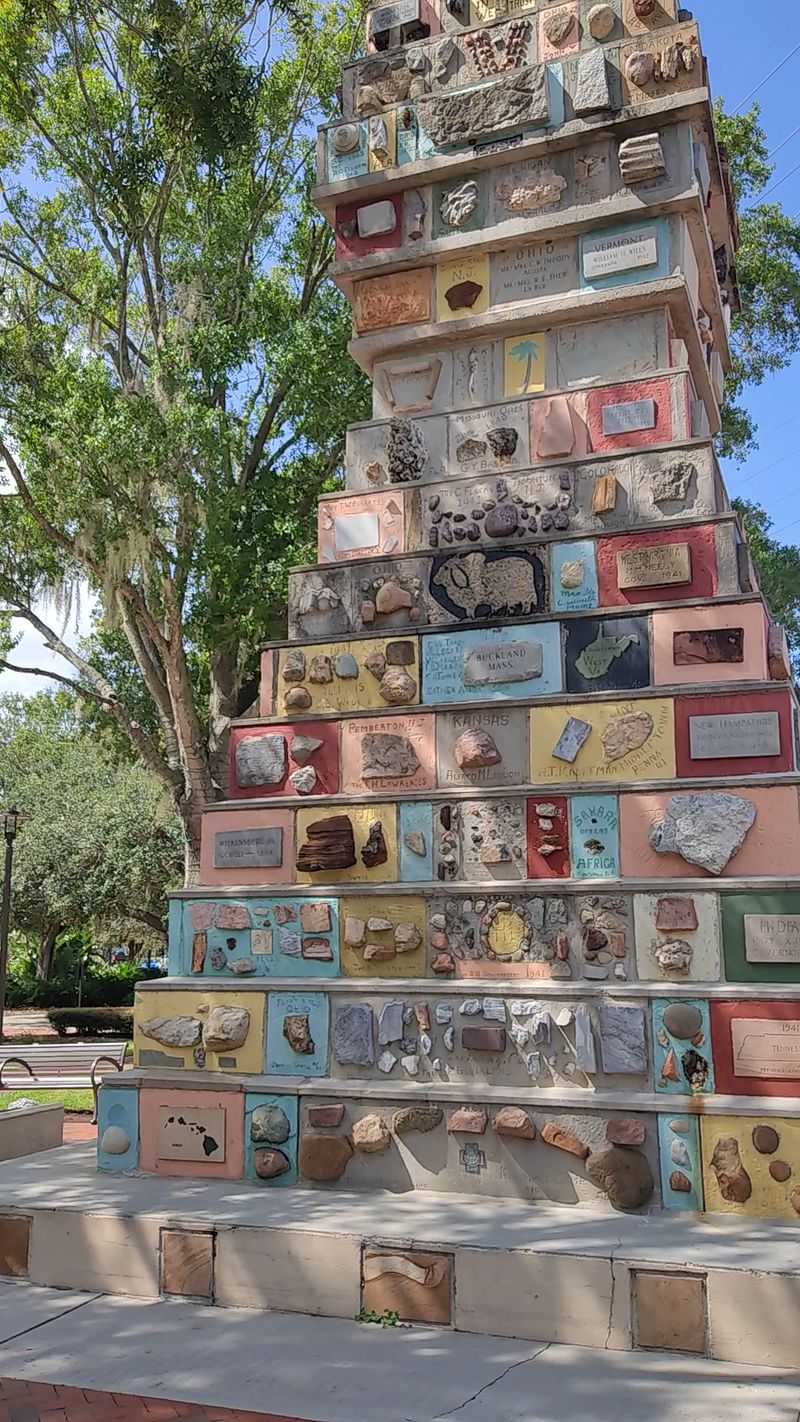
Here is the game everyone ends up playing: circle the base and try to find your home state. It takes longer than you would think, because the stones are not in any tidy order, and the labels range from crisp painted lettering to faded scratches.
The original build used stones from the 48 states that existed at the time. Alaska and Hawaii joined the club later, their contributions worked into the walkways around the structure rather than the tower itself.
Rocks from 21 foreign countries are mixed in, so you may run across markers for Cuba, Canada, or spots in Africa while hunting for Ohio. Petrified wood shows up.
So do fragments pulled from historic buildings.
Walt Disney Studios donated an unidentified mineral in 1966, which remains unidentified to this day.
Some stones have loosened or fallen out over the decades, and plenty of the older labels have weathered past reading. That patchiness is part of the appeal, honestly.
A monument assembled from mailed-in rocks was never going to age like marble, and pretending otherwise would miss the point entirely.
Volunteers Did the Heavy Lifting
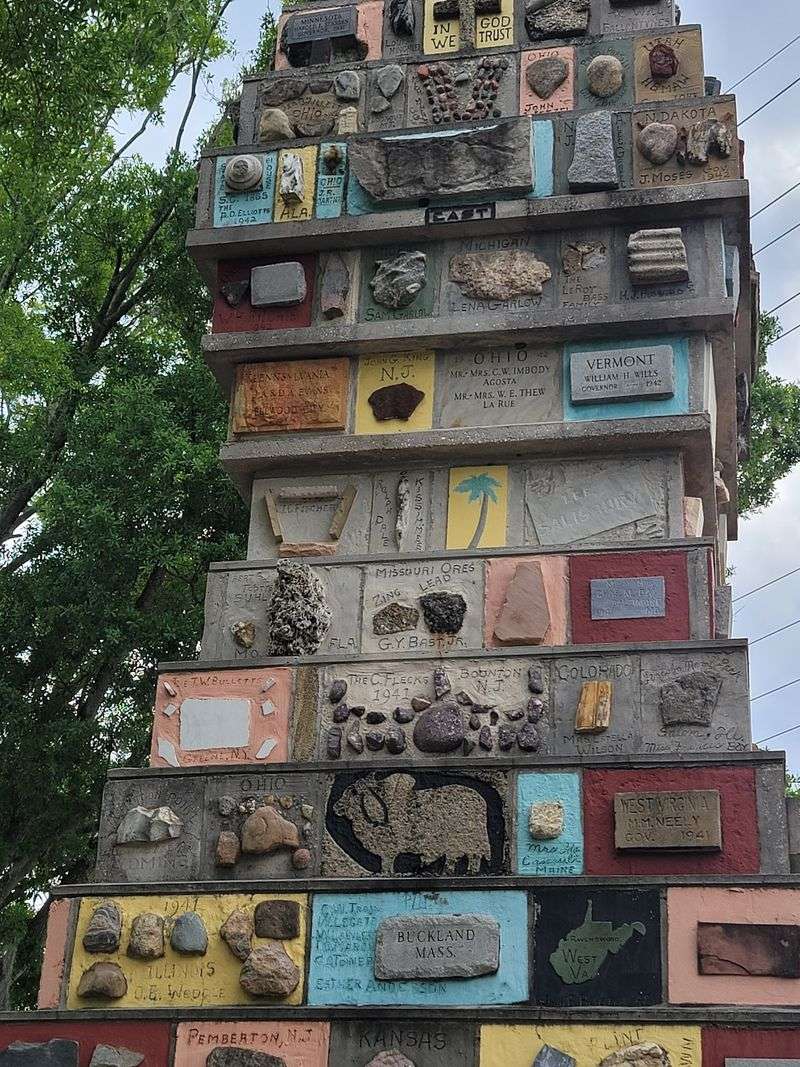
No construction firm ever billed the city for this job. The people who built the Monument of States were volunteers, most of them senior citizens from the local tourist club, mixing concrete and setting rocks by hand.
Think about the numbers for a second. The foundation alone is estimated at around 100,000 pounds, reinforced with steel rails, and the complete monument runs to roughly 600,000 pounds.
Three hundred tons, raised by retirees during wartime.
Up top sits a concrete globe, and above that a concrete eagle weighing 562 pounds with a wingspan of six feet. A 20-foot flagstaff finishes the composition, which is why the flag reads so small from the sidewalk despite being a normal size.
Bressler-Pettis passed in 1954, and a portion of his remains was sealed inside the structure he dreamed up. A plaque at the base keeps his name attached to it.
Hurricanes have come and gone through this part of Florida for eighty-some years, and the tower is still vertical. Whatever those volunteers lacked in professional training, they clearly made up for in concrete.
The Park, the Lake, and the Boardwalk
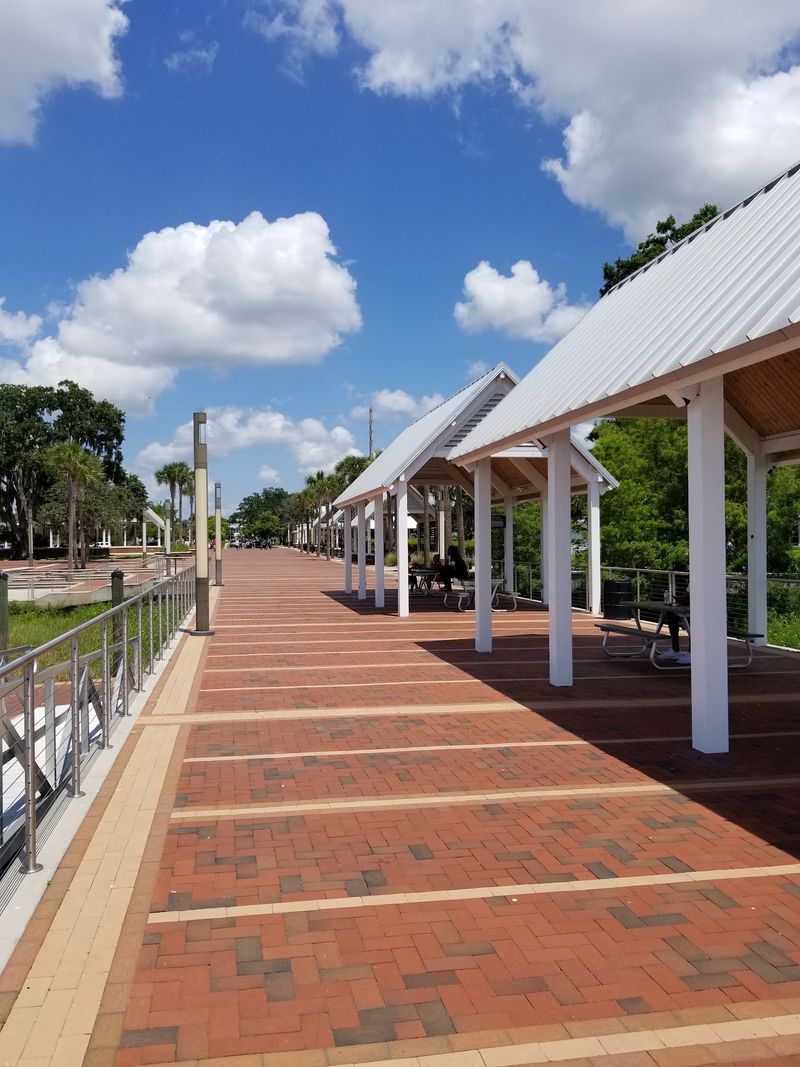
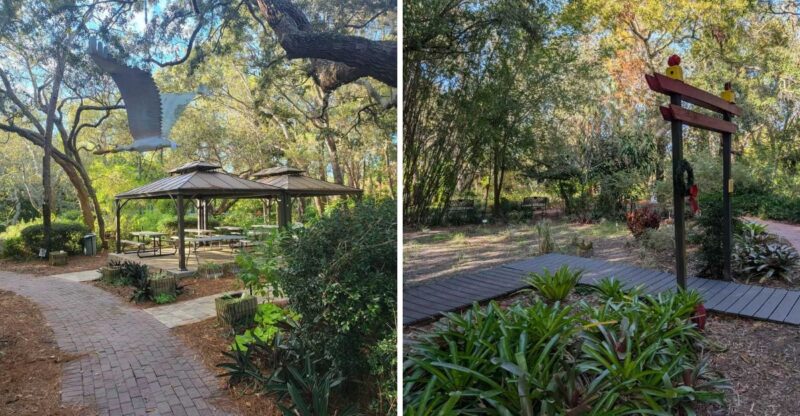
Shade trees, benches, and a wide stretch of open grass surround the monument, which turns a five-minute curiosity stop into something longer. Picnic tables are scattered around.
Grills are available if you feel like turning the visit into lunch.
Walk a short distance and you reach the Lake Tohopekaliga waterfront, where a long boardwalk runs along the shoreline. Herons, egrets, turtles, and assorted other lake residents are usually out doing their thing.
A lighthouse structure and a nearby memorial add a couple more things to look at, and a library sits close by.
The paths here suit walkers, skaters, and anyone on a bicycle, and there is enough room that nobody feels crowded. Families use the space for birthday parties and weekend cookouts.
Photographers get the better end of the deal. Late afternoon light hits the west face of the tower and lights up the mineral colors, and the lake gives you a completely different backdrop a few steps away.
Two very different photo opportunities within one parking lot is a decent return on a free stop.
Old Florida Roadside Americana Holding On
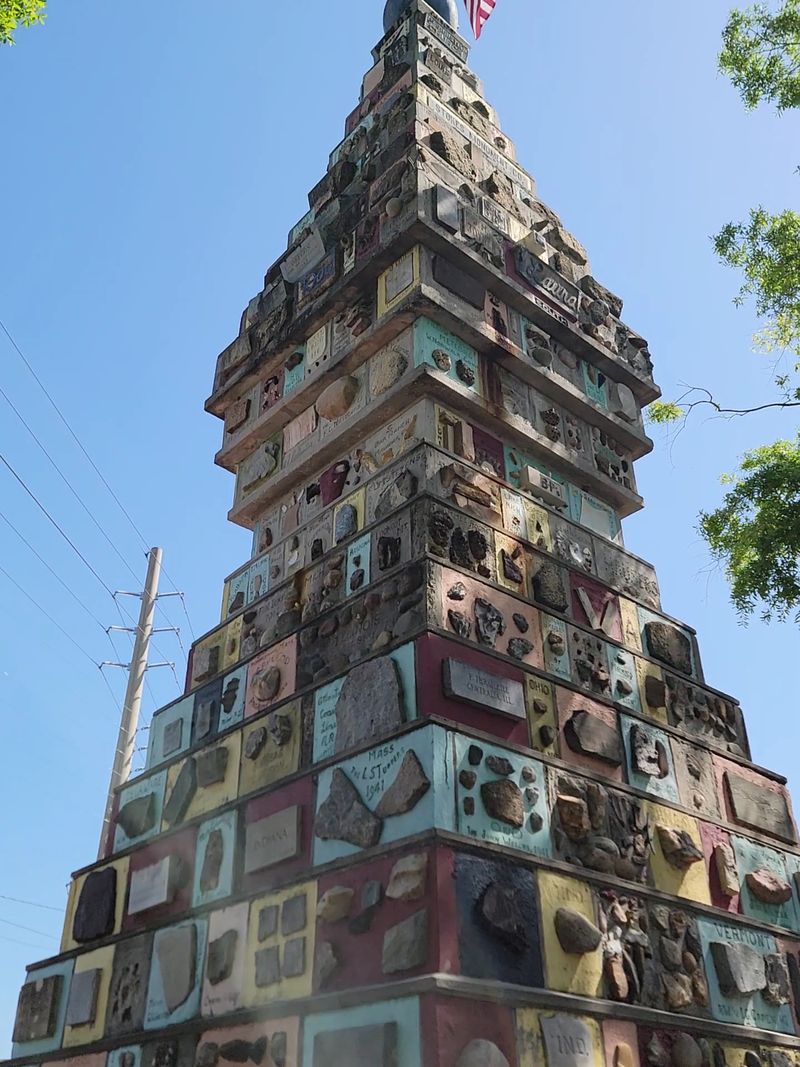
Before theme parks rearranged the entire economy of central Florida, attractions looked like this: homemade, sincere, and built by somebody with more enthusiasm than budget. The monument pulled crowds back when a tower of rocks counted as a reason to stop the car.
Then the interstates went in, the big parks opened, and the tower slipped quietly out of the itinerary. Neglect followed for a stretch of years.
Restoration work happened in 1993, including a time capsule set to be opened in 2043. Another refurbishment came in 2001, after September 11, when the original message about holding together sounded relevant again.
December 2015 brought the listing on the National Register of Historic Places.
If roadside Americana is your thing, this is the real article rather than a revival of it, and the slightly chipped, sun-bleached quality is proof. Anyone hoping for a polished attraction with a gift shop and a guided tour will want to adjust expectations first.
What stands here is folk art at architectural scale, made from mail-order rocks and patriotic stubbornness.
Planning a Stop Without Overthinking It
Good news for the spontaneous: the site is open 24 hours, every day, and there is no admission charge. Parking nearby is free too, which is not a sentence you get to write often about central Florida attractions.
Morning and late afternoon are the kinder windows. Midday sun on an open lawn with a concrete tower reflecting heat back at you is a rough combination, especially in summer.
Budget twenty minutes if you just want to see it, an hour if you plan to read labels and hunt for your state, longer if the lakefront boardwalk pulls you in.
Bring water. Bring a hat.
A phone camera handles the detail shots fine, though a zoom helps for the eagle.
Downtown Kissimmee sits a short walk away, so coffee and a meal are easy to fold in. The Amtrak station is also close enough that people arriving by train have spotted the tower from the platform and wandered over.
Restrooms and facilities are tied to the surrounding park rather than the monument itself, so plan accordingly before a long drive.
Is It Worth Pulling Off the Highway?
Honesty first: this is not a half-day destination, and anyone driving ninety minutes each way purely for a tower of rocks may feel a little short-changed. Some stones are illegible.
A few gaps show where rocks came loose.
But measure it against what it cost you, which is nothing, and the math changes fast.
You get a 50-foot structure built by retirees during a war, a concrete eagle with a six-foot wingspan, stones from every state and 21 countries, a mystery mineral from a movie studio, and a lakefront park attached. That is a lot of story for a parking space and twenty minutes.
The thing I keep thinking about is the mail. Governors across the country actually stopped what they were doing and sent a rock to a retired doctor in a small Florida town because he asked nicely.
Fold it into a Kissimmee afternoon with the boardwalk and a bite downtown, and it earns its place easily. Treat it as the whole reason for the drive and you may want to pack a picnic to fill out the day.