This California Trail Pairs A Memorable Hike With Million-Dollar Views
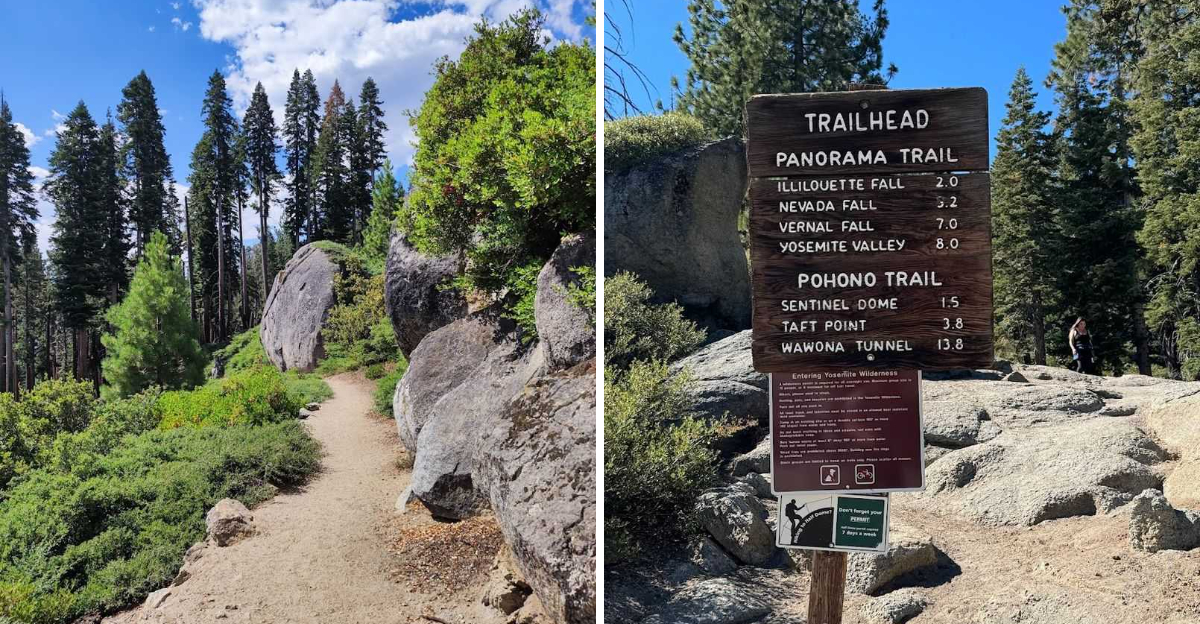
Certain trails know exactly how to build suspense. This California path rises toward views so dramatic they can make the whole climb feel like a slow reveal.
Each step builds a little more anticipation, then the landscape opens up and suddenly the climb feels lighter, easier, and completely worth it.
A trail like this does not need to be the wildest to leave its mark. Open sky, dramatic distance, and that brief stunned pause at the overlook do plenty.
Reaching a place this beautiful can shift the whole mood of the day. For a while, nothing matters except the view in front of you and the quiet satisfaction of having earned it.
The Views Are the Whole Point and the Name Is Not Exaggerating
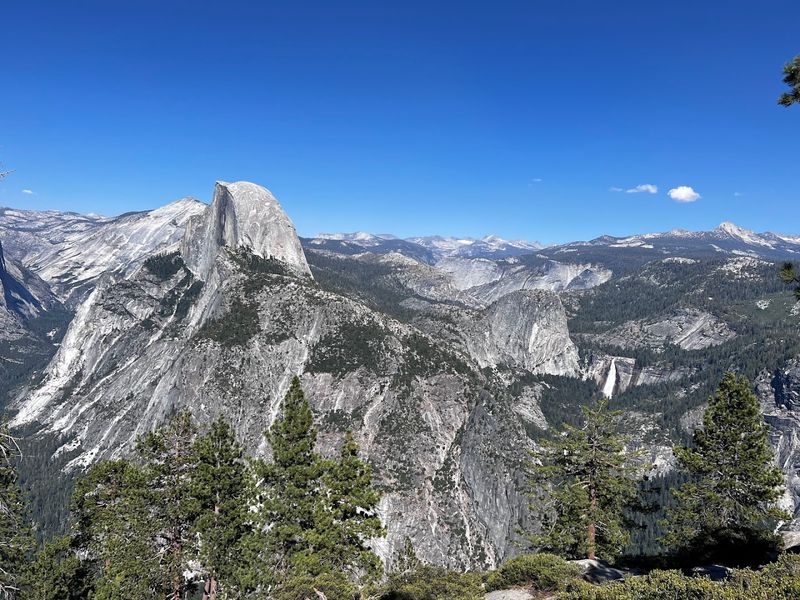
Few trail names actually deliver on their promise, but Panorama Trail earns every letter of its title.
From the moment the path begins descending from Glacier Point, the scenery opens up in a way that feels almost cinematic.
Half Dome dominates the eastern skyline, and Yosemite Valley stretches out far below like a green corridor framed by granite walls.
The National Park Service lists Panorama Trail among the main trails descending from Glacier Point toward Yosemite Valley, and the route includes views of Illilouette Fall, Nevada Fall, and Vernal Fall along the way.
That is not a single highlight at the end of a long slog. The views keep shifting and improving as the trail moves through different elevations and angles.
Standing at a high point on the trail and seeing multiple waterfalls and Half Dome in the same glance is the kind of moment that makes a hike feel genuinely memorable.
Hikers who prioritize scenery over speed tend to enjoy this route the most. Bringing a camera or simply taking time to pause and look around makes the experience feel far richer than rushing through it.
Starting at Glacier Point Means the Hike Opens With a Bang
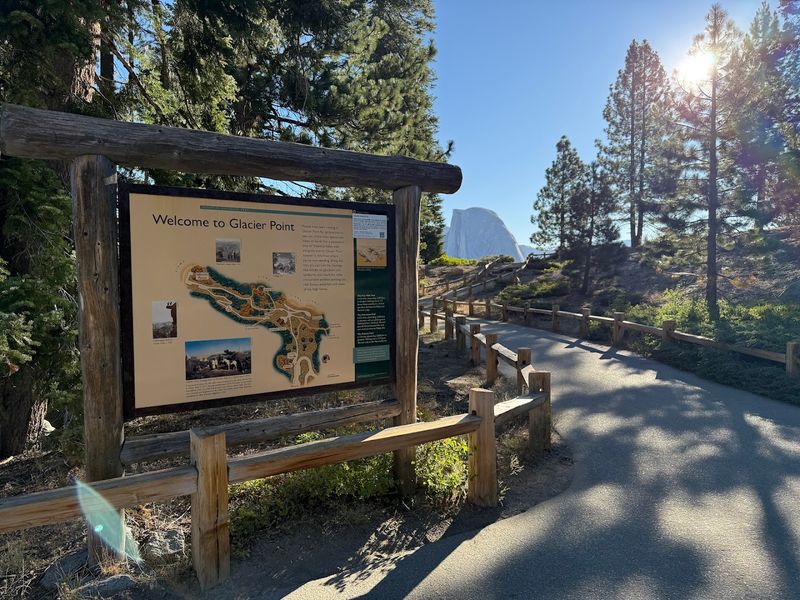
Starting a hike at one of the most celebrated viewpoints in any national park sets a high bar right from the beginning.
Glacier Point sits at an elevation of about 7,214 feet and delivers commanding views of Yosemite Valley, Half Dome, and the High Sierra before a hiker even takes a single step down the trail.
The National Park Service describes it as one of the most dramatic overlooks in the entire park. Most hikes build toward a payoff at the end, but Panorama Trail flips that structure entirely.
The drama starts immediately, and the scenery continues to evolve as the trail descends through forests, across creek crossings, and along exposed cliffs.
That progression keeps the energy of the hike moving rather than fading.
Glacier Point Road is typically open from late spring through early fall, so checking current road conditions before planning a trip is essential.
Arriving at Glacier Point early in the morning tends to mean fewer crowds and softer light that makes the views even more striking.
The trailhead parking area is located near the Glacier Point overlook itself, making the start of the hike straightforward to find.
Eight Miles of One-Way Trail Is Not a Casual Afternoon Walk
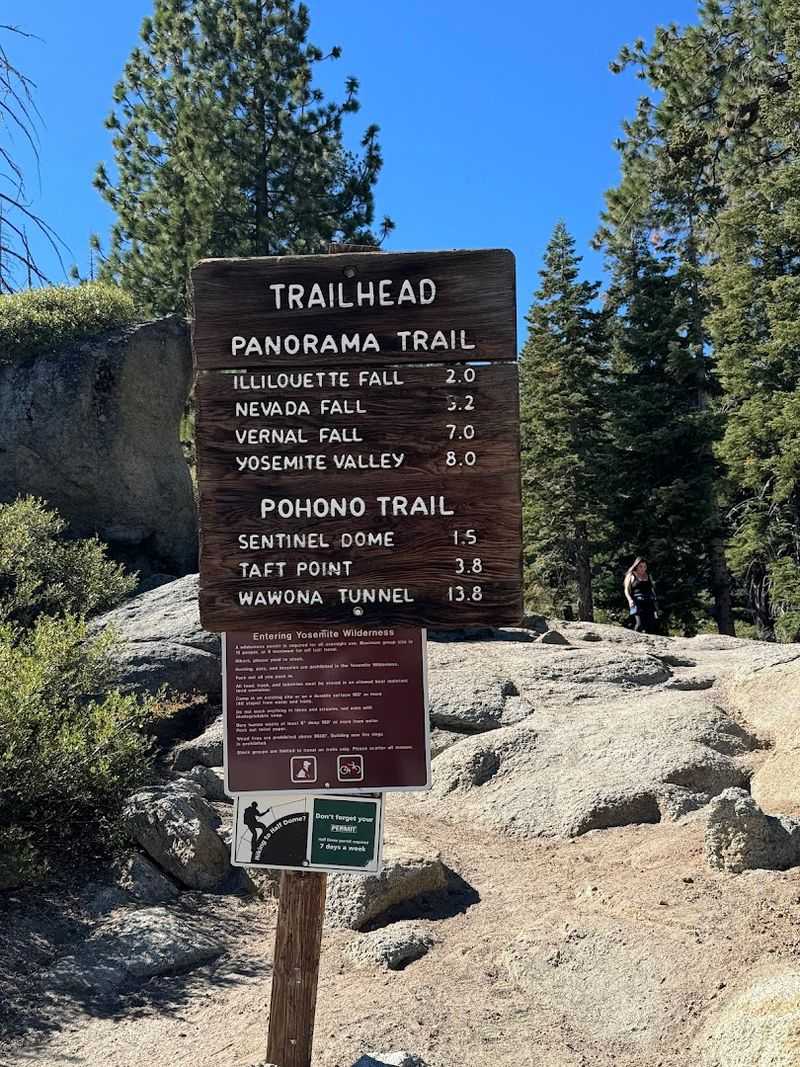
At approximately 8.5 miles one way with a net elevation drop of around 3,200 feet, Panorama Trail sits firmly in the strenuous category.
The National Park Service and trail resources consistently estimate a hiking time of six to eight hours for the full route, which tells you something important about how this trail should be approached.
Packing enough water is non-negotiable on a hike of this length, especially during summer months when temperatures in the valley can climb significantly higher than conditions near Glacier Point.
Snacks that provide steady energy, sunscreen, and well-broken-in hiking shoes make a real difference over eight-plus miles of varied terrain. Poles can also help reduce strain on the knees during the long descent.
Many hikers continue past the Panorama Trail junction and connect down via the Mist Trail or John Muir Trail to reach Yosemite Valley, which extends the route further.
Starting early in the day helps avoid afternoon heat and gives enough time to complete the descent without rushing.
Treating this hike with the same respect as any serious backcountry outing leads to a safer and more enjoyable experience overall.
Illilouette Fall Is One Waterfall You Cannot See From Any Road
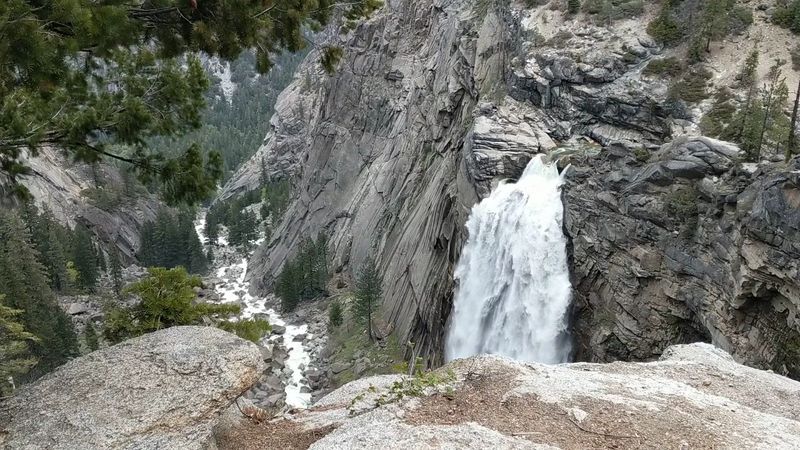
There is something genuinely satisfying about seeing a waterfall that cannot be reached by car.
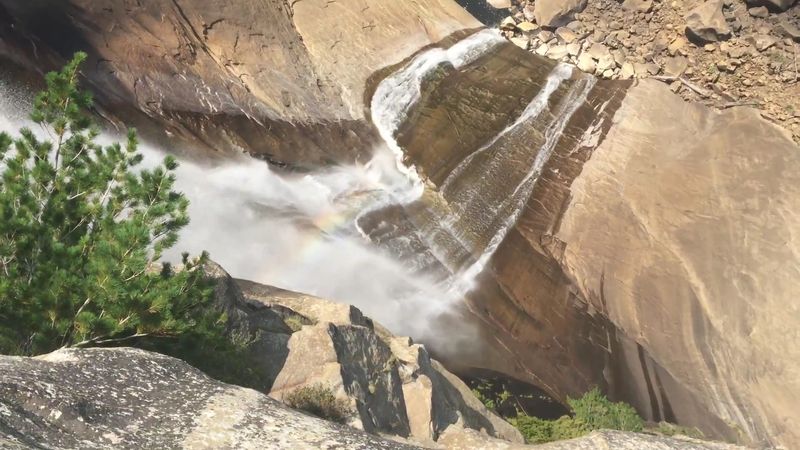
Illilouette Fall drops approximately 370 feet into Illilouette Creek and is considered one of Yosemite’s major waterfalls, yet it remains invisible from any road in the park.
The only reliable way to get a proper view of it is on foot via Panorama Trail.
Yosemite’s official waterfall information specifically notes that the best viewpoint for Illilouette Fall is along this trail, which gives the route a real advantage over the more drive-up-friendly spots in the park.
Seeing it in late spring or early summer tends to offer the most dramatic flow, when snowmelt is still feeding the creek at full force.
The sound of the fall reaches hikers before the view does, which adds a nice element of anticipation as the trail curves toward the canyon edge.
Standing at the viewpoint and looking down at the water dropping into the green gorge below is one of those quiet moments that feels genuinely earned.
Road-accessible viewpoints are convenient, but Illilouette Fall is a reminder of what a little effort can unlock.
The Route Links Several of Yosemite’s Biggest Landscapes in One Trip
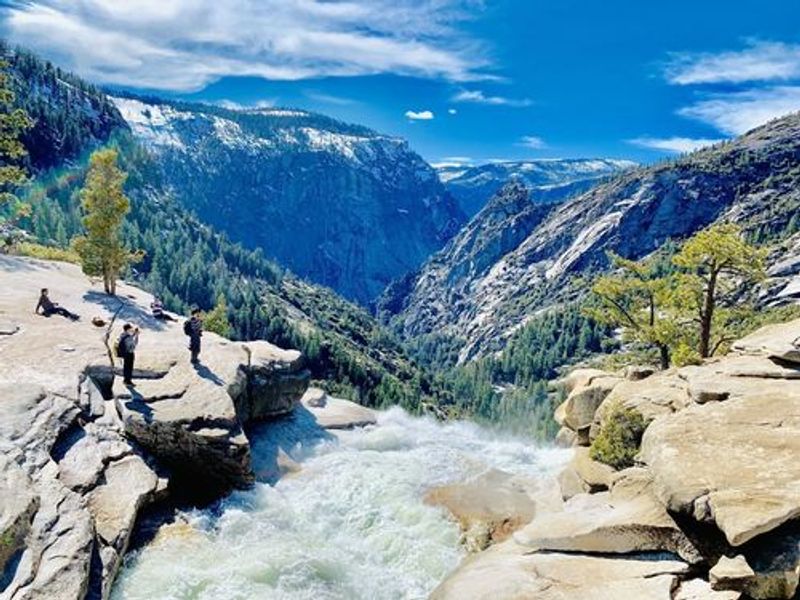
Some hikes give you one great moment and then ask you to walk back the way you came. Panorama Trail works differently by stringing together multiple major highlights across its full length.
The route passes Illilouette Fall, moves along the edge of Panorama Cliff, and eventually connects toward the Nevada Fall and Vernal Fall corridor near the end of the descent.
That layered structure is a big reason why this trail has such a strong reputation among day hikers looking for a big scenic traverse.
Rather than spending energy on a single destination, the hike feels like a tour of some of Yosemite’s most celebrated natural features.
Each section of the trail brings a shift in character, moving from open granite overlooks to forested switchbacks to canyon-edge views.
Connecting to the Mist Trail near the bottom adds yet another dimension, with the roaring rush of Nevada Fall and then Vernal Fall bookending the lower descent.
Hikers who enjoy variety in a single outing tend to find this route especially satisfying.
The sense of covering real ground through genuinely different terrain makes the distance feel purposeful rather than repetitive.
Downhill Does Not Mean Easy and the Knees Will Know It
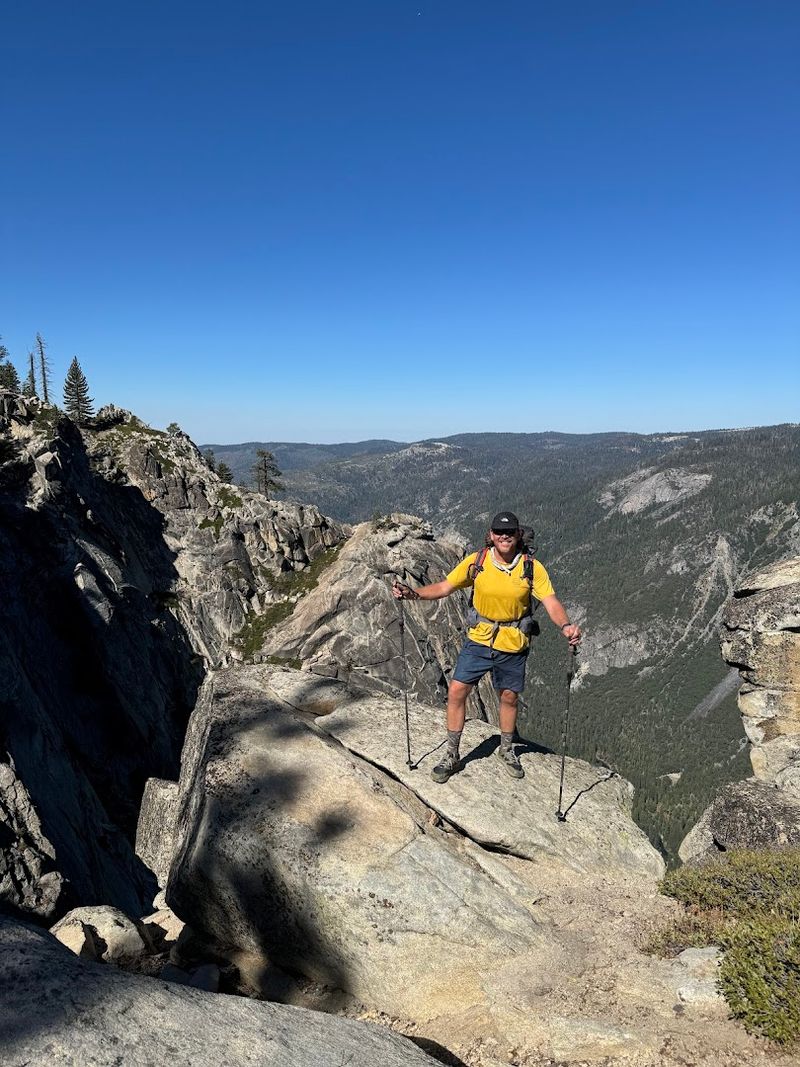
A common assumption about one-way descending hikes is that they must be easier than climbs. Panorama Trail challenges that idea in a direct way.
Dropping roughly 3,200 feet over the course of the route puts sustained pressure on the knees, ankles, and feet, especially in the final miles when fatigue has already set in.
Long downhill mileage can cause more muscle soreness than an equivalent uphill climb for hikers who are not accustomed to it.
The quadriceps work hard to control each step on steep descents, and that effort accumulates over hours of hiking.
Wearing shoes with solid ankle support and using trekking poles helps distribute the load more evenly across the body.
The six to eight hour time estimate from trail resources reflects this reality honestly. Rushing the descent to finish faster can increase the risk of slipping on loose rock or overloading already tired joints.
Taking breaks at viewpoints or near creek crossings gives the legs a chance to recover and keeps the overall pace sustainable.
Treating the downhill with the same respect as an uphill push leads to a much more comfortable finish at the valley floor.
One-Way Logic Means Transportation Planning Cannot Be an Afterthought
Finishing a one-way trail at the bottom of Yosemite Valley while the car sits at Glacier Point creates a logistical puzzle that needs to be solved before the hike begins.
Yosemite explicitly advises hikers descending from Glacier Point trails to arrange their own transportation or plan to hike back up, since there is no dedicated shuttle service that returns to Glacier Point from the valley.
A common approach is a car shuttle, where two vehicles are used so one can be left at each end of the trail.
Another option is coordinating with another hiking party going in the opposite direction, though that requires some advance planning.
Checking the current status of any available park transportation services before the trip is also worthwhile since availability can vary by season.
Getting this detail sorted before arriving at the trailhead removes a major source of stress on the day of the hike.
Finishing eight-plus miles of strenuous terrain only to realize the return logistics have not been handled is a scenario worth avoiding entirely.
Building the transportation plan into the overall trip preparation makes the whole experience run much more smoothly from start to finish.
The Trail Delivers a Layered Payoff That Few Hikes Can Match
What makes Panorama Trail genuinely stand out is not any single feature but the combination of everything it offers in one continuous outing.
Half Dome views appear early and often, the waterfall at Illilouette adds a sense of raw natural power, and the descent toward Nevada Fall and Vernal Fall gives the lower section of the hike its own dramatic energy.
That layered quality is relatively rare among day hikes in any national park. Many routes build toward one climactic viewpoint and then ask hikers to retrace their steps.
Panorama Trail keeps delivering new scenery at each stage of the descent, which prevents the kind of mental fatigue that can set in on repetitive terrain.
The hike also rewards different kinds of attention. Geology fans will notice the granite formations changing in texture and scale as the trail drops.
Those drawn to moving water will find multiple creek crossings and waterfall viewpoints along the way.
Hikers who simply enjoy the feeling of covering meaningful ground through wild terrain will find the distance and elevation change deeply satisfying.
The Strongest Hook for This Trail Is the Scenery Not the Simplicity
Honesty matters when describing a trail like this one. Panorama Trail is not a beginner-friendly walk, and framing it as an easy outing would set hikers up for a genuinely difficult surprise.
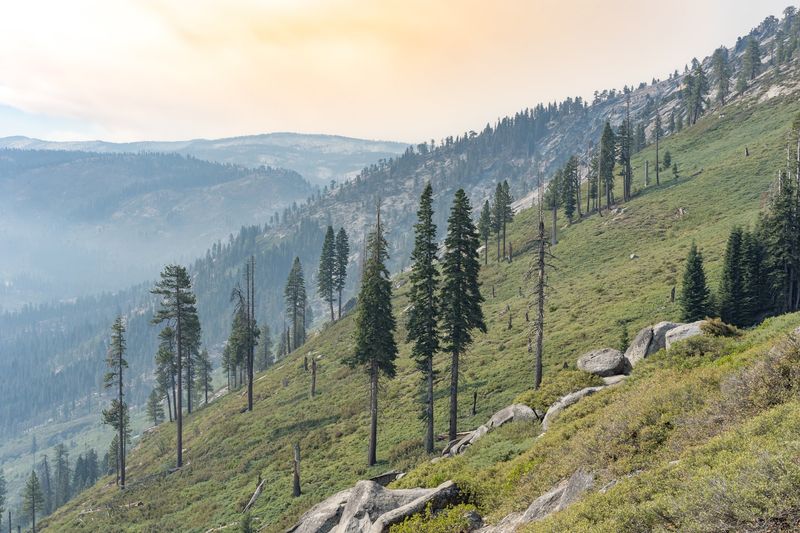
The accurate and compelling story here is the scenery, which is among the most dramatic that Yosemite has to offer anywhere in the park.
Hikers who come prepared for a strenuous day and arrive with realistic expectations tend to leave with the strongest impressions.
The views of Half Dome from multiple angles, the sight of Illilouette Fall dropping into its hidden canyon, and the roar of Nevada Fall near the end of the descent are the kinds of experiences that stay with people.
Those moments are earned through effort, and that effort is part of what makes them feel significant.
Yosemite draws millions of visitors each year, but a meaningful portion of that scenery sits behind a few miles of trail rather than a car window.
Panorama Trail is one of the clearest examples of what opens up when hikers are willing to put in the work. The views are genuinely million-dollar, and the trail makes sure every one of them is well deserved.