This Short Nebraska Trail Follows A Wooden Boardwalk Right To The State’s Tallest Waterfall
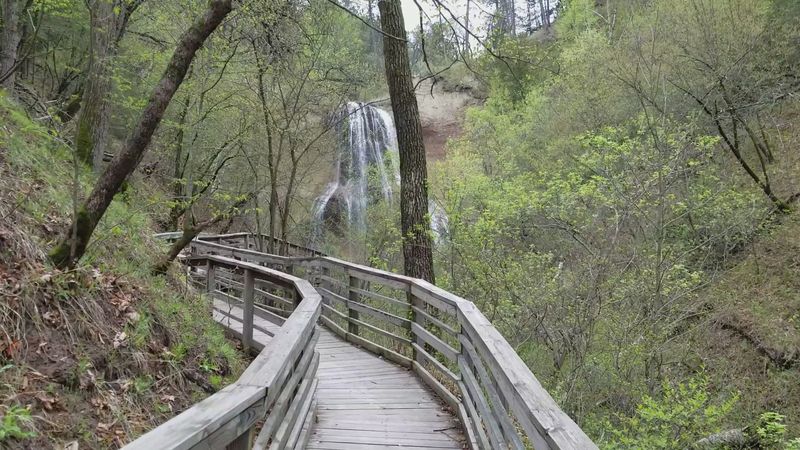
Most people picture Nebraska as corn rows and cattle pasture, flat to the horizon in every direction. Then you drop into a shaded river canyon in the north-central part of the state, and suddenly there is cold spray on your arms, birch trees overhead, and water falling 63 feet off a mossy ledge.
The walk to reach it is barely half a mile, most of it on a boardwalk sturdy enough for strollers and wheelchairs. It is the kind of place that makes lifelong Nebraskans admit they had no idea it was there.
Where the Prairie Splits Open
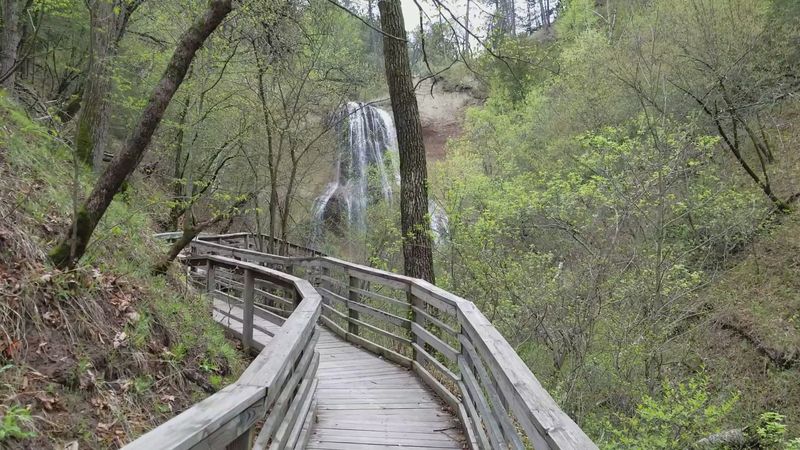
Cornfields sit less than a mile away, which is the detail that stops people cold. Smith Falls drops 63 feet down a spring-fed ledge in a narrow side canyon of the Niobrara River, and it is the tallest waterfall anywhere in Nebraska.
The canyon itself does most of the work. Sandstone walls hold the shade, moss grows thick where the water hits, and the air inside runs several degrees cooler than the grassland above it.
On a hot August afternoon that temperature drop lands like walking into a cellar.
Geologically, the falls come from groundwater seeping out of the Ogallala aquifer through porous rock, which is why the flow stays steady rather than drying up in late summer. The water is clear and cold year round.
Smith Falls State Park wraps around the site in Cherry County, north-central Nebraska, deep in Sandhills country. It is a small park with one very good reason to exist, and the walk in takes about ten minutes.
From Arikaree Falls to a Homesteader’s Name
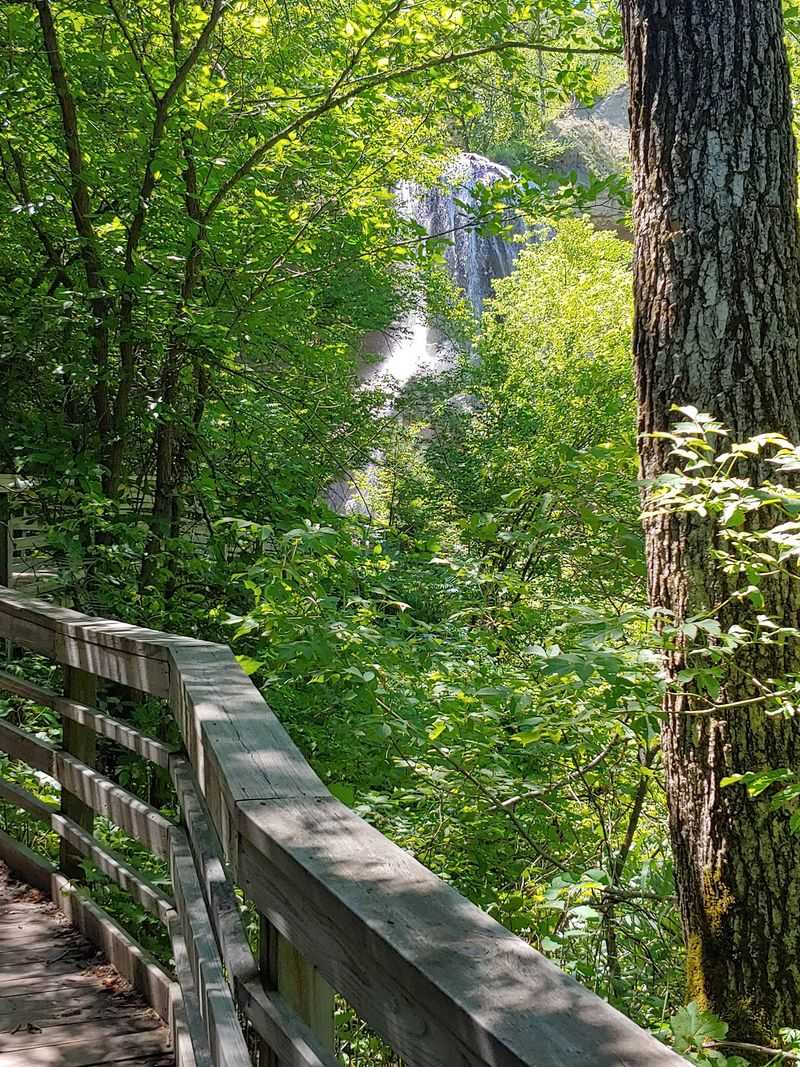
Before any homestead paperwork existed, the cascade carried the name Arikaree Falls, a nod to the Native peoples who lived throughout the Niobrara River Valley long before settlement.
Frederic Smith filed a homestead patent on the surrounding land in 1896, and over time his surname stuck to the water. Names shift quietly like that in Nebraska, one generation at a time, until the older one survives only in records and signage.
The Krzyzanowski family bought the property in 1941 and ranched it for decades. In 1992 they leased the ground to the Nebraska Game and Parks Commission, and Smith Falls State Park was born from that agreement.
Because it remains leased rather than outright purchased, cattle still graze nearby and the working-ranch character of Cherry County has not been scrubbed away. Livestock occasionally wander close enough to the park edges to surprise people on the trail.
Ranch land turned public park is a familiar Nebraska story, and this one gave the state its most photographed drop of water.
Crossing the Old Verdigre Bridge
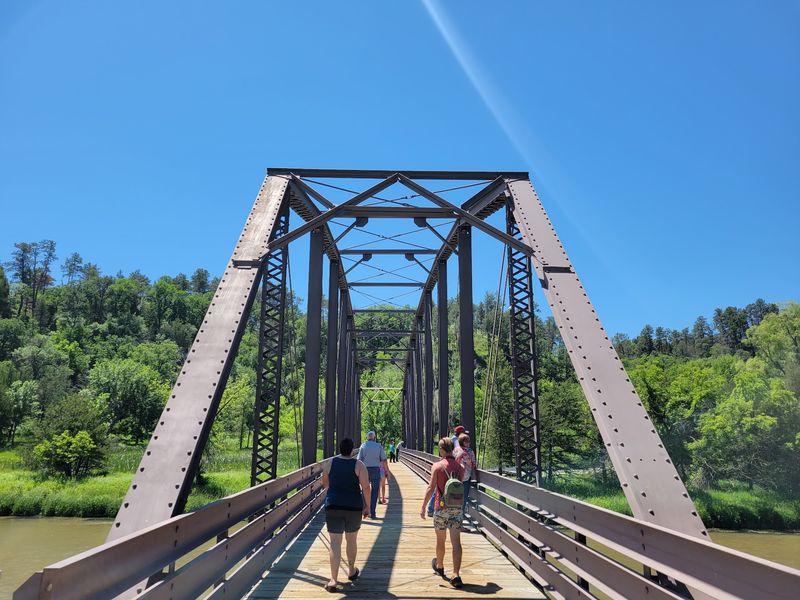
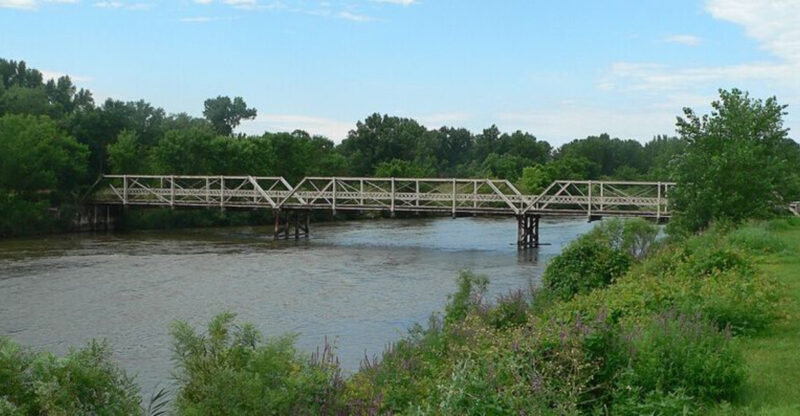
Your boots hit iron before they hit boardwalk. The trail to the falls begins with a 160-foot truss bridge spanning the Niobrara, a structure that spent its earlier life carrying vehicles over a creek in Knox County before being moved here in 1996.
Standing mid-span is half the fun. Canoes and kayaks slide underneath in a steady summer parade, paddlers glancing up, and the river runs shallow and clear enough to see the gravel bottom.
The relocation gave a retired piece of Nebraska infrastructure a second job, and the restored deck is smooth and wide enough for wheelchairs and strollers to roll straight across without trouble.
Old iron bridges get dismantled and scrapped all the time in this state. Saving one and pointing it at a waterfall was a smarter ending than most of them get.
Look upstream and downstream while you are up there. The Niobrara corridor stretches out in both directions, and the view from the bridge deck is worth pausing for before the canyon swallows you.
Half a Mile of Boardwalk and Benches
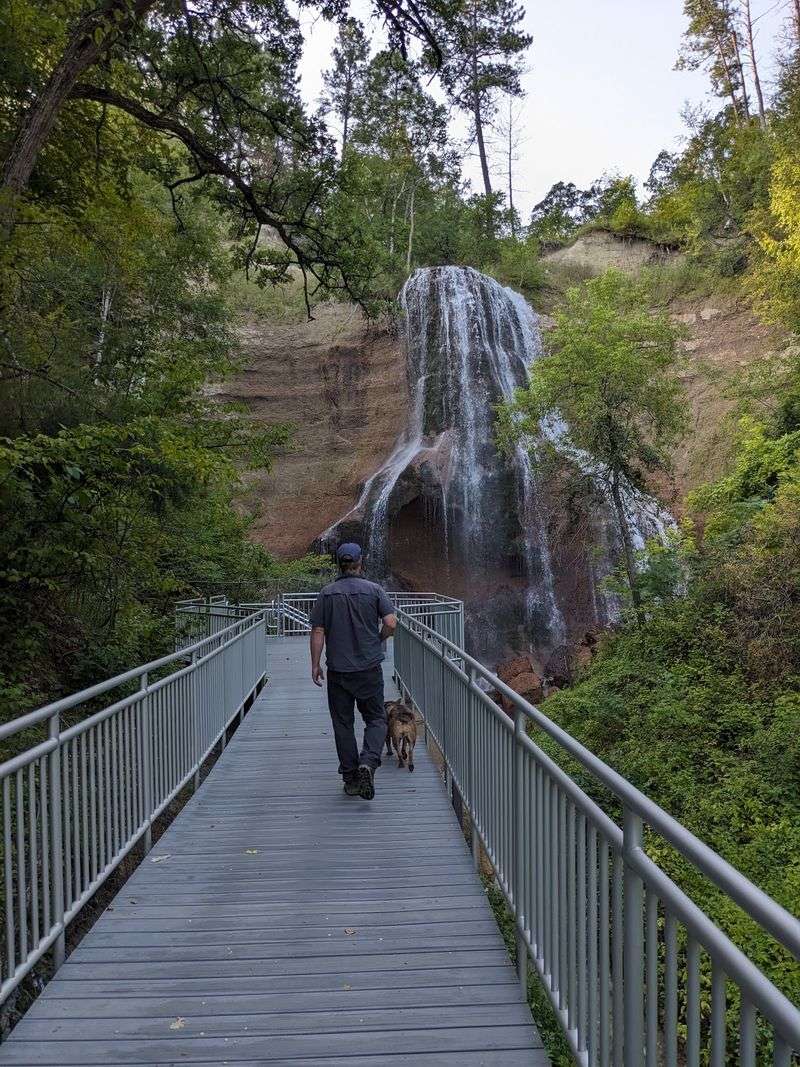
Roughly 500 feet of boardwalk carries you the rest of the way in, built with composite decking on a steel frame after a recent reconstruction. It replaced an older wooden walkway that gave out into dirt paths near the end.
Total distance from the parking area runs about half a mile round trip. That number matters, because it puts the tallest waterfall in Nebraska within reach of grandparents, toddlers, and anyone who does not want to earn a view with a two-hour climb.
Benches appear at intervals along the route, and a platform partway up the walkway offers a second angle on the canyon before you reach the main viewing deck near the base of the falls.
Ferns crowd the railings. Birdsong bounces off the canyon walls.
The whole approach is engineered but it does not feel sterile, mostly because the vegetation is so aggressive on both sides.
Take water anyway. Summer temperatures in Cherry County can push past 100 degrees before you ever reach the shade.
Spruce, Birch, and the Smith Aspen
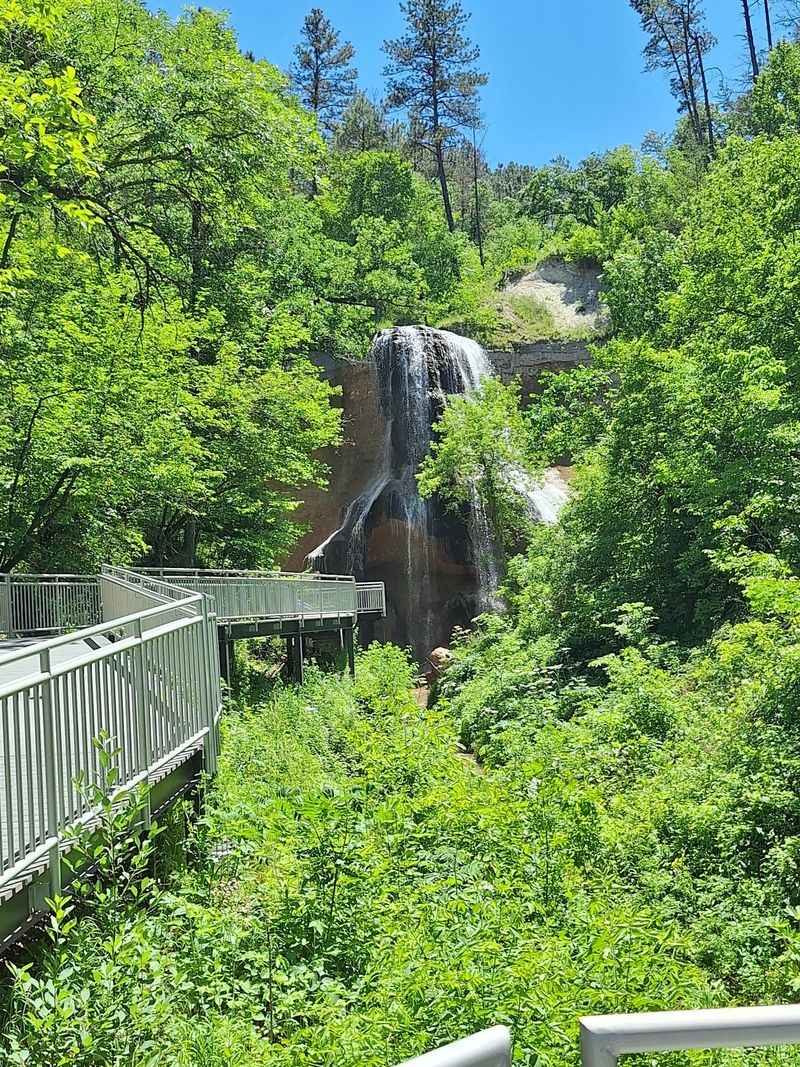
Paper birch and spruce have no business growing in central Nebraska, and yet here they are. The cool, damp canyons along the Niobrara act as refuges for northern plant species left stranded when the last glacial period retreated.
Botanists call this stretch an ecological crossroads. Northern boreal forest, eastern deciduous woodland, and Ponderosa pine communities from the west all overlap within a few hundred yards of each other, which happens almost nowhere else.
A hybrid tree found here, the Smith Aspen, carries the same name as the falls and grows in this specific pocket of canyon.
The constant spring flow is what keeps the whole arrangement alive. Groundwater seeps maintain humidity through July and August, so the understory stays green while the prairie above turns tan.
Anyone who has driven Highway 12 through the Sandhills knows how sudden the shift is. You leave grass and sky, drop into a slot of shade, and the plant list changes completely.
The Niobrara National Scenic River corridor exists largely to protect exactly this kind of biological overlap.
Wading in the Plunge Pool
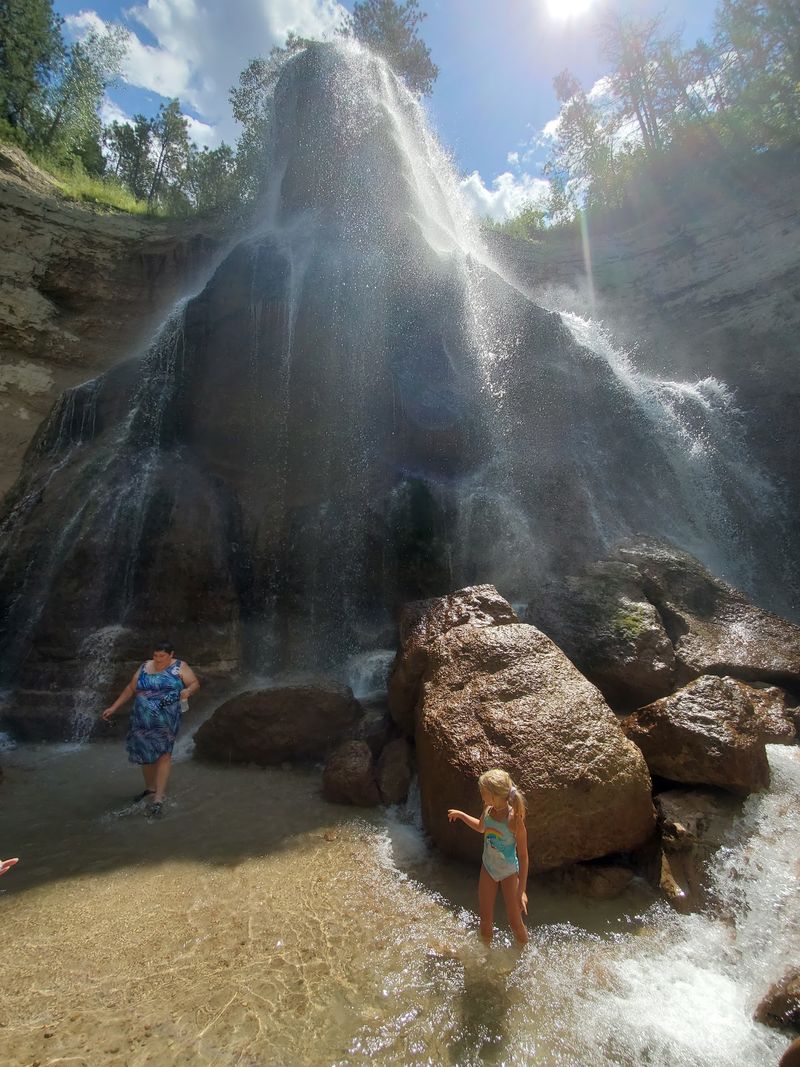
Take your shoes off. The pool at the base is shallow and cold, and stepping into it on a scorching day is the closest thing to air conditioning the Sandhills offer.
Water falling 63 feet throws mist across the whole grotto, so you get cooled off whether or not you wade. Some people walk right up under the column and stand there.
The rock underfoot is uneven and slick where algae grows, which argues for going slow and keeping a hand free. Kids find the shallow edges endlessly entertaining.
Looking straight up through the spray at the clouds is the shot everybody tries to describe afterward and mostly fails to. Photographs flatten it.
Getting this close is a relatively recent luxury. The upgraded walkway opened the base of the falls to people who previously would have had to scramble over dirt and roots to reach it.
Bring a towel and a change of socks if you plan on wading, because the walk back out is half a mile in wet shoes otherwise.
The Longer Walk on the Jim MacAllister Nature Trail
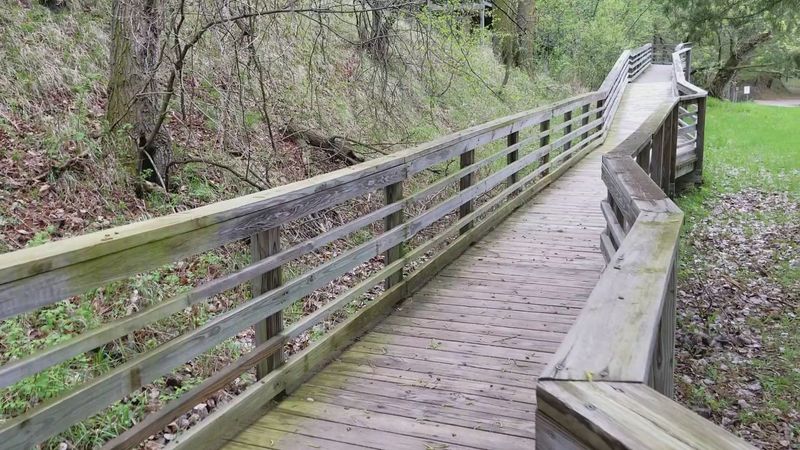
Not everyone wants to turn around after ten minutes. The Jim MacAllister Nature Trail runs about 1.5 miles through the same biologically strange landscape, and it gets you away from the boardwalk crowd almost immediately.
Terrain changes character quickly out here. Woodland gives way to open slope, then back again, with the Niobrara flashing between trees at intervals.
White-tailed deer move through the park regularly, and bird activity in the canyon is heavy enough that people bring binoculars specifically for it. Warblers, woodpeckers, and raptors all use the corridor.
Footing on the longer trail is natural surface rather than decking, so shoes with some grip help, especially after rain.
One common wish among people who make the trip is a route to the top of the falls for a view down. The trail system does not offer that, so the base remains the destination.
Combining both walks turns a quick stop into a genuine morning, which is the better way to handle a drive this far into Cherry County.
Floating the Niobrara and Pulling Ashore
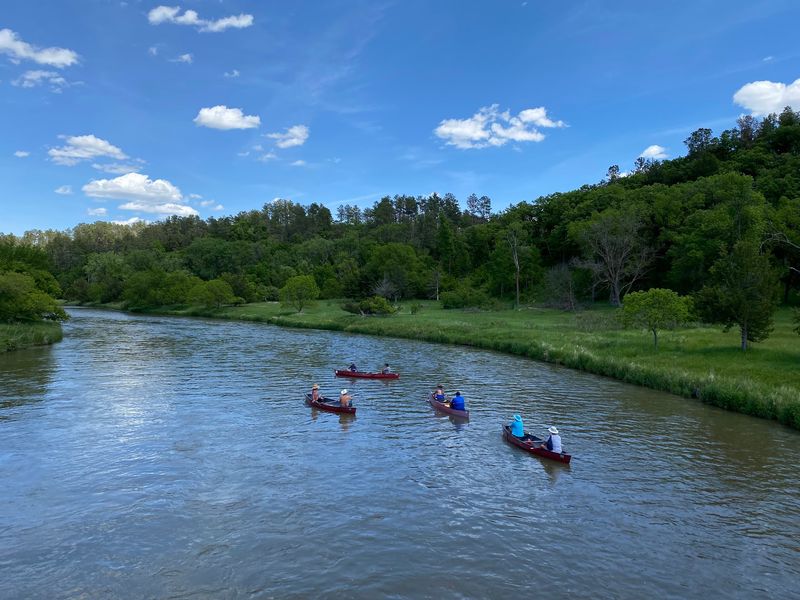
Tubes, canoes, and kayaks fill the Niobrara through the warm months, and Smith Falls sits along one of the most floated stretches in the state.
Plenty of paddlers build the falls into the trip itself, beaching their craft on the bank and walking the short trail up to the waterfall before continuing downstream. It breaks up the float nicely.
River levels vary from year to year. In shallower seasons the run gets scrappy, with rocks catching tubes and forcing you to walk sections, so checking conditions before booking an outfitter saves some frustration.
The stretch of the Niobrara through Cherry County is a designated National Scenic River, and floating it remains one of the signature summer things to do in Nebraska.
From water level, the canyon reads differently than it does from the boardwalk. Bluffs rise higher, small seeps trickle down the rock face, and the whole valley feels wider.
Combining a float with the falls turns the drive to Valentine into a full day rather than a photo stop.
Camping and Fishing Along the River
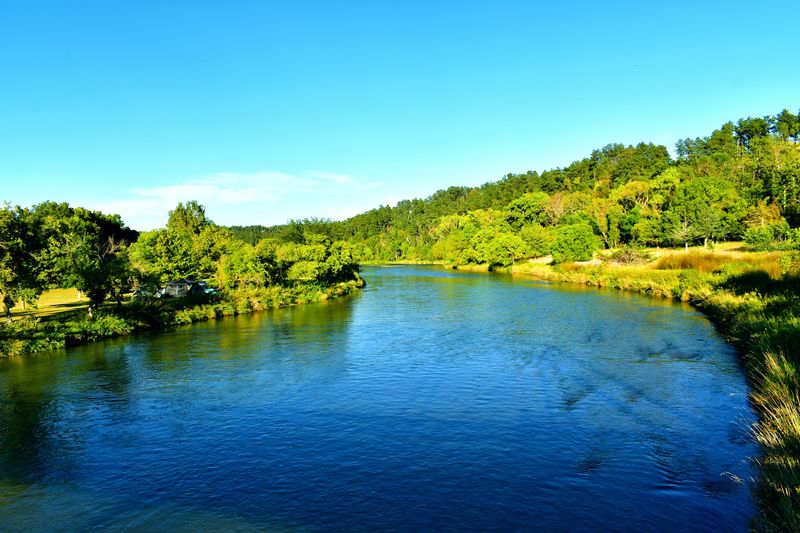
Grass campsites sit along the riverbank inside the park, close enough that you hear water all night. Tent camping is the main event, and waking up a short walk from the falls is a solid arrangement.
During peak summer weekends the campground fills tightly, with tents packed near one another and the parking area busy. Shoulder-season visits are far quieter, and the same ground feels completely different when it is half empty.
Fishing is available along the Niobrara here, though the river is more reliable for scenery than for a full stringer.
Facilities stay well tended. Grass gets mowed, the walkway is kept clean, and the vault restrooms are maintained and stocked.
Reserving ahead through Nebraska Game and Parks is the smart move for holiday weekends, since Cherry County has limited lodging and Valentine sits a solid drive away.
Deer wander through at dusk regularly, and bird activity picks up sharply in the early morning, which is reason enough to stay the night rather than day-trip it.
All-Terrain Wheelchairs and Easy Access
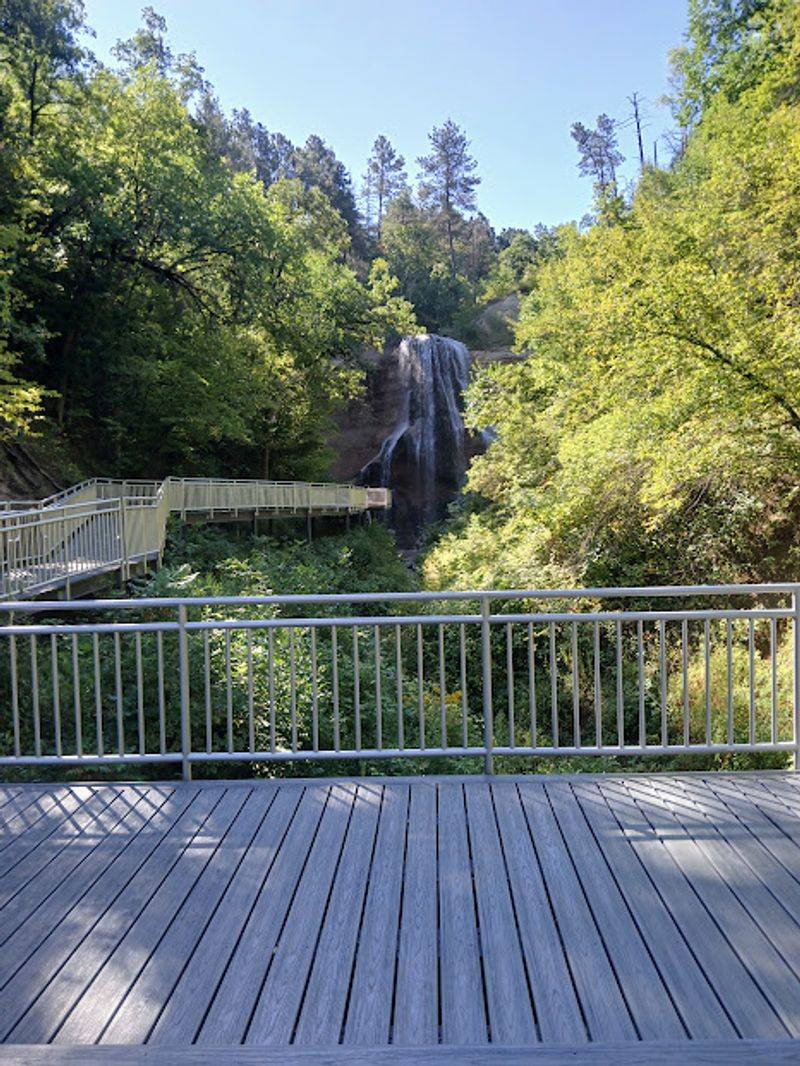
Access here got a serious upgrade. The park added all-terrain wheelchairs, available at the park office, so people with mobility limitations can reach the area around the falls.
The bridge and boardwalk together create a continuous hard surface from the parking area all the way across the Niobrara and up the canyon toward the viewing platform. There are no stairs to negotiate on the main route.
Grade is gentle throughout. Someone moving slowly with frequent bench stops can still complete the round trip comfortably.
Older Nebraskans who remember the earlier dirt paths and rougher wooden walkway will notice how much has changed. What was once a scramble is now a stroll.
Families with strollers benefit from the same improvements, and the width of the decking means passing traffic in both directions rarely creates a bottleneck outside peak hours.
Asking at the office before heading down the trail is the way to arrange a chair, since availability depends on staffing and how many are already out on the route.
Getting There From Valentine, Nebraska
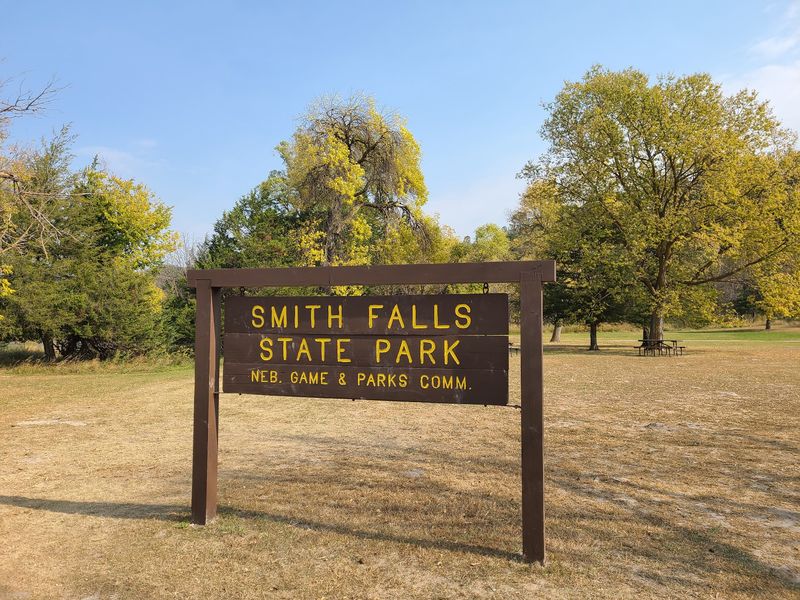
Valentine is the launching point. From town, drive roughly 15 to 20 miles east on Nebraska Highway 12, then turn off onto a well-maintained gravel road that runs down to the park entrance.
Gravel throws people off sometimes, but the surface holds up fine for passenger cars in normal conditions. After heavy rain, take it slower.
A Nebraska State Park Entry Permit is required for any vehicle entering, and annual permits cover the whole system if you plan on hitting other parks the same season.
The address to plug in is Valentine Precinct, NE 69221, in Cherry County. Cell service through the Sandhills can be patchy, so downloading directions ahead of the drive is a reasonable precaution.
Summer is the busiest stretch, with float traffic and campers overlapping. Early morning arrivals get the quietest canyon and the best light for photographs.
Late spring and September both offer smaller crowds and comfortable walking weather, and the canyon holds its green longer than the surrounding prairie does.
A Short Walk With an Outsized Payoff
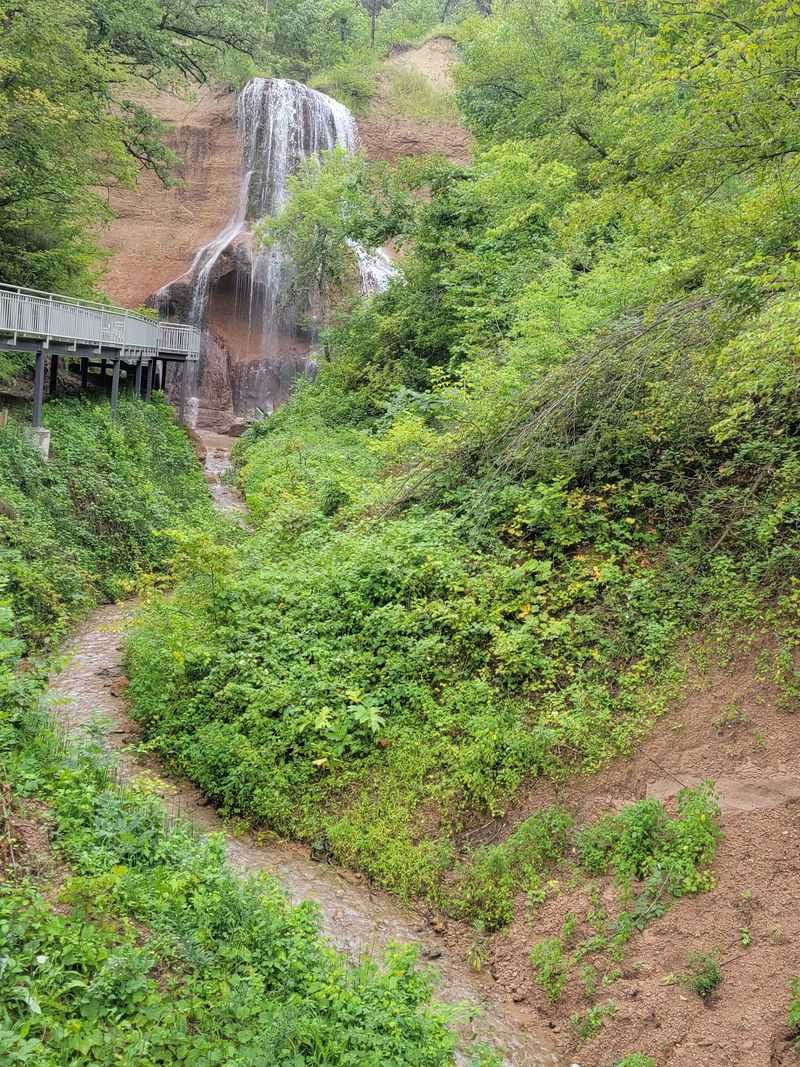
Sixty-three feet is not going to unseat anything in Yosemite, and nobody at the park pretends otherwise. What makes the place stick is the contrast between what surrounds it and what you find at the bottom of the canyon.
You leave grassland, cross an iron bridge with canoes gliding beneath it, walk five minutes through birch and fern, and stand in cold mist. That sequence is unusual anywhere, and it is downright improbable in Nebraska.
Effort required stays low, which widens the audience considerably. Grandparents, kids, wheelchair users, and people wearing sandals all make it to the same viewing platform.
Pair it with a Niobrara float or a night at the riverside campground and the drive out to Cherry County pays for itself.
Plenty of Nebraskans have lived here decades without ever making the trip. Fixing that takes one afternoon, a state park permit, and a willingness to drive a few miles of gravel.