Bald Eagles Gather By The Dozens Each Winter Along This Quiet Idaho Lake Shore
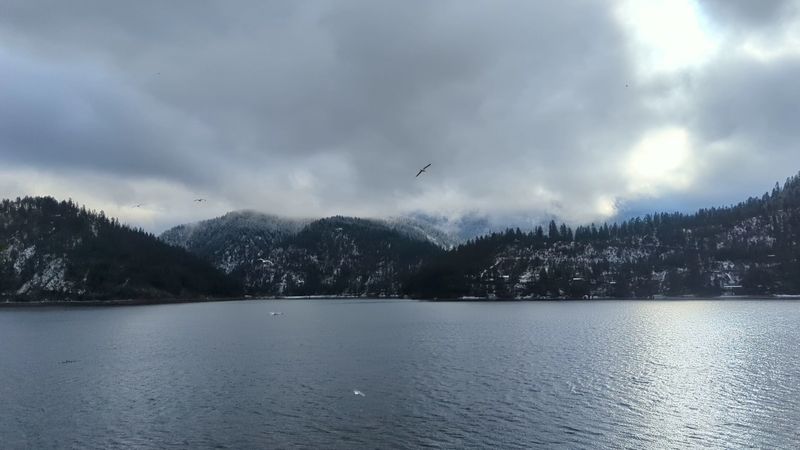
Idaho winters tend to empty out the lakeside trails, which makes the crowd of white-headed birds on one rocky point east of the city all the more surprising. From late fall into the new year, bald eagles show up by the dozens, perched in the pines and swooping low over the cold water.
The walk to see them is short and paved, with no fancy gear required. All you really need is a warm coat, a pair of binoculars, and an early start.
A Knuckle Of Land On Wolf Lodge Bay
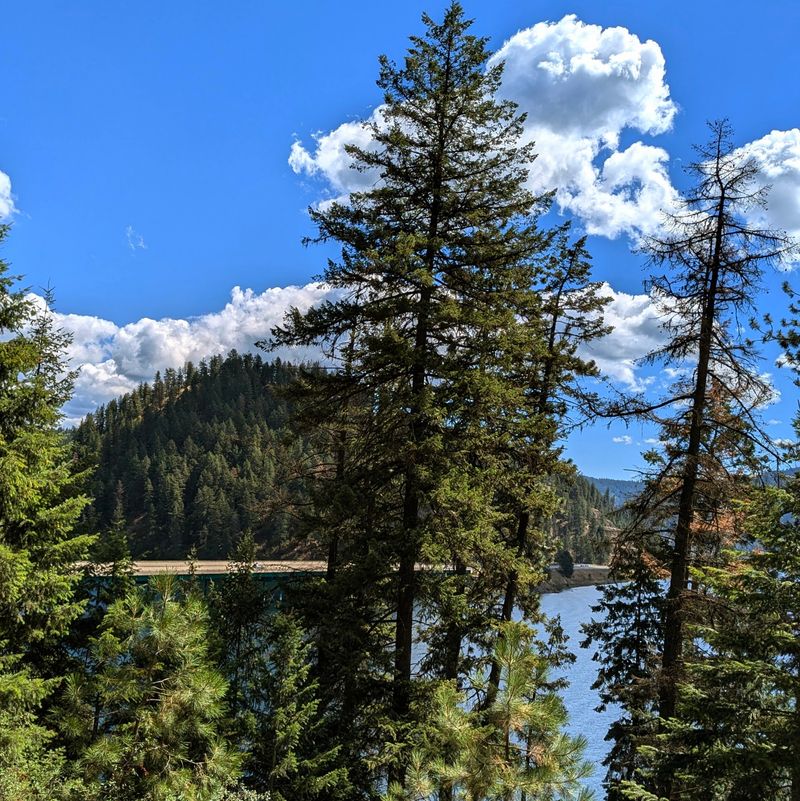
Pine-covered and rounded like a knuckle, a small headland juts into the northeast corner of Lake Coeur d’Alene where the water bends toward Wolf Lodge Bay. That knob of land is Higgens Point, a day-use scenic spot in Kootenai County, sitting only a short drive east of downtown Coeur d’Alene.
You will see the name spelled two ways, Higgens and Higgins, on signs and maps. Either spelling leads to the same place, a quiet Panhandle overlook with picnic tables, a pavilion, restrooms, and a view straight across the water toward the timbered hills.
Summer brings walkers, cyclists, and families with dogs. Winter brings something else entirely, and that is why eagle fans across North Idaho circle the calendar in November.
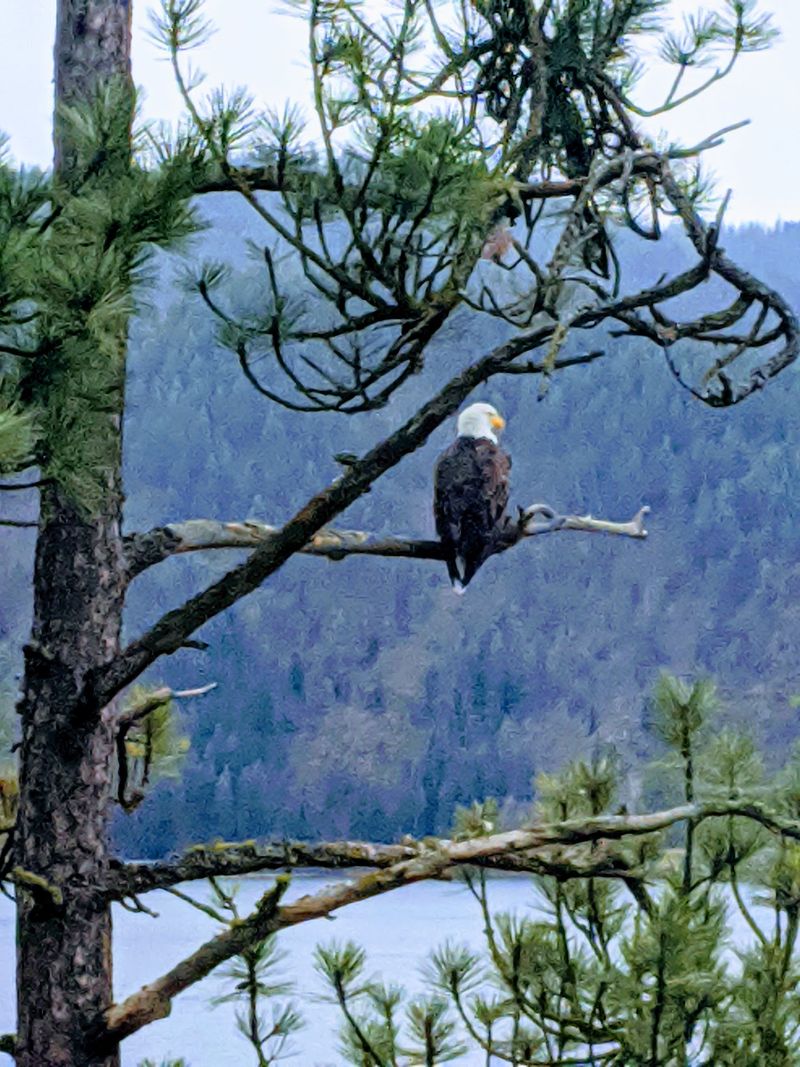
From roughly late November through January, bald eagles gather here in numbers that can climb into the dozens on a good morning. They perch in the tall conifers along the shoreline, drop onto the water, and squabble over fishing rights while bundled-up visitors watch from the point.
It is not a big park, and it does not pretend to be one. The payoff comes from what lands in the trees.
Where The Centennial Trail Ends
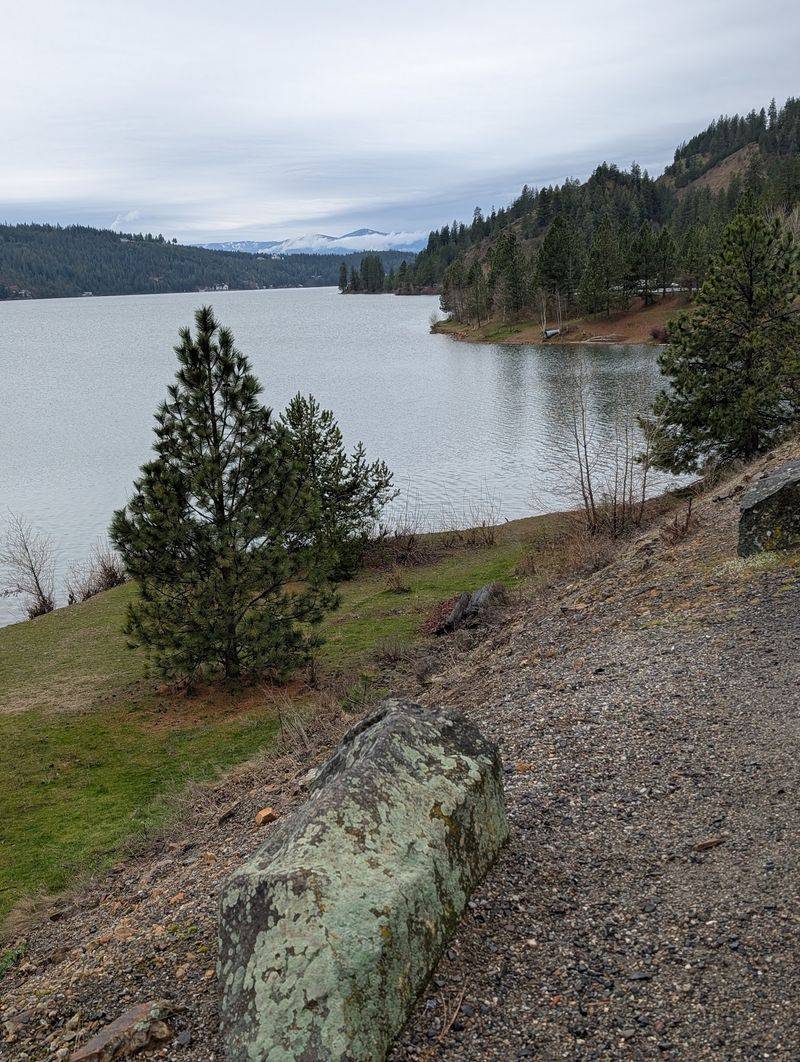
Pavement runs out right here. Higgens Point marks the eastern end of the North Idaho Centennial Trail, a long paved path that follows the Coeur d’Alene shoreline along the Coeur d’Alene Parkway before reaching this final overlook.
For mapping purposes, the address reads N Idaho Centennial Trail, Coeur d’Alene, ID 83814. Punch that into your phone and you will land near the parking lot, which sits close to Interstate 90 on the east side of the lake.
Many visitors arrive the long way, by bike. Riders rent pedal-assist bikes in town and make a round trip of more than 20 miles along the lake, using the point as a turnaround and snack stop before heading back.
Runners treat it the same way.
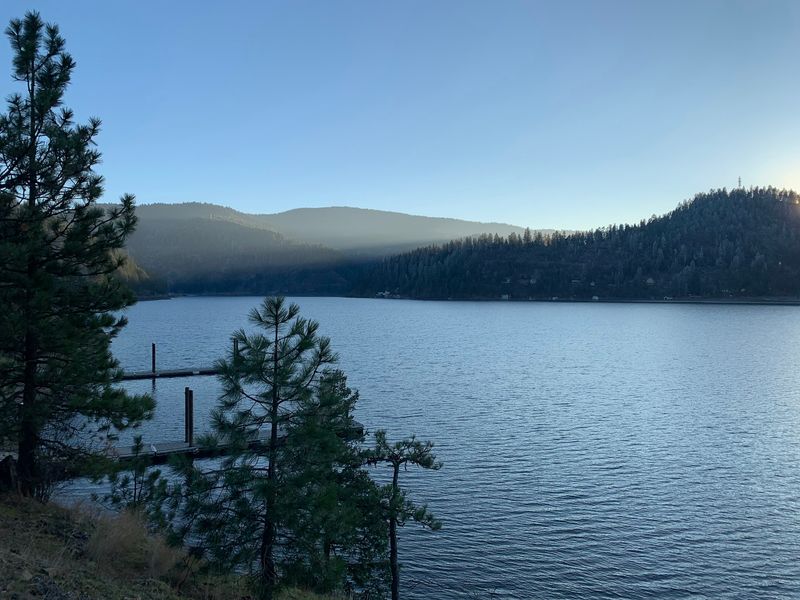
The setting is classic Panhandle. Evergreens climb the hillsides, the lake stretches west toward the city, and the water below the point shifts color with the sky.
Autumn paints the slopes in yellows and rusts, reason enough for a return trip.
One small reality check: the hum of I-90 traffic carries up here if you listen for it. Most people stop noticing once the first eagle glides past.
Kokanee Season Brings Them
Kokanee salmon are the whole reason for the winter crowd. These landlocked salmon spawn in the chilly shallows of Wolf Lodge Bay each fall, and once they finish their life cycle, the fish drift and settle in the water, creating an easy meal for any bird patient enough to wait.
Bald eagles figured that out long ago. They begin arriving in Idaho in late November, and their numbers usually peak in December and January, when the kokanee supply is at its best.
The gathering can hang on through February, and in some years a few birds linger into March or even early April, depending on how the winter plays out. Snow, ice, and fish numbers all nudge the timeline a little.
Eagles are opportunists, so kokanee are not the only thing on the menu. They will also grab other fish, waterfowl, and small mammals when the chance comes along.
Watching them fish is the highlight. An eagle leaves its perch, sweeps low with talons dropped, snatches a salmon from the surface, and flaps back to a branch, sometimes chased by a rival hoping to steal the catch.
Timing tip: November and December usually bring the busiest action.
White Heads, Yellow Eyes, Eight-Foot Wings
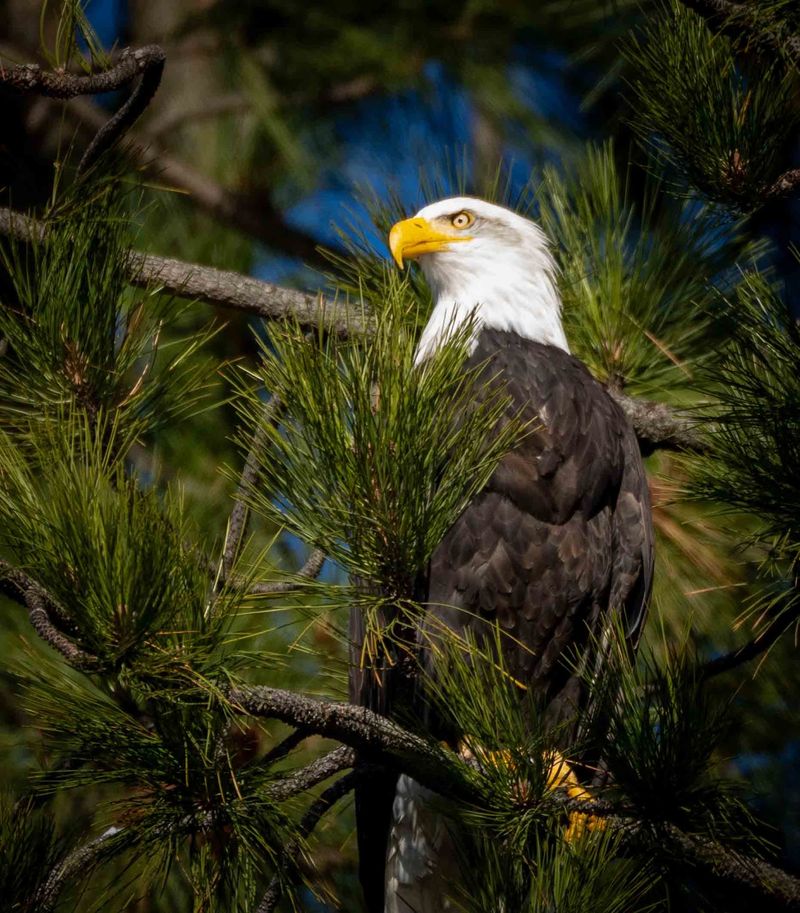
Big, bright, and hard to miss, adult bald eagles wear a white head and white tail over a dark chocolate body. Add the hooked yellow beak and pale yellow eyes, and you have one of the easiest birds in Idaho to identify from across a bay.
Young eagles are trickier. Juveniles look mottled brown and white with darker beaks, and they do not grow into full adult colors until around their fifth year.
Plenty of first-time visitors mistake them for hawks or golden eagles.
Size tells part of the story too. Females are generally larger than males, and the biggest can stretch their wings close to eight feet from tip to tip.
Here is a fun surprise: despite that massive wingspan, a bald eagle weighs only about 10 to 14 pounds. Much of its bulk is plumage, roughly 7,200 feathers on a single bird.
Then there are the eyes. An eagle’s vision can be four to five times sharper than a person’s, sharp enough to spot a rabbit from about three miles away.
So if you feel watched while standing at the point with your binoculars, you probably are.
Try counting the white heads in one tree.
Half A Mile To The Overlook
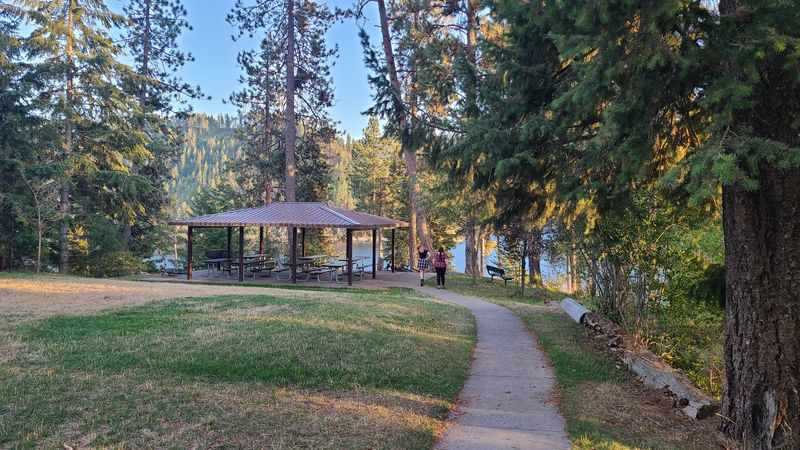
Half a mile. That is roughly the distance from the parking lot to the tip of the point, and most people cover it in 10 to 30 minutes, depending on how often they stop to stare at the lake.
The main route is paved with a moderate incline, gentle enough that visitors using walkers have reached the top without trouble. Families with kids and dog owners find it easy going, though the climb back up from the point does get the legs working a little.
Side paths branch off through the trees and around the hill. Some are packed dirt, with small ups and downs that feel more like a woodland stroll than a sidewalk.
One path deserves a clear warning. A steep, slippery dirt track drops from the top down to the rocky beach, and it is best skipped, especially when winter frost or mud coats the ground.
Photographers should know that trees have grown up around parts of the overlook, which can frame or block the lake view depending on where you stand. Circling the point usually turns up an open angle.
Wear boots with good grip in winter. Trail conditions change quickly after a cold snap.
Horseshoe Pits And A Picnic Pavilion
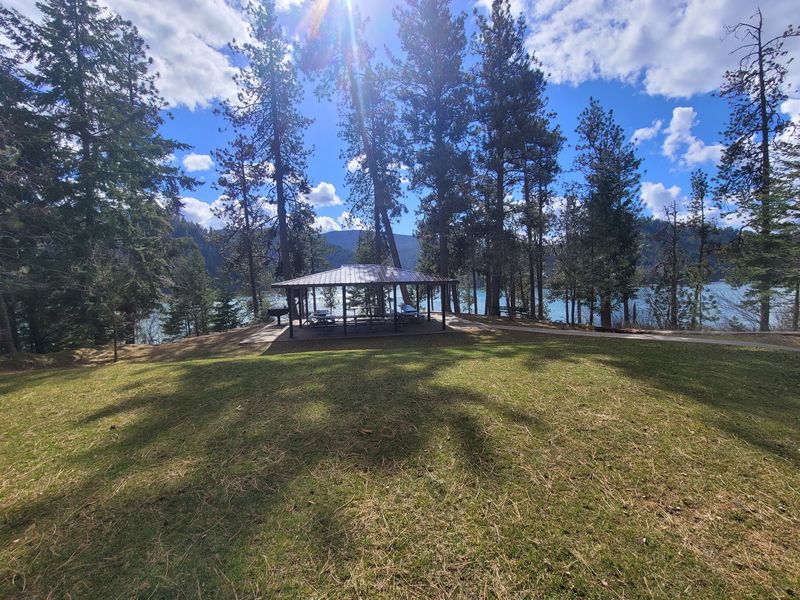
Horseshoe pits are not what most people expect at an eagle-viewing spot, yet there they are, set beside a grassy lawn near the group picnic area. Poles for volleyball or badminton stand ready too, though you need to bring your own net.
Picnic benches are scattered around the grounds, many near the water, and a covered gazebo can be reserved for gatherings. The group area includes a barbecue grill, which makes the point a handy spot for summer birthday lunches or reunions.
Restrooms sit up top. They are basic pit toilets, and winter visitors have noticed they are not always serviced often during the colder months, so tucking a roll of toilet paper in the car is a smart move.
Down at the shoreline, a boat launch and dock give boaters a way to tie up and walk in. Anglers use the area as a fishing spot as well.
Watch your step on the dock, since the boards have shown wear and rough spots in the past.
Parking is generous for a place this size, with plenty of room even on busier days.
Keep in mind that it is a day-use park only.
Chattering Squirrels And Golden Sunsets
Red squirrels run the local gossip network. They chatter from the branches and even mimic bird calls, trying to shoo visitors out of their territory, and they add a surprising amount of noise to an otherwise hushed morning.
Quiet is the overall mood here. Out-of-state travelers have described it as an unexpected Idaho discovery, and it rarely feels crowded outside of peak eagle weekends.
So who fits best? Birders and photographers with long lenses come first, especially on cold December mornings.
Retirees and families looking for an easy, low-cost outing find it just as rewarding, since the walk is short and the benches are plentiful.
Dog owners enjoy the trail year-round. Cyclists and runners treat the point as a finish line after a lakeside workout on the Centennial Trail.
Summer changes the personality completely. Picnickers spread out on the lawn, boaters pull up near the rocky beach, and evening walkers linger for sunset, when the sky over Lake Coeur d’Alene turns gold and pink.
Autumn brings color to the hillsides, and winter brings the eagles. Each season offers its own reason to come back, which explains why so many North Idaho families return every single year.
Before You Pack The Binoculars
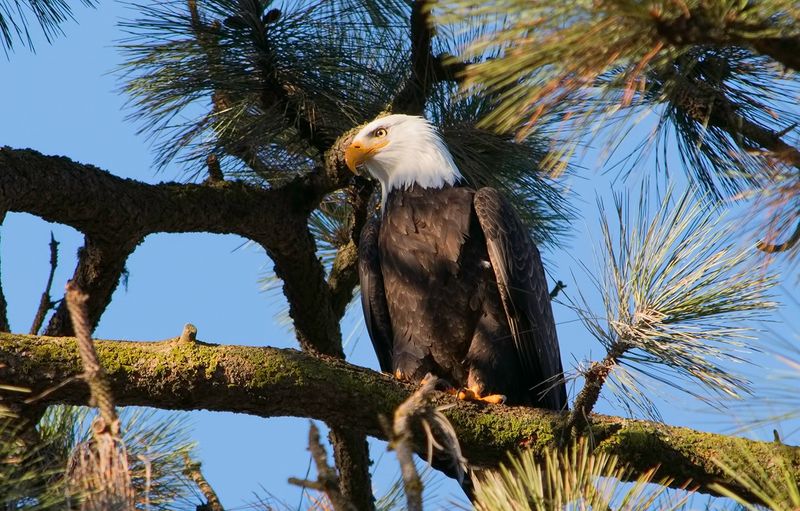
Early bird, meet eagle. The best viewing usually happens between about 8 and 10 in the morning, and again near dusk, when the birds are actively fishing and moving between perches.
The park generally opens in the morning and closes in the evening, but posted hours can shift with the season, so check with Idaho Parks and Recreation before driving out. Higgens Point is part of the Coeur d’Alene Parkway, which the state oversees.
Getting there is simple. Head east from downtown Coeur d’Alene on Coeur d’Alene Lake Drive and follow the shoreline until the road ends near the parking lot.
Cyclists can ride the whole way on the Centennial Trail.
Bring binoculars or a spotting scope. Eagles perch across the bay and high in the trees, and a little magnification turns a white dot into a detailed face.
Keep a respectful distance from the birds, especially any feeding near shore. Disturbing them burns energy they need to get through the winter.
Dress in layers, pack gloves and a thermos of cocoa, and toss in that extra toilet paper. For a different angle, lake cruises out of Coeur d’Alene offer guided eagle-viewing trips on the water during the season.
Worth A Frosty Morning
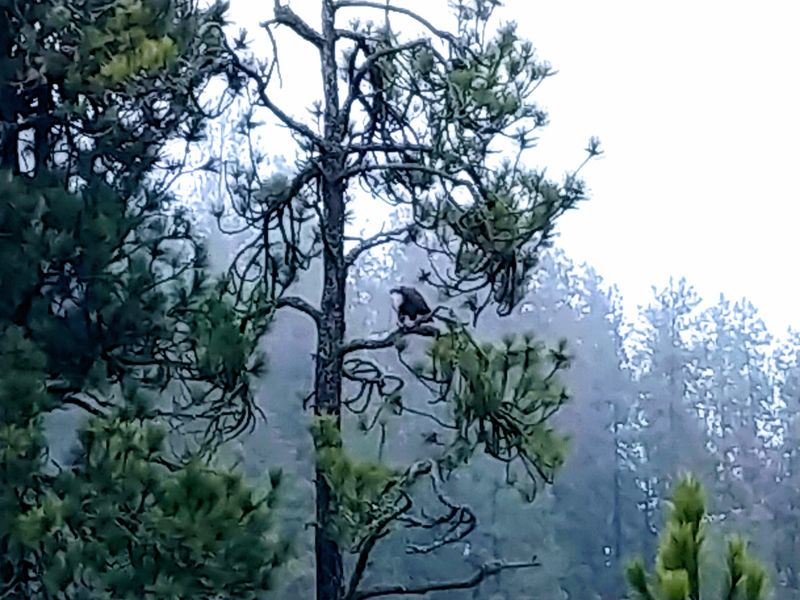
Frost on the picnic tables, steam rising from a travel mug, and a dozen white heads dotting the pines across the bay. That scene sums up a winter morning at Higgens Point better than any list of features could.
Nothing here is fancy. The restrooms are basic, the trees sometimes crowd the view, and the interstate hum never quite fades.
Yet the walk is short, the lake is wide, and the eagles keep showing up every year like clockwork.
For North Idaho families, it makes an easy tradition. Drive out on a clear December weekend, count the birds, then warm up with lunch back in town.
Visitors from the Treasure Valley can fold it into a longer Panhandle trip without much effort.
Summer visitors get a different but equally pleasant version, with bike rides, picnics, and golden sunsets over the water.
Still, the real show arrives with the cold. Plan for late November through January, go early, bring binoculars, and give yourself time to stand still.
Chances are good an eagle will swoop past close enough to hear its wings. After that, most people start planning next winter’s visit on the drive home.